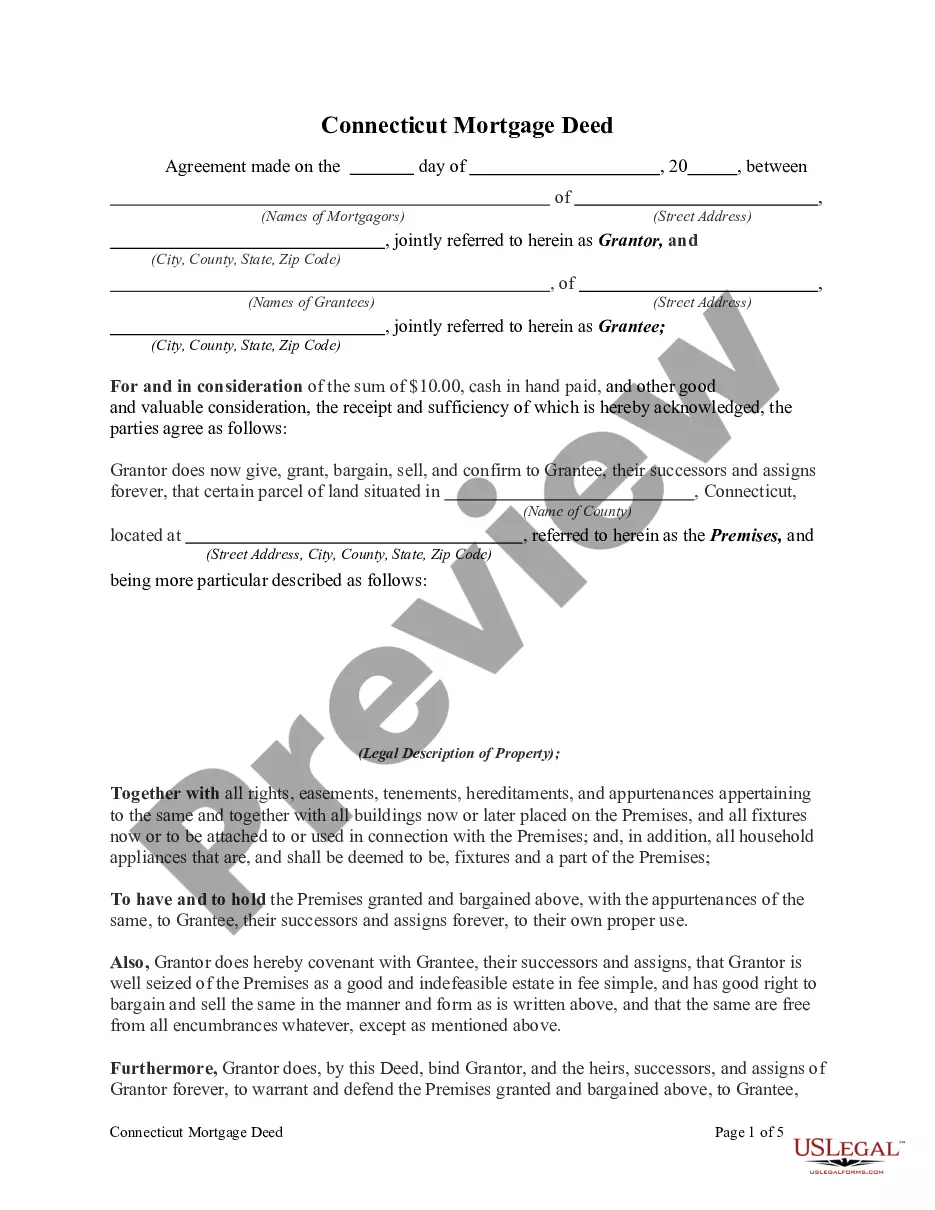
Connecticut Mortgage Deed
What is this form?
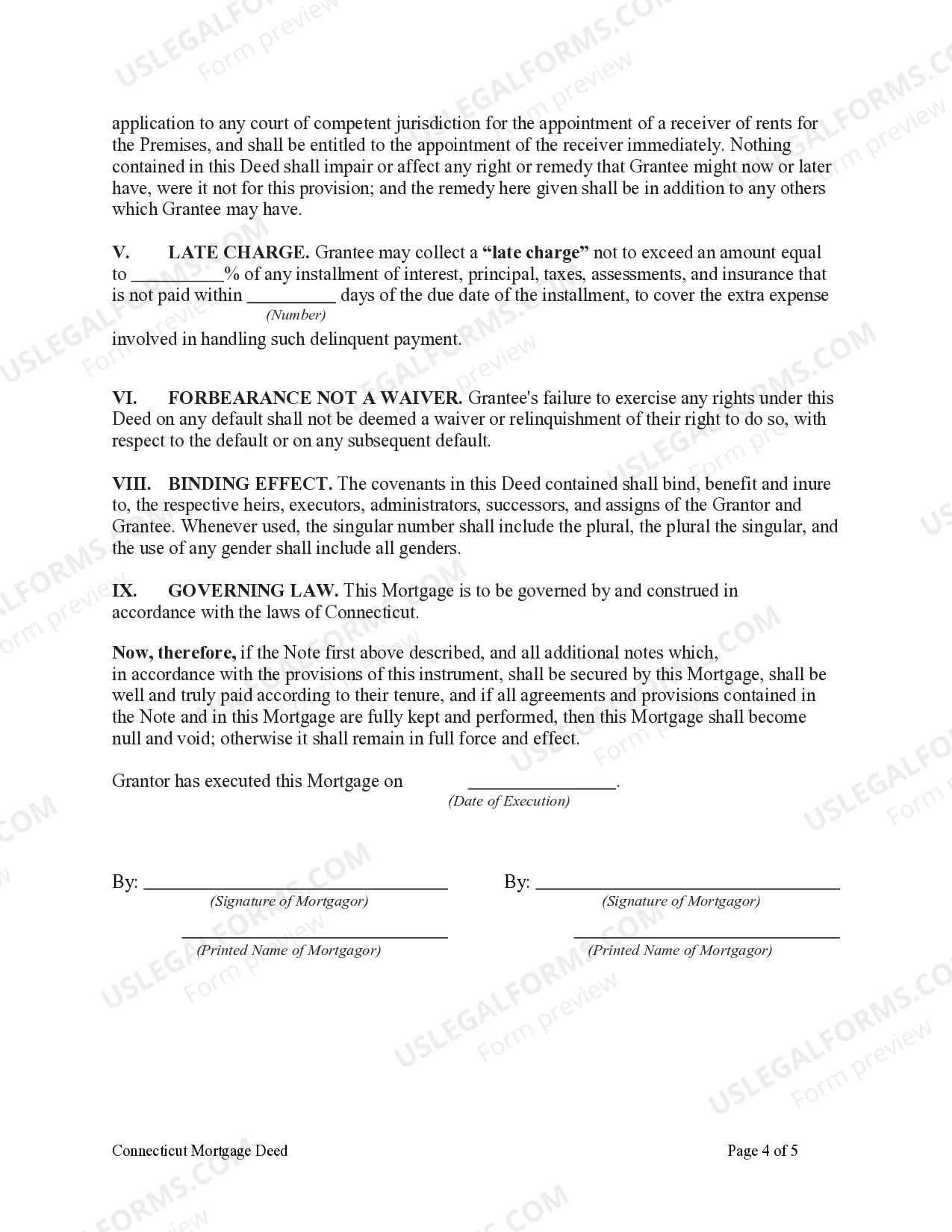
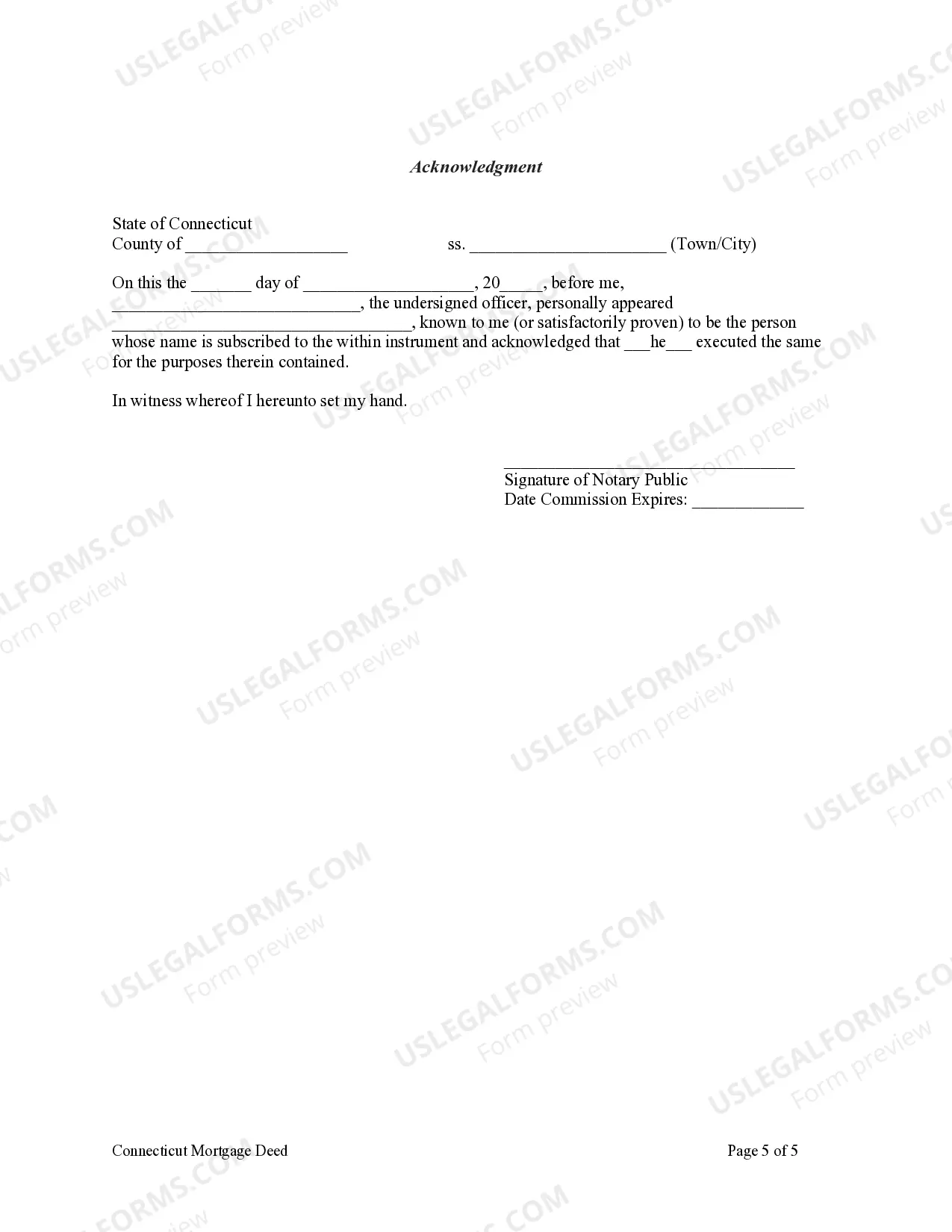
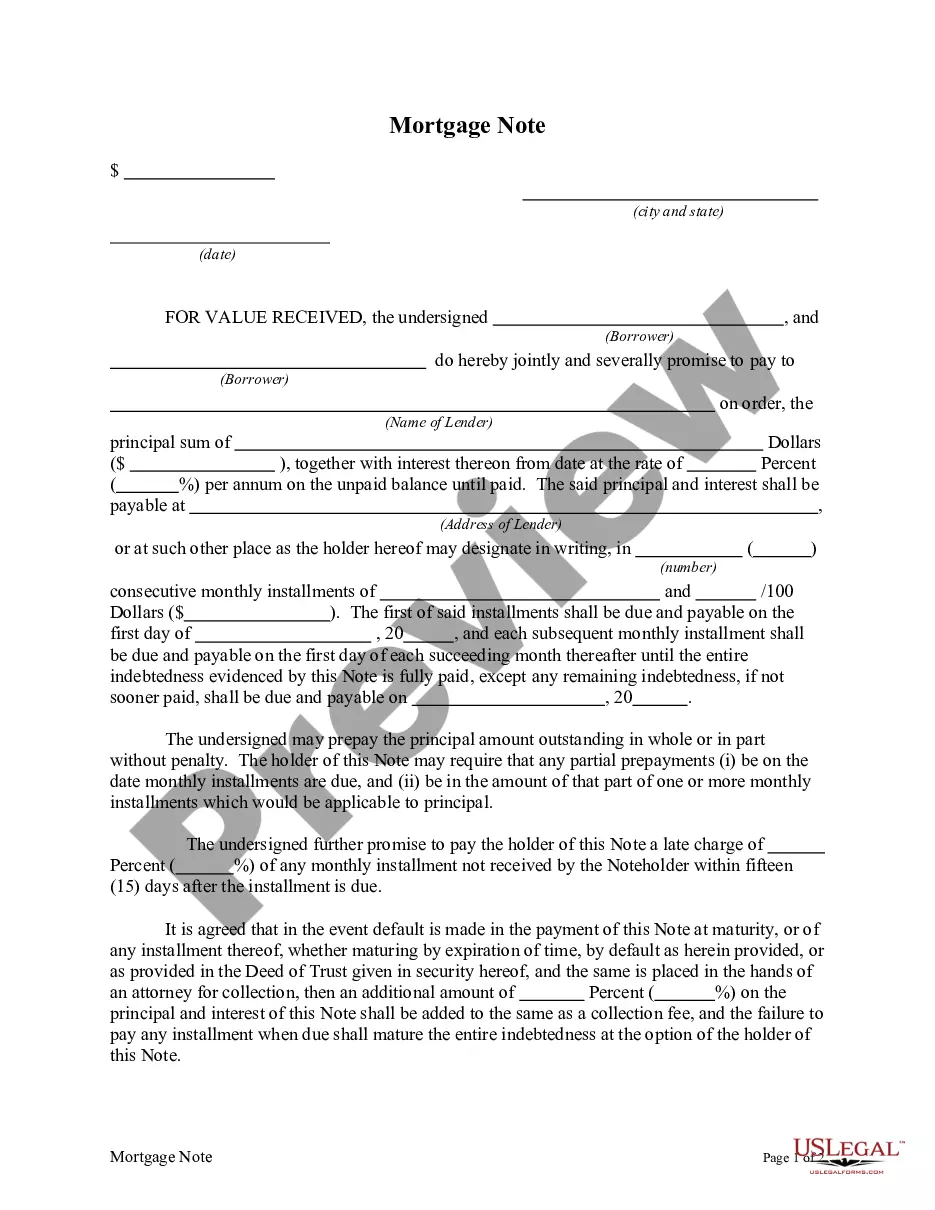
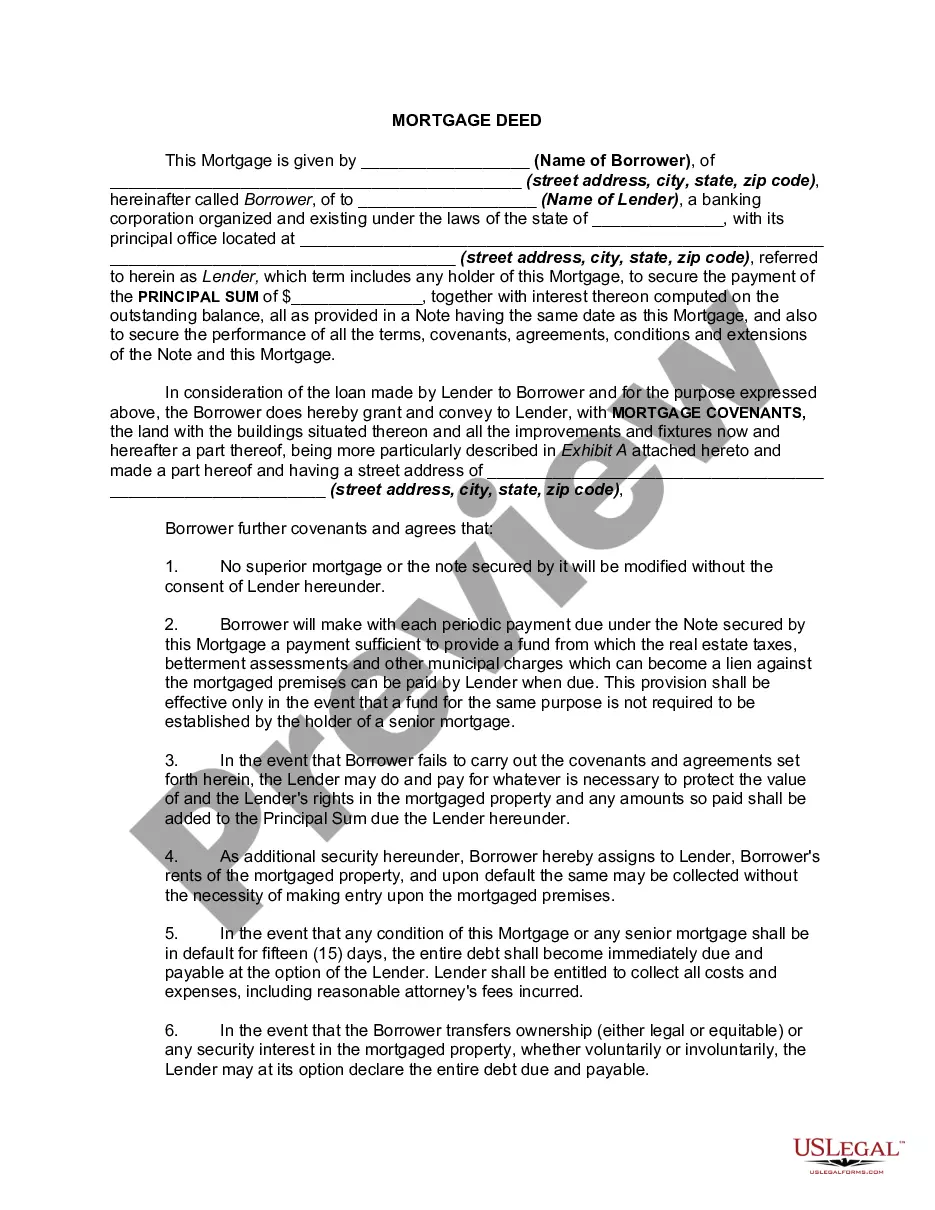
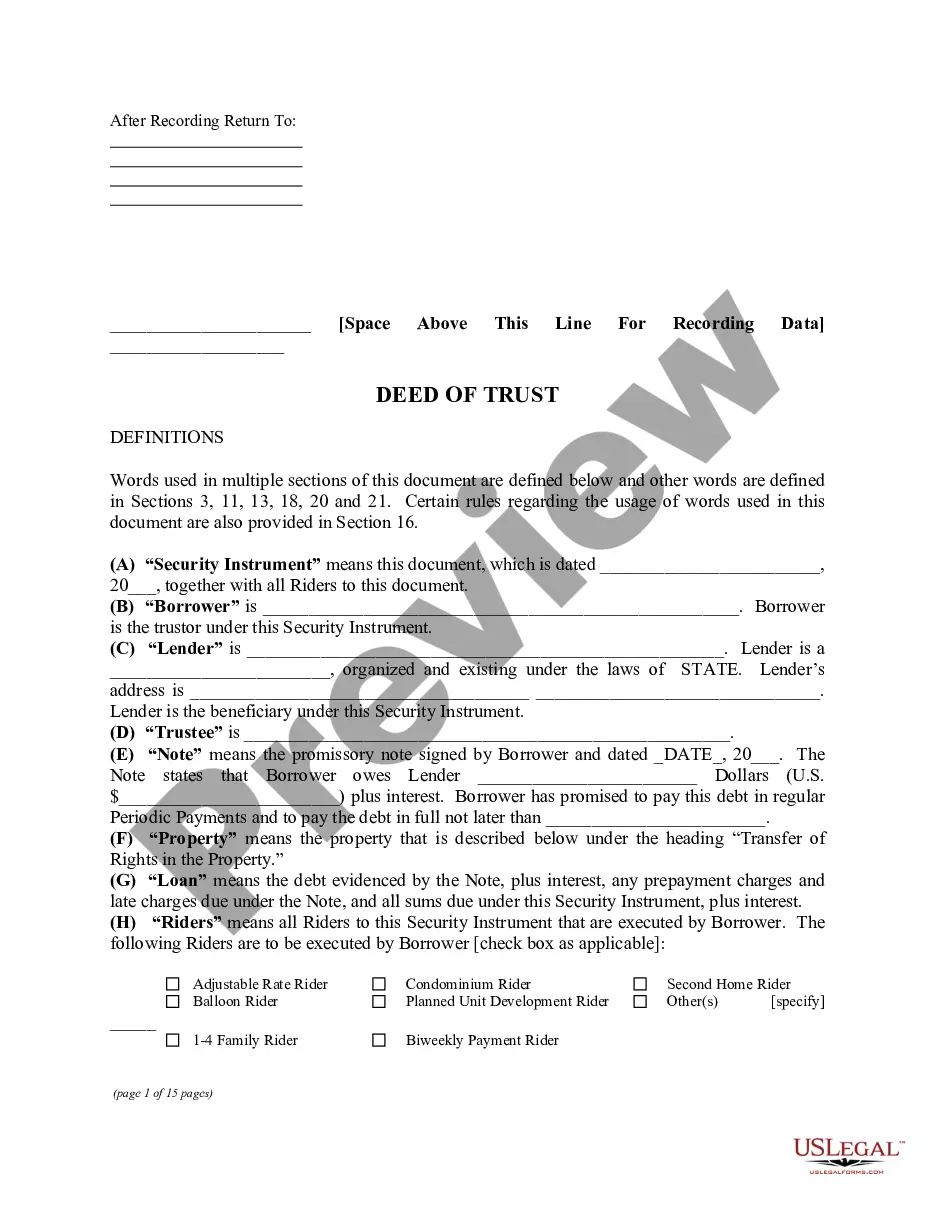
A mortgage deed is a legal document that establishes an interest in real property as collateral for a loan, typically the payment of a mortgage note. This agreement involves two parties: the mortgagor (the borrower) and the mortgagee (the lender). The mortgage deed secures the lender's investment by providing them with the right to foreclose on the property if the borrower defaults on their loan obligations. This form is essential for individuals seeking a loan secured by real estate, differentiating it from other agreements like a simple loan or contract for deed, as it provides formal accountability regarding property ownership and obligations.
Key components of this form
- Identification of the mortgagor (borrower) and mortgagee (lender).
- Description of the property being mortgaged, including rights and easements.
- Terms of the loan, including repayment conditions and interest rates.
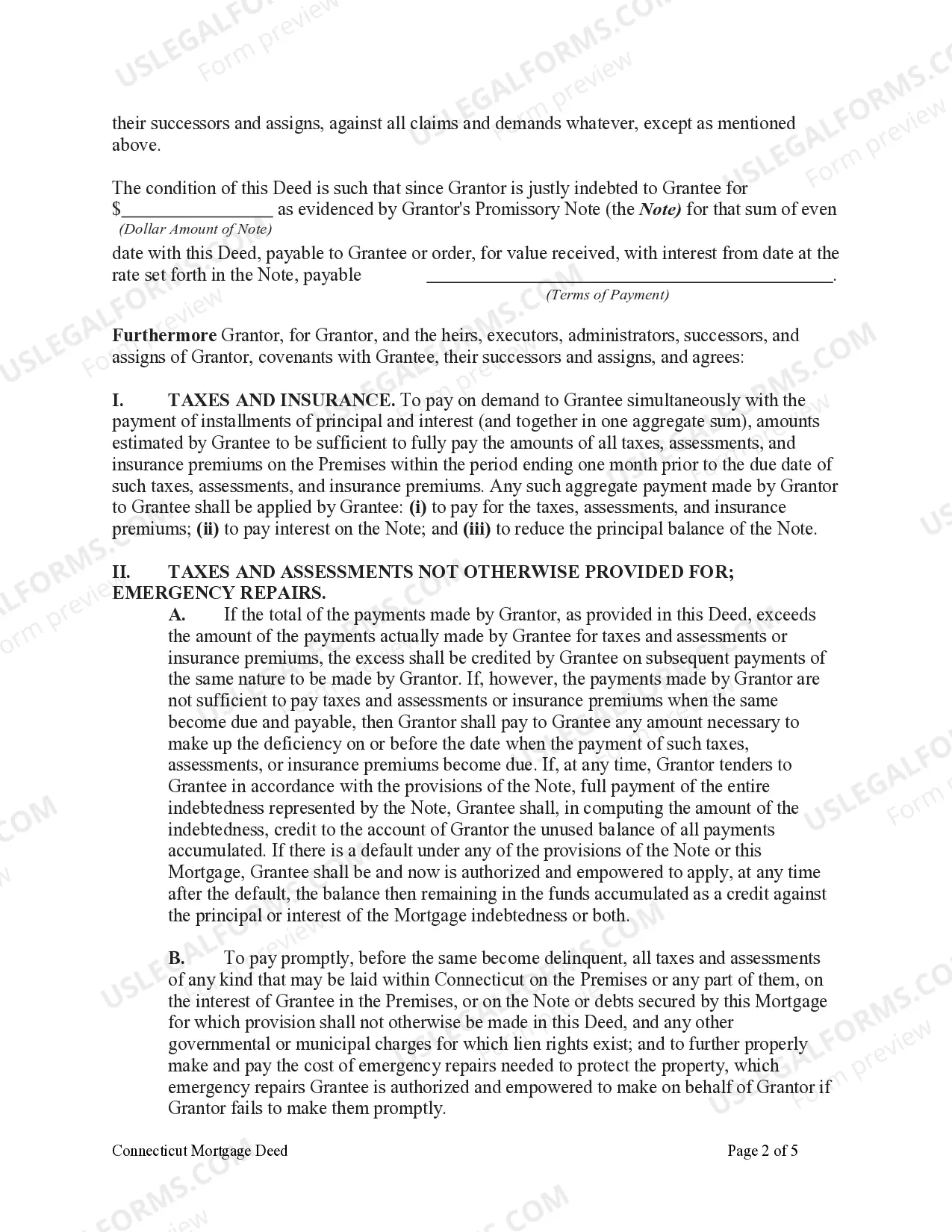
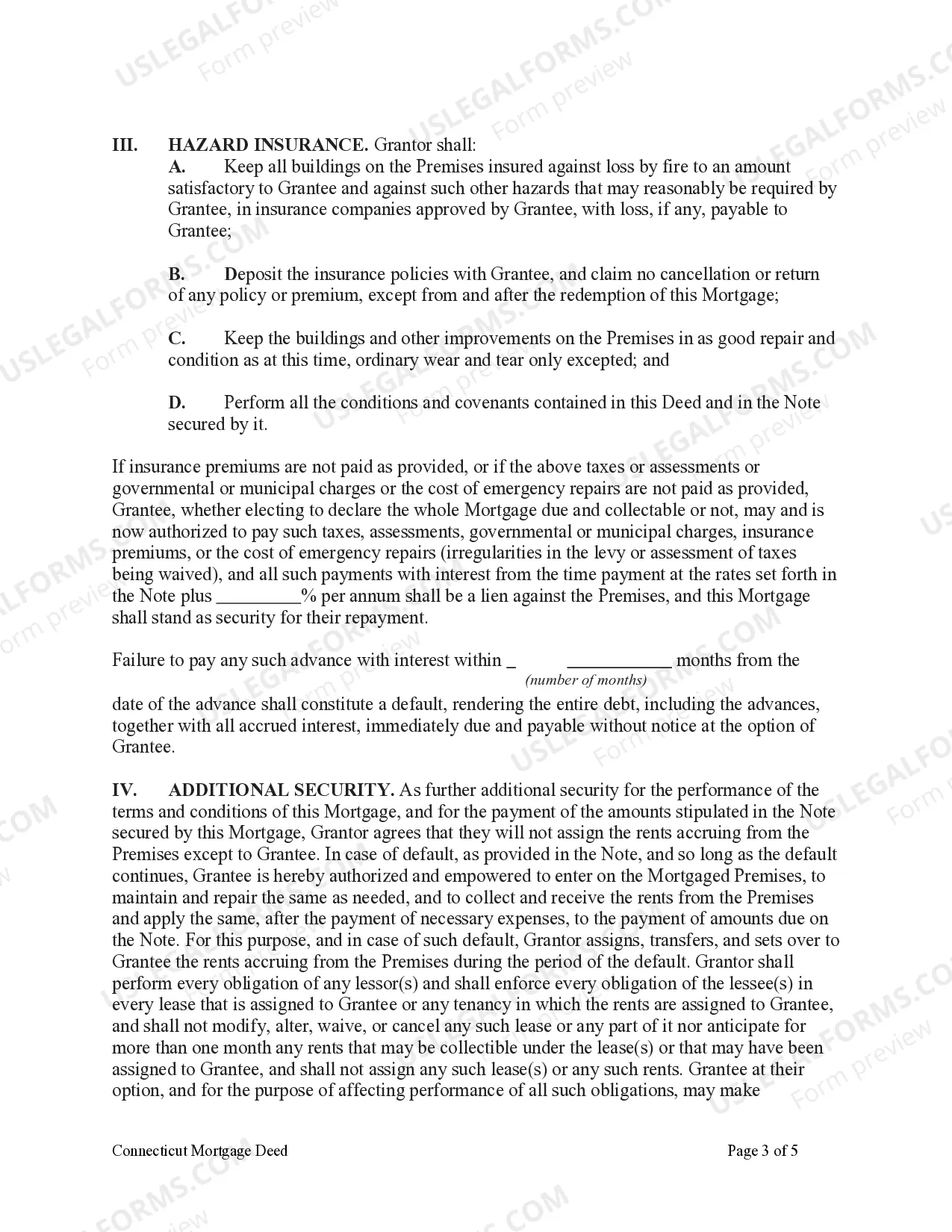
- Covenants by the mortgagor and obligations related to taxes, insurance, and property maintenance.
- Provisions for foreclosure and rights of the lender in case of default.
- Governing law, specifying applicable state laws.


Situations where this form applies
This mortgage deed form should be used when an individual or entity seeks to secure a loan by offering real estate as collateral. It is commonly employed in home purchases, refinancing existing mortgages, or securing loans for investment properties. By executing this form, the borrower commits to the terms of the loan while providing the lender with rights associated with the property, ensuring both parties are legally protected throughout the transaction.
Who should use this form
- Home buyers looking to purchase property with a mortgage loan.
- Property owners refinancing an existing mortgage.
- Investors acquiring real estate using borrowed funds.
- Borrowers who need to formalize their obligations to a lender.
How to prepare this document
- Identify the parties involved by entering the names and addresses of the mortgagor and mortgagee.
- Clearly describe the property being mortgaged, including its physical address and any legal descriptions.
- Specify the terms of the mortgage, including the loan amount, interest rate, and repayment schedule.
- Include any additional covenants or provisions that may be relevant, such as tax and insurance obligations.
- Both parties should sign and date the mortgage deed in the presence of a notary public.
Does this form need to be notarized?
To make this form legally binding, it must be notarized. Our online notarization service, powered by Notarize, lets you verify and sign documents remotely through an encrypted video session.
Get your form ready online
Our built-in tools help you complete, sign, share, and store your documents in one place.
Make edits, fill in missing information, and update formatting in US Legal Forms—just like you would in MS Word.
Download a copy, print it, send it by email, or mail it via USPS—whatever works best for your next step.
Sign and collect signatures with our SignNow integration. Send to multiple recipients, set reminders, and more. Go Premium to unlock E-Sign.
If this form requires notarization, complete it online through a secure video call—no need to meet a notary in person or wait for an appointment.
We protect your documents and personal data by following strict security and privacy standards.

Make edits, fill in missing information, and update formatting in US Legal Forms—just like you would in MS Word.

Download a copy, print it, send it by email, or mail it via USPS—whatever works best for your next step.

Sign and collect signatures with our SignNow integration. Send to multiple recipients, set reminders, and more. Go Premium to unlock E-Sign.

If this form requires notarization, complete it online through a secure video call—no need to meet a notary in person or wait for an appointment.

We protect your documents and personal data by following strict security and privacy standards.
Common mistakes to avoid
- Failing to accurately describe the property being mortgaged.
- Not including all necessary covenants or obligations in the deed.
- Skipping the notarization process, which could lead to legal disputes.
- Leaving out the interest rate or repayment terms, causing ambiguity.
Benefits of completing this form online
- Convenience of completing the mortgage deed from anywhere, without the need for appointments.
- Editability allows users to customize the form to fit specific needs.
- Access to professionally drafted templates ensures legal compliance and accuracy.
- Immediate access to downloadable forms streamlines the process.
Looking for another form?


Form popularity
FAQ
To record a Connecticut Mortgage Deed, specific requirements must be followed. These include having a properly executed deed, payment of any applicable fees, and providing certain details about the property and parties involved. Additionally, you will need to ensure the deed is notarized. Using US Legal Forms can streamline this process and help you meet all recording requirements accurately and efficiently.
Yes, you can record your own Connecticut Mortgage Deed, but it must meet specific legal requirements. It is essential to ensure that the document is properly prepared and signed before submission. While it is possible to handle this independently, many choose to use services like US Legal Forms to minimize errors and ensure compliance with local laws. This helps facilitate a smoother recording process.
To add someone to a Connecticut Mortgage Deed, you typically need to draft a new deed or an addendum to the existing deed. The process includes obtaining their consent and potentially refinancing the mortgage. It's advisable to consult with a real estate attorney or use a trusted service like US Legal Forms to ensure all legal aspects are addressed correctly. This step is crucial to maintaining clear property ownership.
In Connecticut, property deeds are recorded at the local town or city clerk's office where the property is located. This recording process ensures that the Connecticut Mortgage Deed is publicly available, which also helps protect the property owner's rights. Accessing these records allows you to verify ownership and review any existing liens or mortgages. Always make sure to check with your local office for any specific requirements.
The name on the Connecticut Mortgage Deed typically includes the property owner or owners who hold the title. This means that even if you have a mortgage, the deed remains in the owner's name. The lender may have a lien on the property, but they do not appear on the deed itself. It's essential to keep this distinction clear when managing ownership and responsibilities.
Connecticut operates under a title theory approach when it comes to mortgages. This means that when you obtain a mortgage, the lender holds legal title to the property through the Connecticut Mortgage Deed until the debt is repaid. This system affects how ownership and foreclosure processes are handled.
Connecticut is primarily a deed state, which means the focus is on the transfer of property ownership through deeds. In this context, a Connecticut Mortgage Deed is used to secure the mortgage on the property. Understanding the nature of deed versus lien can help you navigate property ownership responsibilities.
In Connecticut, there are several types of deeds, including warranty deeds, quit claim deeds, and bargain and sale deeds. Each serves a specific purpose in property transactions. It's essential to understand the implications of each type, especially when utilizing a Connecticut Mortgage Deed for your transfer.
Yes, Connecticut is considered a deed state, meaning ownership of property is transferred through the delivery of a deed. The Connecticut Mortgage Deed serves as the primary document for this purpose. This type of transfer can vary by the type of deed used, such as warranty deeds or quit claim deeds.
Filing a quit claim deed in Connecticut involves preparing the document and ensuring all parties involved have signed it. You must then submit the Connecticut Mortgage Deed, along with any necessary transfer tax forms, to the local town clerk’s office for recording. It’s advisable to keep a copy for your records as proof of the transaction.