Connecticut Complaint regarding Repudiating an Agreement
What is this form?
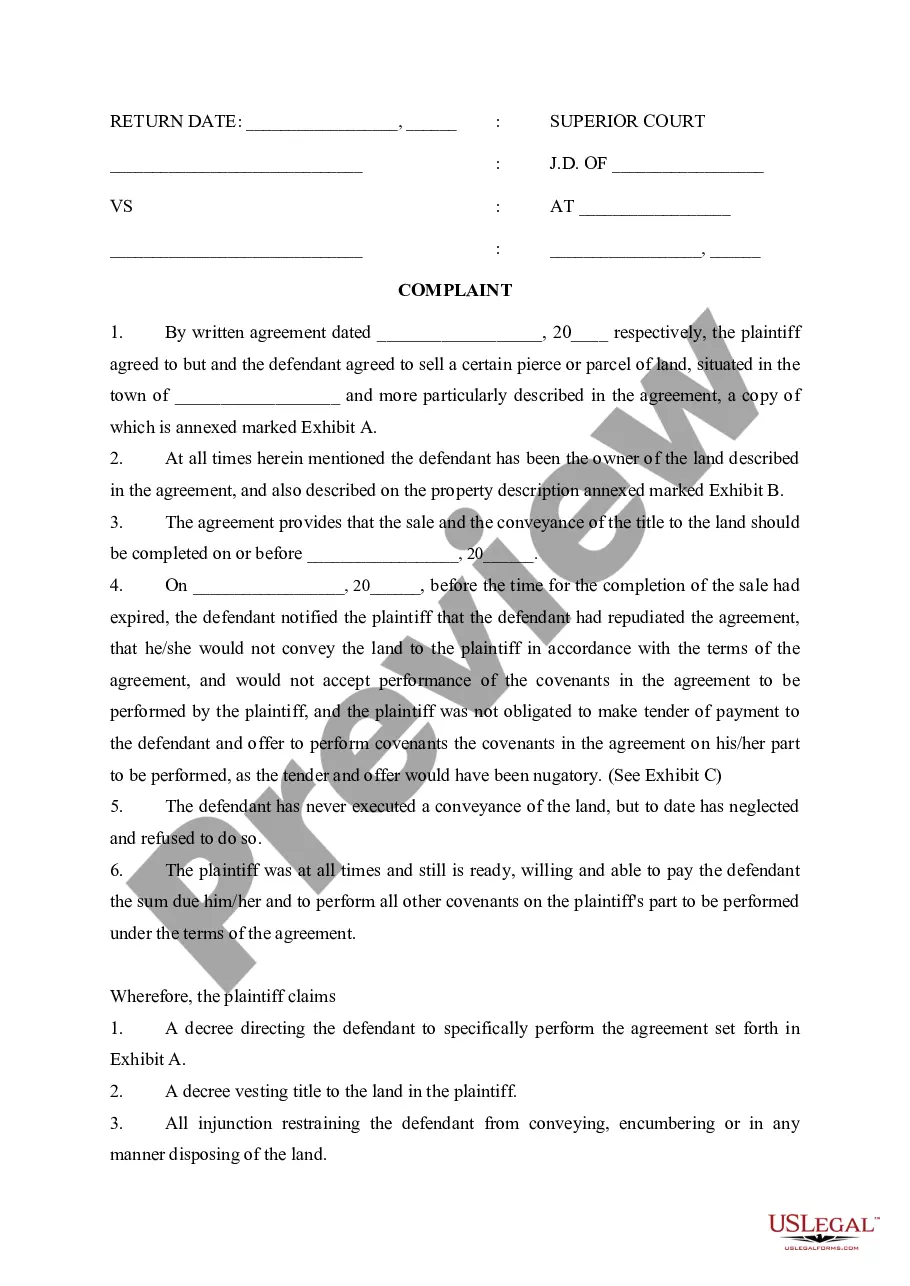
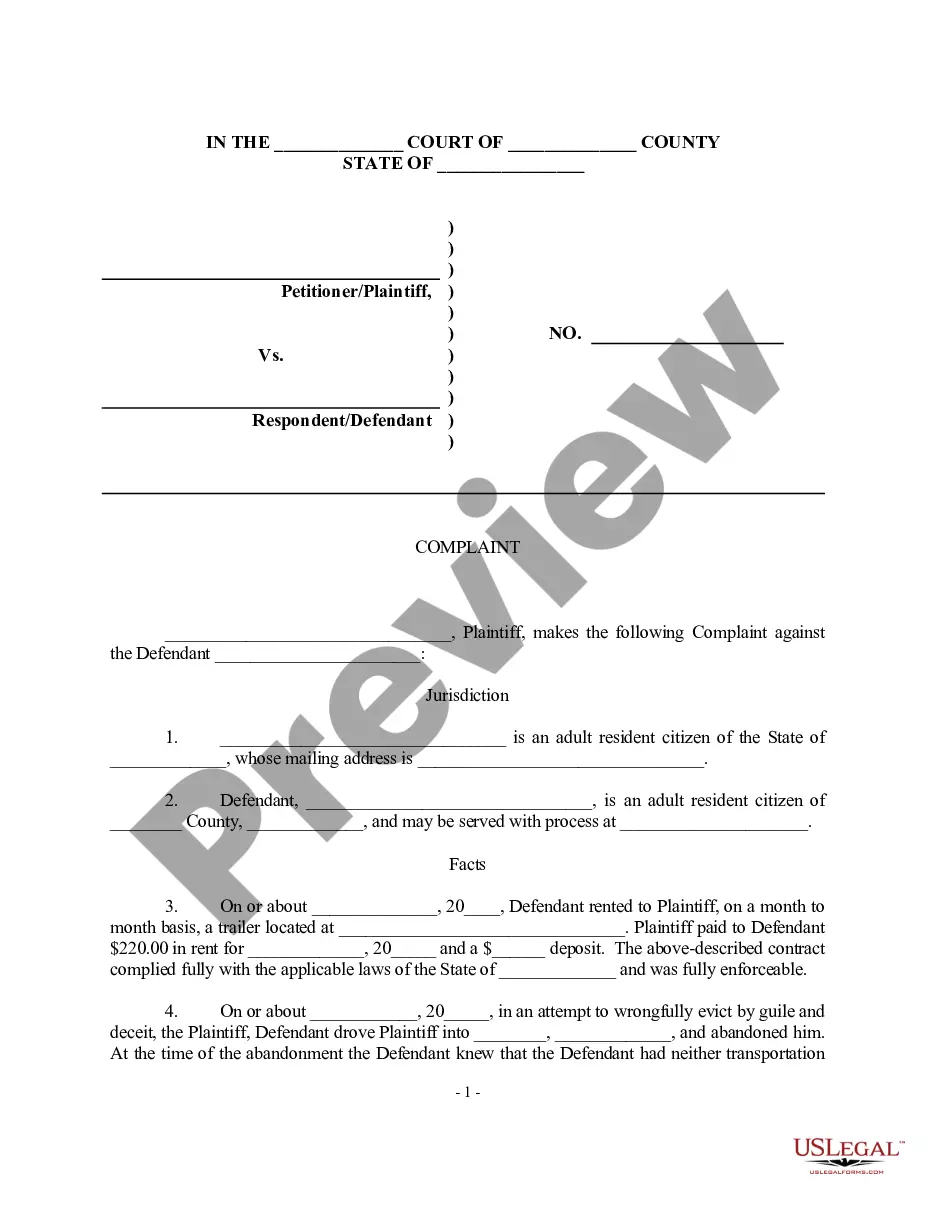
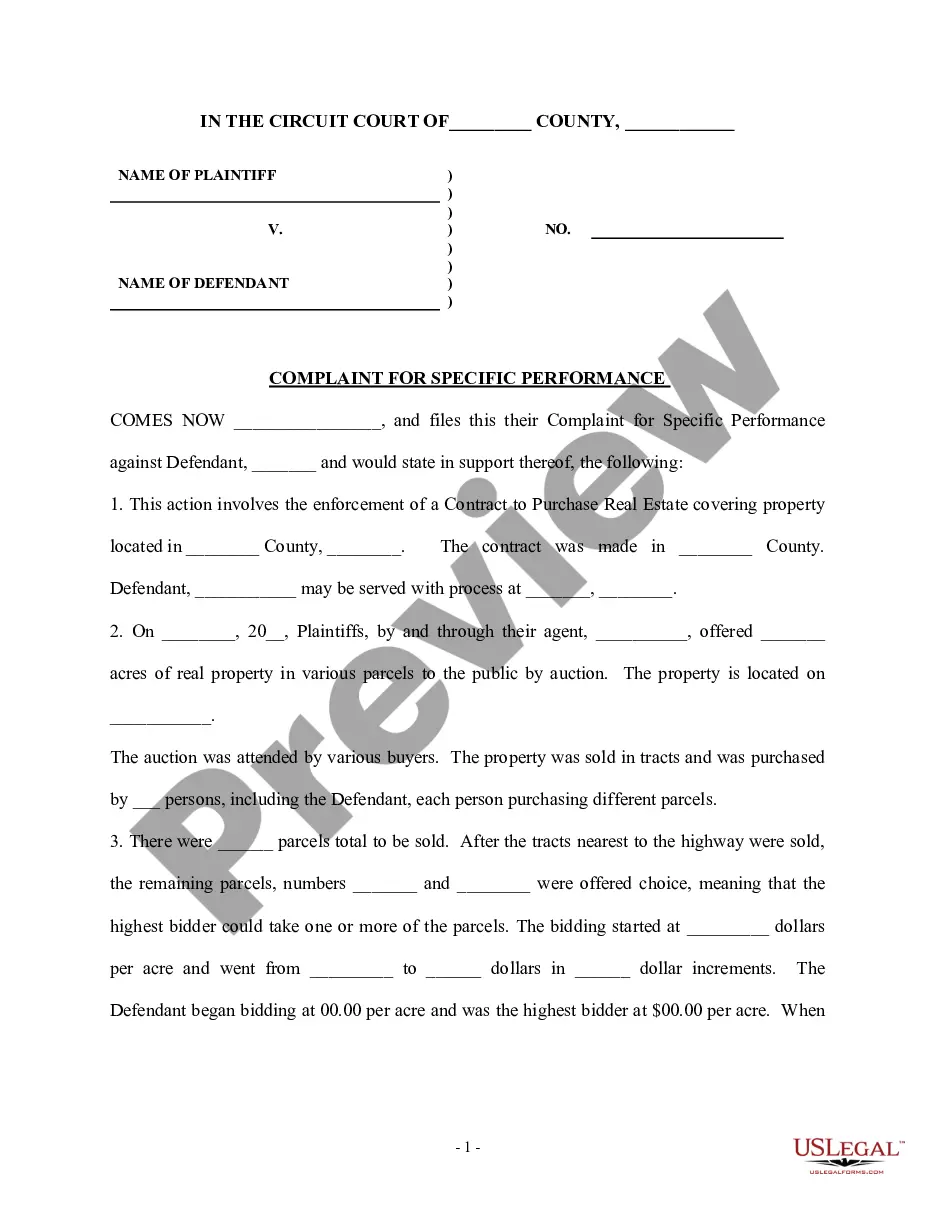
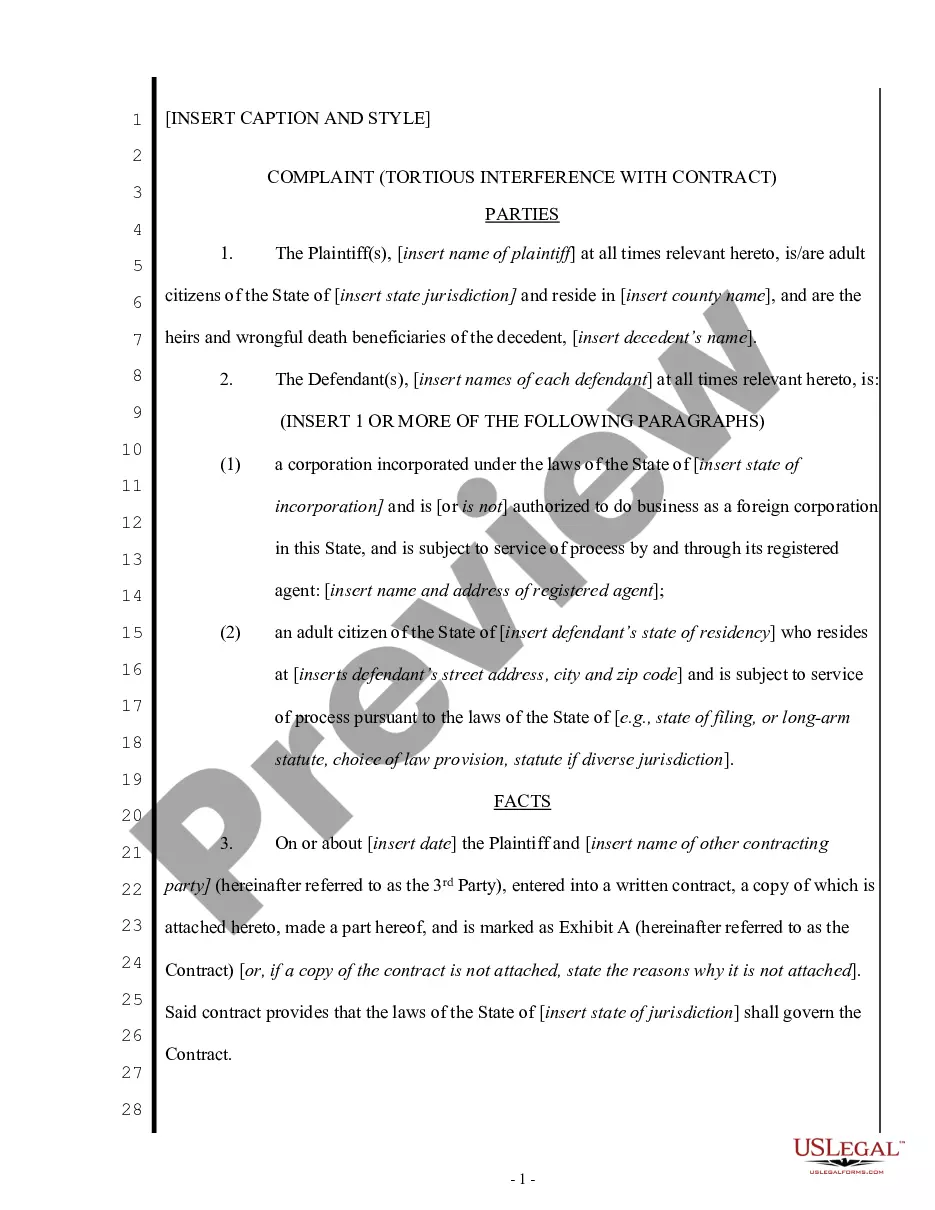
The Complaint regarding repudiating an agreement is a legal document used when one party to a contract indicates they will not fulfill their obligations. This form allows the aggrieved party to seek enforcement of the agreement, even if the other party has repudiated it. Unlike other contract dispute forms, this document specifically targets situations where the plaintiff remains willing to perform their part of the contract despite the other party's refusal.
Key components of this form
- Return date and court information
- Details of the original agreement including date and parties involved
- Notice of repudiation by the defendant
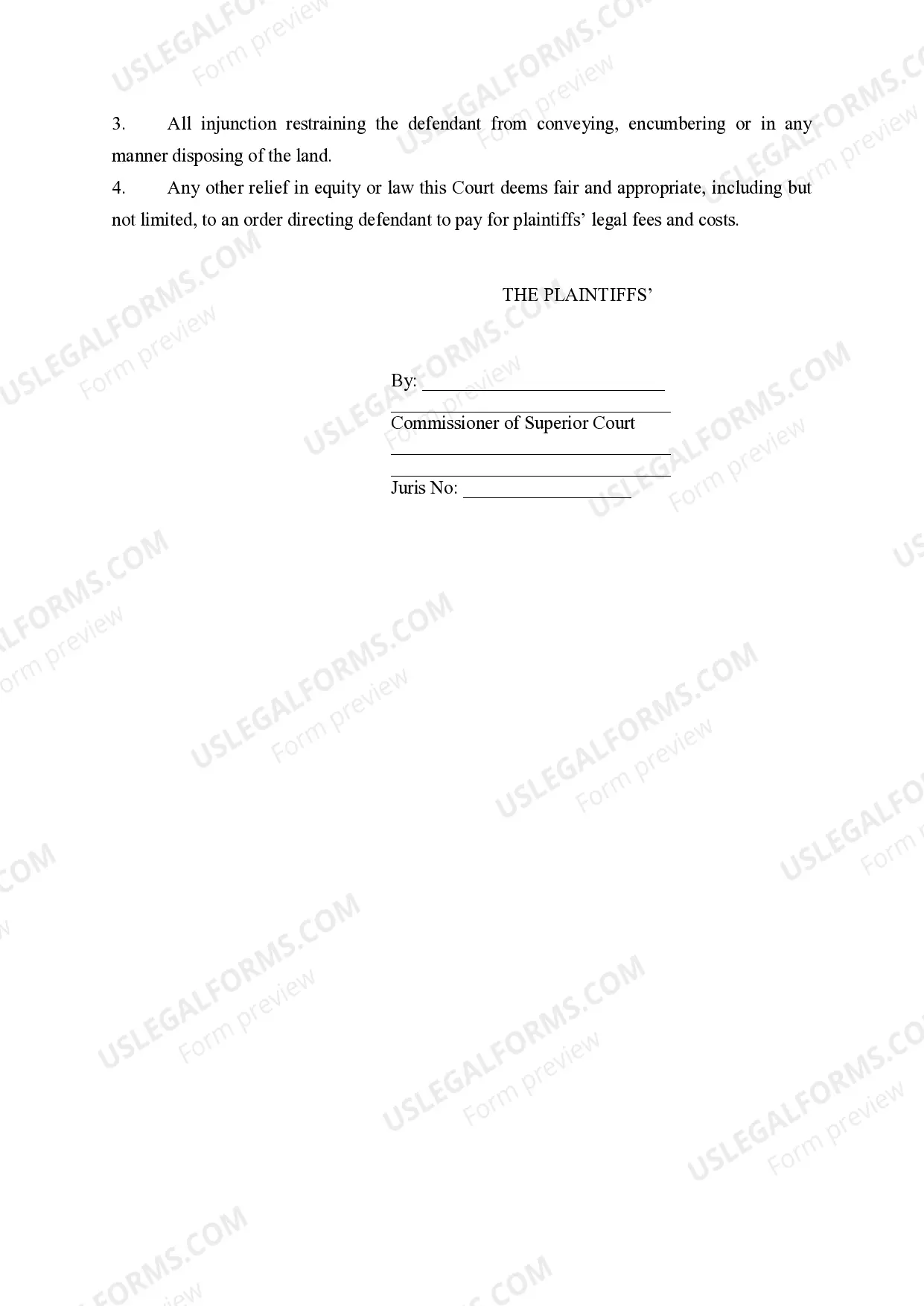
- Claims made by the plaintiff, including requests for specific performance and title vesting
- Exhibits attached for supporting documents




When this form is needed
This form is necessary when one party to a contract has declared that they will not perform their obligations, but the other party still wishes to proceed with the agreement. Common scenarios include real estate transactions where the seller refuses to sell the property or other contract breaches where willingness to fulfill contractual duties remains.
Who this form is for
- Individuals or parties involved in a contract dispute
- Aggrieved parties seeking to enforce a contract after another party has repudiated it
- Business owners needing to address contract renegotiations or terminations
How to complete this form
- Identify the parties involved and fill in their names and addresses.
- Specify the details of the property or agreement, including any exhibit references.
- Enter the date of the original agreement and the date of repudiation.
- Outline the plaintiff's claims and desired outcomes clearly.
- Sign the document and include any necessary attachments or exhibits.
Does this document require notarization?
This form does not typically require notarization unless specified by local law. However, it is advisable to check your local jurisdiction for specific requirements regarding notarization.
Get your form ready online
Our built-in tools help you complete, sign, share, and store your documents in one place.
Make edits, fill in missing information, and update formatting in US Legal Forms—just like you would in MS Word.
Download a copy, print it, send it by email, or mail it via USPS—whatever works best for your next step.
Sign and collect signatures with our SignNow integration. Send to multiple recipients, set reminders, and more. Go Premium to unlock E-Sign.
If this form requires notarization, complete it online through a secure video call—no need to meet a notary in person or wait for an appointment.
We protect your documents and personal data by following strict security and privacy standards.

Make edits, fill in missing information, and update formatting in US Legal Forms—just like you would in MS Word.

Download a copy, print it, send it by email, or mail it via USPS—whatever works best for your next step.

Sign and collect signatures with our SignNow integration. Send to multiple recipients, set reminders, and more. Go Premium to unlock E-Sign.

If this form requires notarization, complete it online through a secure video call—no need to meet a notary in person or wait for an appointment.

We protect your documents and personal data by following strict security and privacy standards.
Avoid these common issues
- Failing to attach supporting documents as exhibits.
- Not properly identifying all parties to the agreement.
- Leaving important dates blank or incorrectly filled in.
- Neglecting to sign the document or submit it within the required timeframe.
Why use this form online
- Convenient access to forms that can be downloaded and completed at your own pace.
- Editability allows users to customize the form to their specific situation.
- Reliability, with documents drafted by licensed attorneys to ensure legal compliance.
Looking for another form?


Form popularity
FAQ
The statute of limitations for debt collection in Connecticut is usually six years. If you face issues related to unpaid debts, be mindful of this timeframe. Submitting a Connecticut Complaint regarding Repudiating an Agreement may be an effective approach to resolving disputes related to debt collection.
In Connecticut, verbal contracts can be binding, but proving their terms and conditions may present challenges. A Connecticut Complaint regarding Repudiating an Agreement can arise if one party does not honor a verbal promise. Always consider documenting agreements to avoid misunderstandings and disputes.
Filing a consumer complaint in Connecticut involves contacting the appropriate agency, such as the Connecticut Department of Consumer Protection. You can also use online platforms like uslegalforms to streamline your process. Submitting a Connecticut Complaint regarding Repudiating an Agreement may help address your concerns effectively.
After a breach of contract, you generally have six years to file a lawsuit in Connecticut. This applies to cases involving a Connecticut Complaint regarding Repudiating an Agreement. It is essential to act promptly, as delays can weaken your position and may affect your legal recourse.
In Connecticut, the statute of limitations for civil actions typically ranges from two to six years, depending on the nature of the claim. For a Connecticut Complaint regarding Repudiating an Agreement, you usually have six years to file a lawsuit. This timeframe is crucial, so be sure to take action within these limits to protect your rights.
To complain about ethics in Connecticut, first, gather all relevant information regarding the situation. You can then submit a formal complaint to the Connecticut Ethics Commission, detailing the unethical behavior observed. Ensure your submission is thorough and includes any supporting documentation. If there's a repudiation of an agreement on your part, a Connecticut Complaint regarding Repudiating an Agreement can serve as a pivotal tool in addressing your concerns.
You may choose to file an ethics complaint when you observe unethical behavior that compromises integrity or public trust. Common scenarios include conflicts of interest, bribery, or violations of established ethical guidelines. Documenting instances and collecting supporting evidence is vital in these circumstances. A Connecticut Complaint regarding Repudiating an Agreement could strengthen your position if an agreement violation occurs.
An ethics complaint typically involves violations such as conflicts of interest, misuse of authority, or the failure to disclose relevant information. These complaints can be filed against public officials or organizations that do not adhere to established ethical standards. It is crucial to provide detailed evidence when submitting your complaint. If you find an agreement has been repudiated, filing a Connecticut Complaint regarding Repudiating an Agreement may be necessary.
Yes, the Ethics Commission in Connecticut has the authority to investigate complaints related to unethical conduct. They review the submitted documentation and determine if further investigation is warranted. Their role ensures accountability and ethical practices among public officials. Should you feel there was a repudiation of an agreement, consider filing a Connecticut Complaint regarding Repudiating an Agreement.
When you file an ethics complaint in Connecticut, it is essential to cite specific instances of unethical behavior. Include the relevant laws or regulations that the individual or organization violated. Clear and concise details bolster the credibility of your claim, making it easier for the authorities to investigate. A strong Connecticut Complaint regarding Repudiating an Agreement can enhance your case.