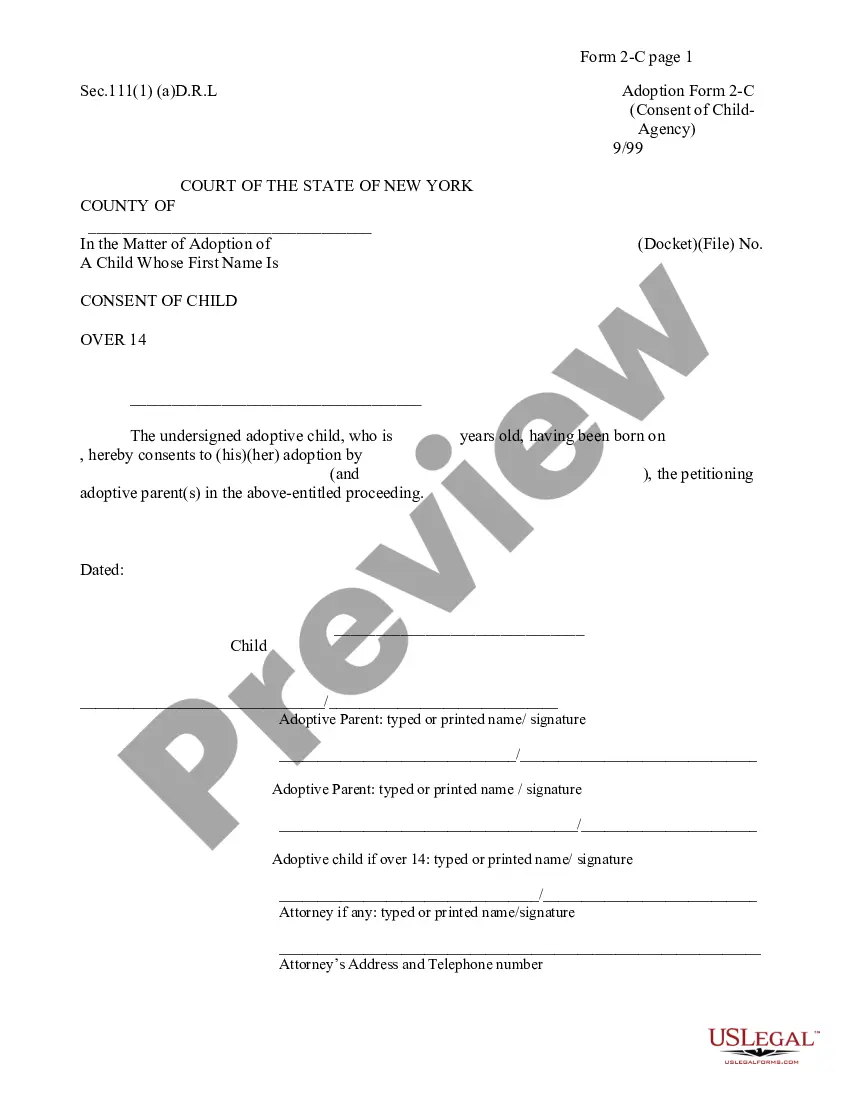
Colorado Last Will and Testament for a Widow or Widower with Adult Children

Understanding this form
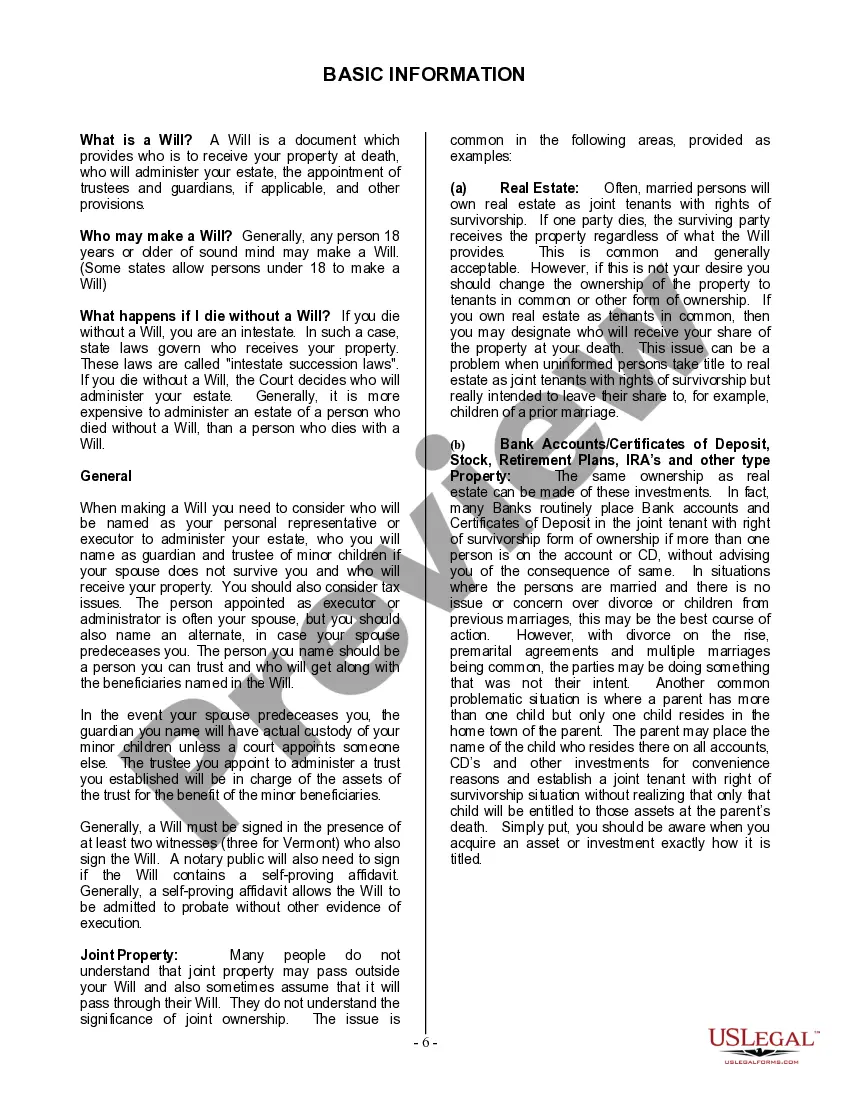
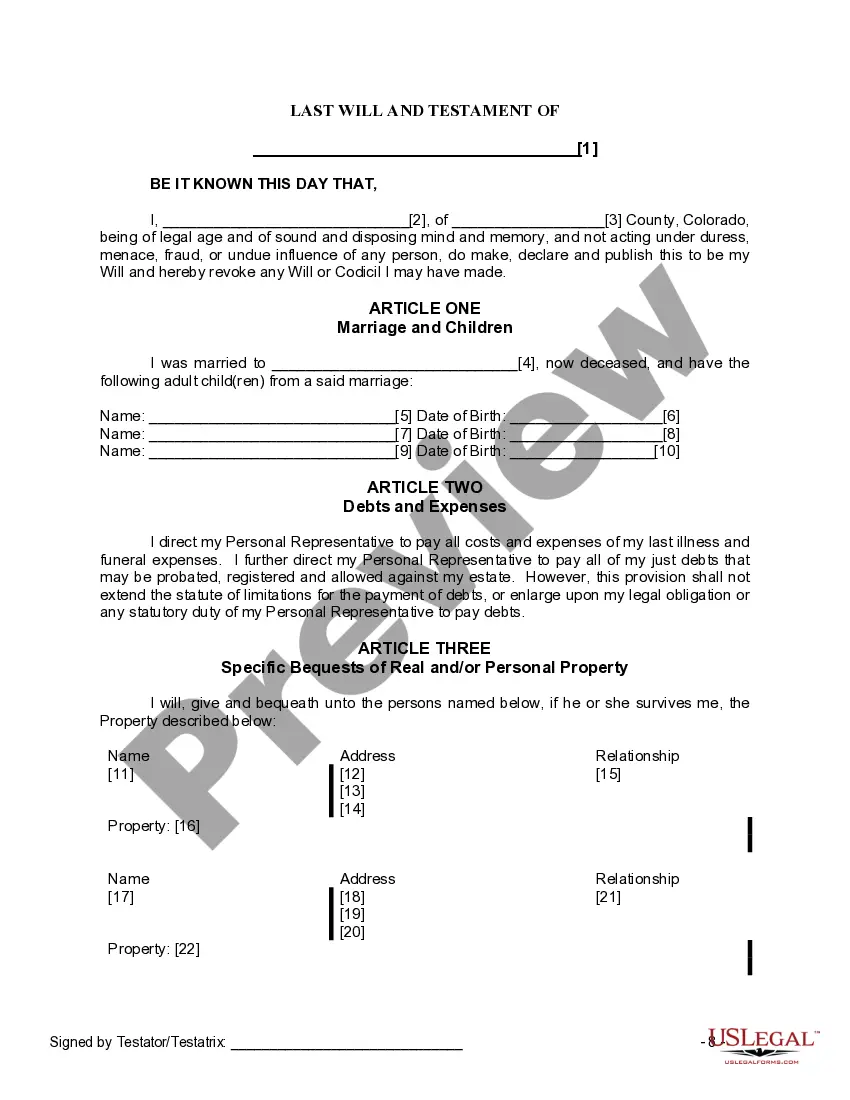
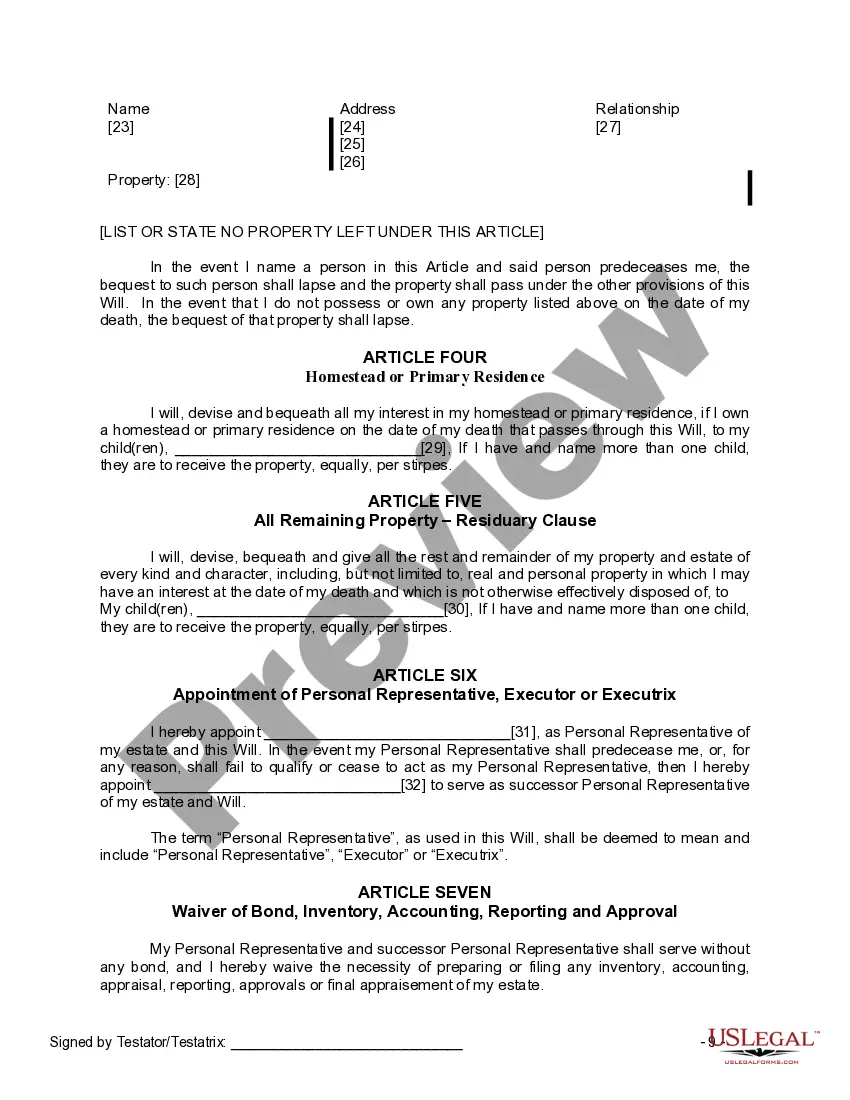
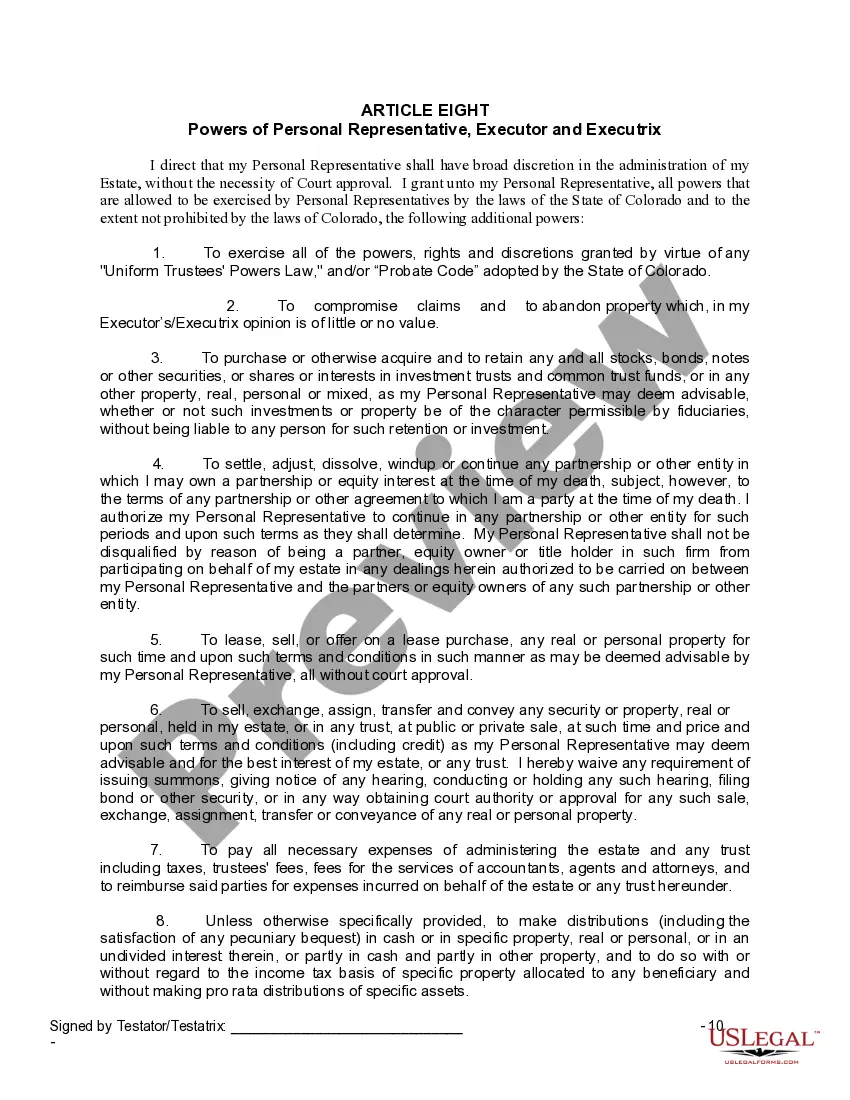
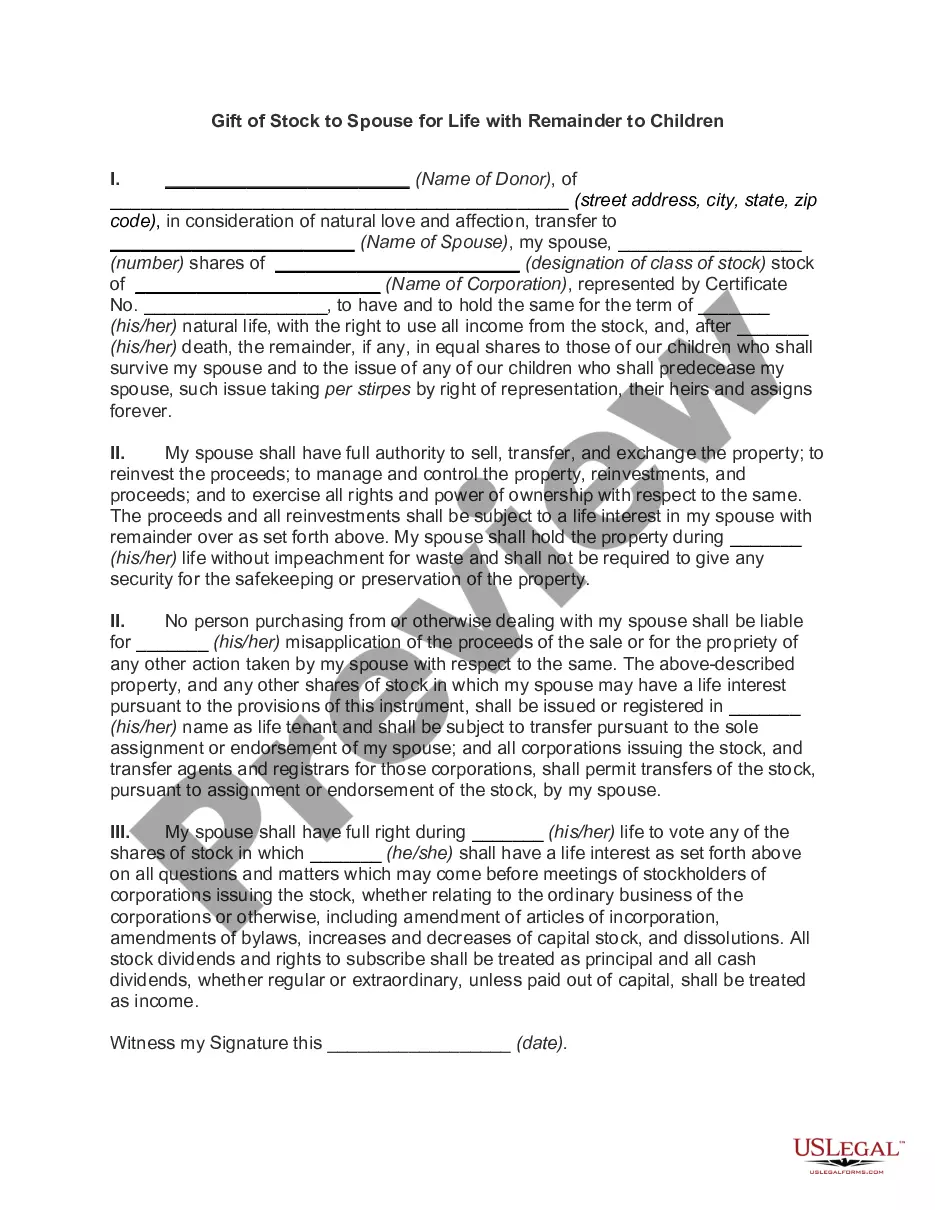
The Last Will and Testament for a Widow or Widower with Adult Children is a legal document that establishes how a deceased person's estate will be managed and distributed. This form is specifically designed for individuals who are widowed or widowered and have adult children. It provides guidance on appointing a personal representative, detailing property bequests, and addressing various estate provisions, making it distinct from a standard Will.
Form components explained
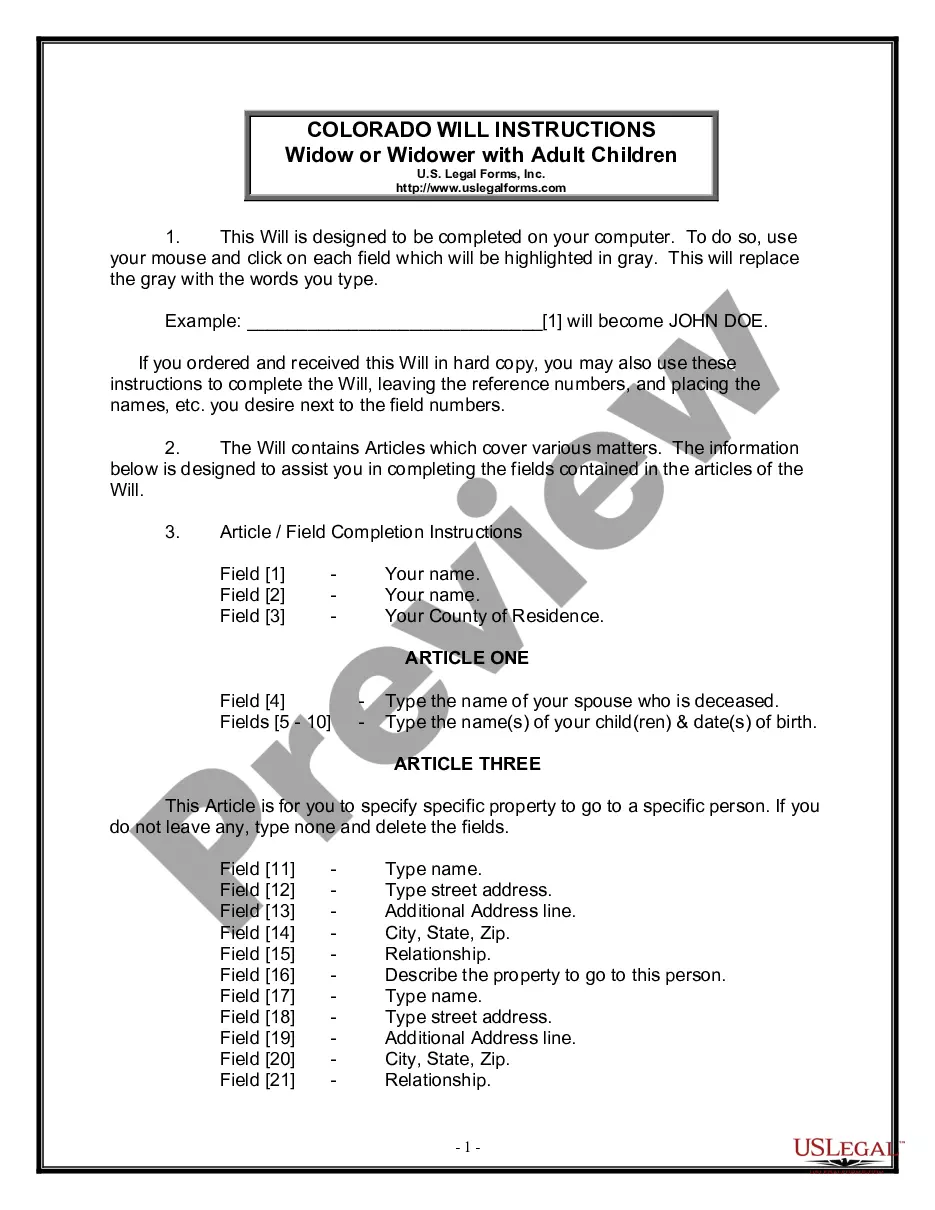
- Personal information: Includes the testator's name, county of residence, and details about the deceased spouse.
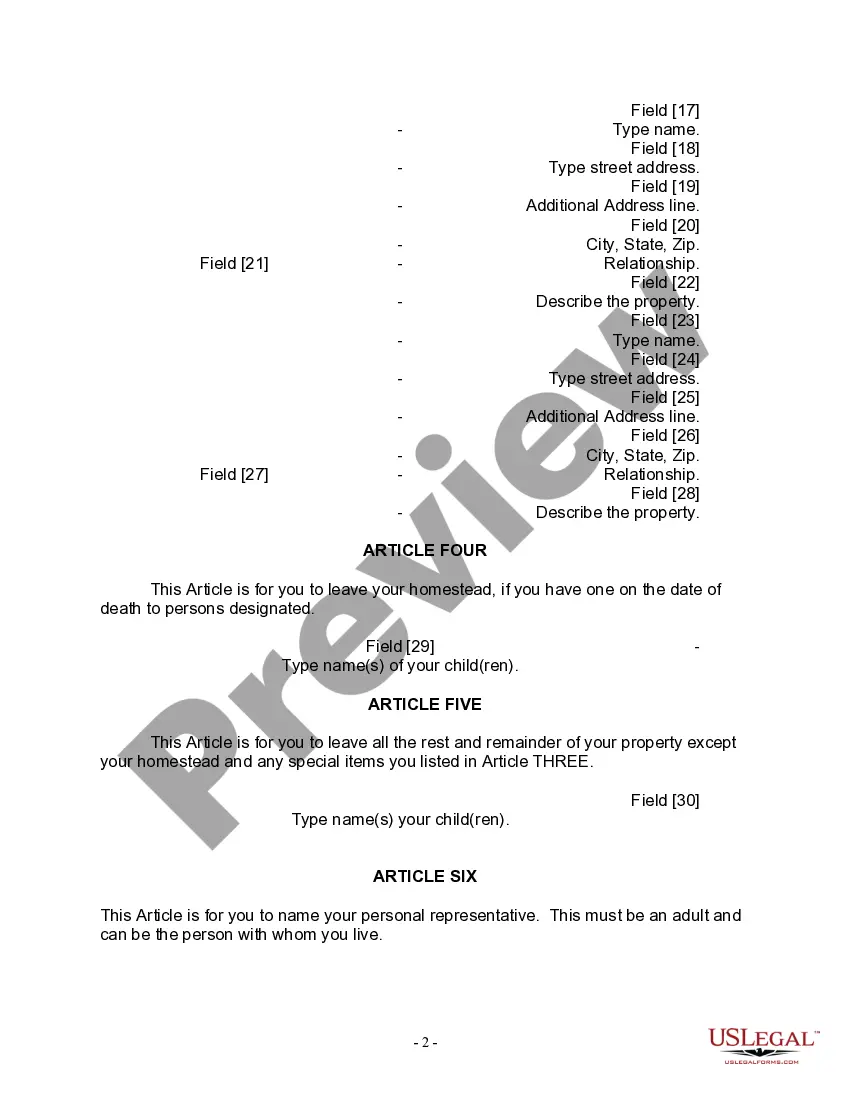
- Bequests: Specifies property distribution among adult children and any specific gifts to designated individuals.
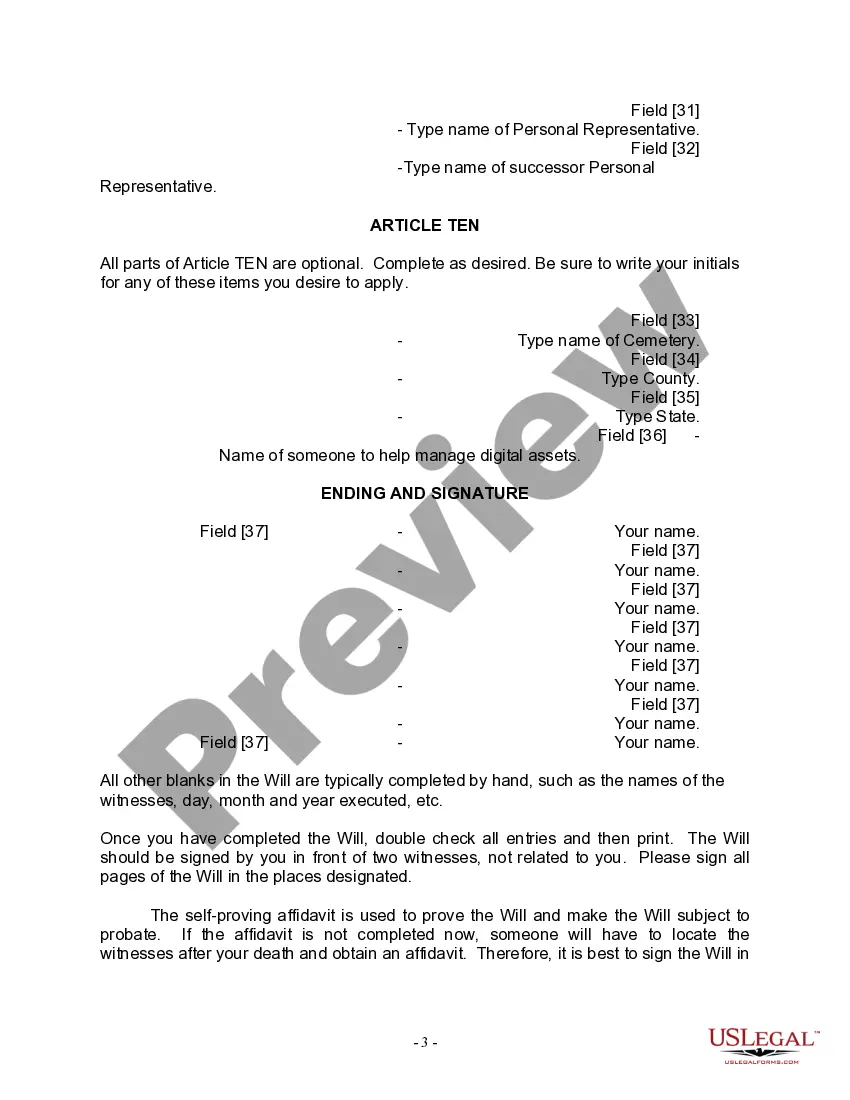
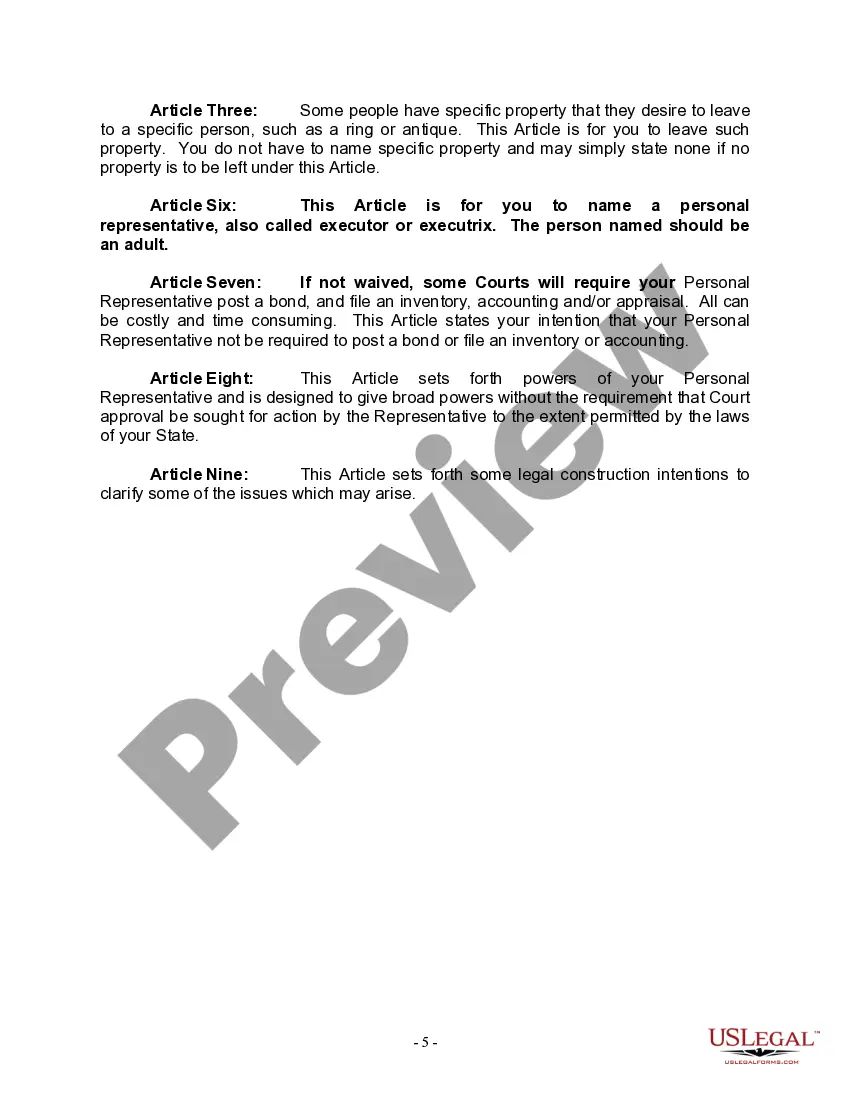
- Appointment of Personal Representative: Designates an adult to manage the estate's affairs.
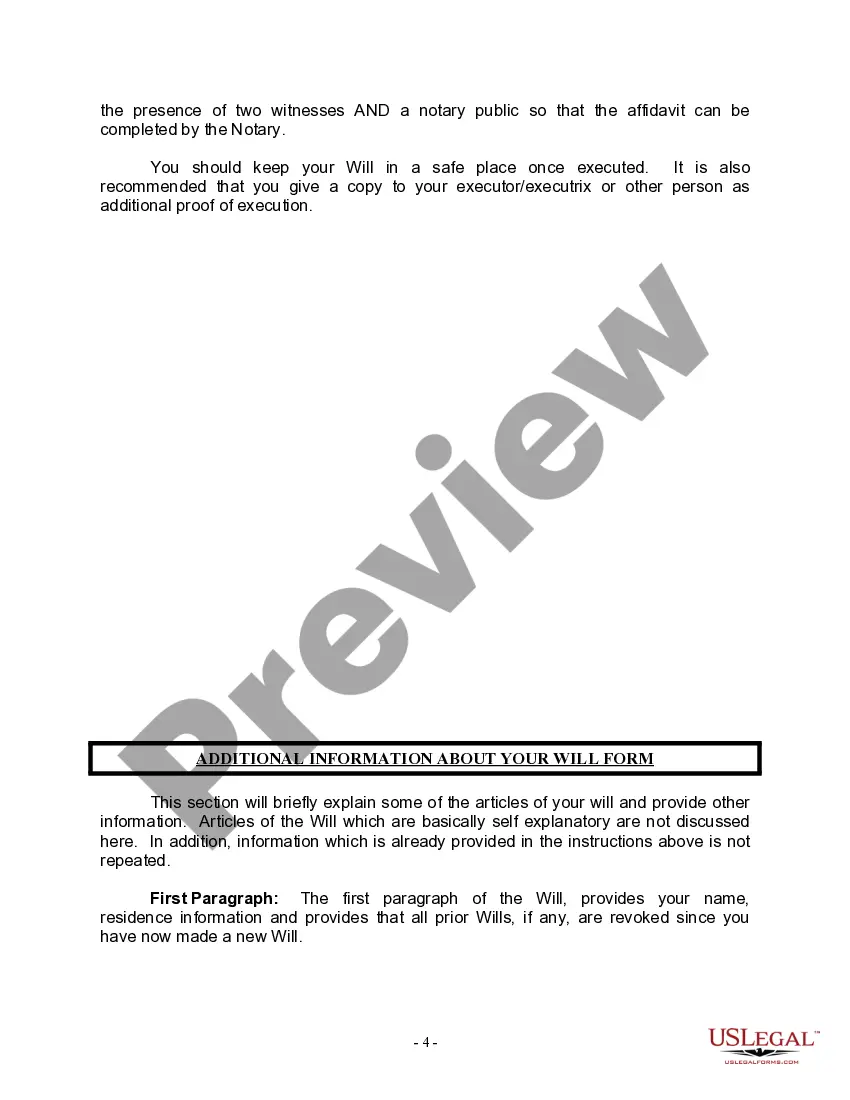
- Witness requirements: Must be signed in the presence of two witnesses who are not beneficiaries.
- Self-proving affidavit: A notarized statement that validates the Will, streamlined for probate.





Common use cases
This form should be used when a widow or widower wishes to legally document their final wishes regarding property distribution and the management of their estate. It's particularly important for those with adult children to ensure their inheritance is clearly defined and to avoid potential disputes among heirs.
Who needs this form
This form is intended for:
- Widows and widowers with adult children seeking to create or update their Last Will and Testament.
- Individuals who want to explicitly outline how their assets will be handled and distributed after death.
- Anyone wanting to appoint a trusted personal representative for their estate.
How to prepare this document
To complete this form, follow these steps:
- Identify yourself as the testator, providing your name and county of residence.
- Enter the name of your deceased spouse and your adult children, including their dates of birth.
- Specify any specific property bequests or indicate if no items are to be given under that section.
- Appoint your personal representative and any successor, ensuring they are adults you trust.
- Sign the Will in the presence of two witnesses, ensuring they also sign.
- If applicable, complete the self-proving affidavit with a notary public to facilitate probate.
Notarization guidance
Yes, this form must be notarized to be legally valid. Completing the self-proving affidavit with a notary public at the time of signing will streamline the probate process, eliminating the need for witnesses after your death.
Get your form ready online
Our built-in tools help you complete, sign, share, and store your documents in one place.
Make edits, fill in missing information, and update formatting in US Legal Forms—just like you would in MS Word.
Download a copy, print it, send it by email, or mail it via USPS—whatever works best for your next step.
Sign and collect signatures with our SignNow integration. Send to multiple recipients, set reminders, and more. Go Premium to unlock E-Sign.
If this form requires notarization, complete it online through a secure video call—no need to meet a notary in person or wait for an appointment.
We protect your documents and personal data by following strict security and privacy standards.

Make edits, fill in missing information, and update formatting in US Legal Forms—just like you would in MS Word.

Download a copy, print it, send it by email, or mail it via USPS—whatever works best for your next step.

Sign and collect signatures with our SignNow integration. Send to multiple recipients, set reminders, and more. Go Premium to unlock E-Sign.

If this form requires notarization, complete it online through a secure video call—no need to meet a notary in person or wait for an appointment.

We protect your documents and personal data by following strict security and privacy standards.
Common mistakes
- Failing to have the Will signed in front of two witnesses, which could invalidate the document.
- Not including a self-proving affidavit when required, leading to complications in probate.
- Overlooking the need to update the Will after significant life changes, such as remarriage or relocation.
Why use this form online
- You can create the Will at your convenience, on your own schedule.
- The form allows for easy edits and customization to fit your unique circumstances.
- Access to attorney-drafted documents ensures legal compliance and reliability.
Looking for another form?

Form popularity
FAQ
Whether you consider yourself married as a widow, widower, or widowed spouse is a matter of personal preference. Legally you are no longer married after the death of your spouse.A person who's lost their spouse may have made a vow to stay married for the rest of their life even after their spouse dies.
As no law prohibits a dead man from marrying his sister-in-law, it must be legal, at least technically.
When referring to a woman whose marital status is unknown, it is nearly always safe to use "Ms." It is also nearly always safe to use "Ms." if the woman has been divorced or widowed and it is unknown whether she wants to remain a "Mrs." or revert to "Miss."
Whether you consider yourself married as a widow, widower, or widowed spouse is a matter of personal preference. Legally you are no longer married after the death of your spouse.A person who's lost their spouse may have made a vow to stay married for the rest of their life even after their spouse dies.
: a man who has lost his spouse or partner by death and usually has not remarried.
A widow is traditionally addressed as Mrs. John Jones, but if you feel the guest may not want to be addressed that way, it's completely okay to ask her how she prefers to be addressed. A divorced woman who has kept her married name should be addressed as you suggested -- Ms.
I'm so sorry to hear about your wife's passing. I know you're going through a lot right now. I am grieving Name right along with you. I was so sorry to hear that Name succumbed to her illness. Name was such a special person.
If her husband passes away, you should continue to address her as the First Lady. In addressing a letter or card, write, First Lady (married last name).
Historically, "Miss" has been the formal title for an unmarried woman. "Mrs.," on the other hand, refers to a married woman. "Ms." is a little trickier: It's used by and for both unmarried and married women.