Colorado Waiver and Release From Liability For Adult for Land for Parking
Description
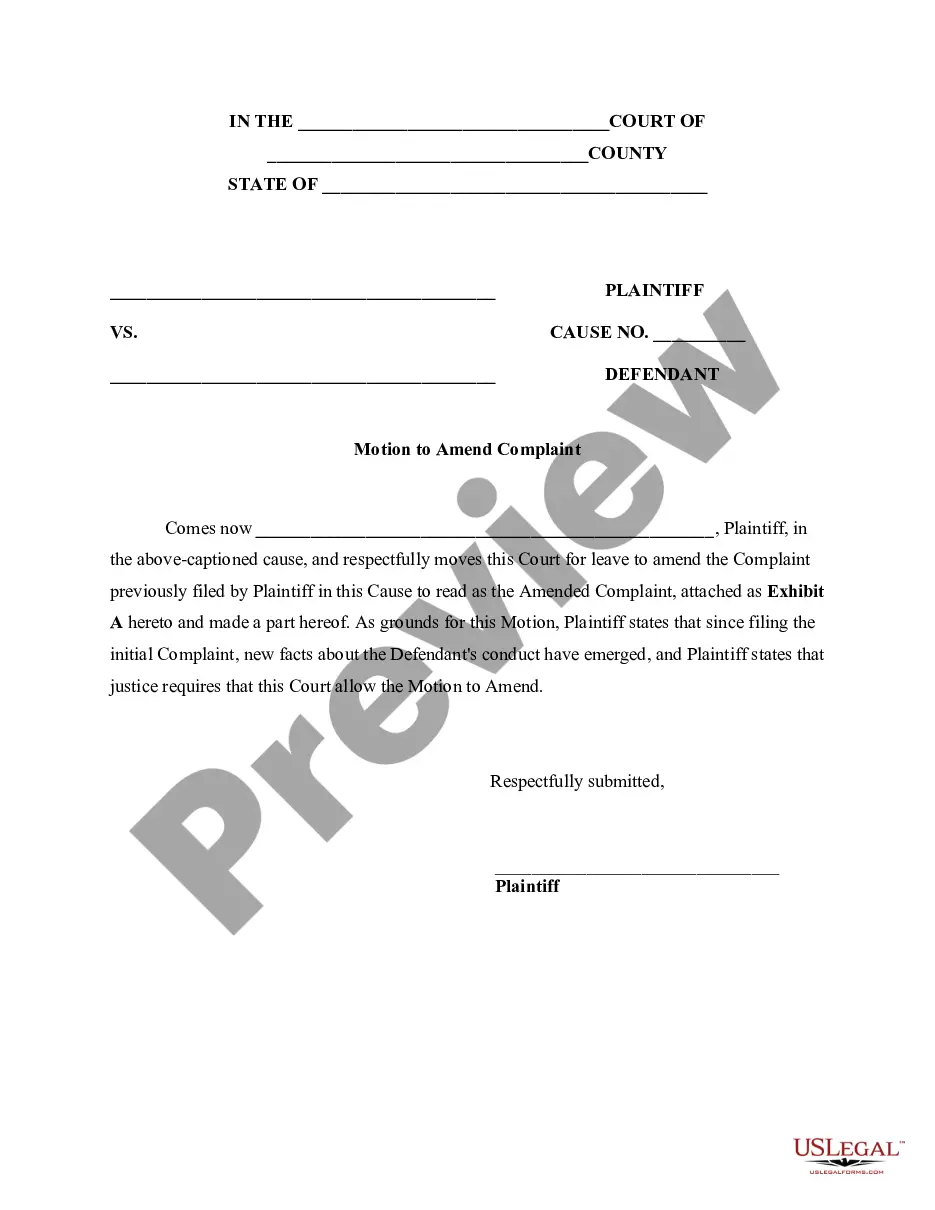
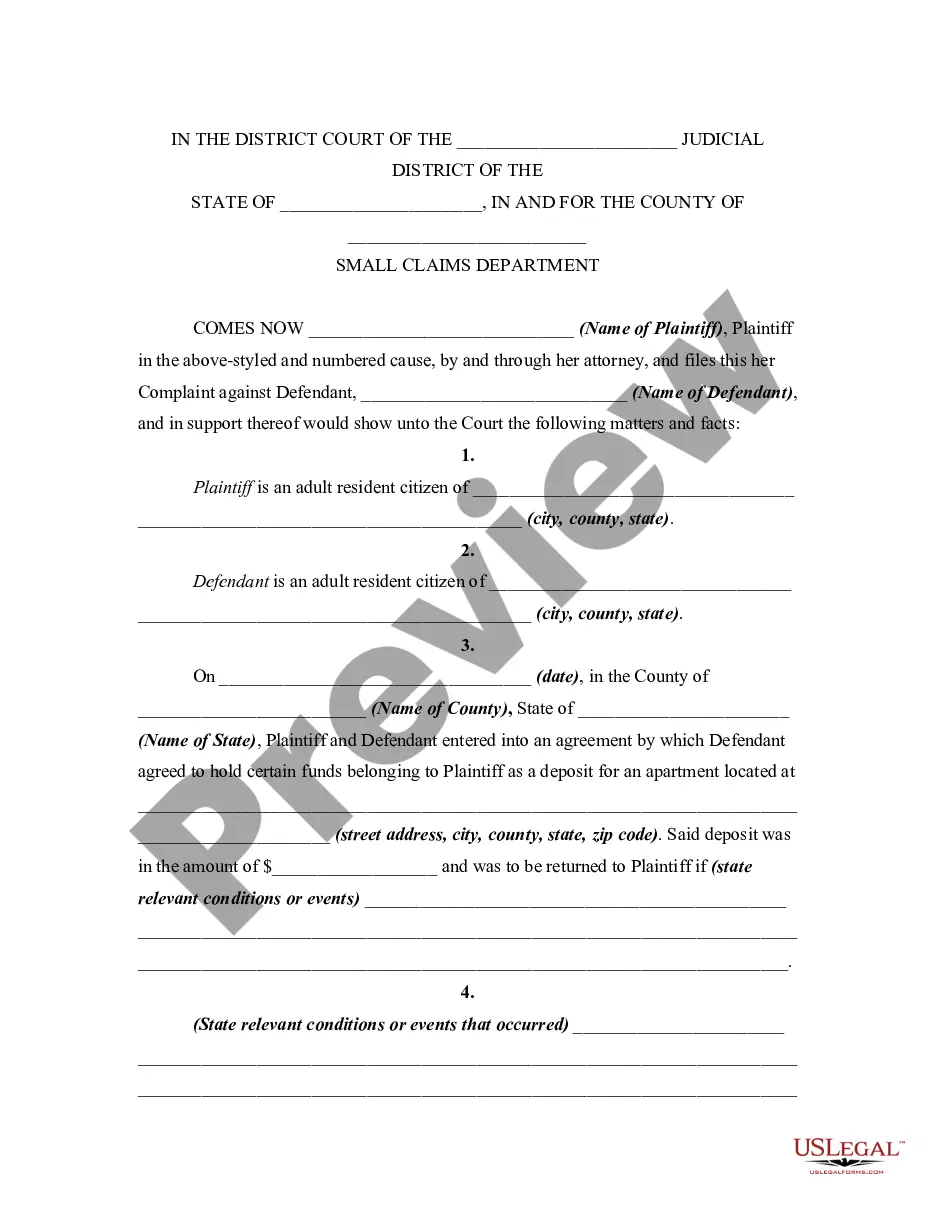
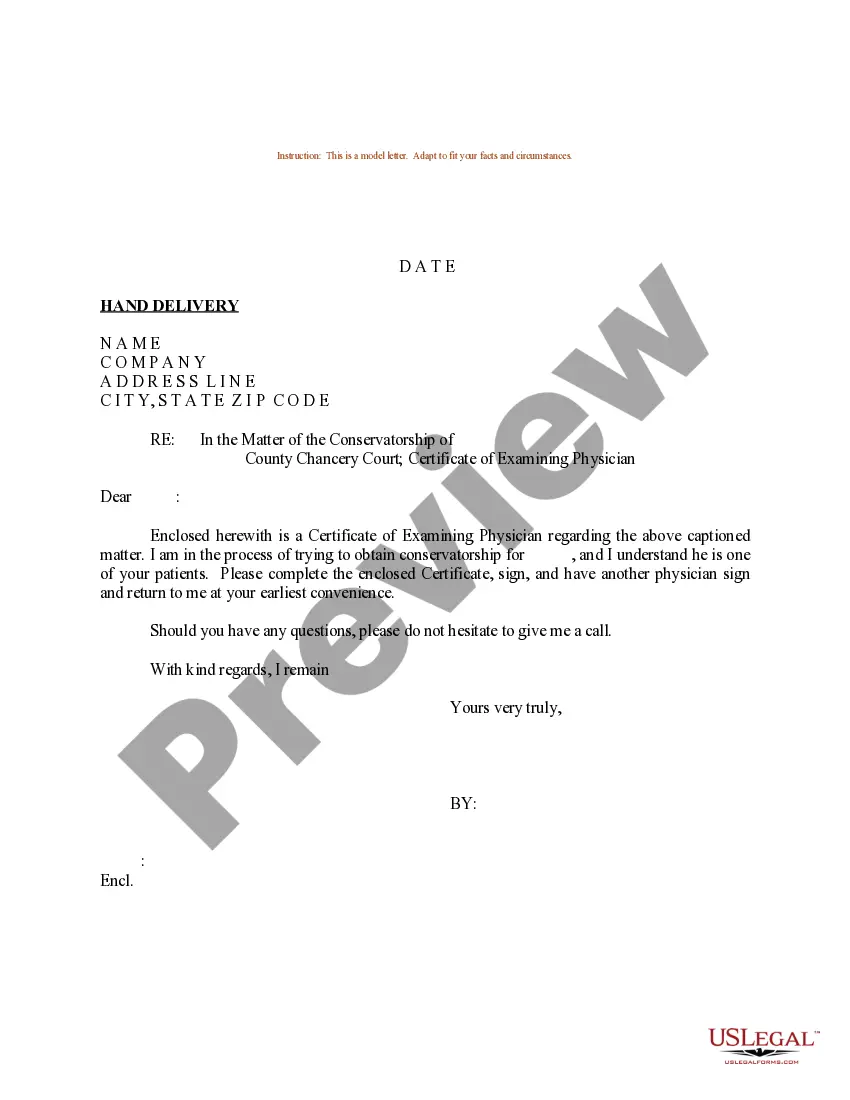
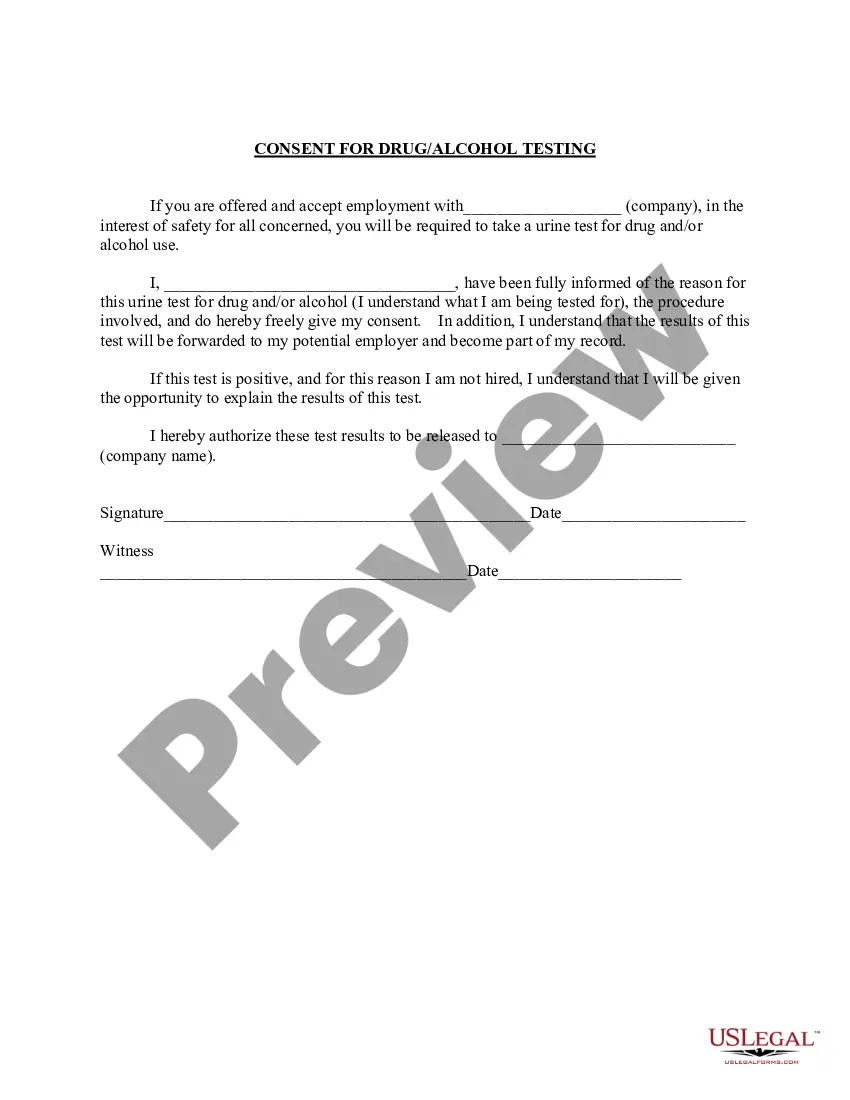
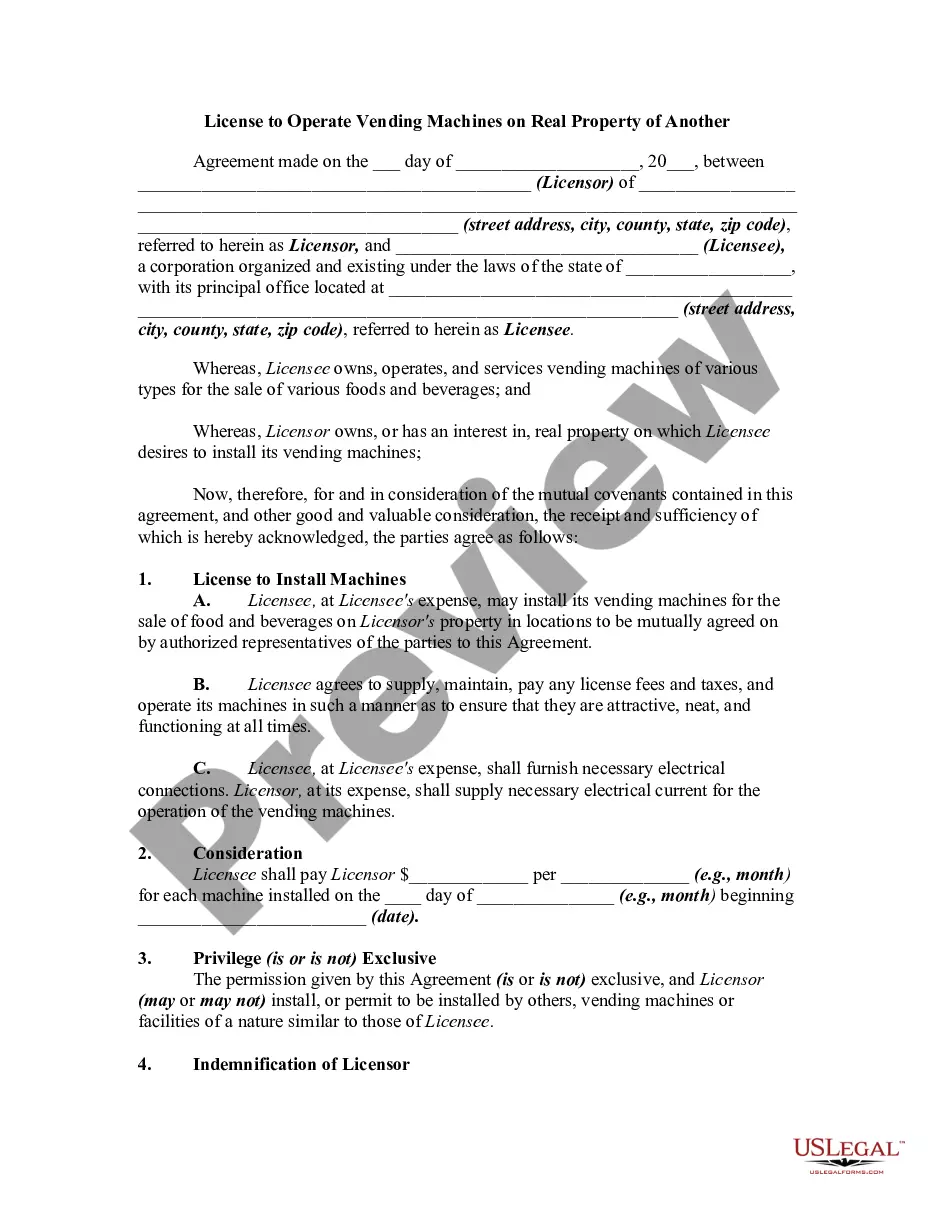
How to fill out Waiver And Release From Liability For Adult For Land For Parking?
Are you in a situation where you require documents for both business or personal purposes almost every time.
There are numerous legal document templates available online, but finding ones you can trust is not simple.
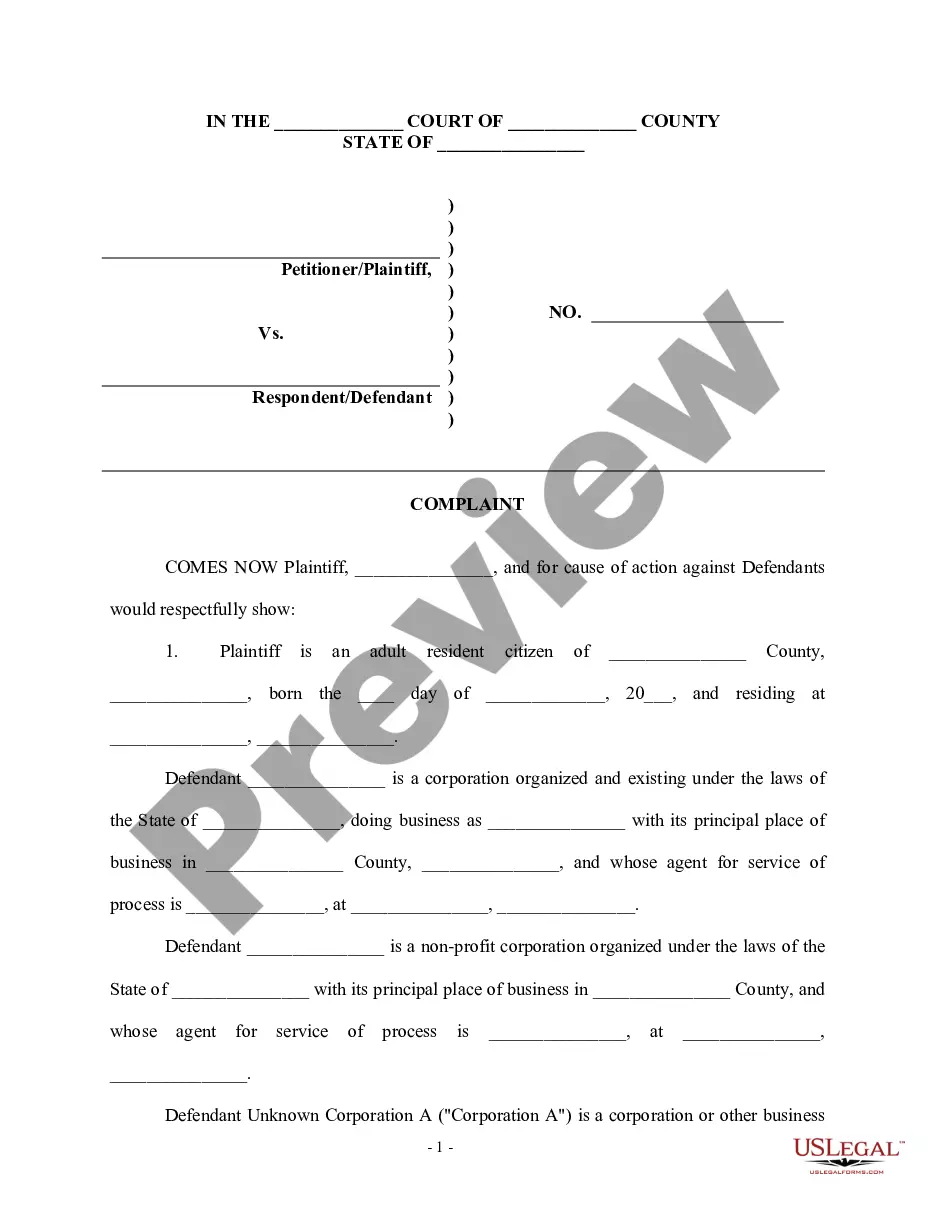
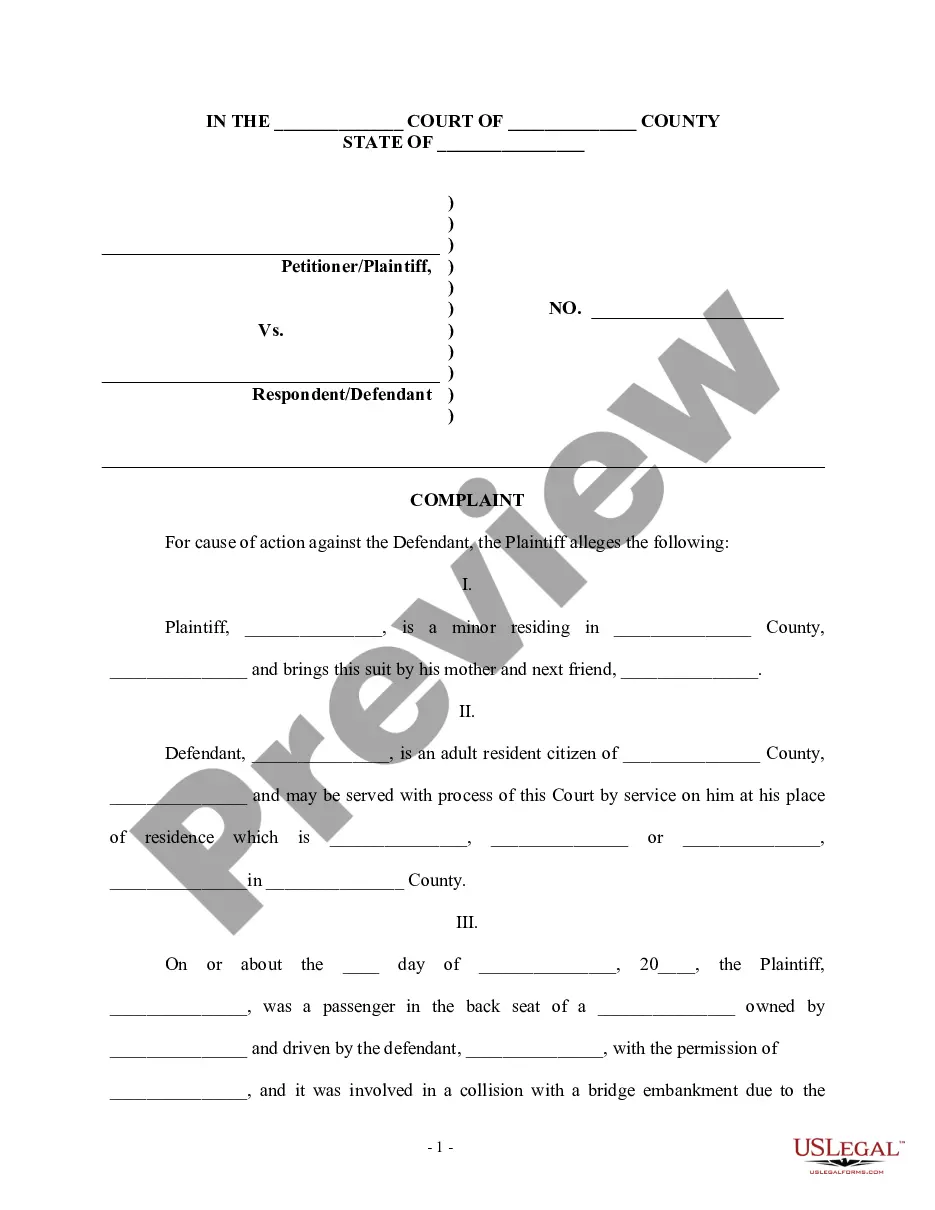
US Legal Forms offers thousands of template options, such as the Colorado Waiver and Release From Liability For Adult for Land for Parking, which are designed to comply with federal and state regulations.
Avoid altering or removing any HTML tags. Only synonymize plain text outside of the HTML tags.
- If you are already acquainted with the US Legal Forms website and have an account, simply Log In.
- After that, you can download the Colorado Waiver and Release From Liability For Adult for Land for Parking template.
- If you do not have an account and wish to start using US Legal Forms, follow these steps.
- Locate the template you need and ensure it is for the correct city/region.
- Utilize the Review feature to inspect the form.
- Check the summary to confirm that you have selected the right template.
- If the template is not what you are looking for, use the Search box to find the one that suits your needs and requirements.
- If you find the correct template, click Acquire now.
- Choose the pricing plan you prefer, fill in the required information to create your account, and pay for the order using your PayPal or credit card.
- Select a convenient file format and download your copy.
- Find all of the document templates you have purchased in the My documents menu. You can obtain another copy of the Colorado Waiver and Release From Liability For Adult for Land for Parking anytime, if needed. Just follow the necessary template to download or print the document template.
- Utilize US Legal Forms, one of the largest collections of legal forms, to save time and avoid mistakes. The service provides properly crafted legal document templates that can be utilized for various purposes. Create an account on US Legal Forms and start making your life a bit easier.
Form popularity
FAQ
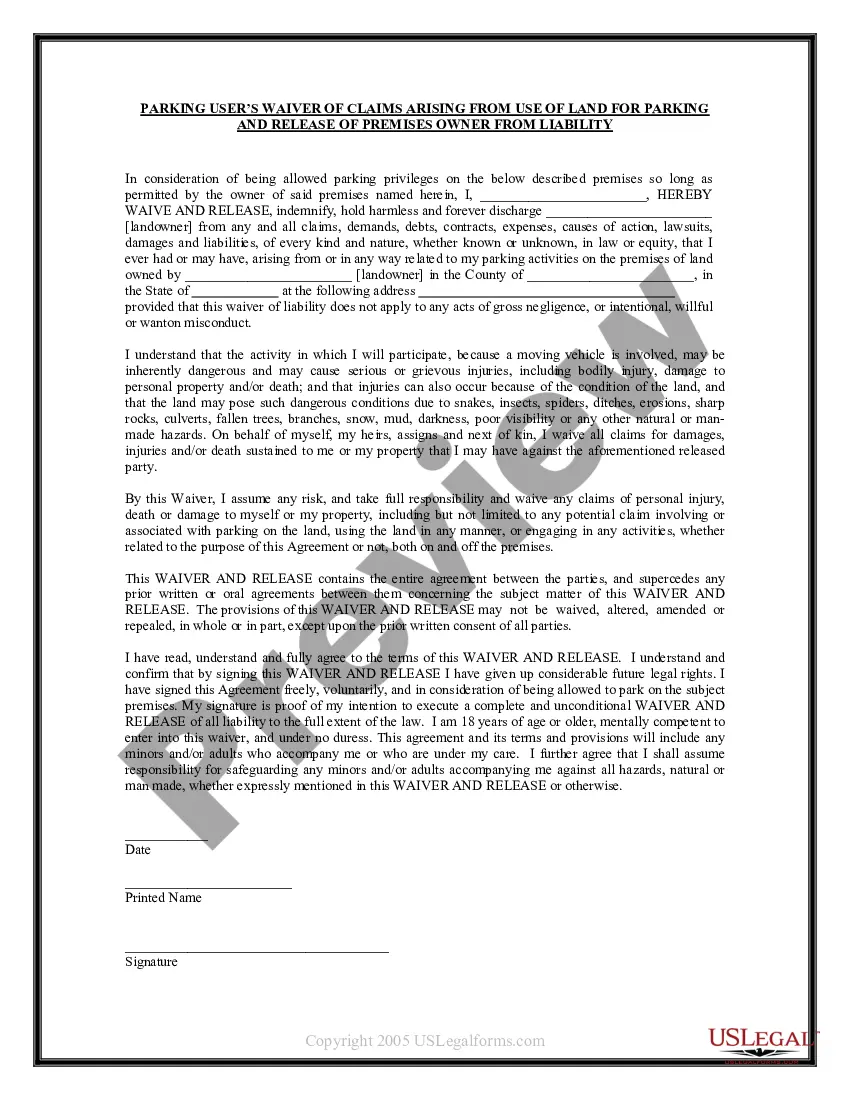
To write a release of liability waiver, start by defining the parties involved and the nature of the activity. Clearly outline the risks associated with the activity and include a statement that acknowledges the participant's understanding of these risks. Always use clear, concise language to avoid misunderstandings. For guidance and ready-to-use templates, you can visit US Legal Forms, where you can find the Colorado Waiver and Release From Liability For Adult for Land for Parking that suits your situation.
Yes, you can write your own Colorado Waiver and Release From Liability For Adult for Land for Parking. However, it's crucial to ensure that your waiver is clear, comprehensive, and legally binding. Consider including specific details about the activity, the risks involved, and the rights you are waiving. For a more reliable and professional document, you may want to use platforms like US Legal Forms, which provide templates tailored to your needs.
Liability waivers can be enforceable in Colorado, provided they are drafted correctly and meet specific legal standards. The Colorado Waiver and Release From Liability For Adult for Land for Parking must be clear and unambiguous, allowing participants to understand the risks they are assuming. Courts generally uphold these waivers unless they are deemed unconscionable or not adequately communicated. Therefore, using a trusted service like USLegalForms can help you create an effective waiver that stands up in court.
Yes, you can write your own liability waiver in Colorado, but it is crucial to ensure that it meets all legal requirements. When creating your own Colorado Waiver and Release From Liability For Adult for Land for Parking, you should clearly outline the potential risks and include specific language that indicates participants understand and accept these risks. However, it's advisable to consult a legal professional or use a reputable platform like USLegalForms to ensure your waiver is valid and enforceable. This helps you avoid any pitfalls that could arise from improper wording.
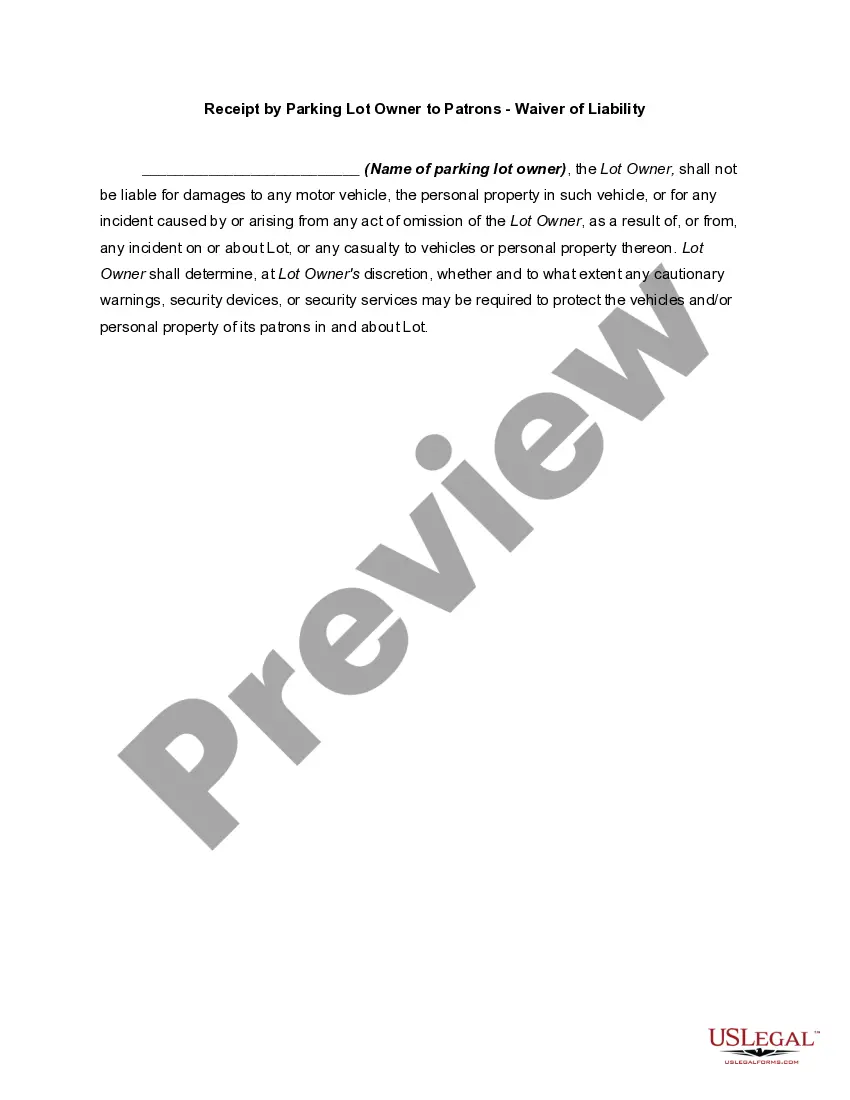
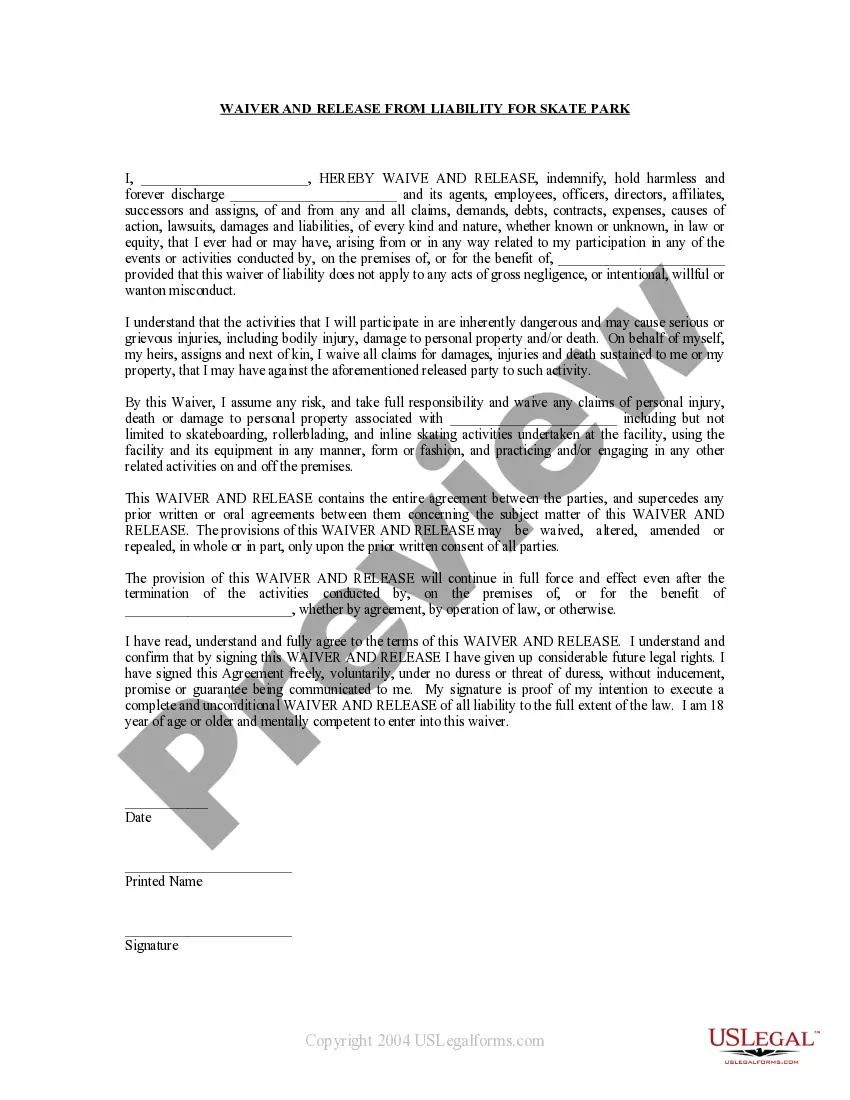
A release of liability form in Colorado serves as a legal document that protects property owners from claims related to injuries or damages that may occur on their land. Specifically, the Colorado Waiver and Release From Liability For Adult for Land for Parking outlines the risks involved and ensures participants acknowledge these risks. By signing this form, individuals agree not to hold the property owner responsible for accidents that may happen while using the parking area. This form is essential for both landowners and users to understand their rights and responsibilities.
A waiver is a legal agreement the primary purpose of which is to let you or another party modify or relinquish a right, privilege, or claim. The agreement can be a separate document on its own, such as if you sign a waiver form, or added to a contract as a waiver clause.
A waiver is a demonstration, usually in written form, of a party's intent to relinquish a legal right or claim. The key point to note is that the relinquishment is voluntary, and can apply to a variety of legal situations. Essentially, a waiver removes a real or potential liability for the other party in the agreement.
A liability waiver, or release waiver, is a legal document that a company or organization requires members of the public to sign in order to protect their organization from being sued if you sustain an injury.
A liability waiver, or release waiver, is a legal document that a company or organization requires members of the public to sign in order to protect their organization from being sued if you sustain an injury.
To sum it up, customers can still sue business owners even when they've signed a waiver to use the business.