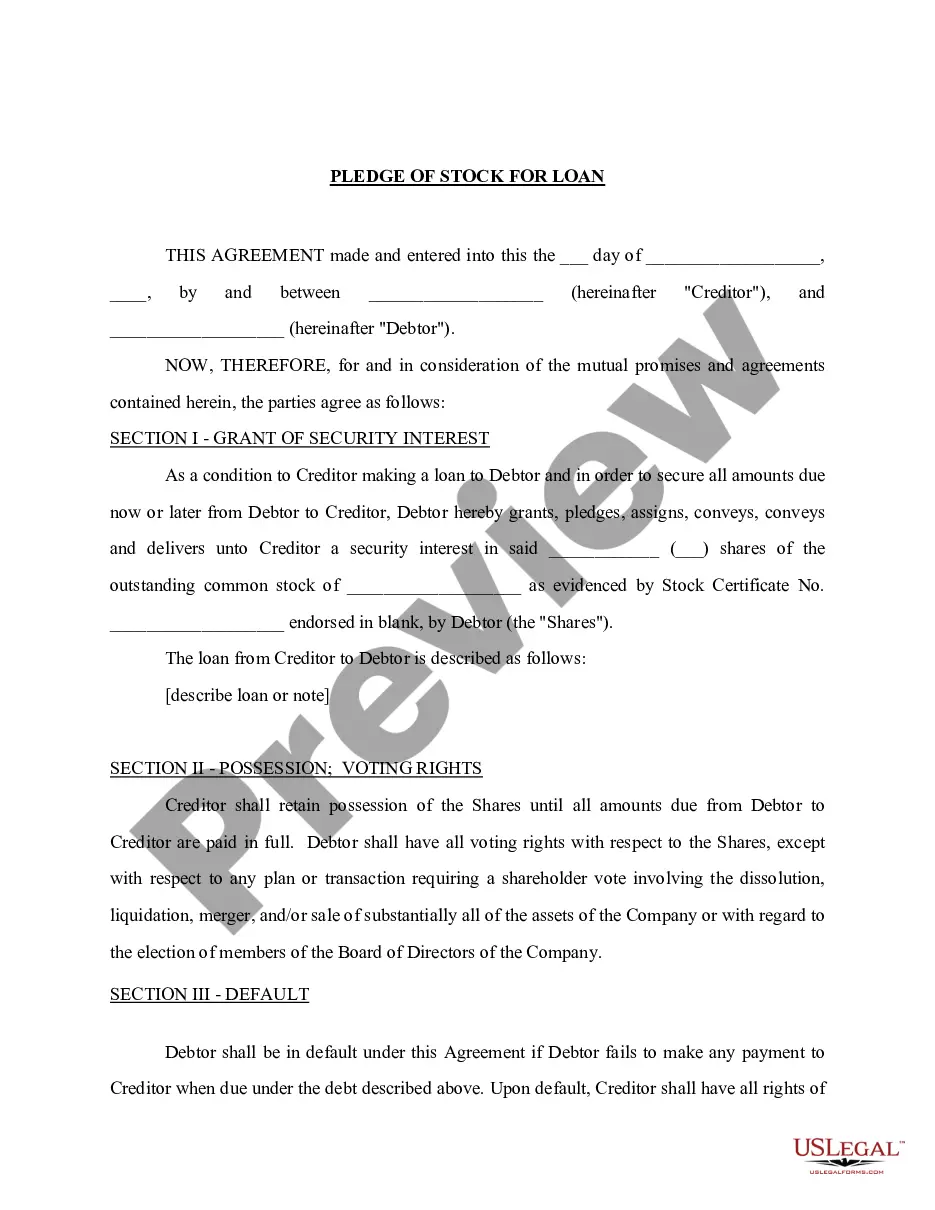
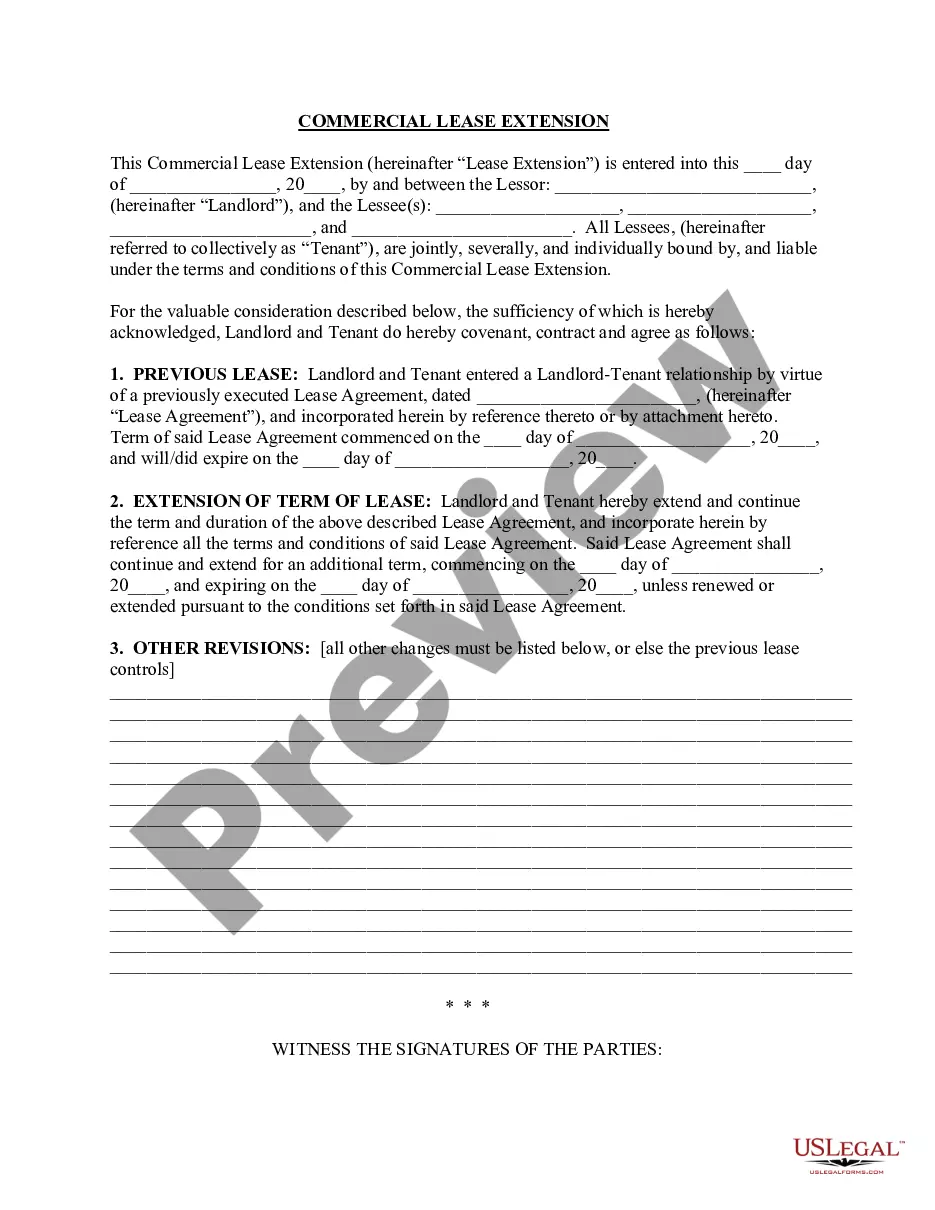
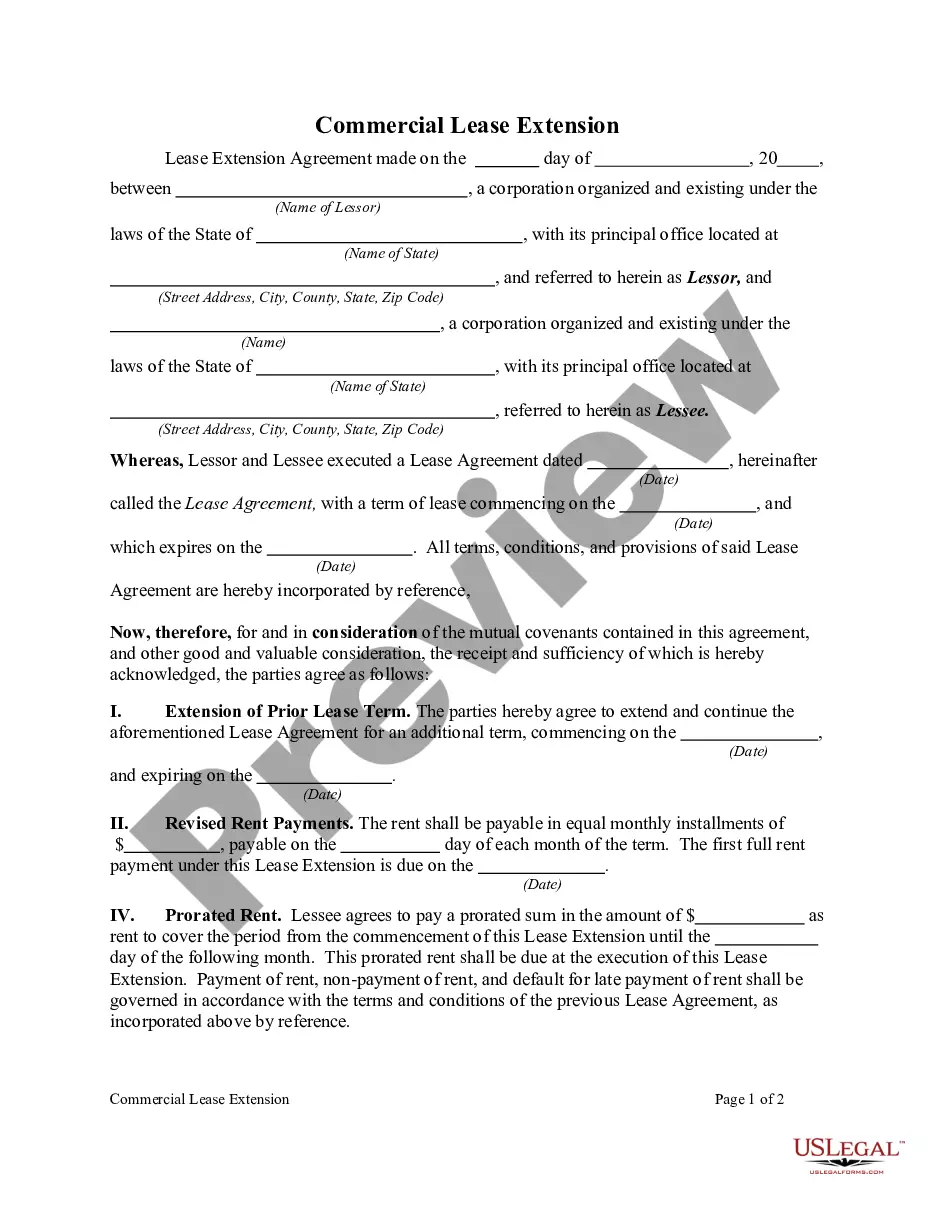
Colorado Commercial Lease Extension
Description
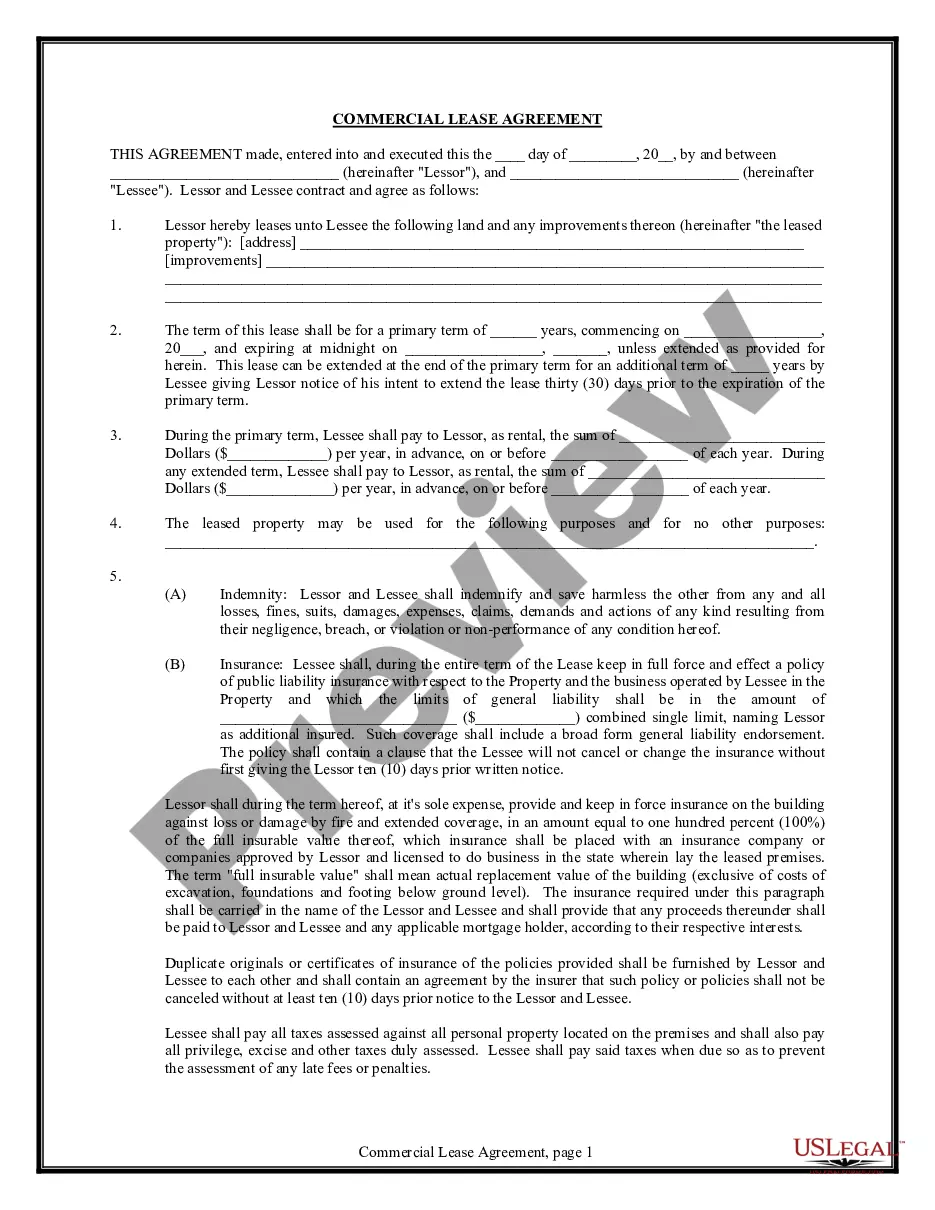
Get your form ready online
Our built-in tools help you complete, sign, share, and store your documents in one place.
Make edits, fill in missing information, and update formatting in US Legal Forms—just like you would in MS Word.
Download a copy, print it, send it by email, or mail it via USPS—whatever works best for your next step.
Sign and collect signatures with our SignNow integration. Send to multiple recipients, set reminders, and more. Go Premium to unlock E-Sign.
If this form requires notarization, complete it online through a secure video call—no need to meet a notary in person or wait for an appointment.
We protect your documents and personal data by following strict security and privacy standards.

Make edits, fill in missing information, and update formatting in US Legal Forms—just like you would in MS Word.

Download a copy, print it, send it by email, or mail it via USPS—whatever works best for your next step.

Sign and collect signatures with our SignNow integration. Send to multiple recipients, set reminders, and more. Go Premium to unlock E-Sign.

If this form requires notarization, complete it online through a secure video call—no need to meet a notary in person or wait for an appointment.

We protect your documents and personal data by following strict security and privacy standards.
Looking for another form?

How to fill out Commercial Lease Extension?
US Legal Forms - one of the largest repositories of legal documents in the United States - offers an extensive selection of legal document templates that you can download or print.
By utilizing the website, you can access thousands of forms for business and personal use, organized by categories, states, or keywords. You can obtain the latest forms like the Colorado Commercial Lease Extension within moments.
If you already have an account, Log In and access the Colorado Commercial Lease Extension from the US Legal Forms library. The Download button will be visible on every form you view.
Process the payment. Use your credit card or PayPal account to complete the transaction.
Select the format and download the form onto your device. Edit. Complete, modify, print, and sign the downloaded Colorado Commercial Lease Extension. Each template you’ve added to your account has no expiration date and is yours indefinitely. Therefore, to obtain or print another copy, just navigate to the My documents section and click on the form you need. Access the Colorado Commercial Lease Extension with US Legal Forms, one of the most extensive collections of legal document templates. Utilize numerous professional and state-specific templates that cater to your business or personal requirements.
- If it’s your first time using US Legal Forms, here are some simple steps to get started.
- Ensure you've selected the correct form for your city/region.
- Click the Preview button to review the contents of the form.
- Check the form outline to ensure you've selected the correct document.
- If the form does not meet your requirements, utilize the Search bar at the top of the screen to find the one that does.
- If you are satisfied with the form, confirm your choice by clicking the Get now button.
- Then, choose your payment plan and provide your information to create an account.
Form popularity
FAQ
Commercial tenants usually remain in a property when a lease has expired because they are still negotiating the terms of a new, renewed lease with the landlord or they have an informal agreement to stay on.
Yes, a lease can automatically renew in Colorado. Like most fixed-term leases, a clause in a written lease can determine whether or not a lease renews. Commonly, the lease will become a month-to-month lease if neither party gives notice that they wish to terminate the tenancy.
Currently, leaseholders of houses can only extend their lease once, by a 50-year period, while leaseholders of flats can extend leases as often as they wish for a 90-year period.
Can the contractual term of a commercial lease be extended? Yes. Subject to satisfying certain criteria, business tenants have a statutory right under the Landlord and Tenant Act 1954 to extend the contractual term of their lease. At the end of the lease, the tenant can ask the landlord for a new lease.
You could be responsible for rent until the end of the lease term or until the property is rented to someone else, whichever comes first. The landlord has a duty to try to re-rent the property once you have moved out, but that duty does not start until you have returned the keys to the landlord.
As already mentioned, business tenants will generally have the right to continue their tenancy agreement when it expires, but under certain extreme cases landlords do have the power to refuse to renew a lease.
Commercial tenants usually remain in a property when a lease has expired because they are still negotiating the terms of a new, renewed lease with the landlord or they have an informal agreement to stay on.
The tenant has a maximum of 48 hours to vacate the property. If they are still on the property after 48 hours, they may be forcibly removed.
If the tenant seeks a new lease they should ensure it is also protected by the Act in order to retain legal protection should the landlord try to end the tenancy. If the landlord refuses to renew the lease, tenants can apply to the courts for a new lease to be granted.
If you decide to try to negotiate a lease extension, there are no rules and your landlord could refuse to extend your lease, or set whatever terms they like.