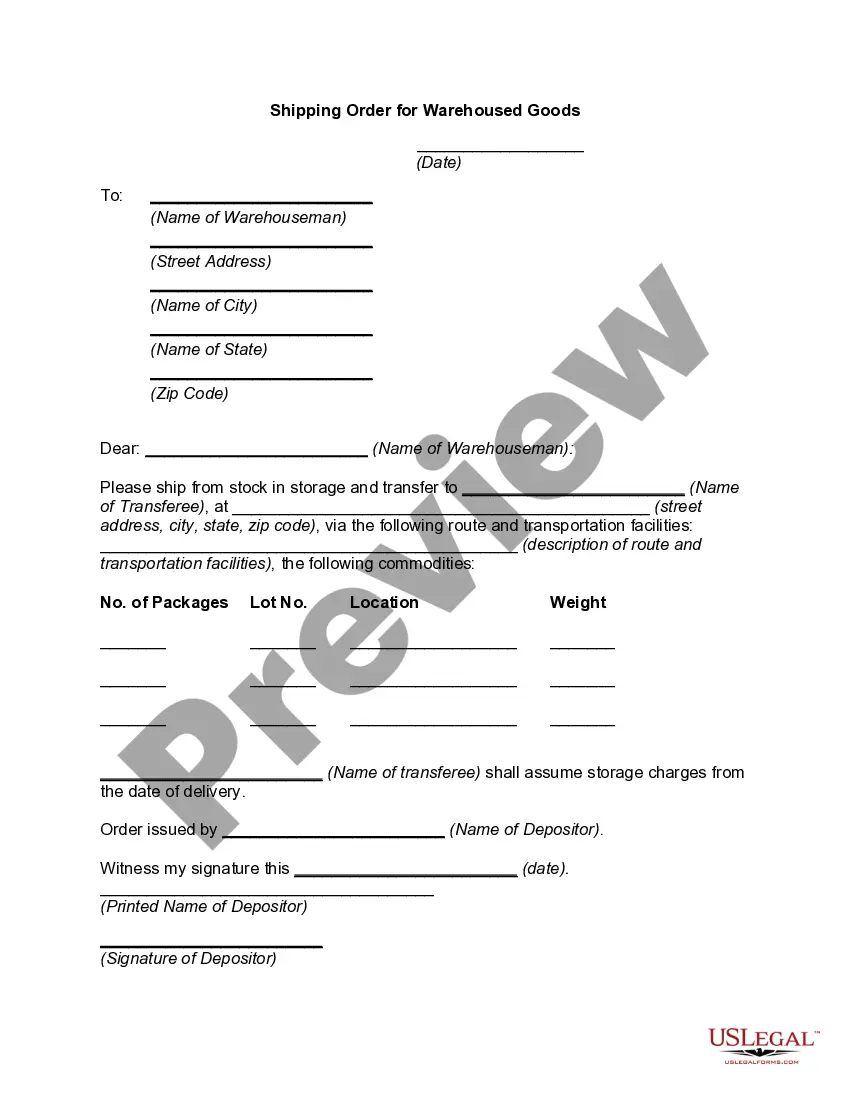
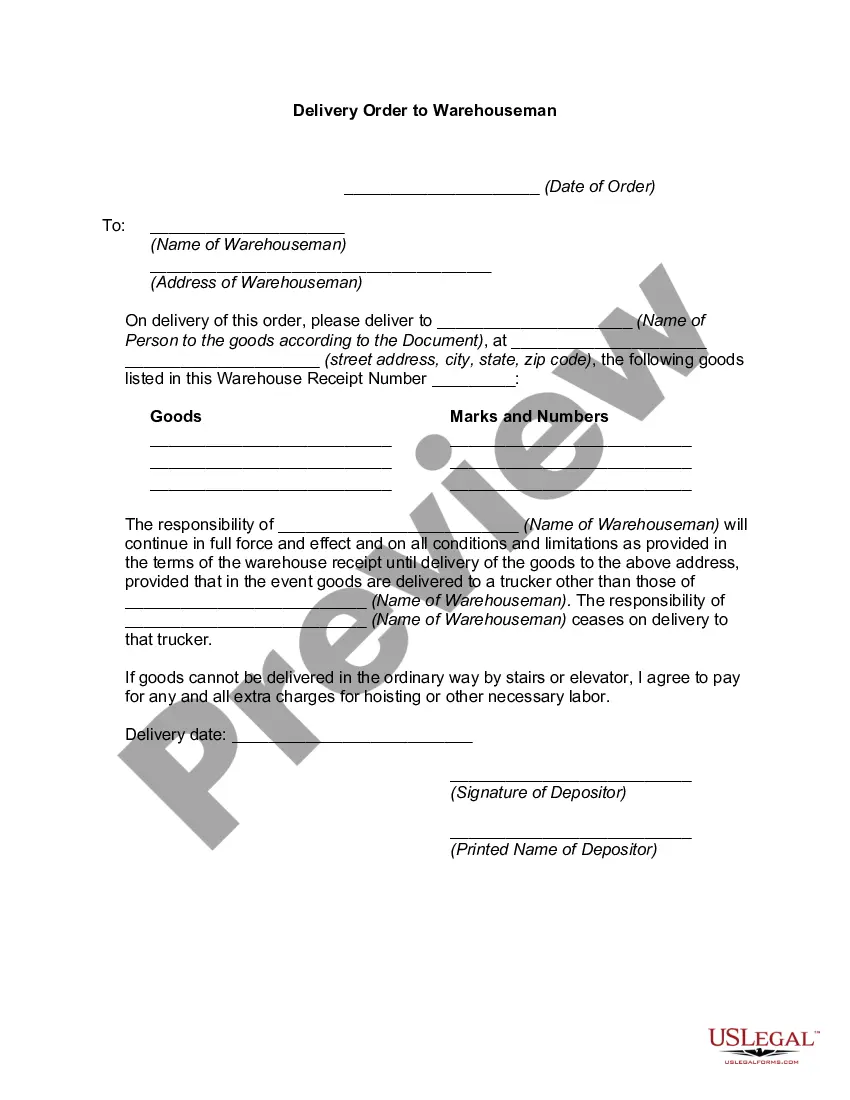
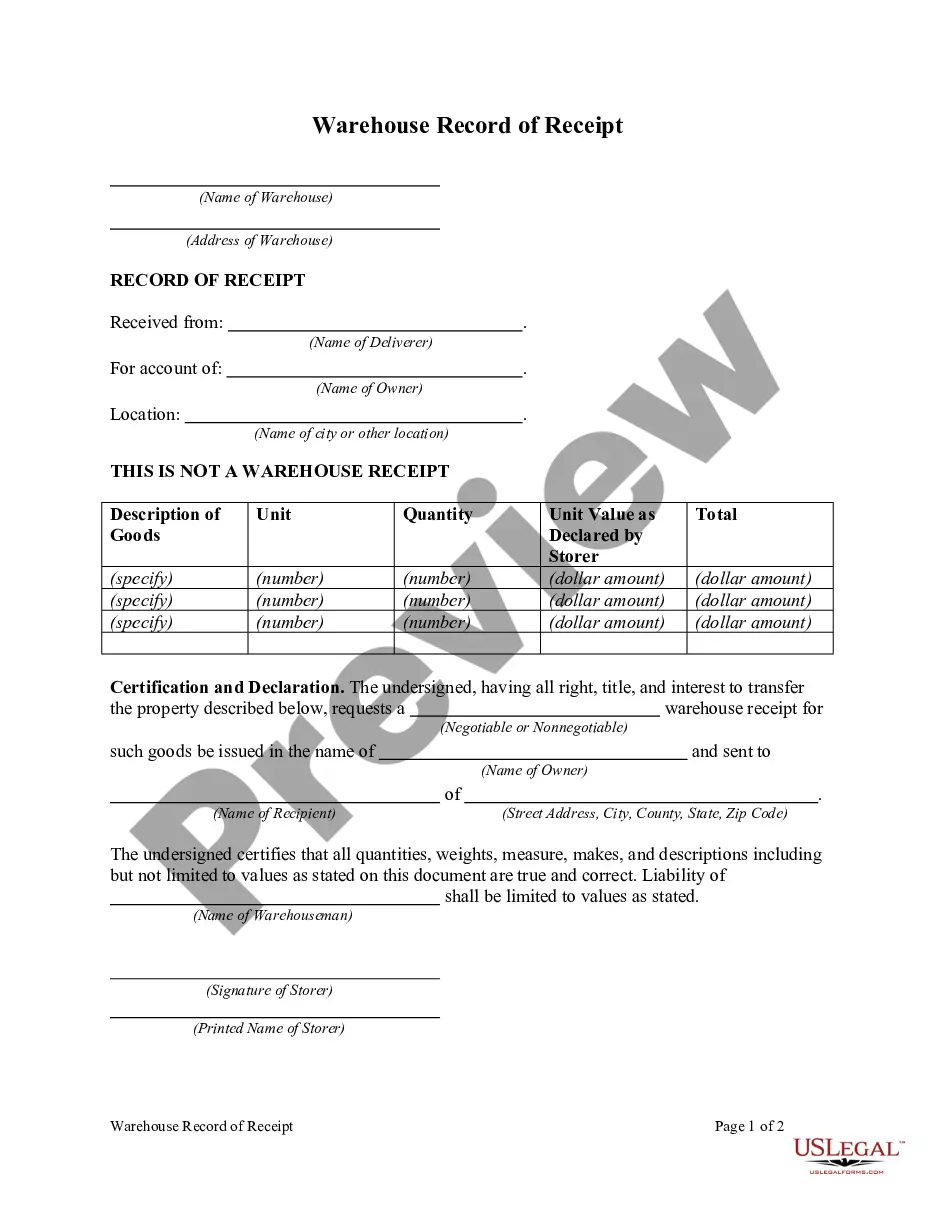
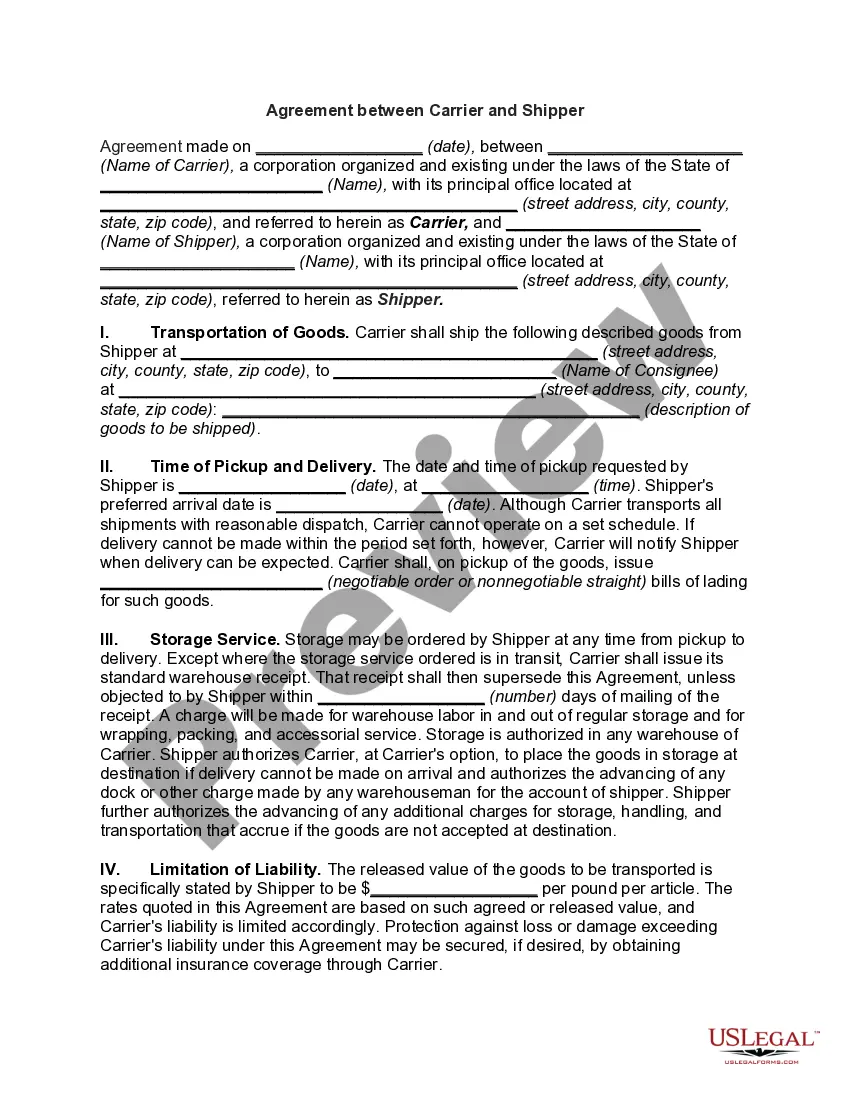
Colorado Shipping Order for Warehoused Goods
Description
Get your form ready online
Our built-in tools help you complete, sign, share, and store your documents in one place.
Make edits, fill in missing information, and update formatting in US Legal Forms—just like you would in MS Word.
Download a copy, print it, send it by email, or mail it via USPS—whatever works best for your next step.
Sign and collect signatures with our SignNow integration. Send to multiple recipients, set reminders, and more. Go Premium to unlock E-Sign.
If this form requires notarization, complete it online through a secure video call—no need to meet a notary in person or wait for an appointment.
We protect your documents and personal data by following strict security and privacy standards.

Make edits, fill in missing information, and update formatting in US Legal Forms—just like you would in MS Word.

Download a copy, print it, send it by email, or mail it via USPS—whatever works best for your next step.

Sign and collect signatures with our SignNow integration. Send to multiple recipients, set reminders, and more. Go Premium to unlock E-Sign.

If this form requires notarization, complete it online through a secure video call—no need to meet a notary in person or wait for an appointment.

We protect your documents and personal data by following strict security and privacy standards.
Looking for another form?


How to fill out Shipping Order For Warehoused Goods?
Are you in a situation where you need documents for either professional or personal purposes nearly every day.
There are many legitimate document templates available online, yet finding ones you can trust is not simple.
US Legal Forms provides a vast array of form templates, including the Colorado Shipping Order for Warehoused Goods, which can be tailored to meet federal and state requirements.
When you locate the appropriate form, click Acquire now.
Choose the pricing plan you prefer, fill in the required information to create your account, and purchase an order using your PayPal or credit card.
- If you are already familiar with the US Legal Forms website and have an account, simply Log In.
- After that, you can download the Colorado Shipping Order for Warehoused Goods template.
- If you do not have an account and wish to start using US Legal Forms, follow these steps.
- Find the form you need and ensure it is for the correct city/state.
- Use the Review button to examine the form.
- Read the information to confirm that you have selected the correct document.
- If the form isn’t what you are looking for, utilize the Research field to find the form that meets your needs.
Form popularity
FAQ
This means you would need to collect and remit state sales tax for the sales made in your shop or on your website. You would not need to collect and remit state sales tax for products sold via a marketplace facilitator.
Colorado is a destination-based sales tax state, which means that sales tax rates are determined by the location of the buyer when the transaction is completed.
Amazon does not collect sales taxes from Montana, New Hampshire, and Oregon, since those states do not have state sales taxes.
Taxable and exempt shipping charges Colorado sales tax may apply to charges for shipping, delivery, freight, handling, and postage. Delivery and freight charges are generally exempt from Colorado sales tax so long as they're both separable from the purchase and separately stated on the customer invoice.
According to an article, "Colorado Department of Revenue officials confirmed Amazon's plan to charge and remit collections from Colorado's 2.9 percent sales tax." "State law requires online retailers to track purchases made by people in Colorado and to report the amount of sales tax that should have been paid.
An out-of-state retailer must apply for a Colorado Sales Tax License and if they don't have a location in Colorado they will collect Colorado sales tax if, in either the previous or current calendar year the retailer has: $100,000 or more of gross sales or services delivered in Colorado, including exempt sales; or.
Carrying, delivery, freight, handling, pickup, shipping, and other similar charges or fees. order for shipping and handling to the $35 list price. The $3 charge for shipping and handling is part of the purchase price and is subject to Denver's tax.
This means you would need to collect and remit state sales tax for the sales made in your shop or on your website. You would not need to collect and remit state sales tax for products sold via a marketplace facilitator.
Sales and purchases of containers, labels, and shipping cases are subject to Denver sales or use tax, unless they meet the following requirements for tax exemption. product to the purchaser; and, C. The tangible personal property is not returnable to retailer for reuse.
Amazon calculates, collects, and remits tax on sales made by merchants shipped to customers located in the states that have enacted Marketplace Facilitator, Marketplace Fairness, or similar laws. These laws shift collection responsibility from the merchant to the marketplace facilitating the merchant's sale.