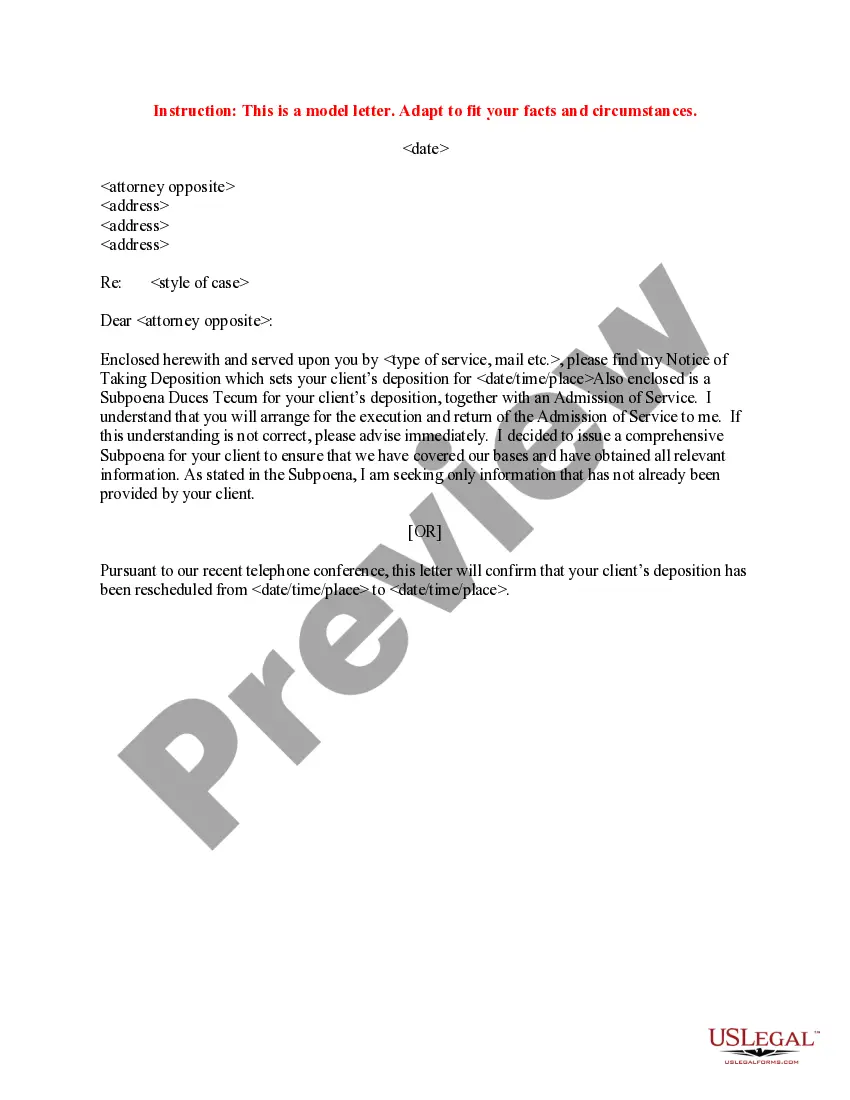
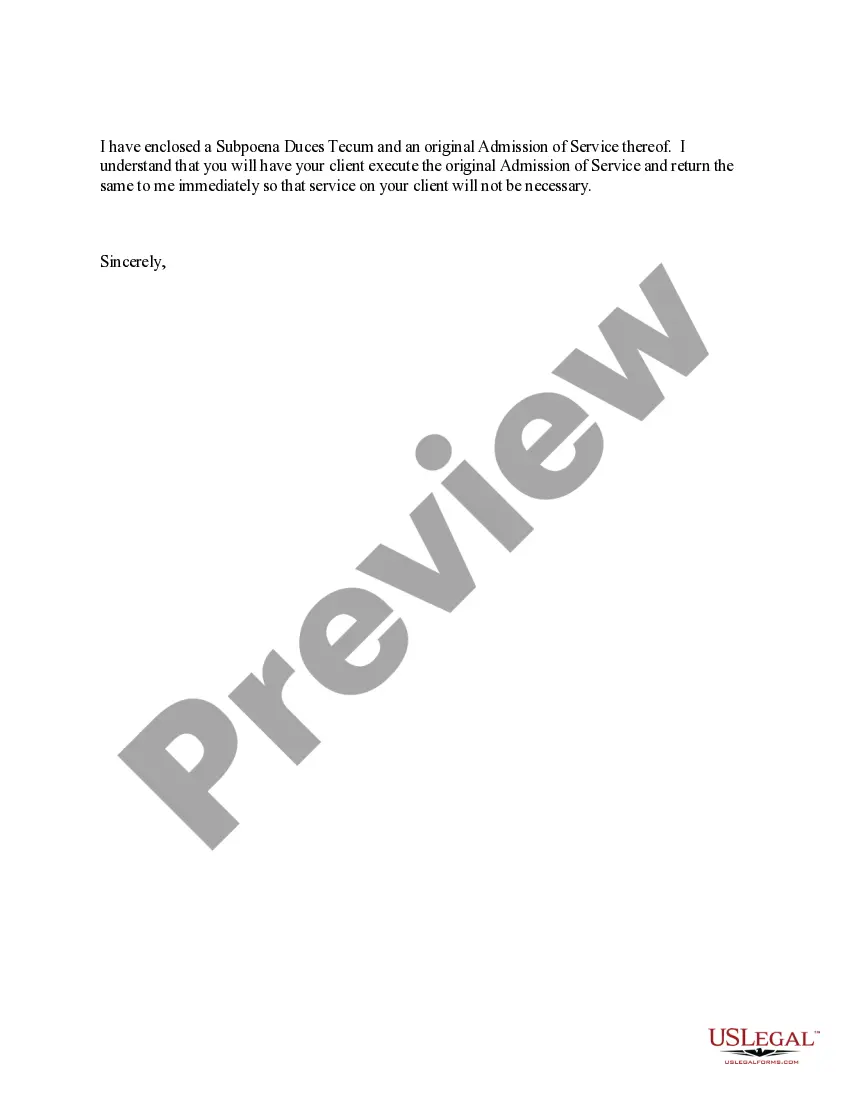
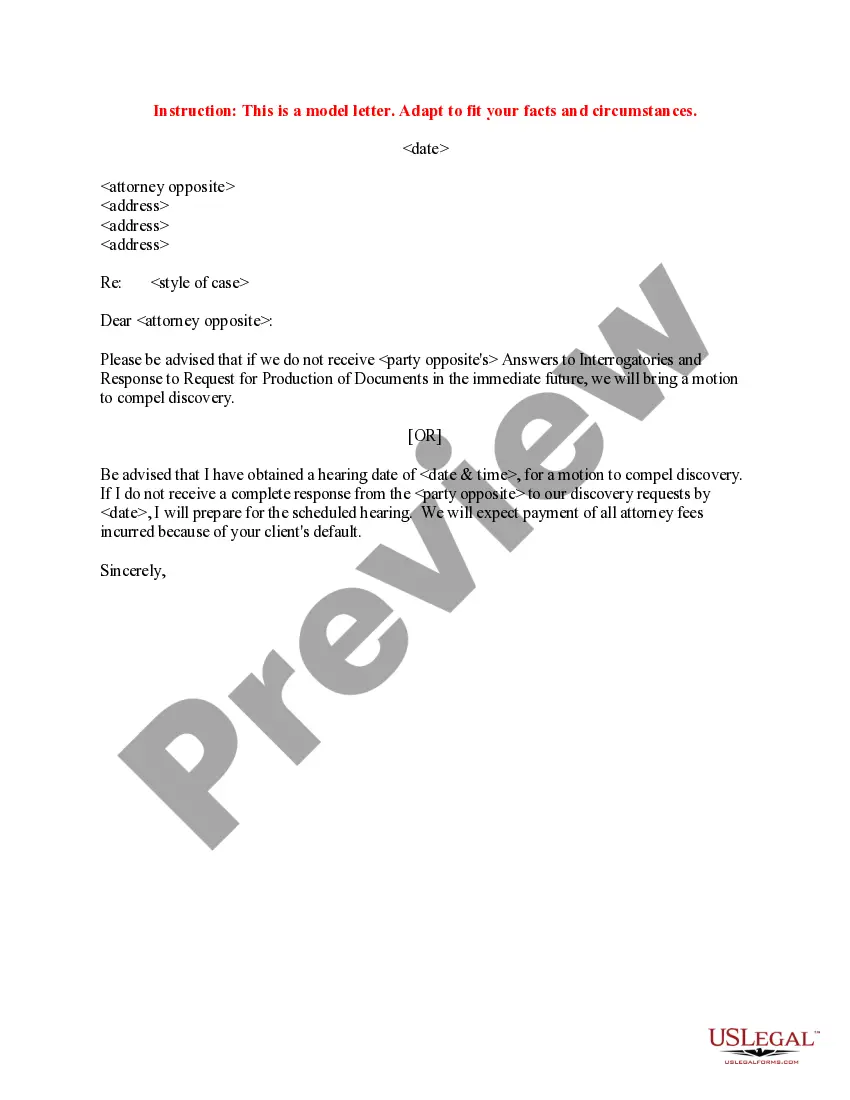
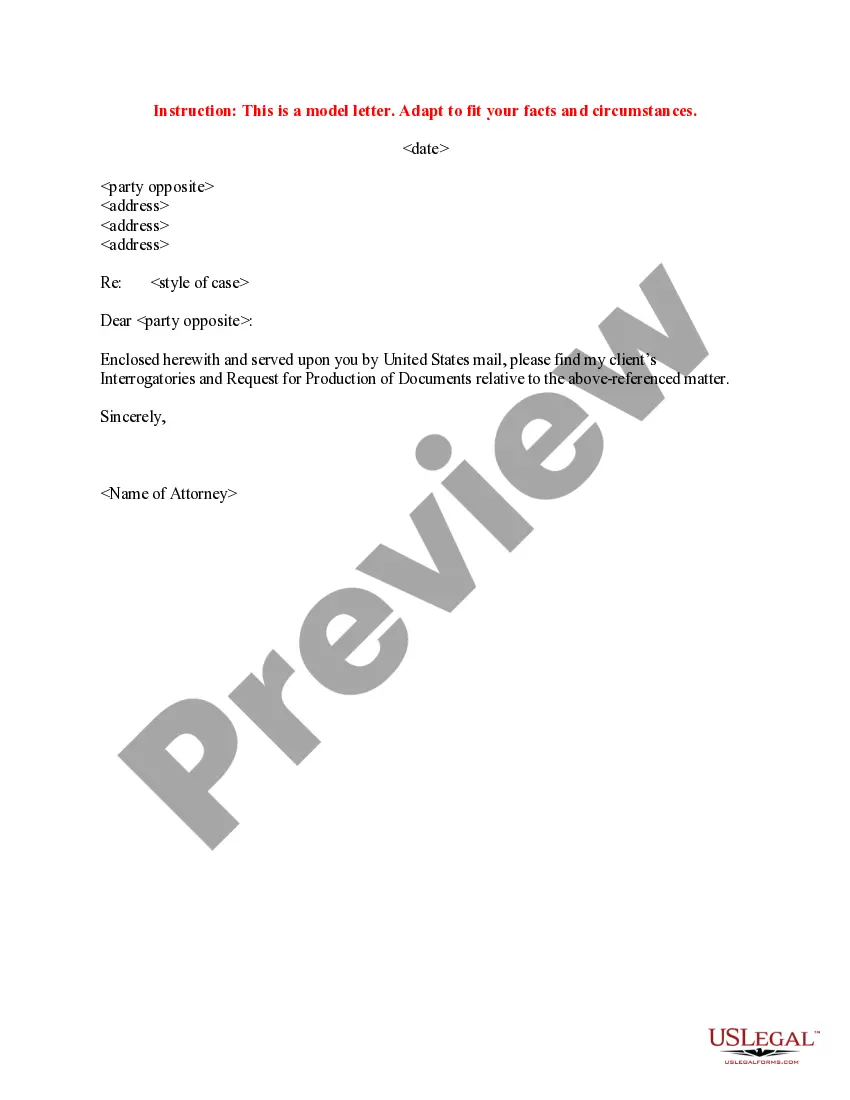
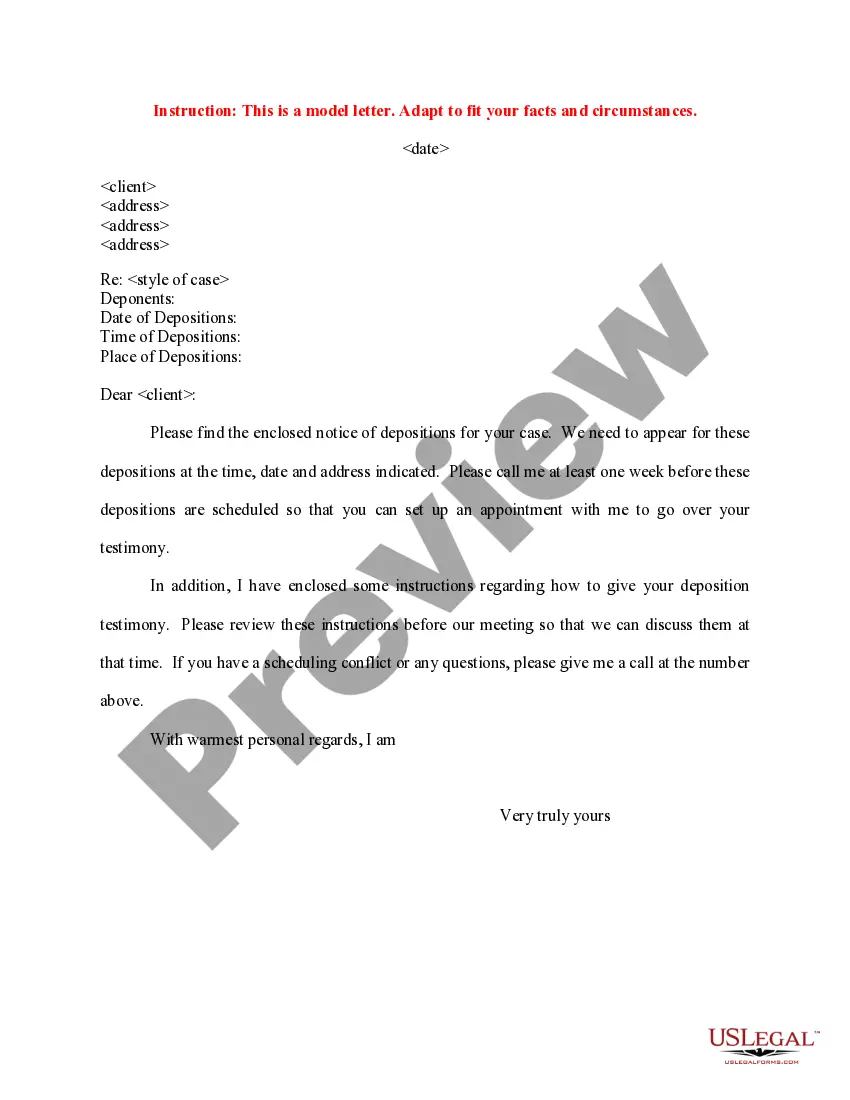
Colorado Discovery - Sample Letter to Opposing Counsel regarding Deposition and Subpoena Duces Tecum
Description
Get your form ready online
Our built-in tools help you complete, sign, share, and store your documents in one place.
Make edits, fill in missing information, and update formatting in US Legal Forms—just like you would in MS Word.
Download a copy, print it, send it by email, or mail it via USPS—whatever works best for your next step.
Sign and collect signatures with our SignNow integration. Send to multiple recipients, set reminders, and more. Go Premium to unlock E-Sign.
If this form requires notarization, complete it online through a secure video call—no need to meet a notary in person or wait for an appointment.
We protect your documents and personal data by following strict security and privacy standards.

Make edits, fill in missing information, and update formatting in US Legal Forms—just like you would in MS Word.

Download a copy, print it, send it by email, or mail it via USPS—whatever works best for your next step.

Sign and collect signatures with our SignNow integration. Send to multiple recipients, set reminders, and more. Go Premium to unlock E-Sign.

If this form requires notarization, complete it online through a secure video call—no need to meet a notary in person or wait for an appointment.

We protect your documents and personal data by following strict security and privacy standards.
Looking for another form?


How to fill out Discovery - Sample Letter To Opposing Counsel Regarding Deposition And Subpoena Duces Tecum?
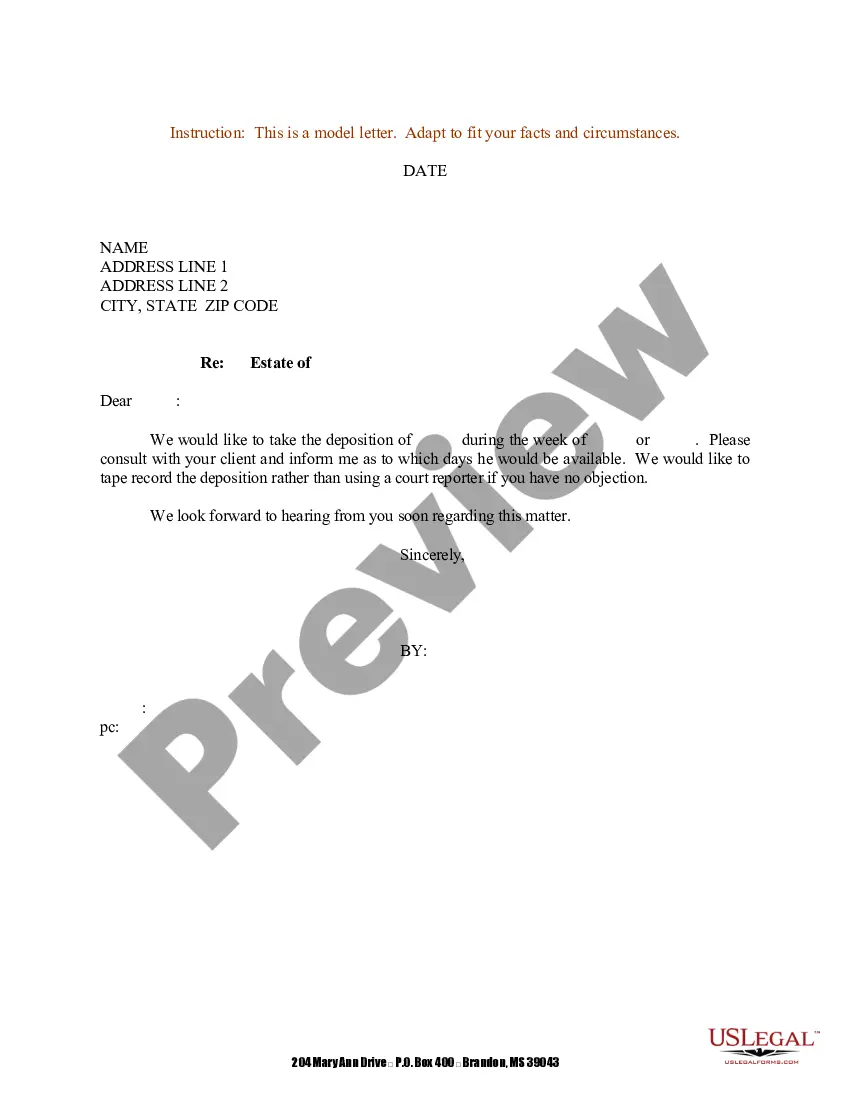
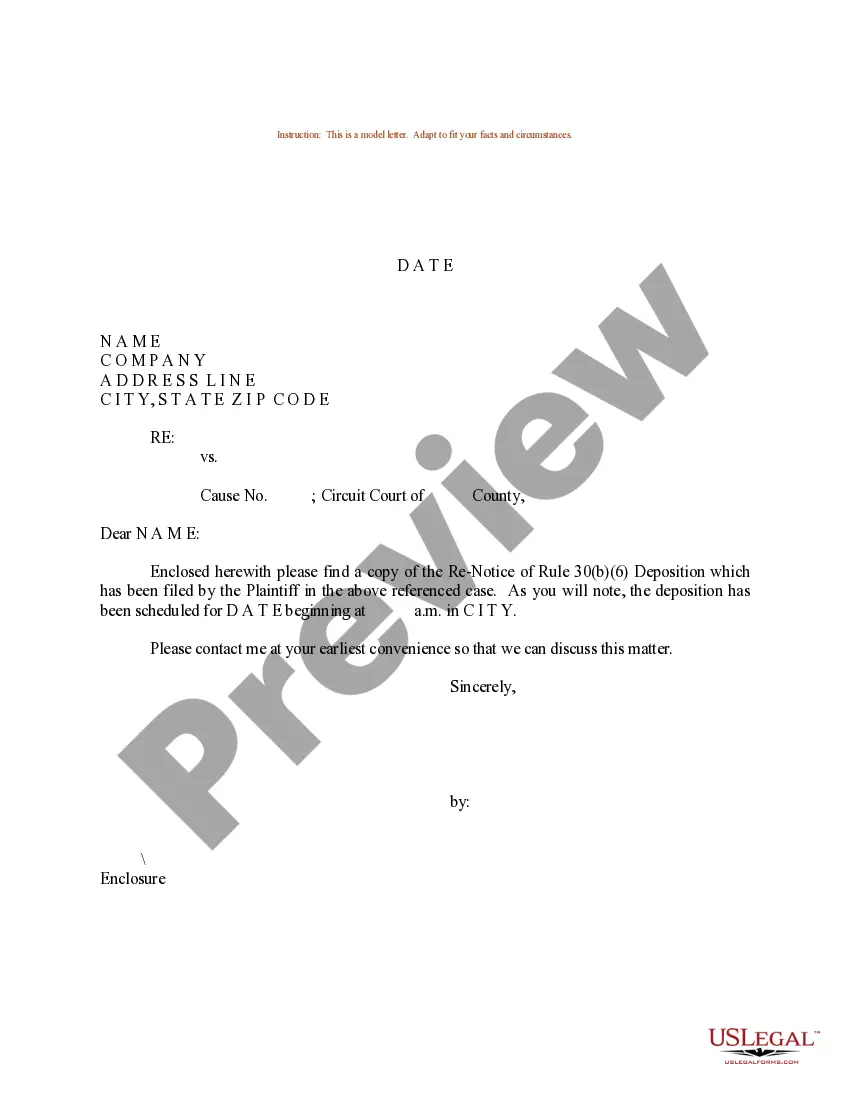
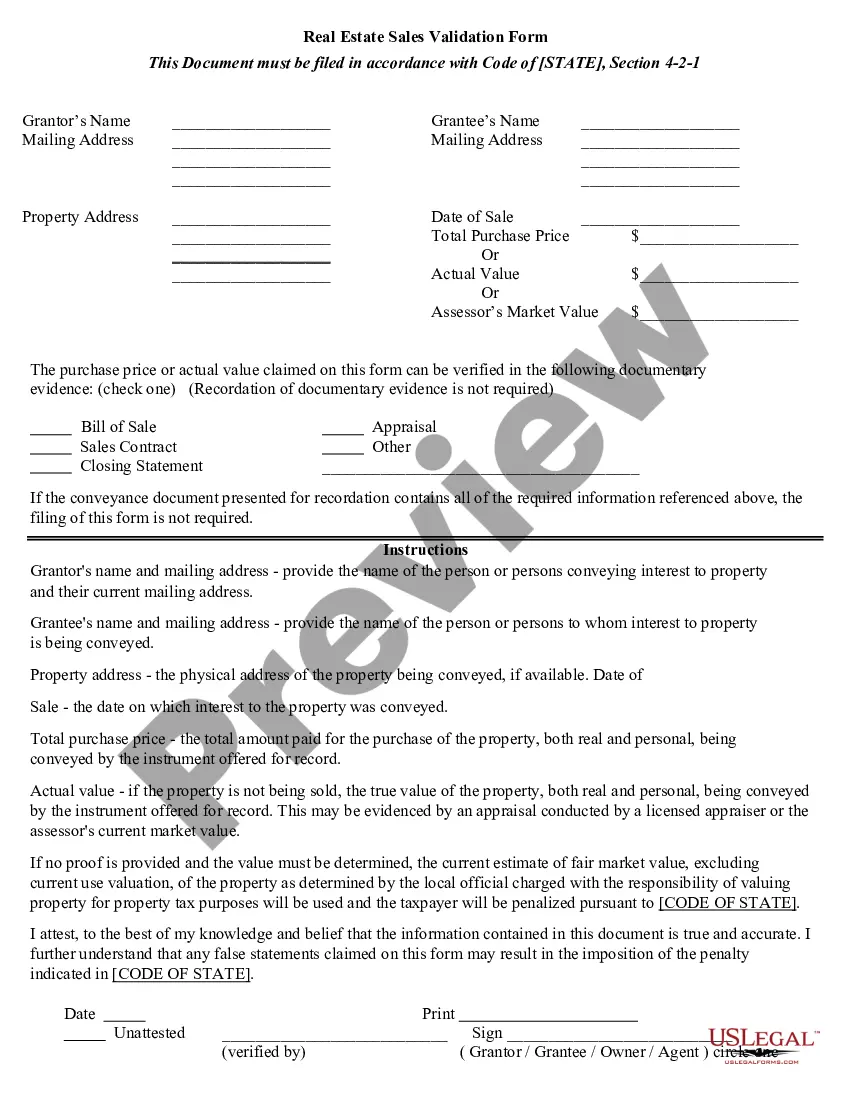
You are able to invest time on-line looking for the legitimate record template that suits the state and federal requirements you need. US Legal Forms offers thousands of legitimate kinds which can be reviewed by specialists. You can easily acquire or print the Colorado Discovery - Sample Letter to Opposing Counsel regarding Deposition and Subpoena Duces Tecum from your assistance.
If you already possess a US Legal Forms accounts, you may log in and click on the Obtain option. Following that, you may complete, change, print, or sign the Colorado Discovery - Sample Letter to Opposing Counsel regarding Deposition and Subpoena Duces Tecum. Each legitimate record template you buy is your own property permanently. To get yet another duplicate of the purchased form, check out the My Forms tab and click on the related option.
If you work with the US Legal Forms web site for the first time, stick to the straightforward directions listed below:
- Initially, be sure that you have selected the best record template for that state/town of your liking. Look at the form description to ensure you have chosen the correct form. If readily available, utilize the Review option to search throughout the record template also.
- In order to find yet another edition of your form, utilize the Look for industry to find the template that meets your requirements and requirements.
- Upon having found the template you need, just click Get now to proceed.
- Select the rates plan you need, key in your references, and register for an account on US Legal Forms.
- Total the purchase. You can utilize your bank card or PayPal accounts to cover the legitimate form.
- Select the format of your record and acquire it to the device.
- Make adjustments to the record if possible. You are able to complete, change and sign and print Colorado Discovery - Sample Letter to Opposing Counsel regarding Deposition and Subpoena Duces Tecum.
Obtain and print thousands of record web templates using the US Legal Forms Internet site, that offers the most important selection of legitimate kinds. Use expert and state-distinct web templates to deal with your small business or person demands.
Form popularity
FAQ
If the court where the discovery is taken orders a deponent to be sworn or to answer a question and the deponent fails to obey, the failure may be treated as contempt of court.
Summary. This discovery deficiency letter is a standard form that attorneys can use in a federal court litigation to facilitate a discussion with opposing counsel concerning his or her failure to respond to discovery requests or provision of inadequate, incomplete, or otherwise deficient responses.
This letter is often called a good faith letter. And it is needed under many courts' rules before you can file a motion to compel discovery if the other party ignores your requests or provides evasive responses or move for sanctions if your opponent refuses to comply with the court's discovery order.
Rule 37 authorizes the court to direct that parties or attorneys who fail to participate in good faith in the discovery process pay the expenses, including attorney's fees, incurred by other parties as a result of that failure.
Rule 37 - Failure to Make Disclosures or to Cooperate in Discovery; Sanctions (a)Motion for an Order Compelling Disclosure or Discovery. (1)In General. On notice to other parties and all affected persons, a party may move for an order compelling disclosure or discovery.
Rule 37-Failure to Make or Cooperate in Discovery: Sanctions. (a) Motion for Order Compelling Disclosure or Discovery. A party, upon reasonable notice to other parties and all persons affected thereby, may apply for an order compelling disclosure or discovery as follows: (1) Appropriate Court.
Dear [Opposing Counsel Name], I am writing to follow up on our recent communication regarding [case name]. I have not yet received a response from you regarding [list the specific issue or question]. Please let me know your thoughts as soon as possible so that we can continue to move forward with the case.