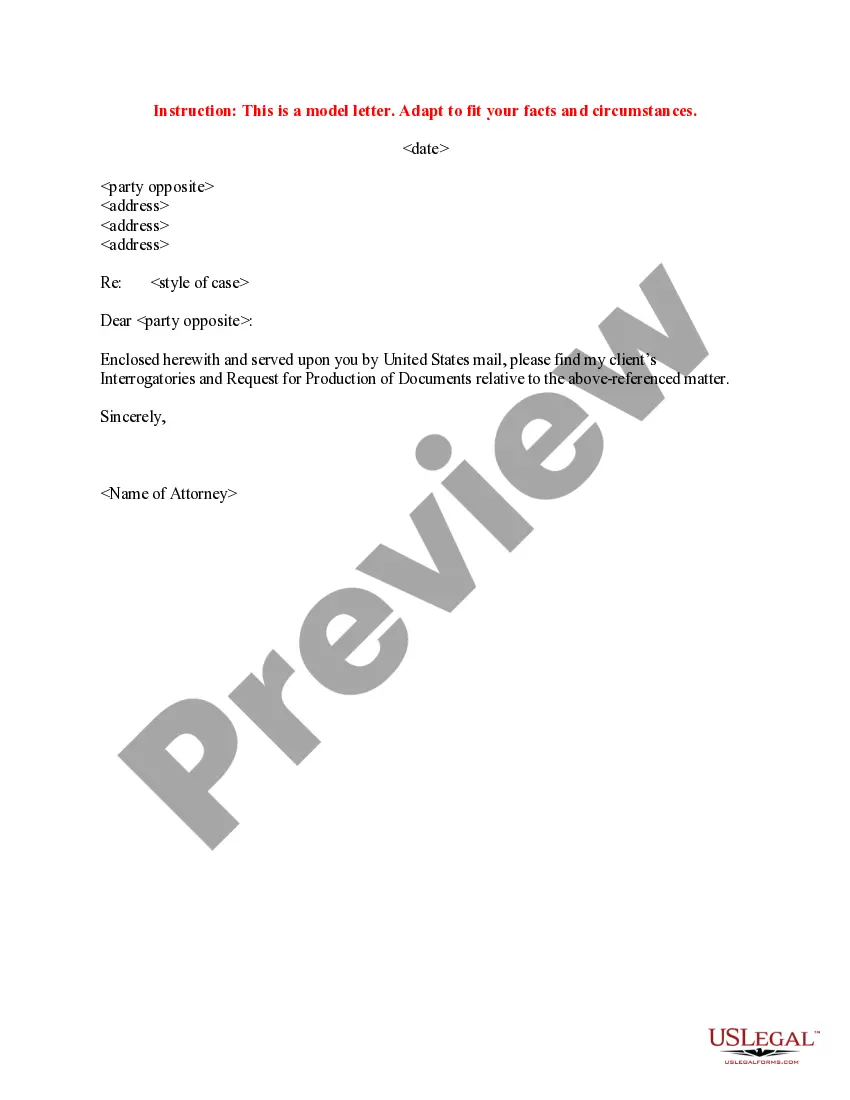
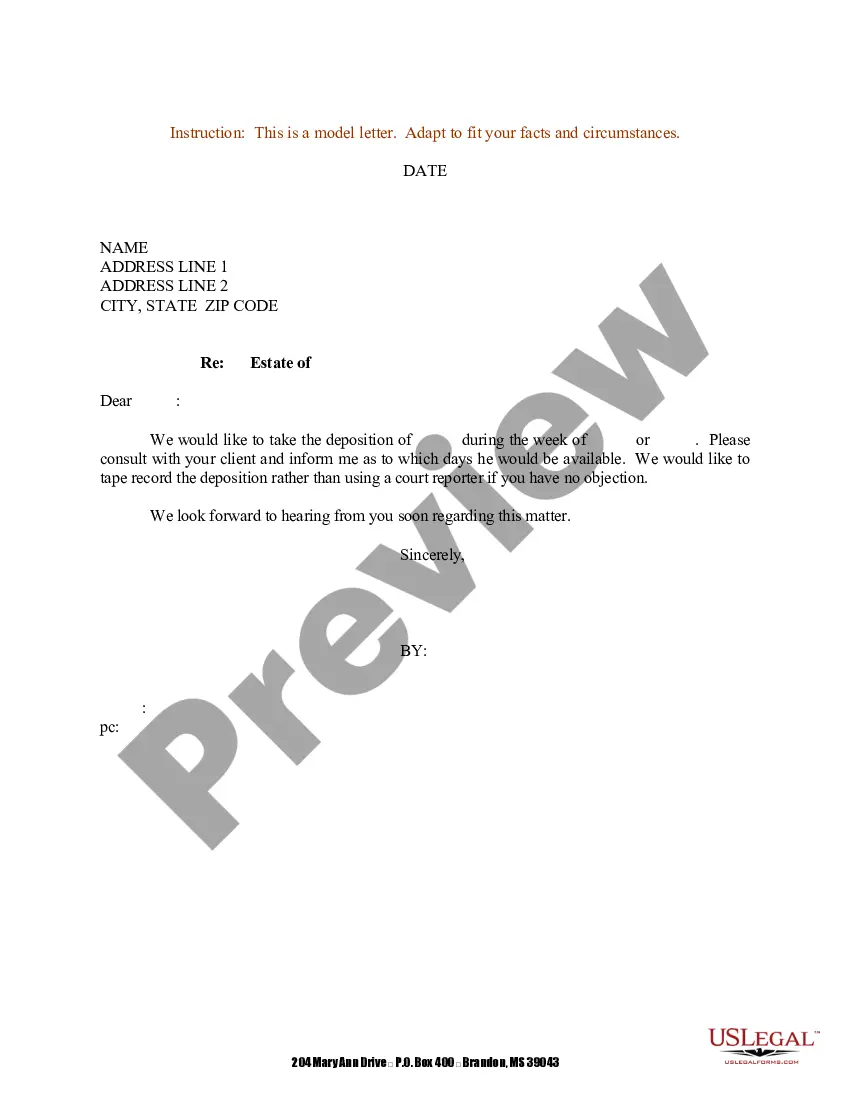
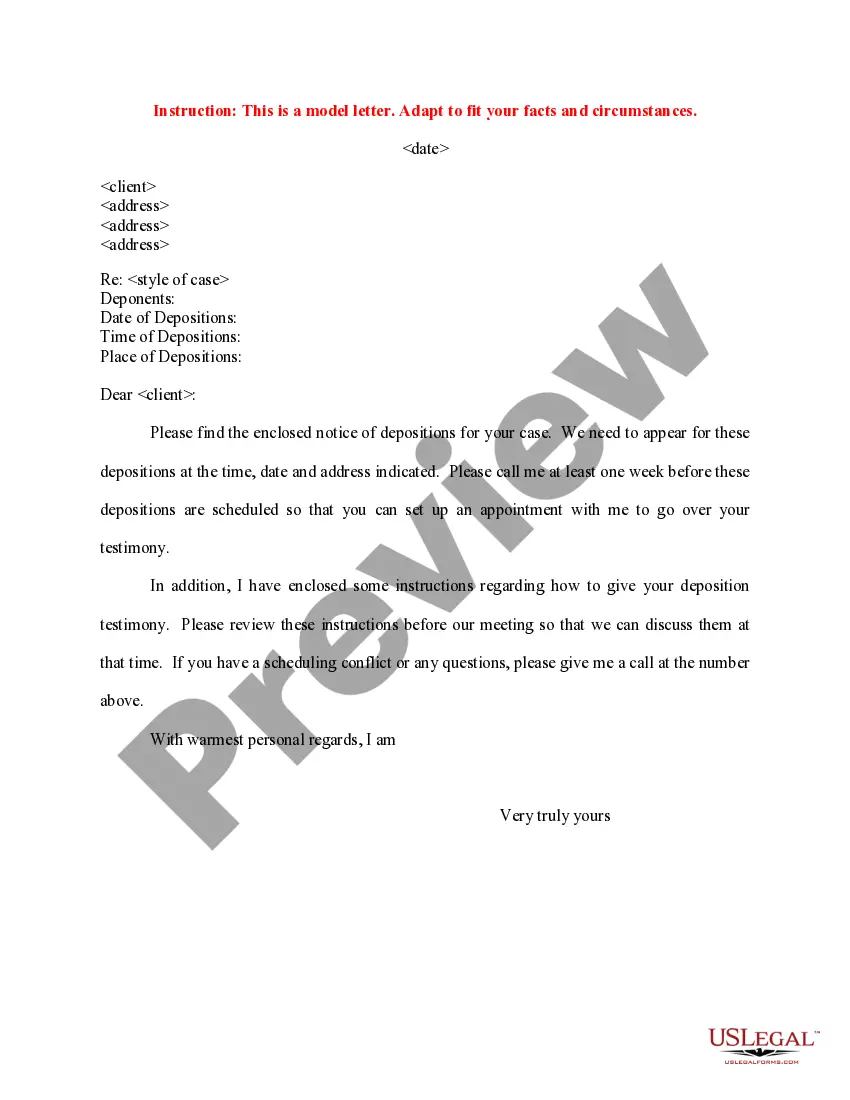
Arkansas Discovery - Sample Letter for service of Discovery Requests
Description

Get your form ready online
Our built-in tools help you complete, sign, share, and store your documents in one place.
Make edits, fill in missing information, and update formatting in US Legal Forms—just like you would in MS Word.
Download a copy, print it, send it by email, or mail it via USPS—whatever works best for your next step.
Sign and collect signatures with our SignNow integration. Send to multiple recipients, set reminders, and more. Go Premium to unlock E-Sign.
If this form requires notarization, complete it online through a secure video call—no need to meet a notary in person or wait for an appointment.
We protect your documents and personal data by following strict security and privacy standards.

Make edits, fill in missing information, and update formatting in US Legal Forms—just like you would in MS Word.

Download a copy, print it, send it by email, or mail it via USPS—whatever works best for your next step.

Sign and collect signatures with our SignNow integration. Send to multiple recipients, set reminders, and more. Go Premium to unlock E-Sign.

If this form requires notarization, complete it online through a secure video call—no need to meet a notary in person or wait for an appointment.

We protect your documents and personal data by following strict security and privacy standards.
Looking for another form?
How to fill out Discovery - Sample Letter For Service Of Discovery Requests?
You are able to commit several hours on-line trying to find the lawful record web template that fits the state and federal demands you will need. US Legal Forms gives 1000s of lawful types that happen to be examined by pros. It is simple to obtain or print out the Arkansas Discovery - Sample Letter for service of Discovery Requests from your service.
If you already have a US Legal Forms profile, it is possible to log in and click the Acquire option. Following that, it is possible to complete, modify, print out, or indicator the Arkansas Discovery - Sample Letter for service of Discovery Requests. Every single lawful record web template you purchase is your own permanently. To obtain one more backup associated with a purchased form, go to the My Forms tab and click the related option.
Should you use the US Legal Forms site the very first time, follow the straightforward guidelines listed below:
- Initially, make sure that you have selected the best record web template to the state/town of your choice. Read the form explanation to ensure you have picked out the correct form. If accessible, make use of the Preview option to look throughout the record web template too.
- If you want to discover one more model in the form, make use of the Look for discipline to get the web template that fits your needs and demands.
- When you have located the web template you would like, click on Purchase now to proceed.
- Select the costs strategy you would like, key in your credentials, and sign up for your account on US Legal Forms.
- Complete the financial transaction. You should use your credit card or PayPal profile to cover the lawful form.
- Select the format in the record and obtain it in your product.
- Make adjustments in your record if possible. You are able to complete, modify and indicator and print out Arkansas Discovery - Sample Letter for service of Discovery Requests.
Acquire and print out 1000s of record web templates utilizing the US Legal Forms Internet site, that provides the most important assortment of lawful types. Use professional and state-specific web templates to tackle your company or individual requires.
Form popularity
FAQ
Here's what every lawyer should consider when creating a discovery plan: 1) Agree on timelines for your discovery plan. ... 2) Provide a list of custodians. ... 3) Lay out parameters for information disclosure. ... 4) Keep legal holds in mind. ... 5) Make sure preservation methods are forensically sound. ... 6) Define protective orders.
A discovery draft is essentially a brainstorming method that writers use. They sit down to tell a story and just wing it (or ?pants? it) from page one to the last page. When they are done, the draft is a mess, but they know their story and their characters much better and have a grasp of what they are writing about.
You use discovery to find out things like: What the other side plans to say about an issue in your case. What facts or witnesses support their side. What facts or witnesses support your side. What information or documents could be used as evidence.
Discovery means you send the other side questions and requests for information or items (like documents) in writing. The other side must respond to your question or request in writing.
Discovery requests typically follow a common format that you can mirror. First, list instructions detailing the request for production. Be sure to mention Rule 34 and Rule 26(b), which outline the scope of the discovery request. It's also necessary to include a section with definitions.
Rule 37 authorizes the court to direct that parties or attorneys who fail to participate in good faith in the discovery process pay the expenses, including attorney's fees, incurred by other parties as a result of that failure.
How to Write Draft Interrogatories Brainstorm questions to ask the non-party related to the issues in the case. Identify relevant documents, witnesses, or other evidence that will be needed to answer the interrogatories. Draft the interrogatories in written form. Ensure the interrogatories are clear, concise and specific.
This letter is often called a good faith letter. And it is needed under many courts' rules before you can file a motion to compel discovery if the other party ignores your requests or provides evasive responses or move for sanctions if your opponent refuses to comply with the court's discovery order.