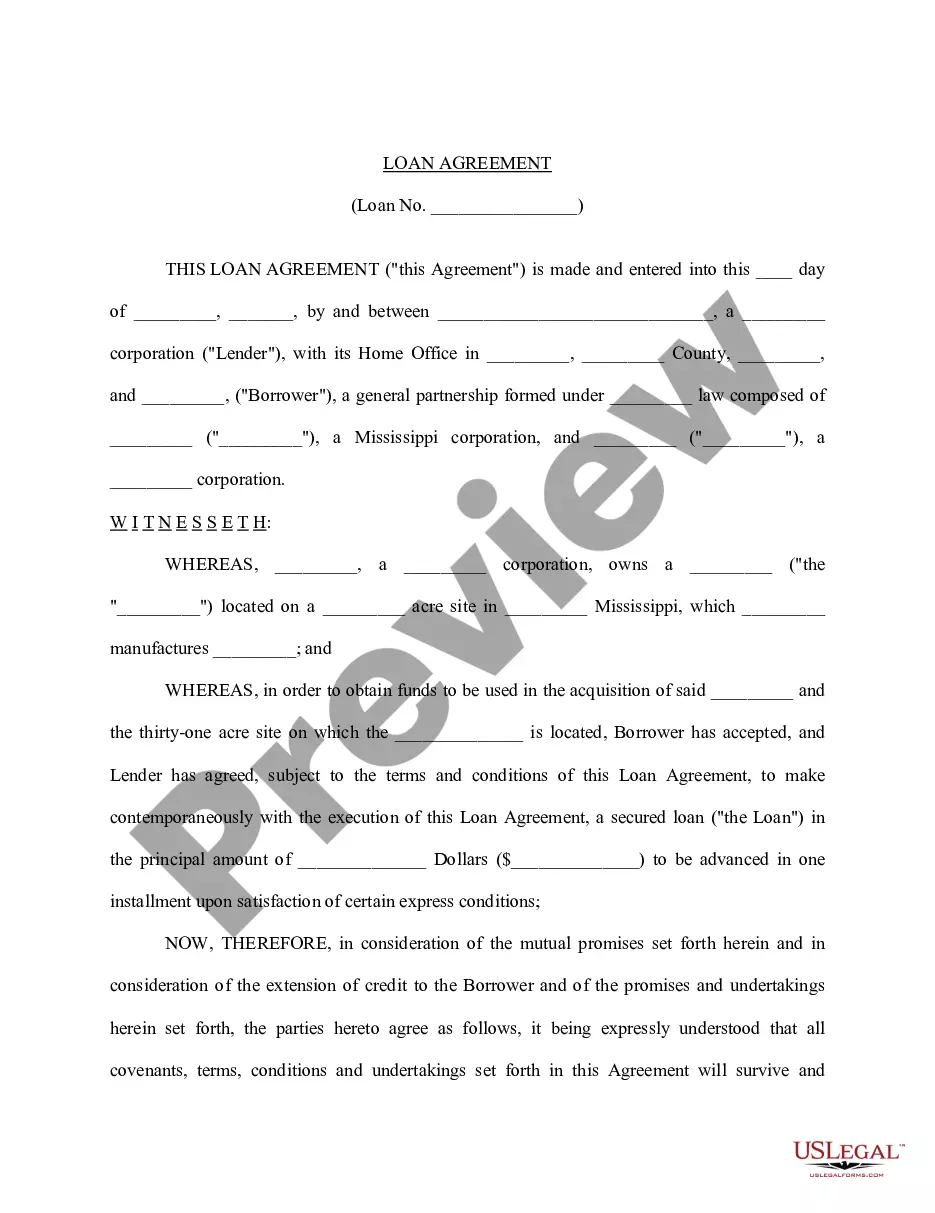
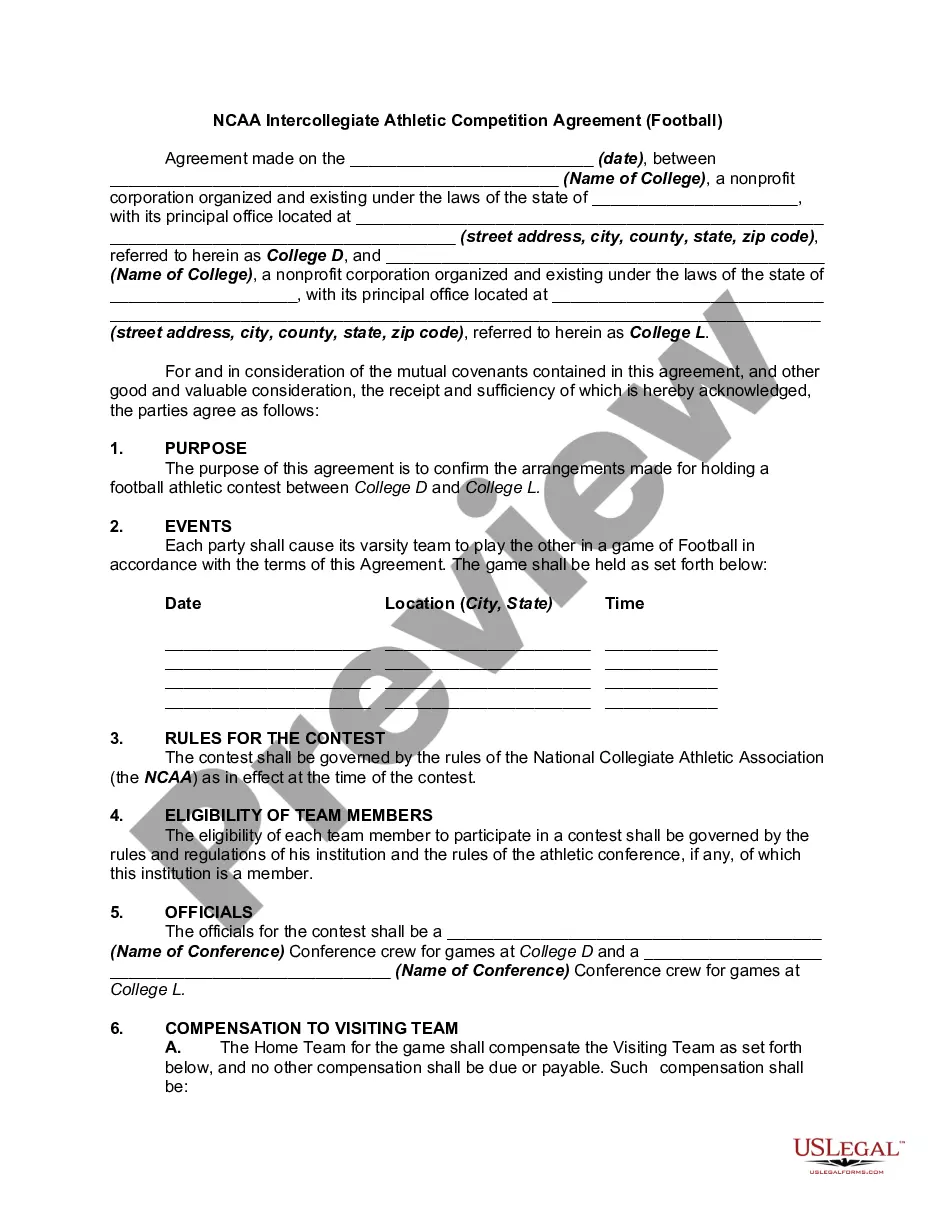
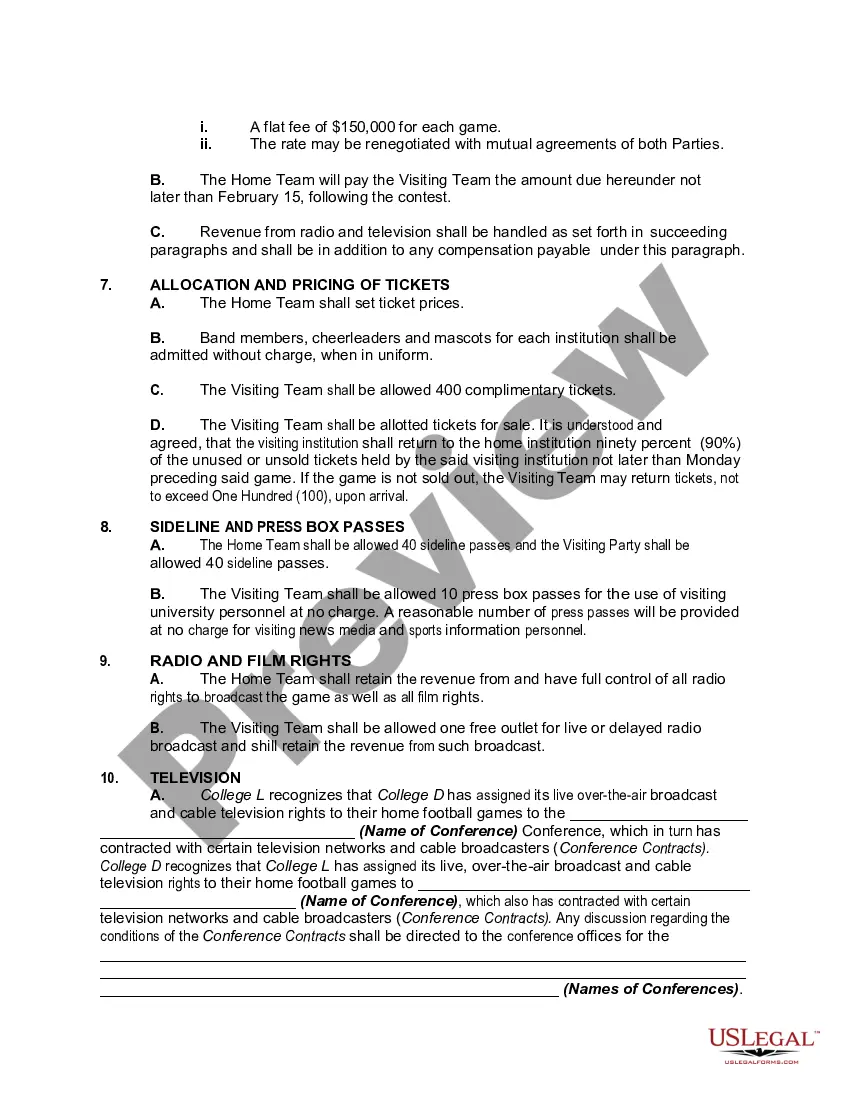
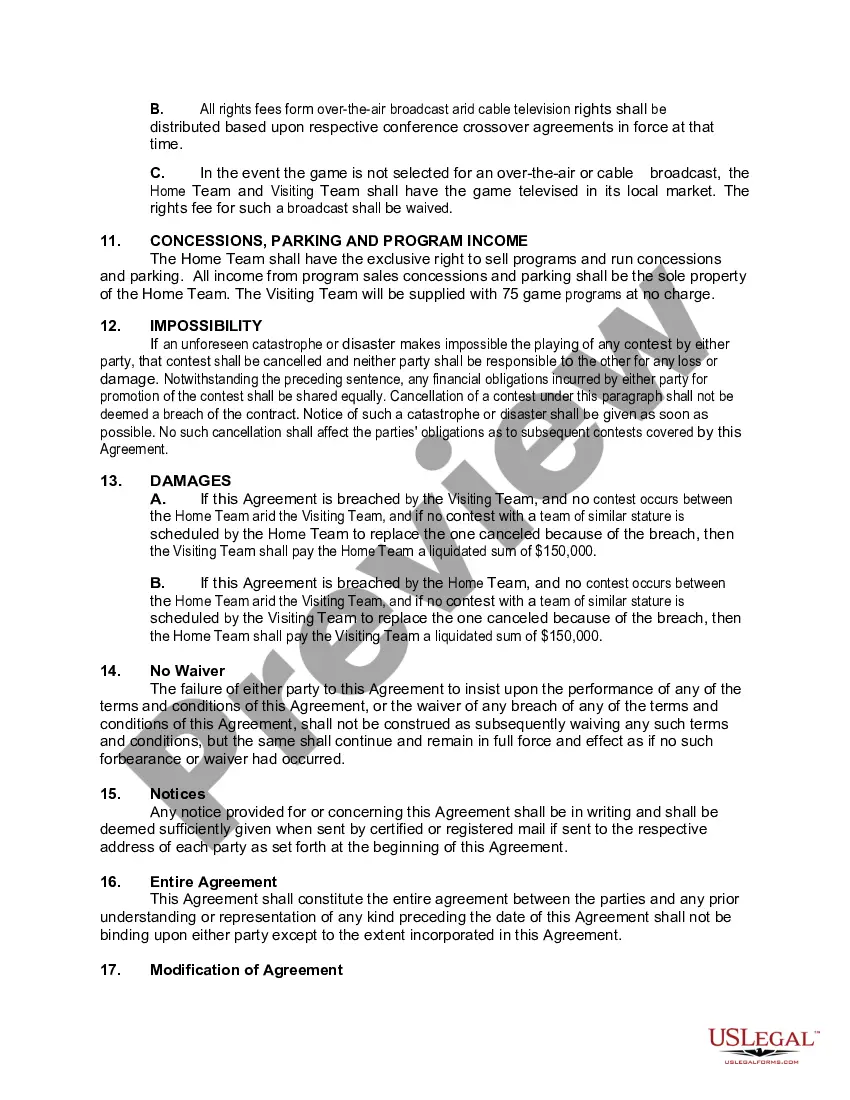
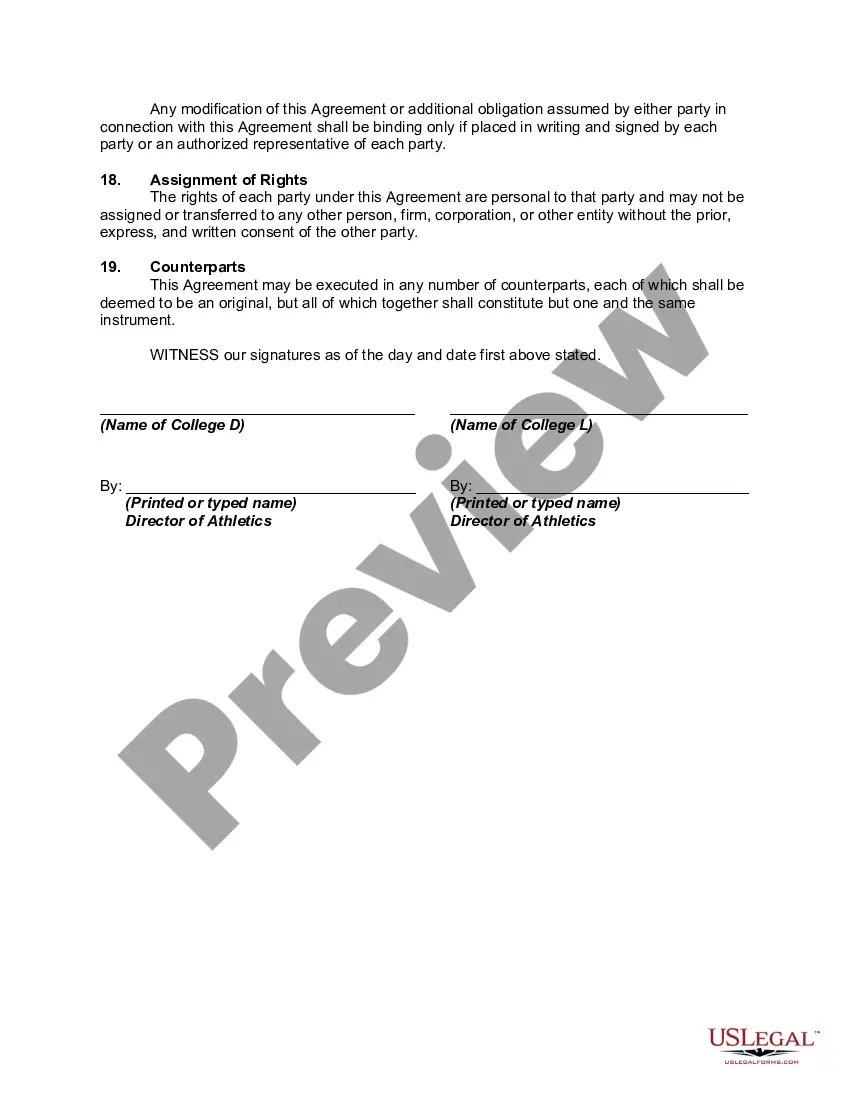
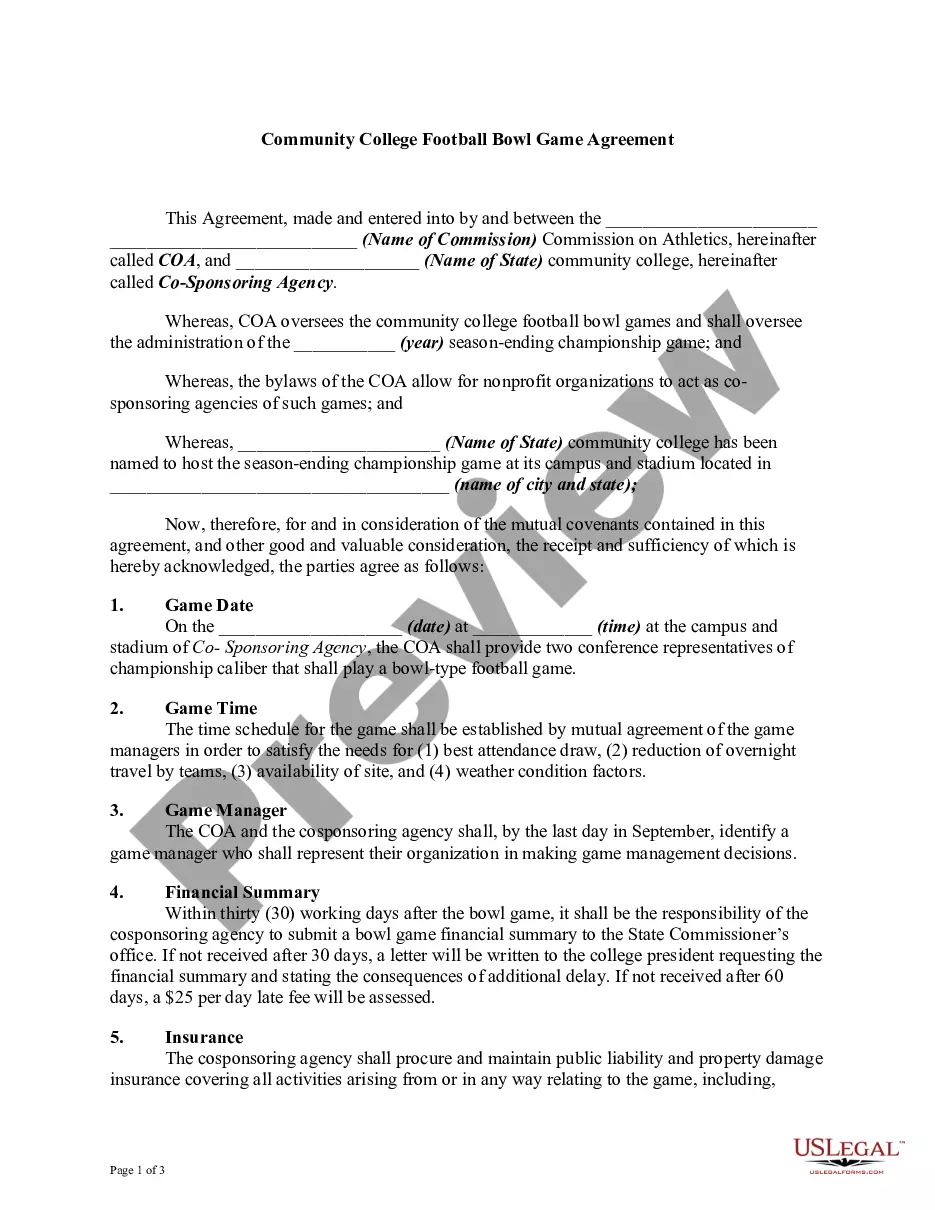
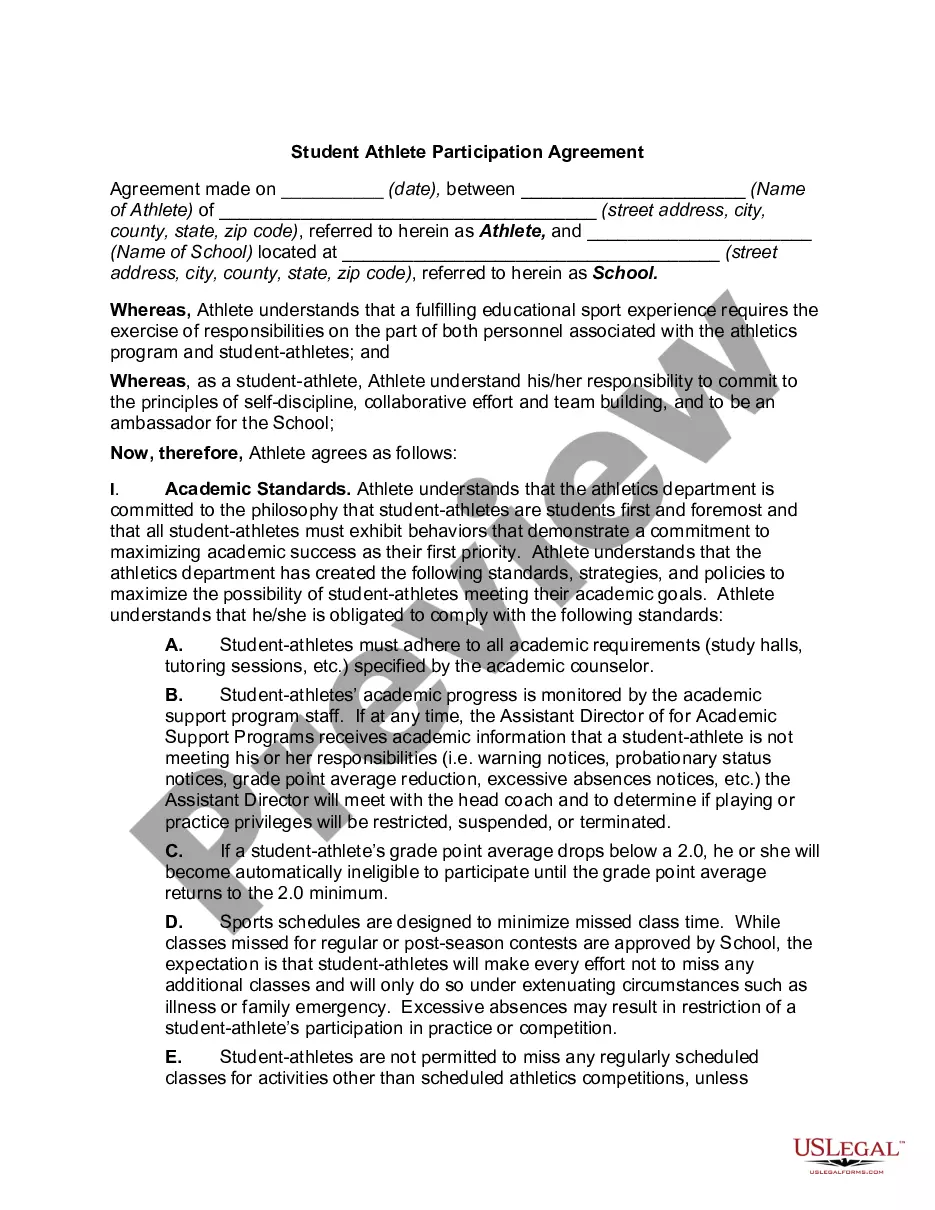
This form is a sample of an agreement between two NCAA Division I Colleges to play football games over a four year period.
Colorado NCAA Intercollegiate Athletic Competition Agreement - Football
Instant download
Description
Free preview
Get your form ready online
Our built-in tools help you complete, sign, share, and store your documents in one place.
Built-in online Word editor
Make edits, fill in missing information, and update formatting in US Legal Forms—just like you would in MS Word.
Export easily
Download a copy, print it, send it by email, or mail it via USPS—whatever works best for your next step.
E-sign your document
Sign and collect signatures with our SignNow integration. Send to multiple recipients, set reminders, and more. Go Premium to unlock E-Sign.
Notarize online 24/7
If this form requires notarization, complete it online through a secure video call—no need to meet a notary in person or wait for an appointment.
Store your document securely
We protect your documents and personal data by following strict security and privacy standards.

Make edits, fill in missing information, and update formatting in US Legal Forms—just like you would in MS Word.

Download a copy, print it, send it by email, or mail it via USPS—whatever works best for your next step.

Sign and collect signatures with our SignNow integration. Send to multiple recipients, set reminders, and more. Go Premium to unlock E-Sign.

If this form requires notarization, complete it online through a secure video call—no need to meet a notary in person or wait for an appointment.

We protect your documents and personal data by following strict security and privacy standards.
Looking for another form?

How to fill out NCAA Intercollegiate Athletic Competition Agreement - Football?
You might spend numerous hours online seeking the legal document template that complies with the federal and state requirements you will need.
US Legal Forms provides a vast array of legal forms that have been verified by professionals.
You can easily acquire or print the Colorado NCAA Intercollegiate Athletic Competition Agreement - Football with my help.
- If you possess a US Legal Forms account, you can Log In and click on the Obtain button.
- Afterward, you can complete, modify, print, or sign the Colorado NCAA Intercollegiate Athletic Competition Agreement - Football.
- Every legal document template you receive is yours indefinitely.
- To have another copy of any obtained form, visit the My documents tab and click on the appropriate button.
- If you are using the US Legal Forms website for the first time, follow the straightforward instructions below.
- First, ensure that you have selected the appropriate document template for your region/city of choice.
- Review the form outline to verify you have chosen the correct form.
- If available, utilize the Preview button to review the document template as well.
Form popularity
FAQ
The 2.8 billion dollar settlement addresses key issues regarding the treatment of student-athletes and their rights. It is designed to ensure that those involved in the Colorado NCAA Intercollegiate Athletic Competition Agreement - Football receive compensation for past grievances. The settlement underscores the changing landscape of collegiate sports, advocating for the fair treatment of all athletes. Understanding this settlement can provide important insights into current and future student-athlete rights.
Division III schools do not offer athletic scholarships in the same way Division I and II schools do. Instead, they may provide need-based financial aid to support students, which can include those engaged in the Colorado NCAA Intercollegiate Athletic Competition Agreement - Football. This approach allows for a balance between athletics and academics, ensuring that students focus on their education. Athletes still have opportunities to compete at a high level while being supported financially.
The 2.8 billion NCAA settlement refers to a significant agreement intended to compensate student-athletes for unfair practices related to compensation and rights. This validation of student-athletes' concerns aligns with the principles of the Colorado NCAA Intercollegiate Athletic Competition Agreement - Football. The settlement aims to create a fairer environment for athletes across the nation. Researchers and advocates are monitoring the impact of this settlement closely.
While GPA requirements can vary by school, most NCAA Division I programs often look for a minimum GPA of 2.3. However, higher GPAs may improve your chances of securing an offer, particularly within the context of the Colorado NCAA Intercollegiate Athletic Competition Agreement - Football. Maintaining good academic standing is essential, as it reflects your commitment as a student-athlete. Focus on both academics and athletics to enhance your opportunities.
The NCAA settlement will potentially address claims that date back several years, depending on the specific agreements made, including those in the Colorado NCAA Intercollegiate Athletic Competition Agreement - Football. Generally, the settlement looks to include incidents or grievances that the relevant parties formally reported. It's vital for individuals to gather any records or evidence during this period to support their claims. Staying updated on the settlement timeline can be beneficial.
The 5 year rule establishes a time frame during which a student-athlete must compete in NCAA sports after their initial enrollment. Specifically, student-athletes have five years to use their four years of eligibility under the Colorado NCAA Intercollegiate Athletic Competition Agreement - Football. This rule encourages athletes to begin their academic journey early while balancing their sporting commitments. Ensuring compliance with this rule is essential for maintaining eligibility.
The NCAA 2.6 billion lawsuit centers on claims regarding the NCAA's treatment of student-athletes, particularly in relation to compensation and rights. This case is significant in the context of the Colorado NCAA Intercollegiate Athletic Competition Agreement - Football. It highlights the ongoing legal challenges that athletic organizations face as they adjust to new standards and expectations. Understanding these legal matters can offer clarity on how they affect student-athletes today.
The distribution of the NCAA settlement will depend on various factors outlined in the Colorado NCAA Intercollegiate Athletic Competition Agreement - Football. Eligible parties will likely receive direct compensation based on their claims and participation levels. It's crucial for impacted individuals to stay informed about their rights and to understand the distribution process. Keeping track of updates through official channels can ensure that you receive any potential benefits.
Approximately 6% of high school football players advance to play at the Division 1 level. This statistic highlights the competitive nature of college football and the importance of adhering to guidelines established by the Colorado NCAA Intercollegiate Athletic Competition Agreement - Football. Aspiring athletes should focus on their development to increase their chances of playing at this elite level.
College athletes can secure Name, Image, and Likeness (NIL) deals by building their personal brand and engaging with potential sponsors. This process typically involves networking, utilizing social media, and reaching out to companies interested in partnerships. Understanding the intricacies of the Colorado NCAA Intercollegiate Athletic Competition Agreement - Football can help athletes navigate the terms of their NIL agreements more effectively.