Colorado Quitclaim Deed from an Individual to Three Individuals
About this form
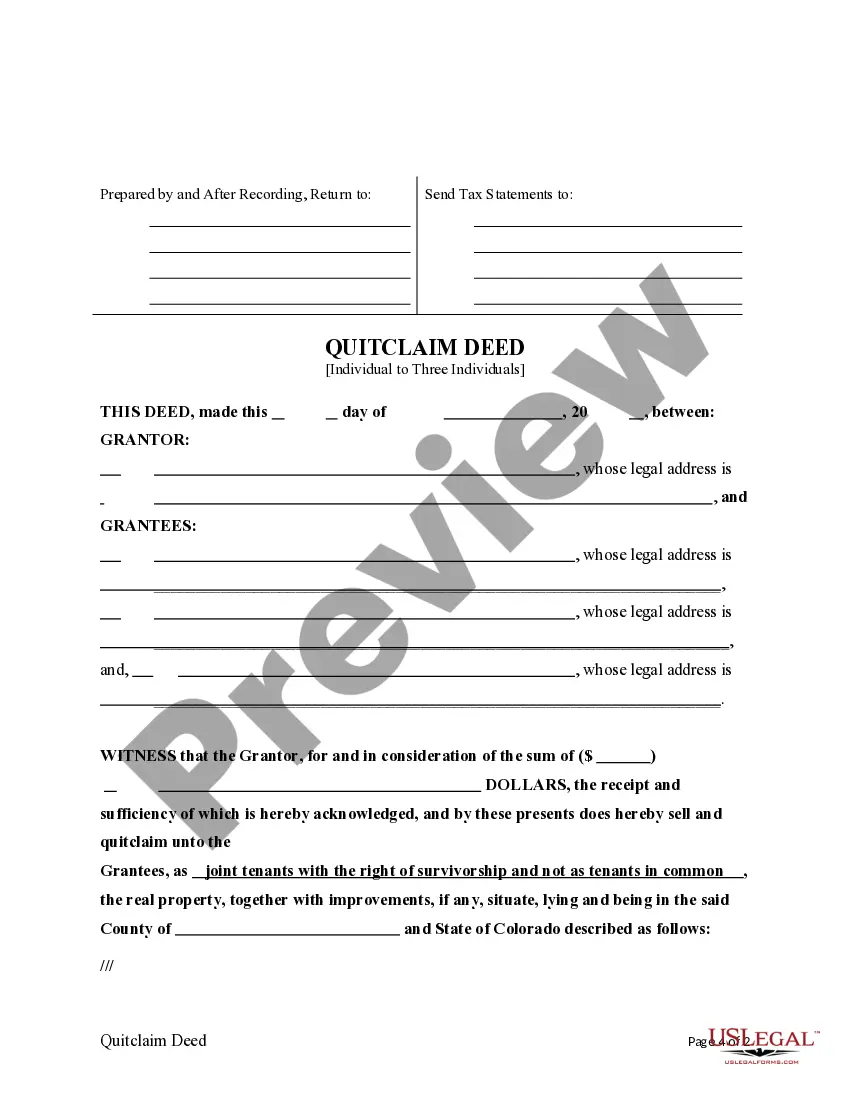
This form is a Quitclaim Deed where an individual (the Grantor) transfers property ownership to three individuals (the Grantees). It serves the purpose of conveying and quitclaiming the described property. The Grantees can take ownership as joint tenants with the right of survivorship or as tenants in common. This makes it different from other deed types, like warranty deeds, which offer guarantees of clear title. This deed complies with state statutory laws, ensuring legal validity for property transfers.
Key parts of this document
- Identification of the Grantor, the individual transferring the property.
- Identification of the Grantees, the three individuals receiving the property.
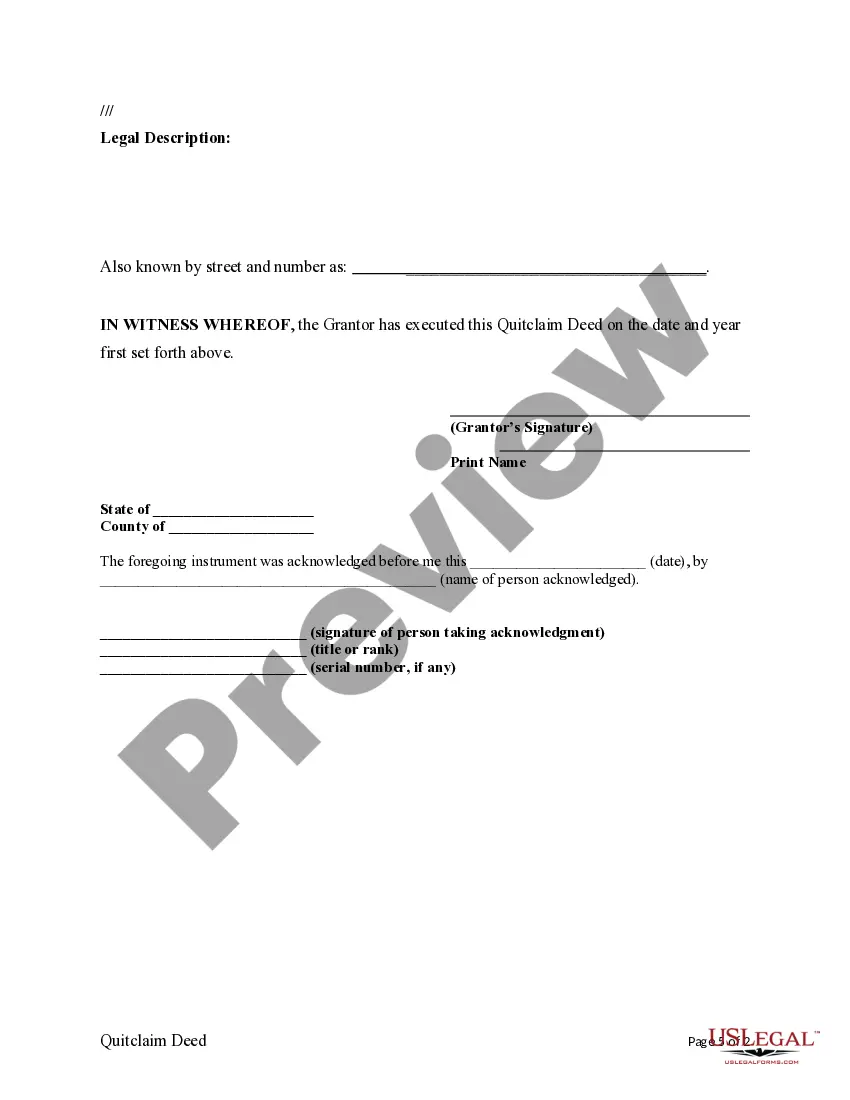
- Description of the property being conveyed, including legal description and address.
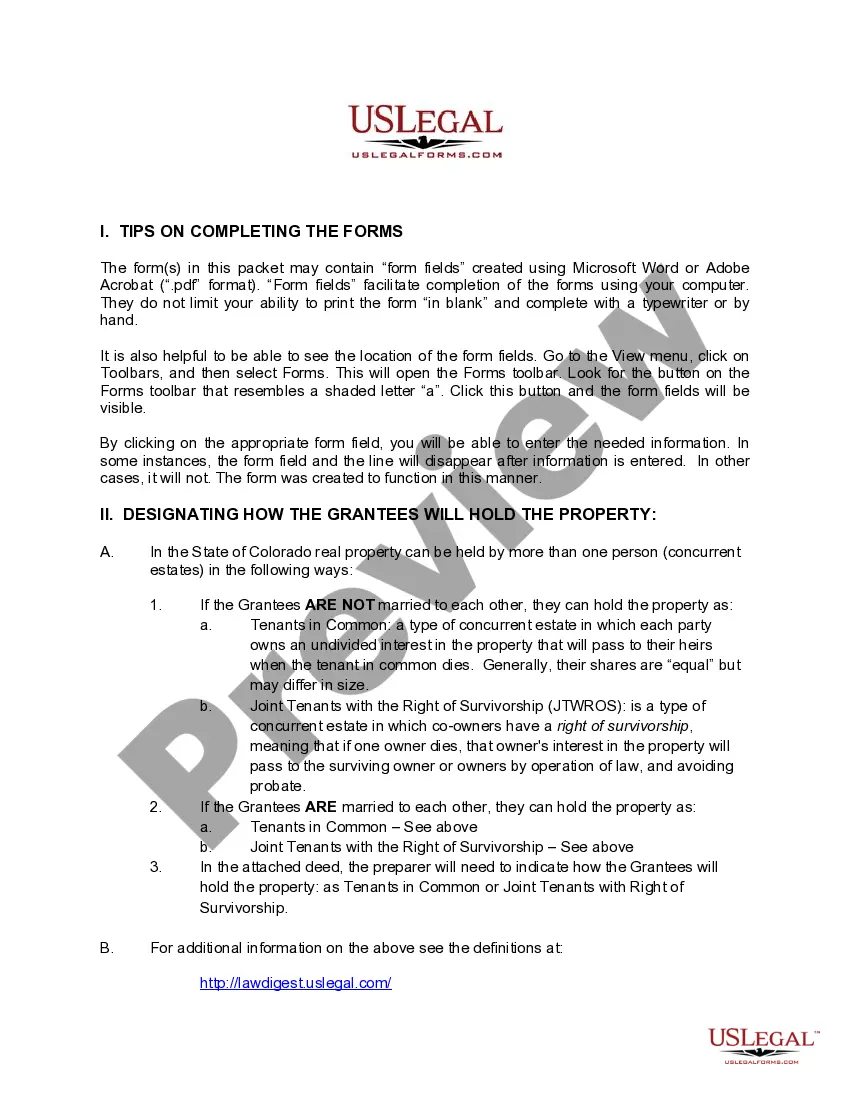
- Section to specify how Grantees will hold the property: as joint tenants or tenants in common.
- Signatures of the Grantor and any required witnesses.
- Notarization section, if applicable, for legal verification of the document.




When to use this document
This Quitclaim Deed form should be used when an individual wishes to transfer property ownership to three other individuals. It is commonly used among family members, friends, or in situations where property ownership needs to be clarified without making warranties about the title. This form is ideal for non-commercial transactions where the Grantor trusts the Grantees and simply wants to convey their interest in the property.
Who should use this form
This form is suitable for:
- Individuals transferring property to multiple recipients.
- Family members or friends involved in informal property transactions.
- Anyone wishing to simplify the property transfer process without legal disputes.
- Property owners who want to clarify joint ownership among Grantees.
Steps to complete this form
- Identify the Grantor, entering their full legal name.
- List the names of the three Grantees receiving the property.
- Provide a complete description of the property, including its address and legal descriptors.
- Specify whether the Grantees will hold the property as joint tenants or tenants in common.
- Have the Grantor sign the document in the presence of a notary, if required, and gather any necessary witness signatures.
- File the signed Quitclaim Deed with the appropriate county office for recording.
Notarization guidance
This form needs to be notarized to ensure legal validity. US Legal Forms provides secure online notarization powered by Notarize, allowing you to complete the process through a verified video call, available anytime.
Get your form ready online
Our built-in tools help you complete, sign, share, and store your documents in one place.
Make edits, fill in missing information, and update formatting in US Legal Forms—just like you would in MS Word.
Download a copy, print it, send it by email, or mail it via USPS—whatever works best for your next step.
Sign and collect signatures with our SignNow integration. Send to multiple recipients, set reminders, and more. Go Premium to unlock E-Sign.
If this form requires notarization, complete it online through a secure video call—no need to meet a notary in person or wait for an appointment.
We protect your documents and personal data by following strict security and privacy standards.

Make edits, fill in missing information, and update formatting in US Legal Forms—just like you would in MS Word.

Download a copy, print it, send it by email, or mail it via USPS—whatever works best for your next step.

Sign and collect signatures with our SignNow integration. Send to multiple recipients, set reminders, and more. Go Premium to unlock E-Sign.

If this form requires notarization, complete it online through a secure video call—no need to meet a notary in person or wait for an appointment.

We protect your documents and personal data by following strict security and privacy standards.
Avoid these common issues
- Failing to provide a complete and accurate property description.
- Not specifying how the Grantees will hold the property.
- Lacking proper signatures from the Grantor or required witnesses.
- Omitting notarization, which may be necessary for validity.
Why complete this form online
- Convenient access to legal forms without needing to visit an attorney's office.
- Edit and customize the form to fit specific needs easily.
- Immediate downloads allow for faster transfer of ownership.
- Reliability ensured through professional drafting by licensed attorneys.
Looking for another form?

Form popularity
FAQ
Yes, a Colorado Quitclaim Deed from an Individual to Three Individuals effectively transfers ownership of property. This type of deed allows the individual to give up any claim to the property, passing the title to multiple individuals at once. It's essential to understand that while a quitclaim deed transfers ownership, it does not guarantee that the grantor has full title. For a smooth transaction, consider using resources from US Legal Forms to assist you in drafting a Colorado Quitclaim Deed that fits your specific needs.
Yes, you can add a third person to your deed using a quitclaim deed. Utilizing a Colorado Quitclaim Deed from an Individual to Three Individuals allows you to easily include that third party as a co-owner. Be sure to have all current owners consent and sign the deed, ensuring that the transaction is valid and understood by all.
The best way to add someone to a deed is by executing a quitclaim deed. Specifically, a Colorado Quitclaim Deed from an Individual to Three Individuals offers a straightforward solution for transferring property interests. This method requires fewer legal formalities and can be completed quickly, ensuring that all parties are officially recognized in ownership.
Transferring property to a family member in Colorado typically involves completing a quitclaim deed. You can utilize a Colorado Quitclaim Deed from an Individual to Three Individuals to ensure all involved parties are recognized. It’s advisable to have the deed notarized and recorded with the county clerk to finalize the transfer and protect everyone's rights.
Filling out a Colorado quitclaim deed involves several key steps. First, identify the current owner, also known as the grantor, and the new owners, or grantees. You must include a legal description of the property, and ensure all parties sign the document properly. Using platforms like US Legal Forms can streamline this process, providing templates and guidance tailored for a Colorado Quitclaim Deed from an Individual to Three Individuals.
Yes, you can add someone to your deed without refinancing by using a quitclaim deed. A Colorado Quitclaim Deed from an Individual to Three Individuals enables you to transfer ownership interests without altering your mortgage. However, it's essential to check with your lender, as they may have specific requirements regarding such changes.
A quitclaim deed allows for multiple names to be included. Specifically, in a Colorado Quitclaim Deed from an Individual to Three Individuals, you can easily list all three individuals as grantees. Keep in mind that the number of individuals can impact property rights and future transactions, so clarity is essential in the deed.
In general, an owner of a property must consent to any changes on a deed. Therefore, adding someone's name to a deed without permission is not legally recognized. When considering a Colorado Quitclaim Deed from an Individual to Three Individuals, it’s vital that all parties involved agree to the transaction. This ensures that the deed accurately reflects everyone's intent.
A primary disadvantage of receiving a Colorado Quitclaim Deed from an Individual to Three Individuals is the absence of title guarantees. As a buyer, you carry the burden of any existing claims or encumbrances on the property. Therefore, it is wise to use resources like USLegalForms to obtain more information and ensure you understand your rights and liabilities in such transactions.
Using a quitclaim deed, such as a Colorado Quitclaim Deed from an Individual to Three Individuals, can be risky because it does not protect the buyer against title defects. If the grantor fails to disclose any problems with the title, the new owner may face legal challenges or financial loss. It is essential to weigh these risks before considering a quitclaim deed.