Colorado Proof of Death and Heirship
About this form
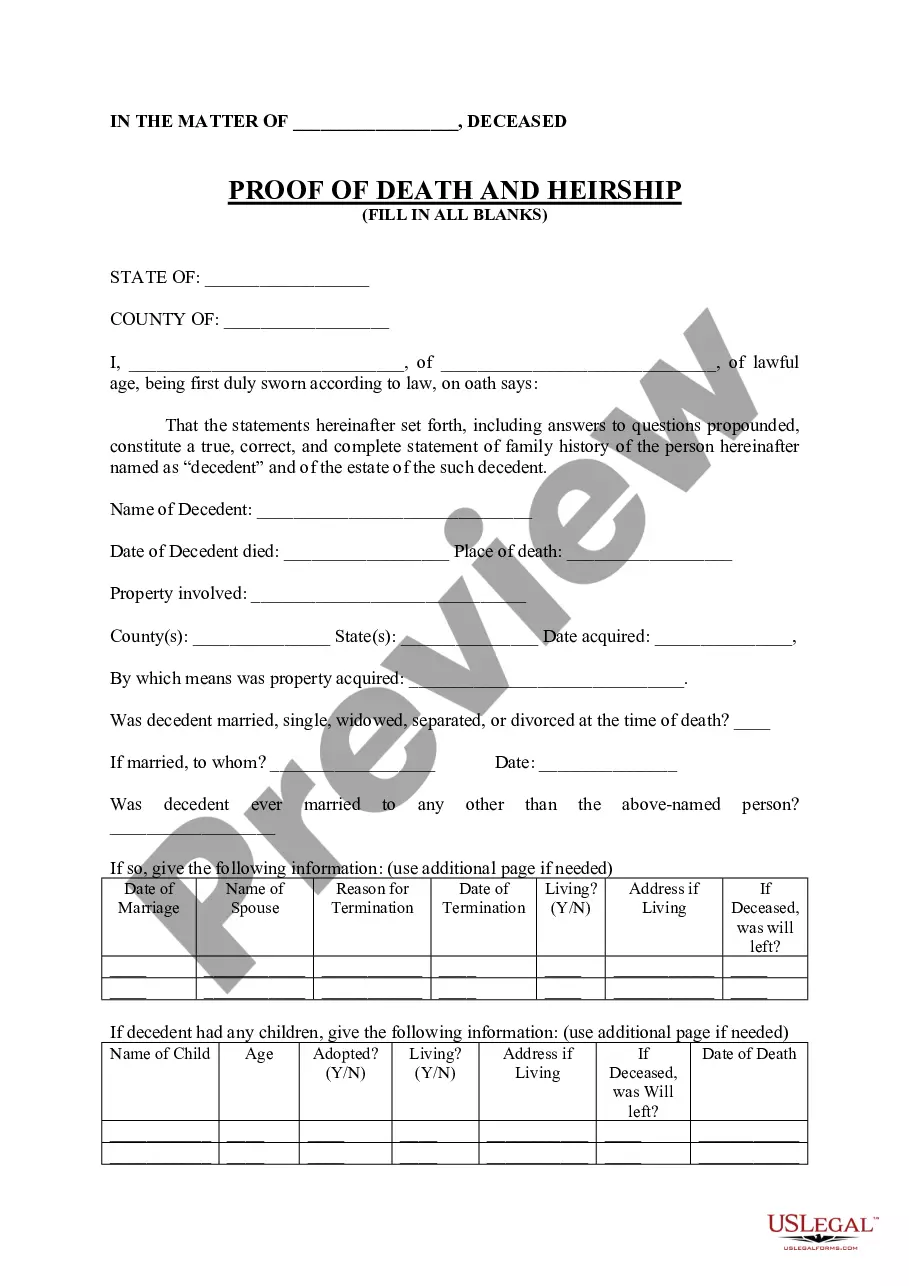
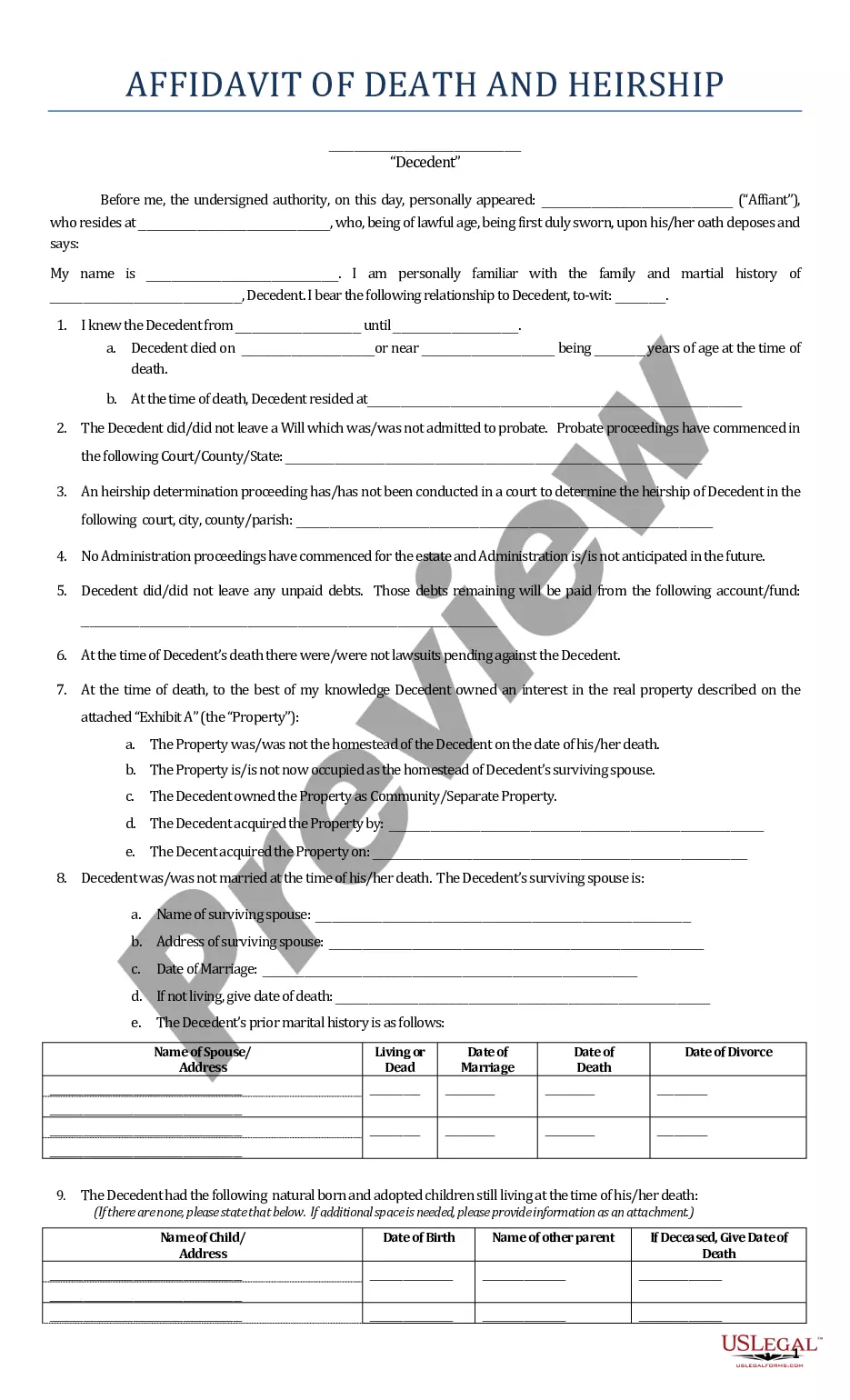
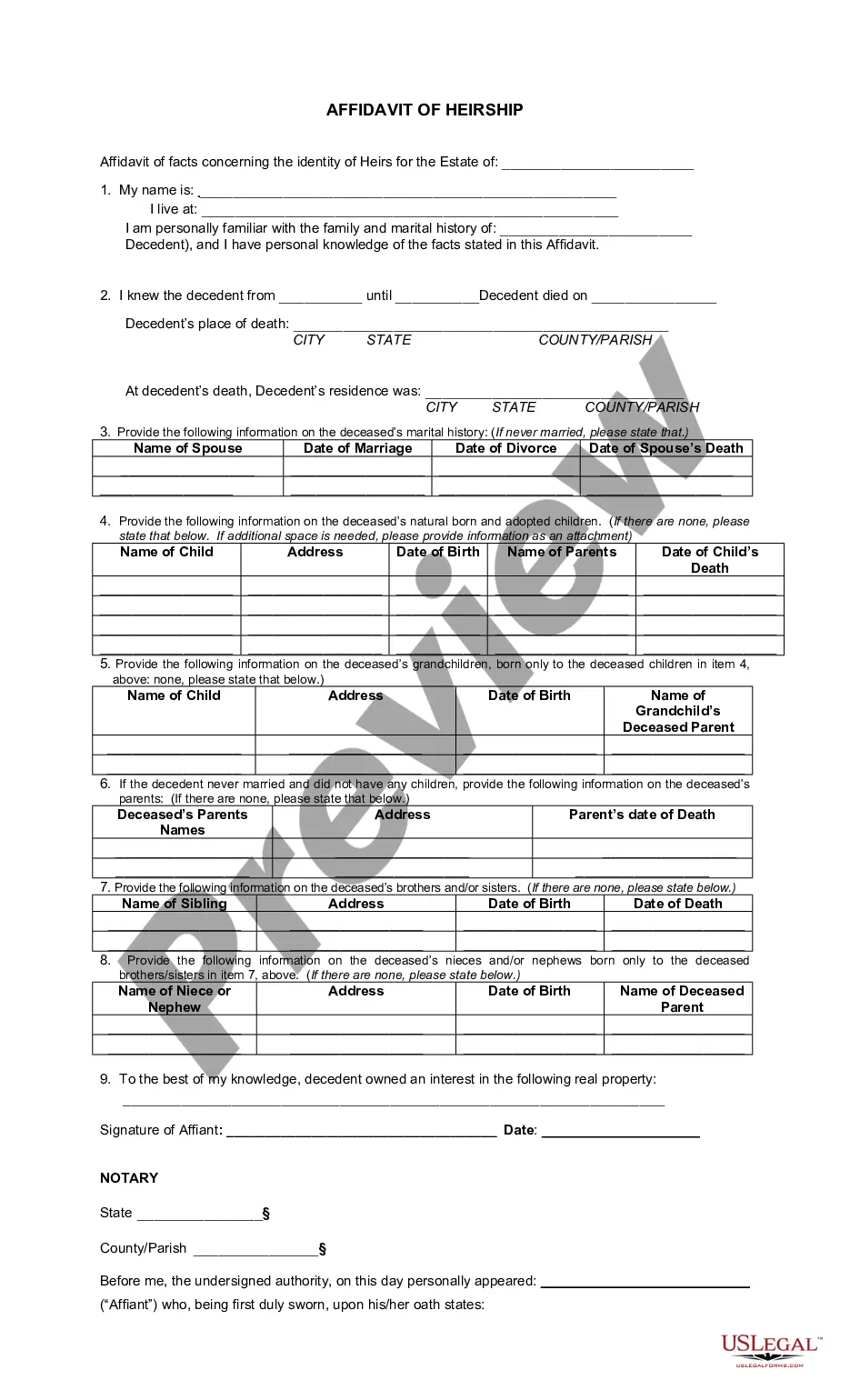
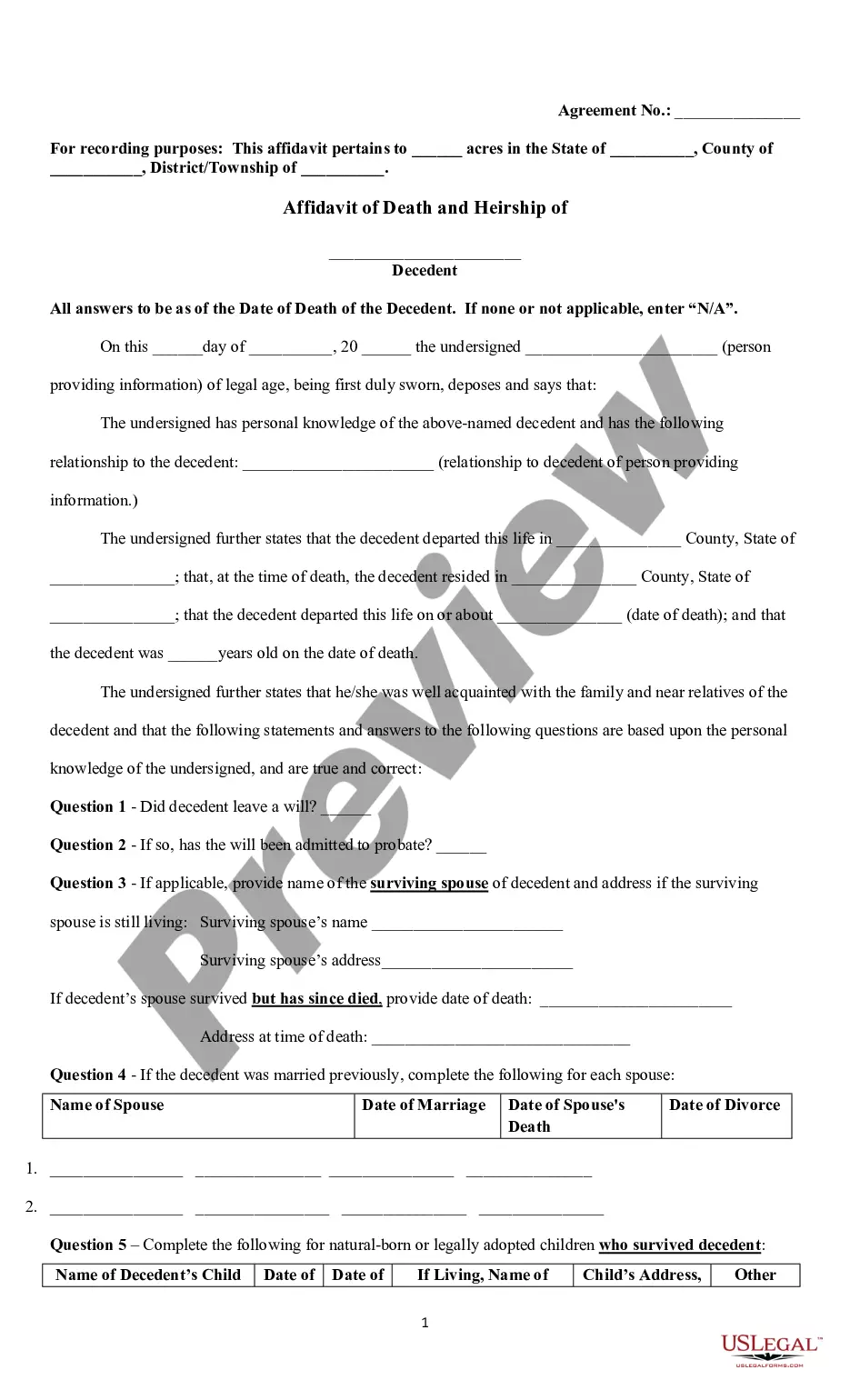
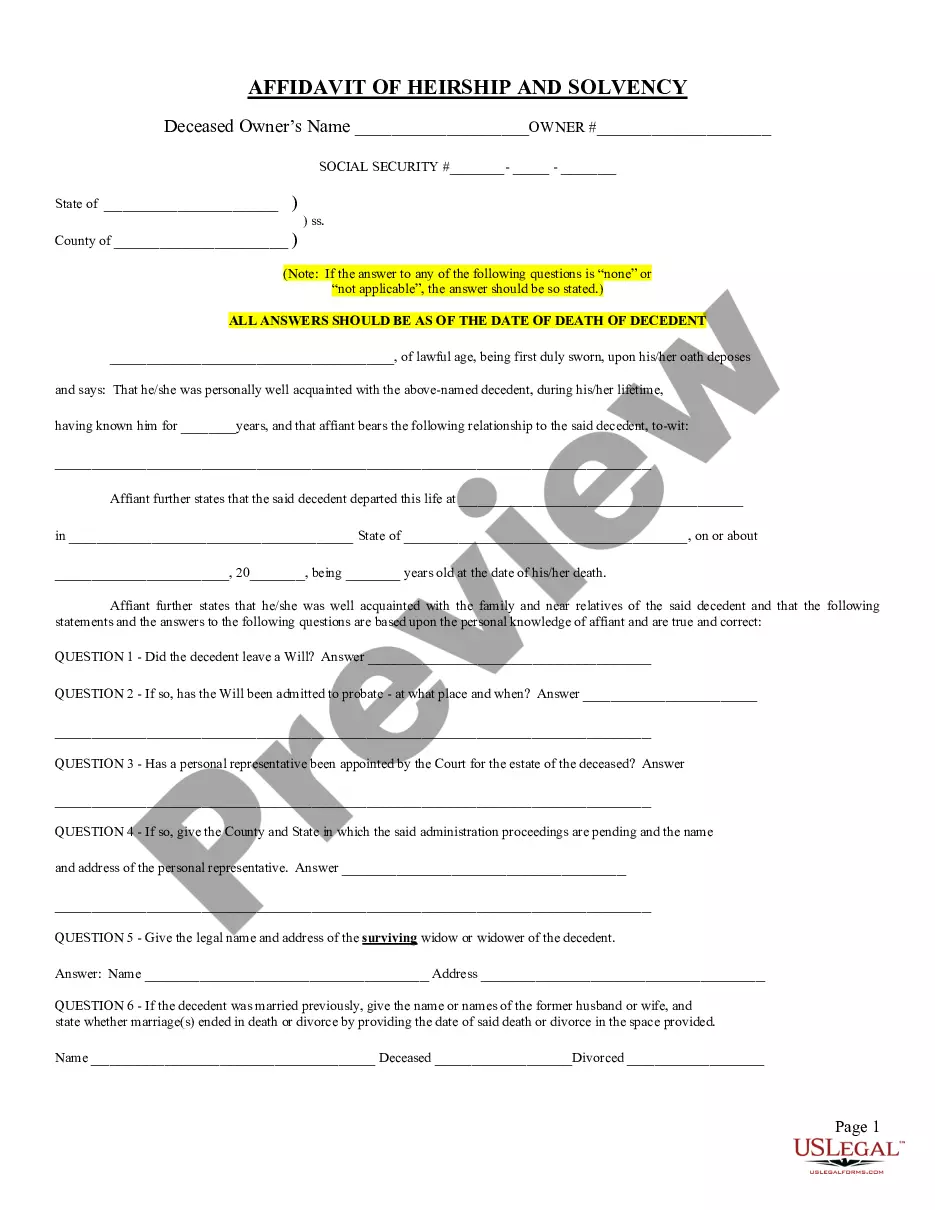
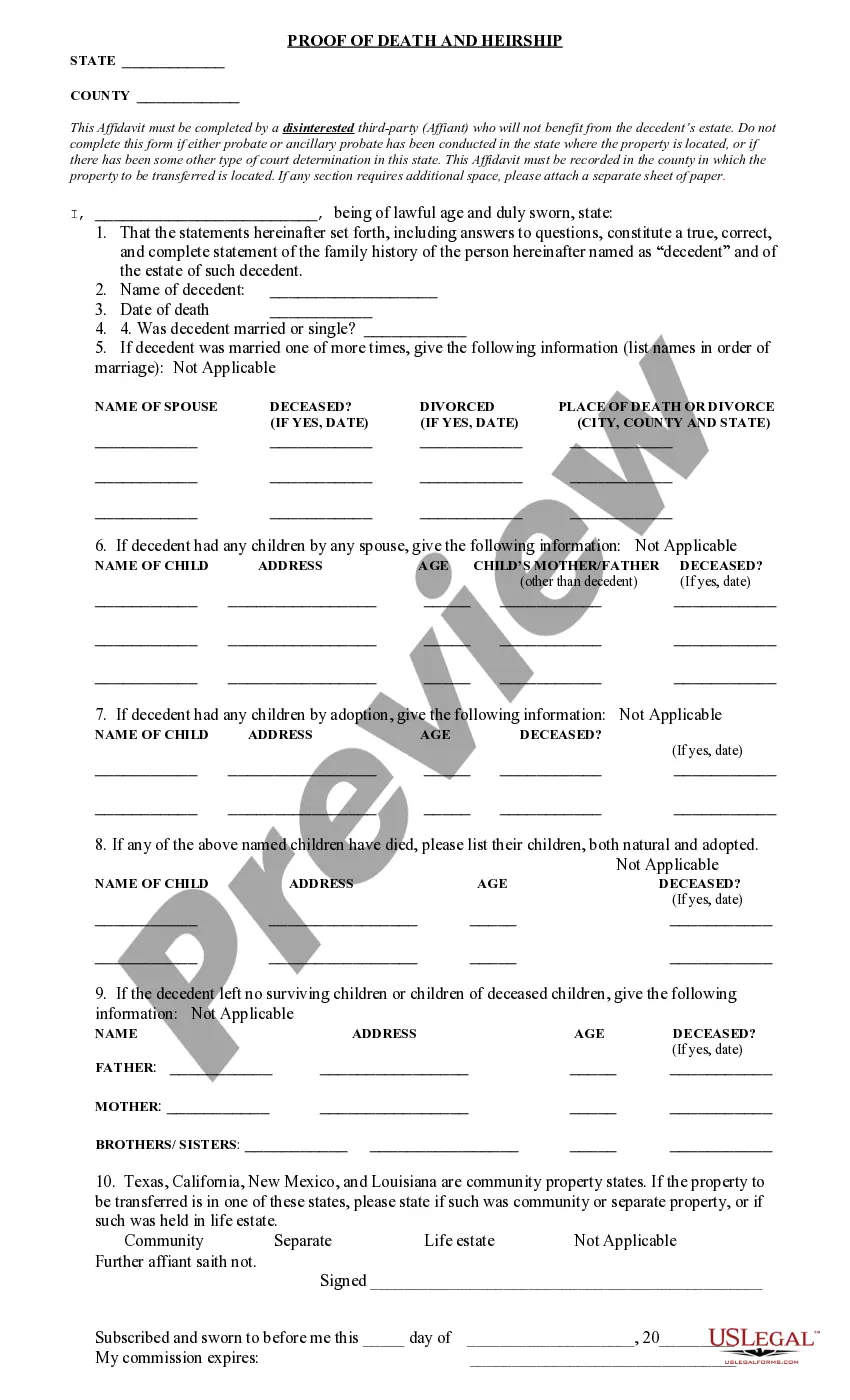
The Proof of Death and Heirship is a legal document that establishes the heirs of a deceased individual. This affidavit primarily serves to declare rightful ownership of property or an estate by outlining the family history and relationships of the decedent. Unlike other legal documents, it specifically focuses on confirming both the death of the individual and the identity of their heirs.
Key components of this form
- Name of decedent
- Date and place of the decedent's death
- Information about the decedent's marriage status and any prior marriages
- Details regarding the decedent's children and their status
- Information about the decedent's parents, siblings, and other relatives
- Supporting affidavit from a witness confirming the accuracy of the information


Situations where this form applies
This form is used in situations where an individual needs to establish their legal status as an heir to a deceased person's estate. Common scenarios include property transfers, settling an estate, or claiming assets that belong to the deceased. It may be required when no formal will exists, or when proving heirship is necessary to complete legal proceedings or transactions related to the estate.
Who needs this form
- Individuals seeking to affirm their status as an heir for a deceased relative
- Surviving family members who need to transfer estate property legally
- Executors or administrators of estates that need to determine heirs
- Attorneys handling estate or probate matters for clients
How to prepare this document
- Identify and fill in all required information about the decedent, including their name, date of death, and place of death.
- Detail the decedent's marriage status and list any previous spouses as required.
- Provide information on the decedent's children, parents, and siblings.
- Have a witness complete the supporting affidavit section, confirming their relationship to the decedent.
- Sign the document in front of a notary public, if required.
- File the completed form in all counties where the decedent owned property.
Is notarization required?
Yes, this form must be notarized to be legally valid. US Legal Forms offers integrated online notarization services that are available 24/7. This secure video call process ensures legal equivalence without the need for physical travel.
Get your form ready online
Our built-in tools help you complete, sign, share, and store your documents in one place.
Make edits, fill in missing information, and update formatting in US Legal Forms—just like you would in MS Word.
Download a copy, print it, send it by email, or mail it via USPS—whatever works best for your next step.
Sign and collect signatures with our SignNow integration. Send to multiple recipients, set reminders, and more. Go Premium to unlock E-Sign.
If this form requires notarization, complete it online through a secure video call—no need to meet a notary in person or wait for an appointment.
We protect your documents and personal data by following strict security and privacy standards.

Make edits, fill in missing information, and update formatting in US Legal Forms—just like you would in MS Word.

Download a copy, print it, send it by email, or mail it via USPS—whatever works best for your next step.

Sign and collect signatures with our SignNow integration. Send to multiple recipients, set reminders, and more. Go Premium to unlock E-Sign.

If this form requires notarization, complete it online through a secure video call—no need to meet a notary in person or wait for an appointment.

We protect your documents and personal data by following strict security and privacy standards.
Common mistakes to avoid
- Failing to provide complete and accurate information about the family structure.
- Not having the supporting affidavit signed by a qualified witness.
- Forgetting to file the document in all necessary jurisdictions.
- Neglecting to notarize the document when required.
Why use this form online
- Convenient access to certified legal forms at any time.
- Easy customization of the form to meet specific needs.
- Reliability in that forms are drafted by licensed attorneys.
- Immediate availability for download and use.
Summary of main points
- The Proof of Death and Heirship is essential for establishing legal heirs and transferring ownership of property.
- Completing the form accurately is crucial to avoid legal complications.
- Notarization is necessary for the formâs validity, ensuring that the information contends in a legal context.
- Consult state-specific guidelines as requirements may vary by jurisdiction.
Looking for another form?
Form popularity
FAQ
To obtain an affidavit of heirship, you may start by drafting the document that includes important details such as the deceased's information, the names of the heirs, and their relationship to the deceased. It's advisable to consult with a legal professional to ensure the affidavit meets all the necessary legal requirements. Tools like USLegalForms can simplify this process by providing templates and guidance for creating an affidavit that supports your case in matters of Colorado Proof of Death and Heirship.
In Colorado, several individuals can request a death certificate. This includes immediate family members, legal representatives, or anyone with a tangible interest in the estate. It's important to have proper identification and may be required to explain your relationship with the deceased during the request process. Understanding who can request these certificates is key for understanding Colorado Proof of Death and Heirship.
To prove you are an heir, you typically need to provide documentation that establishes your relationship to the deceased. This can include birth certificates, marriage licenses, or a family tree. Additionally, an affidavit of heirship may be useful, as it serves as a sworn statement confirming your status as an heir. All of this information plays a vital role in the process of Colorado Proof of Death and Heirship.
To obtain a death certificate in Colorado, you need to contact the Colorado Department of Public Health and Environment. You can request the certificate online, by mail, or in person. Make sure to provide the necessary details, such as the deceased’s full name, date of death, and relationship to you, to ensure a smooth process. This document is essential for matters related to Colorado Proof of Death and Heirship.
Determination of heirs refers to the legal process of identifying and establishing the rightful beneficiaries of a deceased person's estate. This process is necessary for the division of assets and is essential for executing the terms of any existing will or the state's intestacy laws. By leveraging services like USLegalForms, you can efficiently manage the steps required for the Colorado proof of death and heirship, ensuring clarity and legal compliance throughout the process.
The determination of heirs in Colorado involves identifying individuals who are legally entitled to inherit from a deceased person’s estate. This process often requires reviewing the deceased’s will, or, in its absence, applying state intestacy laws. Utilizing tools like USLegalForms can help guide you through the steps required for a streamlined Colorado proof of death and heirship, ensuring that all potential heirs are accurately identified.
In Colorado, an heir is typically an individual entitled to inherit property from a deceased person's estate under state law. This usually includes children, spouses, and any other relatives designated by law, such as parents or siblings. Understanding who qualifies as an heir is crucial in the Colorado proof of death and heirship process, as it establishes rightful ownership of the deceased's assets.
To fill out an affidavit of death and heirship correctly, you should start by gathering all necessary information about the deceased, such as their full name, date of birth, and date of death. Next, list the names and details of the heirs, including their relationship to the deceased. Using a platform like USLegalForms can simplify the process by providing templates specifically designed for Colorado proof of death and heirship, ensuring compliance with local laws.
To obtain a legal heir certificate in the USA, you typically need to submit an application to the local government or court along with necessary documents like death certificates and proof of relationships. This certificate officially recognizes your status as an heir and can be vital in processes related to Colorado Proof of Death and Heirship. Utilizing services like uslegalforms can streamline this process and ensure you have the correct paperwork.
Yes, an affidavit of death often needs to be notarized to ensure its validity. Notarization serves as a means of verifying the identity of the signer and the authenticity of the document. This is an important step in the process of establishing Colorado Proof of Death and Heirship, as it provides necessary legal credibility.