Colorado Revocation of Postnuptial Property Agreement
Understanding this form
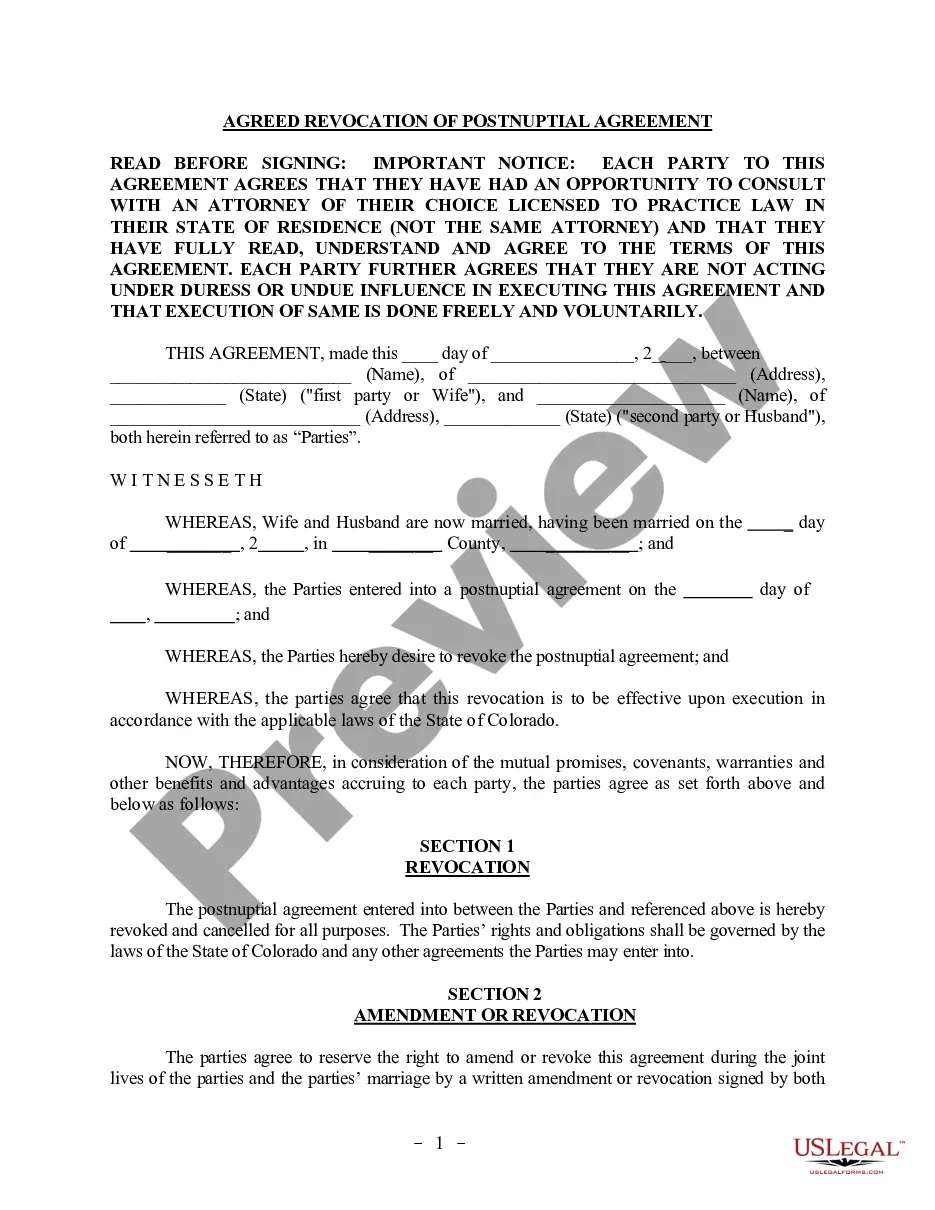
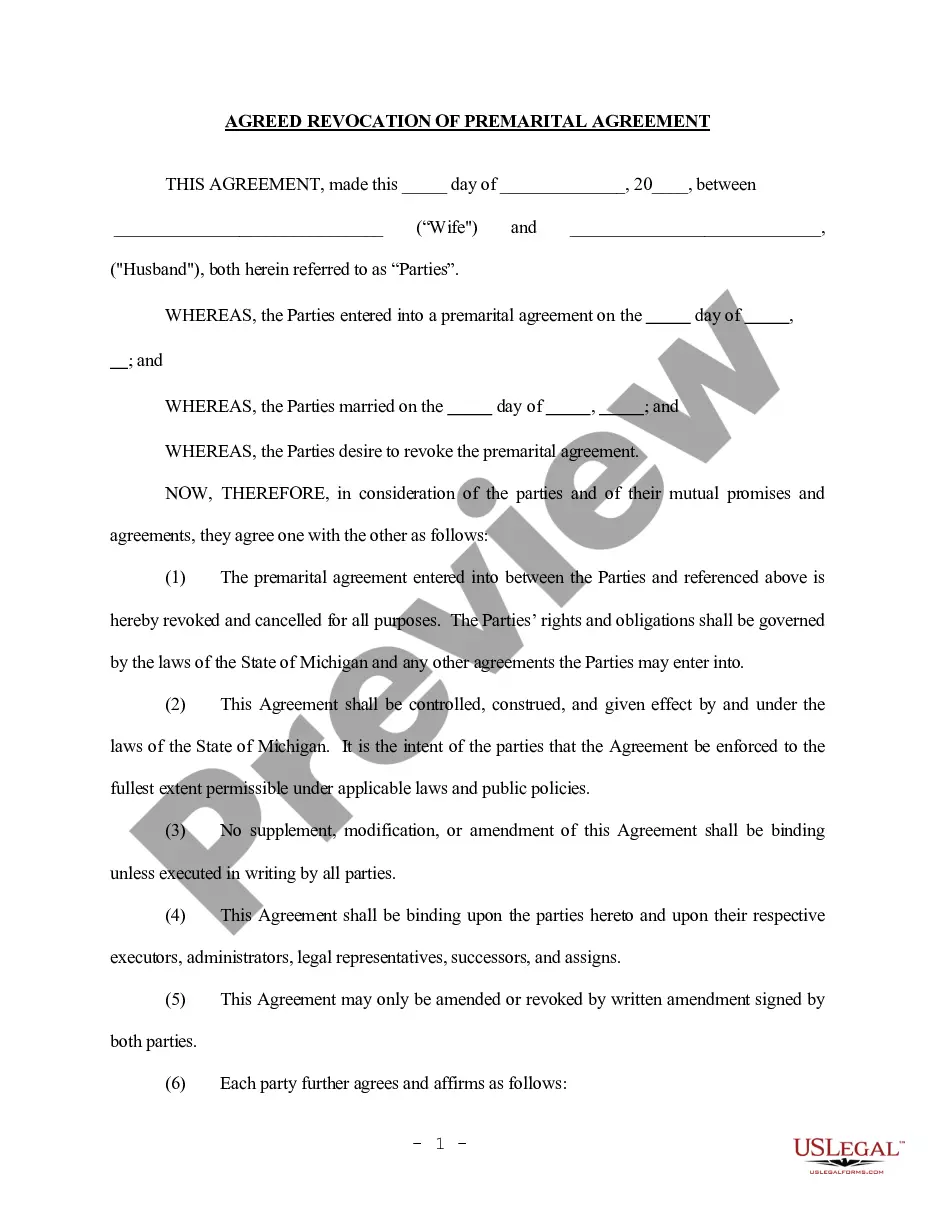
The Revocation of Postnuptial Property Agreement is a legal document that allows couples to officially cancel an existing postnuptial agreement. While postnuptial agreements outline property rights during a marriage, this form serves as the formal mechanism to revoke those outlined rights. It helps ensure that both parties acknowledge the revocation and protects their interests moving forward.
What’s included in this form
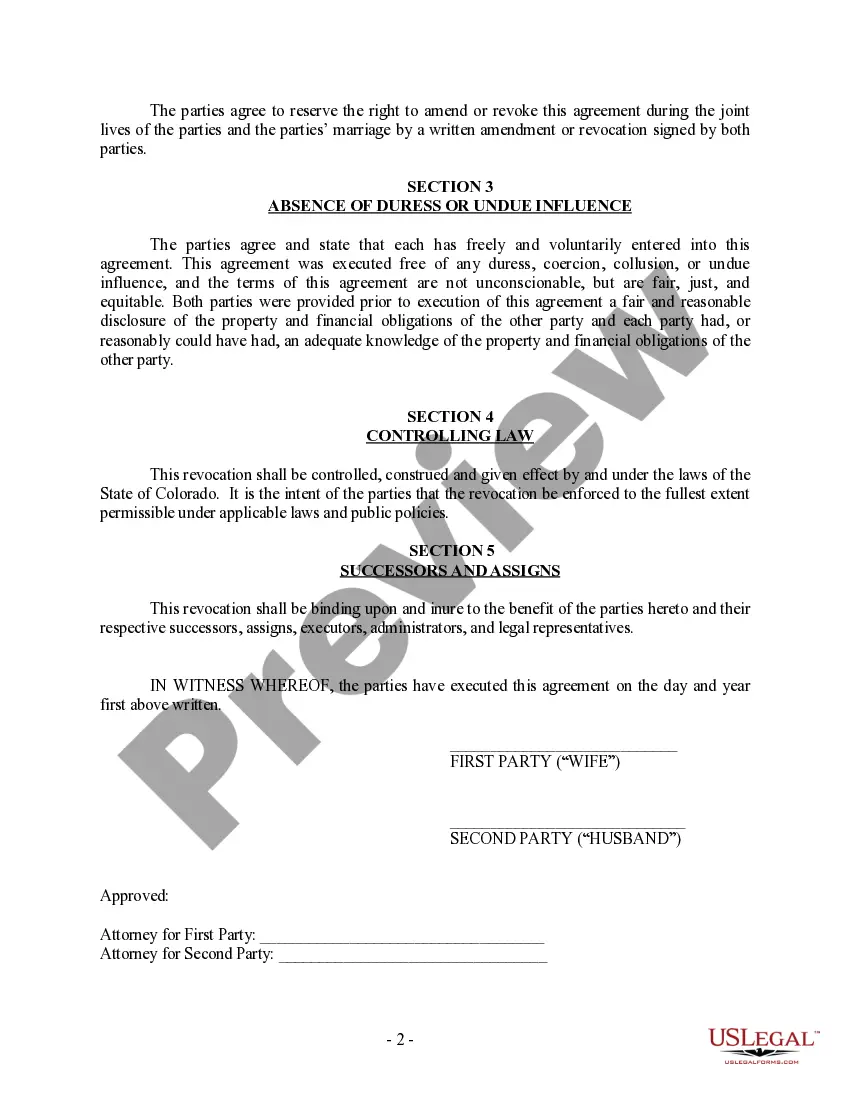
- Revocation Statement: Confirms that the existing postnuptial agreement is nullified.
- Agreement of Free Will: States that both parties enter the revocation voluntarily and without coercion.
- Governing Law: Outlines that the laws of Colorado govern the revocation.
- Successors and Assigns: Ensures the revocation applies to both parties and their legal representatives.
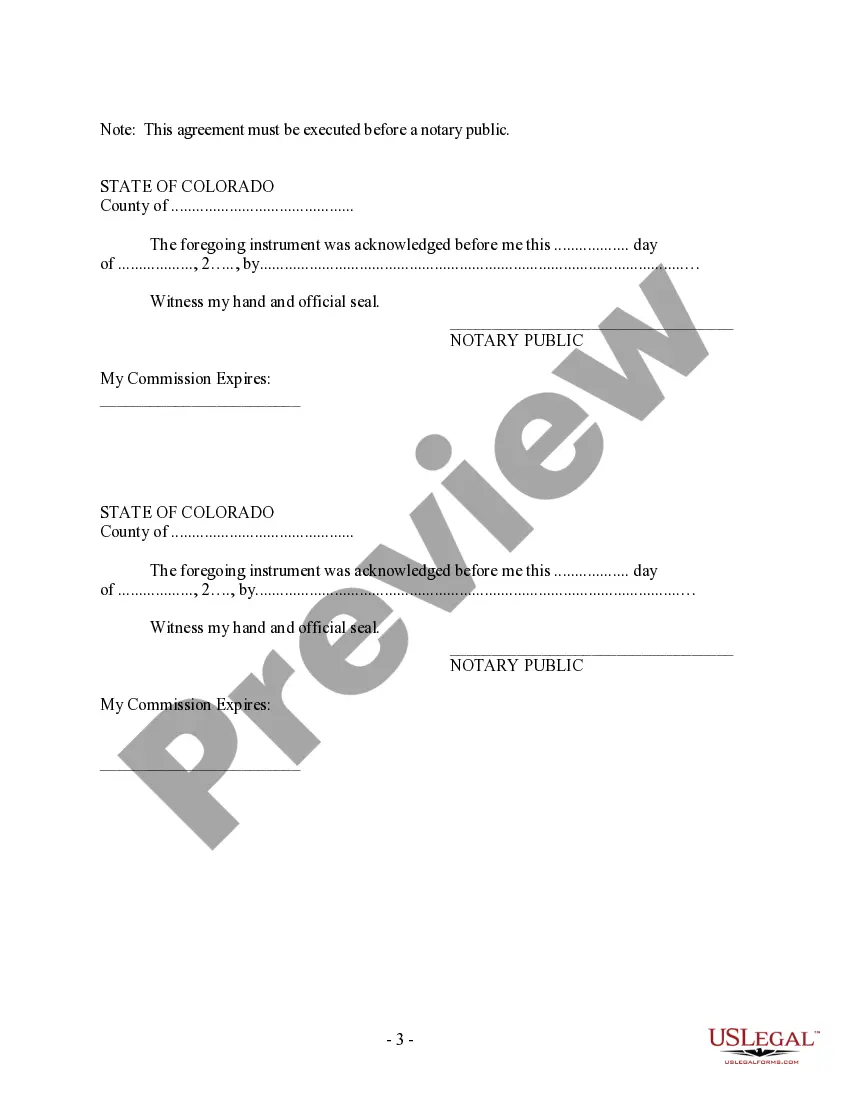
- Notarization Requirement: Indicates the need for notarization to validate the form.
When this form is needed
This form is typically used when a married couple decides to revoke their existing postnuptial property agreement. Situations that may prompt this decision include changes in financial circumstances, a desire for updated terms reflecting current arrangements, or the general need to dissolve prior agreements that no longer serve their interests.
Intended users of this form
- Married couples who have previously established a postnuptial property agreement.
- Parties seeking a clear, legal means to revoke that agreement.
- Individuals who wish to ensure both spouses are in agreement about the revocation process.
How to prepare this document
- Identify the parties involved: Clearly state the names of both spouses in the form.
- Enter the date: Fill in the date the revocation agreement is made.
- Review the terms: Read through all the clauses to ensure understanding and agreement.
- Sign in presence of a notary: Both parties must sign the document while present before a notary public.
- Ensure notary completion: The notary should complete their section, verifying that the signatures are valid.
Notarization guidance
This form needs to be notarized to ensure legal validity. US Legal Forms provides secure online notarization powered by Notarize, allowing you to complete the process through a verified video call, available anytime.
Get your form ready online
Our built-in tools help you complete, sign, share, and store your documents in one place.
Make edits, fill in missing information, and update formatting in US Legal Forms—just like you would in MS Word.
Download a copy, print it, send it by email, or mail it via USPS—whatever works best for your next step.
Sign and collect signatures with our SignNow integration. Send to multiple recipients, set reminders, and more. Go Premium to unlock E-Sign.
If this form requires notarization, complete it online through a secure video call—no need to meet a notary in person or wait for an appointment.
We protect your documents and personal data by following strict security and privacy standards.

Make edits, fill in missing information, and update formatting in US Legal Forms—just like you would in MS Word.

Download a copy, print it, send it by email, or mail it via USPS—whatever works best for your next step.

Sign and collect signatures with our SignNow integration. Send to multiple recipients, set reminders, and more. Go Premium to unlock E-Sign.

If this form requires notarization, complete it online through a secure video call—no need to meet a notary in person or wait for an appointment.

We protect your documents and personal data by following strict security and privacy standards.
Mistakes to watch out for
- Failing to notarize the form, which can render it invalid.
- Not having both parties present when signing the document.
- Leaving out necessary details, such as the date or signatures of the parties involved.
- Not reviewing the terms carefully, which may lead to misunderstandings or disagreements later.
Benefits of completing this form online
- Convenience of immediate access to legal forms from home.
- Editable templates that can be tailored to specific needs.
- Reliable, attorney-drafted language to ensure legal compliance.
Quick recap
- The Revocation of Postnuptial Property Agreement cancels an existing agreement between spouses.
- Both parties must agree to the revocation and sign in front of a notary.
- A clear understanding of the terms is crucial to avoid future disputes.
Looking for another form?
Form popularity
FAQ
Yes, postnuptial agreements are enforceable in Colorado, provided they meet certain legal requirements. These agreements must be entered into voluntarily, with full disclosure of assets, and must have clear, agreed-upon terms. For those considering a Colorado Revocation of Postnuptial Property Agreement, it is an effective way to manage property rights during marriage.
To invalidate a postnuptial agreement, a party typically needs to present evidence of issues such as fraud, coercion, or improper signing procedures. This often involves filing a legal claim to challenge the agreement in court. Understanding the grounds for the Colorado Revocation of Postnuptial Property Agreement can greatly assist in navigating this complex process.
Several factors can void a postnuptial agreement, including fraud, lack of full disclosure of assets, or if it is found to be unconscionable. If a court determines that one party was misled about the terms or that the agreement is fundamentally unfair, it may be voided. This highlights the importance of clear communication and fairness in creating a Colorado Revocation of Postnuptial Property Agreement.
A postnuptial agreement may be deemed invalid if it lacks mutual consent, if either party did not fully understand the agreement, or if it was signed under duress or coercion. Additionally, if the agreement does not comply with state laws regarding property division, it may not hold up in court. Therefore, understanding the criteria for a valid Colorado Revocation of Postnuptial Property Agreement is crucial.
Yes, a postnuptial agreement can be overturned under certain circumstances. If a party can prove that the agreement was signed under duress, fraud, or without full disclosure of assets, a court may consider the Colorado Revocation of Postnuptial Property Agreement. Additionally, if the agreement is deemed unconscionable or if both parties did not have independent legal advice, it may also be invalidated. For guidance and support in navigating this process, you can turn to US Legal Forms to access reliable legal resources and templates.
Yes, Colorado does recognize post-nuptial agreements. These agreements are valid as long as they are created voluntarily and fairly. If you are considering a Colorado Revocation of Postnuptial Property Agreement, using a reliable platform like US Legal Forms can provide you with the necessary resources to ensure compliance with Colorado law.
Yes, post-nuptial agreements can hold up in court when they are properly drafted and executed. In Colorado, these agreements must meet specific legal criteria to ensure their enforceability. Proper documentation and legal counsel can enhance the chances of your Colorado Revocation of Postnuptial Property Agreement being upheld in court, strengthening your position in case of disputes.