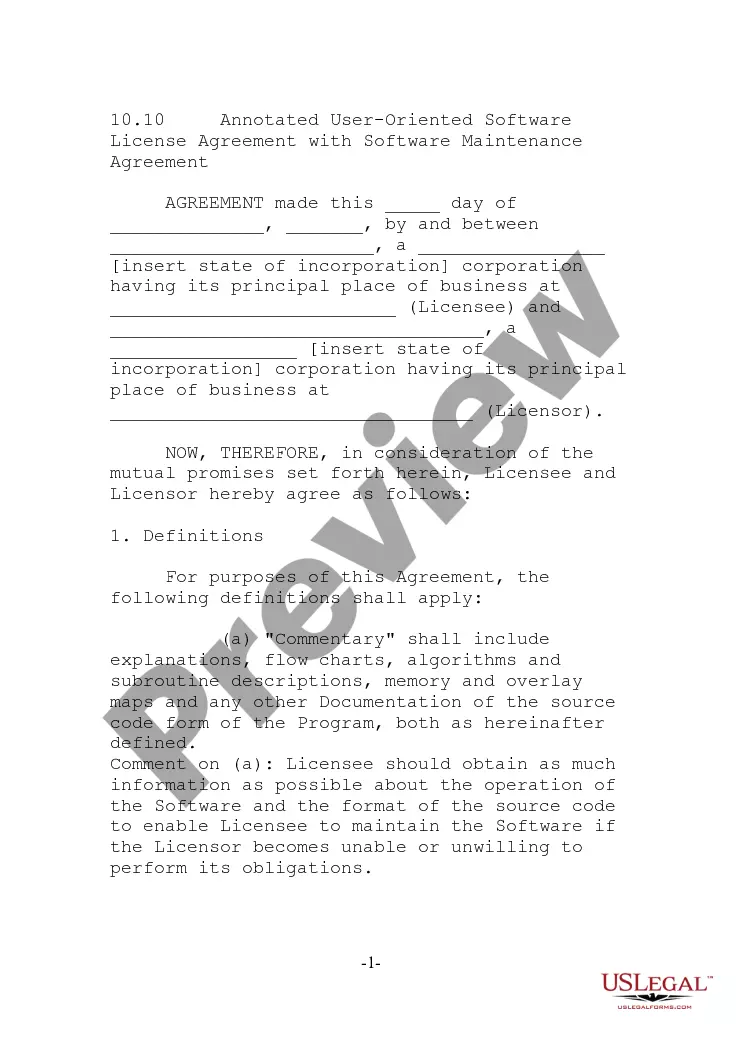
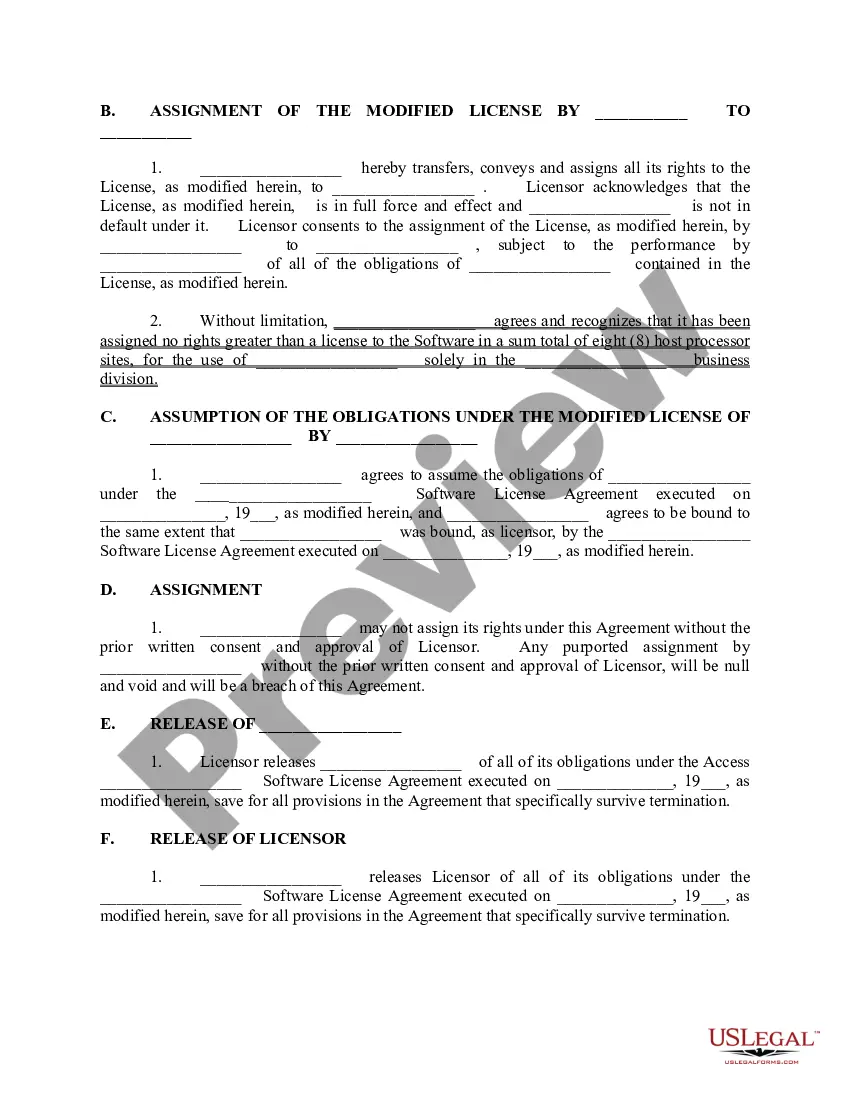
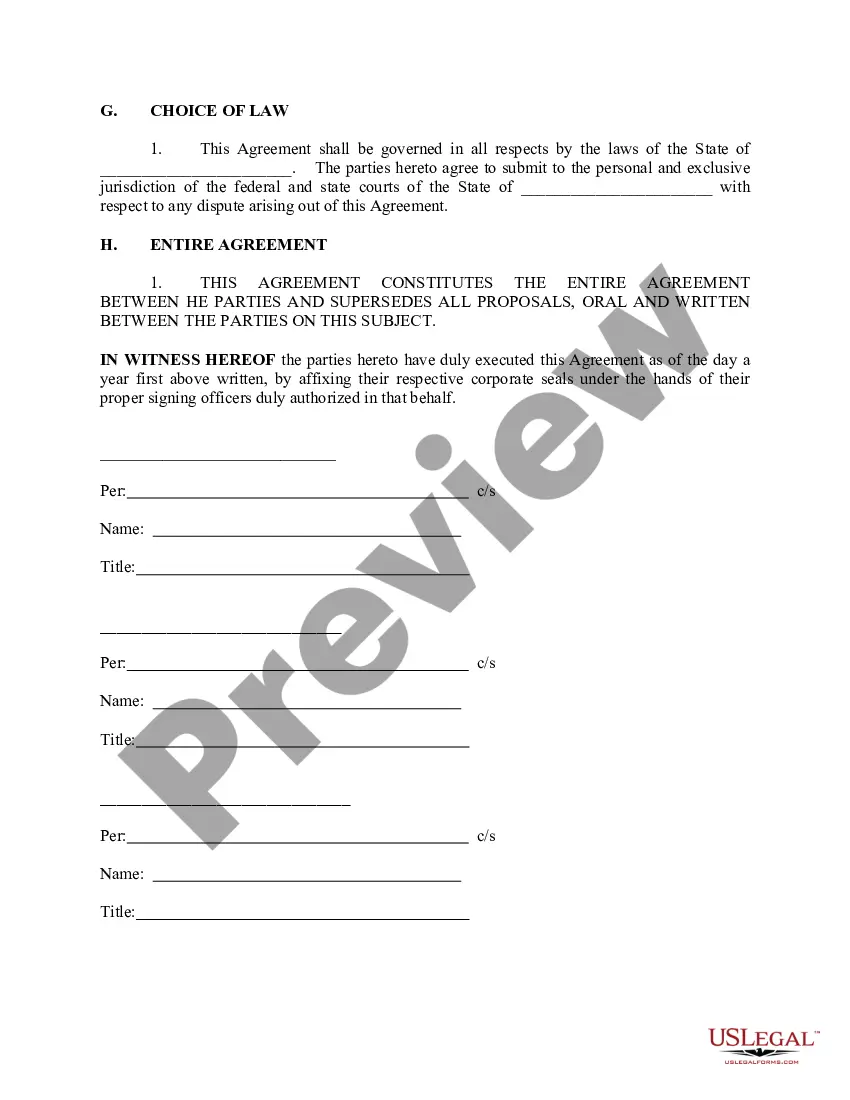
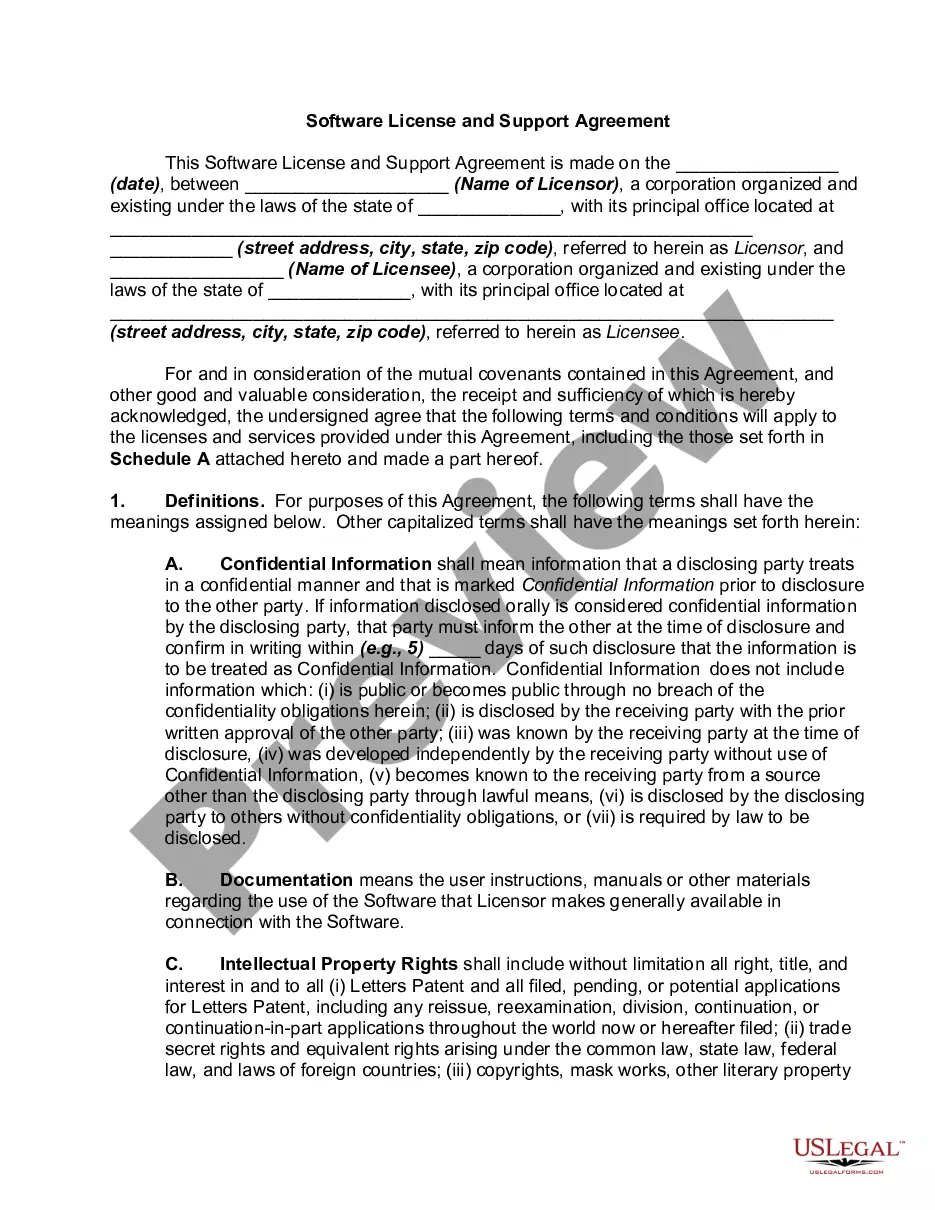
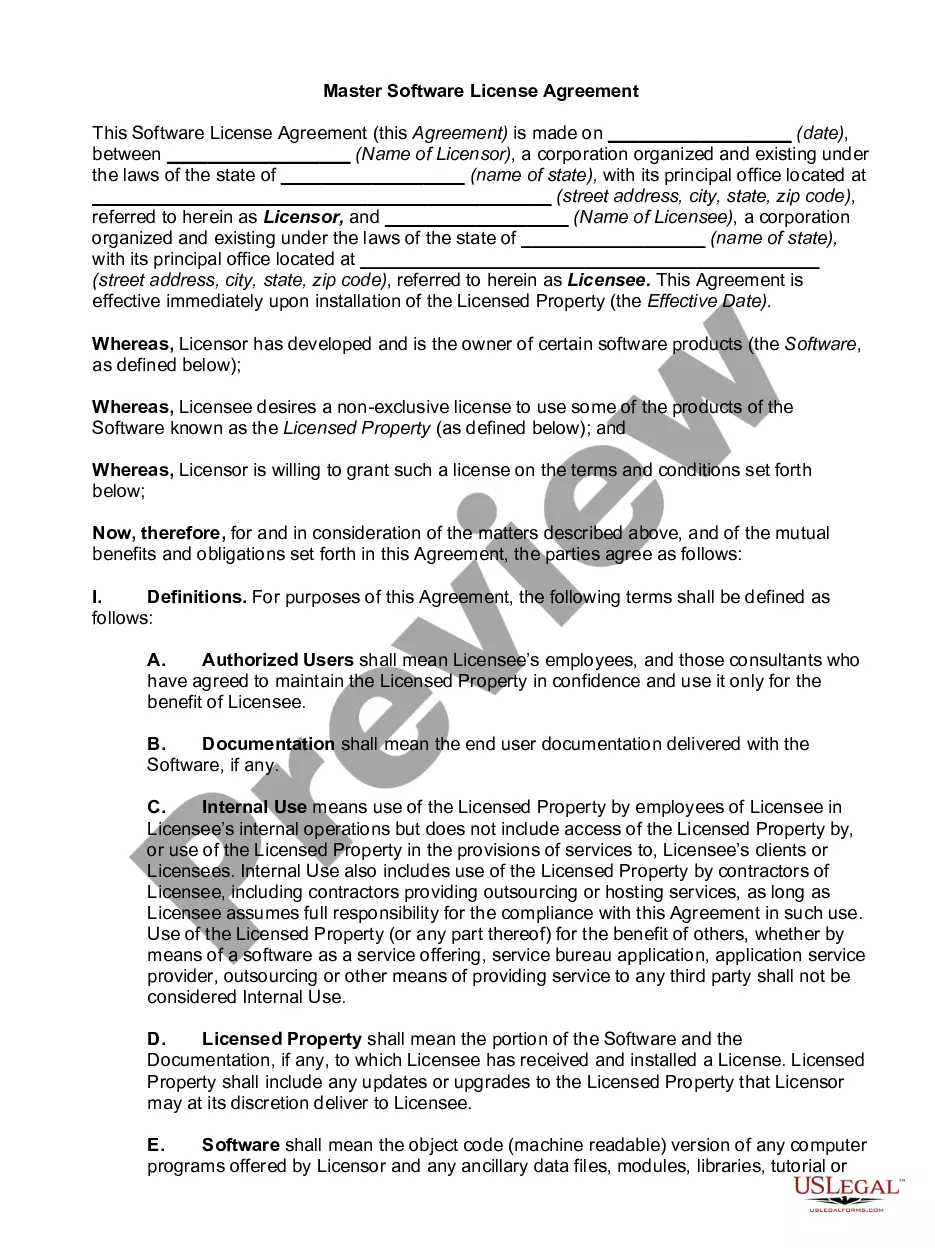
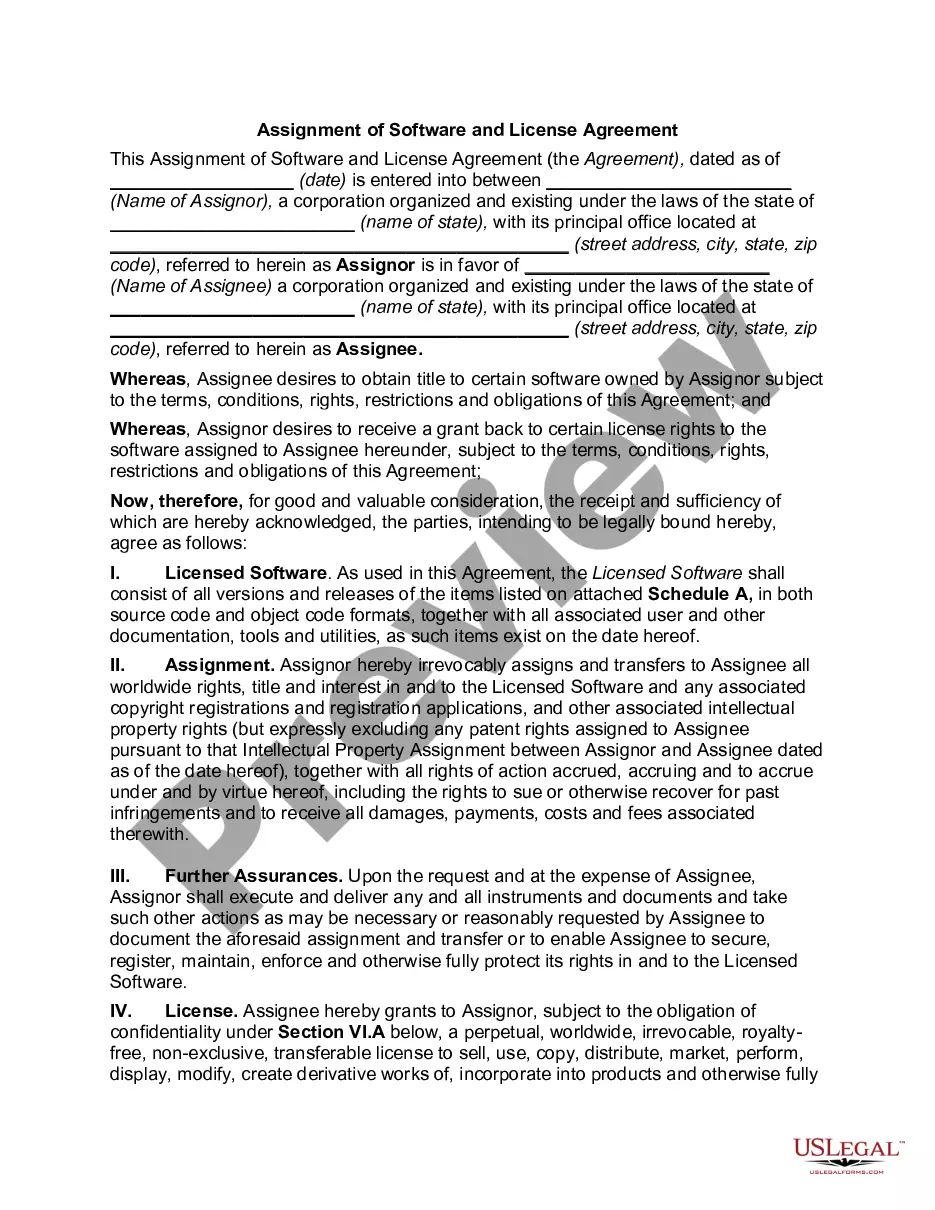
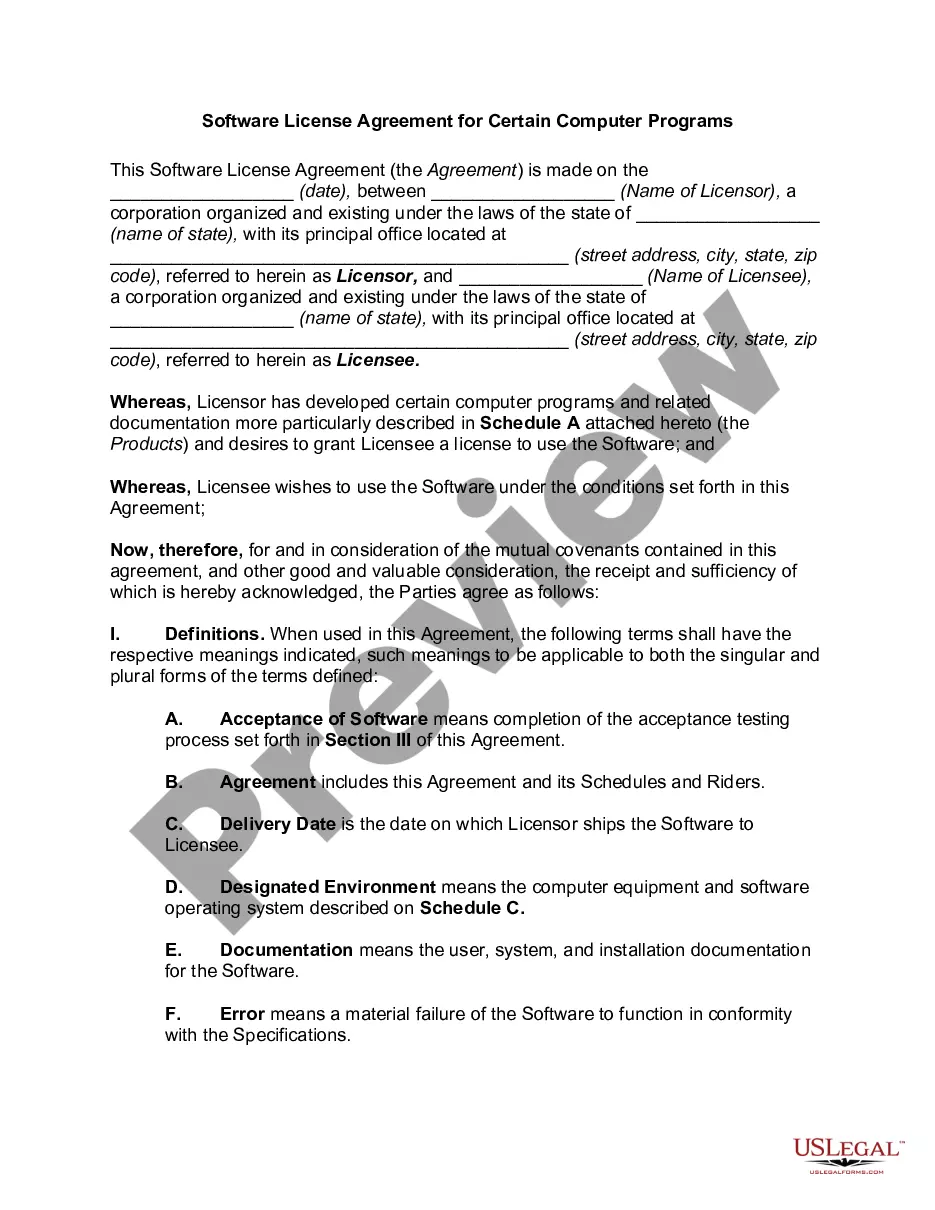
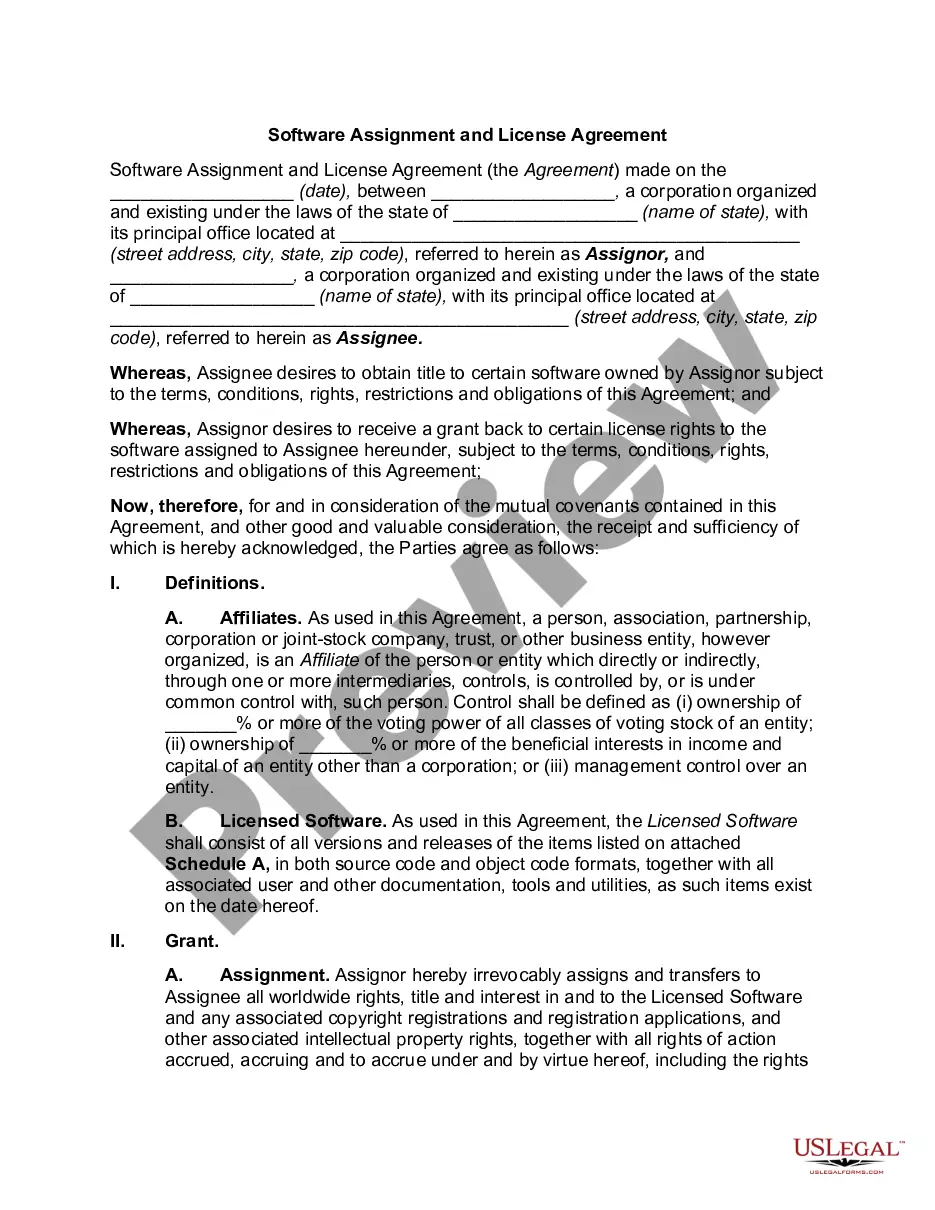
This form is an Assignment and Assumption of a Software License Agreement. The licensor has agreed to grant its consent to a one time assignment in consideration of the licensee modifying and limiting its rights under the license. The licensee may not assign its right under the agreement without the written consent of the licensor.
California Assignment and Assumption of Software License Agreement
Instant download
Description
Free preview



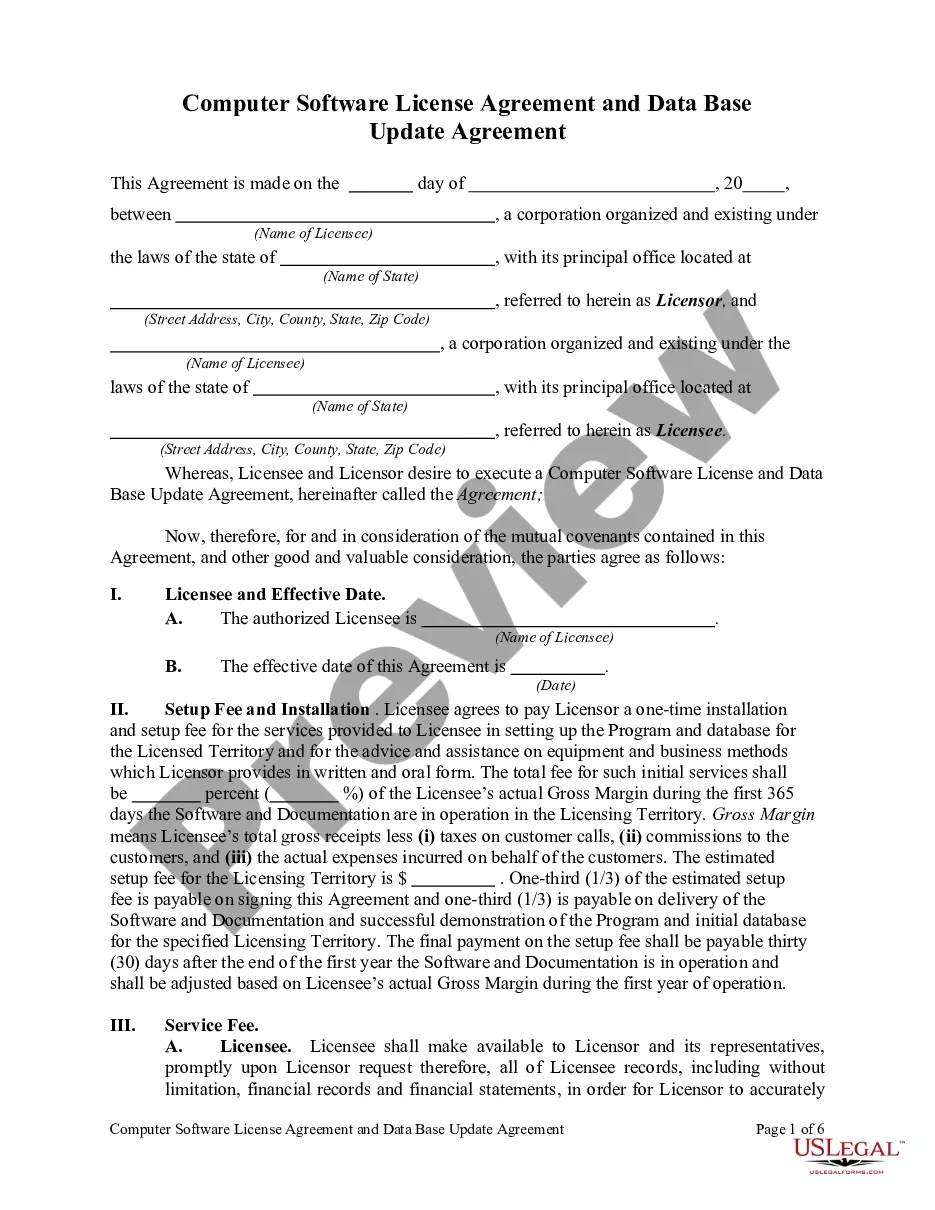
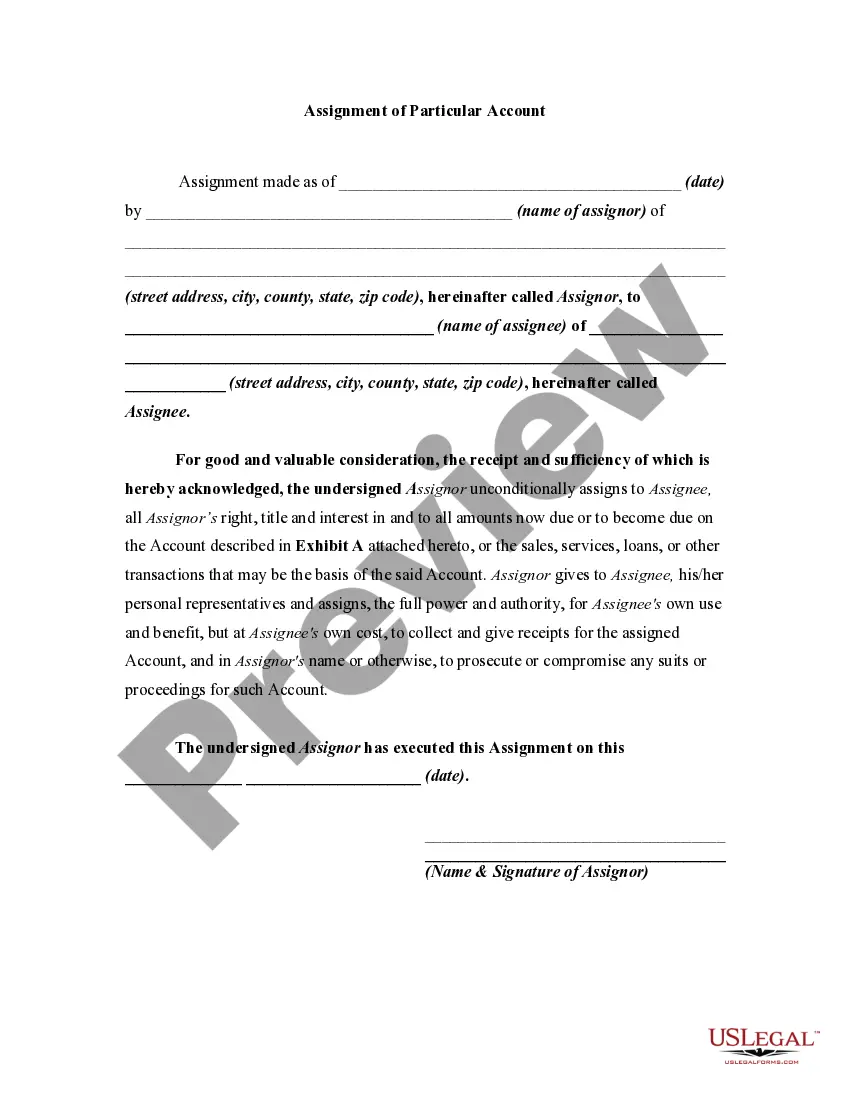
How to fill out Assignment And Assumption Of Software License Agreement?
Finding the appropriate legal document template can be a challenge. Certainly, there are numerous templates available online, but how do you locate the legal form you need? Utilize the US Legal Forms website. This service offers thousands of templates, such as the California Assignment and Assumption of Software License Agreement, that you can utilize for business and personal purposes. All of the forms are reviewed by professionals and meet state and federal requirements.
If you are already registered, Log In to your account and click the Download button to obtain the California Assignment and Assumption of Software License Agreement. Use your account to search through the legal forms you have previously purchased. Navigate to the My documents section of your account and download another copy of the document you require.
If you are a new user of US Legal Forms, here are simple instructions for you to follow: First, ensure you have selected the correct form for your area/region. You can browse the form using the Review option and check the form description to confirm this is the correct one for you. If the form does not meet your needs, use the Search field to find the appropriate form. Once you are confident that the form is suitable, click the Get now button to acquire the form. Select the pricing plan you need and enter the required information. Create your account and pay for the order using your PayPal account or credit card. Choose the document format and download the legal document template to your device. Complete, edit, print, and sign the acquired California Assignment and Assumption of Software License Agreement.
US Legal Forms is the largest repository of legal forms where you can find various document templates. Take advantage of this service to download professionally crafted documents that adhere to state regulations.
- Finding the right legal document template can be tough.
- There are a lot of templates online, but how do you find the one you need.
- Utilize the US Legal Forms website for access to thousands of templates.
- Ensure that the form meets your specific requirements before proceeding.
- You can browse forms and check descriptions to find the right one.
- If you are a new user, follow the straightforward steps provided.
Form popularity
FAQ
Licensing agreements can include software licenses, distribution agreements, and franchise agreements. For example, a California Assignment and Assumption of Software License Agreement allows a software developer to grant users the right to use their software while retaining ownership. This highlights the versatility of licensing agreements in various industries.
An IP assignment clause typically states that any intellectual property created during the course of employment or contractual work belongs to the company. For instance, in a California Assignment and Assumption of Software License Agreement, such a clause would ensure that software developed by an employee is owned by the employer, thereby protecting proprietary rights.
Assignment refers to the transfer of rights or benefits in a contract, while assumption involves taking over the obligations or responsibilities in that contract. In a California Assignment and Assumption of Software License Agreement, both elements are essential; the assignor relinquishes their rights, and the assignee assumes the duties of the agreement, ensuring continuity.
An assignment is specifically the act of transferring rights or interests under a contract, while an agreement is a broader term that encompasses any mutual understanding between parties. For instance, a California Assignment and Assumption of Software License Agreement serves as both, establishing the assignment of rights along with mutual obligations and terms agreed upon by all parties.
Assumed means that one party takes over the responsibilities or duties of another, while assigned indicates that rights or interests are transferred to a new party. In legal agreements like the California Assignment and Assumption of Software License Agreement, clarity in these terms is crucial as it affects the obligations and rights associated with the software license.
A typical example of assignment of copyright occurs when a graphic designer creates a logo for a company. By assigning their copyright to the company, the designer grants them exclusive rights to use and reproduce that logo. This reflects the essence of a California Assignment and Assumption of Software License Agreement, where rights and responsibilities are clearly defined and transferred.
An assignment agreement transfers the rights to a contract or obligation from one party to another. In contrast, an assumption agreement requires one party to take over the duties of the other in a contract. For example, in a California Assignment and Assumption of Software License Agreement, the assignor transfers their rights, and the assignee assumes the obligations under the software license.
An assignment involves transferring the rights and responsibilities of a contract to another party, whereas a sublease allows a current tenant to lease their space to another party while retaining their original lease. In terms of a California Assignment and Assumption of Software License Agreement, it is crucial to recognize how these concepts uniquely apply to software licensing to avoid legal complications. Understanding these differences empowers you to make informed decisions in your agreements.
No, assignment and subcontracting are distinctly different concepts. Assignment involves transferring rights to a third party, while subcontracting entails hiring another party to perform tasks under a contract without transferring any rights. In the context of the California Assignment and Assumption of Software License Agreement, understanding this difference is vital for effectively managing your contracts and ensuring compliance with software usage terms.
The key difference lies in the transfer of rights. In an assignment, all rights are transferred to the new party, whereas sublicensing permits the original licensee to retain ownership while allowing a third party some limited rights to use the software. This distinction is crucial in the California Assignment and Assumption of Software License Agreement, as it helps define how software can be utilized and distributed. Knowing these terms can save businesses from future legal issues.