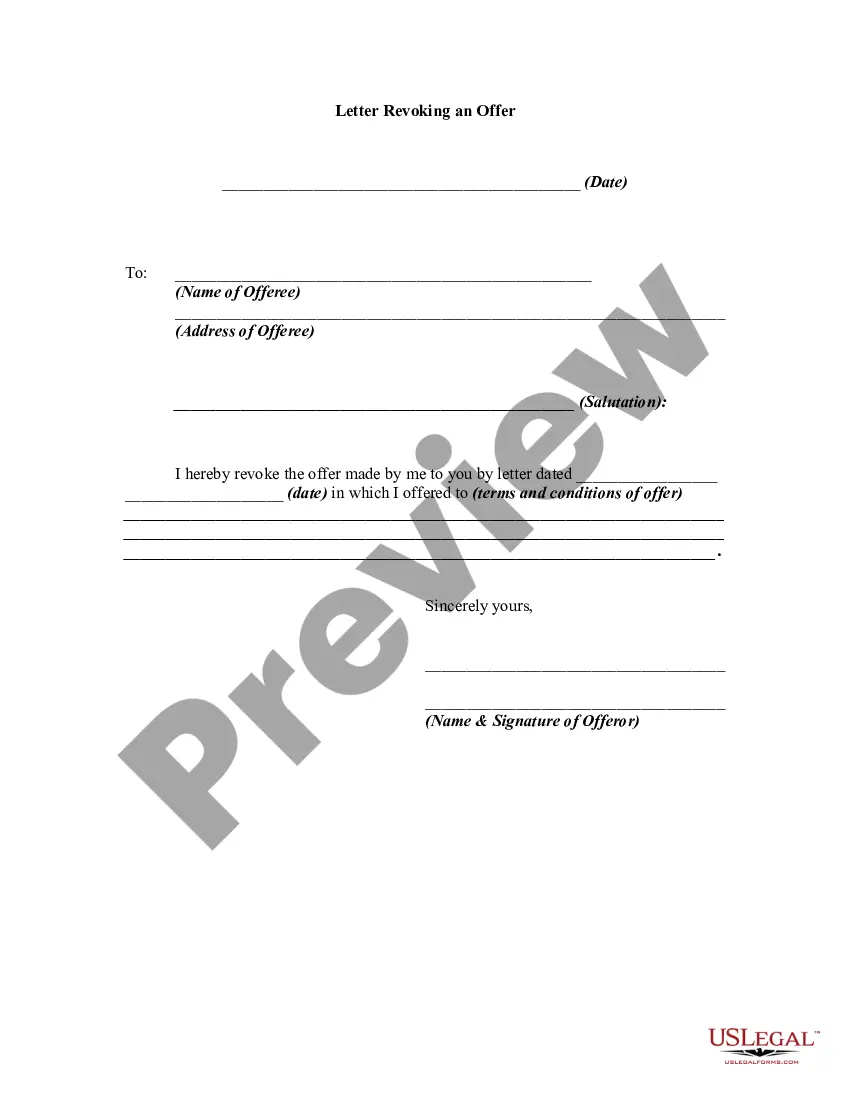
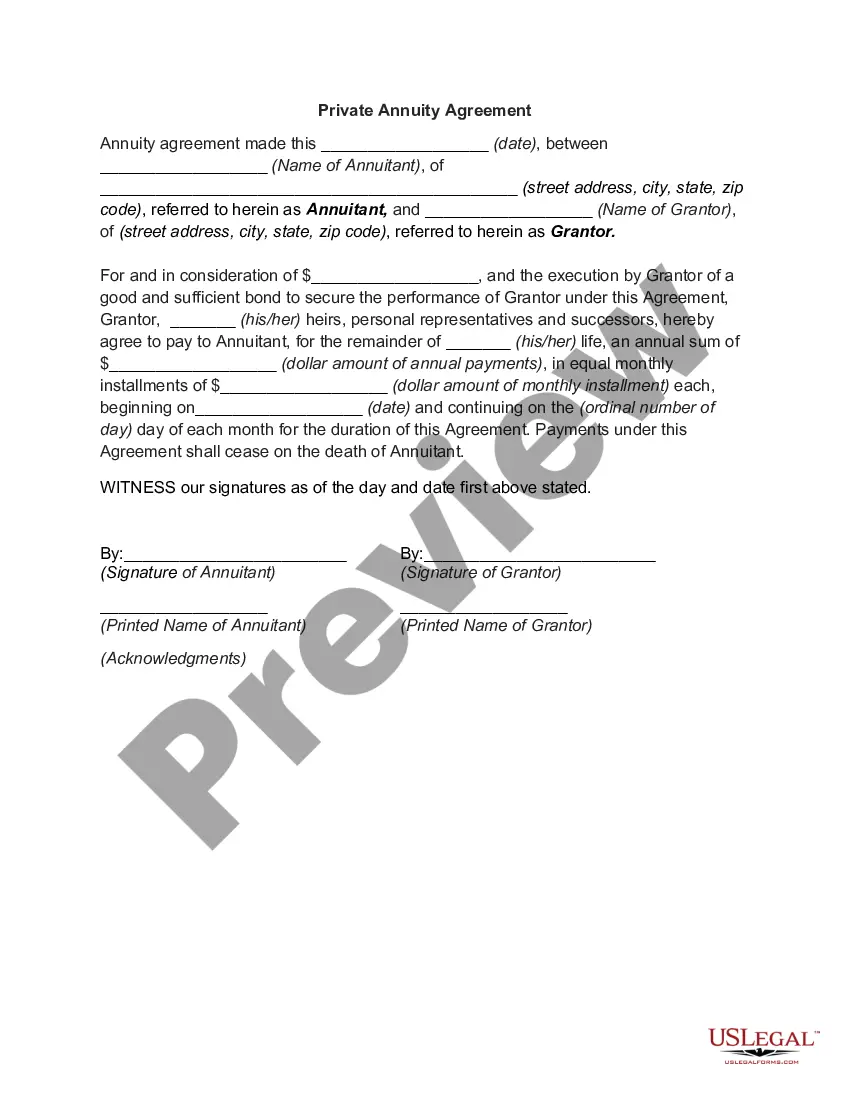
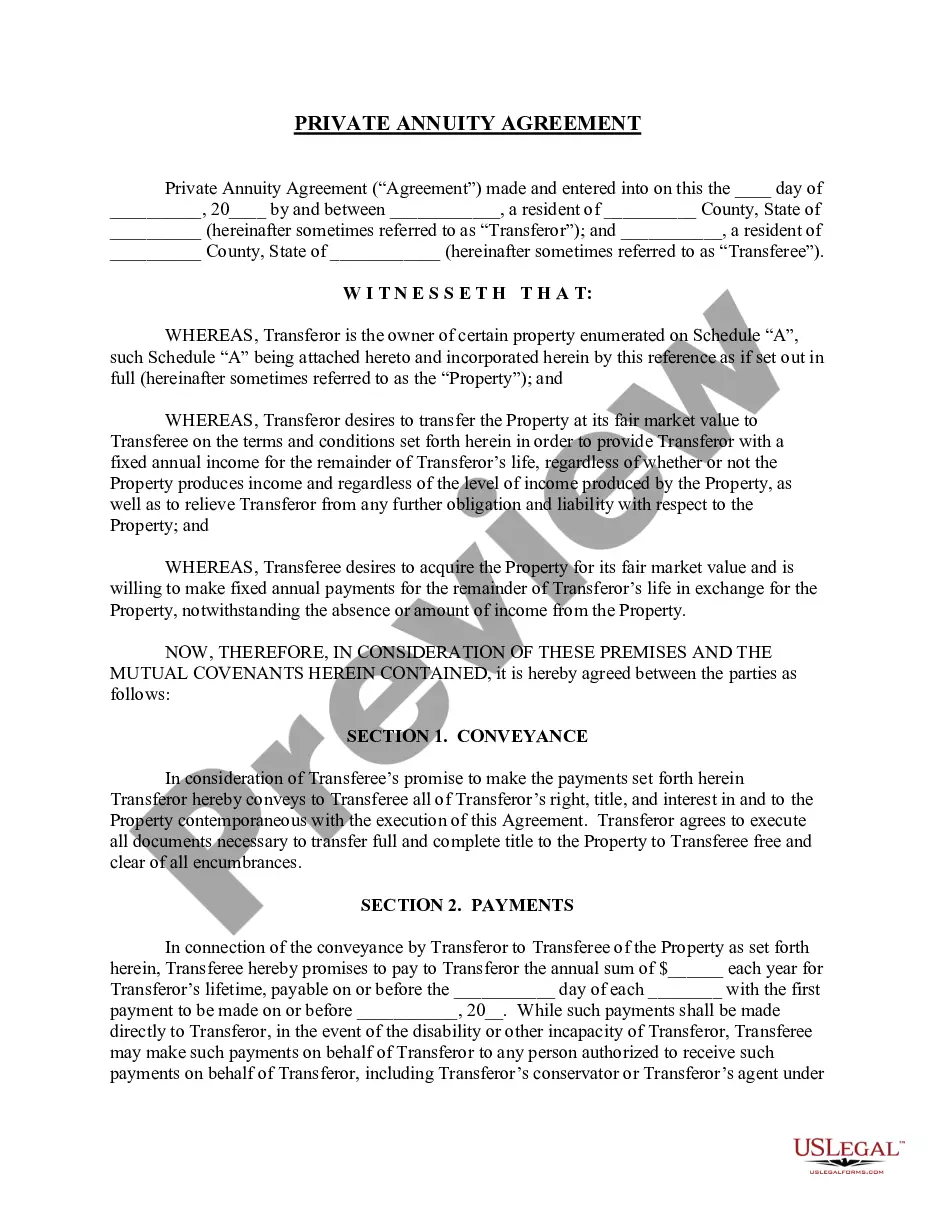
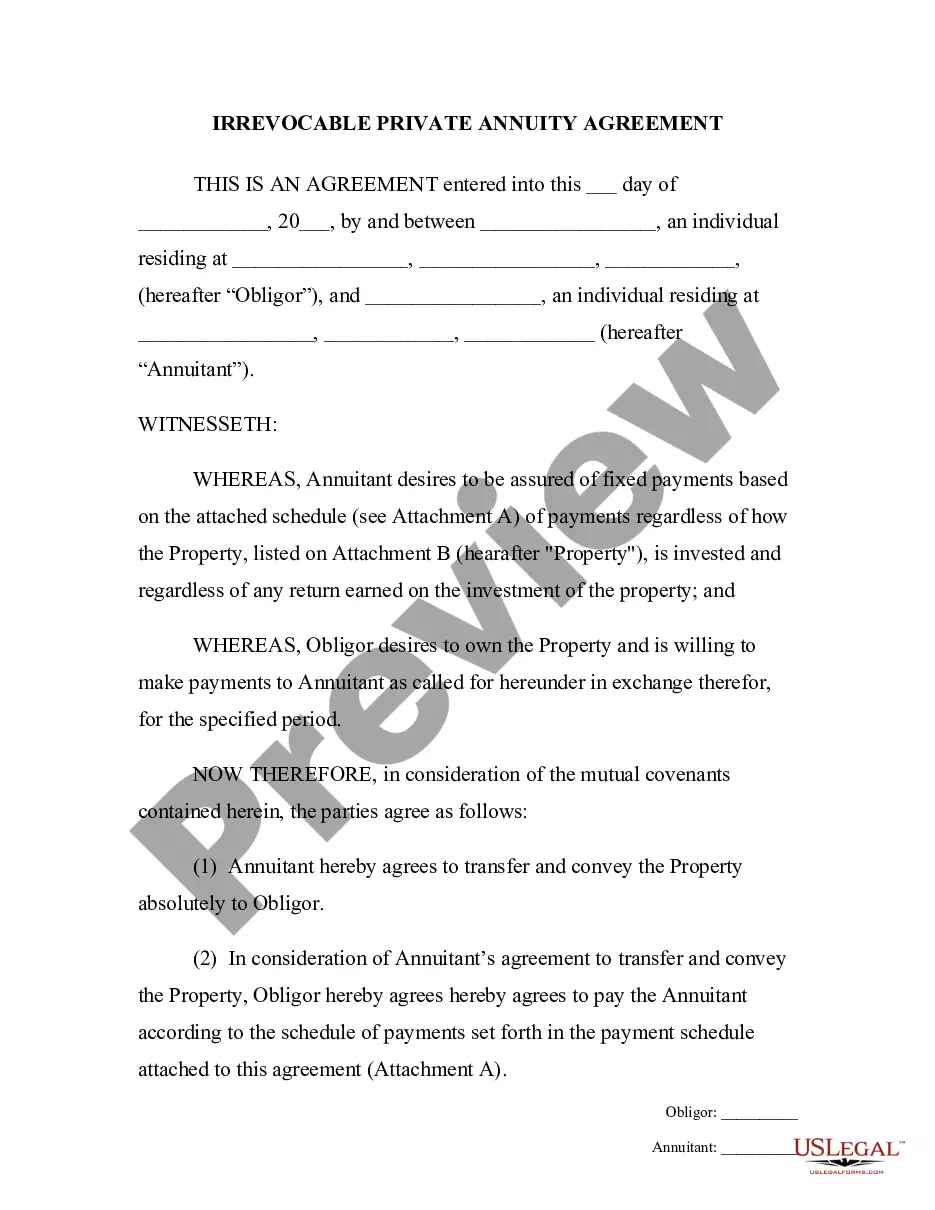
California Private Annuity Agreement
Description
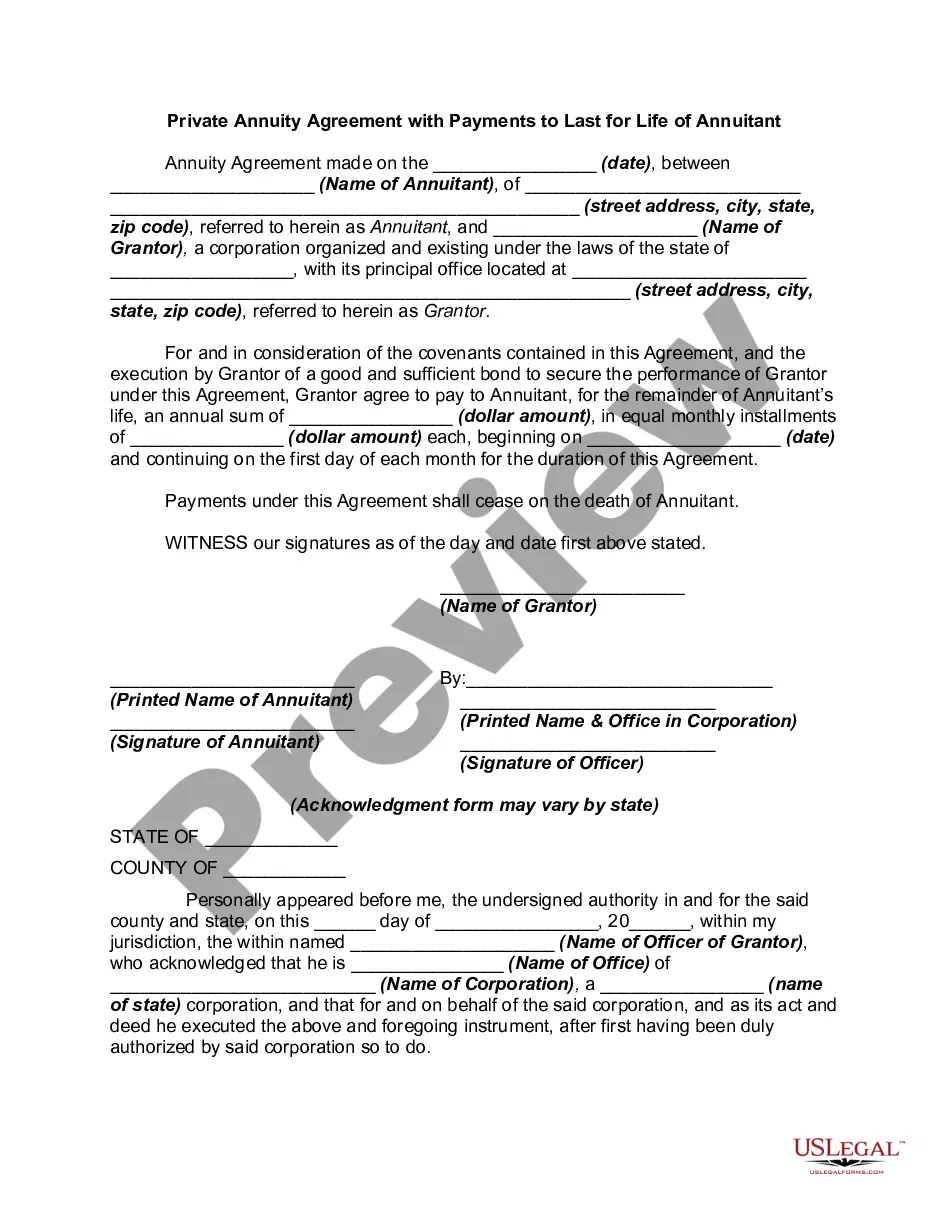
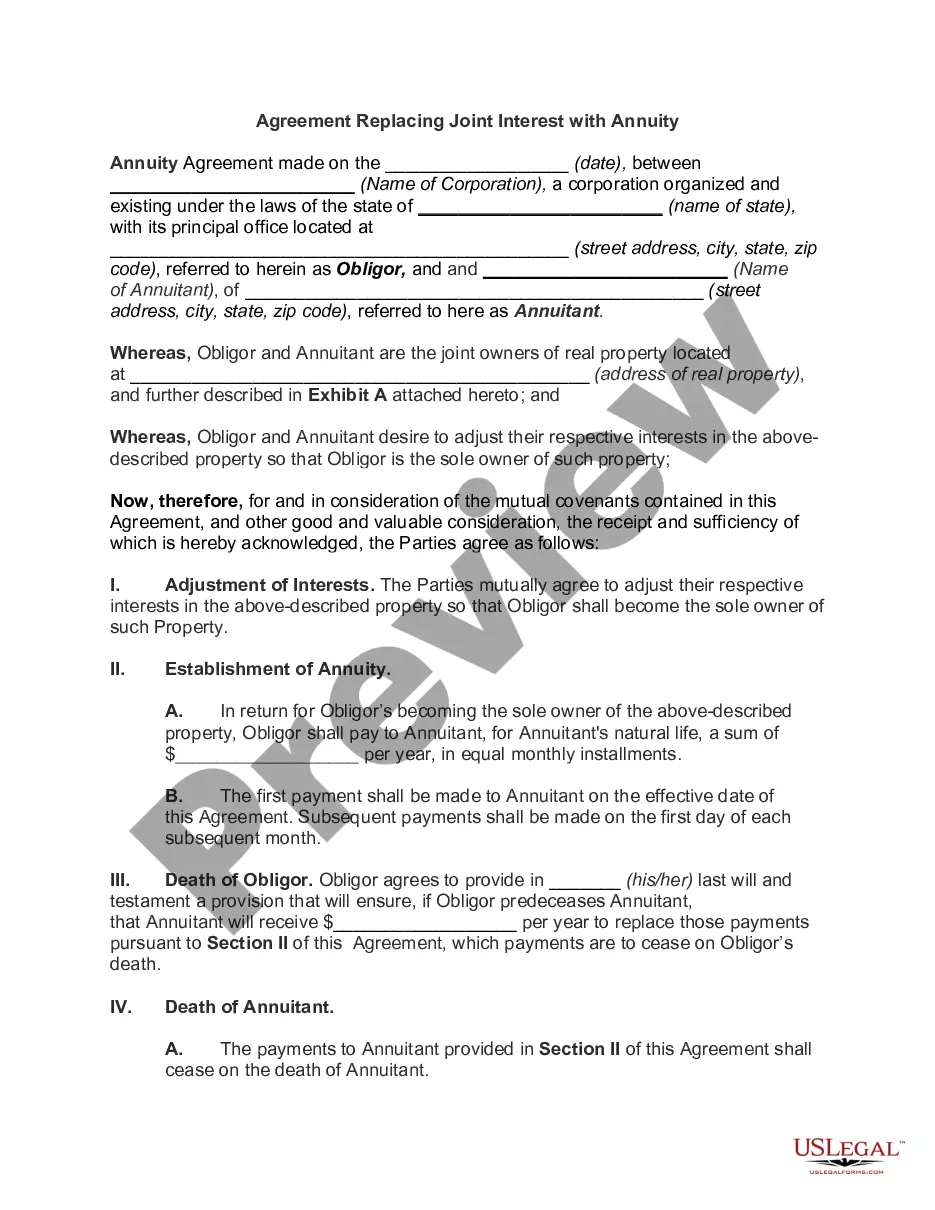
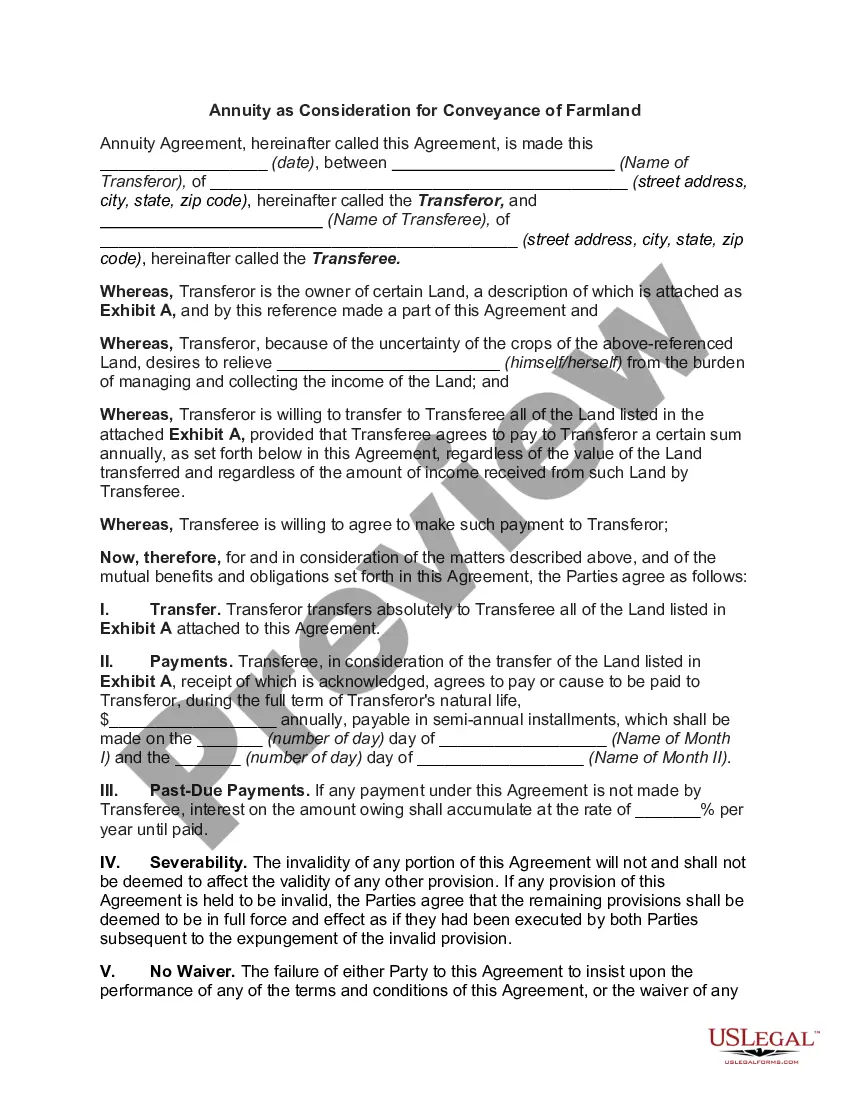
Get your form ready online
Our built-in tools help you complete, sign, share, and store your documents in one place.
Make edits, fill in missing information, and update formatting in US Legal Forms—just like you would in MS Word.
Download a copy, print it, send it by email, or mail it via USPS—whatever works best for your next step.
Sign and collect signatures with our SignNow integration. Send to multiple recipients, set reminders, and more. Go Premium to unlock E-Sign.
If this form requires notarization, complete it online through a secure video call—no need to meet a notary in person or wait for an appointment.
We protect your documents and personal data by following strict security and privacy standards.

Make edits, fill in missing information, and update formatting in US Legal Forms—just like you would in MS Word.

Download a copy, print it, send it by email, or mail it via USPS—whatever works best for your next step.

Sign and collect signatures with our SignNow integration. Send to multiple recipients, set reminders, and more. Go Premium to unlock E-Sign.

If this form requires notarization, complete it online through a secure video call—no need to meet a notary in person or wait for an appointment.

We protect your documents and personal data by following strict security and privacy standards.
Looking for another form?



How to fill out Private Annuity Agreement?
You can spend hours online searching for the legal document template that fulfills the state and federal requirements you will need.
US Legal Forms provides a vast array of legal templates that are vetted by specialists.
You can directly obtain or print the California Private Annuity Agreement from my services.
If available, use the Review button to examine the document template simultaneously.
- If you already have a US Legal Forms account, you can Log In and click the Download button.
- After that, you can complete, modify, print, or sign the California Private Annuity Agreement.
- Every legal document template you purchase is yours permanently.
- To acquire another copy of the purchased form, navigate to the My documents tab and click the corresponding button.
- If you are using the US Legal Forms website for the first time, follow the simple instructions outlined below.
- First, ensure that you have selected the right document template for the state/city of your choice.
- Review the form summary to confirm you have chosen the correct form.
Form popularity
FAQ
The monthly payment on a $100,000 annuity generally falls between $500 and $600, depending on the product type and interest rates. Factors such as your age and the duration of the payments will influence this amount. A California Private Annuity Agreement can guide you in estimating your potential monthly payments effectively.
Each annuity payment is treated as part tax-free return of basis, part capital gain, and part ordinary income until your entire basis is recovered. Once your basis is recovered, the entire annuity is treated as part capital gain and part ordinary income until you have surpassed your life expectancy.
Insuring the life of the transferee is an available option; however, any connection of the life insurance policy to the private annuity will be deemed as a secured transaction.
Thus, annuity payments to an annuitant who was outliving his life expectancy is taxed as ordinary income. Additionally, the annuity payment must be based on IRS actuarial tables and cannot be related in any way to the amount of income earned by the asset; otherwise, the asset will be included in the annuitant's estate.
California currently issues a state premium tax on annuities, totaling 2.35 percent. Annuity premiums on profit-sharing and qualified pension plans are taxed at a rate of 0.5 percent. Early retirement plan withdrawals are subject to a 10 percent federal penalty.
A private annuity is a special agreement in which an individual (annuitant) transfers property to an obligor. The obligor agrees to make payments to the annuitant according to an agreed-upon schedule in exchange for the property transfer.
Matured annuity benefits are protected based on how much is necessary for the debtor to support their household, including any spouse or dependents. These guidelines stand for all annuities purchased in CA, regardless of whether the annuitant moves to another state.