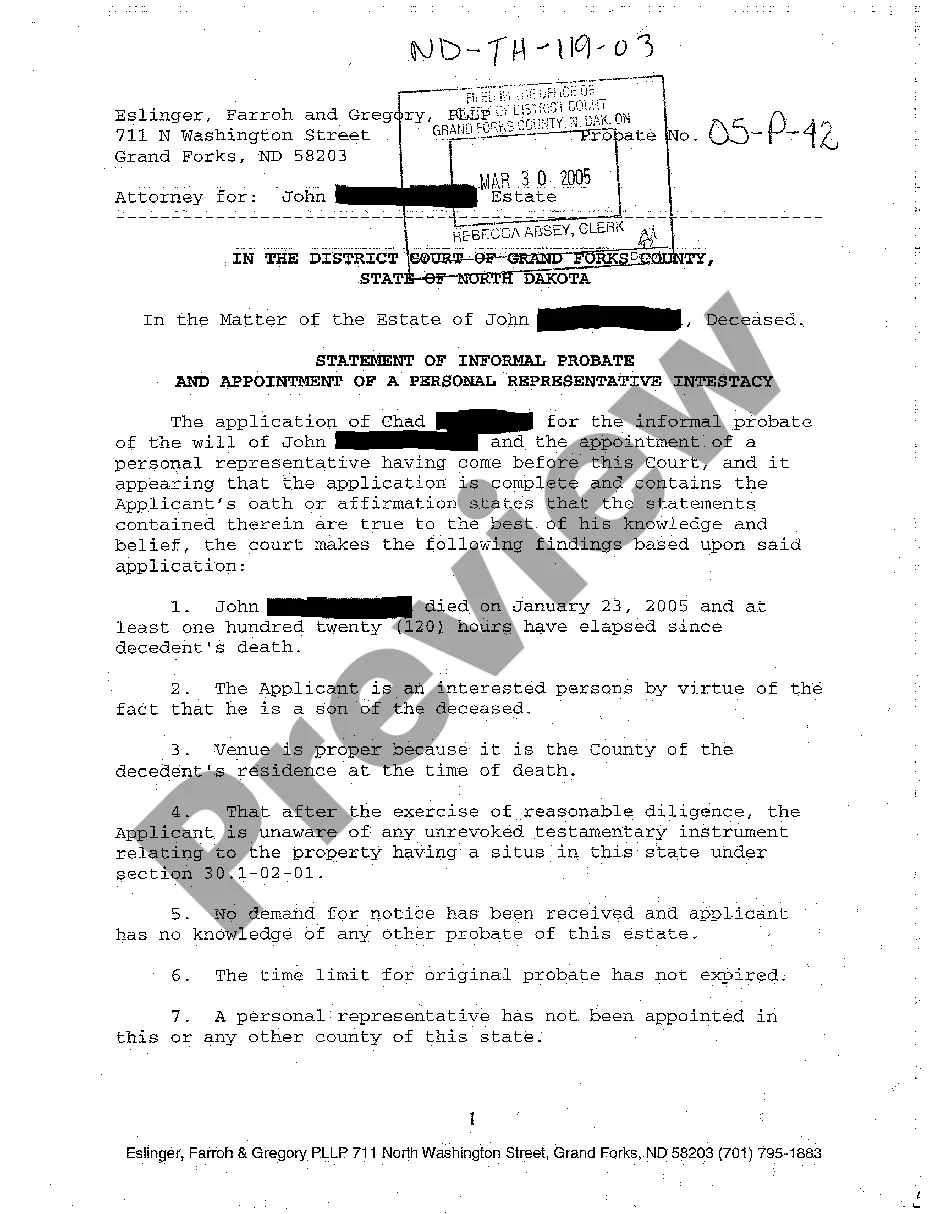
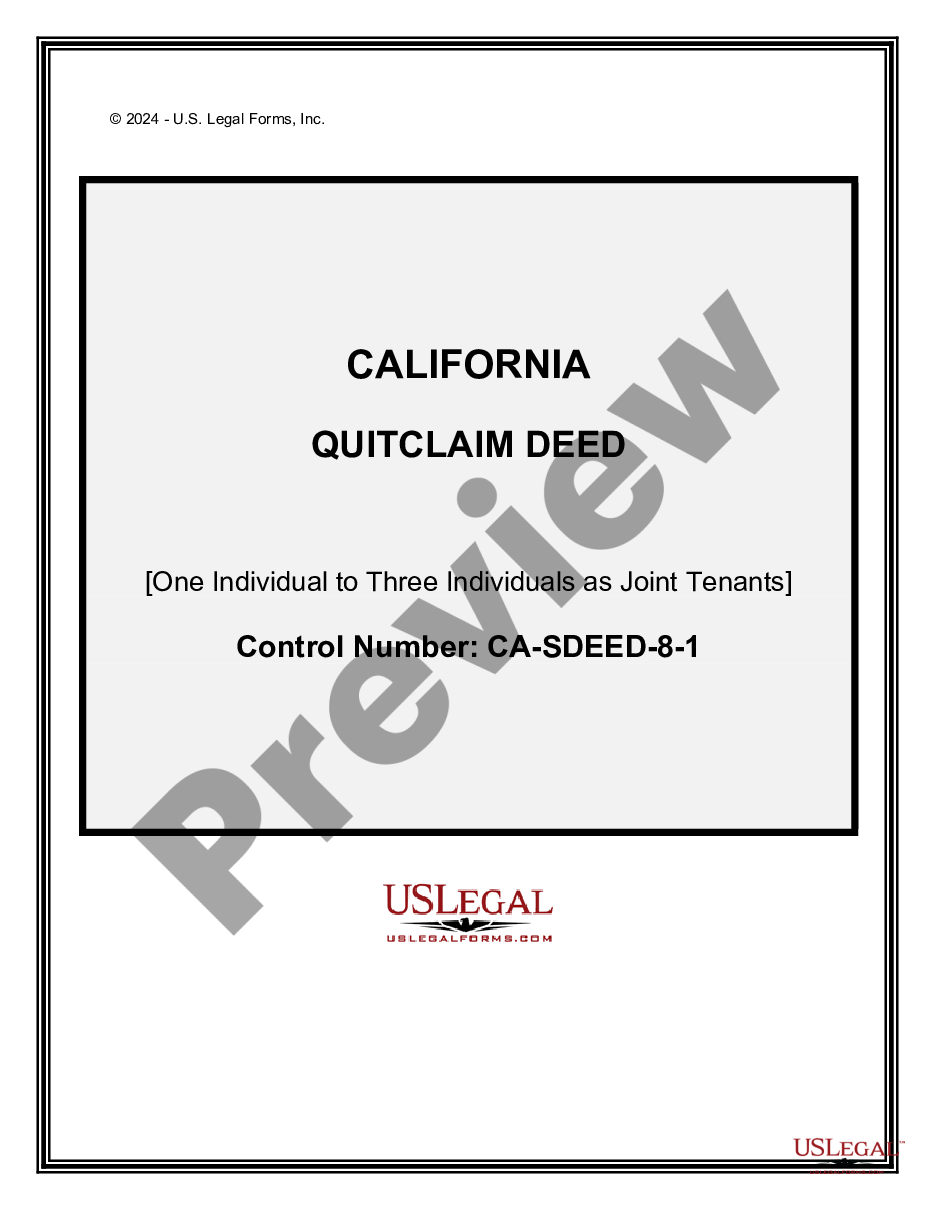
California Quitclaim Deed from one Individual to Three Individuals as Tenants in Common
Overview of this form
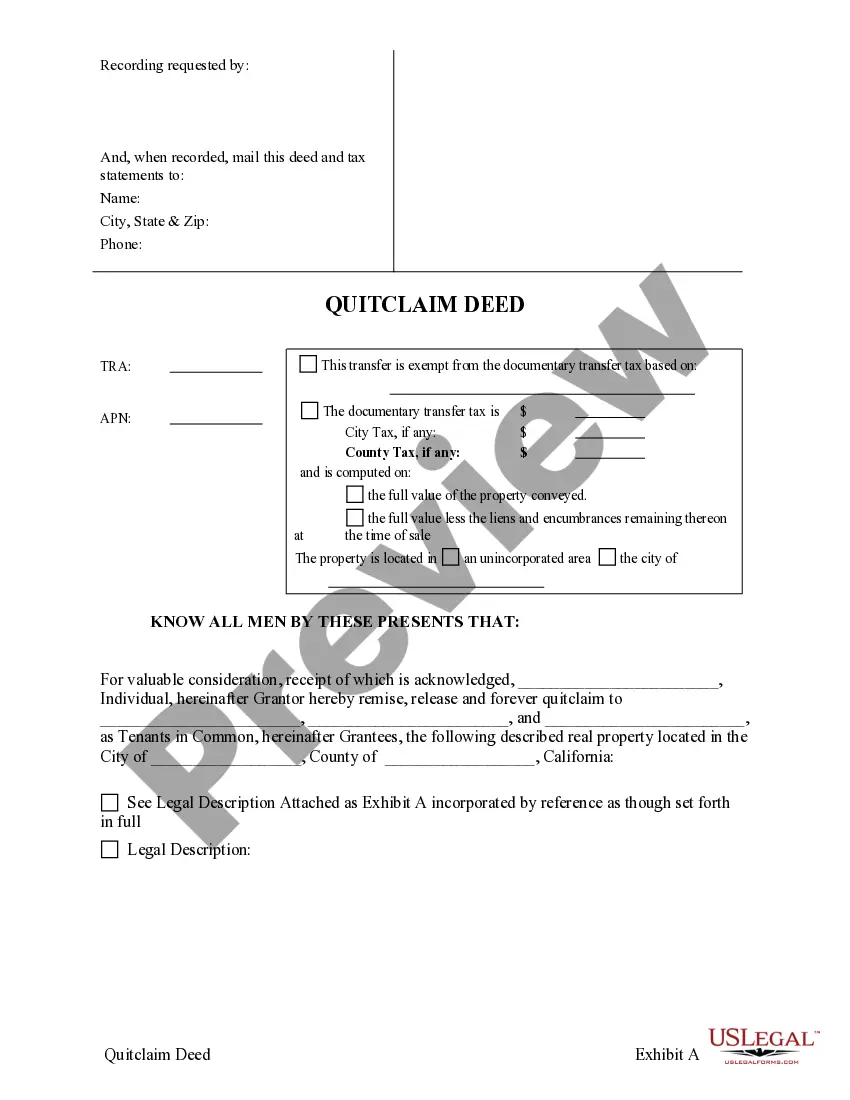
The Quitclaim Deed from one Individual to Three Individuals as Tenants in Common is a legal document that allows a property owner (the grantor) to transfer their ownership interest in real estate to three individuals (the grantees) who will hold the title as tenants in common. This form is distinct from other types of deeds, such as warranty deeds, because it transfers rights without guaranteeing the title's validity. It is particularly useful when the grantor wishes to relinquish interest in a property to multiple parties without financial transaction involved.
Main sections of this form
- Grantor's information: Full name and address of the individual transferring their property.
- Grantee's information: Names and addresses of the three individuals receiving the property.
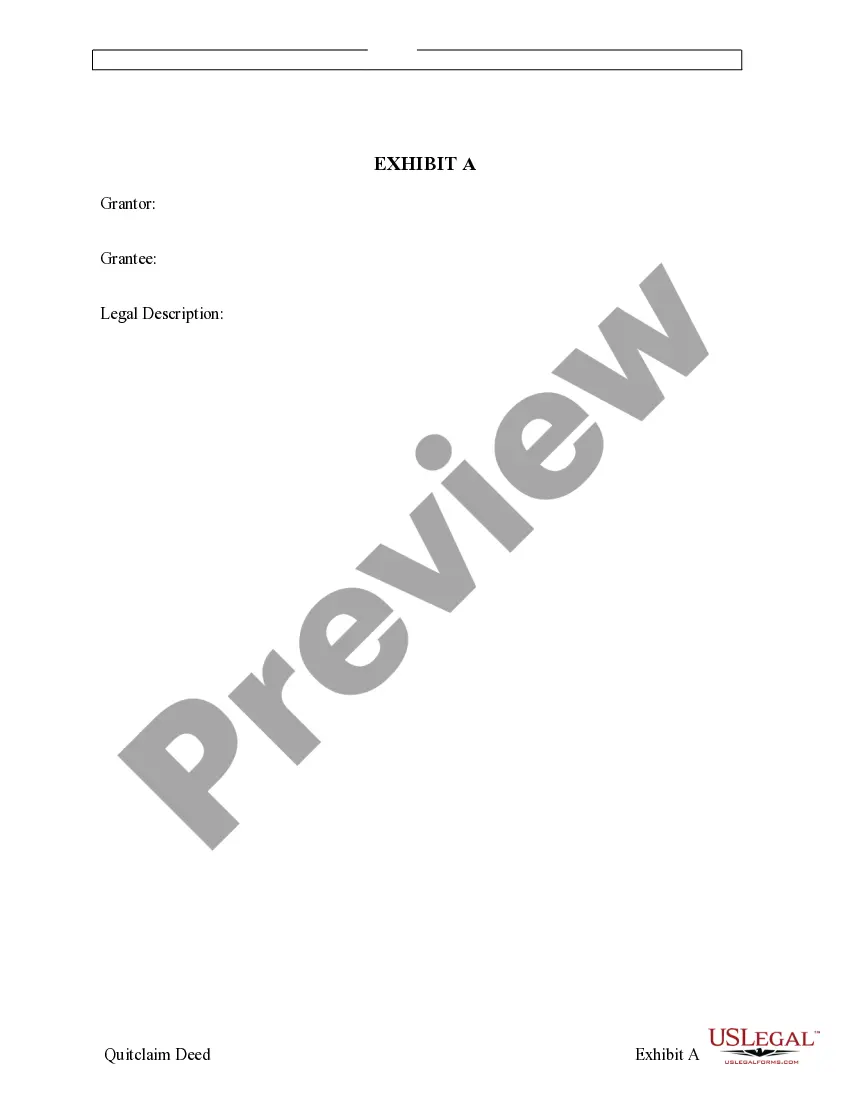
- Property description: Detailed description of the property being transferred, including legal description.
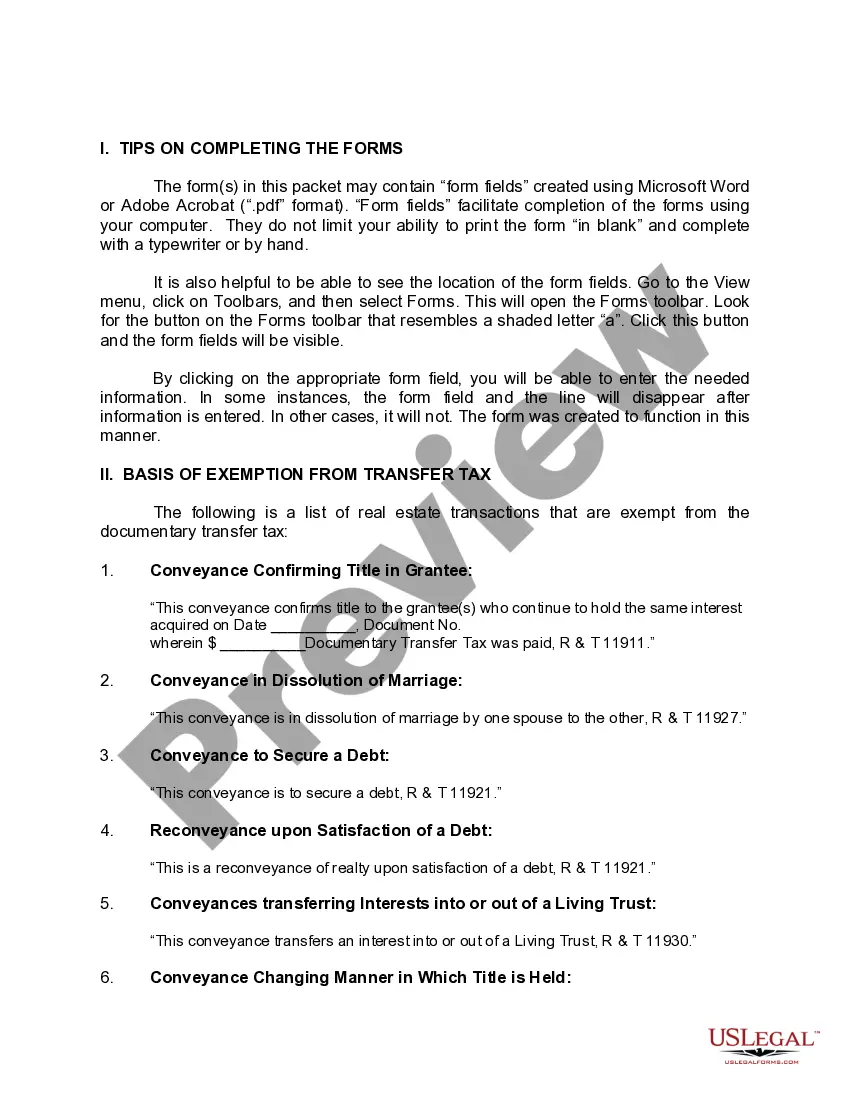
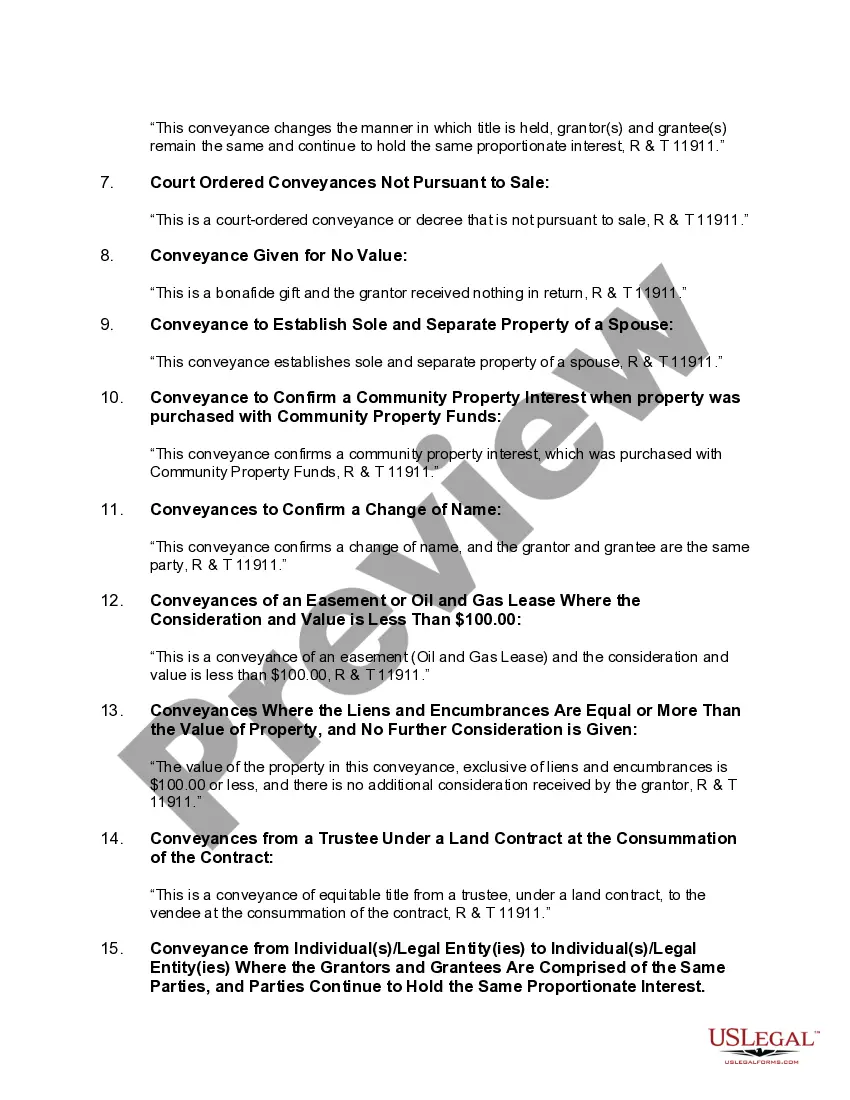
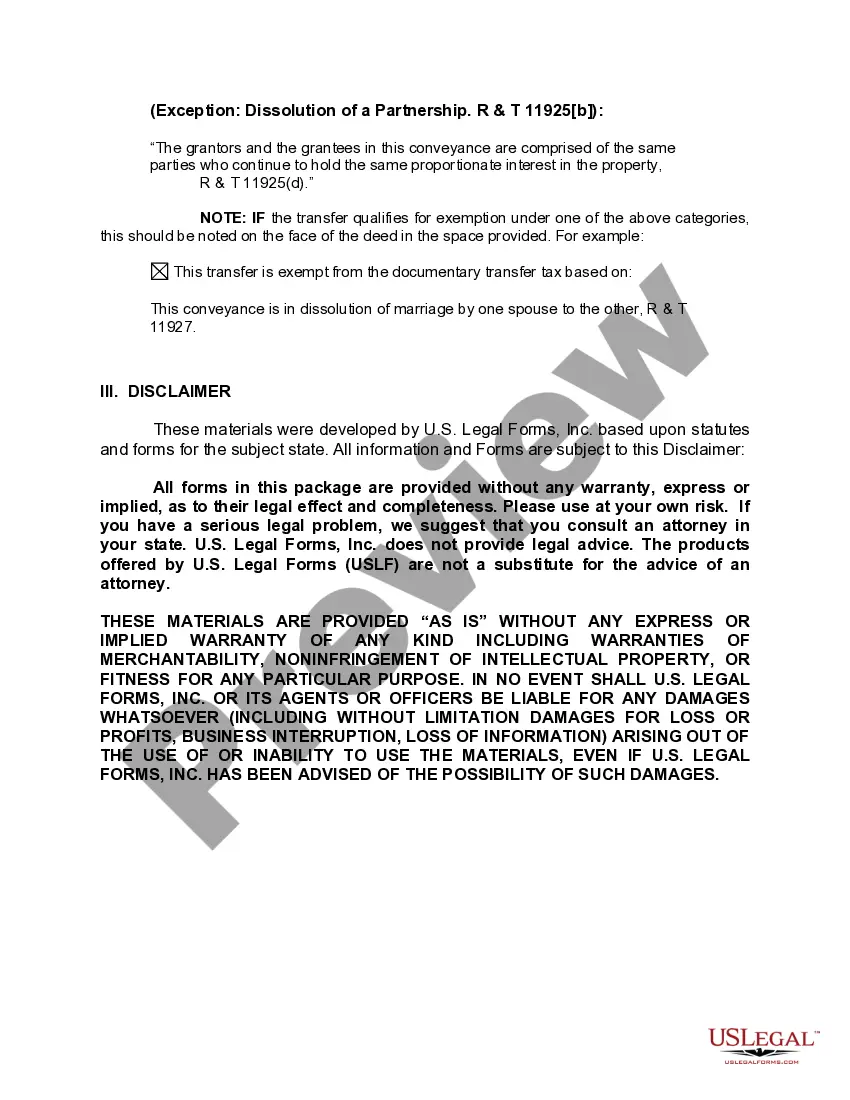
- Exemption claim: Section to state if the transfer is exempt from documentary transfer tax and the reason.
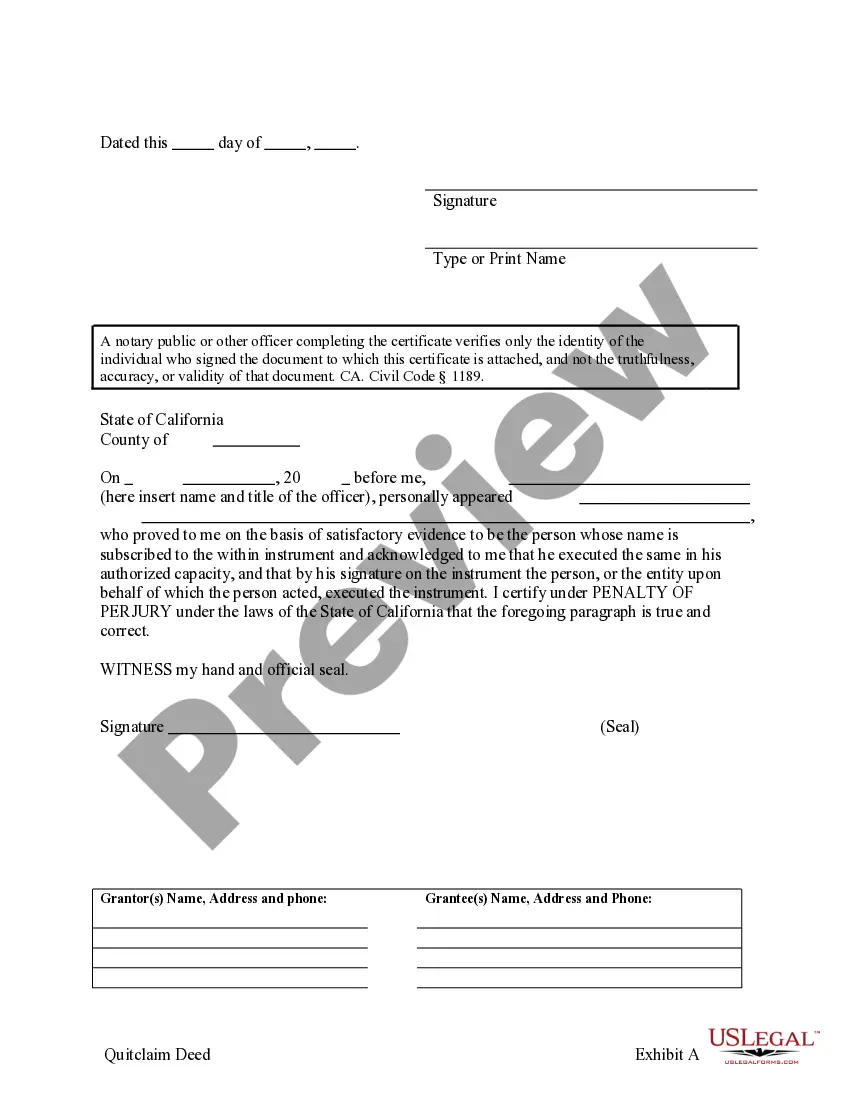
- Signatures: Space for the grantor's signature and date, which validates the transfer.
- Acknowledgment: A space for a notary public's acknowledgment, if required, confirming the identity of the grantor.


Common use cases
This form is applicable in various scenarios, such as when a property owner wishes to transfer their ownership interest to family members, friends, or business partners without a sale. It can also be used to clarify ownership arrangements among co-owners, especially in estate planning situations. This deed may be appropriate in cases where the grantor is giving the property as a gift or making changes to the title structure for estate planning purposes.
Who needs this form
This form is designed for:
- Individuals transferring property to multiple parties.
- Property owners seeking to clarify ownership as tenants in common.
- Anyone involved in estate planning who wishes to perform a straightforward transfer of property rights.
- Grantors who are not selling the property and aim to gift their interest.
Instructions for completing this form
- Identify the parties: Clearly state the name and address of the grantor and the three grantees.
- Specify the property: Provide the full legal description of the real estate being transferred.
- Declare exemptions: Indicate if the transfer is exempt from documentary transfer tax and specify the reason in the designated section.
- Sign the form: The grantor must sign and date the quitclaim deed to validate the transfer.
- Notarize if necessary: If your jurisdiction requires notarization, take the signed form to a notary public for acknowledgment.
Notarization guidance
This form must be notarized to be legally valid. US Legal Forms provides secure online notarization powered by Notarize, allowing you to complete the process through a verified video call.
Get your form ready online
Our built-in tools help you complete, sign, share, and store your documents in one place.
Make edits, fill in missing information, and update formatting in US Legal Forms—just like you would in MS Word.
Download a copy, print it, send it by email, or mail it via USPS—whatever works best for your next step.
Sign and collect signatures with our SignNow integration. Send to multiple recipients, set reminders, and more. Go Premium to unlock E-Sign.
If this form requires notarization, complete it online through a secure video call—no need to meet a notary in person or wait for an appointment.
We protect your documents and personal data by following strict security and privacy standards.

Make edits, fill in missing information, and update formatting in US Legal Forms—just like you would in MS Word.

Download a copy, print it, send it by email, or mail it via USPS—whatever works best for your next step.

Sign and collect signatures with our SignNow integration. Send to multiple recipients, set reminders, and more. Go Premium to unlock E-Sign.

If this form requires notarization, complete it online through a secure video call—no need to meet a notary in person or wait for an appointment.

We protect your documents and personal data by following strict security and privacy standards.
Common mistakes
- Failing to provide a complete legal description of the property.
- Not including the names of all grantees or inaccuracies in their information.
- Omitting the grantor's signature or date.
- Ignoring local requirements for notarization or additional forms.
- Not stating the exemption reason clearly if applicable.
Why complete this form online
- Convenience: Complete the form at your own pace without needing to visit a lawyer's office.
- Editability: Easily fill out the form using your computer, reducing errors and improving clarity.
- Accessibility: Download the form in a suitable format and print it when ready for signing.
- Time-saving: Instant access to legally vetted forms saves time compared to drafting from scratch.
Looking for another form?
Form popularity
FAQ
Quitclaim deeds, such as the California Quitclaim Deed from one Individual to Three Individuals as Tenants in Common, can be viewed with caution due to their lack of guarantees. They do not protect the buyer from any existing claims on the property, potentially leading to future legal issues. Many legal advisors suggest using warranty deeds for more security. Nevertheless, in certain situations, quitclaim deeds fulfill specific needs efficiently, especially when both parties trust each other.
If one person wishes to leave a joint tenancy in California, they typically need to execute a California Quitclaim Deed from one Individual to Three Individuals as Tenants in Common. This process allows the individual to transfer their share of the property to the remaining co-owners. It is crucial to ensure that all parties agree to this change to avoid future disputes. Utilizing a legal service like US Legal Forms can simplify this process and ensure compliance with all necessary regulations.
To remove someone from a deed in California, you can use a quitclaim deed to transfer their ownership rights. The process involves completing the necessary form, obtaining signatures, and filing it with the county recorder's office. This ensures a clean and legal transition of ownership. Platforms like US Legal Forms provide user-friendly resources for obtaining the right documents.
Yes, you can remove someone's name from a property deed using a quitclaim deed. This deed allows for the legal transfer of ownership interests without the need to refinance. Both parties must agree to the transfer, and the document needs to be properly executed. US Legal Forms offers straightforward solutions for this process.
Changing a deed from joint tenants to tenants in common involves executing a new deed, usually a quitclaim deed. This document must specify your intention to change the ownership structure. Each owner can then have distinct ownership interests. Consider using US Legal Forms to find the right templates for this change.
To remove someone from a deed in California, you will typically complete a quitclaim deed. This form should be filled out correctly, signed, and notarized. Once completed, file the deed with the local county recorder's office. This process can be efficiently managed using online resources like US Legal Forms.
A quitclaim deed can have multiple owners listed. In the case of a California Quitclaim Deed from one Individual to Three Individuals as Tenants in Common, all individuals can hold their separate shares of the property. This structure allows for shared ownership while protecting individual interests. Always ensure your deed reflects the correct ownership structure.
To remove someone from a deed without refinancing, you can use a California Quitclaim Deed form. This document allows the current owner to transfer their interest to another party. The key is to ensure that all parties agree to this change before proceeding. Using the right legal forms, such as those available on the US Legal Forms platform, can simplify the process.
To add someone to a deed, execute a quit claim deed that transfers ownership from the current owner to the new individual. This deed should clearly state all parties involved, including the new owner, and define their ownership interests. For a California Quitclaim Deed from one Individual to Three Individuals as Tenants in Common, this ensures that each person has a defined share in the property. Remember to file the deed with the appropriate county office to make the changes official.
You can add a third person to your deed by executing a quit claim deed that includes the new individual as a co-owner. This addition modifies your ownership structure, allowing for shared responsibility and benefits. In a California Quitclaim Deed from one Individual to Three Individuals as Tenants in Common, all parties are recognized as co-owners with distinct shares of the property. To finalize it, don’t forget to record the deed with the county.