California Commercial Master Lease
What is this form?
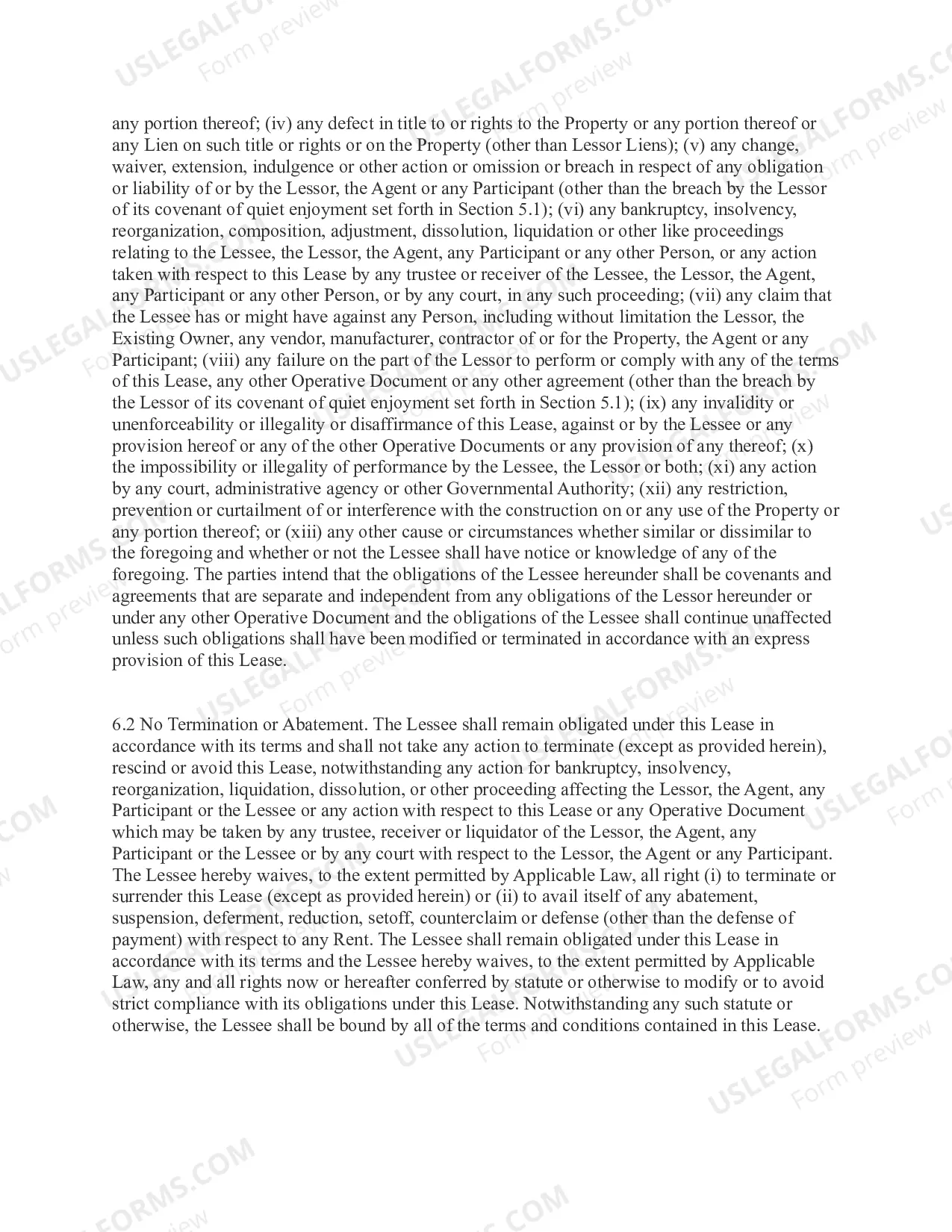
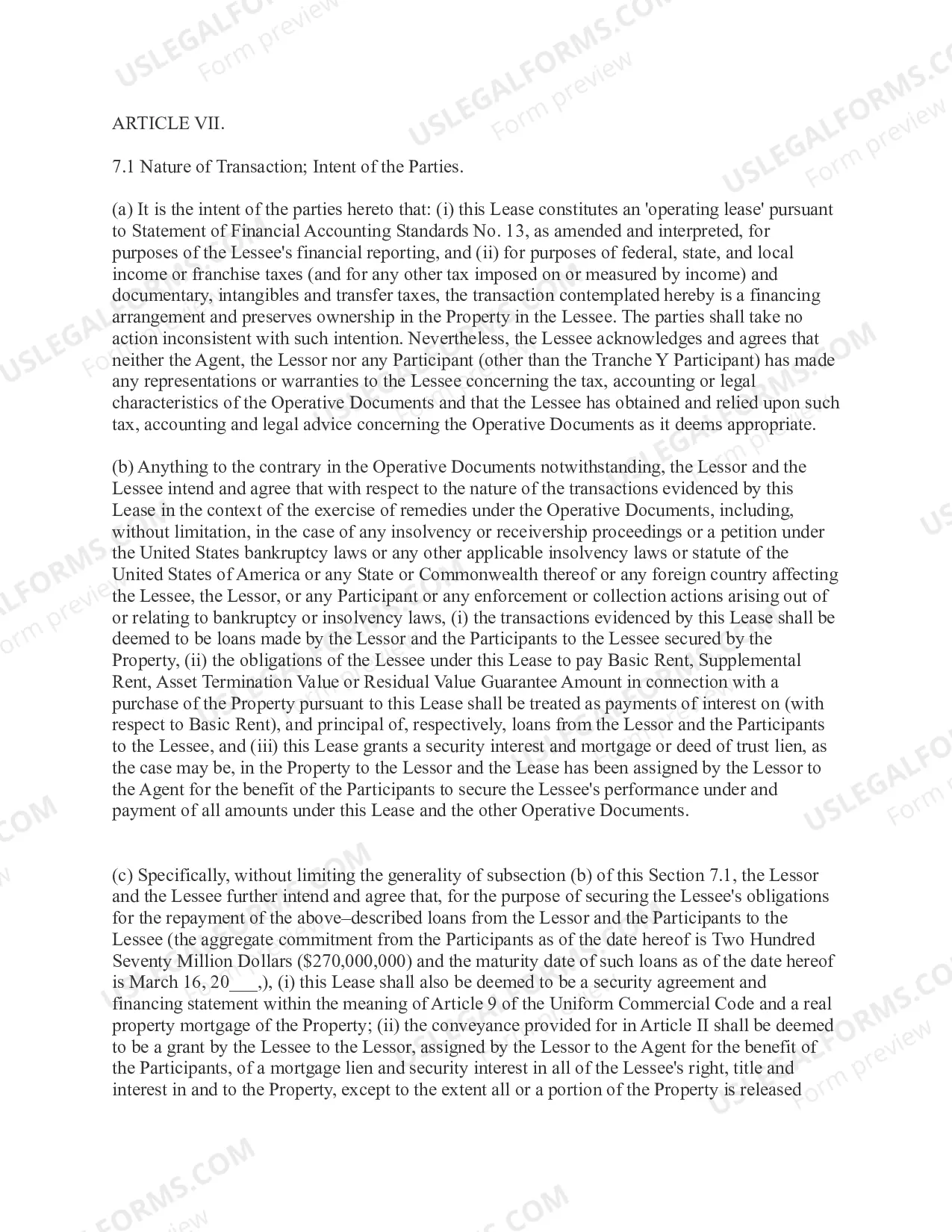
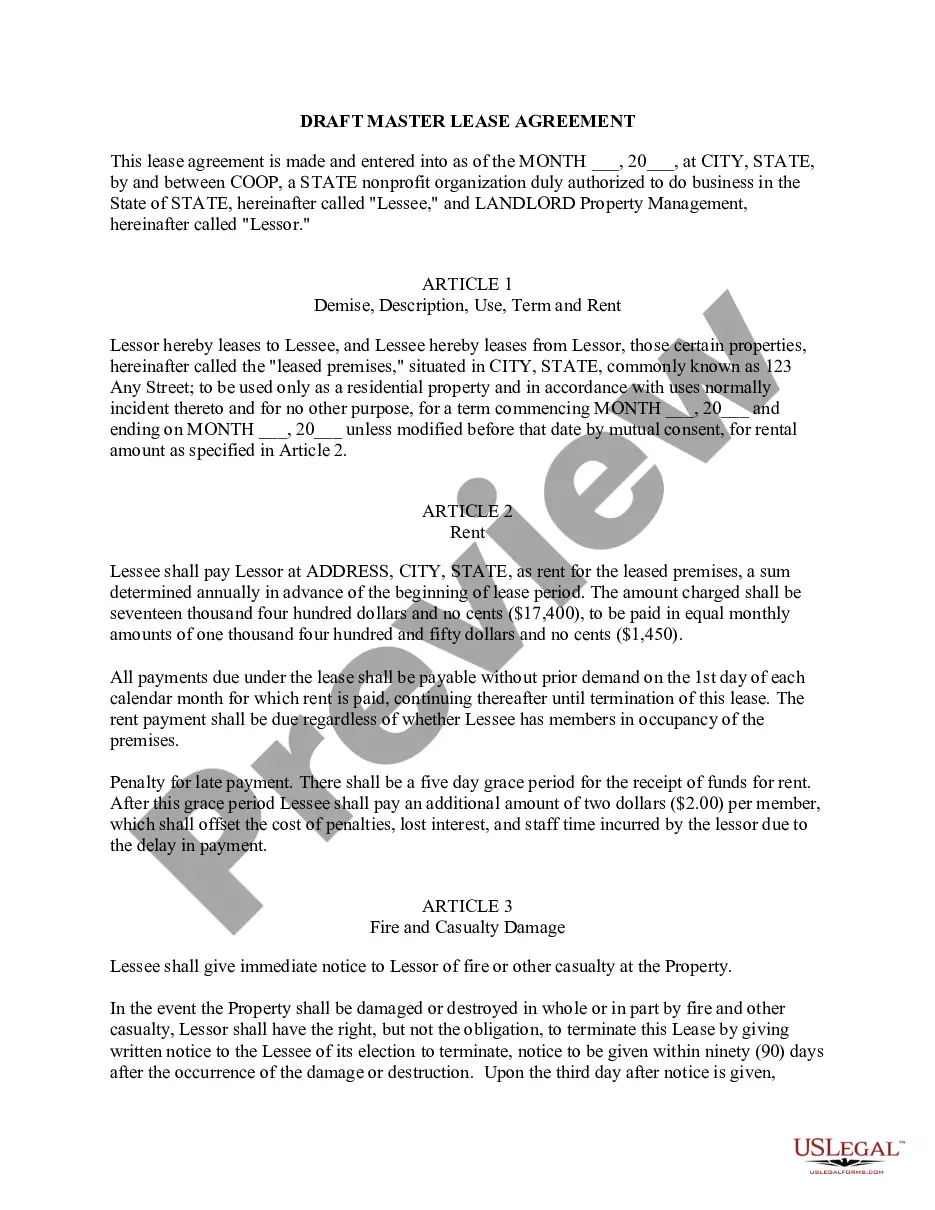
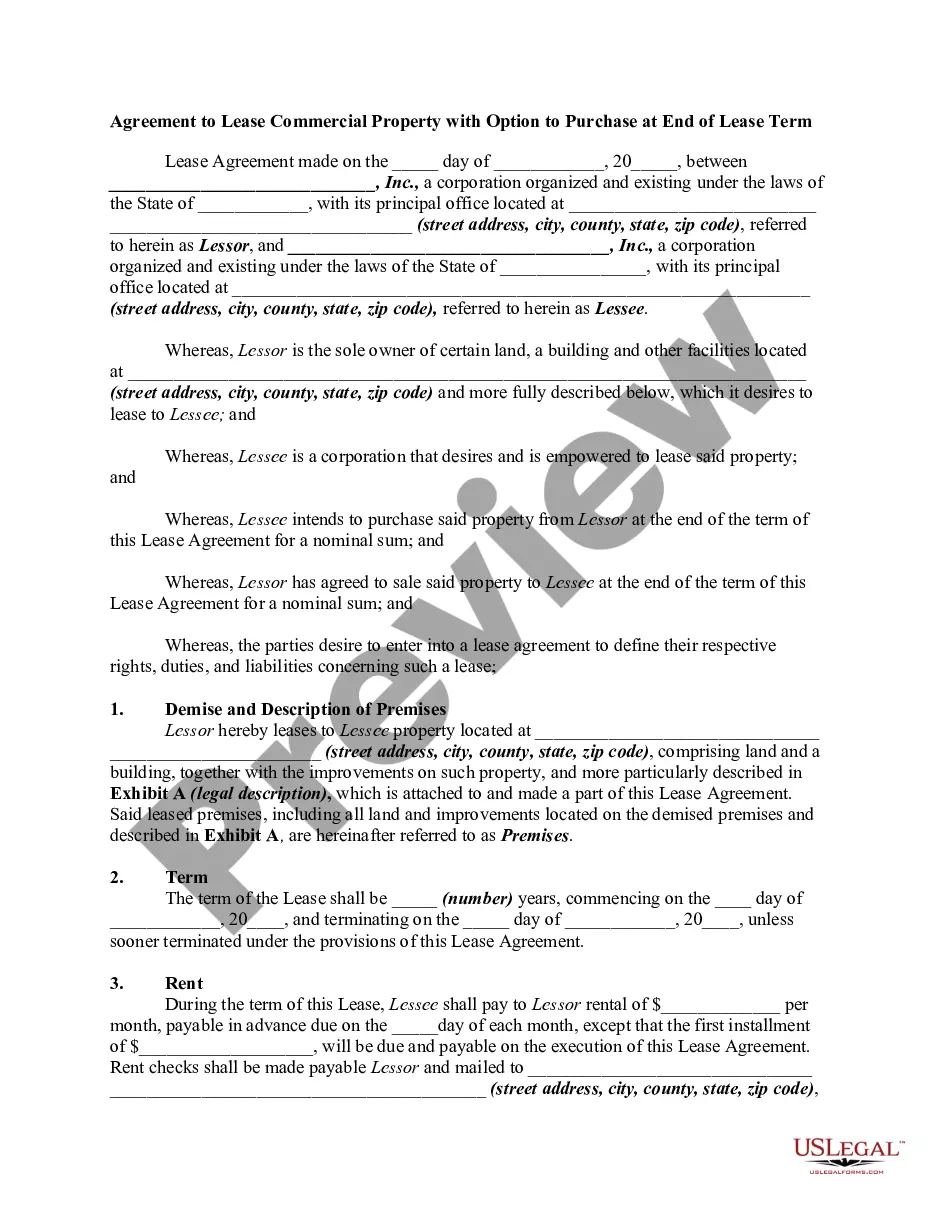
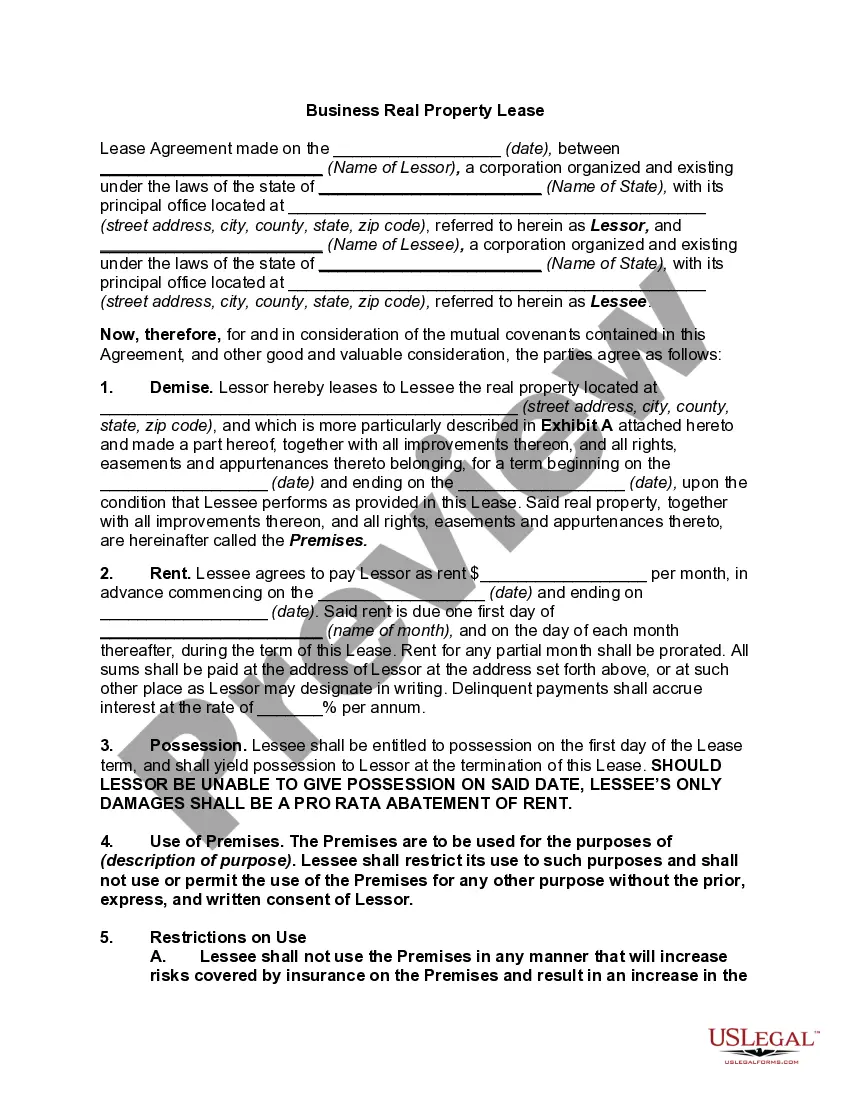
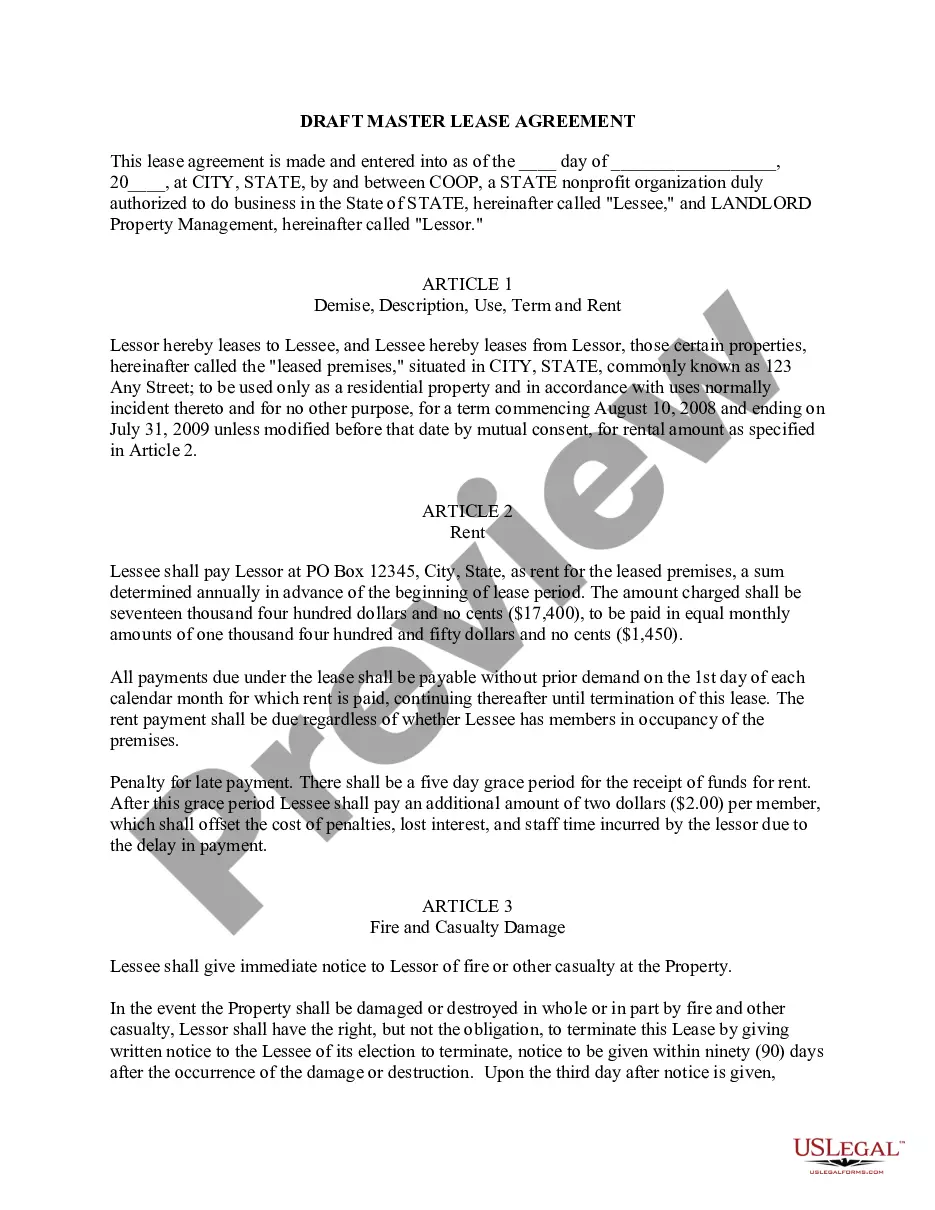
The Commercial Master Lease is a legal document that allows a property owner (lessor) to lease an income-producing property to a single tenant (lessee), who can then sublease portions of the property to multiple tenants. This arrangement enables the initial tenant to generate income from sub-leases, while the lessor retains ownership rights. Unlike traditional leases, this form provides a framework for establishing such multi-tiered leasing agreements, tailored to the needs of the parties involved.
Key parts of this document
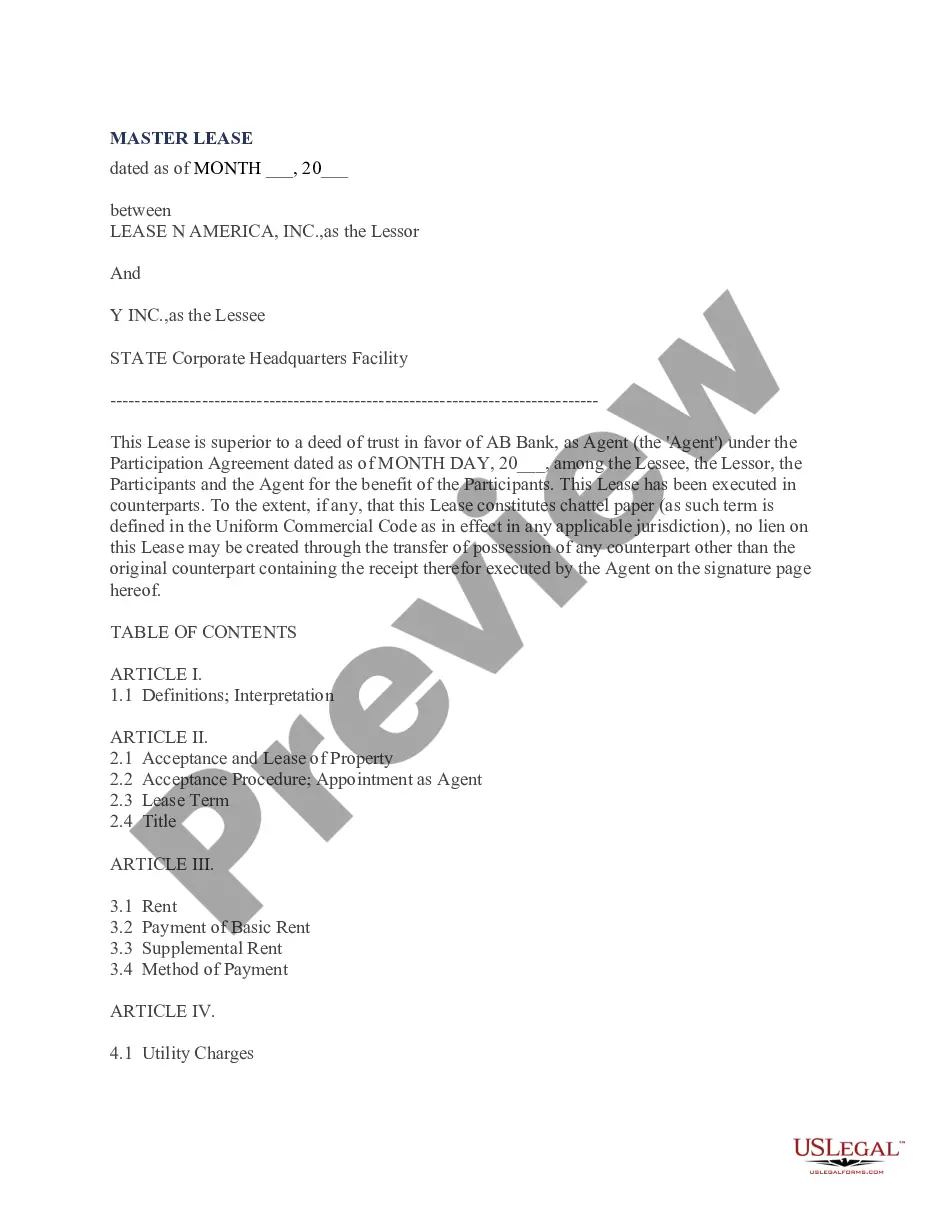
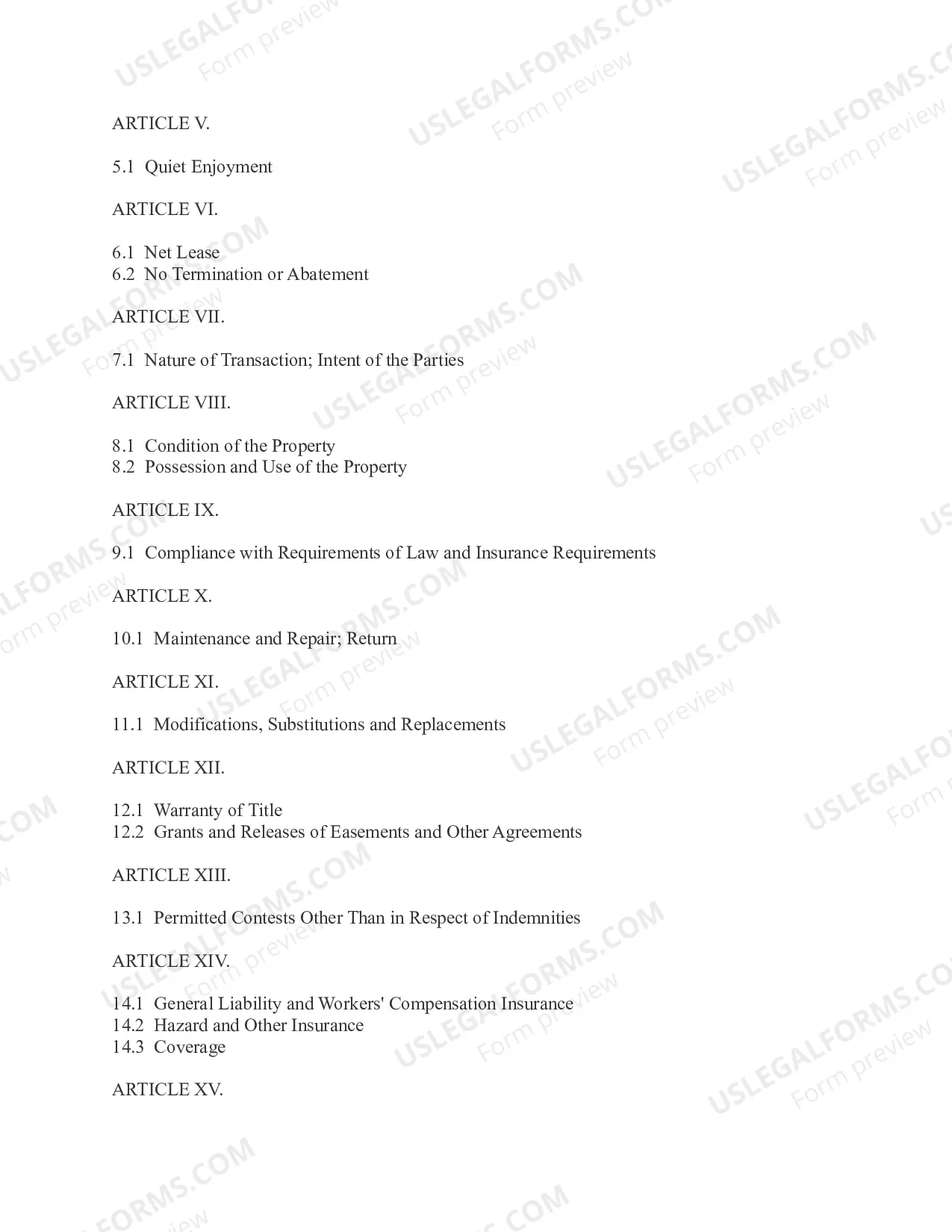
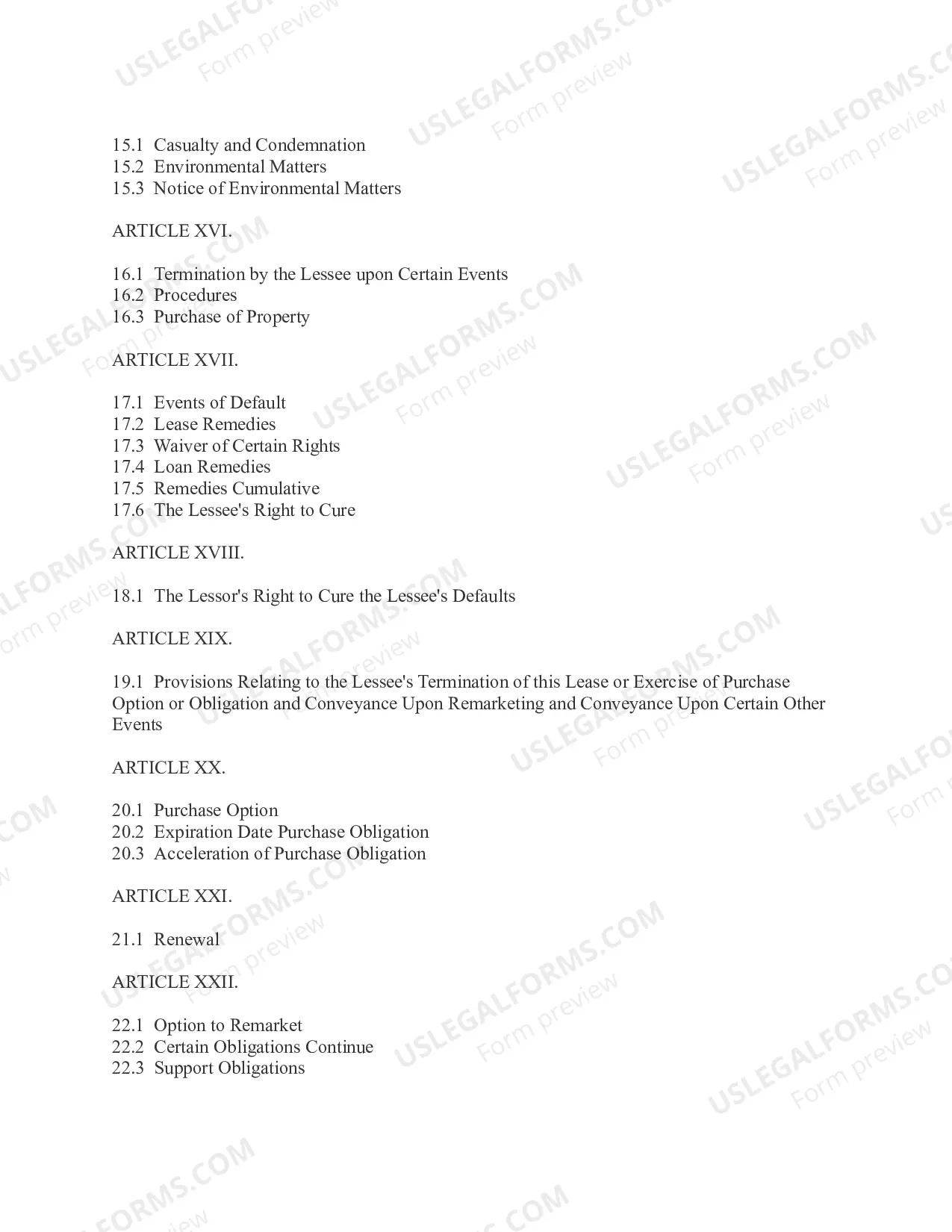
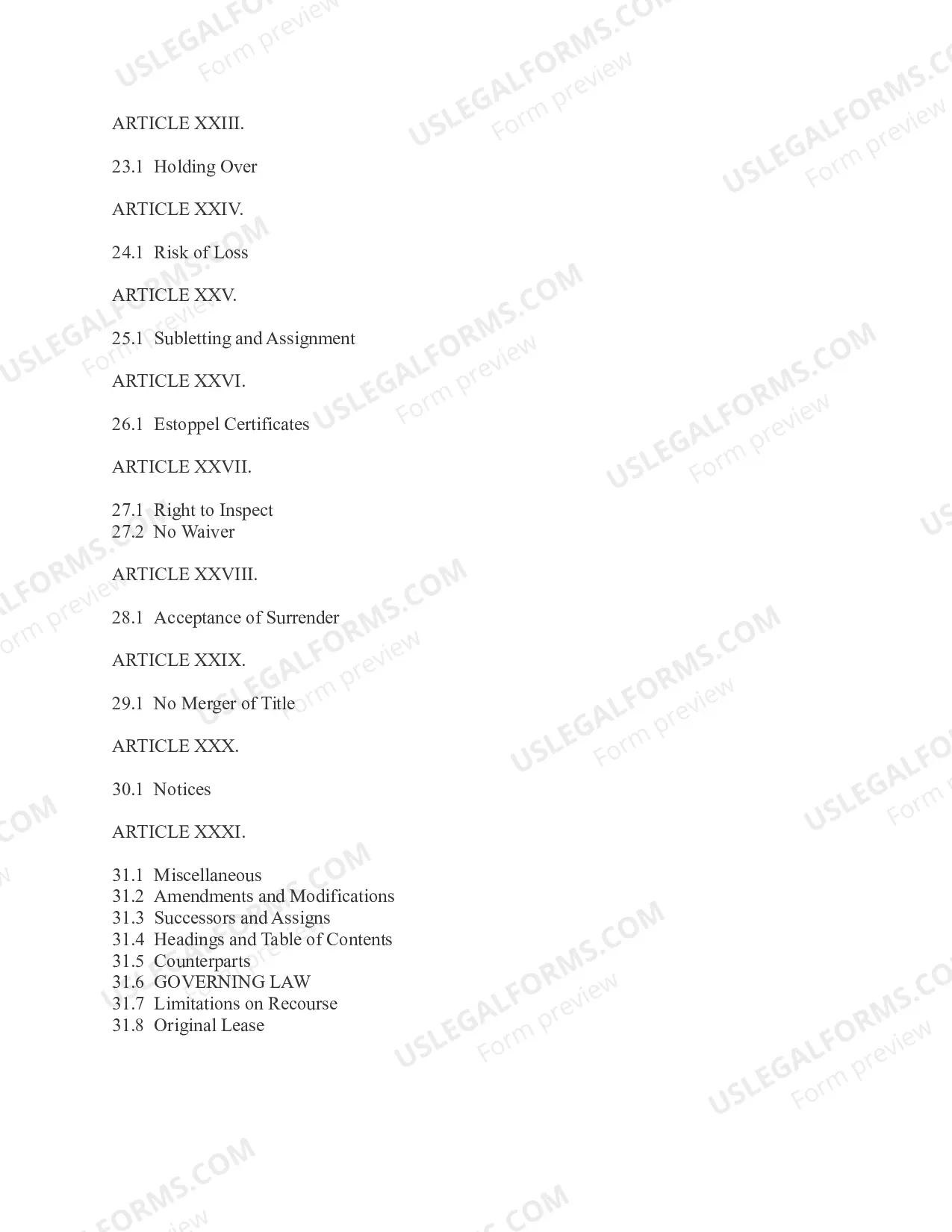
- Definitions and Interpretations: Clarifies key terms used in the lease.
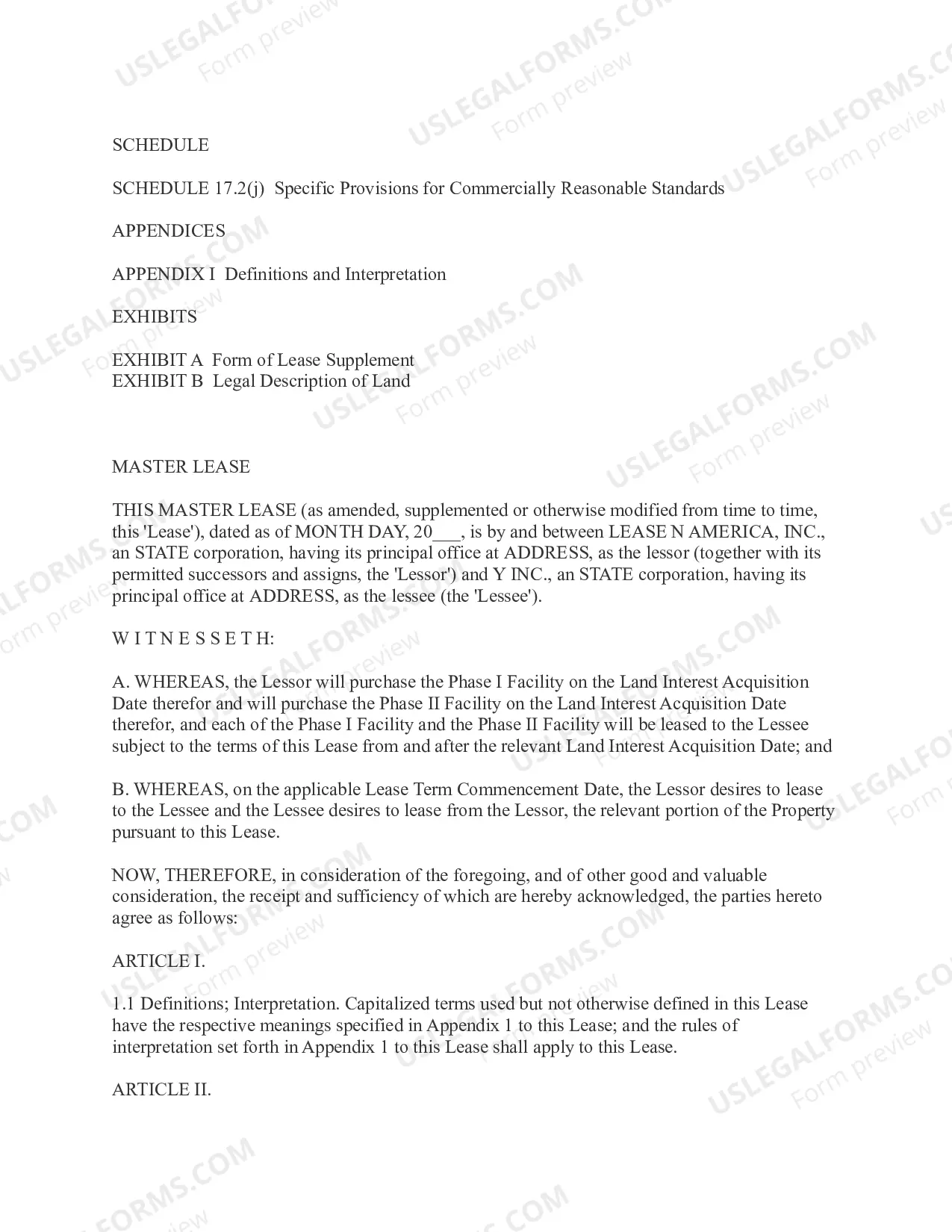
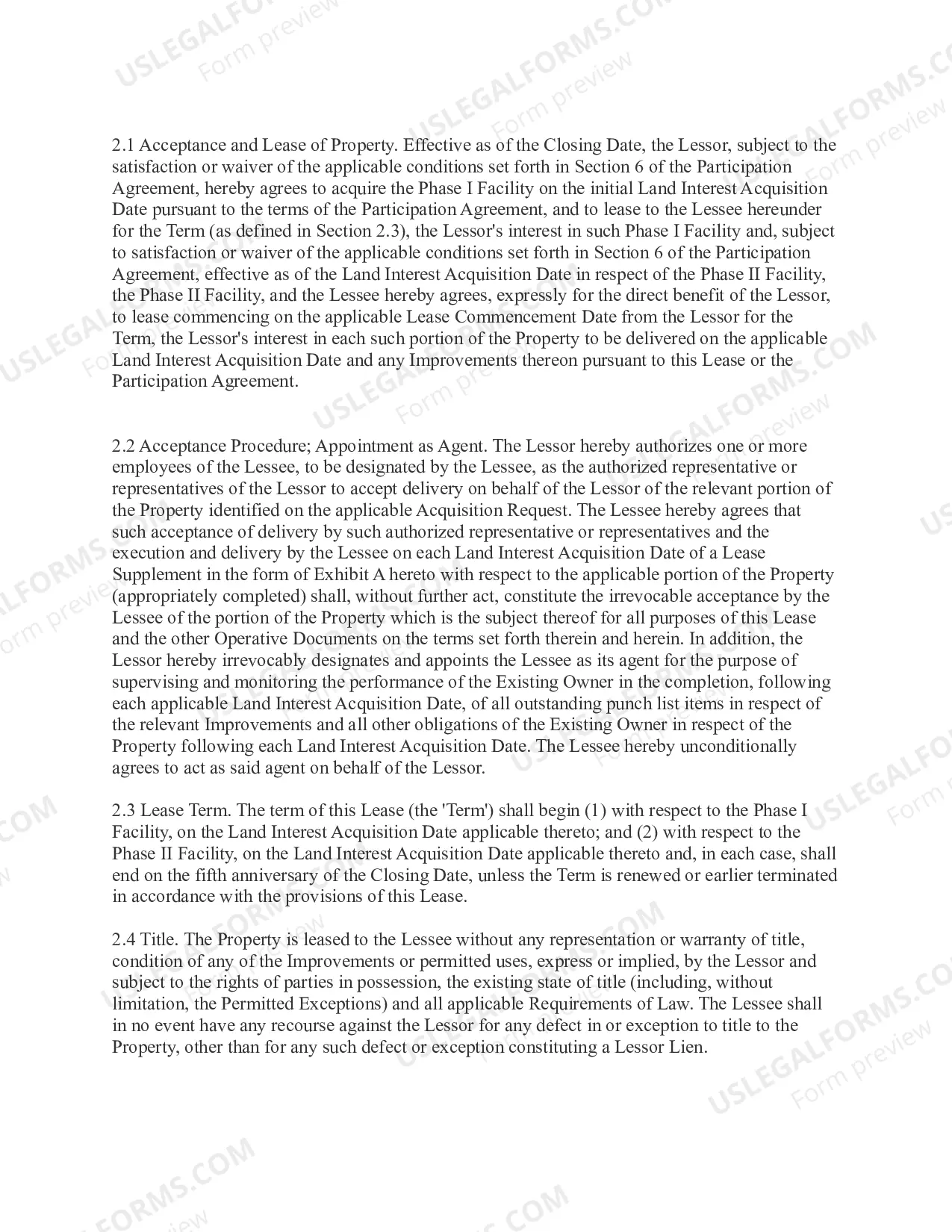
- Acceptance and Lease of Property: Outlines the process for leasing the property to the lessee.
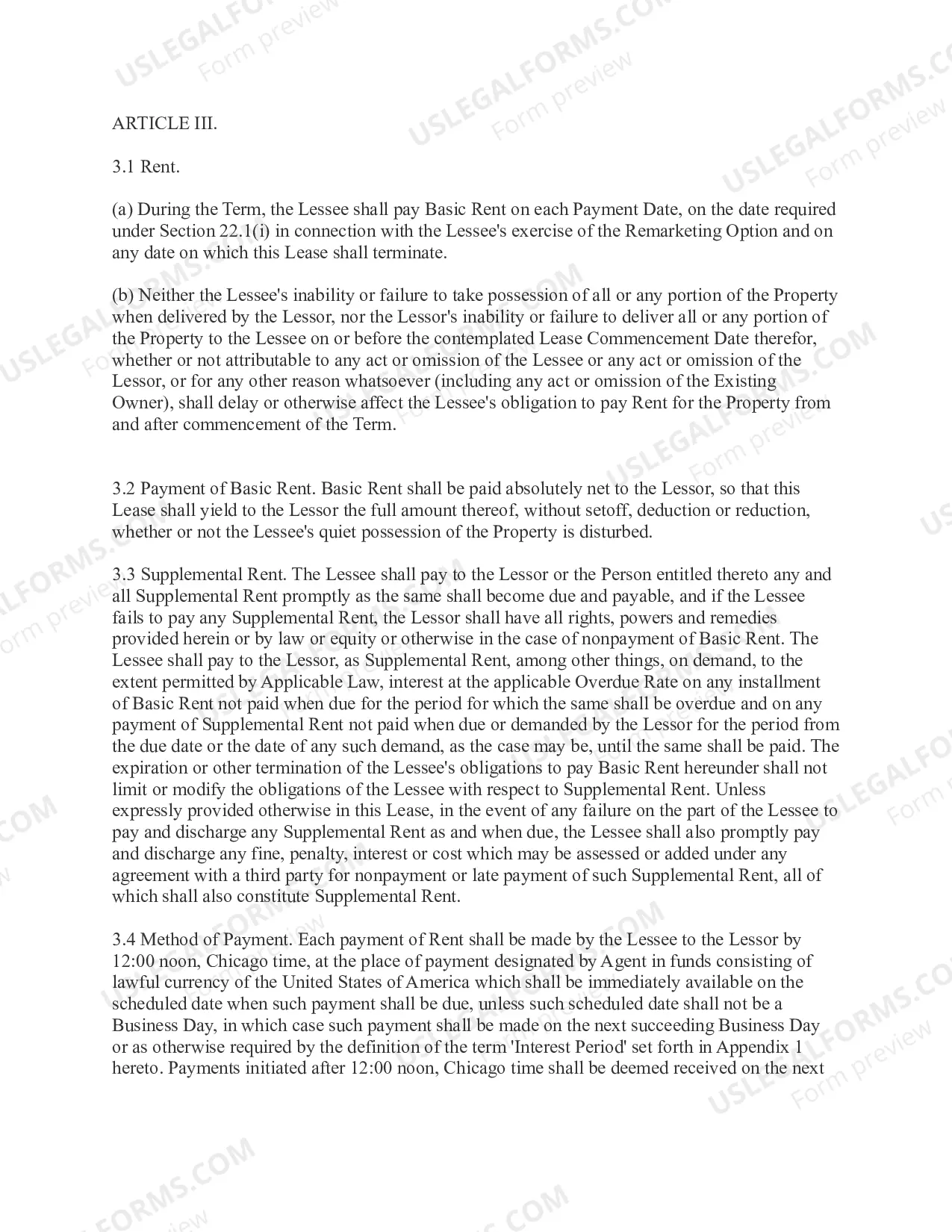
- Rent and Payment Terms: Specifies how rent should be calculated and when it is due.
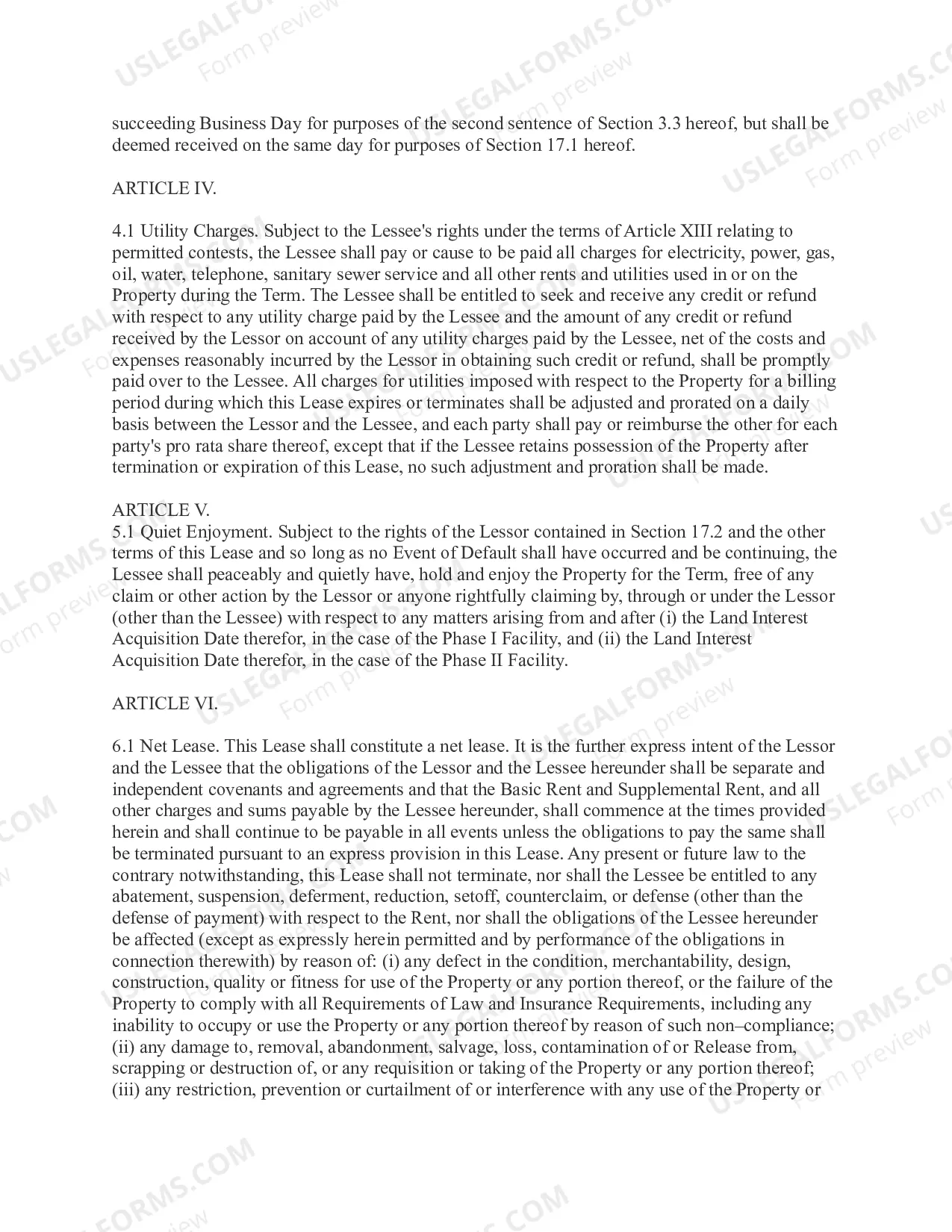
- Utility Charges: Details who is responsible for utility payments.
- Maintenance and Repair Obligations: Identifies the responsibilities for upkeep of the property.
- Termination and Purchase Options: Describes circumstances under which the lease can be terminated and the property purchased.

When to use this document
This form is suitable when a property owner wishes to lease out a commercial property while still retaining ownership rights. It is particularly useful in scenarios where the primary tenant intends to sublease to multiple businesses or organizations, thereby generating additional income. Additionally, it may be employed in situations involving complex financing arrangements where both the lessor and lessee have specific financial and operational objectives.
Who needs this form
This form is intended for:
- Property owners seeking to lease a commercial property with subleasing capabilities.
- Businesses looking to lease and sublease commercial space to generate income.
- Legal professionals drafting leasing agreements for commercial properties.
Completing this form step by step
- Identify the parties involved by entering the names and addresses of both the lessor and lessee.
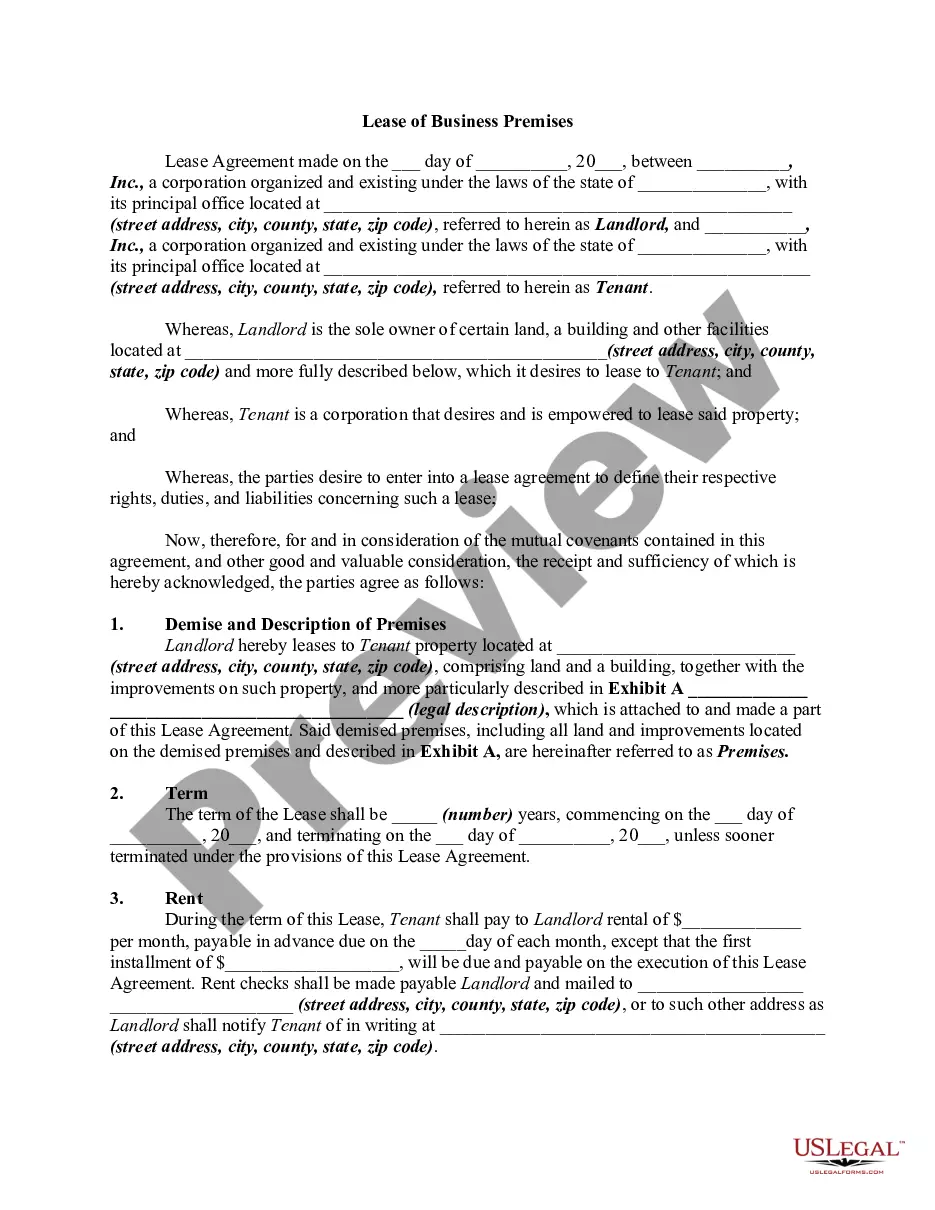
- Specify the details of the property being leased, including its legal description and any included improvements.
- Determine the lease term and outline the start and end dates of the lease agreement.
- Indicate the rent amount, payment schedule, and any additional charges such as utilities or maintenance fees.
- Include any special provisions or clauses relevant to the unique needs of both parties.
- Ensure all parties sign and date the document in the specified areas to make it legally binding.
Does this document require notarization?
This form does not typically require notarization unless specified by local law. However, having the lease notarized can provide an added layer of legal assurance and proof of identity.
Get your form ready online
Our built-in tools help you complete, sign, share, and store your documents in one place.
Make edits, fill in missing information, and update formatting in US Legal Forms—just like you would in MS Word.
Download a copy, print it, send it by email, or mail it via USPS—whatever works best for your next step.
Sign and collect signatures with our SignNow integration. Send to multiple recipients, set reminders, and more. Go Premium to unlock E-Sign.
If this form requires notarization, complete it online through a secure video call—no need to meet a notary in person or wait for an appointment.
We protect your documents and personal data by following strict security and privacy standards.

Make edits, fill in missing information, and update formatting in US Legal Forms—just like you would in MS Word.

Download a copy, print it, send it by email, or mail it via USPS—whatever works best for your next step.

Sign and collect signatures with our SignNow integration. Send to multiple recipients, set reminders, and more. Go Premium to unlock E-Sign.

If this form requires notarization, complete it online through a secure video call—no need to meet a notary in person or wait for an appointment.

We protect your documents and personal data by following strict security and privacy standards.
Common mistakes
- Failing to clearly define the leased property, including legal descriptions.
- Not specifying payment terms and rent amounts correctly.
- Overlooking necessary signatures, which can invalidate the lease.
- Neglecting to address maintenance responsibilities adequately.
- Forgetting to comply with state-specific requirements, leading to legal complications.
Why complete this form online
- Convenience: Download and fill out the form at your convenience, without the need for in-person consultations.
- Editability: Make necessary changes easily to tailor the lease to fit your specific requirements.
- Reliability: The form is drafted by licensed attorneys to ensure legal compliance and effectiveness.
Looking for another form?
Form popularity
FAQ
Transferring a commercial lease typically involves obtaining the landlord's consent and fulfilling the conditions outlined in the original lease agreement. It’s crucial to inform the landlord in writing and provide any necessary documentation regarding the new tenant's qualifications. Using a platform like US Legal Forms can help you navigate this process and ensure that the transfer aligns with the terms of your California commercial master lease.
Yes, a lease agreement can still be legal, even if it is not notarized. The primary requirements for a legal lease are the mutual agreement of both parties and the essential terms clearly outlined in the document. While a California commercial master lease does not require notarization, having a notarized agreement may assist in avoiding potential conflicts or misunderstandings.
Commercial leases in California do not generally require notarization; however, obtaining a notary public's signature can add a layer of protection. This process can help with enforcing the lease terms in case of disputes. Always review your specific situation or engage legal counsel to ensure compliance with applicable laws when drafting a California commercial master lease.
In California, a rental agreement does not typically need to be notarized to be legally binding. However, including notarization may enhance the document's legitimacy and provide extra security for both parties. When dealing with a California commercial master lease, it is advisable to consult legal professionals for specific requirements and best practices.
To write up a commercial lease, start by clearly outlining the terms of the agreement, including rental amount, duration, and property details. It is essential to incorporate specific clauses related to maintenance, utilities, and the responsibilities of each party. Utilizing resources like US Legal Forms can guide you through creating an effective California commercial master lease tailored to your needs.
A commercial master lease is a type of lease agreement that allows one party, known as the master tenant, to rent property from the landlord and then sublease it to others. This structure is particularly beneficial for investors looking to manage multiple properties under a single agreement. Using a California commercial master lease can simplify property management and increase revenue opportunities for the master tenant.
A master tenant in California is the individual or entity that holds the primary lease for a property, allowing them to sublease portions of the space to other tenants. This arrangement can provide greater flexibility and potential income avenues for the master tenant. Understanding this role can help you effectively manage your space and relationships. If you're considering the California Commercial Master Lease structure, becoming familiar with the concept of a master tenant can be beneficial for your plans.
The three primary types of commercial property leases include gross, net, and modified gross leases. Each lease type varies in terms of expense responsibilities, with gross leases putting more on the landlord and net leases shifting costs to tenants. Understanding these distinctions will help you navigate your rental agreements more efficiently. If you are looking for a California Commercial Master Lease, assessing these options can guide you to the right choice for your business.
To start commercial leasing, first define your space requirements and budget. Research the types of properties available in California that suit your business needs. You can use platforms like uslegalforms to guide you through lease agreements and ensure compliance, helping you make informed decisions with confidence.
The process of obtaining a California Commercial Master Lease can take anywhere from a few weeks to several months. It largely depends on how quickly you complete the necessary paperwork and engage with the landlord. To speed up the process, have all your documents ready and remain proactive in communications.