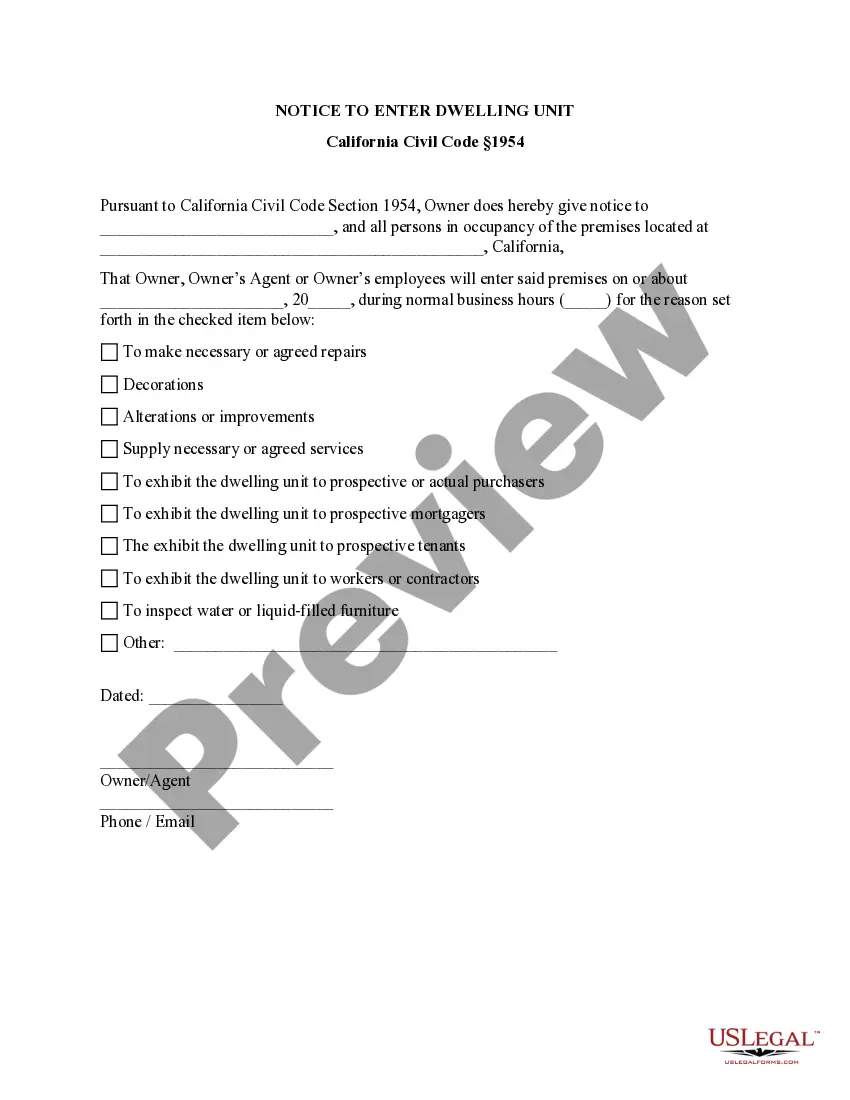
California Notice to Enter Dwelling Unit
What this document covers
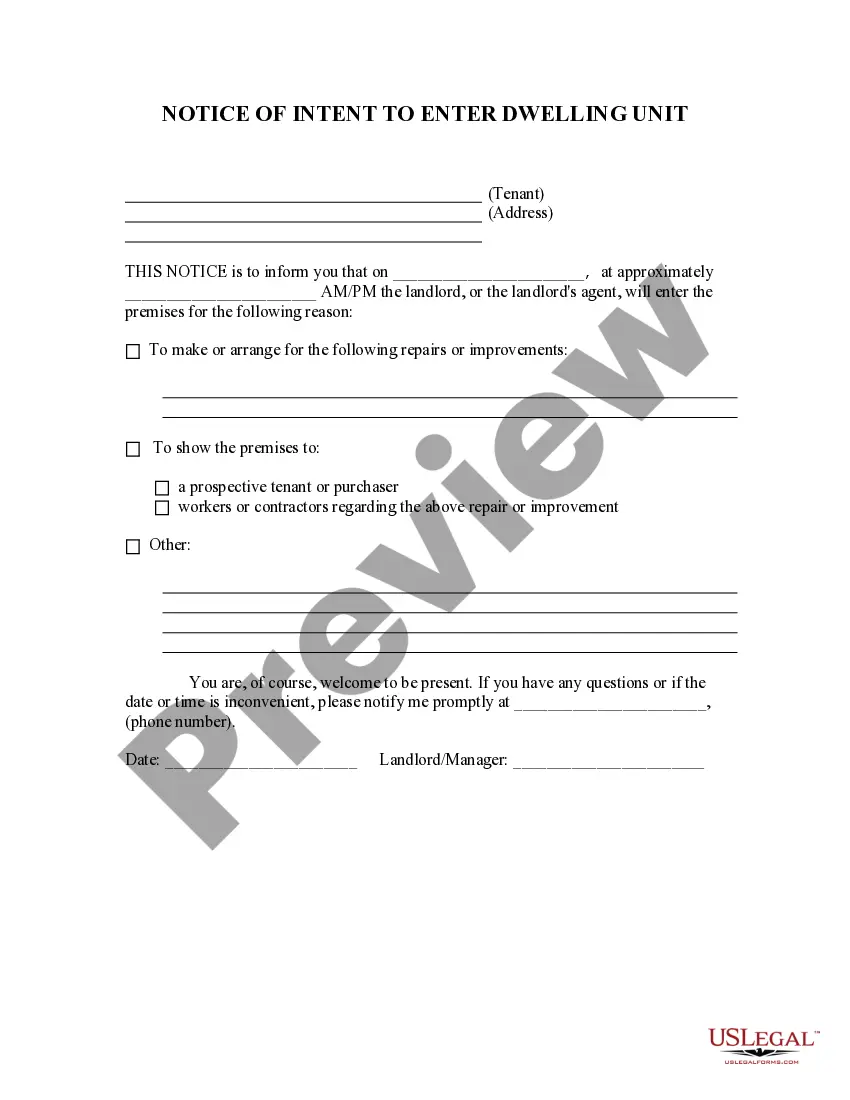
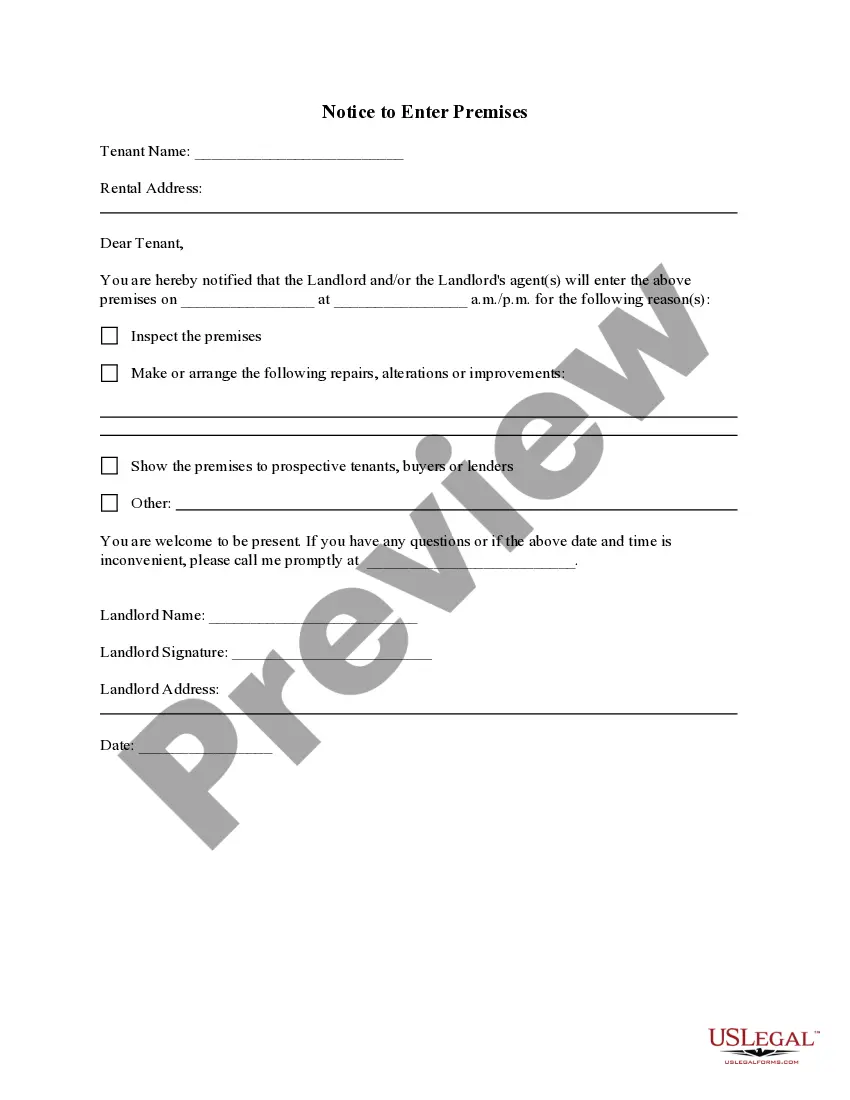
The Notice to Enter Dwelling Unit is a legal document used by landlords to inform tenants and occupants of their intention to enter rental property. This notice is required under California Civil Code Section 1954 and specifies the date, time, and reason for entry. It helps protect tenants' rights while ensuring landlords can fulfill their responsibilities, such as making repairs or showing the property to potential buyers or tenants.
Main sections of this form
- Notification of the property address and occupants
- Date and time of the intended entry
- Reason for entering the property (e.g., repairs, inspections)
- Name and contact information of the owner or agent
- Signature and date of the notice
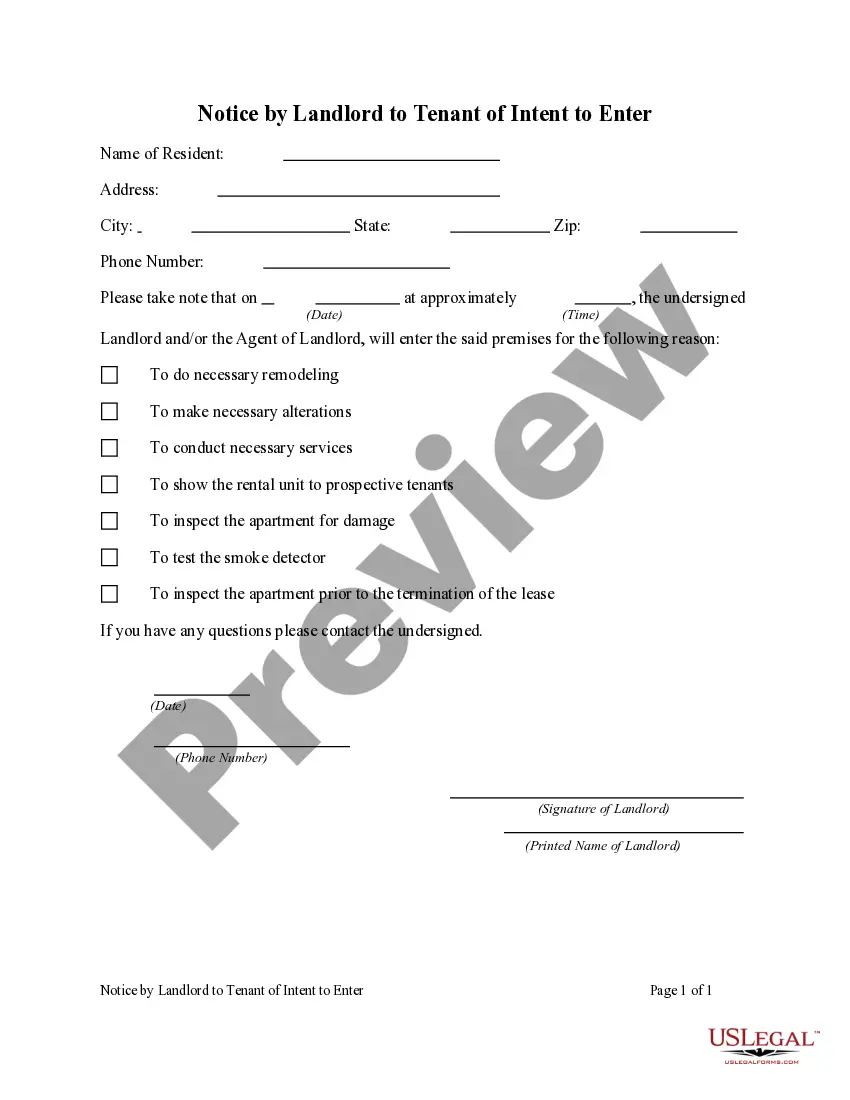
When this form is needed
This form should be used when a landlord or property owner needs to enter a rental unit for legitimate reasons. Common scenarios include performing necessary repairs, conducting inspections, or showing the unit to prospective buyers or tenants. It is crucial to provide adequate notice to the tenants to respect their rights to privacy and quiet enjoyment of the property.
Who can use this document
- Property owners and landlords managing rental properties
- Real estate agents acting on behalf of landlords
- Property managers overseeing tenant relations
Completing this form step by step
- Identify the tenants and any occupants by filling in their names.
- Specify the property address clearly.
- Enter the anticipated date and time of entrance.
- Select the reason for entering the dwelling from the provided options.
- Include the owner or agent's contact information.
- Sign and date the notice before delivering it to the tenants.
Is notarization required?
This form does not typically require notarization unless specified by local law. Completing this notice can be done efficiently without the need for a notary, making it convenient for landlords to serve their tenants appropriately.
Get your form ready online
Our built-in tools help you complete, sign, share, and store your documents in one place.
Make edits, fill in missing information, and update formatting in US Legal Forms—just like you would in MS Word.
Download a copy, print it, send it by email, or mail it via USPS—whatever works best for your next step.
Sign and collect signatures with our SignNow integration. Send to multiple recipients, set reminders, and more. Go Premium to unlock E-Sign.
If this form requires notarization, complete it online through a secure video call—no need to meet a notary in person or wait for an appointment.
We protect your documents and personal data by following strict security and privacy standards.

Make edits, fill in missing information, and update formatting in US Legal Forms—just like you would in MS Word.

Download a copy, print it, send it by email, or mail it via USPS—whatever works best for your next step.

Sign and collect signatures with our SignNow integration. Send to multiple recipients, set reminders, and more. Go Premium to unlock E-Sign.

If this form requires notarization, complete it online through a secure video call—no need to meet a notary in person or wait for an appointment.

We protect your documents and personal data by following strict security and privacy standards.
Mistakes to watch out for
- Failing to provide adequate notice time as required by law.
- Neglecting to include all occupants in the notice.
- Not specifying a clear reason for entry.
- Using an incorrect date or time for the proposed visit.
Why use this form online
- Easy and quick access to legal templates drafted by licensed attorneys.
- Customized filling options to tailor the notice according to specific needs.
- Time-saving download option allowing immediate use.
- Secure and reliable format that meets legal requirements.
Looking for another form?

Form popularity
FAQ
In most cases, landlords cannot enter a tenant's home without permission in California. They must follow the California Notice to Enter Dwelling Unit rules, which require giving you prior notice and specifying the reason for entry. However, in emergencies, landlords may enter without permission. As a tenant, understanding your rights ensures you can address unauthorized entries effectively.
Yes, landlords in California must give notice before entering a tenant's dwelling unit. The California Notice to Enter Dwelling Unit requires at least 24 hours' written notice, except in emergencies. This law protects your privacy as a tenant and ensures you are informed before anyone enters your home. Violations of this law could lead to legal consequences for the landlord.
Yes, tenants in California can deny access to their landlord if the landlord fails to provide proper notice. Under the California Notice to Enter Dwelling Unit laws, landlords must notify tenants at least 24 hours in advance. If you feel uncomfortable or your landlord does not follow the rules, you have the right to refuse entry. Remember, good communication can often resolve these situations amicably.
As a tenant in California, you have the right to refuse entry to your landlord if they do not provide proper notice. The California Notice to Enter Dwelling Unit typically requires landlords to give at least 24 hours' notice before visiting. However, you cannot deny entry in cases of emergencies, such as plumbing issues or fire hazards. Always ensure your landlord complies with the notice requirements to protect your rights.
Harassment by landlords in California includes any behavior that interferes with your right to enjoy your rental space. This may involve repeated unwarranted entries, threats of eviction without cause, or excessive demands for entry against the California Notice to Enter Dwelling Unit regulations. If you feel that your landlord is harassing you, it’s crucial to document all instances and consider seeking legal advice. Uslegalforms can provide valuable resources to help you understand and protect your rights.
In California, a landlord cannot enter your room without permission unless they have given proper notice. The law mandates that landlords provide a California Notice to Enter Dwelling Unit at least 24 hours in advance. This notice must state the purpose of the entry, making it clear that you have rights regarding your privacy. Understanding your rights can help you address any unauthorized entries effectively.
Yes, you can sue your landlord if they enter your dwelling unit without providing proper notice as specified by California law. The California Notice to Enter Dwelling Unit requires landlords to give a written notice at least 24 hours before entering. If your landlord fails to adhere to this rule, you may have grounds for a legal claim. It’s always wise to document any unauthorized entries and seek advice on how uslegalforms can assist you in navigating this situation.
A 24-hour notice to enter a dwelling unit in California is a formal notification that a landlord must provide before entering your home. This notice is part of the California Notice to Enter Dwelling Unit regulations, ensuring that tenants are prepared for the landlord's visit. The notice must specify the date and time of entry, and can be canceled or rescheduled by mutual agreement. Being aware of this process helps tenants feel secure in their living spaces.
A landlord must give at least 24 hours' notice before entering your property in California. This requirement is part of the regulations surrounding the California Notice to Enter Dwelling Unit, which ensures that tenants have adequate time to prepare for the visit. This notice can be delivered in various ways, such as in person, through mail, or by posting it on your door. Knowing this rule helps you assert your rights as a tenant effectively.
In California, a landlord cannot enter your apartment without permission unless it is an emergency situation. The law protects your privacy by requiring landlords to follow the guidelines of the California Notice to Enter Dwelling Unit. This means they must provide a reasonable advance notice, usually at least 24 hours, unless there are urgent circumstances. Understanding these rights is crucial for tenant safety and peace of mind.