California Investigation of Policy Statement
What is this form?
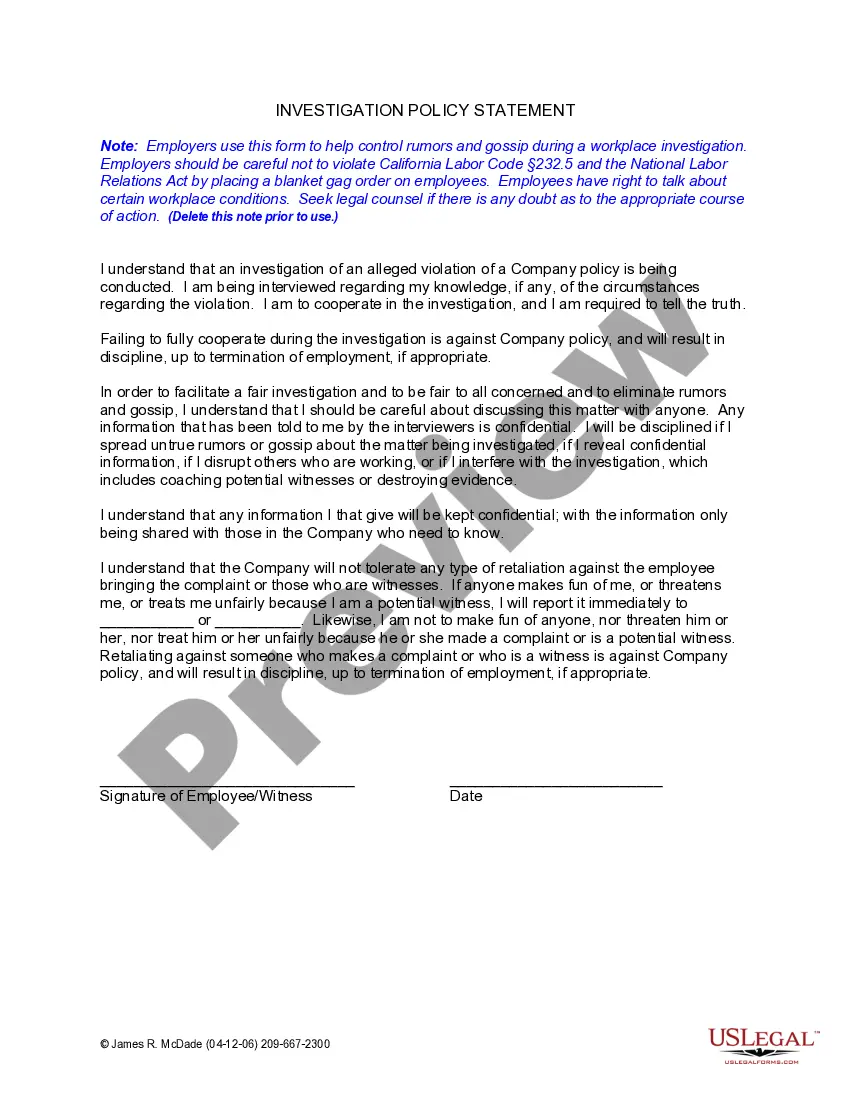
The Investigation of Policy Statement is a critical document used by employers during workplace investigations of alleged policy violations. This form serves to maintain confidentiality and reduce rumors while gathering information from employees. It outlines the expectations of cooperation and honesty from the employee being interviewed, differentiating it from other types of investigative forms by its focus on confidentiality and workplace conduct.
Main sections of this form
- Statement of understanding regarding the investigation.
- Obligation of the employee to cooperate and tell the truth.
- Confidentiality clause outlining how information should be treated.
- Consequences for spreading rumors or interfering with the investigation.
- Reporting procedures for retaliation or unfair treatment.
Common use cases
This form is utilized when an employer feels there has been a violation of company policy and needs to conduct an investigation. It is essential when interviewing employees to ensure they understand the gravity of the situation, their responsibilities during the investigation, and the confidentiality expected from them. Situations might include harassment claims, policy breaches, or misconduct allegations where clear communication and documentation are necessary to handle the investigation appropriately.
Who needs this form
- Employers conducting investigations into workplace misconduct.
- Human resources personnel involved in employee interviews.
- Supervisors or managers addressing policy violations.
- Employees asked to provide testimony or evidence during an investigation.
How to prepare this document
- Read the form thoroughly to understand its implications.
- Sign and date the form to acknowledge your understanding of the investigation.
- Provide any information requested during the interview accurately and truthfully.
- Refrain from discussing the investigation with co-workers or unauthorized individuals.
- Report any instances of retaliation or unfair treatment immediately as instructed.
Is notarization required?
In most cases, this form does not require notarization. However, some jurisdictions or signing circumstances might. US Legal Forms offers online notarization powered by Notarize, accessible 24/7 for a quick, remote process.
Get your form ready online
Our built-in tools help you complete, sign, share, and store your documents in one place.
Make edits, fill in missing information, and update formatting in US Legal Forms—just like you would in MS Word.
Download a copy, print it, send it by email, or mail it via USPS—whatever works best for your next step.
Sign and collect signatures with our SignNow integration. Send to multiple recipients, set reminders, and more. Go Premium to unlock E-Sign.
If this form requires notarization, complete it online through a secure video call—no need to meet a notary in person or wait for an appointment.
We protect your documents and personal data by following strict security and privacy standards.

Make edits, fill in missing information, and update formatting in US Legal Forms—just like you would in MS Word.

Download a copy, print it, send it by email, or mail it via USPS—whatever works best for your next step.

Sign and collect signatures with our SignNow integration. Send to multiple recipients, set reminders, and more. Go Premium to unlock E-Sign.

If this form requires notarization, complete it online through a secure video call—no need to meet a notary in person or wait for an appointment.

We protect your documents and personal data by following strict security and privacy standards.
Mistakes to watch out for
- Failing to read and understand the confidentiality obligations.
- Discussing the investigation with unauthorized parties.
- Not reporting retaliation or threats as specified.
Why use this form online
- Convenient access to the form anytime and anywhere.
- Editable fields to customize the form to your needs.
- Secure download ensuring the privacy of sensitive information.
Legal use & context
- This form supports compliance with workplace policies and legal standards regarding confidentiality.
- Correctly completing and using this form can protect both the employer and employee's rights during an investigation.
- Utilizing legal counsel when necessary can ensure adherence to local labor laws.
Looking for another form?


Form popularity
FAQ
To file a complaint with the California Attorney General's Office, you should begin by visiting their official website. There, you can find a dedicated section for filing complaints related to various issues, including those concerning the California Investigation of Policy Statement. After providing the necessary details, submit your complaint electronically or choose to mail it in. Ensure you keep a copy of your submission for your records, as it serves as an important document in the process.
The CBI, or California Bureau of Investigation, indeed exists and is responsible for various investigative functions. They assist local law enforcement agencies with complex cases, ensuring adherence to policies outlined in the California Investigation of Policy Statement. Their collaboration aims at improving the overall effectiveness and accountability of law enforcement in California.
A CRD report summarizes findings related to a specific incident or complaint logged in the California Reporting Database. These reports provide critical insights into law enforcement practices and are essential for stakeholders focusing on reform. They play a vital role in informing the California Investigation of Policy Statement by highlighting areas that require attention or improvement.
A CRD case involves matters that are logged into the California Reporting Database. These cases may include allegations of misconduct, use of force, or other issues related to law enforcement agencies. By analyzing these cases, stakeholders can enhance transparency and improve compliance with the California Investigation of Policy Statement.
Employers can set expectations regarding communications about workplace matters, especially surrounding sensitive issues like investigations. This policy is often consistent with the California Investigation of Policy Statement. It is essential to understand your rights while following your employer’s guidance to maintain a cooperative work environment.
When writing a workplace harassment investigation report, start with a clear statement of purpose, followed by a detailed account of the findings. Include witness statements, evidence reviewed, and conclusions drawn. Utilizing the California Investigation of Policy Statement as a guide can enhance the report's effectiveness and adherence to legal standards.
Employers can advise employees to keep an investigation confidential to ensure its effectiveness and protect those involved. This practice is in line with the California Investigation of Policy Statement, which supports confidentiality during inquiries. It’s vital for all parties to respect these directives for a successful resolution.
Yes, employers can instruct employees not to discuss ongoing investigations to protect confidentiality. This approach aligns with the California Investigation of Policy Statement, which emphasizes the importance of a discreet investigation process. Following such protocols helps maintain the integrity of the investigation.
The Fair Employment and Housing Act (FEHA) imposes a duty on employers to promptly and thoroughly investigate complaints of harassment and discrimination. This legal obligation ties closely to the California Investigation of Policy Statement. By fulfilling this duty, employers can create a safer and more equitable workplace.
When investigating a harassment complaint, employers should follow established procedures. This includes gathering evidence, interviewing relevant parties, and documenting findings. Adhering to the California Investigation of Policy Statement ensures a fair and effective process.