California Vacation Policy
What is this form?
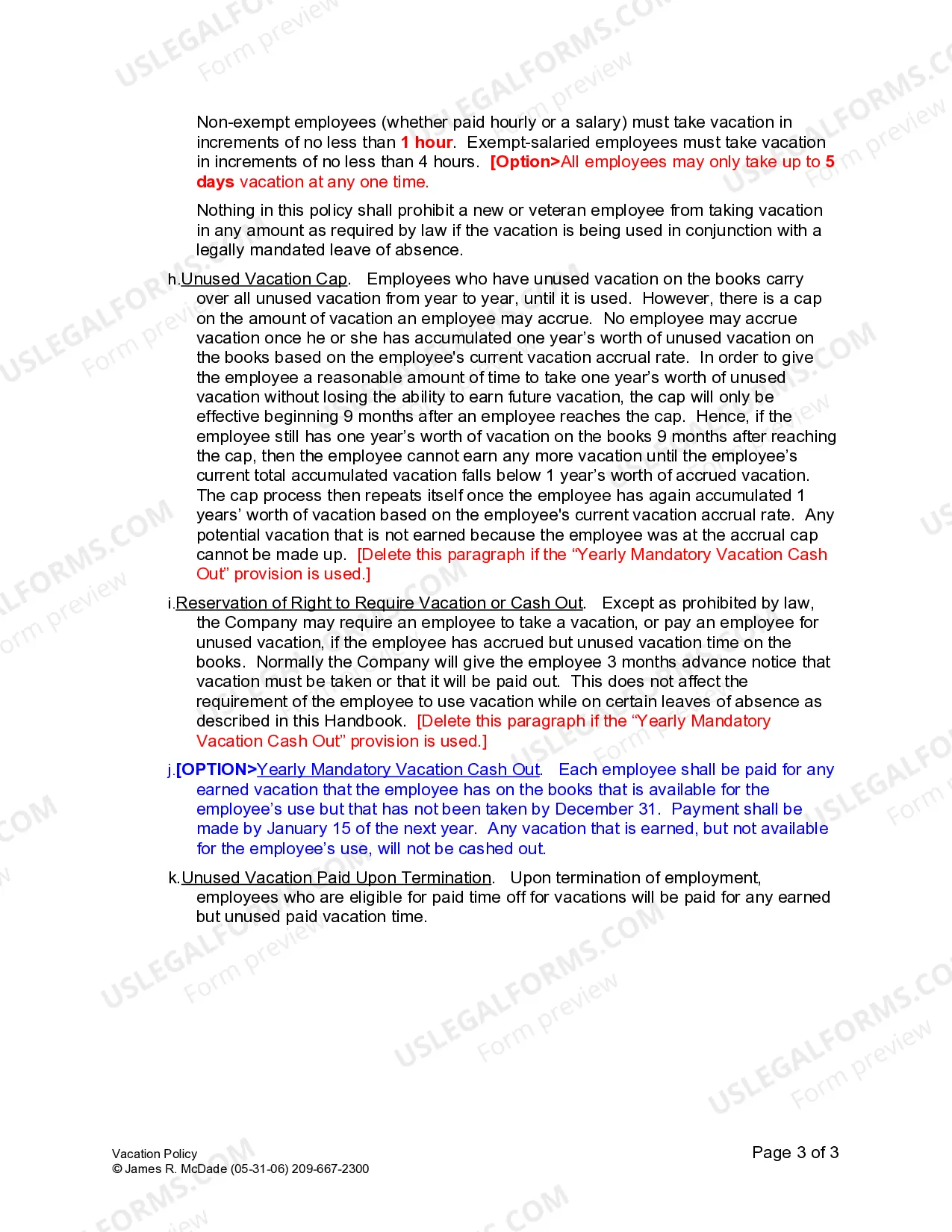
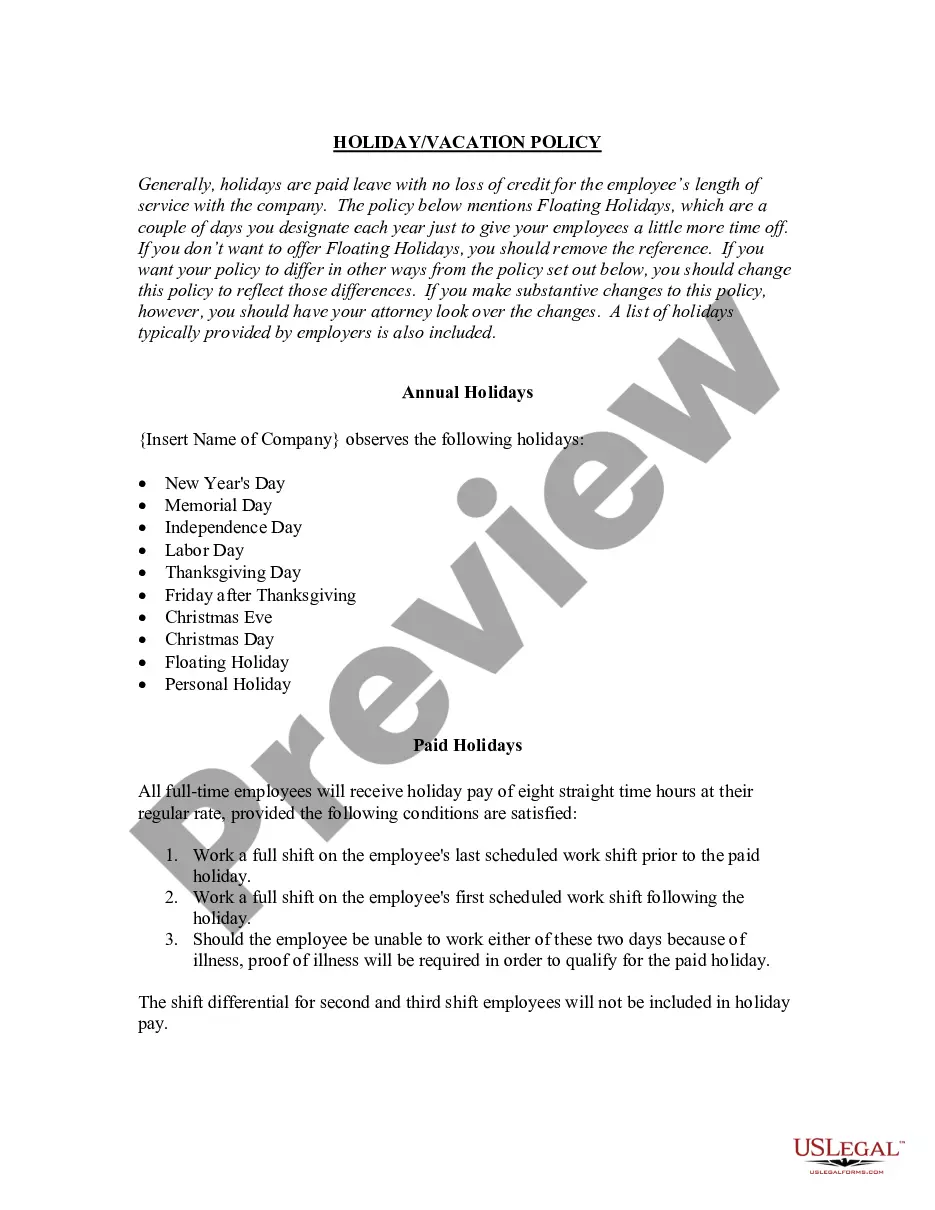
The Vacation Policy form is a vital document for employers that outlines the rules and guidelines regarding vacation time for employees. This policy details how vacation days are accrued, the scheduling of time off, and provisions for any unused vacation. Unlike informal agreements, this policy provides a structured framework that ensures consistency and clarity for both employers and employees regarding vacation entitlements.
Key parts of this document
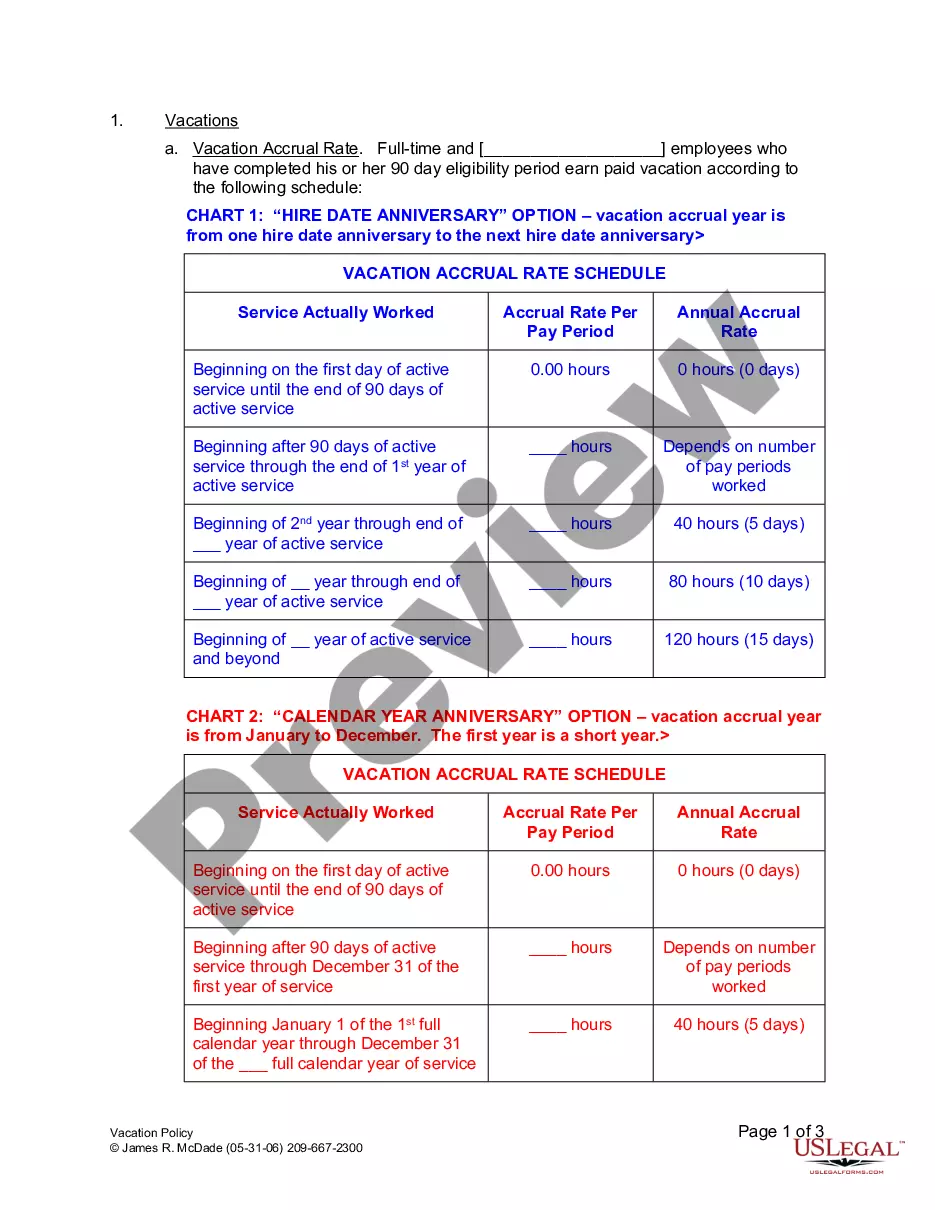
- Vacation accrual rates for various periods of employment.
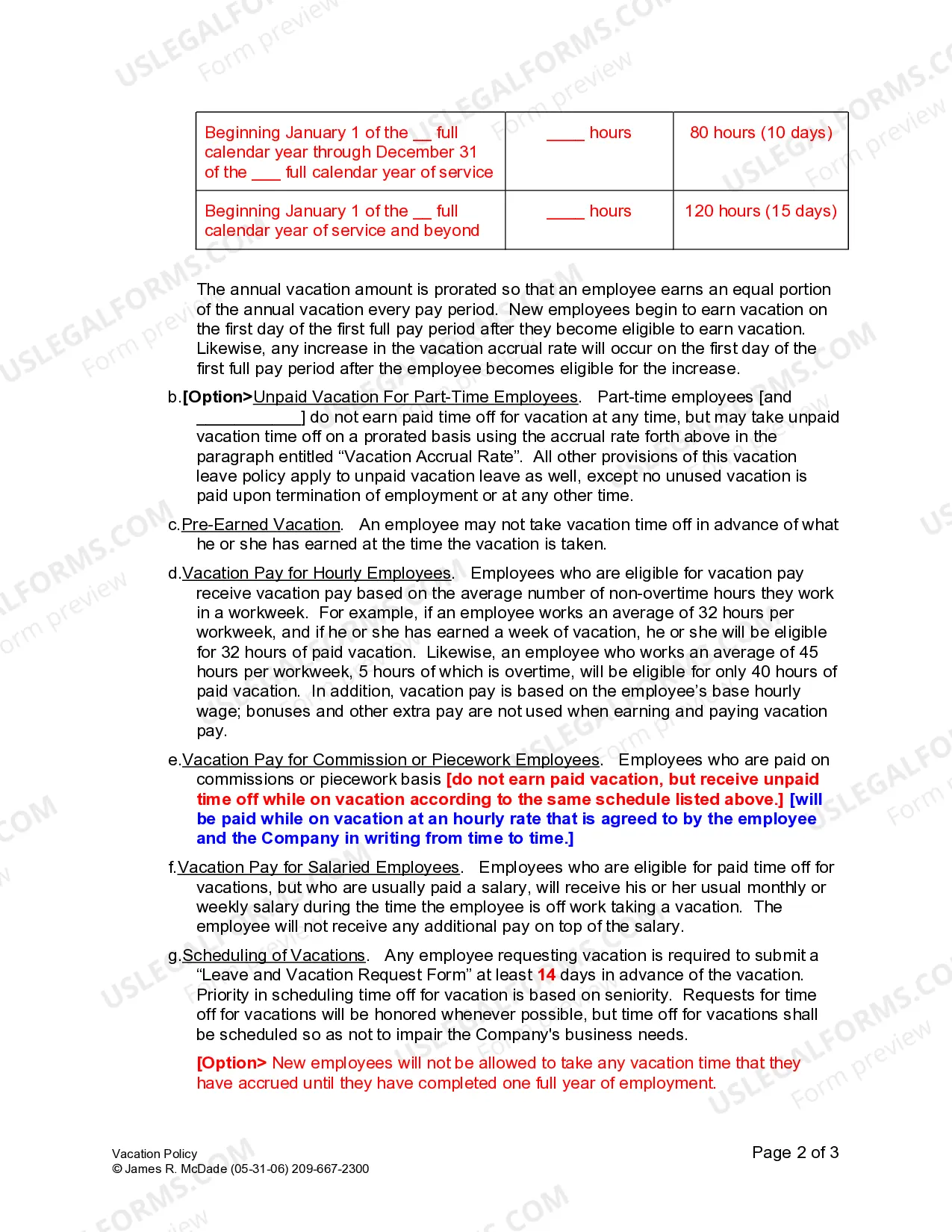
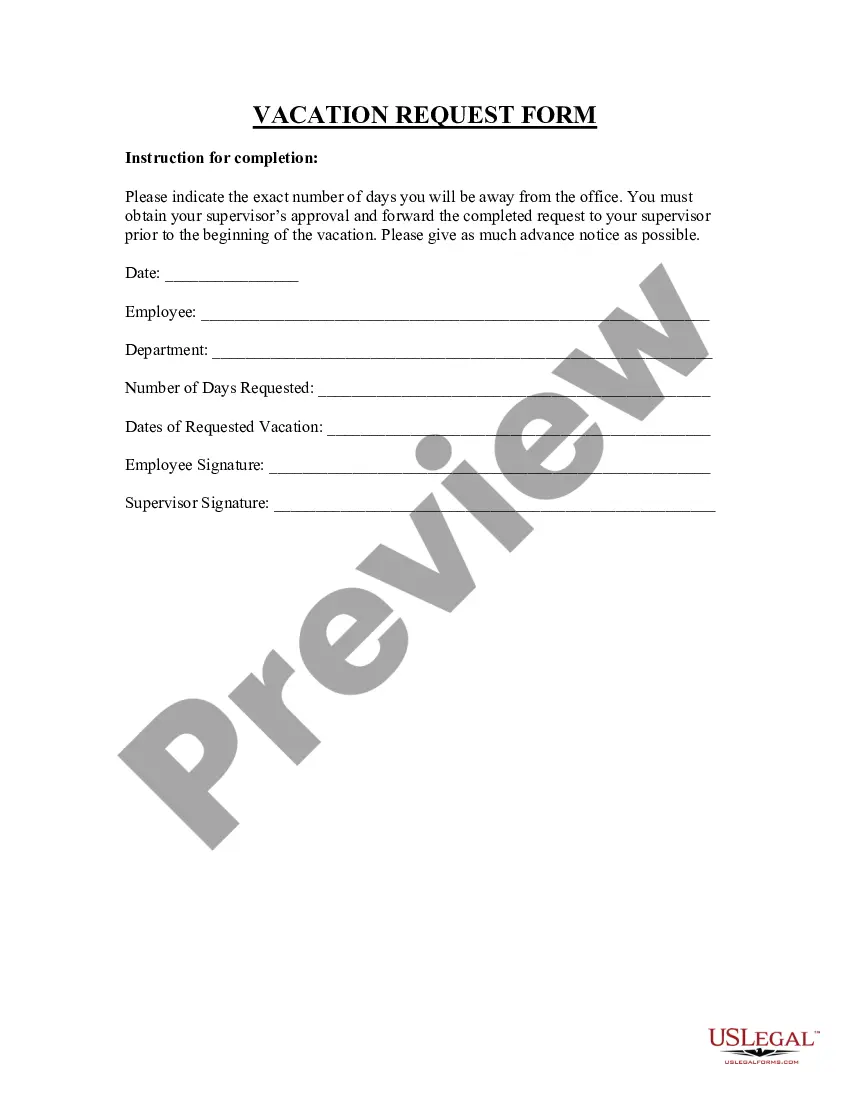
- Procedures for scheduling vacations and making requests.
- Details regarding unpaid vacation for part-time employees.
- Guidelines for vacation pay calculations based on different employment types.
- Policies on the carryover and cash payout of unused vacation time.
Situations where this form applies
This Vacation Policy form should be used when establishing or updating an organization's vacation policy. It is essential for maintaining legal compliance and ensuring clarity in employee benefits. Use this form whenever there is a need to outline vacation accrual, manage scheduling, or define payout procedures for unused vacation times, especially for new hires or during organizational changes.
Who can use this document
- Employers looking to formalize their vacation policies.
- Managers responsible for employee benefits and human resources.
- Small business owners wanting clear guidelines for vacation accrual.
- Human resources professionals drafting employee handbooks.
- Companies that require consistency in vacation benefit practices across all employees.
Completing this form step by step
- Identify the type of employees covered (full-time, part-time).
- Define the vacation accrual rates based on the length of service.
- Specify any requirements for requesting vacation time, including submission deadlines.
- Document policies regarding payout for unused vacation time upon termination.
- Review and adapt any sections to align with company culture and state laws.
Notarization requirements for this form
Notarization is not commonly needed for this form. However, certain documents or local rules may make it necessary. Our notarization service, powered by Notarize, allows you to finalize it securely online anytime, day or night.
Get your form ready online
Our built-in tools help you complete, sign, share, and store your documents in one place.
Make edits, fill in missing information, and update formatting in US Legal Forms—just like you would in MS Word.
Download a copy, print it, send it by email, or mail it via USPS—whatever works best for your next step.
Sign and collect signatures with our SignNow integration. Send to multiple recipients, set reminders, and more. Go Premium to unlock E-Sign.
If this form requires notarization, complete it online through a secure video call—no need to meet a notary in person or wait for an appointment.
We protect your documents and personal data by following strict security and privacy standards.

Make edits, fill in missing information, and update formatting in US Legal Forms—just like you would in MS Word.

Download a copy, print it, send it by email, or mail it via USPS—whatever works best for your next step.

Sign and collect signatures with our SignNow integration. Send to multiple recipients, set reminders, and more. Go Premium to unlock E-Sign.

If this form requires notarization, complete it online through a secure video call—no need to meet a notary in person or wait for an appointment.

We protect your documents and personal data by following strict security and privacy standards.
Typical mistakes to avoid
- Failing to update the policy to comply with changes in employment law.
- Not clearly specifying the accrual rates for different employee classifications.
- Overlooking the necessity of communicating the policy to all employees.
- Neglecting to include the procedure for employees to formally request vacation time.
- Inconsistent application of the policy leading to confusion.
Why use this form online
- Convenient access to a structured policy template tailored to your needs.
- Editability allows for customization to fit specific organizational requirements.
- Reliable legal language drafted by licensed attorneys ensures protection from disputes.
- Easy to download and distribute among employees for clarity.
- Helps in maintaining compliance with state-specific regulations.
Legal use & context
- This form is legally recognized as an official policy document within employment contracts.
- Proper implementation can help prevent disputes regarding vacation entitlements.
- Reviewing the policy annually ensures it remains compliant with state labor laws.
Summary of main points
- The Vacation Policy outlines crucial guidelines for vacation time management.
- It is essential for establishing clear and fair vacation accrual practices.
- This policy is adaptable to specific organizational and state requirements.
- Employers should regularly update the vacation policy to reflect legal changes.
Looking for another form?
Form popularity
FAQ
Under the California Vacation Policy, employers cannot deny vacation time once it has been accrued. However, they may need to manage business needs and request employees to submit vacation requests in advance. It's wise to communicate early with your employer to coordinate your time off effectively. If you feel that your request is unjustly denied, resources from uslegalforms can provide guidance on your rights.
California law provides clear guidelines on vacation time under the California Vacation Policy. Employees earn vacation days as part of their compensation, which cannot expire or be forfeited. Employers are required to keep accurate records and allow employees to use their earned time. Knowing the law can help you advocate for your rights.
The rules for vacation time in California focus on ensuring fairness and protecting employee rights. Once vacation days are earned, they cannot be revoked or taken away. Employers must allow employees to take their accrued vacation time, and any unused vacation days will roll over, creating a liability for the company. Understanding these rules can help you navigate your benefits effectively.
No, California is not a 'use it or lose it' state regarding vacation time. Under the California Vacation Policy, accrued vacation time cannot be taken away. Employers must allow employees to use their vacation days and cannot impose a limit that leads to forfeiture of unused time off. This policy protects your right to take the vacation time you earn.
In California, vacation days are considered earned wages, which means employees cannot lose them if they do not use them. Employers must clearly communicate their California Vacation Policy, including how vacation time accrues and any rules for requesting leave. Familiarizing yourself with these requirements can empower you to plan your time off.
An example of a vacation policy in California outlines vacation accrual rates and how employees can request time off. Generally, it specifies eligibility, approval procedures, and how unused vacation time is handled at year-end. Understanding your employer’s California Vacation Policy will help you navigate your time off effectively.
To complete an employee time off request form, you should include your name, the dates you wish to take off, and the type of leave you'll be using. It's helpful to cite relevant company policies, including your California Vacation Policy, as this shows your awareness of the rules. Submit the form promptly to ensure ample time for approval.
To fill out a travel request, first provide basic information such as your name, purpose of travel, destination, and dates. Next, detail any associated costs and how they align with your employer's policies. By adhering to your California Vacation Policy during this process, you can streamline approval and avoid potential issues.
When writing a vacation request, start with a polite greeting and clearly state your intention to take time off. Include specific dates and any important details, such as coverage plans if necessary. Be sure to conclude with a thank you and reference your company's California Vacation Policy to emphasize adherence to guidelines.
A sample vacation request form typically includes fields for your name, department, and dates of absence. Additionally, it may require you to explain how your responsibilities will be managed while you're away. Remember, following the format outlined in your company's California Vacation Policy can help you prepare an effective request.