California Disabled Employee Job Evaluation Form
What this document covers
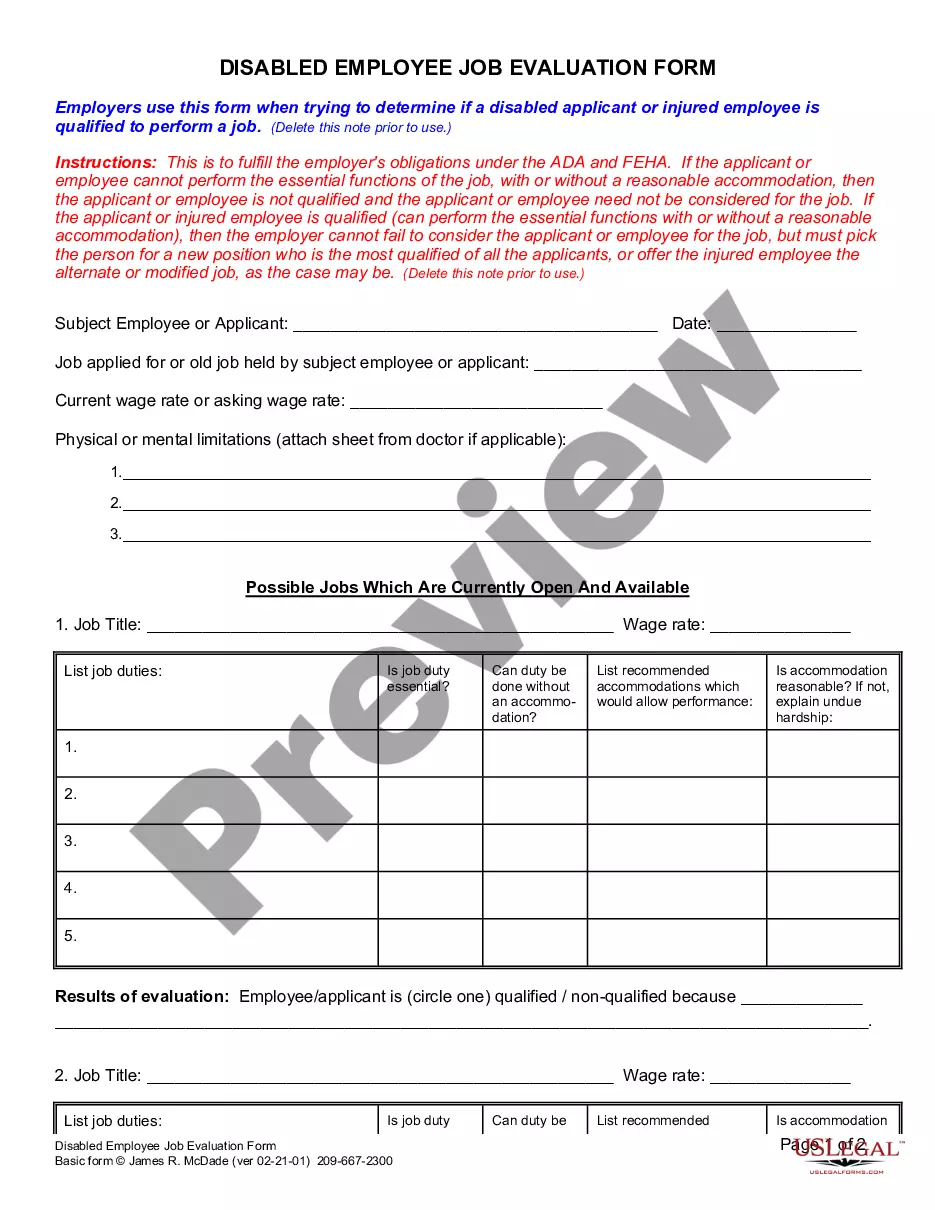
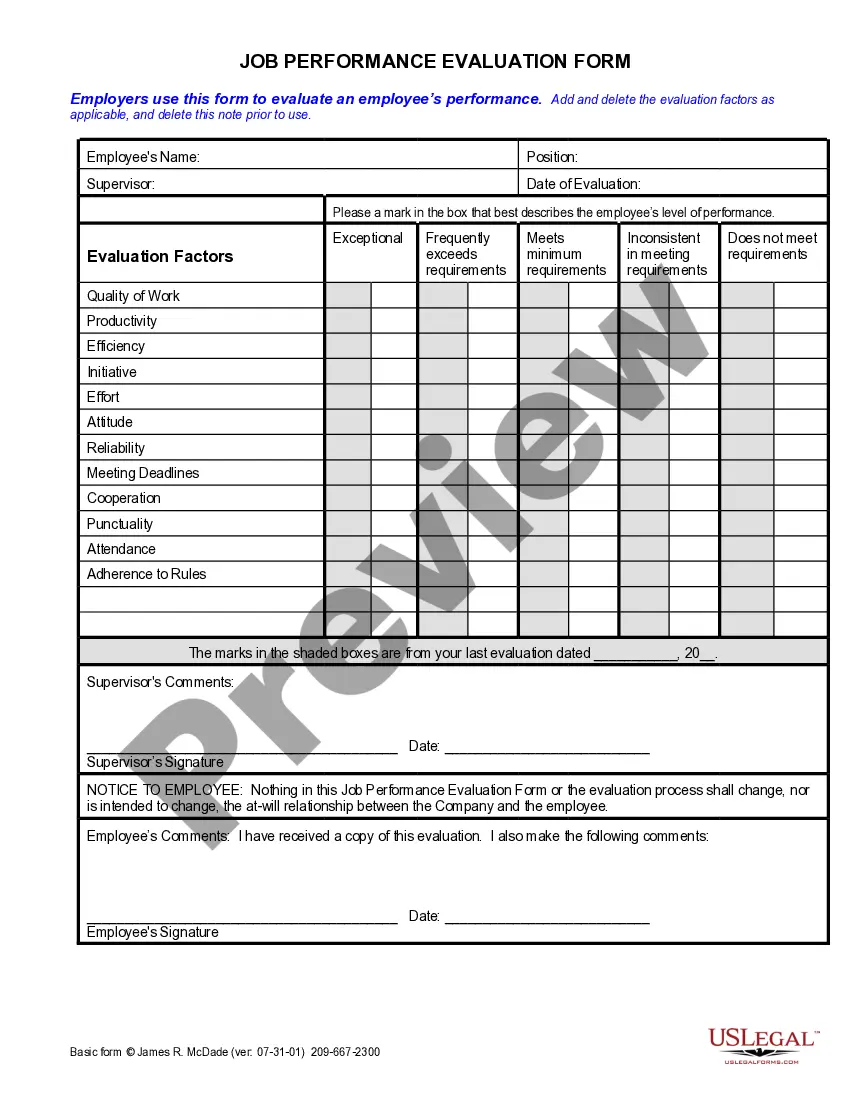
The Disabled Employee Job Evaluation Form is a legal document used by employers to assess whether a disabled applicant or an injured employee is qualified for a job. This evaluation process is essential to comply with the Americans with Disabilities Act (ADA) and the Fair Employment and Housing Act (FEHA). The form helps employers determine if the individual can perform essential job functions with or without accommodations, ensuring fair consideration in the hiring or reintegration process.
What’s included in this form
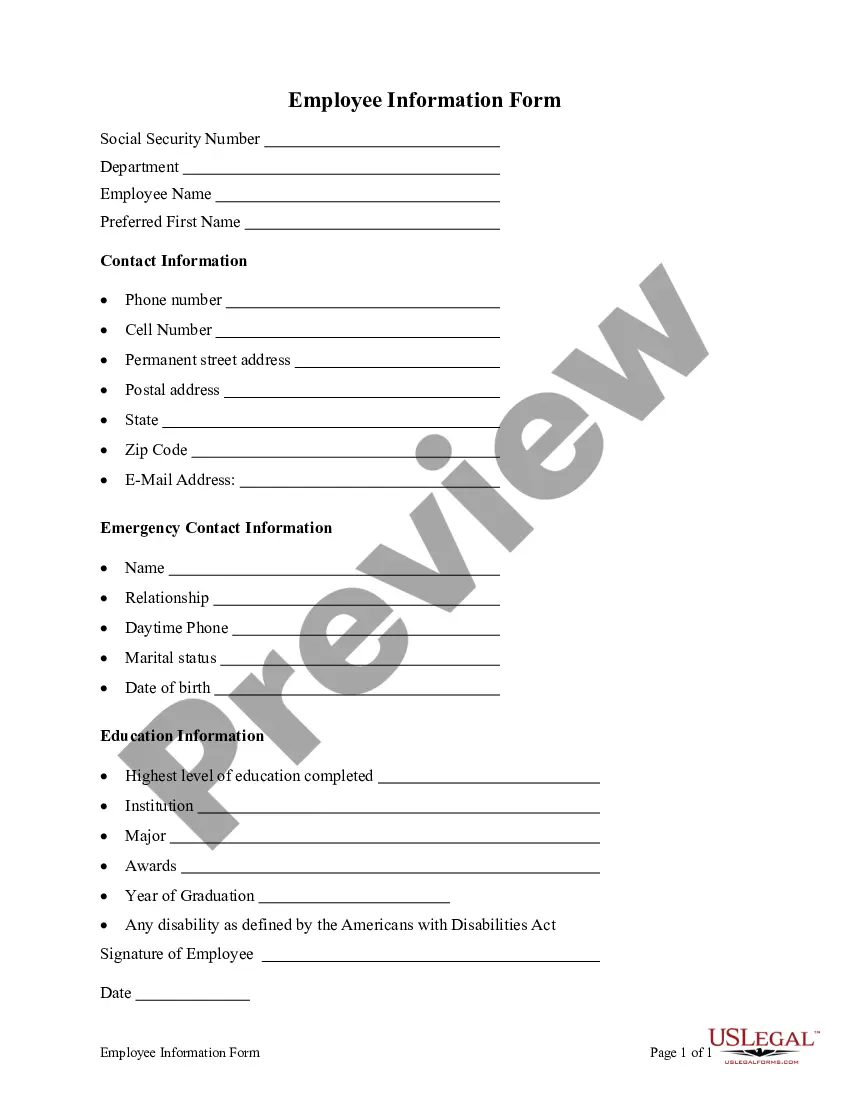
- Information about the employee/applicant, including name and date.
- Details of the job applied for or previously held, including wage rates.
- A section to describe physical or mental limitations, with the option to attach medical documentation.
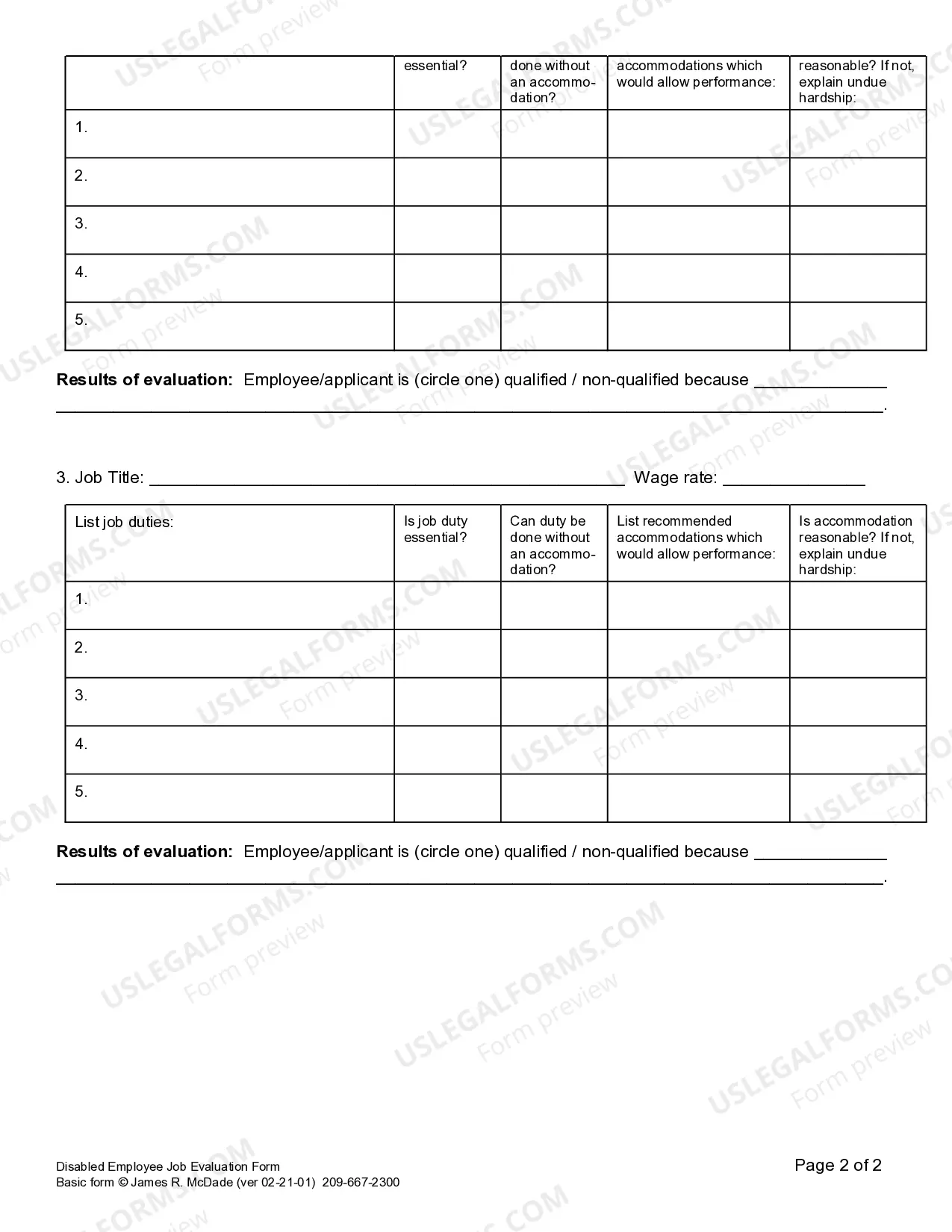
- Evaluation criteria for different available job titles, including job duties, essential functions, and accommodation needs.
- Results of the evaluation, indicating whether the employee/applicant is qualified or non-qualified.
When this form is needed
This form is necessary when an employer is evaluating a disabled applicant or an employee who has been injured to determine their qualification for a specific job. It is particularly relevant in cases where the potential employee requires accommodations to perform essential job duties. Employers should use this form during the hiring process or when assessing employees' fitness for a new or modified role due to disability.
Who needs this form
- Employers assessing the qualifications of disabled job applicants.
- Human resources personnel involved in the hiring process.
- Supervisors evaluating the return-to-work options for injured employees.
- Managers responsible for ensuring compliance with ADA and FEHA regulations.
Completing this form step by step
- Enter the employee's or applicant's personal information at the top of the form.
- Specify the job being applied for or previously held, including relevant wage information.
- Detail any physical or mental limitations and attach a note from a medical professional if necessary.
- List available job titles, their duties, and indicate whether these duties are essential and can be performed without accommodation.
- Document recommended accommodations and assess their reasonableness based on potential undue hardship.
- Review the evaluation results, indicating whether the applicant is qualified or non-qualified and provide justification.
Does this document require notarization?
Notarization is generally not required for this form. However, certain states or situations might demand it. You can complete notarization online through US Legal Forms, powered by Notarize, using a verified video call available anytime.
Get your form ready online
Our built-in tools help you complete, sign, share, and store your documents in one place.
Make edits, fill in missing information, and update formatting in US Legal Forms—just like you would in MS Word.
Download a copy, print it, send it by email, or mail it via USPS—whatever works best for your next step.
Sign and collect signatures with our SignNow integration. Send to multiple recipients, set reminders, and more. Go Premium to unlock E-Sign.
If this form requires notarization, complete it online through a secure video call—no need to meet a notary in person or wait for an appointment.
We protect your documents and personal data by following strict security and privacy standards.

Make edits, fill in missing information, and update formatting in US Legal Forms—just like you would in MS Word.

Download a copy, print it, send it by email, or mail it via USPS—whatever works best for your next step.

Sign and collect signatures with our SignNow integration. Send to multiple recipients, set reminders, and more. Go Premium to unlock E-Sign.

If this form requires notarization, complete it online through a secure video call—no need to meet a notary in person or wait for an appointment.

We protect your documents and personal data by following strict security and privacy standards.
Common mistakes
- Failing to attach medical documentation when required.
- Not clearly identifying essential job duties.
- Overlooking the need for reasonable accommodation considerations.
- Inadequately justifying decisions regarding qualifications.
Why complete this form online
- Immediate access to a downloadable and editable form tailored to your needs.
- Simplicity in keeping track of completed evaluations for compliance purposes.
- Convenience of accessing the form anytime, anywhere, eliminating delays in the hiring or evaluation process.
Looking for another form?



Form popularity
FAQ
The DWC 7 form is a document used for reporting the progress of an injured worker's claim over time. This form includes updates on medical treatment and other relevant information about the worker's recovery. Utilizing the DWC 7 can be beneficial alongside your California Disabled Employee Job Evaluation Form to provide a complete overview of your situation.
Doctors determine disability percentages by assessing your medical condition, treatment history, and the impact on your daily activities. They often refer to specific guidelines, such as the AMA Guides, for standardized evaluations. This assessment plays a significant role in completing your California Disabled Employee Job Evaluation Form, setting the foundation for your benefits.
When visiting a workers' comp doctor, avoid making any statements that may minimize your injury or suggest that you are not affected by it. Be cautious with casual remarks that downplay your symptoms, as these can impact your evaluation. Focusing on your condition without embellishment will strengthen your California Disabled Employee Job Evaluation Form.
The disability evaluation unit is a part of the California DWC responsible for evaluating claims related to disability. This unit assesses medical evidence and determines the level of disability for workers. Engaging with this unit may involve your California Disabled Employee Job Evaluation Form, which outlines your specific circumstances.
An SR-1 form is a report used to notify the California DWC of a workplace injury or illness. This form captures important details about the incident, including the nature of the injury and the circumstances surrounding it. Submitting the SR-1 can complement your California Disabled Employee Job Evaluation Form, ensuring comprehensive documentation of your claim.
The DWC 1 form serves as the official notice of an injury or illness for workers' compensation purposes. Its main goal is to inform employers and insurance carriers about the need for medical evaluations and benefits. Completing this form accurately is key to initiating your California Disabled Employee Job Evaluation Form to assess your situation.
A DWC claim refers to a workers' compensation claim that is filed with the Department of Workers' Compensation (DWC) in California. This claim is essential for employees seeking compensation for job-related injuries or disabilities. Understanding the DWC claim process is vital to effectively navigating your California Disabled Employee Job Evaluation Form.
The DWC 1 form in California is a crucial document required for reporting work-related injuries or illnesses. This form allows injured employees to formally submit their claims for workers' compensation benefits. By completing the form, you initiate the process for a California Disabled Employee Job Evaluation Form, which streamlines your access to necessary support.
Yes, a Qualified Medical Evaluator (QME) plays a crucial role in determining your disability rating. The QME reviews your medical history, conducts examinations, and assesses how the disability affects your work capabilities. By completing a California Disabled Employee Job Evaluation Form prior to this evaluation, you can provide the QME with comprehensive information, which can help ensure an accurate assessment of your condition.
The purpose of a disability evaluation is to determine the extent of an individual's disability and its impact on their ability to work. This evaluation helps to facilitate necessary accommodations or benefits, ensuring that disabled employees receive fair treatment in the workplace. By utilizing a California Disabled Employee Job Evaluation Form, employers and employees can effectively document this assessment, making it easier to understand the necessary interventions.