California Tenancy in Common Agreement - Single Dwelling - Unmarried Couple
About this form
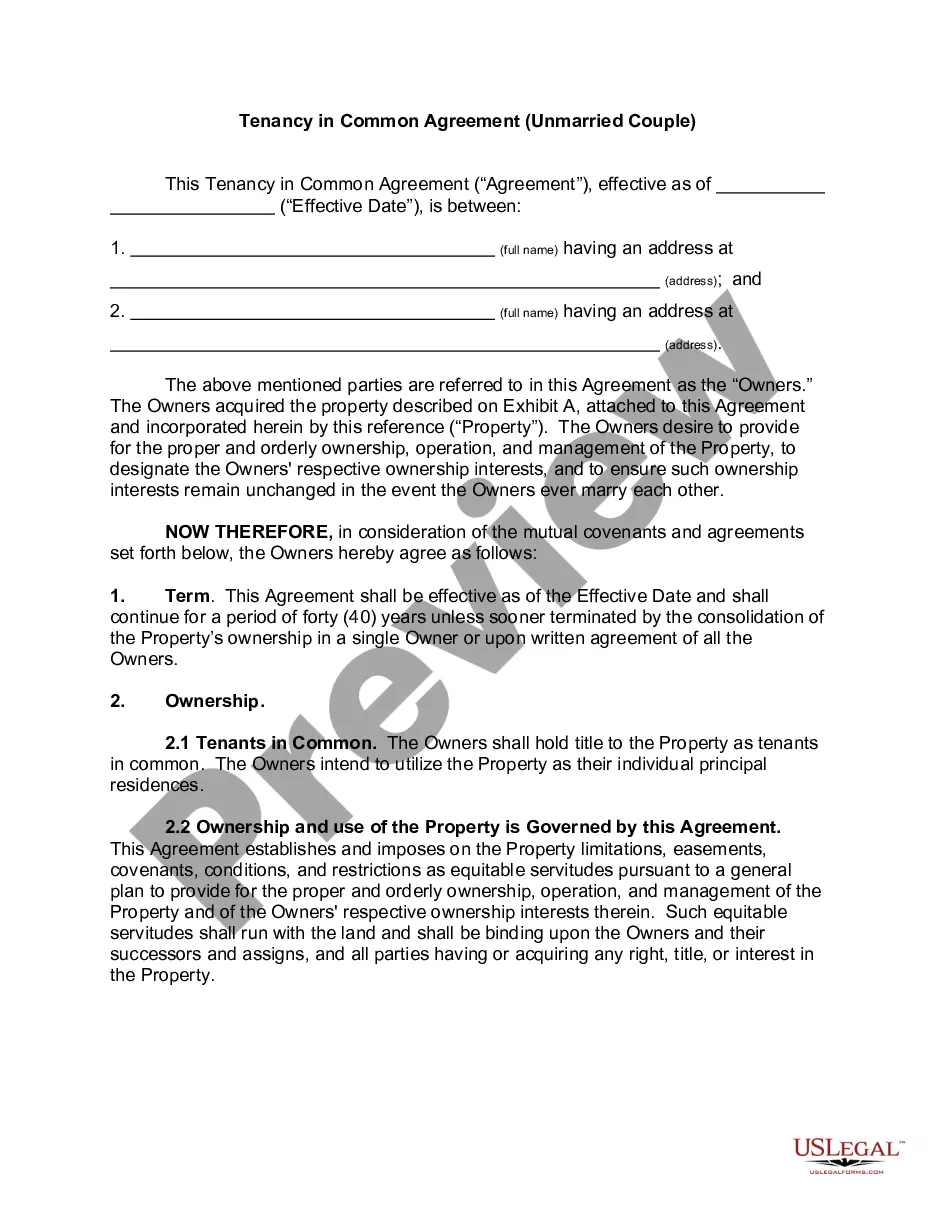
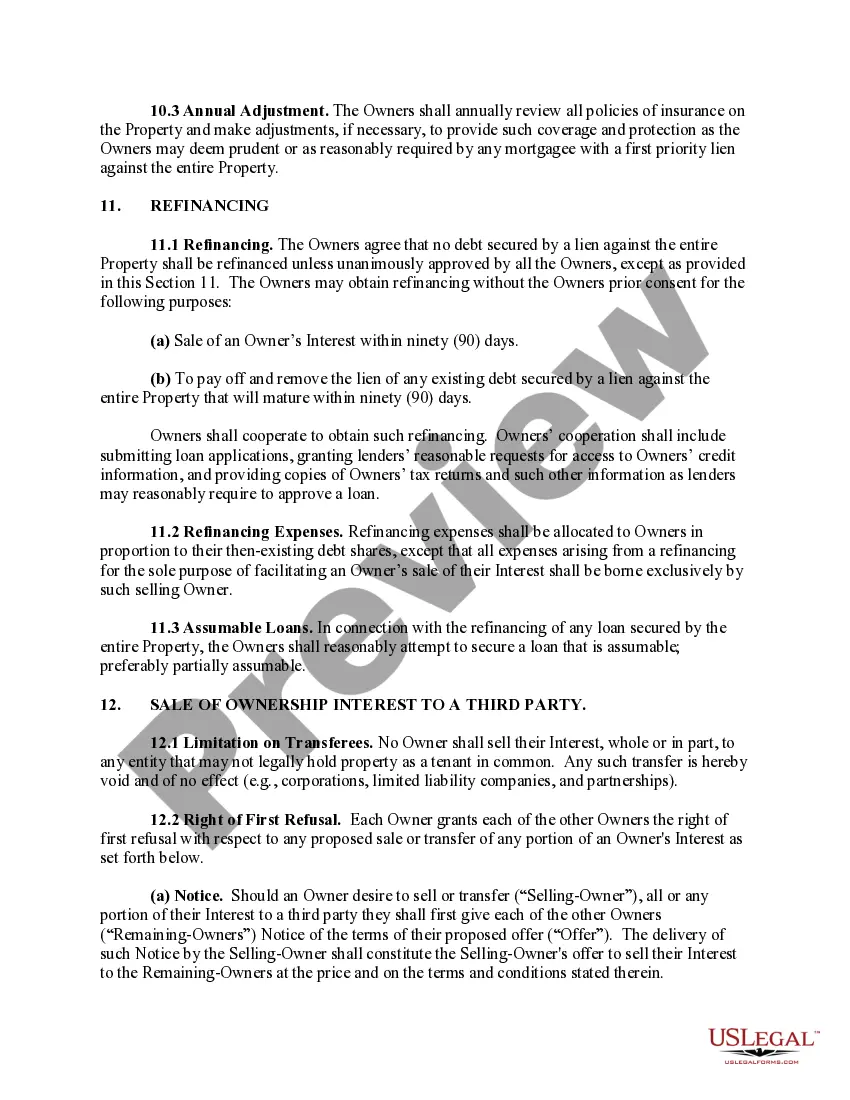
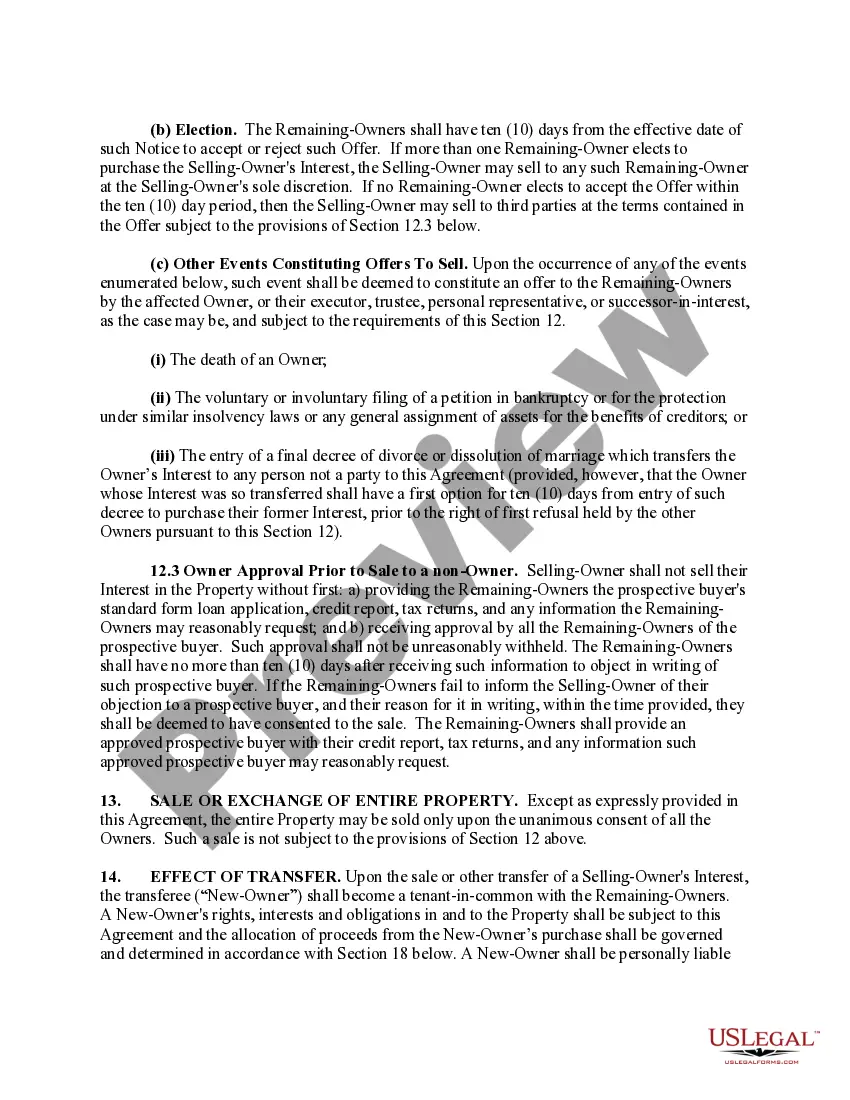
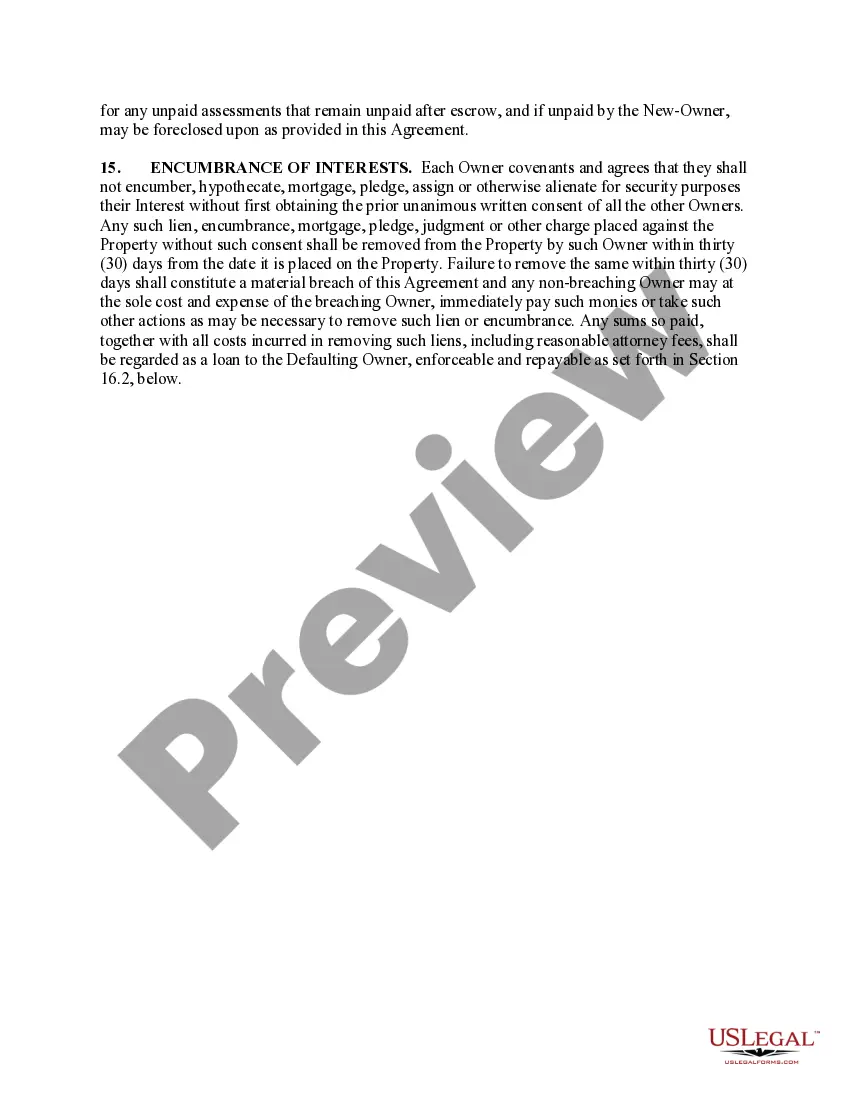
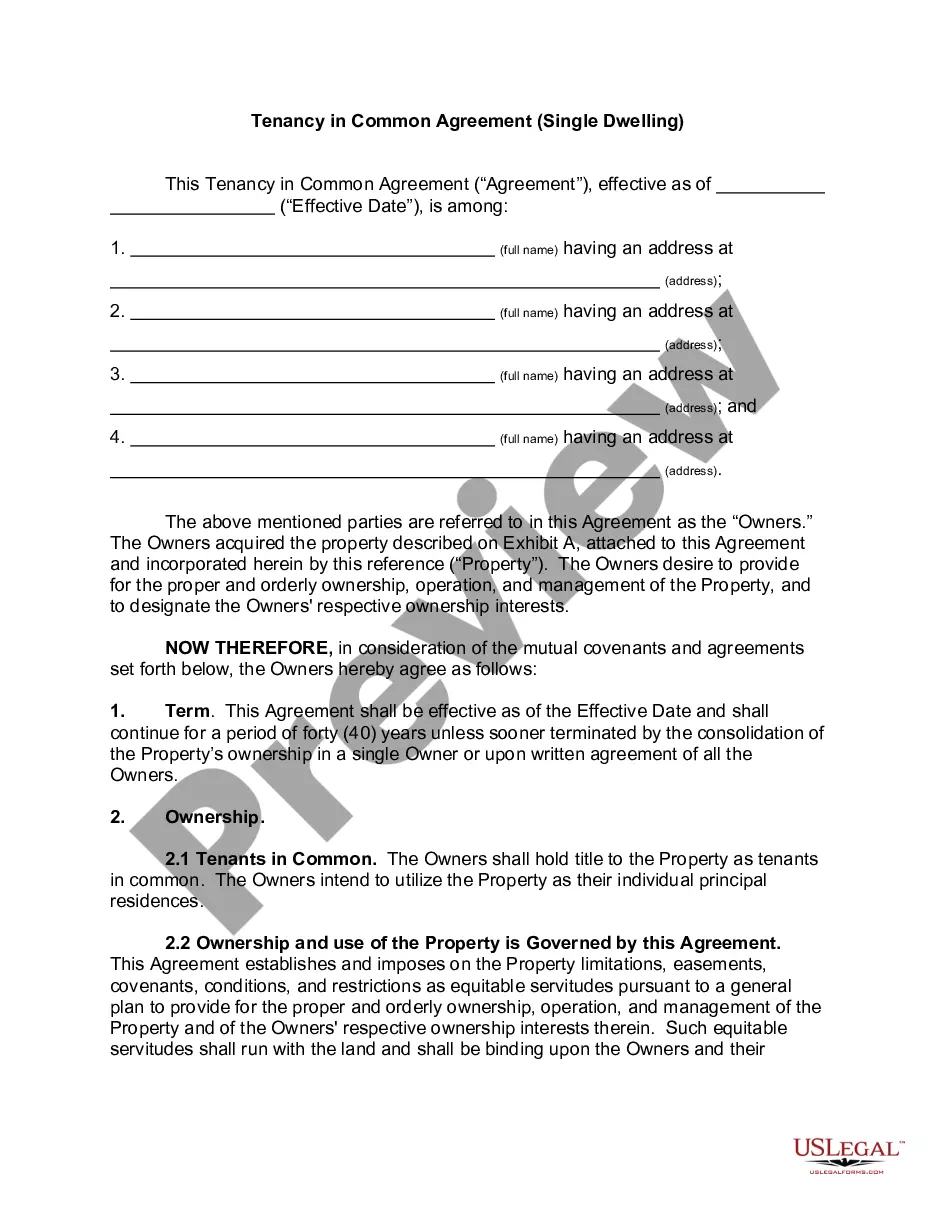
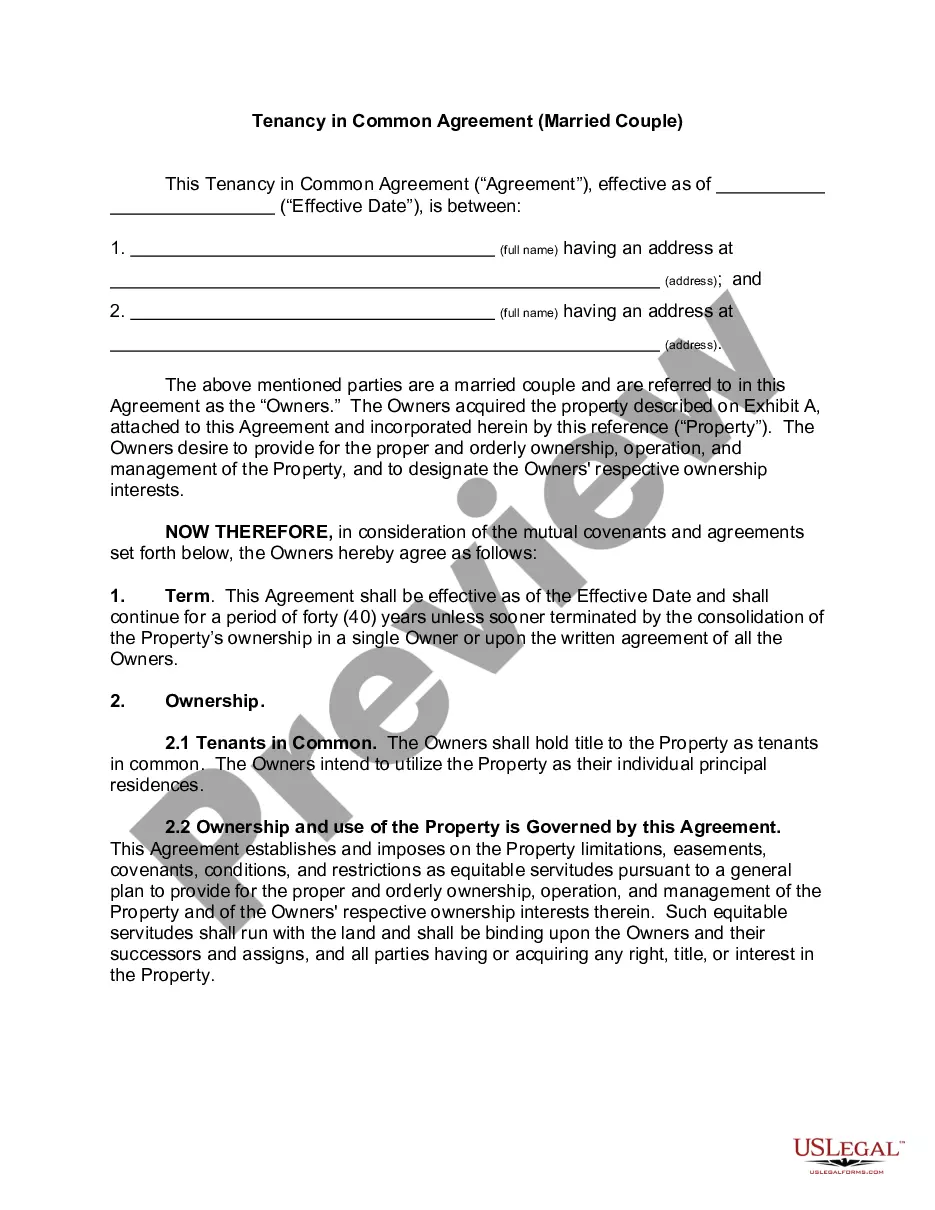
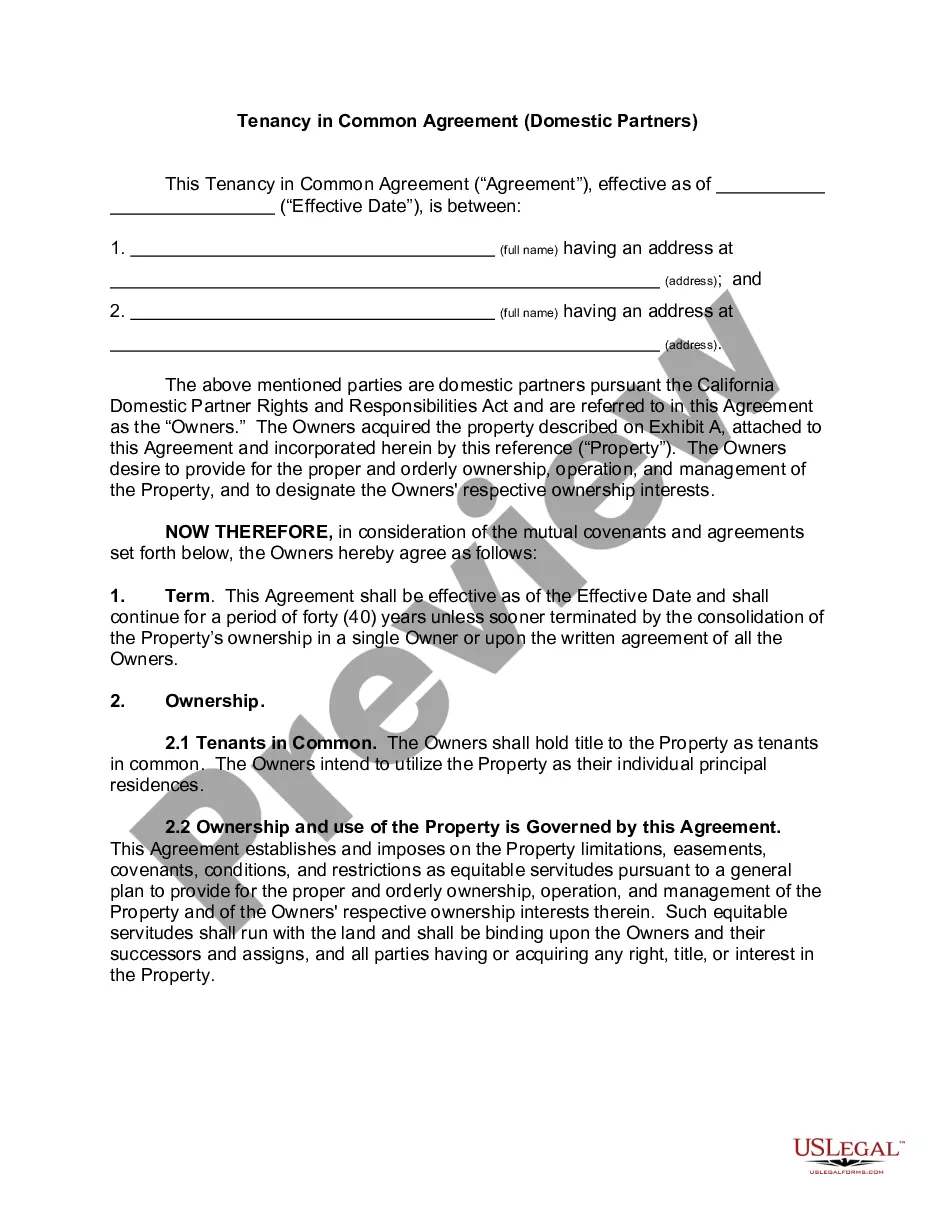
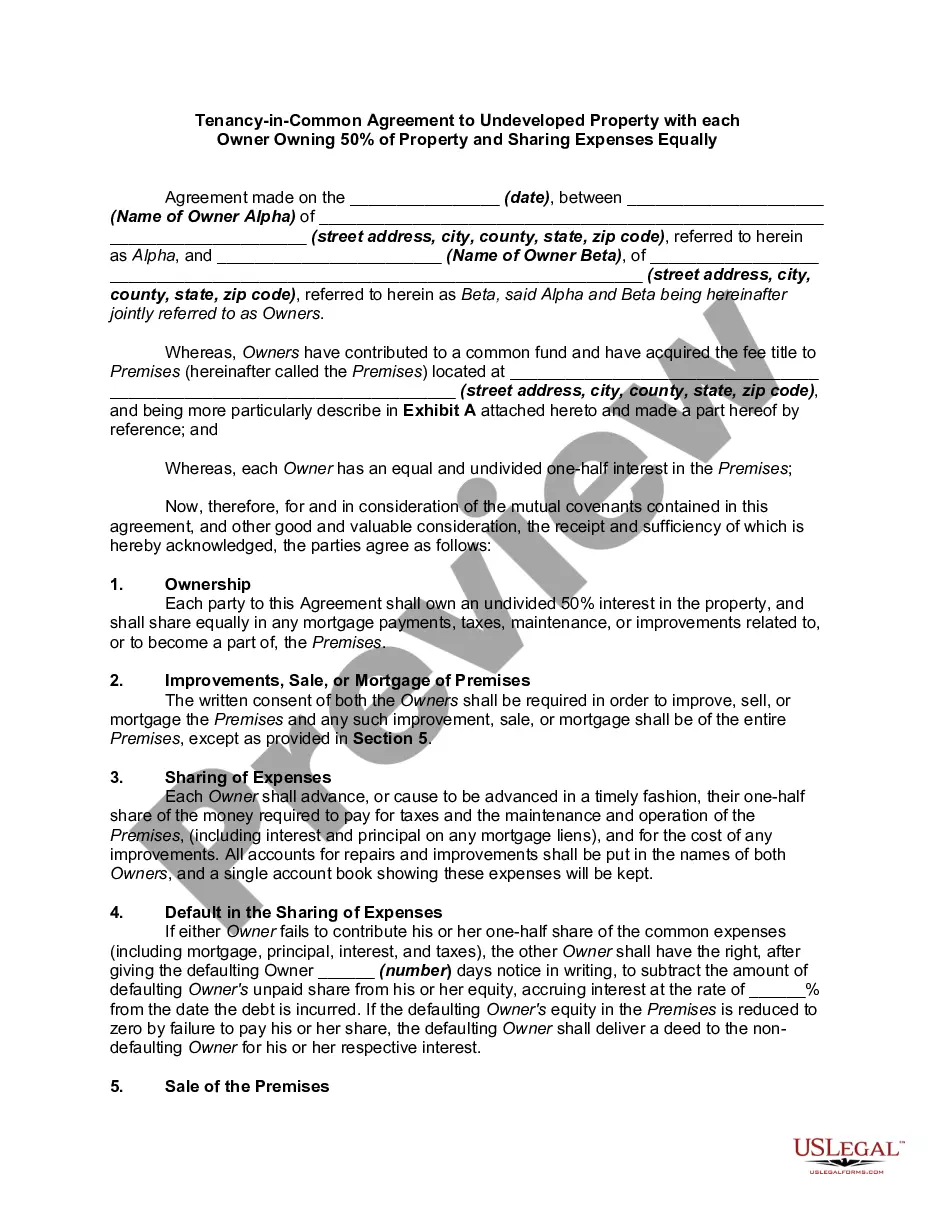
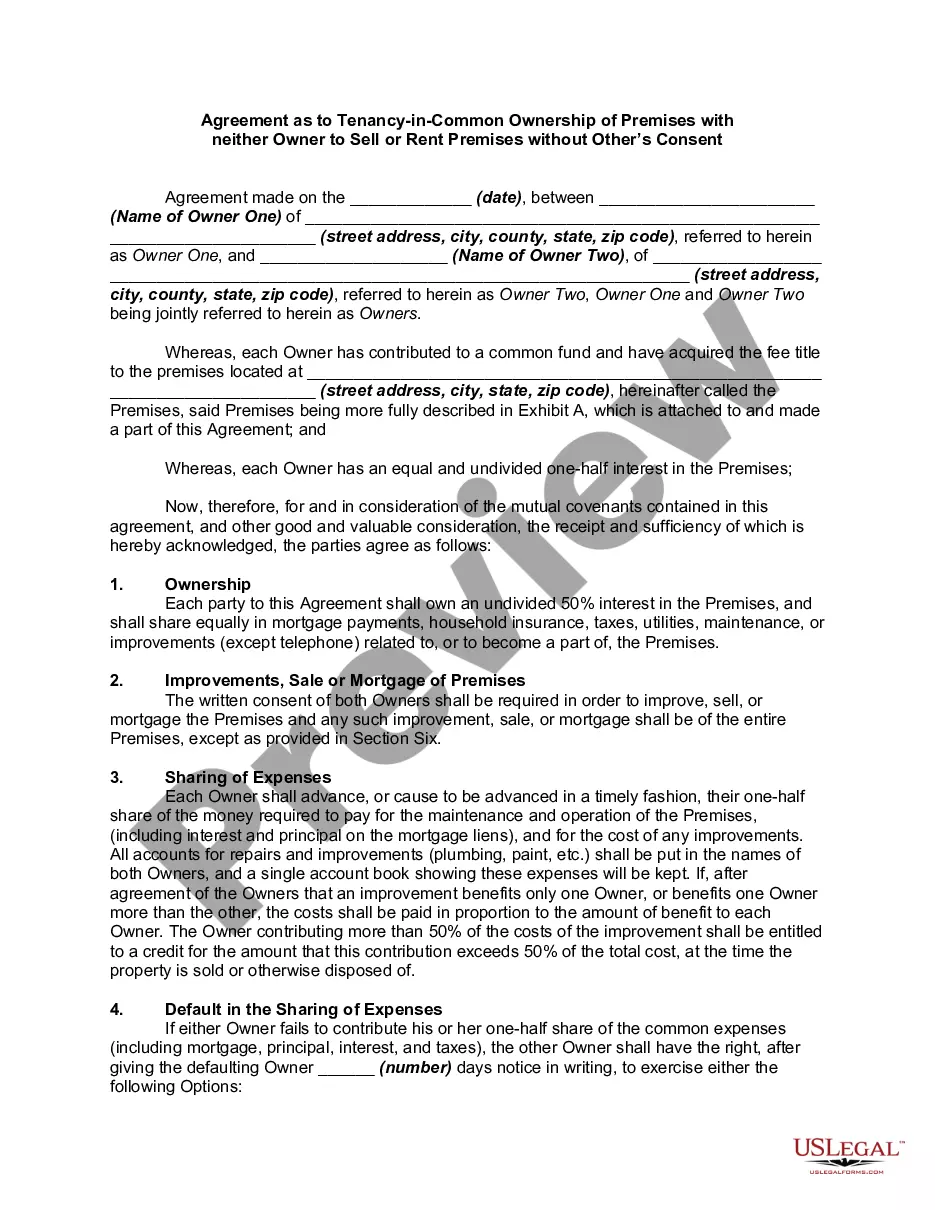
The Tenancy in Common Agreement for Unmarried Couples is a legally binding document that establishes how two or more individuals co-own a single dwelling as tenants in common. This agreement clearly defines each owner's separate property rights, their respective ownership interests, and details governing the use and maintenance of the property. Unlike a joint tenancy agreement, tenants in common can hold different ownership percentages and can sell their interests independently without requiring consent from other owners. This form is useful for unmarried couples who wish to clearly define their financial and living arrangements while sharing property ownership.
Form components explained
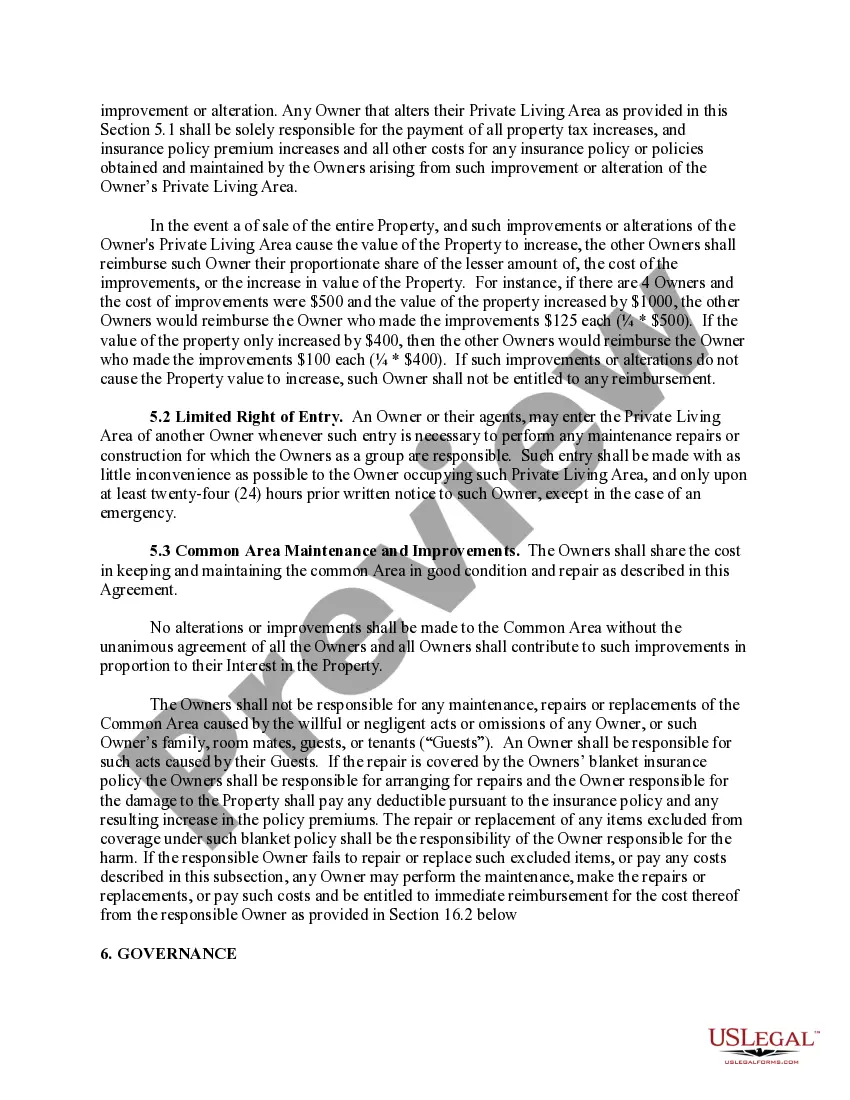
- Ownership structure: Defines the property as separate ownership rather than community property.
- Ownership interests: Specifies the ownership percentages for each party.
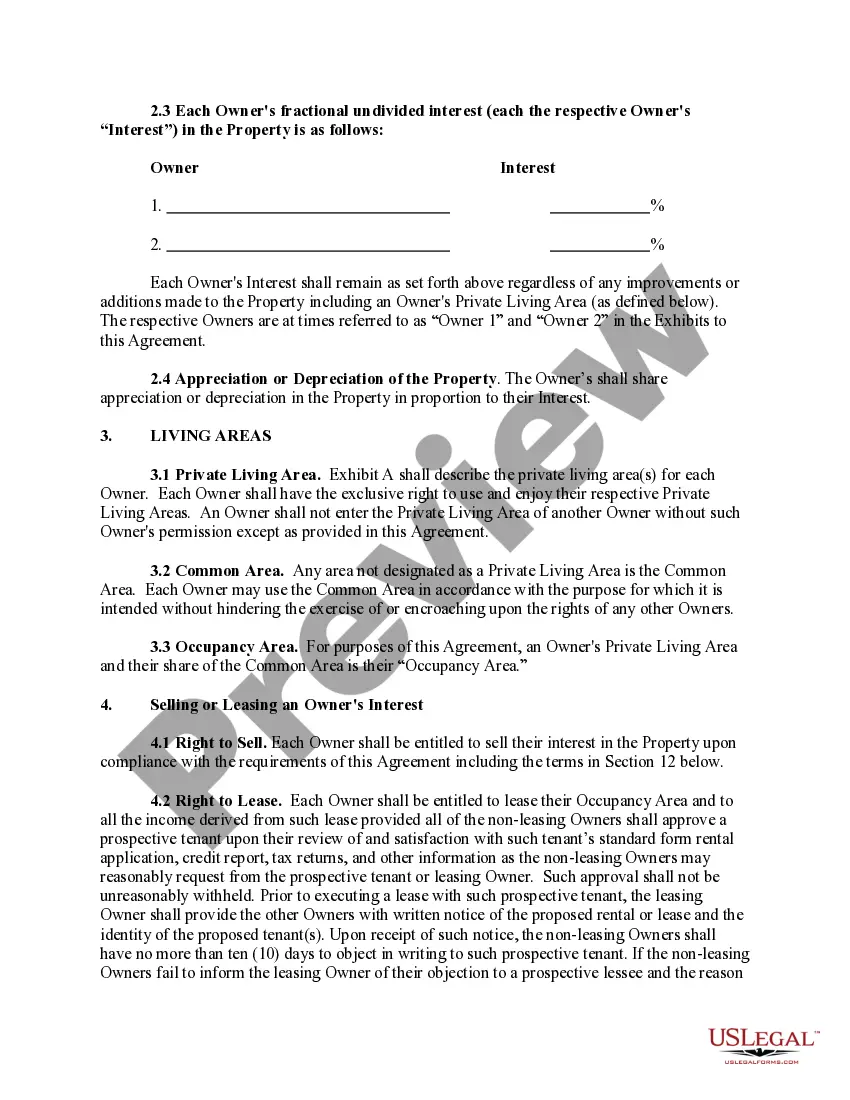
- Living areas: Establishes private living spaces and common areas for shared use.
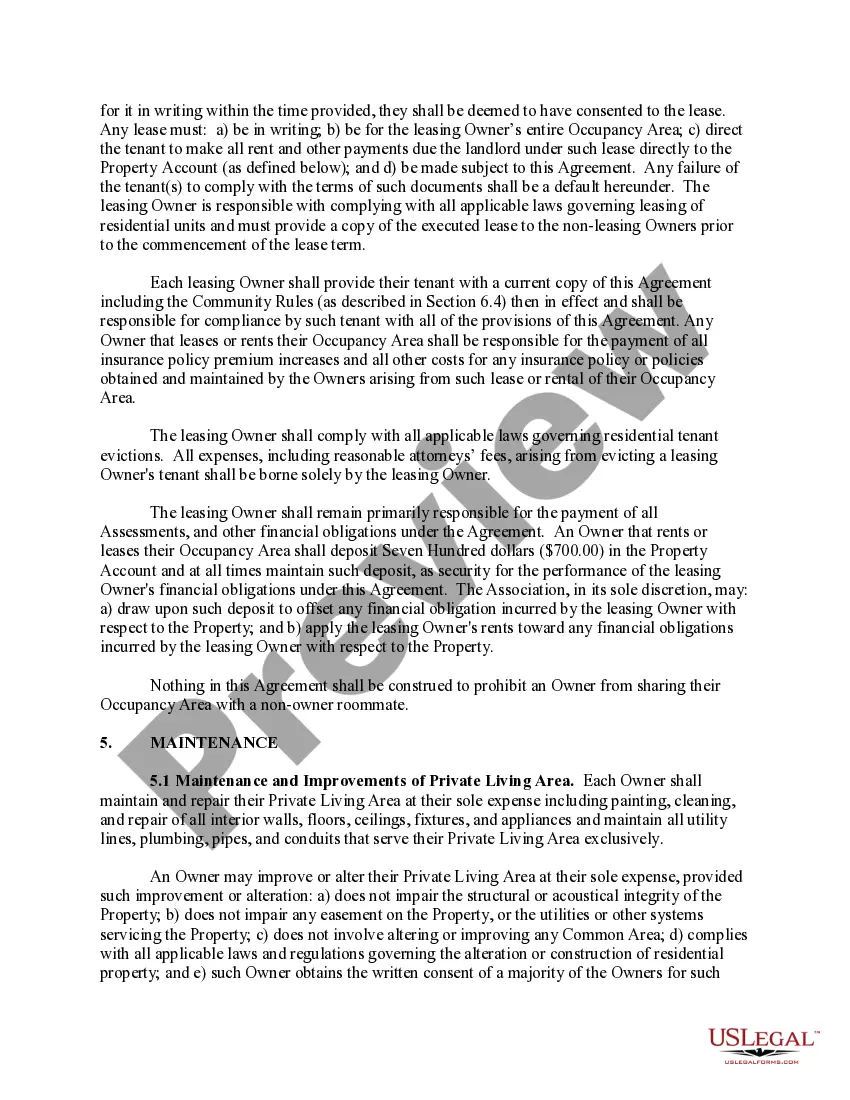
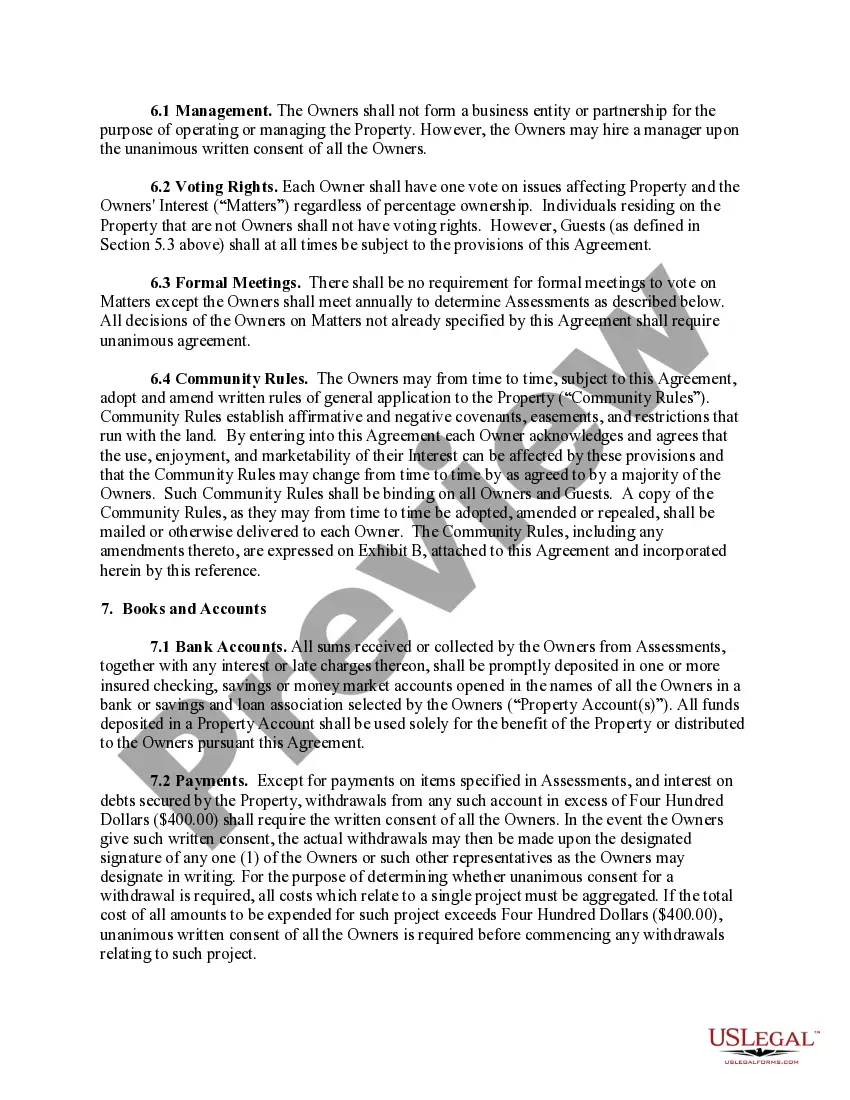
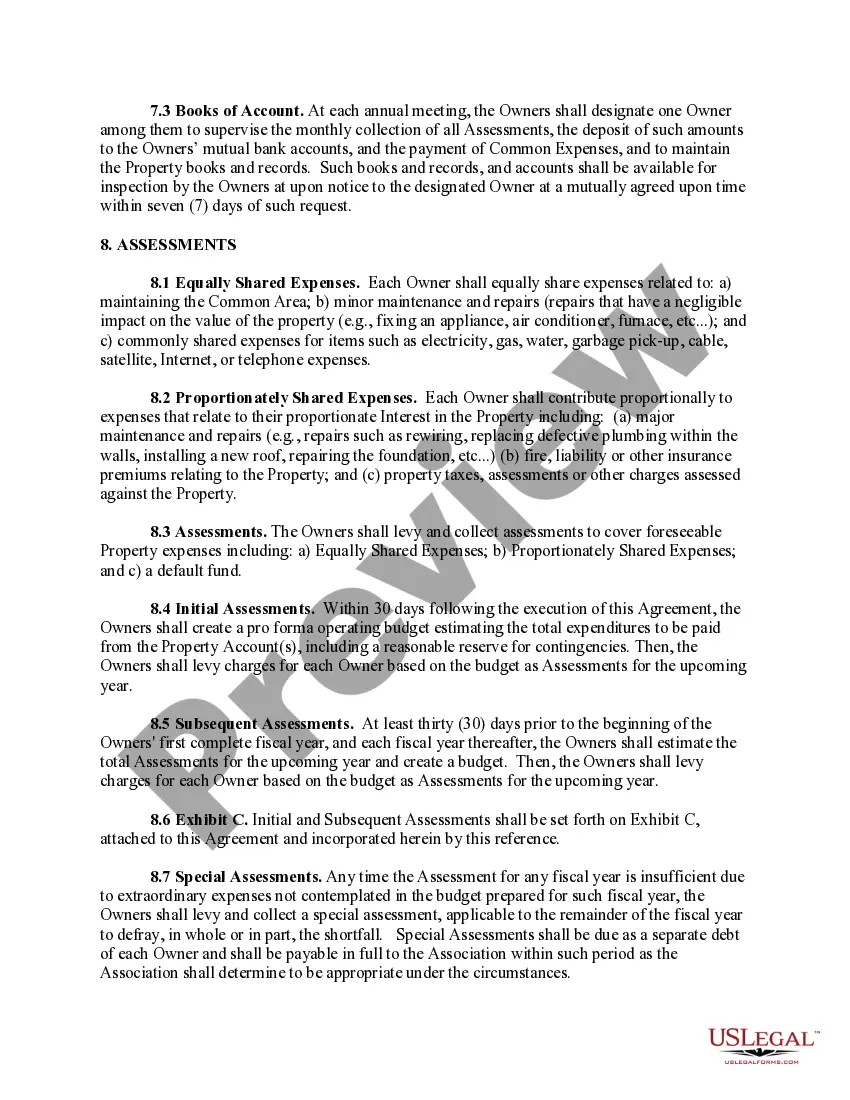
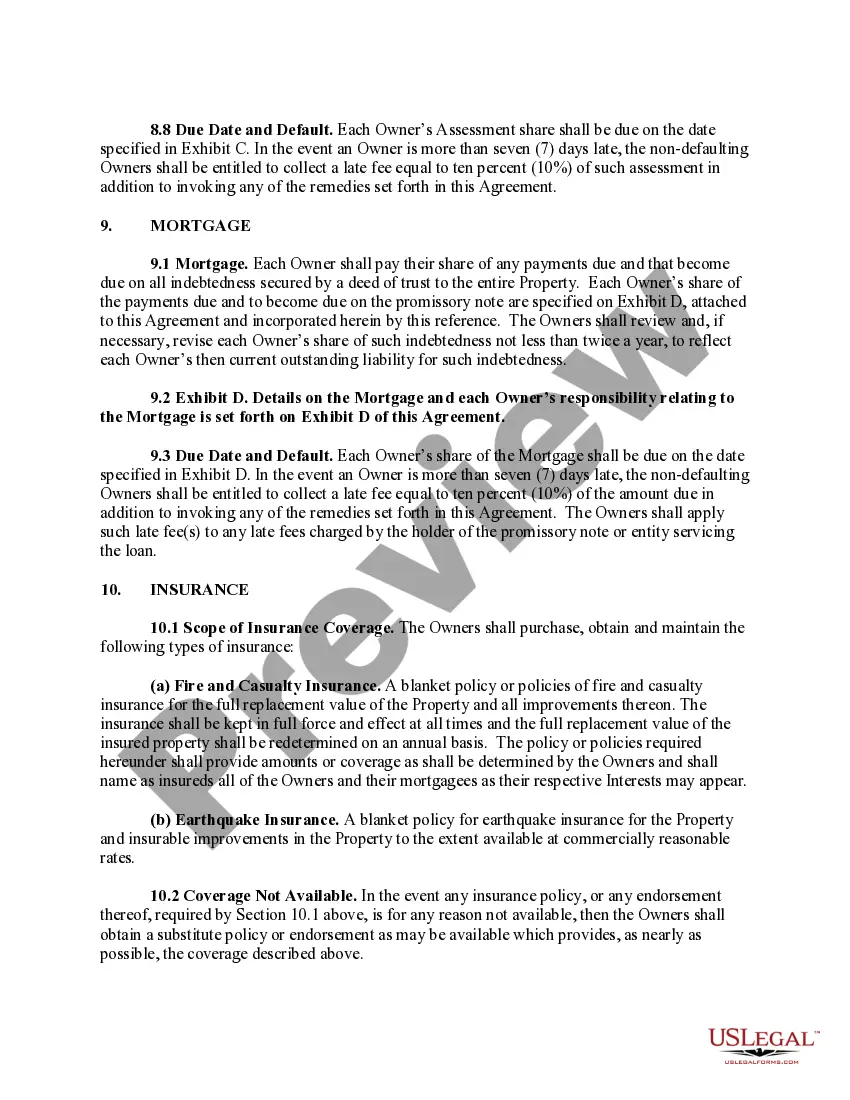
- Financial obligations: Outlines how expenses such as mortgage payments, taxes, and maintenance are shared.
- Dispute resolution: Provides processes for addressing disagreements, including mediation and arbitration.
- Transfer of interest: Describes how an owner can sell or lease their share of the property.

When this form is needed
This agreement is typically used when two unmarried individuals purchase a property together and want to establish clear terms regarding their ownership, responsibilities, and rights. It is particularly beneficial for couples who wish to maintain their individual property rights while cohabitating and sharing financial obligations related to their home.
Intended users of this form
- Unmarried couples purchasing property together.
- Individuals wishing to cohabitate while clearly defining property ownership rights.
- Co-owners looking for a structured agreement to manage shared living arrangements.
- Couples who want to protect their individual financial interests in the event of a dispute or separation.
How to prepare this document
- Identify the parties: Enter the full legal names and addresses of the owners involved.
- Specify the property: Describe the dwelling and refer to any attached exhibits that detail the property's characteristics.
- Define ownership interests: Clearly outline each owner's percentage interest in the property.
- Detail living areas: Assign private living areas and common spaces as necessary.
- Enter terms for financial obligations: Clearly state how expenses will be divided among the owners.
- Include signatures: Both owners must sign and date the agreement to make it legally binding.
Notarization guidance
This form does not typically require notarization unless specified by local law. However, notarization can add an extra layer of authenticity and may be beneficial when presenting the agreement to financial institutions or during legal proceedings.
Get your form ready online
Our built-in tools help you complete, sign, share, and store your documents in one place.
Make edits, fill in missing information, and update formatting in US Legal Forms—just like you would in MS Word.
Download a copy, print it, send it by email, or mail it via USPS—whatever works best for your next step.
Sign and collect signatures with our SignNow integration. Send to multiple recipients, set reminders, and more. Go Premium to unlock E-Sign.
If this form requires notarization, complete it online through a secure video call—no need to meet a notary in person or wait for an appointment.
We protect your documents and personal data by following strict security and privacy standards.

Make edits, fill in missing information, and update formatting in US Legal Forms—just like you would in MS Word.

Download a copy, print it, send it by email, or mail it via USPS—whatever works best for your next step.

Sign and collect signatures with our SignNow integration. Send to multiple recipients, set reminders, and more. Go Premium to unlock E-Sign.

If this form requires notarization, complete it online through a secure video call—no need to meet a notary in person or wait for an appointment.

We protect your documents and personal data by following strict security and privacy standards.
Avoid these common issues
- Failing to define ownership percentages, which can lead to disputes over property rights.
- Not specifying how to handle the sale of one's interest, causing complications if one owner wants to sell.
- Neglecting to outline maintenance responsibilities, leading to disagreements about property upkeep.
- Overlooking dispute resolution provisions, which can create issues if conflicts arise.
Benefits of using this form online
- Convenient: Access the form anytime and download it instantly.
- Editability: Easily fill in your specific details without needing extensive legal drafting experience.
- Reliability: Forms are drafted by licensed attorneys to ensure they meet legal requirements.
Summary of main points
- The Tenancy in Common Agreement is essential for unmarried couples sharing property ownership.
- It clarifies ownership rights and responsibilities to prevent future disputes.
- Proper completion of the form is crucial for its validity and effectiveness.
- Consulting legal counsel might be beneficial, especially regarding specific state laws.
Looking for another form?

Form popularity
FAQ
If you are married but your name is not on the deed, you still have certain rights under California's community property laws. This means you may have a claim to ownership of the property, depending on your financial contributions or agreements made during your marriage. Engaging in a California Tenancy in Common Agreement - Single Dwelling - Unmarried Couple can help clarify these rights and protect your interests in the property, especially in complex situations.
Yes, it does matter whose name appears on the house deed as it determines legal ownership. In a California Tenancy in Common Agreement - Single Dwelling - Unmarried Couple, both parties have distinct shares in the property, regardless of whose name is on the deed. This can affect your rights in terms of selling, transferring, or inheriting the property, making it essential to have clear agreements in place.
If your husband passed away and your name is not on the deed, the property ownership may go to his heirs based on his will or state intestacy laws. It's important to note that, without a California Tenancy in Common Agreement - Single Dwelling - Unmarried Couple in place, you might not have automatic rights to the property. In such cases, you may need to consult with a legal expert to understand your options for claiming ownership, and to potentially negotiate a settlement or enforce your rights.
The best tenancy option for unmarried couples typically is a Tenancy in Common. This option offers each partner an individual share of the property, allowing for greater control over personal interests. A California Tenancy in Common Agreement - Single Dwelling - Unmarried Couple ensures that both partners understand their rights and responsibilities, making it an ideal choice for shared ownership.
If your name is not on the deed, your rights to the property may be limited. However, you may still hold a financial interest or claim based on your contributions to the property or agreements made. In this scenario, seeking a legal framework such as a California Tenancy in Common Agreement - Single Dwelling - Unmarried Couple can help establish your position and clarify ownership rights.
When an unmarried couple splits up in California, the division of property depends on the ownership structure in place. If the couple owns the home as tenants in common, each partner possesses a share of the property, which can lead to negotiations or a buyout for one party to retain ownership. A clearly drafted California Tenancy in Common Agreement - Single Dwelling - Unmarried Couple can guide this process and protect each owner’s rights.
In California, a Tenancy in Common agreement is established when two or more individuals wish to hold property together. Each party owns an undivided interest in the property and can decide how to manage and use it. For unmarried couples, a California Tenancy in Common Agreement - Single Dwelling - Unmarried Couple solidifies their ownership rights and responsibilities, ensuring clarity in case of disagreements or separation.
A Tenancy in Common (TIC) allows multiple individuals to own a property together while having distinct ownership shares. Each owner can sell, transfer, or bequeath their share without affecting the others. This arrangement works well for unmarried couples wanting to co-own a single dwelling, as it provides flexibility and individual control over their ownership.
The legal term for an unmarried couple living together is often referred to as cohabitation. In California, a California Tenancy in Common Agreement - Single Dwelling - Unmarried Couple can provide essential protection for partners in this situation. This agreement addresses ownership shares and usage rights within the dwelling, making it crucial for unmarried couples who cohabitate. Ensuring you have a solid legal framework will help safeguard both parties' interests.
If you split up and are not married, the terms of your California Tenancy in Common Agreement - Single Dwelling - Unmarried Couple come into play. Depending on your agreement, one partner may buy out the other's share, or you may need to sell the property and divide the proceeds. This arrangement helps prevent potential legal disputes, as it establishes a clear process for handling separation. Consulting with legal advice can also ensure a smooth transition.