California General Notary Fill In
Understanding this form
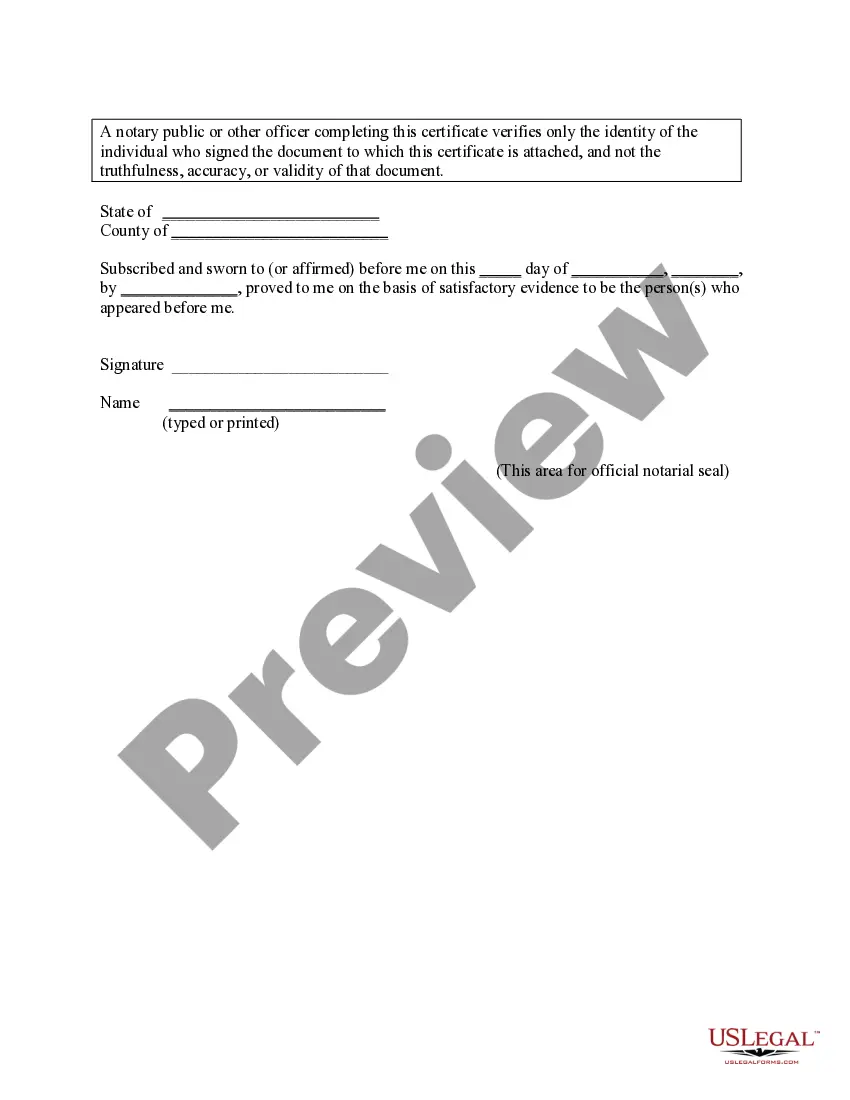
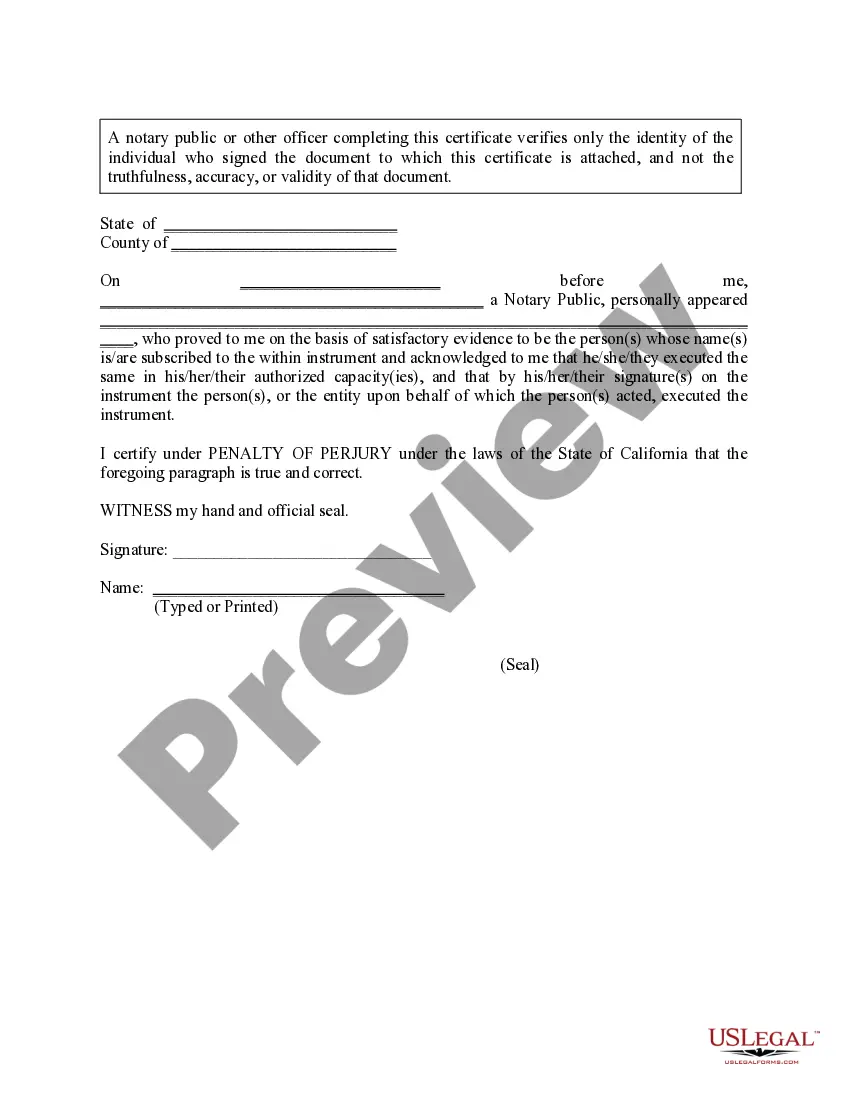
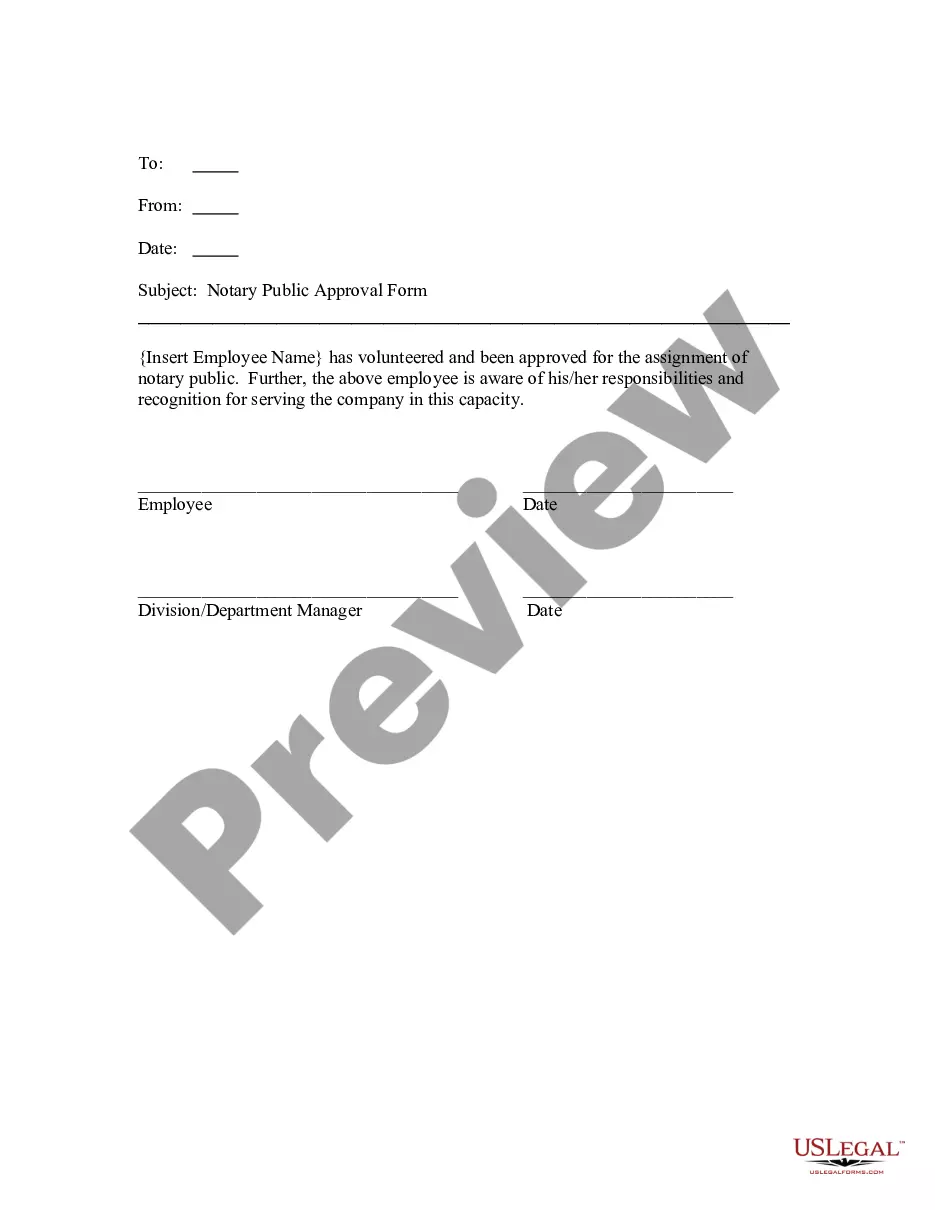
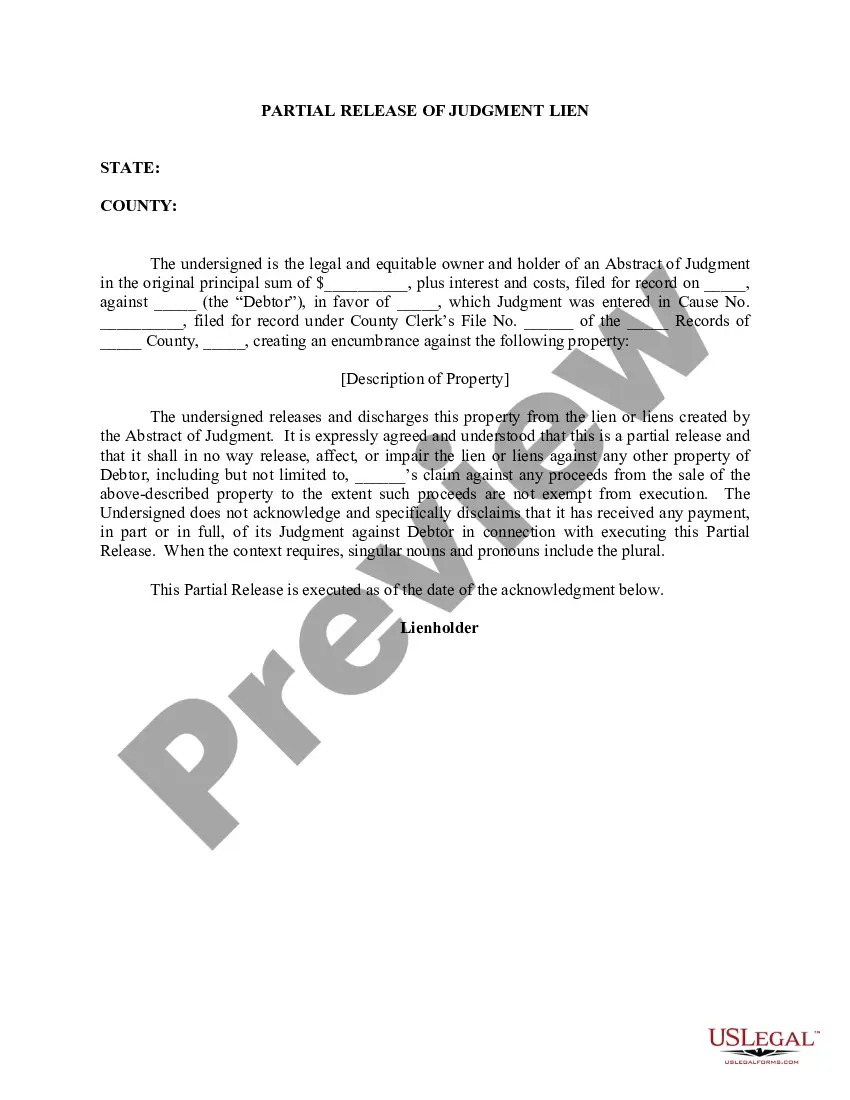
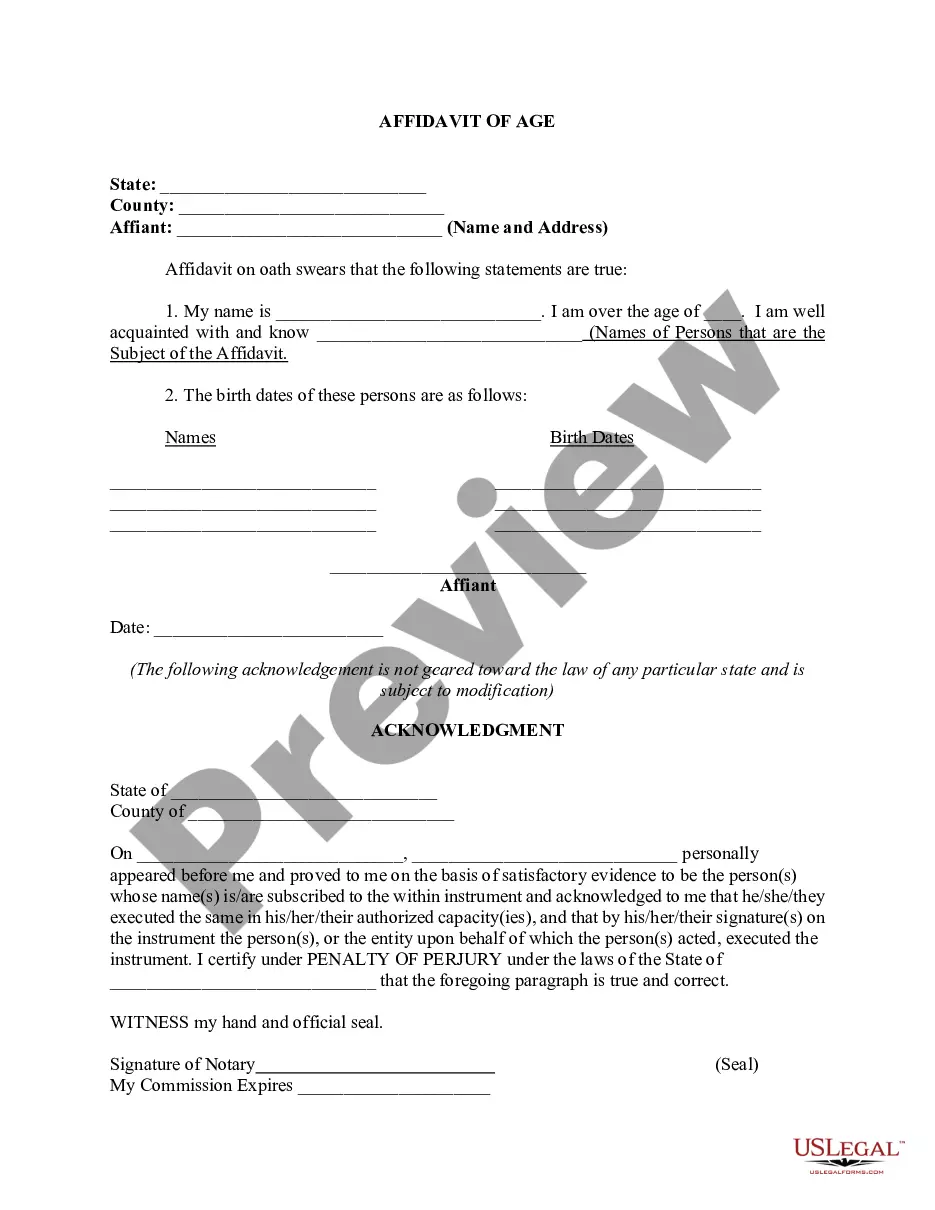
The General Notary Fill In form is a crucial document that allows a notary public to authenticate signatures on various documents. This form is specifically designed to affirm the identity of individuals signing a document, ensuring their clear intention to do so. Unlike other forms, this notary acknowledgment form is tailored for use in legal contexts where notarization is required, providing an essential layer of authenticity and trust in the signing process.
Main sections of this form
- Verification of identity: Confirms the identity of the signers.
- Date and location: Specifies the state and county where the notarization is taking place.
- Signature of the notary: Provides the official signature of the notary public.
- Name of the notary: Includes the printed name of the notary for identification.
- Notarial seal area: Reserved for the official notarial seal, which adds authenticity.
Common use cases
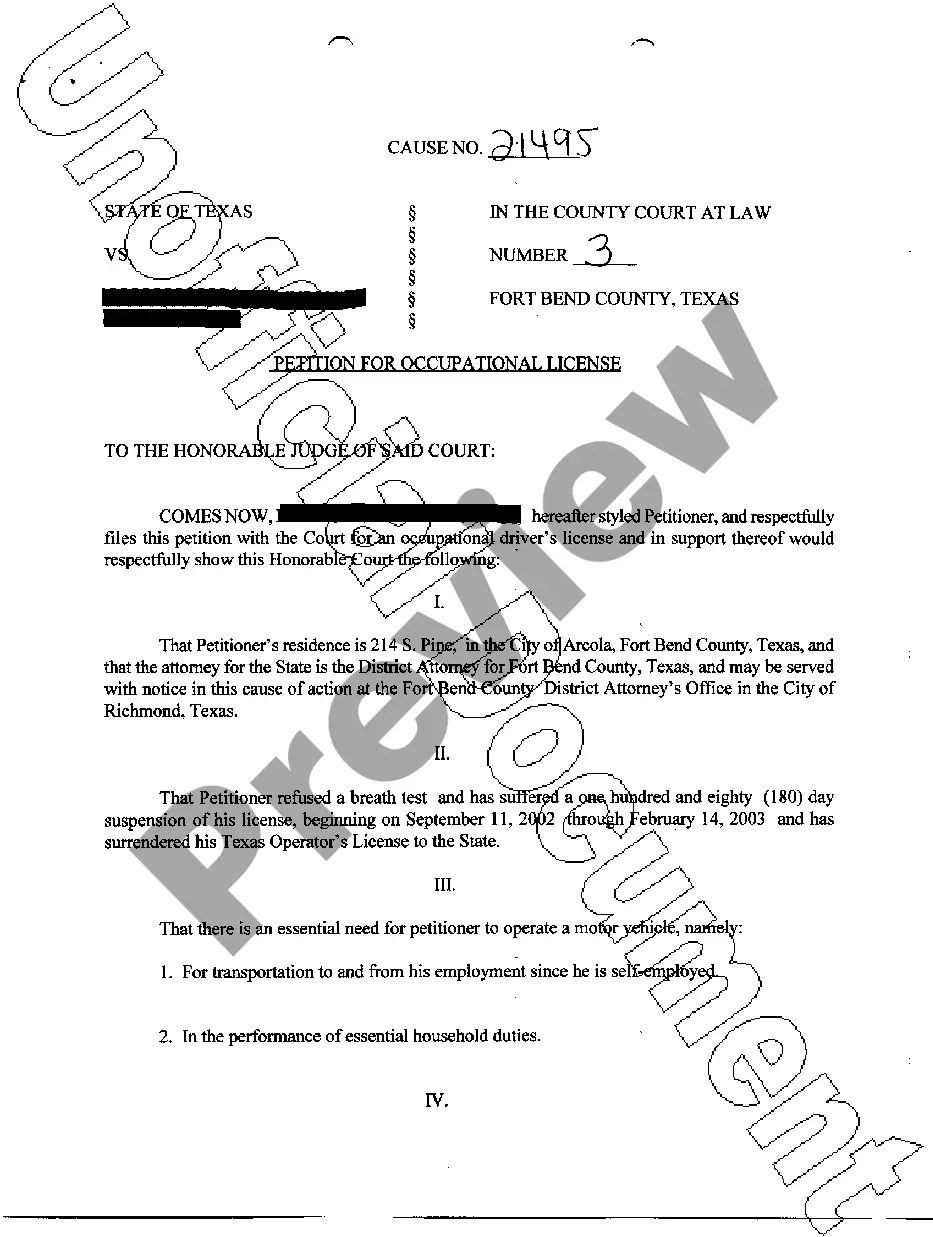
This form should be utilized when individuals need to have their signatures notarized on important documents, such as contracts, legal agreements, or property deeds. It is especially necessary in situations where state or local laws require notarization to validate the documentâs execution or when there is a need for an extra layer of verification for legal proceedings.
Who this form is for
- Individuals needing to notarize documents for legal purposes.
- Lawyers or paralegals assisting clients with notarization.
- Businesses that require notarized agreements or contracts.
- Anyone involved in real estate transactions where notarization is necessary.
Steps to complete this form
- Identify the state and county where the notarization will take place.
- Fill in the date on which the notarization is performed.
- Provide the name of the individual(s) signing the document.
- Have the signers appear before the notary public to verify their identities.
- Sign the form as the notary public and include the printed name.
- Affix the official notarial seal in the designated area.
Notarization requirements for this form
Yes, this form must be notarized to be legally valid. US Legal Forms offers integrated online notarization services, available twenty-four hours a day, providing secure video calls with licensed notaries, ensuring legal equivalence without the need for in-person travel.
Get your form ready online
Our built-in tools help you complete, sign, share, and store your documents in one place.
Make edits, fill in missing information, and update formatting in US Legal Forms—just like you would in MS Word.
Download a copy, print it, send it by email, or mail it via USPS—whatever works best for your next step.
Sign and collect signatures with our SignNow integration. Send to multiple recipients, set reminders, and more. Go Premium to unlock E-Sign.
If this form requires notarization, complete it online through a secure video call—no need to meet a notary in person or wait for an appointment.
We protect your documents and personal data by following strict security and privacy standards.

Make edits, fill in missing information, and update formatting in US Legal Forms—just like you would in MS Word.

Download a copy, print it, send it by email, or mail it via USPS—whatever works best for your next step.

Sign and collect signatures with our SignNow integration. Send to multiple recipients, set reminders, and more. Go Premium to unlock E-Sign.

If this form requires notarization, complete it online through a secure video call—no need to meet a notary in person or wait for an appointment.

We protect your documents and personal data by following strict security and privacy standards.
Common mistakes
- Failing to identify the correct state and county in the form.
- Not having the signers present during the notarization.
- Leaving the date blank or incorrectly filled.
- Neglecting to use the official notarial seal.
- Not printing the name of the notary legibly.
Benefits of using this form online
- Convenience: Access and download the form anytime, anywhere.
- Editability: Easily fill in the necessary fields before printing.
- Reliability: Utilize templates drafted by licensed attorneys to ensure legal compliance.
Looking for another form?
Form popularity
FAQ
To notarize a document in California, the signers must appear in person before a state-commissioned notary to complete the signature. The document to be notarized will need to have been completed and reviewed for any errors or changes before the notarization session begins.
Be 18 years of age or older (there is no maximum age set by statute) be a legal California resident. complete a course of study approved by the Secretary of State. satisfactorily complete and pass a written examination prescribed by the Secretary of State.
Notary Public 101? - On-line Notary Courses and Live Notary Public Classes for California Notaries. The signer's mark must be witnessed by two persons who must subscribe their own names as witnesses on the document.
How To Fill Out A Jurat NotaryPeople - YouTube YouTube Start of suggested clip End of suggested clip Name in the second line if you don't have a second signer. Put a straight line to help prevent fraudMoreName in the second line if you don't have a second signer. Put a straight line to help prevent fraud and so that no one else can add a second name. Next you have a signature of notary.
?In California, a notary public is not prohibited from notarizing for relatives or others, unless doing so would provide a direct financial or beneficial interest to the notary public. With California's community property law, care should be exercised if notarizing for a spouse or a domestic partner.?
Notarization fees are regulated by California state law and are generally low-cost. So how much does a notary charge? In most cases, a California notary public may charge a maximum notary fee of $15 for each signature. This includes writing the certificate, affixing the notary stamp, and acknowledging the signature.
How to Complete an Acknowledgment - YouTube YouTube Start of suggested clip End of suggested clip Now what do you fill in fill in the venue or county where you are notarizing the date you notarized.MoreNow what do you fill in fill in the venue or county where you are notarizing the date you notarized. Your name and title of office notary. Public next you fill in the name of your signer appearing.
The California notary code permits notaries to levy less than $15 for each notarized signature and an additional travel fee. The travel fee is not regulated and must be disclosed separately.