California Quitclaim Deed - Trust to Three Individuals
What is this form?
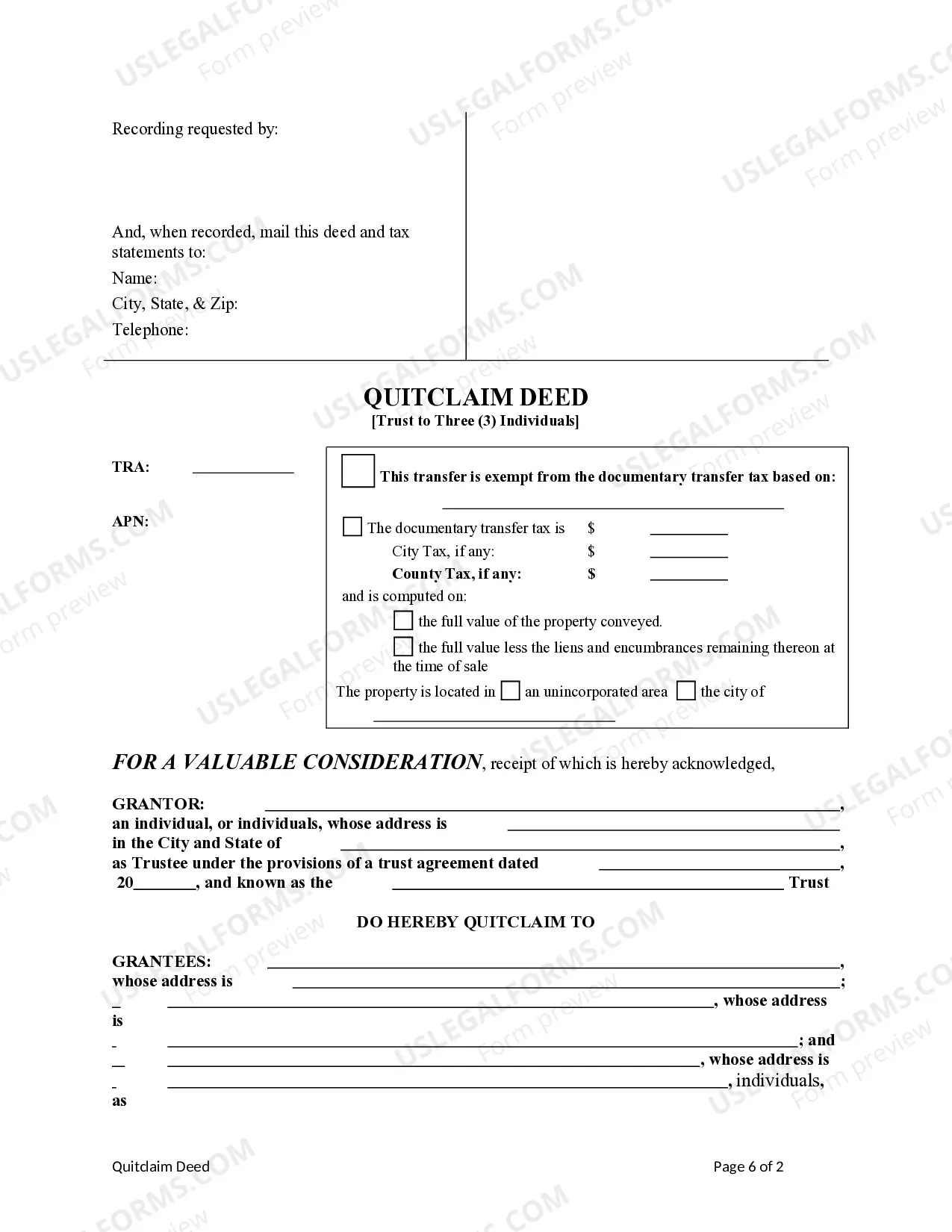
The Quitclaim Deed - Trust to Three Individuals is a legal document that allows a trust (the Grantor) to transfer any property interest to three individuals (the Grantees). This type of deed is distinct because it conveys only the interest the Grantor holds, without guaranteeing that the title is free from claims. It is often used in transactions involving family property transfers or to clarify ownership among multiple parties.
What’s included in this form
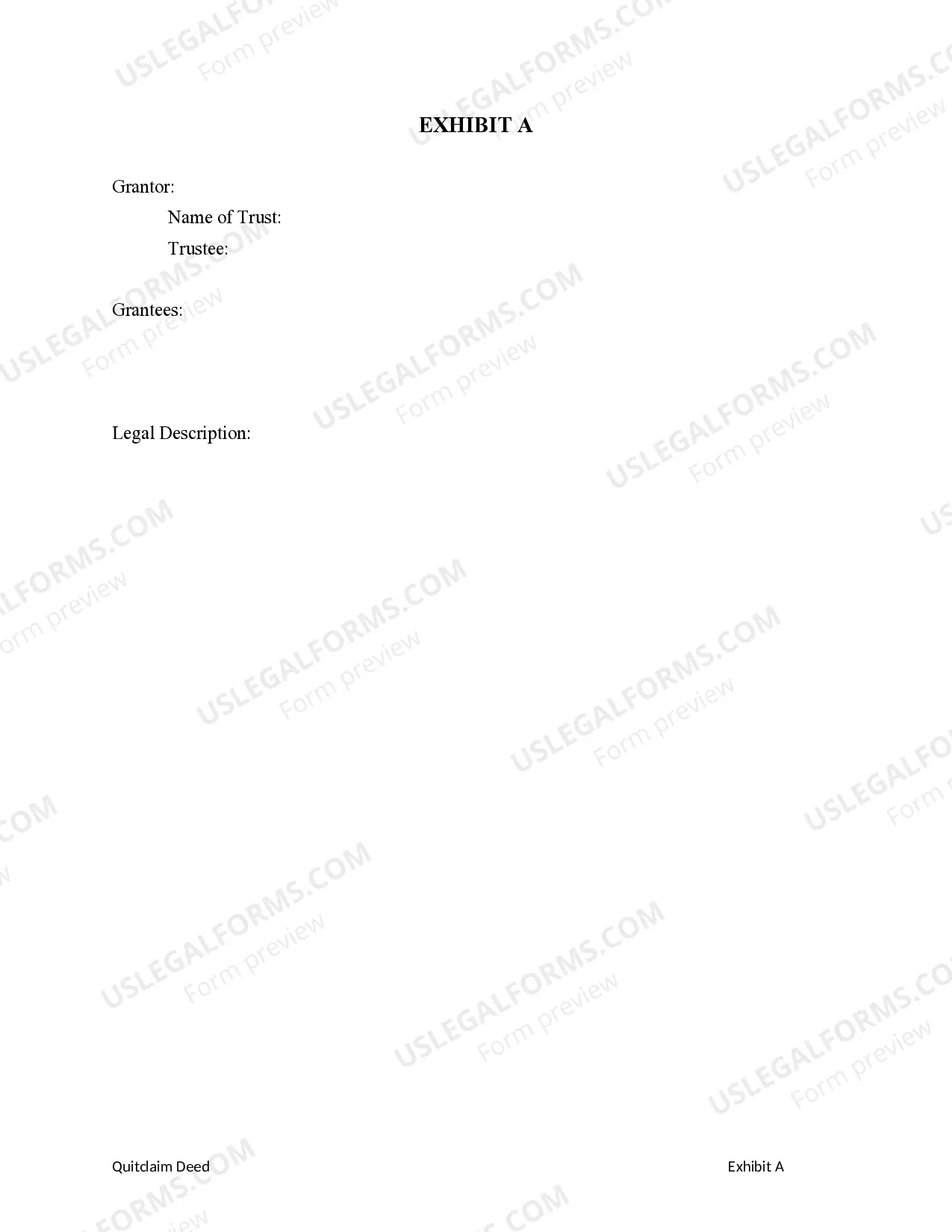
- Identification of the Grantor (the trust) and the Grantees (the three individuals).
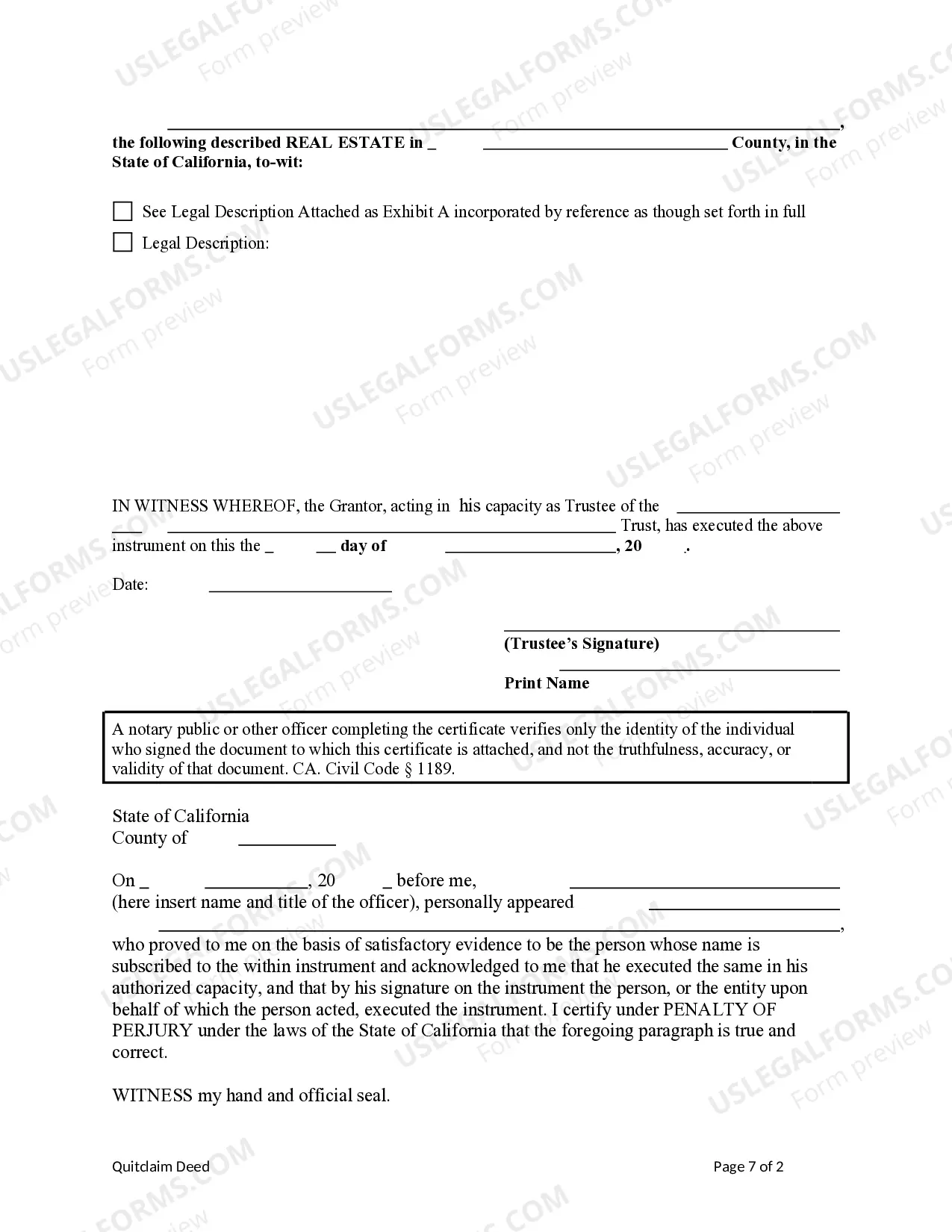
- Description of the property being transferred, including its legal description.
- Statement of the Grantor's intent to quitclaim any interest in the property.
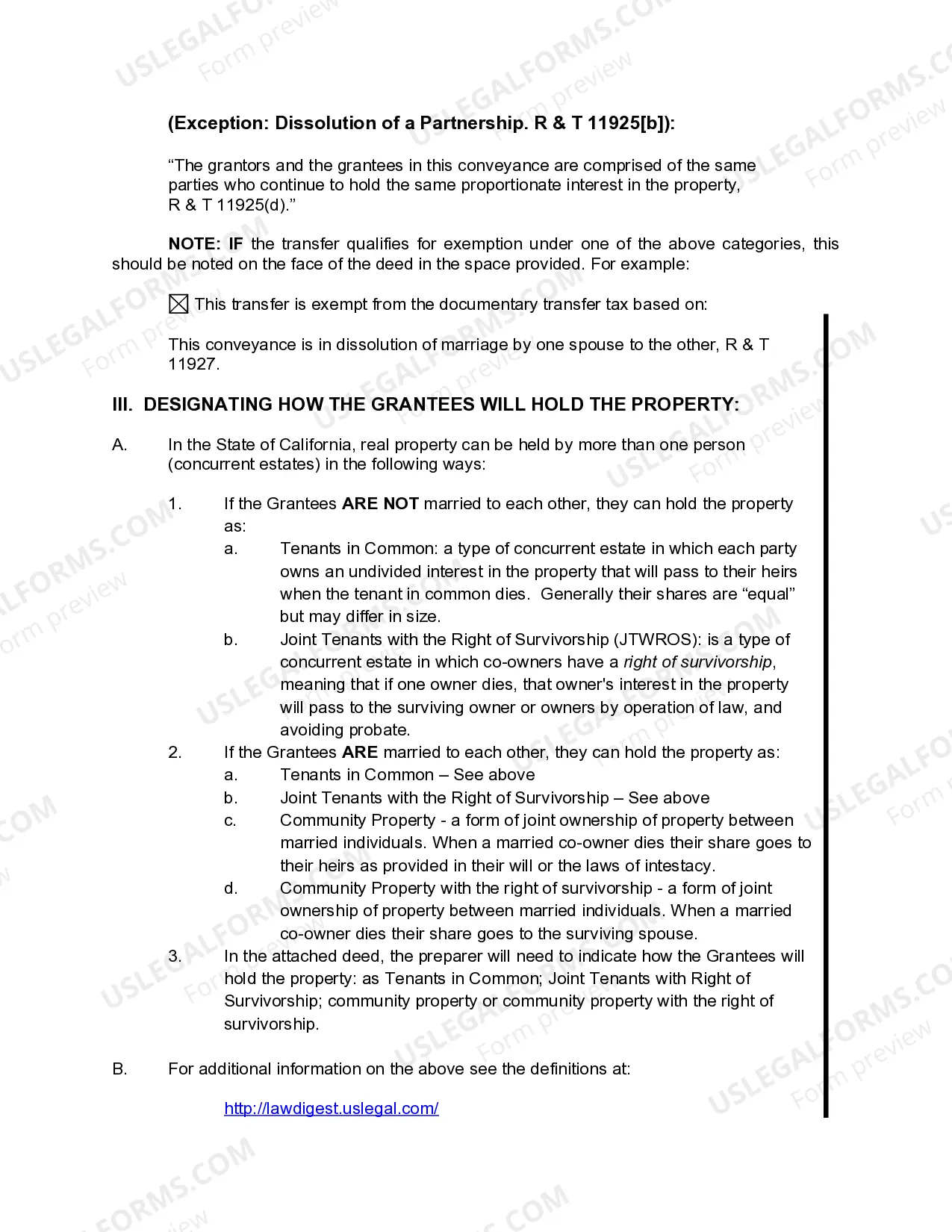
- Space to designate how the Grantees will hold the property (e.g., Joint Tenants or Tenants in Common).
- Notarial acknowledgment section if required by state law.





When to use this form
This form is needed when a trust wants to transfer property to multiple individuals, especially for estate planning or settling family matters. It is commonly used when property needs to be conveyed as a gift or to consolidate ownership among specified parties.
Who needs this form
- Trustees looking to transfer property from a trust to beneficiaries.
- Individuals involved in the dissolution of a trust or estate planning.
- Family members who need to clarify or formalize property ownership.
How to prepare this document
- Identify the parties involved: enter the name of the trust as the Grantor and the names of the three individuals as Grantees.
- Provide a clear legal description of the property being transferred.
- Indicate how the Grantees will hold the property (e.g., as Joint Tenants or Tenants in Common).
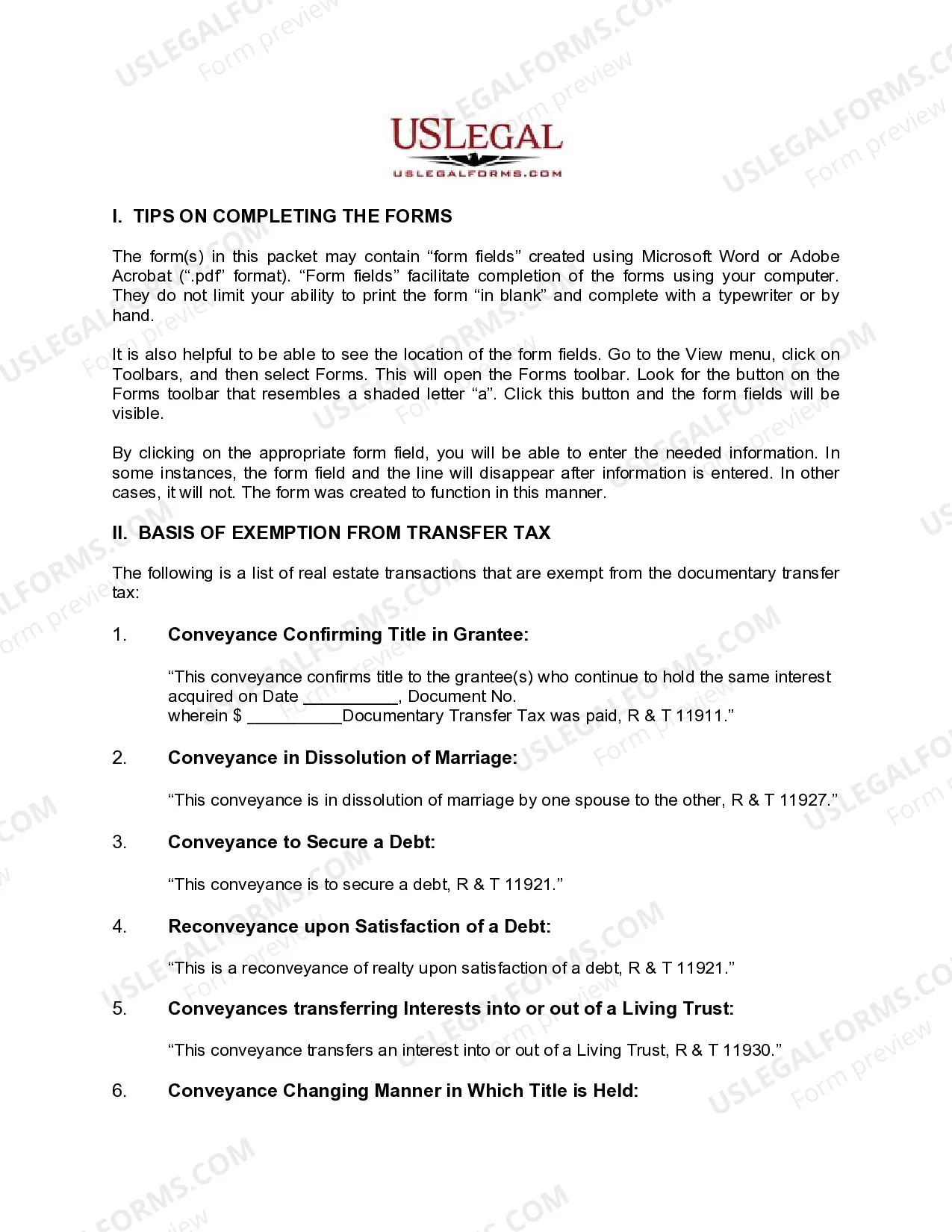
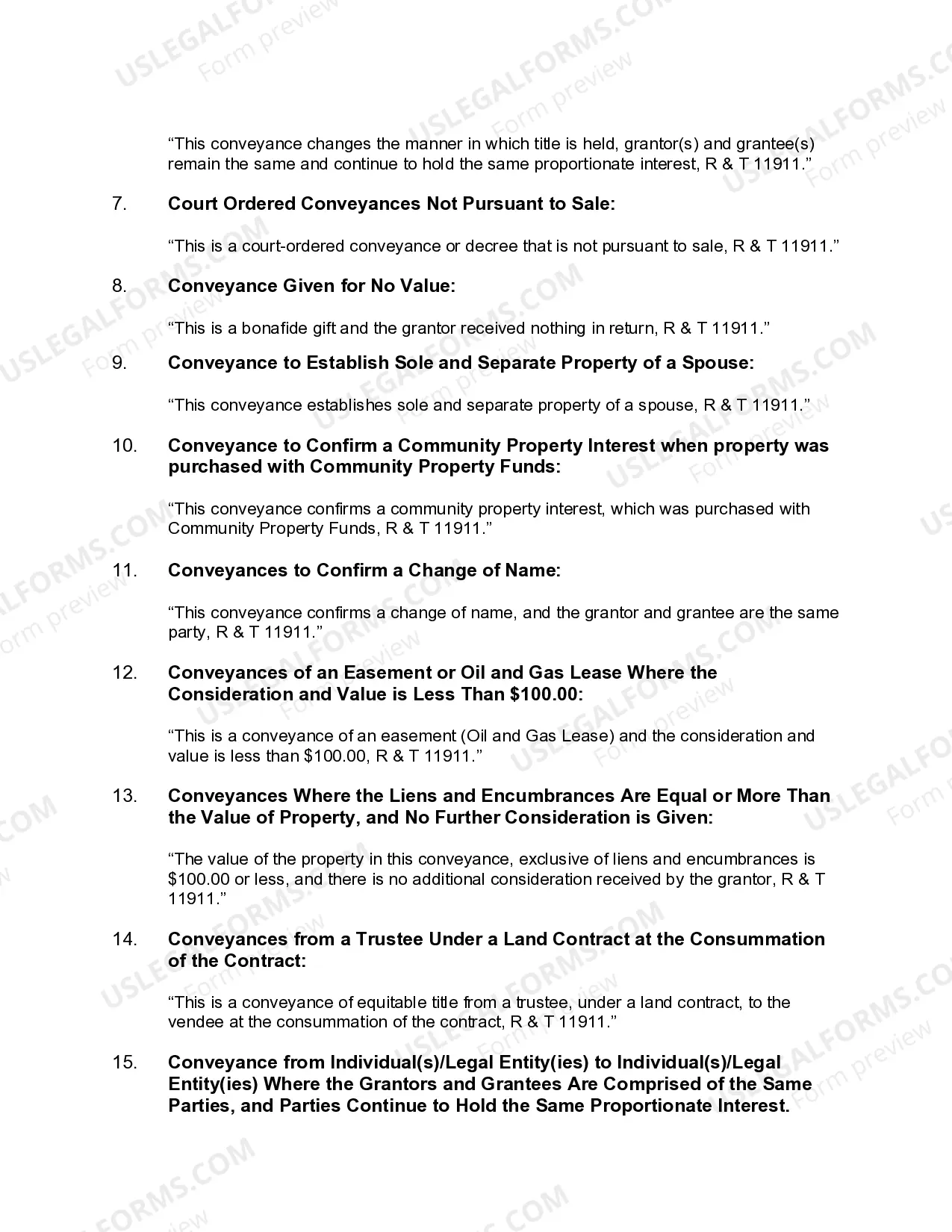
- Complete any required sections related to exemptions from transfer tax, if applicable.
- Sign and date the deed in accordance with state requirements, including notarization if needed.
Notarization guidance
This form needs to be notarized to ensure legal validity. US Legal Forms provides secure online notarization powered by Notarize, allowing you to complete the process through a verified video call, available anytime.
Get your form ready online
Our built-in tools help you complete, sign, share, and store your documents in one place.
Make edits, fill in missing information, and update formatting in US Legal Forms—just like you would in MS Word.
Download a copy, print it, send it by email, or mail it via USPS—whatever works best for your next step.
Sign and collect signatures with our SignNow integration. Send to multiple recipients, set reminders, and more. Go Premium to unlock E-Sign.
If this form requires notarization, complete it online through a secure video call—no need to meet a notary in person or wait for an appointment.
We protect your documents and personal data by following strict security and privacy standards.

Make edits, fill in missing information, and update formatting in US Legal Forms—just like you would in MS Word.

Download a copy, print it, send it by email, or mail it via USPS—whatever works best for your next step.

Sign and collect signatures with our SignNow integration. Send to multiple recipients, set reminders, and more. Go Premium to unlock E-Sign.

If this form requires notarization, complete it online through a secure video call—no need to meet a notary in person or wait for an appointment.

We protect your documents and personal data by following strict security and privacy standards.
Mistakes to watch out for
- Failing to include a complete legal description of the property.
- Not designating how the Grantees will hold the property.
- Skipping the signature and notarization requirements, which may invalidate the deed.
Quick recap
- The Quitclaim Deed allows a trust to transfer property to three individuals without guaranteeing the title.
- It is essential to include all required information accurately to avoid legal issues.
- Understanding how Grantees will hold the property can affect ownership rights and inheritance.
Looking for another form?

Form popularity
FAQ
Yes, you can execute a quitclaim deed from a trust. A California Quitclaim Deed - Trust to Three Individuals allows for property transfer from the trust to the individuals named within it. It streamlines the process of transferring ownership while preserving the trust's integrity. For those unfamiliar with the legalities, US Legal Forms offers easy-to-use templates that can aid in creating the required documents.
Yes, you can add a third person to your deed through a California Quitclaim Deed - Trust to Three Individuals. This process involves preparing a new quitclaim deed that specifies the additional person you want to include. It’s crucial to ensure all parties involved agree to this change, and you may want to consult a legal expert for guidance. Utilizing services like US Legal Forms can help simplify this process and provide the necessary documentation.
In California, there is no hard and fast limit to the number of individuals who can be included in a Quitclaim Deed - Trust to Three Individuals. Multiple parties can indeed hold title together, resulting in joint ownership. However, it's crucial to consider how co-ownership affects property management and decisions over time. Using platforms like uslegalforms can guide you in drafting deeds that include multiple individuals, ensuring all parties understand their rights and responsibilities.
A California Quitclaim Deed - Trust to Three Individuals primarily benefits those who wish to transfer property rights quickly and without lengthy legal processes. Family members or friends often use it to simplify inheritance or share ownership among themselves. This type of deed allows for straightforward changes in property ownership without the necessity of a sale. In situations where trust exists, parties can easily negotiate and agree on the property transfer.
In California, a trustee can be an individual or a corporate entity, such as a bank or a trust company. The trustee must be reliable and capable of managing the trust assets on behalf of the beneficiaries. Choosing the right trustee is crucial for the effective management of the trust and ensuring that it reflects the trustor's wishes.
The three main actors in an express trust relationship are the trustor, the trustee, and the beneficiary. The trustor sets up the trust by transferring property to the trustee, who manages it for the beneficiary's benefit. This structure provides a clear understanding of roles and expectations, ensuring that the assets are handled according to the trustor's intentions.
In a trust relationship, the primary parties are the trustor, the trustee, and the beneficiary. The trustor establishes the trust and defines its terms, while the trustee administers the trust according to those terms for the benefit of the beneficiary. This clear division of responsibilities ensures transparency and accountability within the trust framework.
The three parties involved in a trust deed in California are the trustor, the trustee, and the beneficiary. The trustor creates the trust and places property into it, the trustee manages the trust assets, and the beneficiary receives the benefits from the trust. Understanding these roles can help you effectively navigate the benefits of a trust deed.
In California, property placed in a trust is owned by the trust itself, managed by a trustee on behalf of the beneficiaries. The trustee holds the legal title while the beneficiaries hold equitable interests in the property. This arrangement allows for flexible management and distribution of the property according to the trust's terms.
To add a person to a California quitclaim deed, you must prepare a new quitclaim deed, listing the new individual alongside existing owners. After drafting the document, sign it in front of a notary public, then record it with the county recorder's office to make it official. This process is essential for ensuring that the property ownership reflects the new arrangement among individuals.