California Quitclaim Deed from a Trust to a Limited Liability Company
What this document covers
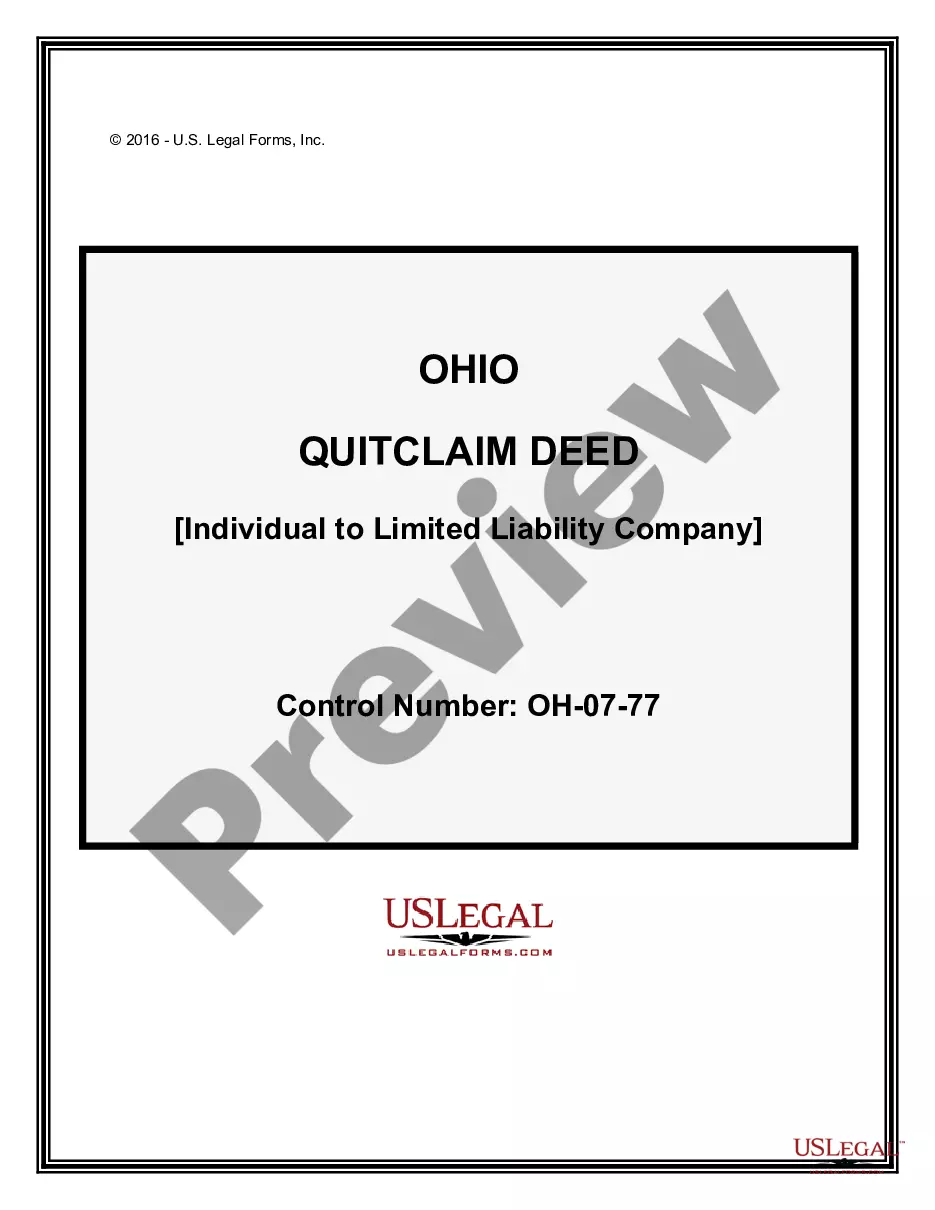
The Quitclaim Deed from a Trust to a Limited Liability Company is a legal document that allows a trust (the Grantor) to transfer ownership of real property to a limited liability company (the Grantee). This form is commonly used in real estate transactions and differs from other deeds as it conveys only the interest, if any, that the Grantor has in the property, without warranties or guarantees.
Main sections of this form
- Identification of the Grantor (trust) and Grantee (limited liability company).
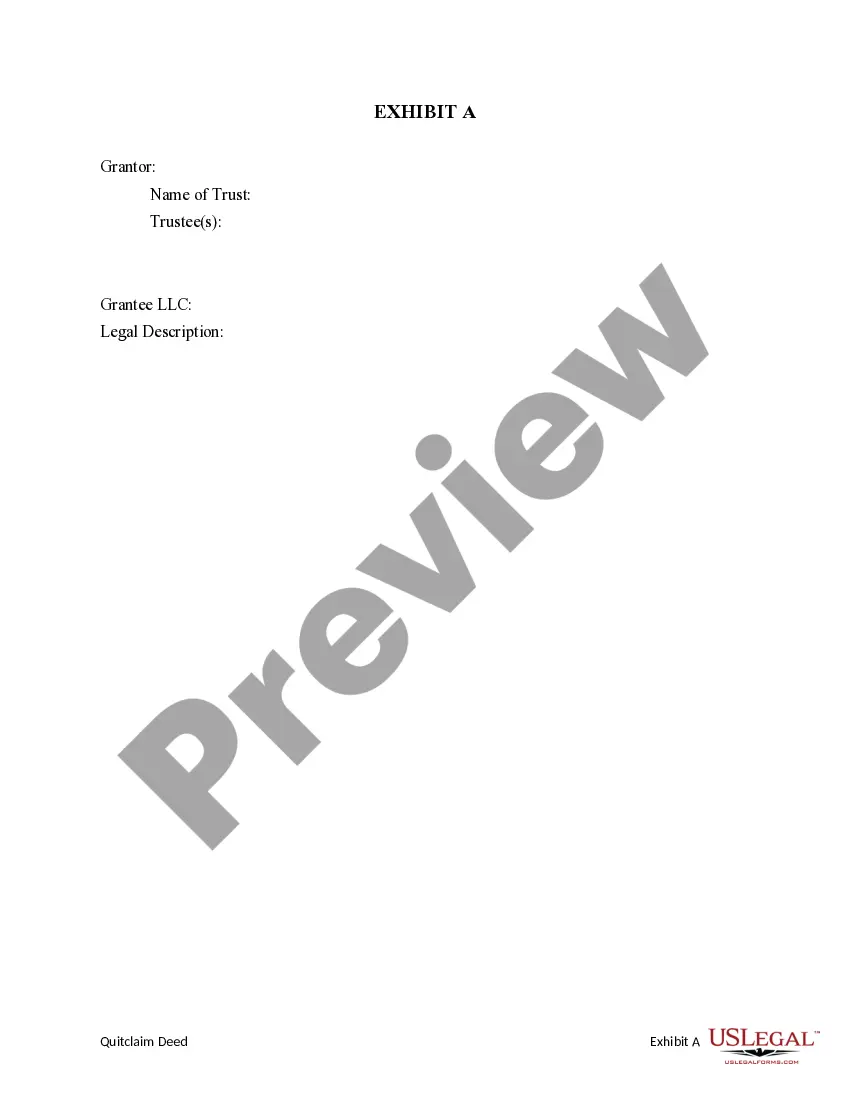
- Description of the property being transferred.
- Notary section for validation of the signatures.
- Space for the signature of the Grantor and witnesses, if required.
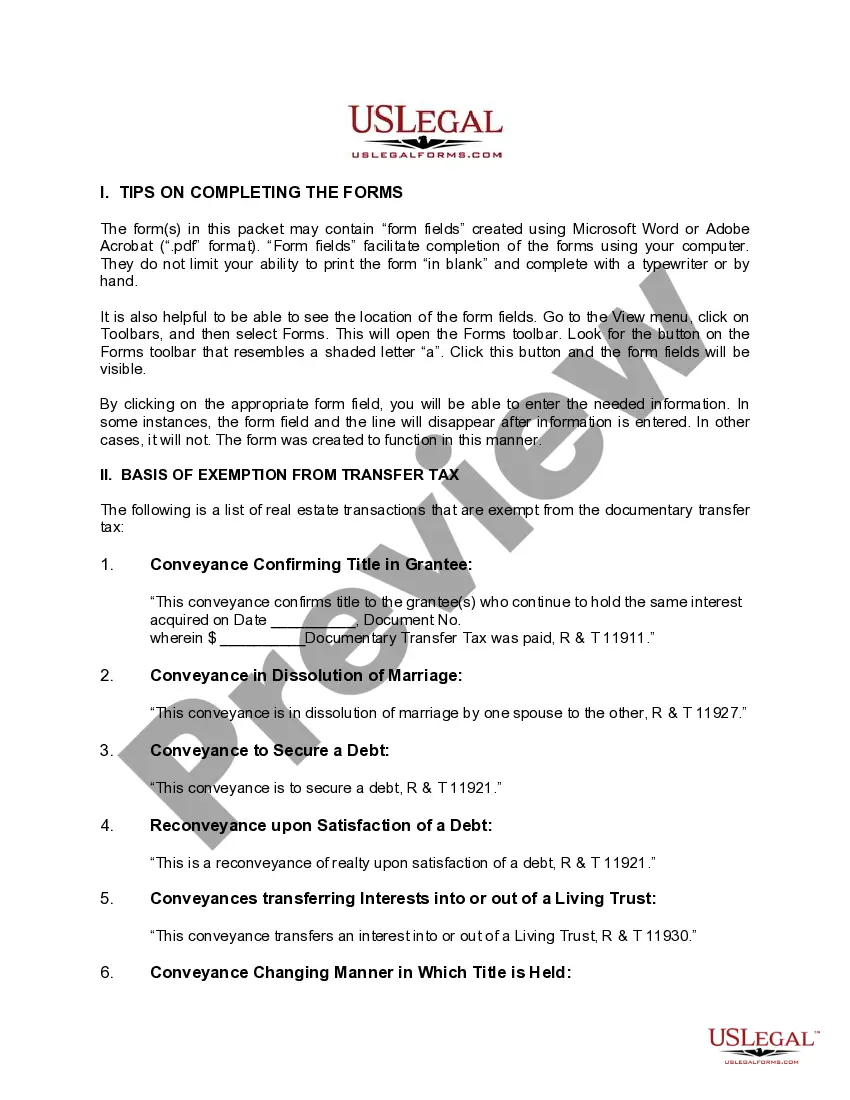
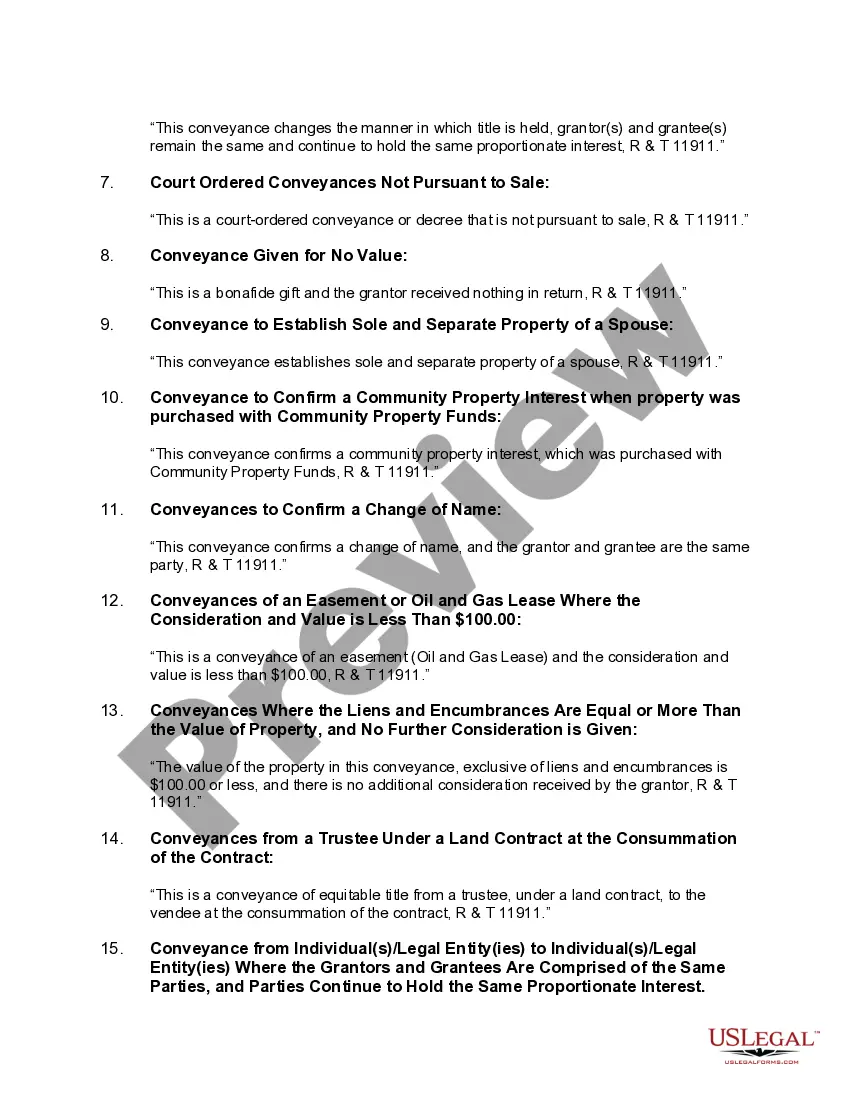
- Acknowledgment of any potential exemptions from transfer tax.
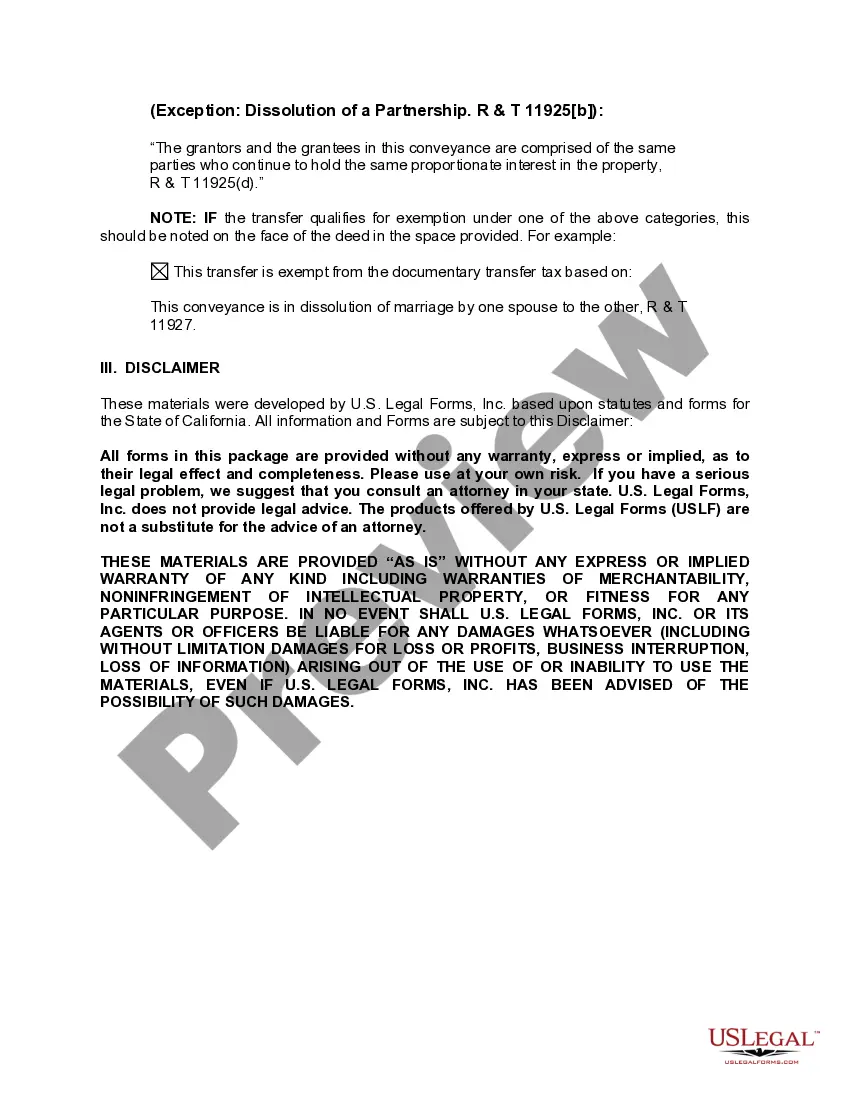
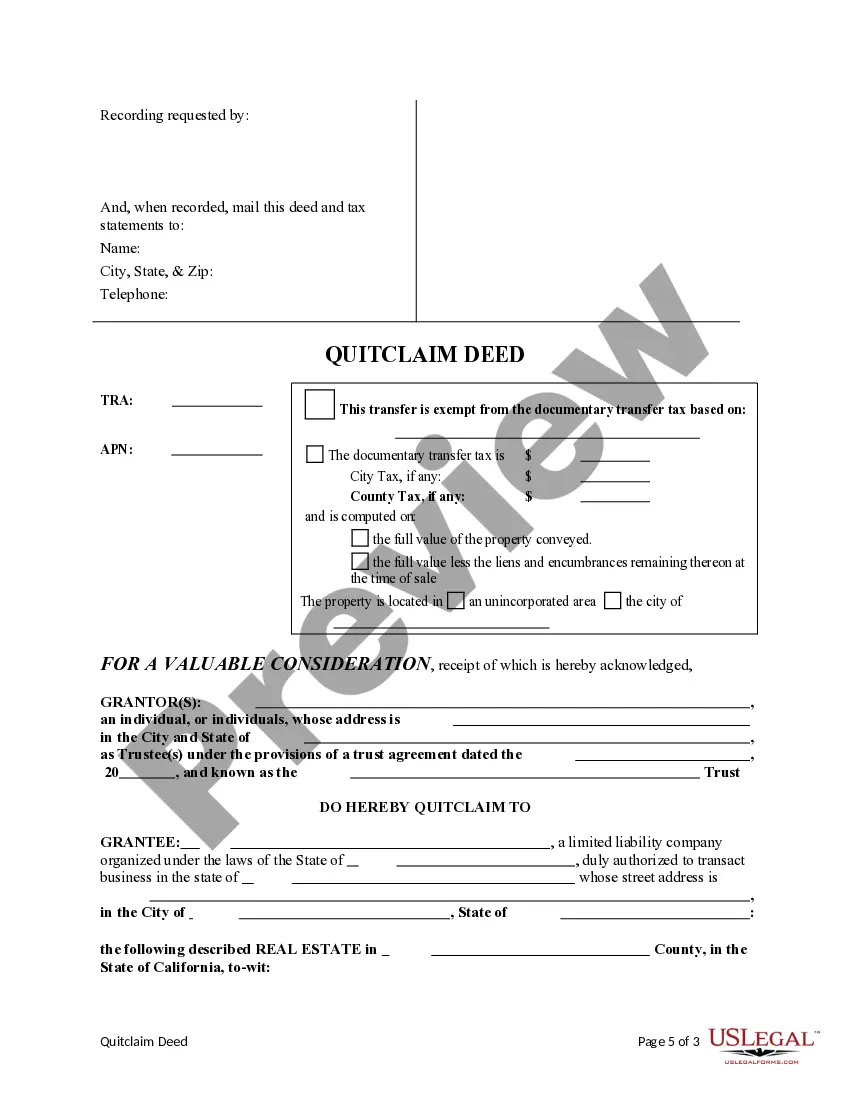
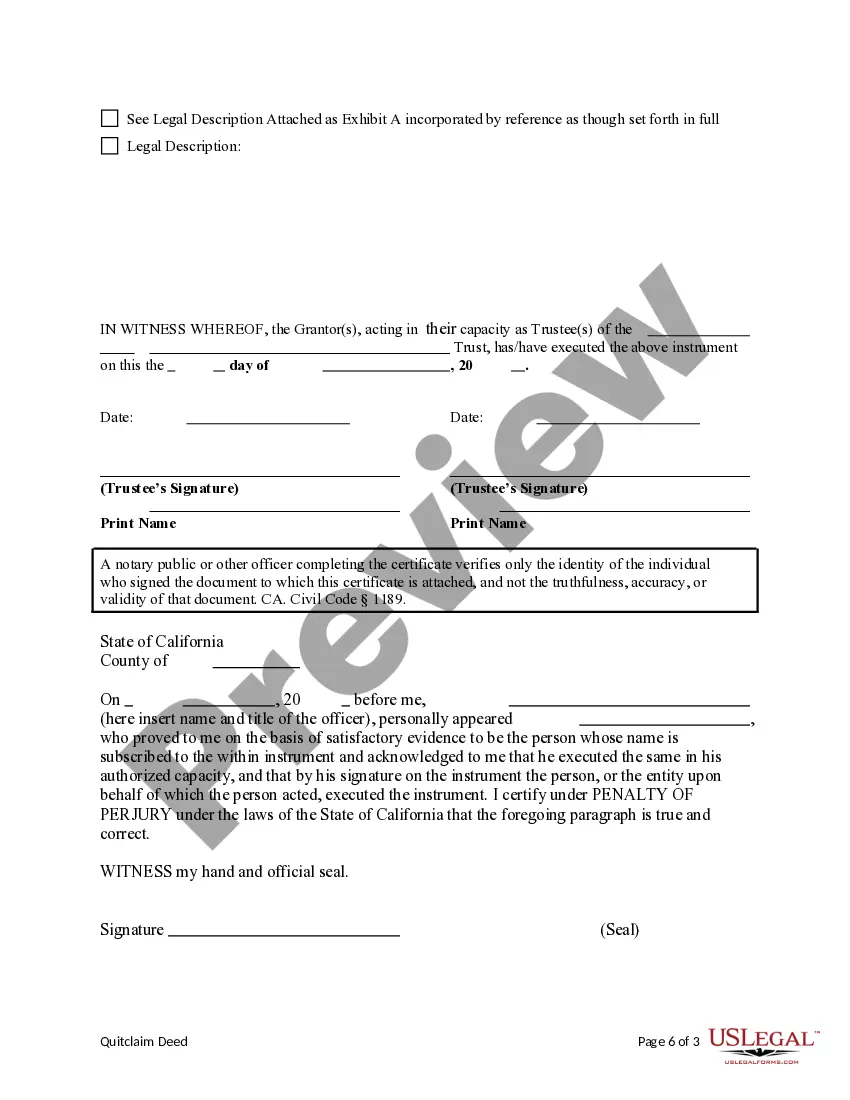
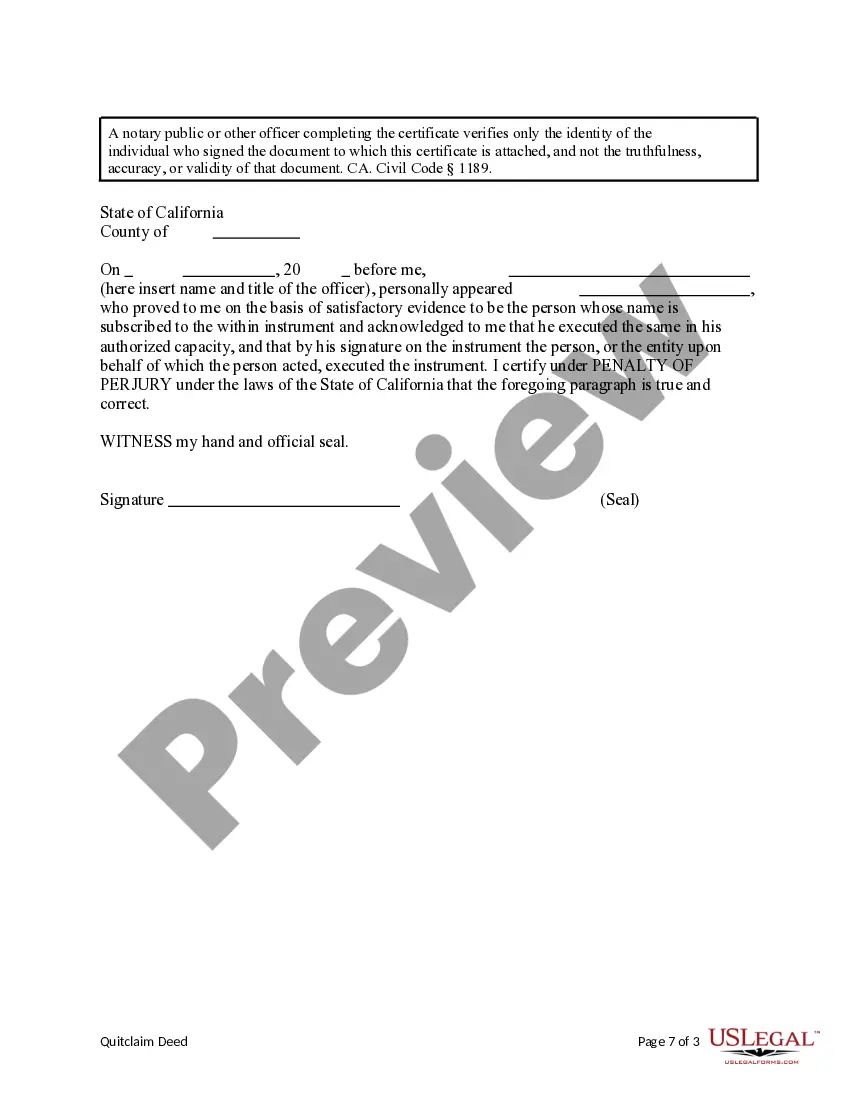



Situations where this form applies
This form is appropriate to use when a trust needs to transfer property to a limited liability company. It may be used in various situations, including restructuring ownership of real estate within business contexts, aligning property ownership with business operation goals, or simplifying the management of assets held in a trust.
Who this form is for
- Trustees managing real estate assets in a trust.
- Members or managers of a limited liability company acquiring property from a trust.
- Individuals looking to simplify property management under a business structure.
Completing this form step by step
- Identify the parties involved: the Grantor (the trust) and the Grantee (the limited liability company).
- Clearly describe the property being transferred, including legal descriptions as needed.
- Fill in the date of the transaction and any additional relevant details.
- Ensure that the Grantor signs the document and that it is properly notarized.
- File the completed deed with the appropriate local or state agency for recording.
Notarization guidance
This form needs to be notarized to ensure legal validity. US Legal Forms provides secure online notarization powered by Notarize, allowing you to complete the process through a verified video call, available anytime.
Get your form ready online
Our built-in tools help you complete, sign, share, and store your documents in one place.
Make edits, fill in missing information, and update formatting in US Legal Forms—just like you would in MS Word.
Download a copy, print it, send it by email, or mail it via USPS—whatever works best for your next step.
Sign and collect signatures with our SignNow integration. Send to multiple recipients, set reminders, and more. Go Premium to unlock E-Sign.
If this form requires notarization, complete it online through a secure video call—no need to meet a notary in person or wait for an appointment.
We protect your documents and personal data by following strict security and privacy standards.

Make edits, fill in missing information, and update formatting in US Legal Forms—just like you would in MS Word.

Download a copy, print it, send it by email, or mail it via USPS—whatever works best for your next step.

Sign and collect signatures with our SignNow integration. Send to multiple recipients, set reminders, and more. Go Premium to unlock E-Sign.

If this form requires notarization, complete it online through a secure video call—no need to meet a notary in person or wait for an appointment.

We protect your documents and personal data by following strict security and privacy standards.
Typical mistakes to avoid
- Failing to properly describe the property, which can lead to disputes or incomplete transfers.
- Not obtaining the necessary notarization, rendering the document invalid.
- Omitting signatures from either party, which can create legal challenges.
- Not checking state-specific rules that may apply to the deed.
Advantages of online completion
- Convenience of completing the form digitally, saving time and reducing errors.
- Editability allows for easy corrections and adjustments before finalizing.
- Access to forms drafted by licensed attorneys ensures compliance with legal standards.
Looking for another form?
Form popularity
FAQ
Whether a quitclaim deed or a trust is better for you depends on your specific situation and goals. A quitclaim deed is typically faster and simpler for property transfers, while a trust offers long-term asset protection and management advantages. When handling property matters like a California Quitclaim Deed from a Trust to a Limited Liability Company, understanding your unique needs can guide your decision and platforms like USLegalForms can help clarify your options.
Yes, a quitclaim deed can be used to transfer property out of a trust. This process allows the trust to relinquish its rights and interests in the property to a new owner, such as a Limited Liability Company. It is essential to follow the proper procedures to maintain compliance with California laws regarding property transfers. For detailed guidance, consider using USLegalForms for your California Quitclaim Deed from a Trust to a Limited Liability Company.
Anyone can prepare a quitclaim deed in California, but it is recommended that they have a clear understanding of property laws. Standardly, attorneys, real estate agents, or professional document preparation services can ensure the deed complies with legal standards. For a seamless transaction involving a California Quitclaim Deed from a Trust to a Limited Liability Company, leveraging assistance from USLegalForms can be beneficial.
Typically, a quitclaim deed can be prepared by the property owner or an attorney. In some cases, real estate professionals may also offer assistance in drafting the document. When using a California Quitclaim Deed from a Trust to a Limited Liability Company, it's advisable to ensure that all legal requirements are met, and using a reliable service like USLegalForms can help simplify the process.
A quitclaim deed may not be appropriate in situations involving complex property disputes or foreclosure actions. Additionally, if there are existing liens or encumbrances on the property, a quitclaim deed does not remove these liabilities. To safeguard your interests, consider consulting legal assistance or using platforms like USLegalForms when dealing with a California Quitclaim Deed from a Trust to a Limited Liability Company.
In California, a quitclaim deed can be signed by the property owner transferring the property. This means that the grantor, or the person relinquishing their interest in the property, must sign the document. It is essential that the signature is notarized to ensure its validity. If you're considering a California Quitclaim Deed from a Trust to a Limited Liability Company, proper execution is crucial.
People often place their property in an LLC to protect their personal assets from liability. By using a California Quitclaim Deed from a Trust to a Limited Liability Company, they create a layer of separation between personal and business assets. Additionally, this structure can provide tax advantages and simplify estate planning.
Transferring your property to an LLC involves using a California Quitclaim Deed from a Trust to a Limited Liability Company. You will prepare the deed, gather necessary signatures, and ensure it is properly recorded with local authorities. This approach not only legitimizes the transfer but also protects your assets under the LLC structure.
To transfer your property to an LLC in California, begin by preparing a California Quitclaim Deed from a Trust to a Limited Liability Company. This deed will need to be signed, notarized, and then filed with the county recorder's office. Taking this route simplifies the ownership transfer and offers potential tax benefits.
To remove your property from an LLC, you can use a California Quitclaim Deed from a Trust to a Limited Liability Company to transfer ownership back to yourself or another entity. This process involves drafting the deed, signing it, and then recording it with your local county recorder's office. By following these steps, you ensure a clear transfer of property ownership.