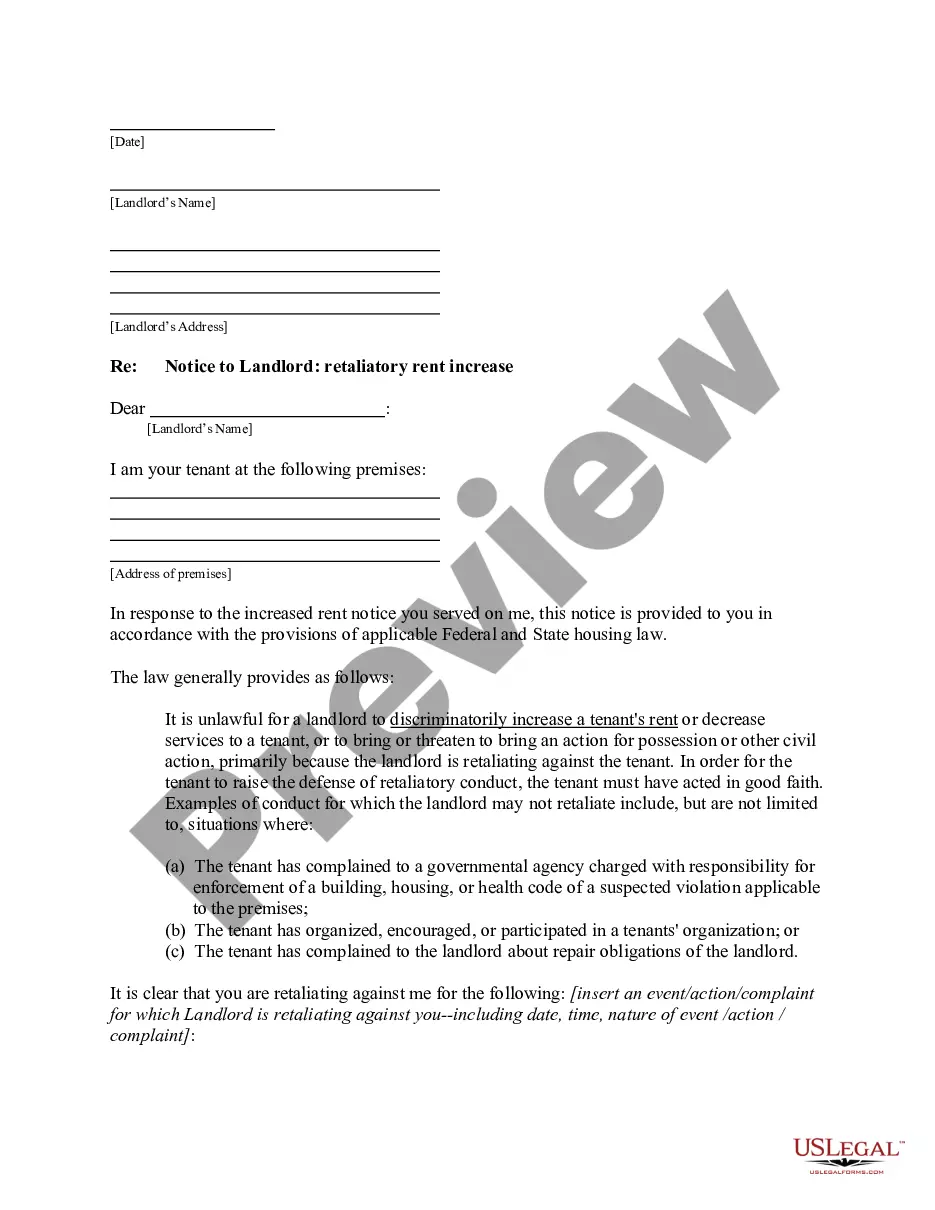
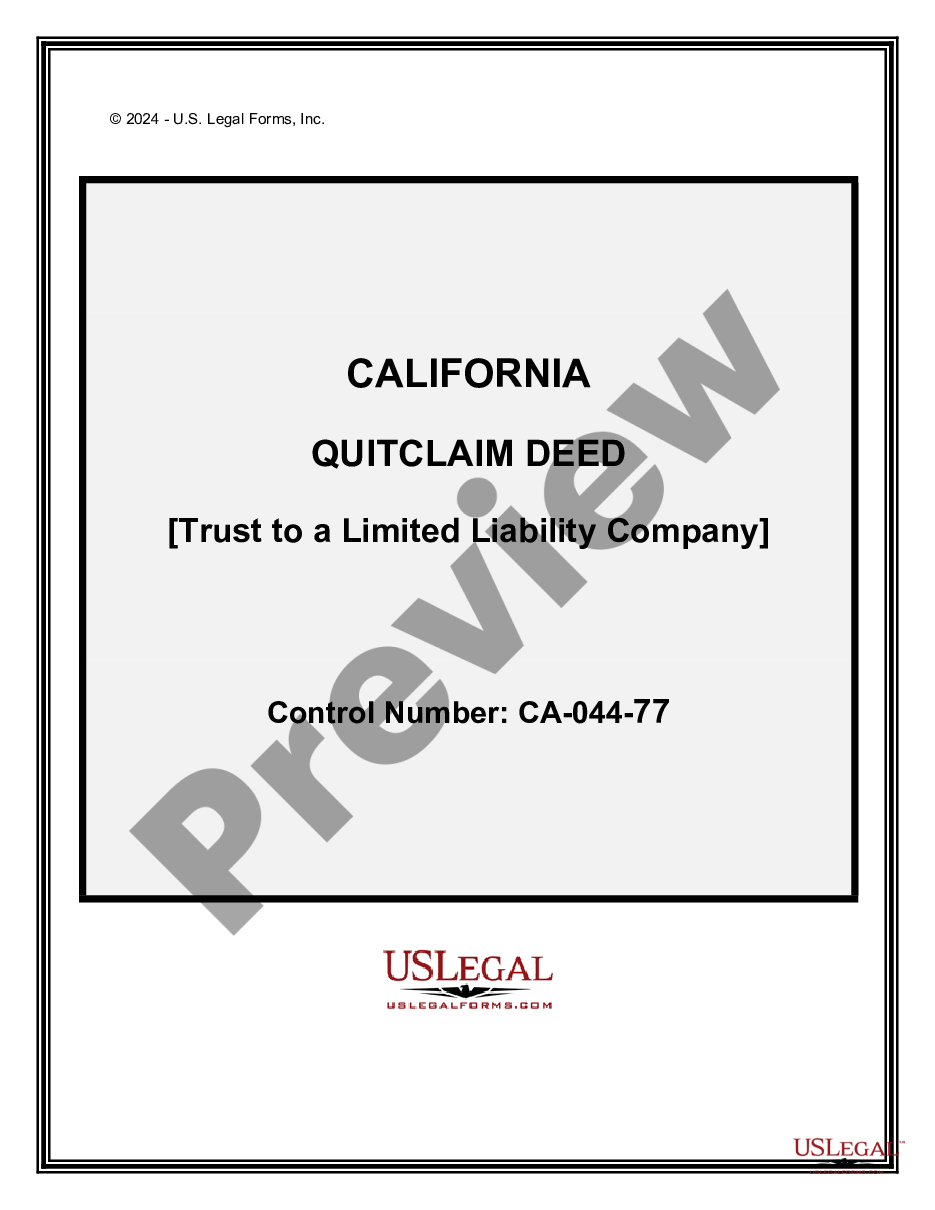
California Quitclaim Deed from a Limited Liability Company to a Trust
What is this form?
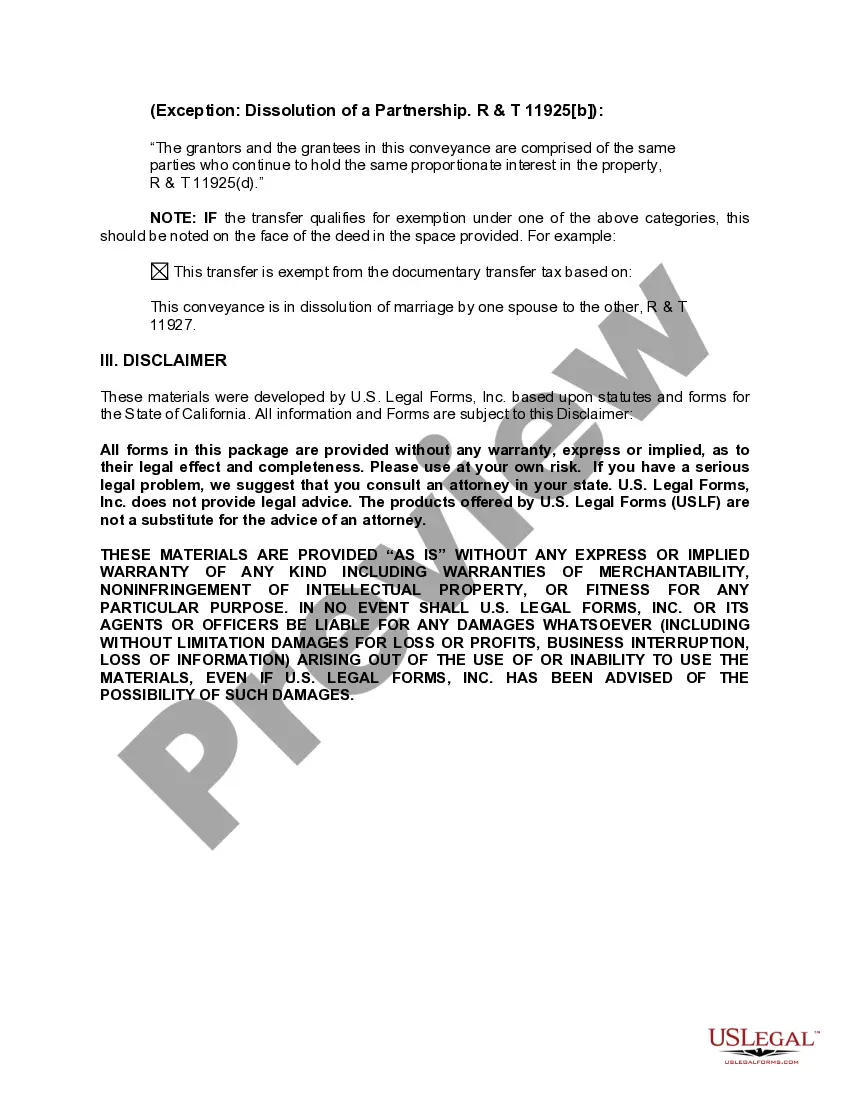
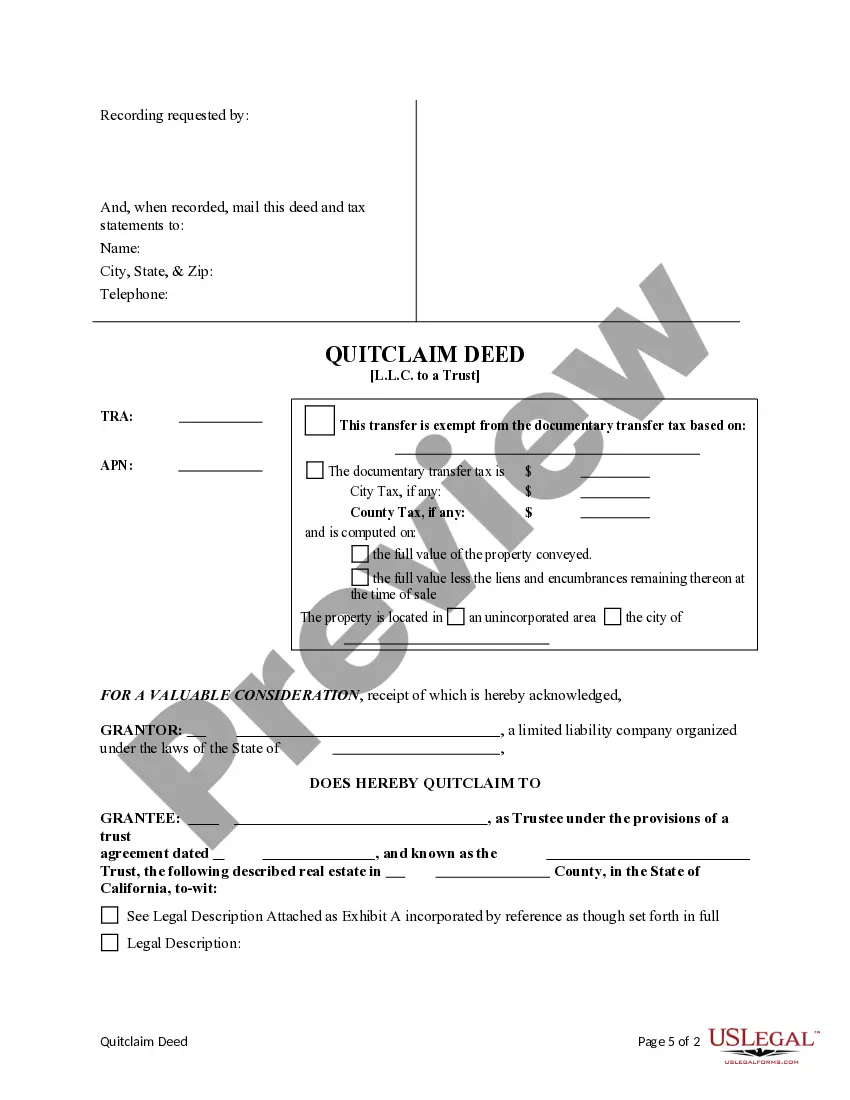
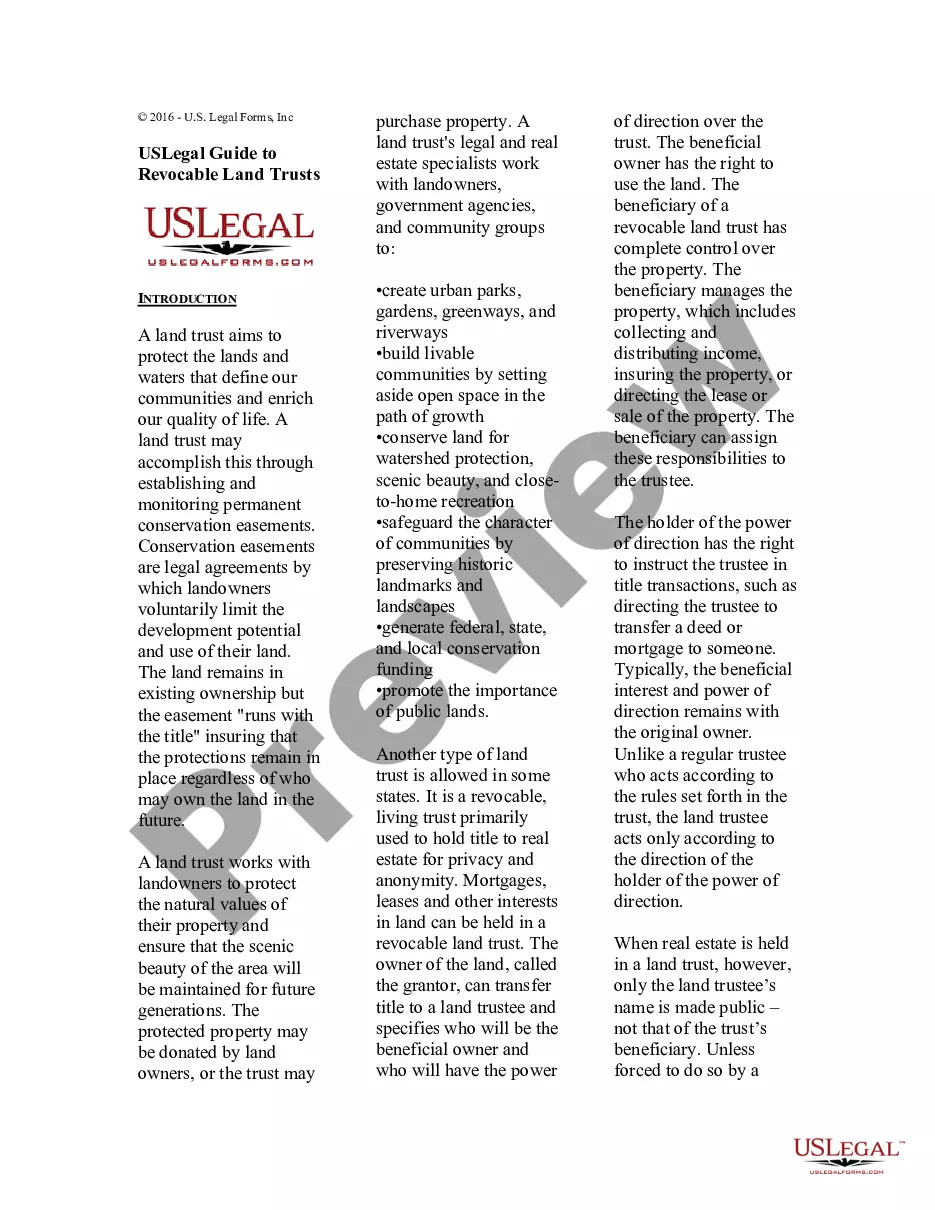
The Quitclaim Deed from a Limited Liability Company to a Trust is a legal document used to transfer ownership of real estate from an LLC (the Grantor) to a Trust (the Grantee). Unlike other types of deeds, a quitclaim deed does not guarantee that the Grantor holds clear title to the property; it simply conveys whatever interest the Grantor may have at the time of transfer. This form is particularly useful in estate planning and transferring property into a trust without a complex title review process.
Key parts of this document
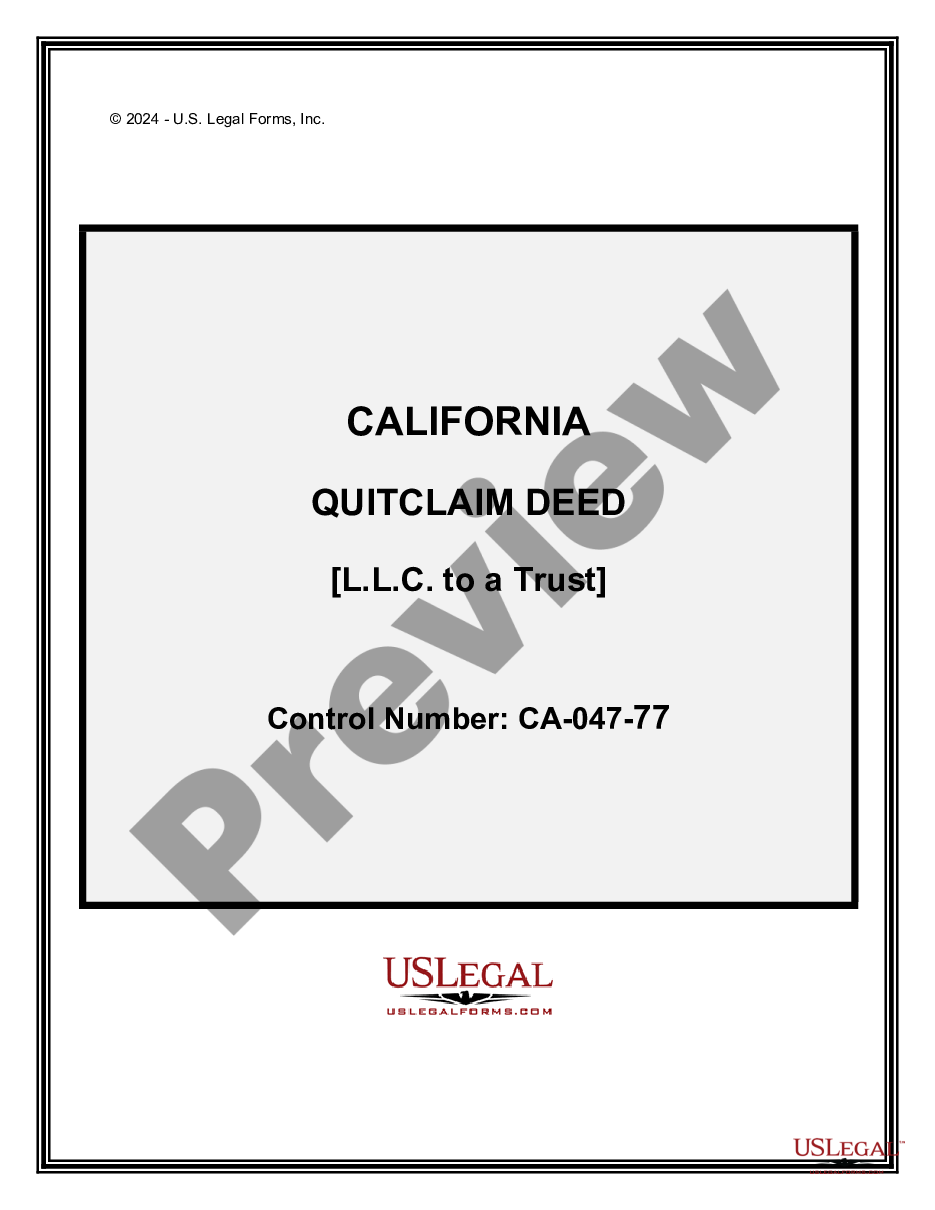
- Identification of the Grantor (LLC) and Grantee (Trust).
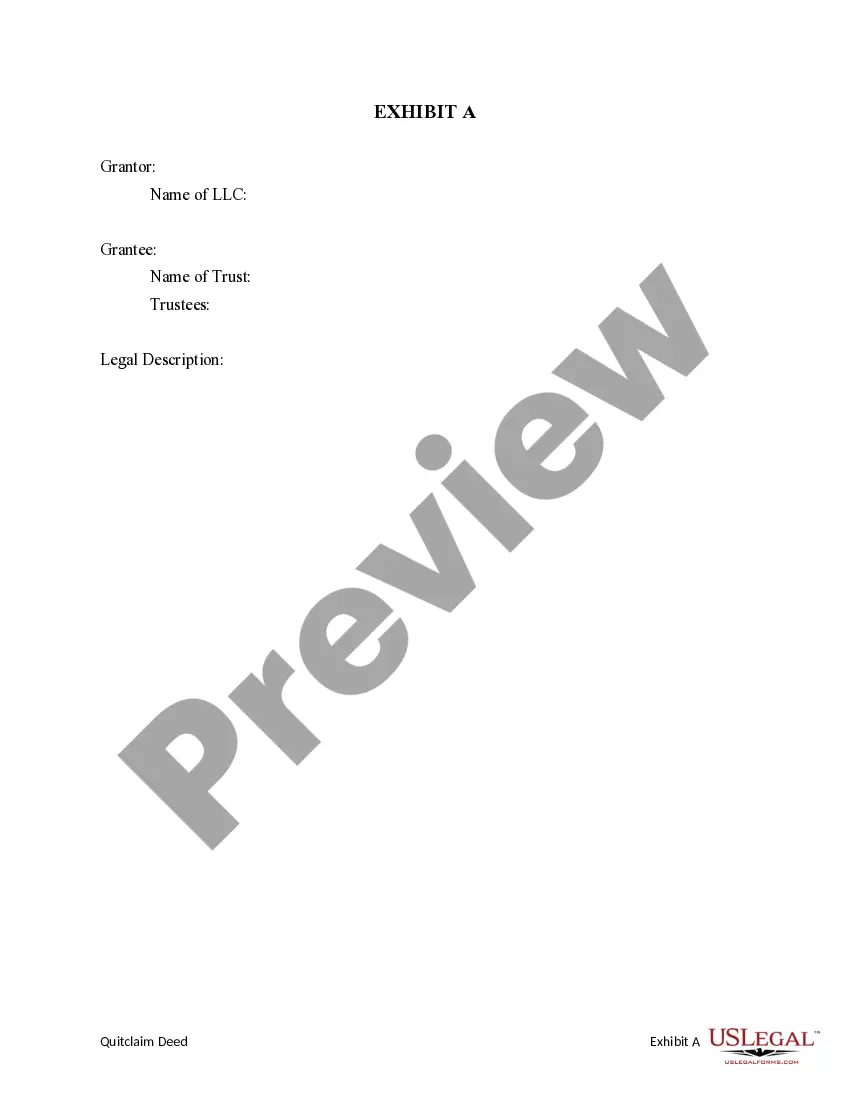
- Description of the property being transferred.
- Statement of the consideration (if any) for the transfer.
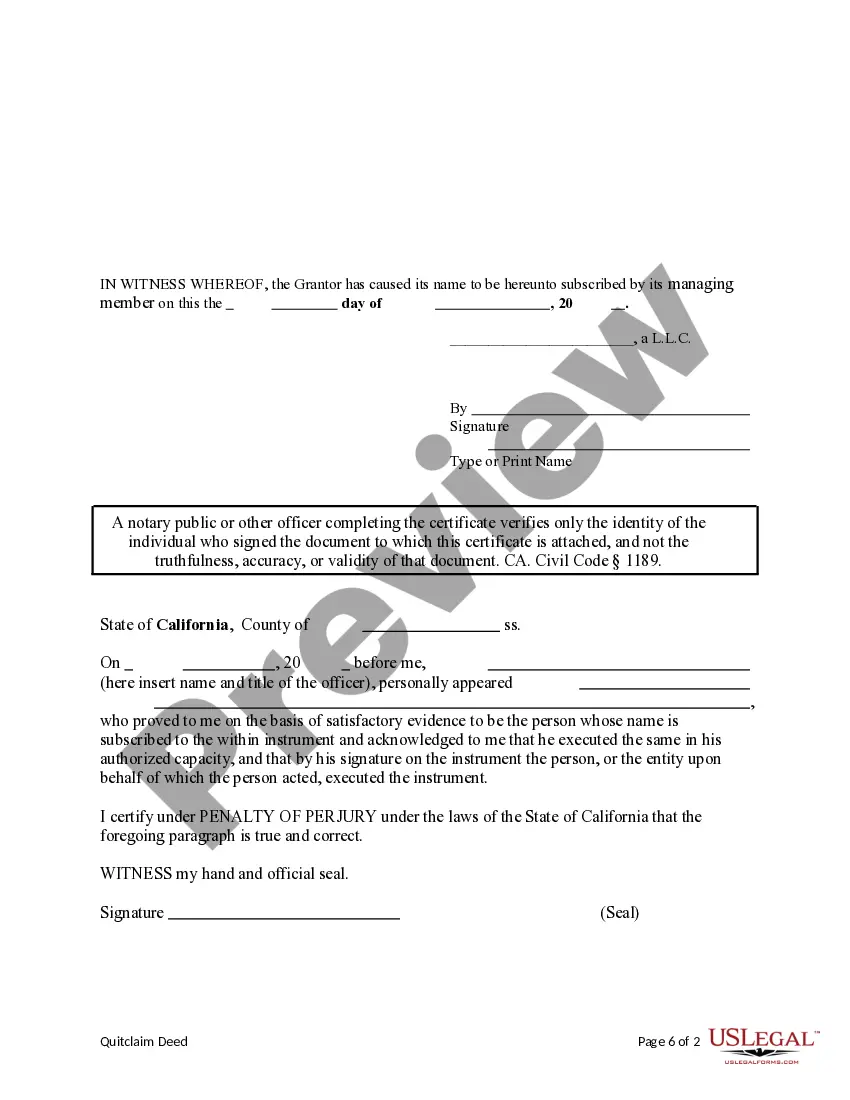
- Notarization section for legal validity.
- Signature lines for the authorized representative of the LLC.



Situations where this form applies
This form is commonly used when an LLC wishes to transfer property into a trust for various reasons, including estate planning, asset protection, or simplifying property management. It may also be applicable in situations where property needs to be set aside for beneficiaries under the terms of the trust or as part of succession planning.
Who can use this document
This form is intended for:
- Limited Liability Companies looking to transfer real estate into a trust.
- Trustees who need to formalize property transfers on behalf of the trust.
- Individuals involved in estate planning or property management.
Completing this form step by step
- Identify and enter the full legal names of the Grantor (LLC) and Grantee (Trust).
- Clearly describe the property being transferred, including its address or legal description.
- Specify the consideration, if applicable, or state "for no consideration" if the transfer is a gift.
- Have the representative of the LLC sign the deed in the presence of a notary.
- Ensure the notary completes their section to validate the deed.
Notarization guidance
This form needs to be notarized to ensure legal validity. US Legal Forms provides secure online notarization powered by Notarize, allowing you to complete the process through a verified video call, available anytime.
Get your form ready online
Our built-in tools help you complete, sign, share, and store your documents in one place.
Make edits, fill in missing information, and update formatting in US Legal Forms—just like you would in MS Word.
Download a copy, print it, send it by email, or mail it via USPS—whatever works best for your next step.
Sign and collect signatures with our SignNow integration. Send to multiple recipients, set reminders, and more. Go Premium to unlock E-Sign.
If this form requires notarization, complete it online through a secure video call—no need to meet a notary in person or wait for an appointment.
We protect your documents and personal data by following strict security and privacy standards.

Make edits, fill in missing information, and update formatting in US Legal Forms—just like you would in MS Word.

Download a copy, print it, send it by email, or mail it via USPS—whatever works best for your next step.

Sign and collect signatures with our SignNow integration. Send to multiple recipients, set reminders, and more. Go Premium to unlock E-Sign.

If this form requires notarization, complete it online through a secure video call—no need to meet a notary in person or wait for an appointment.

We protect your documents and personal data by following strict security and privacy standards.
Common mistakes
- Failing to accurately describe the property being transferred.
- Not including all required signatures or notarization.
- Leaving out the date of the transfer.
- Using the wrong name for the Trust or LLC, which can affect legal standing.
Why use this form online
- Convenience of completing the form from home without the need for an appointment.
- Editable fields allow for accurate and easy entry of information.
- Access to a reliable, attorney-drafted form that ensures legal compliance.
Looking for another form?

Form popularity
FAQ
Yes, a trust can serve as a manager of an LLC in California. This setup allows the trust to effectively manage the LLC's operations and assets according to the trust's terms. It is essential to ensure that the LLC's operating agreement accommodates this arrangement to avoid any legal complications.
Transferring an LLC to a trust in California involves executing a California Quitclaim Deed from a Limited Liability Company to a Trust. You need to draft the appropriate deed, have it properly executed, and file it according to state regulations. This ensures that the trust becomes the new owner of the LLC's assets.
To transfer your LLC to a trust in California, you will need to prepare a California Quitclaim Deed from a Limited Liability Company to a Trust. It typically involves drafting the deed, ensuring it is signed, notarized, and then recorded with the county. This process ensures that the LLC's assets are legally moved into the trust.
One common mistake parents make is failing to communicate their intentions clearly to their beneficiaries. It’s essential to outline the purpose of the trust and how assets will be distributed. Moreover, not properly updating the trust to reflect changing family dynamics can lead to confusion. When using a California Quitclaim Deed from a Limited Liability Company to a Trust, keeping these factors in mind can prevent future issues.
Certain assets cannot be placed in a trust, including retirement accounts with specific beneficiary designations and life insurance policies where you are not the policy owner. Additionally, personal assets such as vehicles or items with significant personal value may be best handled outside a trust. If you need guidance on the California Quitclaim Deed from a Limited Liability Company to a Trust, consider consulting with experts.
To transfer a deed to a trust in California, execute a California Quitclaim Deed specifically transferring the property to the trust. First, complete the quitclaim deed with accurate names and property details. Then, have the deed notarized and file it with the appropriate county recorder's office. Utilizing services from US Legal Forms can guide you through this process smoothly.
Filing a deed of trust in California requires preparing and signing the document, which outlines the borrower, lender, and property involved. After signing, you must file the deed with the county recorder’s office where the property is located. Make sure to keep a copy for your records, as well as the original deed. For a comprehensive resource, consider using platforms like US Legal Forms that simplify the filing process.
Yes, a quitclaim deed can effectively transfer property from a trust to another party. This type of deed relinquishes any claim the trust has to the property, ensuring a clear transfer. It's important to execute the deed properly to guarantee its enforceability. For added security, consider consulting a legal professional before proceeding with the transfer.
Transferring an LLC into a trust in California involves creating a California Quitclaim Deed from the LLC to the trust. First, draft the deed and include all essential details, such as the name of the LLC, the trust, and the property information. It is also wise to consult with an attorney to ensure compliance with state laws. Once completed, file the deed with the county recorder.
To transfer property from a Limited Liability Company (LLC) to a person, you typically need to execute a California Quitclaim Deed. This document allows the LLC to convey ownership of the property to the individual. Ensure that you properly fill out the deed, include necessary details, and have it notarized. Finally, file the completed deed with your local county recorder's office.