California Quitclaim Deed from Individual to Two Individuals in Joint Tenancy
About this form
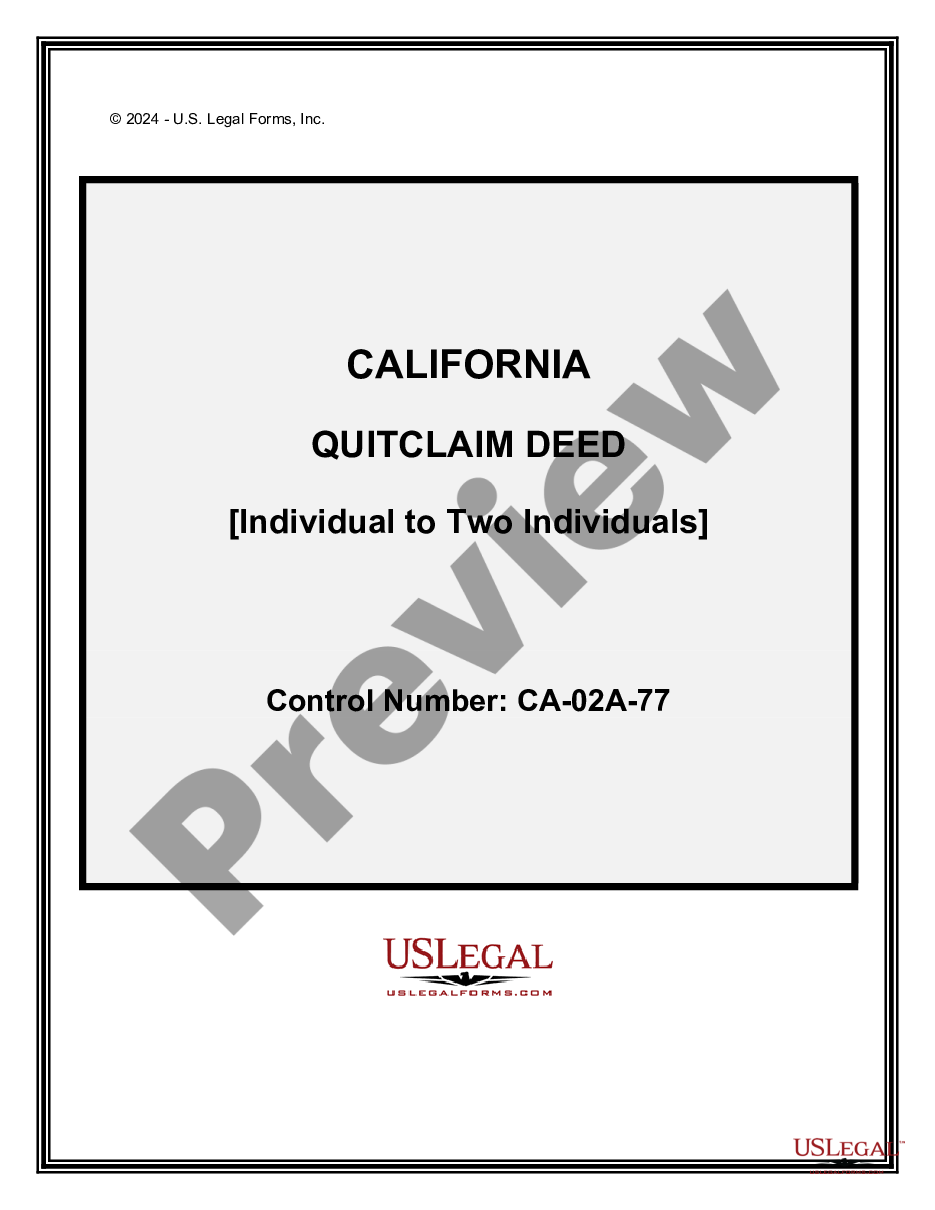
This Quitclaim Deed from Individual to Two Individuals in Joint Tenancy form allows an individual (the Grantor) to transfer property ownership to two people (the Grantees) who will hold the property together. Unlike other deeds, a quitclaim deed does not guarantee that the Grantor holds a clear title. It is a straightforward way to convey property without the complexities of a warranty deed, making it suitable for transfers between family members or friends.
What’s included in this form
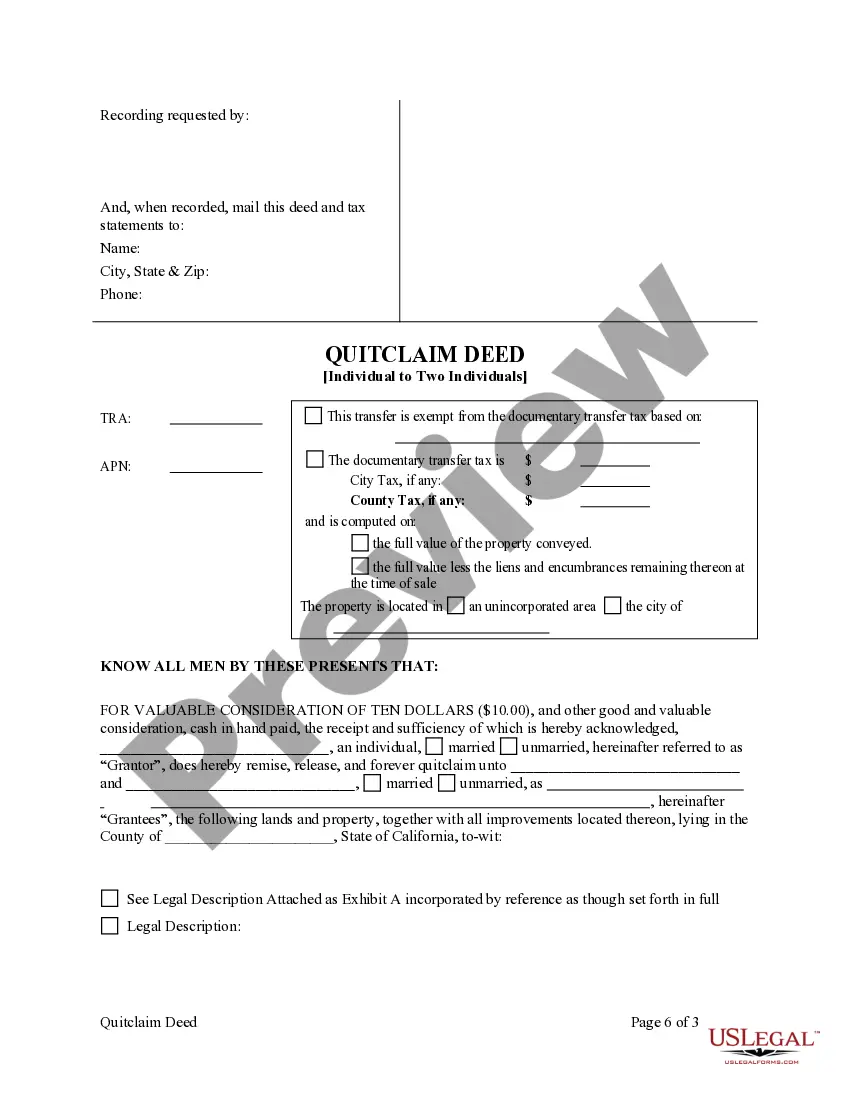
- Grantor and Grantees: Identifying the individual transferring the property and the two individuals receiving it.
- Property Description: Details about the property being conveyed, including any reservations for oil, gas, and minerals.
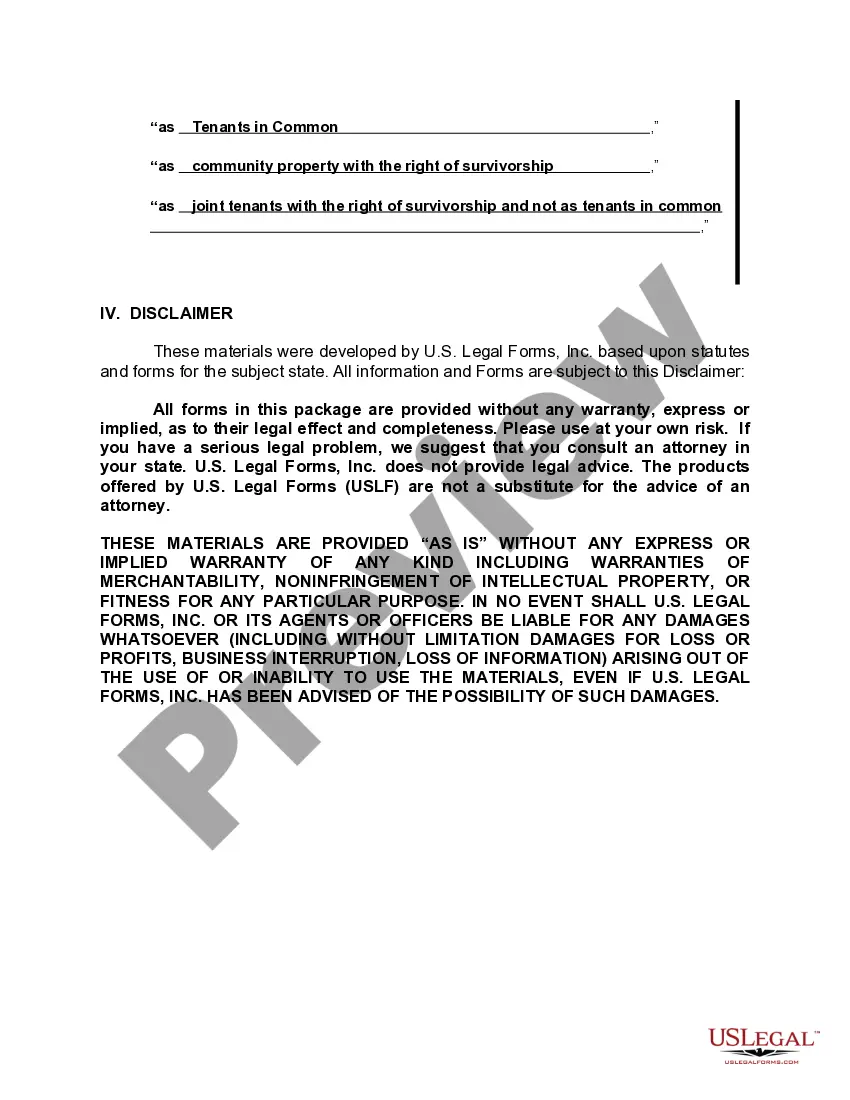
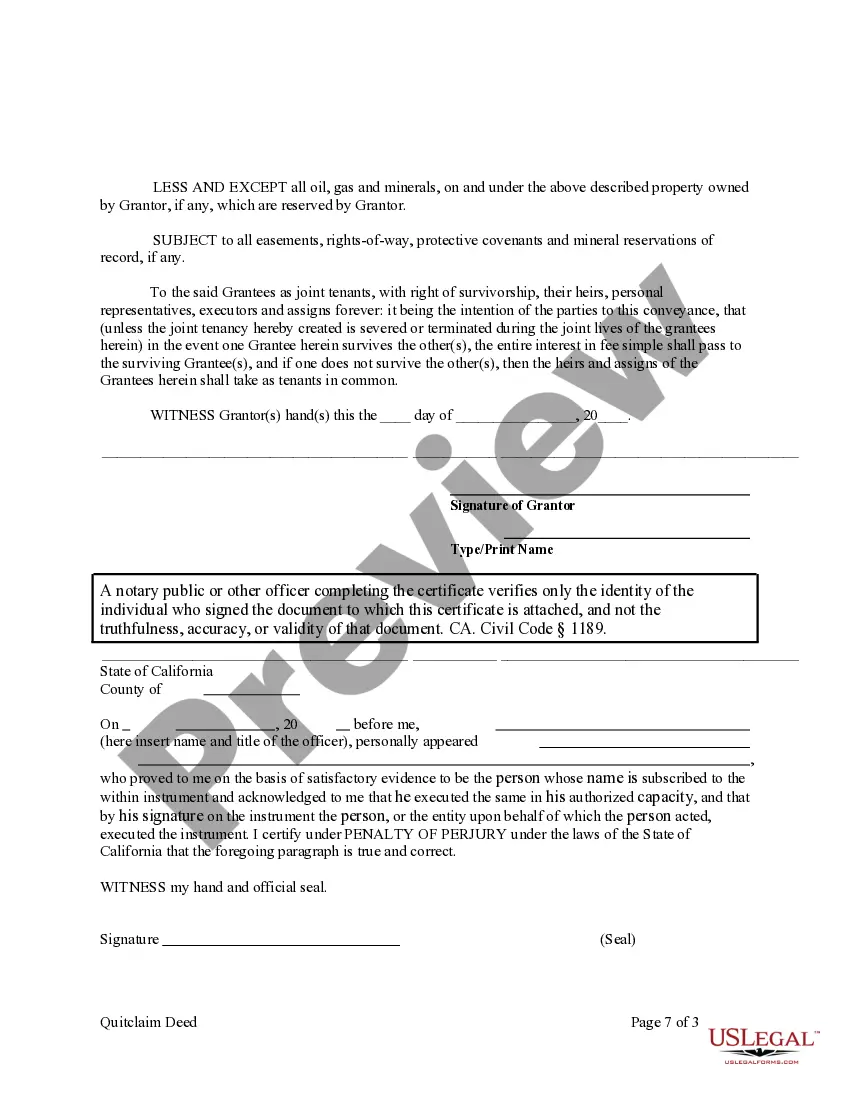
- Joint Tenancy Clause: Specifies that the Grantees will hold the property together with rights of survivorship, meaning ownership passes to the surviving Grantee upon death.
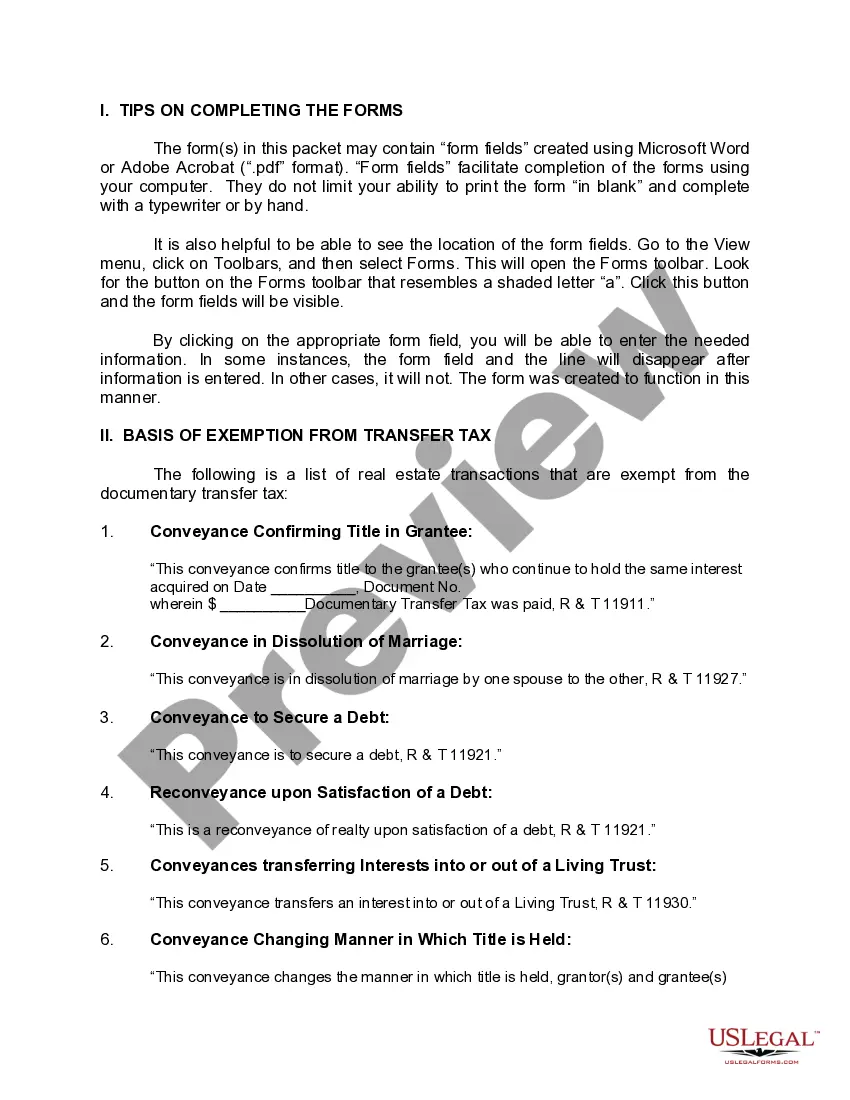
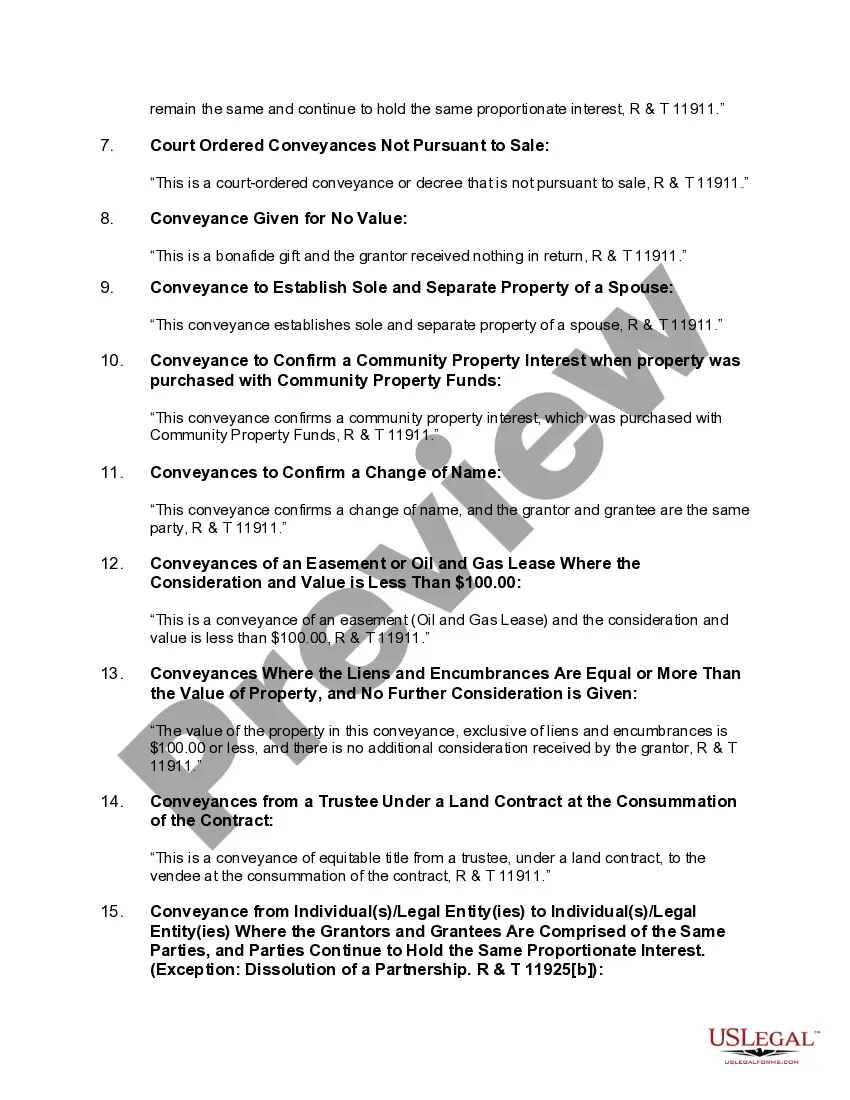
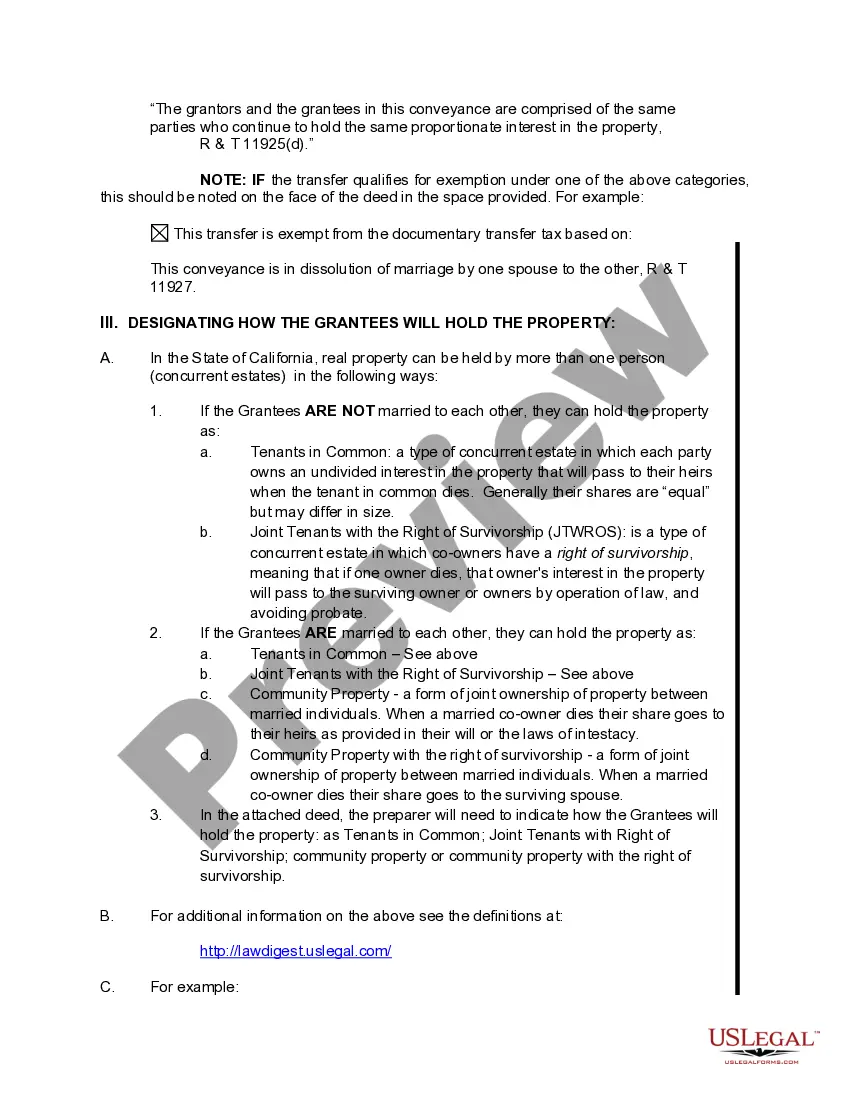
- Transfer Tax Exemption: Indicates if the deed qualifies for exemption under specific real estate transaction regulations.
- Signatures: Required signatures of the Grantor, certifying the conveyance of ownership.




Situations where this form applies
This deed is useful when an individual wishes to transfer property to two other individuals, particularly in family situations, such as parents giving property to children, or when co-owners decide to formalize joint ownership. It is also applicable in situations where the Grantor does not want to retain any rights to the property being transferred.
Who can use this document
- Individuals wishing to transfer property to two individuals.
- Friends or family members who want to establish joint ownership of a property.
- Parties involved in informal property transactions that do not require the complexities of a warranty deed.
How to prepare this document
- Identify the Grantor and the two Grantees by providing their full legal names.
- Describe the property being conveyed, including its address and legal description.
- Specify whether any oil, gas, or mineral rights are reserved by the Grantor.
- Indicate how the Grantees will hold the propertyâjoint tenants with the right of survivorship.
- Have the Grantor sign and date the deed to complete the transfer.
Notarization requirements for this form
This form does not typically require notarization unless specified by local law. It is advisable to check state-specific regulations to ensure compliance.
Get your form ready online
Our built-in tools help you complete, sign, share, and store your documents in one place.
Make edits, fill in missing information, and update formatting in US Legal Forms—just like you would in MS Word.
Download a copy, print it, send it by email, or mail it via USPS—whatever works best for your next step.
Sign and collect signatures with our SignNow integration. Send to multiple recipients, set reminders, and more. Go Premium to unlock E-Sign.
If this form requires notarization, complete it online through a secure video call—no need to meet a notary in person or wait for an appointment.
We protect your documents and personal data by following strict security and privacy standards.

Make edits, fill in missing information, and update formatting in US Legal Forms—just like you would in MS Word.

Download a copy, print it, send it by email, or mail it via USPS—whatever works best for your next step.

Sign and collect signatures with our SignNow integration. Send to multiple recipients, set reminders, and more. Go Premium to unlock E-Sign.

If this form requires notarization, complete it online through a secure video call—no need to meet a notary in person or wait for an appointment.

We protect your documents and personal data by following strict security and privacy standards.
Mistakes to watch out for
- Failing to accurately describe the property, which can lead to legal disputes.
- Omitting the reservation of rights for oil, gas, or minerals when applicable.
- Not having all parties sign the deed, which may invalidate the transfer.
Benefits of using this form online
- The convenience of downloading and completing the form at your own pace.
- Editable format allows users to enter specific information quickly and accurately.
- Access to reliable and legally compliant forms drafted by licensed attorneys.
Looking for another form?






Form popularity
FAQ
Typically, an attorney or a title company prepares a California Quitclaim Deed from Individual to Two Individuals in Joint Tenancy. They ensure that the document meets all state requirements and properly reflects the transfer of ownership. While it is possible for individuals to complete this process on their own, professional assistance helps avoid mistakes that could lead to legal challenges. At US Legal Forms, you can find templates and guidance to simplify the preparation process.
To add joint tenancy to a deed, you need to create a new deed that states your intention to hold the property with your co-owner. A California Quitclaim Deed from Individual to Two Individuals in Joint Tenancy is specifically designed for this purpose. Fill out the deed, sign it in front of a notary, and then file it with the relevant county office. This action ensures both parties share equal ownership and rights.
Yes, you can add someone to your deed in California without refinancing your mortgage. By utilizing a California Quitclaim Deed from Individual to Two Individuals in Joint Tenancy, you can transfer ownership while retaining your existing mortgage arrangement. This way, the new co-owner does not have to go through the refinancing process. Just ensure you file the deed promptly with your county.
You do not necessarily need a lawyer to add someone to a deed in California, but it can be beneficial to consult one if you're uncertain about the process. Using a California Quitclaim Deed from Individual to Two Individuals in Joint Tenancy simplifies the legal requirements. This deed is straightforward and designed for property title transfers. If the situation is complex, a lawyer can help offer guidance.
To add joint tenancy to a deed, you will need to create a new deed that specifies the joint tenancy arrangement. Using a California Quitclaim Deed from Individual to Two Individuals in Joint Tenancy is an effective method. This document outlines the intent for both individuals to hold the property together. Remember to file the new deed with your local county recorder to finalize the change.
To add a person to a deed in California, you typically need to fill out a California Quitclaim Deed from Individual to Two Individuals in Joint Tenancy. You can retrieve the proper forms online or through local offices. After filling out the deed, you must sign it in the presence of a notary public. Finally, file the executed deed with the county recorder’s office to make it official.
If one person wants to leave a joint tenancy in California, they can request to remove their name from the deed through a formal process. This step typically involves filing a California Quitclaim Deed from Individual to Two Individuals in Joint Tenancy, where the departing owner relinquishes their interest. It’s essential to communicate with all parties involved to ensure a smooth transition and prevent potential disputes. Understanding your options can lead to clearer ownership and a more harmonious arrangement.
One significant disadvantage of joint ownership is the potential for conflicts between co-owners. Disagreements regarding property use, sale, or maintenance can arise, potentially complicating relationships. Moreover, if one co-owner faces creditors, the entire property could be at risk, affecting all parties involved. To streamline ownership concerns, consider utilizing a California Quitclaim Deed from Individual to Two Individuals in Joint Tenancy, which can define ownership more clearly.
Joint tenancy in California requires that all owners have equal shares in the property and possess the right of survivorship. This means when one owner passes away, their share automatically transfers to the surviving owner(s). Additionally, all parties must take ownership at the same time, through the same deed, such as a California Quitclaim Deed from Individual to Two Individuals in Joint Tenancy. Knowing these rules is crucial for effective property management and estate planning.
In California, a joint tenancy can indeed complicate matters concerning a trust. If a property is held in joint tenancy, it generally takes precedence over the terms of a trust when it comes to ownership. Therefore, it's important to ensure that your intentions are clearly expressed in any estate planning documents you create. Utilizing a California Quitclaim Deed from Individual to Two Individuals in Joint Tenancy can help clarify the ownership structure and prevent confusion.