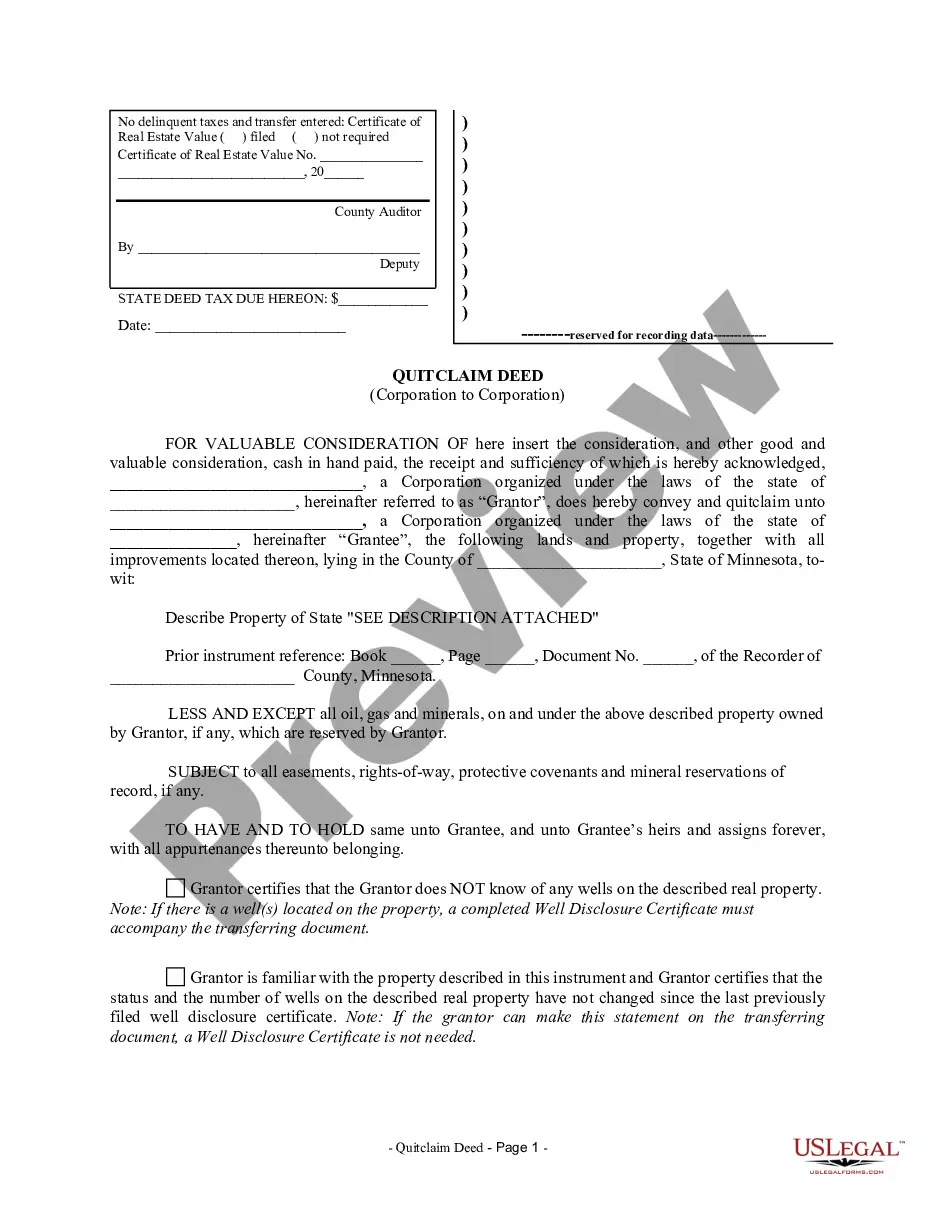
Arizona Release of Purchase Contract - Residential
About this form
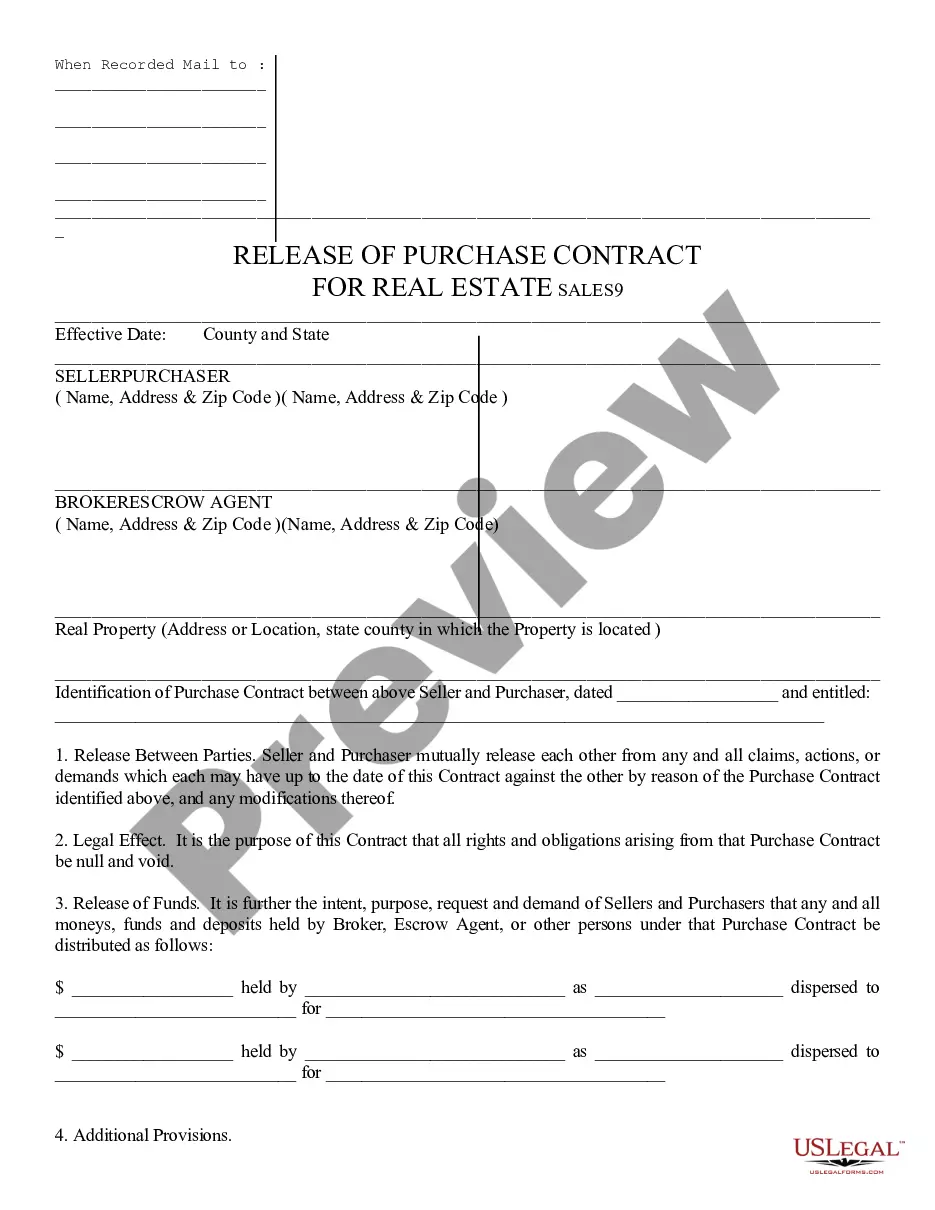
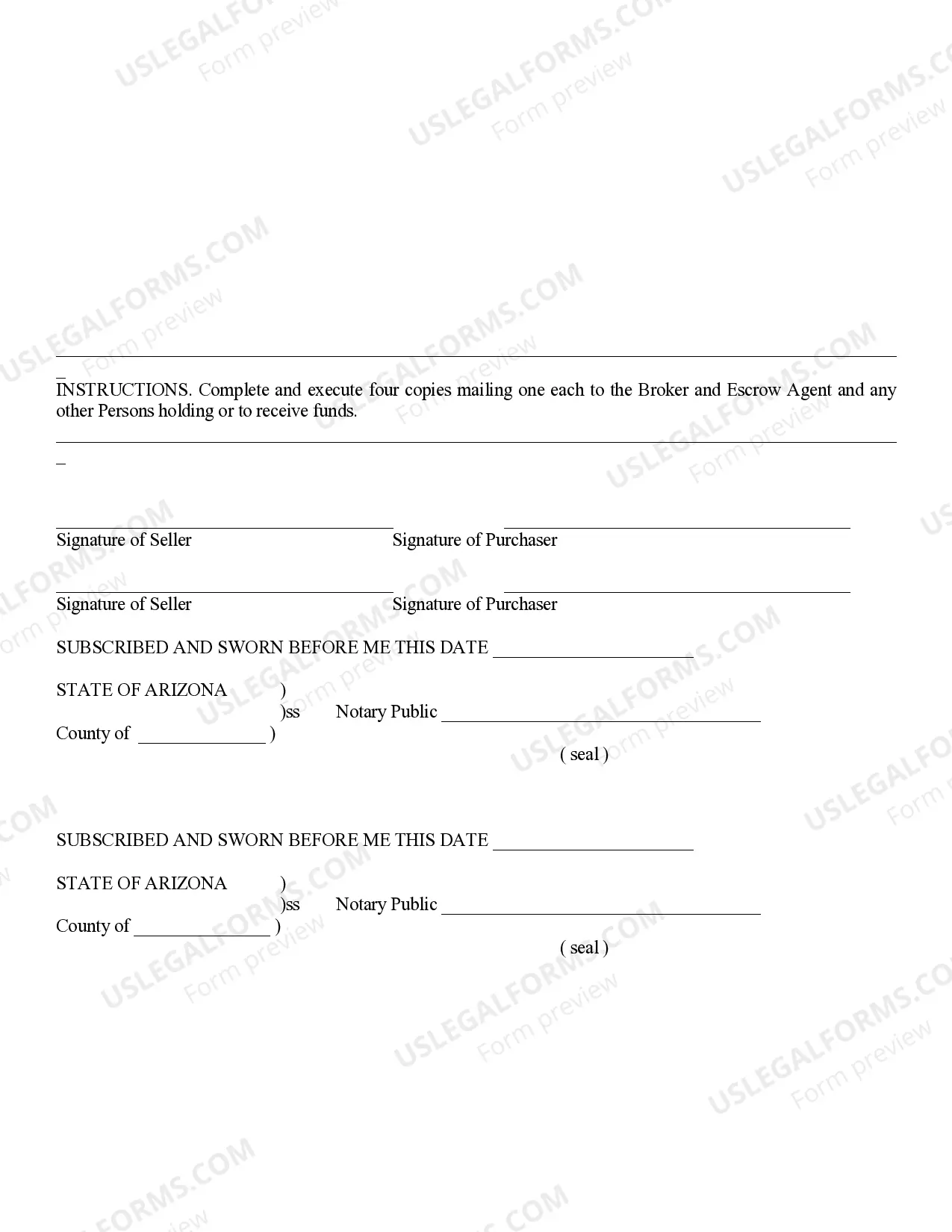
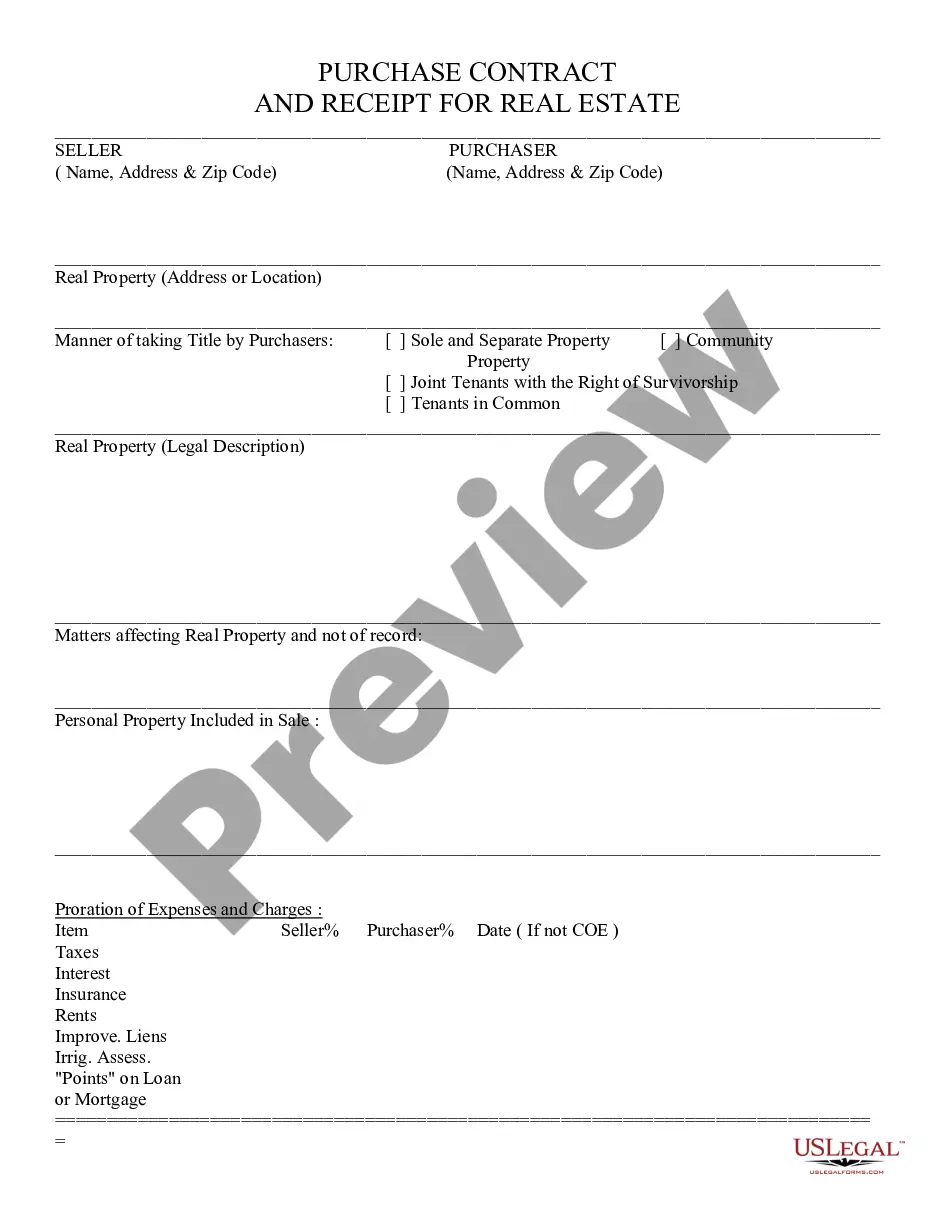
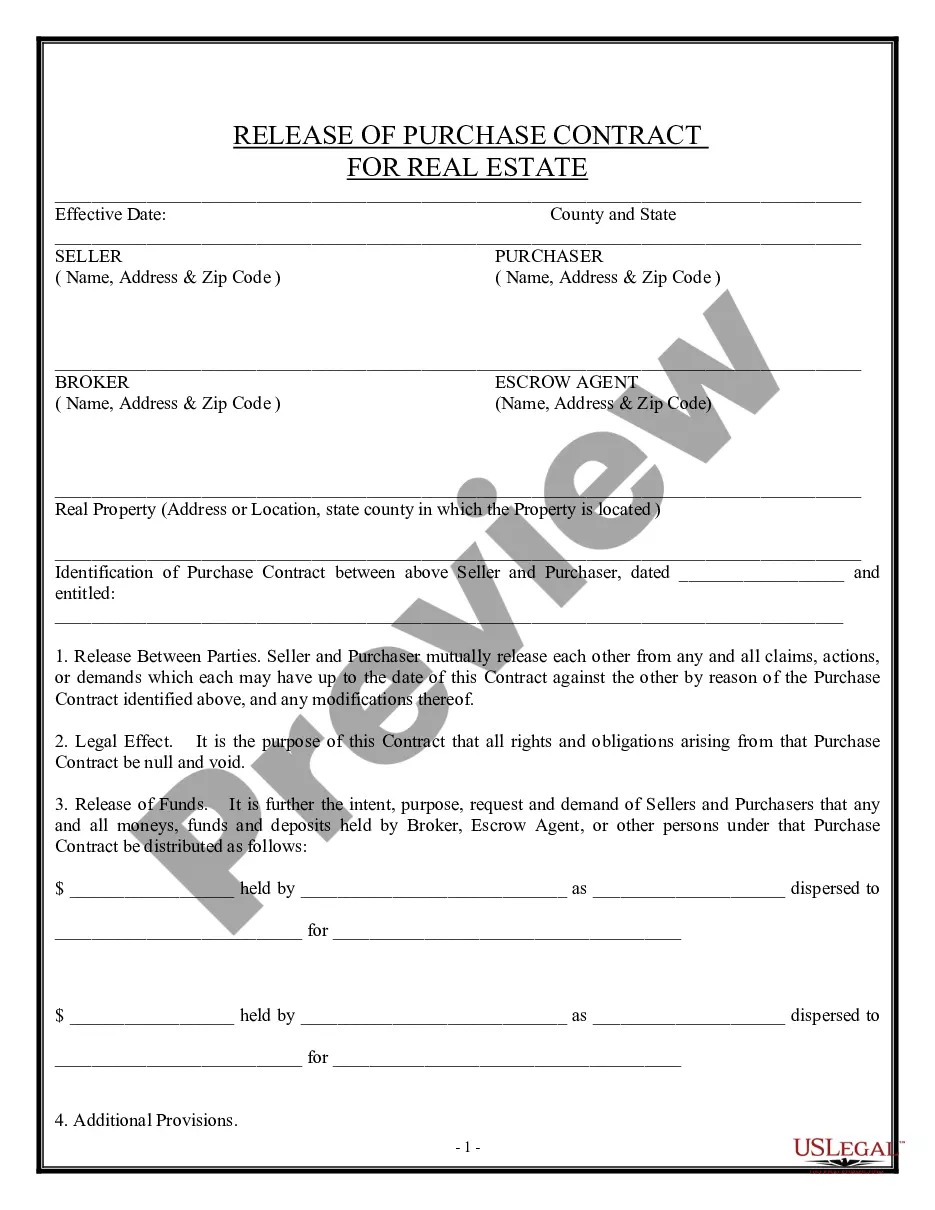
The Release of Purchase Contract - Residential is a legal document that nullifies all rights and obligations under a previously established purchase contract for a residential property. Both the seller and intended buyer are required to sign this document in front of a notary public. Its purpose is to formally release the parties from any further obligations and to clear any associated claims.
Key parts of this document
- Identification of the seller and buyer.
- Terms that declare the original purchase contract as null and void.
- Instructions for the release of any held funds or deposits.
- Provisions for additional conditions or agreements.
Common use cases
This form should be used when both the seller and buyer decide to terminate their existing purchase contract for a residential property. Circumstances may include failure to reach financing, changes in personal circumstances, or mutual agreement to cancel the purchase for any reason.
Who this form is for
- Home sellers who wish to formally cancel a sale agreement.
- Potential buyers who can no longer proceed with a home purchase.
- Real estate agents involved in the transaction.
- Parties seeking to ensure legal protection when releasing contractual obligations.
Steps to complete this form
- Identify the parties involved: seller and buyer.
- Clearly state the details of the original purchase contract being released.
- Specify the terms under which held funds or deposits will be distributed.
- Have both parties sign the document in front of a notary public.
- Distribute copies of the executed form to all relevant parties, including brokers or escrow agents.
Is notarization required?
In most cases, this form does not require notarization. However, some jurisdictions or signing circumstances might. US Legal Forms offers online notarization powered by Notarize, accessible 24/7 for a quick, remote process.
Get your form ready online
Our built-in tools help you complete, sign, share, and store your documents in one place.
Make edits, fill in missing information, and update formatting in US Legal Forms—just like you would in MS Word.
Download a copy, print it, send it by email, or mail it via USPS—whatever works best for your next step.
Sign and collect signatures with our SignNow integration. Send to multiple recipients, set reminders, and more. Go Premium to unlock E-Sign.
If this form requires notarization, complete it online through a secure video call—no need to meet a notary in person or wait for an appointment.
We protect your documents and personal data by following strict security and privacy standards.

Make edits, fill in missing information, and update formatting in US Legal Forms—just like you would in MS Word.

Download a copy, print it, send it by email, or mail it via USPS—whatever works best for your next step.

Sign and collect signatures with our SignNow integration. Send to multiple recipients, set reminders, and more. Go Premium to unlock E-Sign.

If this form requires notarization, complete it online through a secure video call—no need to meet a notary in person or wait for an appointment.

We protect your documents and personal data by following strict security and privacy standards.
Mistakes to watch out for
- Failing to get the signatures notarized, which can invalidate the agreement.
- Not completing the fields regarding the release of held funds.
- Assuming that the form is unnecessary if the buyer and seller verbally agree to cancel.
- Neglecting to provide copies to all parties involved.
Benefits of using this form online
- Immediate access to the document for quick completion and download.
- Editable formats (Word and Rich Text) allow for easy customization.
- Legal forms drafted by licensed attorneys ensure reliability and compliance.
Looking for another form?
Form popularity
FAQ
Changing your mind after signing a real estate contract is possible under certain conditions, but usually involves consequences. The contract might allow for a brief rescission period, where you can cancel without penalty. It is important to read the contract carefully and consult services like US Legal Forms to ensure you are making informed decisions.
To be perfectly clear, you can always back out of a real estate purchase contract at any time before closing. There's no way the seller can force you to actually purchase the home. However, if there's no valid reason for backing out as defined in the contract, you'll likely lose your earnest deposit.
Every real estate contract meets four requirements to be valid:The contract must contain an offer and an acceptance. The purpose of the agreement must be legal. There must be an exchange of things of value (usually, it's money for property)
The identity of the buyer and of the seller. A sufficient description of the real property to be sold. The sale price, or consideration to be paid for the real property by the buyer. The amount of any earnest money deposit to be paid by the buyer.
At the top of the page, you should center the title between the left- and right-hand margins. Title your document something like Purchase and Sale Agreement or Agreement to Purchase Real Estate. Identify the parties to the sale. You need to identify the purchaser and the seller at the start of your agreement.
A real estate deal can take a turn for the worst if the contract is not carefully written to include all the legal stipulations for both the buyer and seller.You can write your own real estate purchase agreement without paying any money as long as you include certain specifics about your home.
Offer price. Amount of earnest money. Amount of down payment. Closing date. Personal property included. Seller contribution to Buyer closing costs, if any. Escrow company. Home warranty.
Identifying the Address and Parties Involved. First and foremost, a purchase agreement must outline the property at stake. Price and Terms. Closing Date and Costs. Real Estate Taxes and Special Assessments. Homestead Classification. Delivery, Acceptance Date, and Offer Expiration. Default. Counter Offer.
If you want out of a real estate contract and don't have any contingencies available, you can breach the contract.The seller could also decide to sue you for breach of contract. Some real estate contracts have a liquidated damages clause that states the maximum the seller can keep if the buyers breach the contract.
In real estate, a purchase agreement is a binding contract between a buyer and seller that outlines the details of a home sale transaction. The buyer will propose the conditions of the contract, including their offer price, which the seller will then either agree to, reject or negotiate.Real estate purchase contract.