Arizona Purchase Contract and Receipt - Residential
Understanding this form
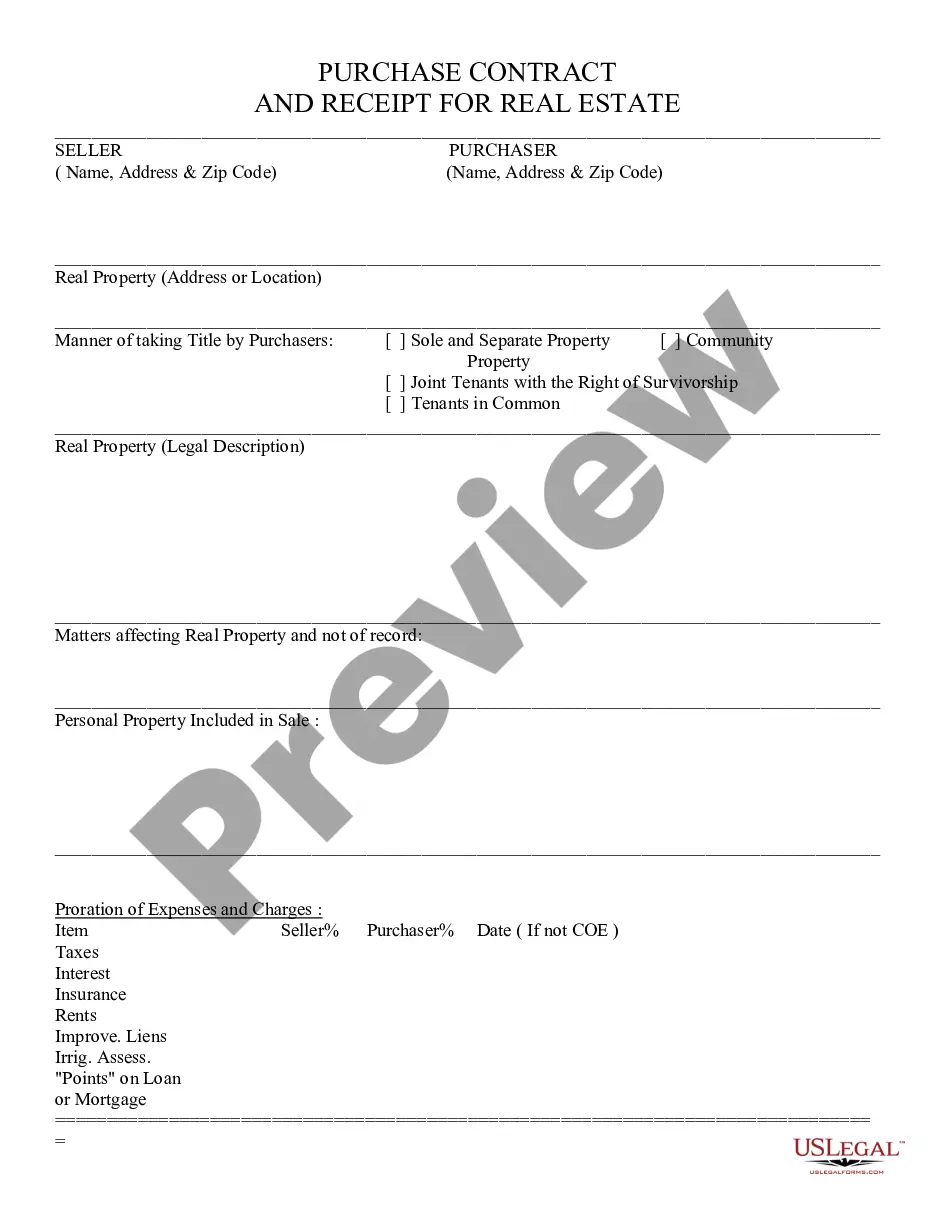
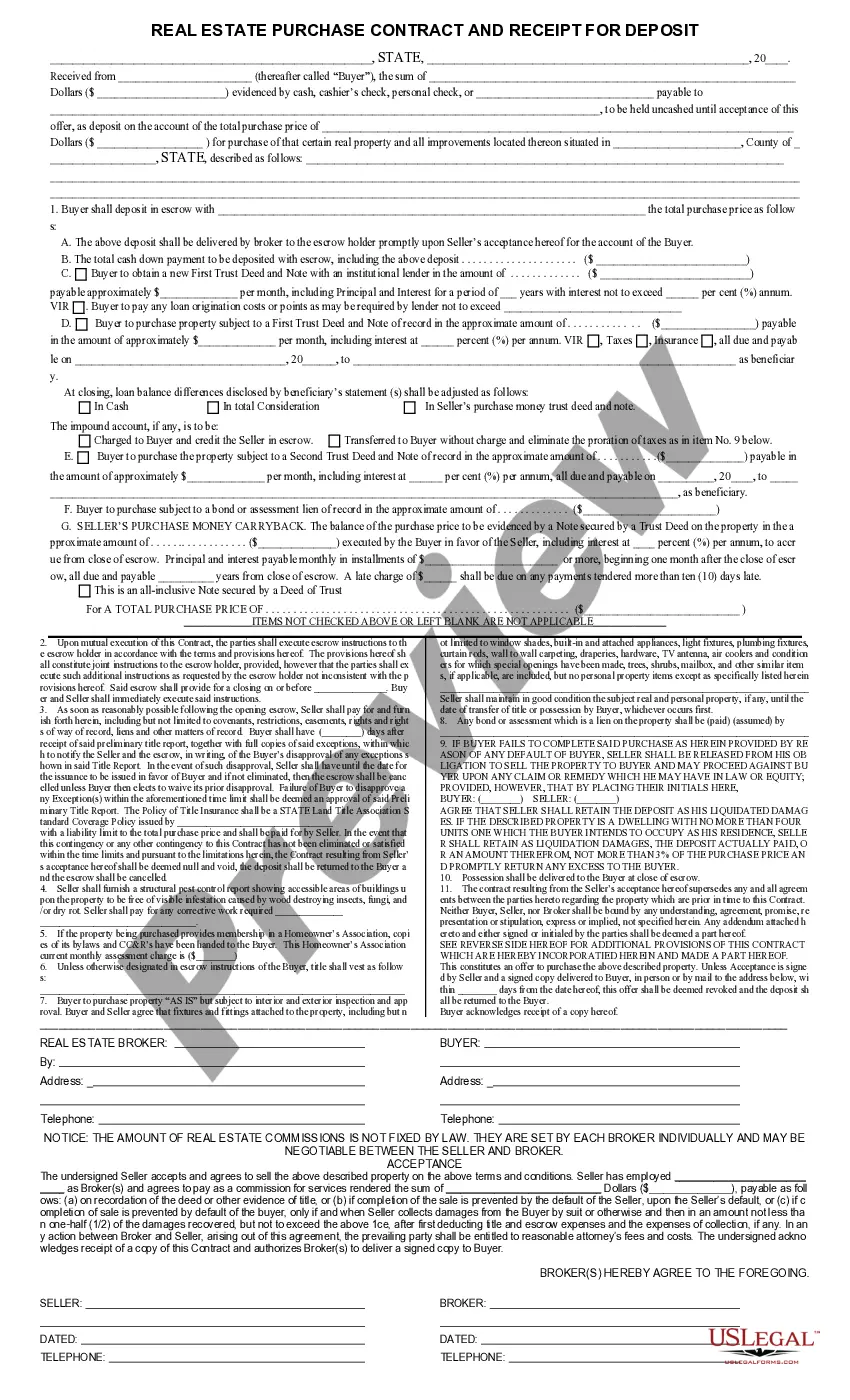
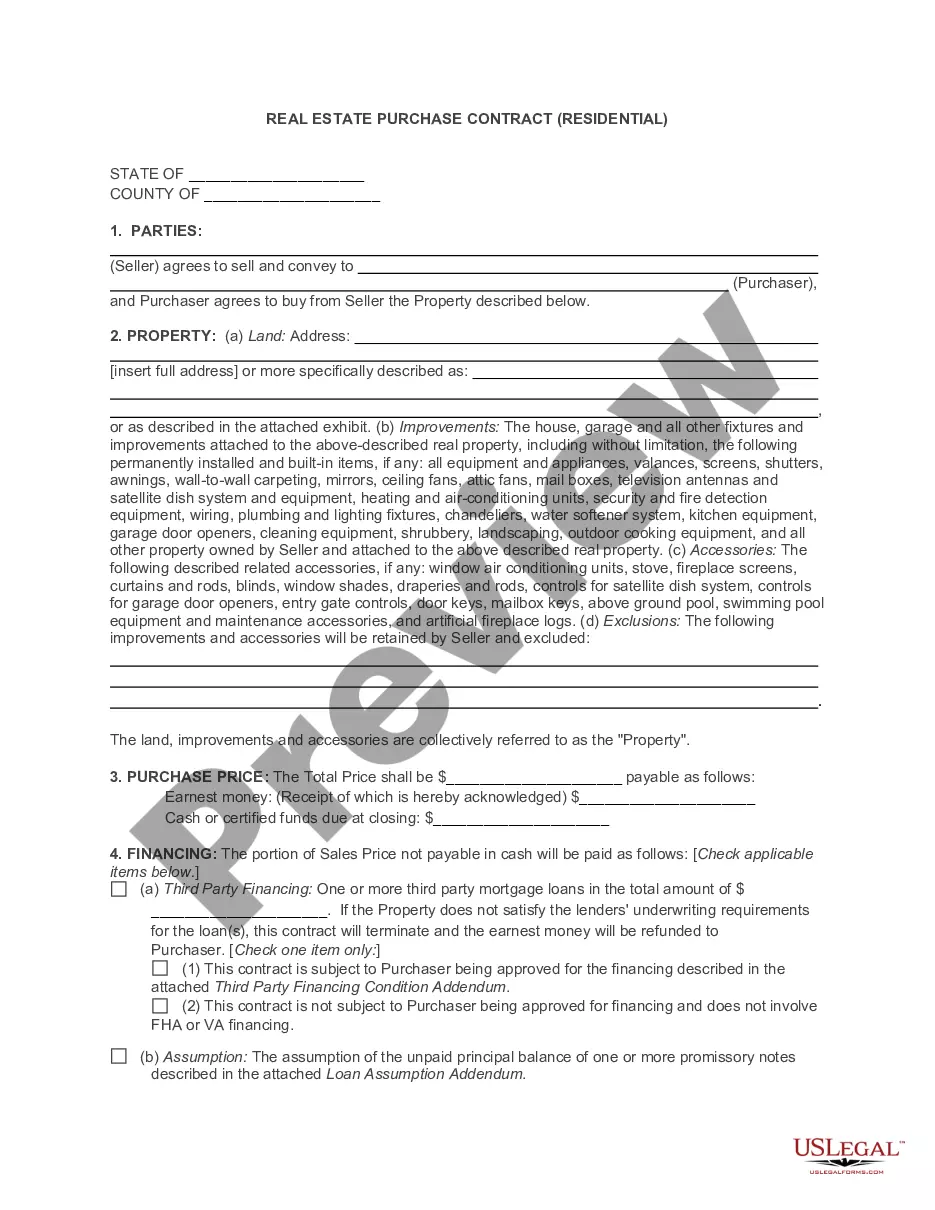
The Purchase Contract and Receipt - Residential is a legal document that outlines the obligations and details for both the buyer and the seller involved in the purchase of residential property. Unlike general sales agreements, this form is specifically tailored for real estate transactions and includes provisions such as title transfer and essential timelines. Both parties must sign this contract in front of a Notary Public, confirming their understanding of their commitments regarding the property purchase.
What’s included in this form
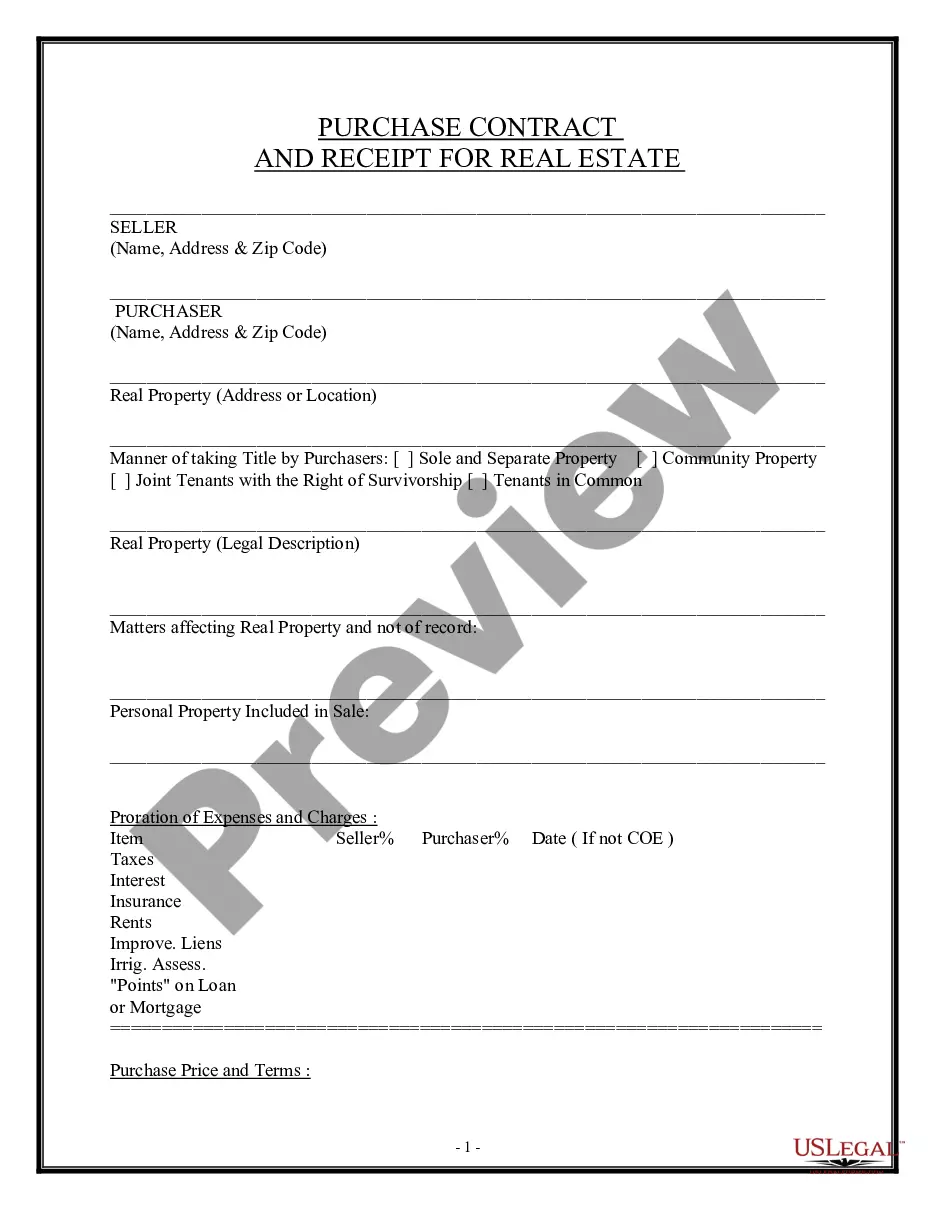
- Seller and purchaser information, including contact details.
- Detailed description of the real property being purchased.
- Terms regarding the proration of expenses and charges related to the property.
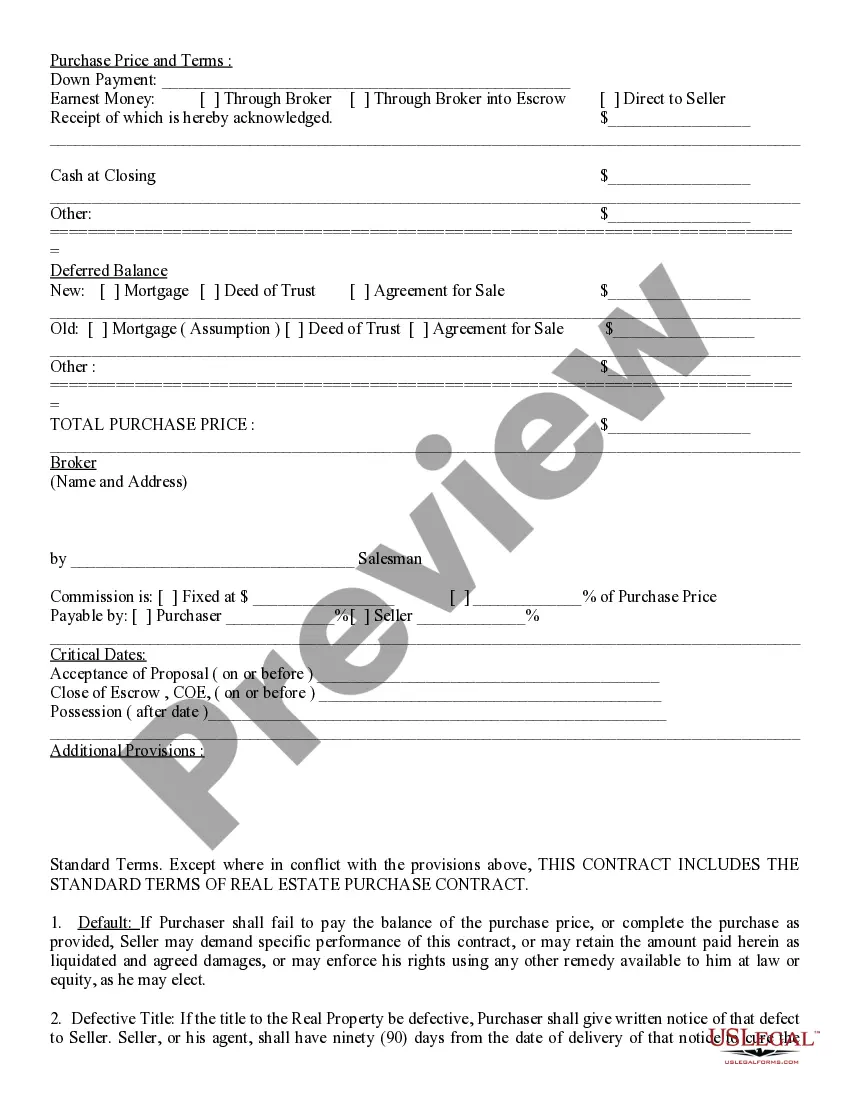
- Specifics about the purchase price, down payment, and payment method.
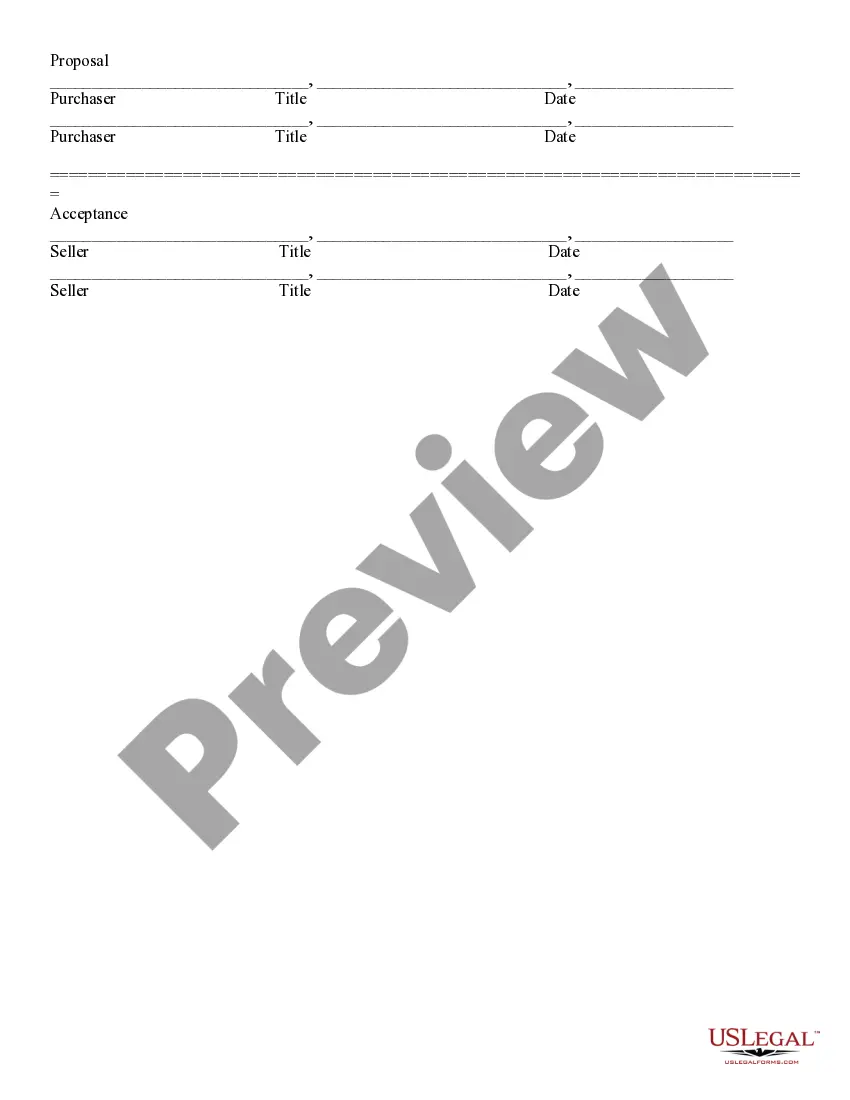
- Critical dates for the acceptance of the proposal and the closing of escrow.
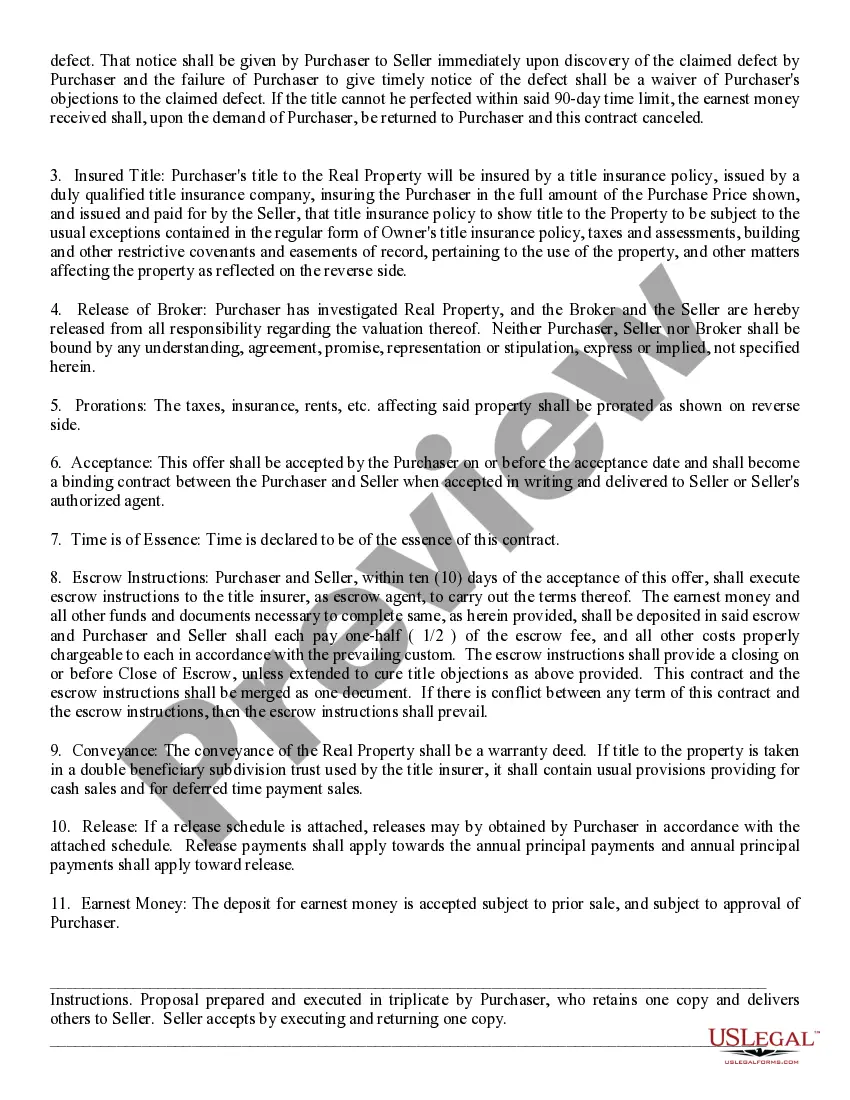
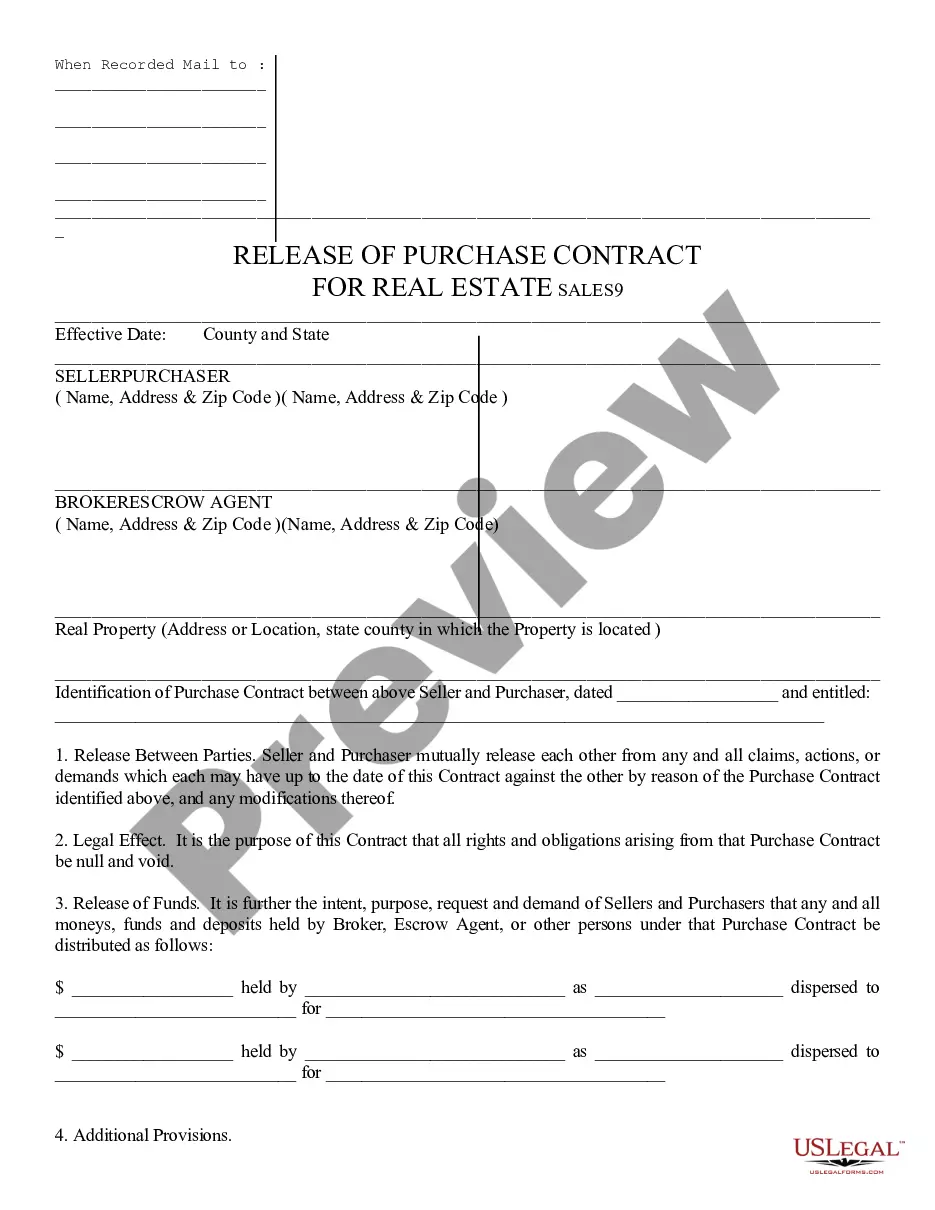
- Additional provisions regarding default and title issues.
Common use cases
This form should be used when an individual or entity wishes to purchase a residential property. It is applicable in situations such as buying a home from a private seller, negotiating terms with a real estate broker, or when both parties have settled on a price and terms for the sale. The contract ensures that all aspects of the transaction are clearly documented and legally binding.
Who needs this form
- Individuals looking to purchase residential property.
- Real estate investors purchasing residential properties.
- Property sellers who require a formal contract for transaction documentation.
- Real estate agents assisting clients in completing property transactions.
Completing this form step by step
- Identify the parties involved: the seller and purchaser, along with their contact information.
- Provide the legal description and physical address of the property being sold.
- Specify the manner of title taking, addressing any joint ownership or separate ownership details.
- Detail the purchase price, including any down payment and terms of payment.
- Enter critical dates for proposal acceptance and closing of escrow.
- Both parties should sign the document in front of a Notary Public to validate the agreement.
Does this form need to be notarized?
Yes, this form must be notarized to be legally valid. Both the buyer and seller need to sign this document in front of a Notary Public to confirm their agreement and understanding of the terms outlined in the contract. US Legal Forms offers integrated online notarization for added convenience, allowing for secure video calls anytime.
Get your form ready online
Our built-in tools help you complete, sign, share, and store your documents in one place.
Make edits, fill in missing information, and update formatting in US Legal Forms—just like you would in MS Word.
Download a copy, print it, send it by email, or mail it via USPS—whatever works best for your next step.
Sign and collect signatures with our SignNow integration. Send to multiple recipients, set reminders, and more. Go Premium to unlock E-Sign.
If this form requires notarization, complete it online through a secure video call—no need to meet a notary in person or wait for an appointment.
We protect your documents and personal data by following strict security and privacy standards.

Make edits, fill in missing information, and update formatting in US Legal Forms—just like you would in MS Word.

Download a copy, print it, send it by email, or mail it via USPS—whatever works best for your next step.

Sign and collect signatures with our SignNow integration. Send to multiple recipients, set reminders, and more. Go Premium to unlock E-Sign.

If this form requires notarization, complete it online through a secure video call—no need to meet a notary in person or wait for an appointment.

We protect your documents and personal data by following strict security and privacy standards.
Common mistakes
- Failing to include complete seller and purchaser information.
- Not providing a clear legal description of the property.
- Leaving the purchase price blank or improperly stating payment terms.
- Missing signatures or notarization, making the contract unenforceable.
Benefits of using this form online
- Convenience of downloading and customizing the form at any time.
- Access to a legally vetted template drafted by licensed attorneys.
- Ability to easily edit terms as needed before finalizing the agreement.
- Immediate access, allowing for quick execution of the purchase process.
Legal use & context
- The Purchase Contract creates a binding agreement between the buyer and seller, protecting the rights of both parties.
- Properly filled out and signed contracts are enforceable in a court of law, assuming no illegal terms are included.
- It is essential to follow state-specific requirements to ensure the transaction is legally compliant.
Main things to remember
- The Purchase Contract and Receipt - Residential is crucial for formalizing a residential property purchase.
- Both parties must ensure all details are accurate and complete to avoid future disputes.
- Notarization is required to validate the agreement.
- Using this form online provides ease and immediate access to necessary legal documentation.
Looking for another form?
Form popularity
FAQ
In real estate, a purchase agreement is a binding contract between a buyer and seller that outlines the details of a home sale transaction. The buyer will propose the conditions of the contract, including their offer price, which the seller will then either agree to, reject or negotiate.Real estate purchase contract.
A real estate deal can take a turn for the worst if the contract is not carefully written to include all the legal stipulations for both the buyer and seller.You can write your own real estate purchase agreement without paying any money as long as you include certain specifics about your home.
A real estate deal can take a turn for the worst if the contract is not carefully written to include all the legal stipulations for both the buyer and seller.You can write your own real estate purchase agreement without paying any money as long as you include certain specifics about your home.
1 Access The Desired Real Estate Template To Record A Purchase Agreement. 2 Introduce The Agreement, Seller, Buyer, And Concerned Property. 3 Define The Basic Terms Of The Real Estate Purchase. 4 Record Any Property The Buyer Must Sell To Complete This Purchase.
Buyer's Inspection Contingency. Essentially, this contingency conditions the closing on the buyer receiving and being happy with the result of one or more home inspections. Financing Contingency. Insurance-Related Contingencies. Appraisal Contingency. Other Contingencies.
Identifying the Address and Parties Involved. First and foremost, a purchase agreement must outline the property at stake. Price and Terms. Closing Date and Costs. Real Estate Taxes and Special Assessments. Homestead Classification. Delivery, Acceptance Date, and Offer Expiration. Default. Counter Offer.
Buyer and seller information. Property details. Pricing and financing. Fixtures and appliances included/excluded in the sale. Closing and possession dates. Earnest money deposit amount. Closing costs and who is responsible for paying.
At the top of the page, you should center the title between the left- and right-hand margins. Title your document something like Purchase and Sale Agreement or Agreement to Purchase Real Estate. Identify the parties to the sale. You need to identify the purchaser and the seller at the start of your agreement.
Offer price. Amount of earnest money. Amount of down payment. Closing date. Personal property included. Seller contribution to Buyer closing costs, if any. Escrow company. Home warranty.