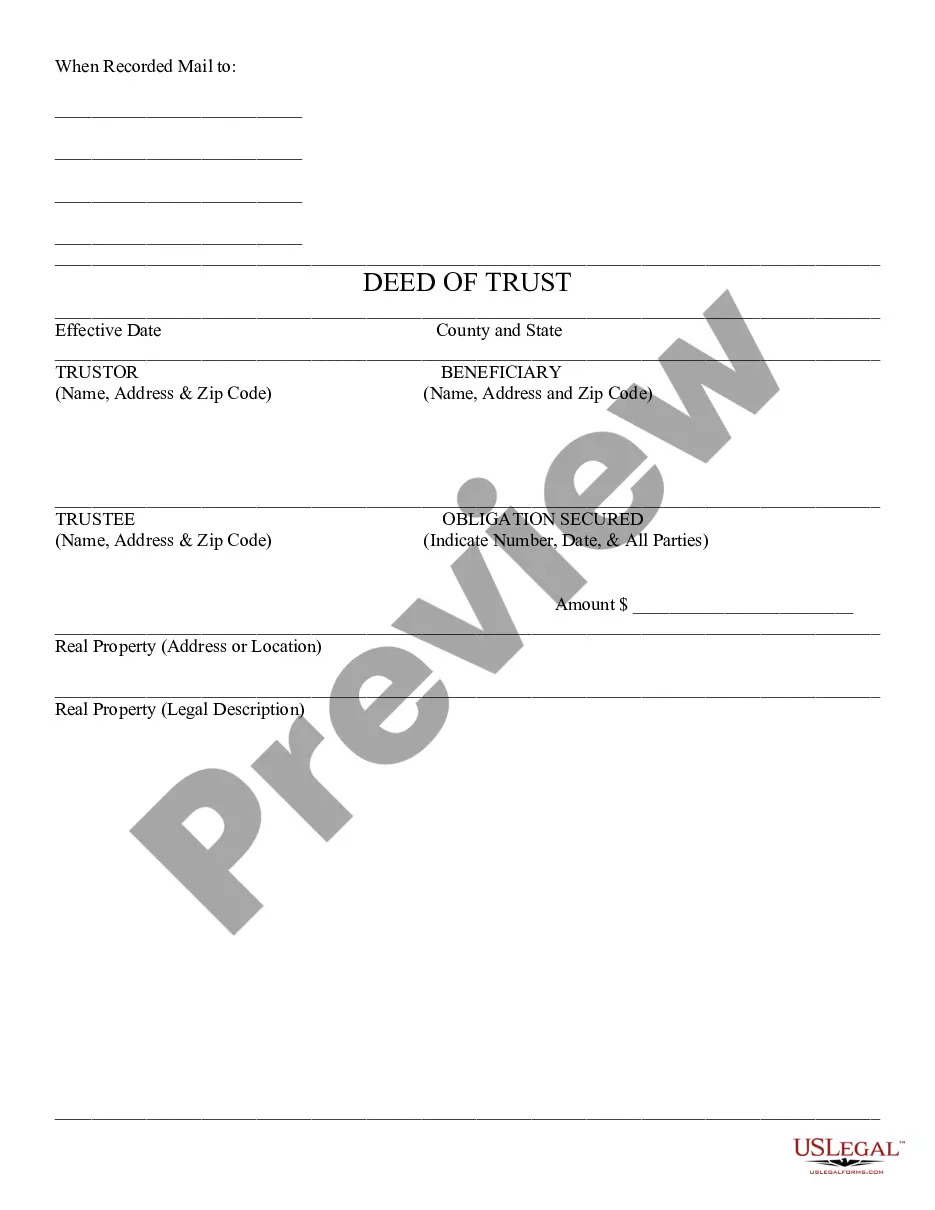
Arizona Deed of Trust
About this form
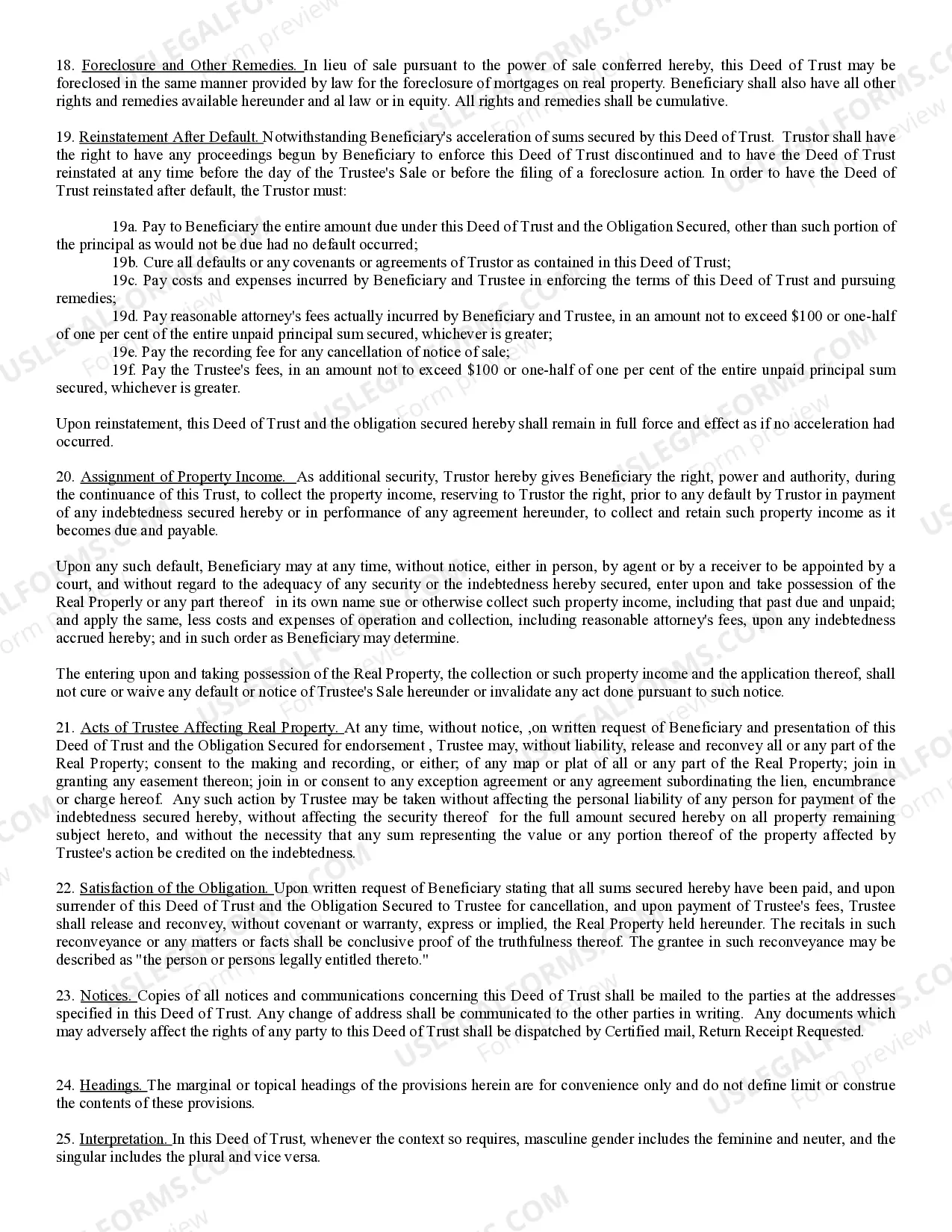
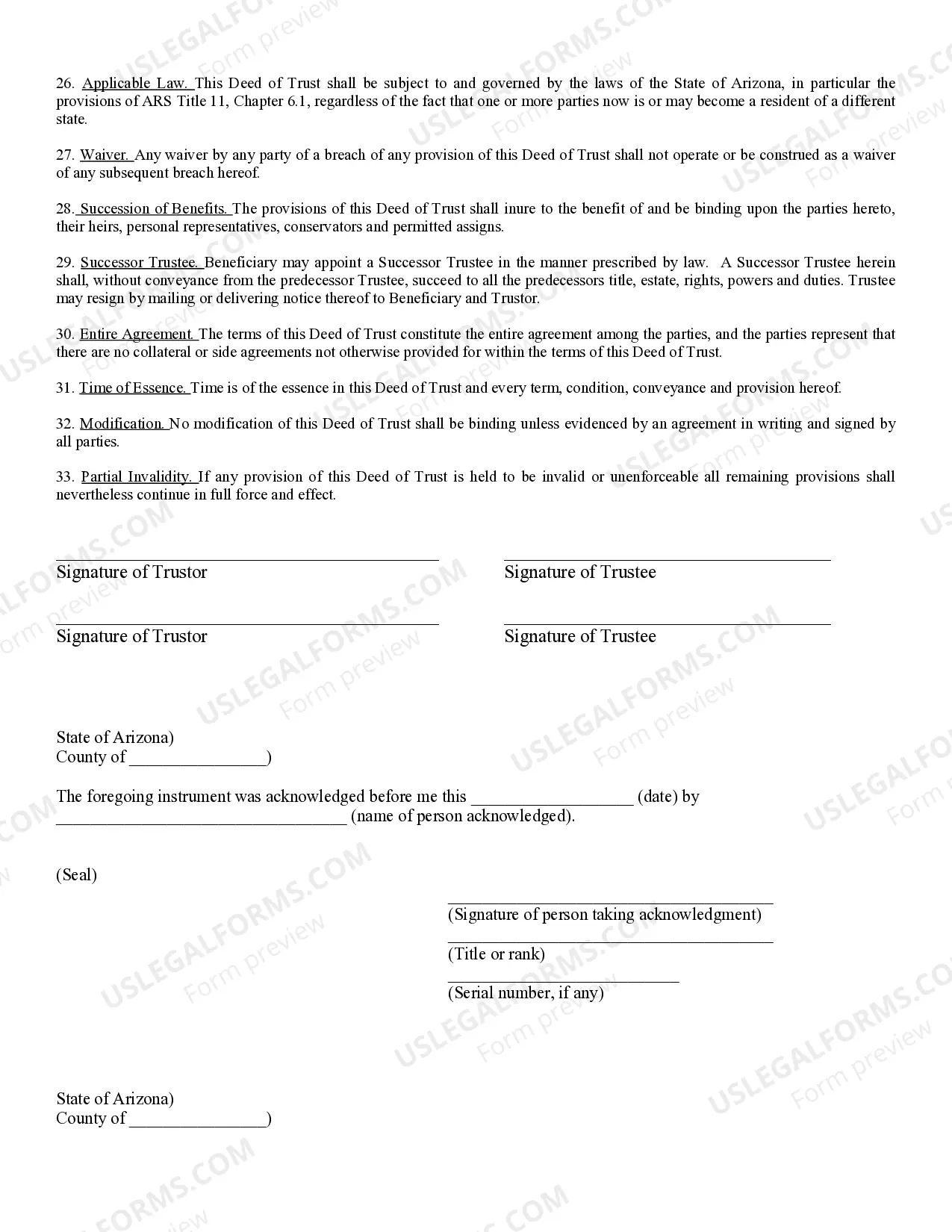
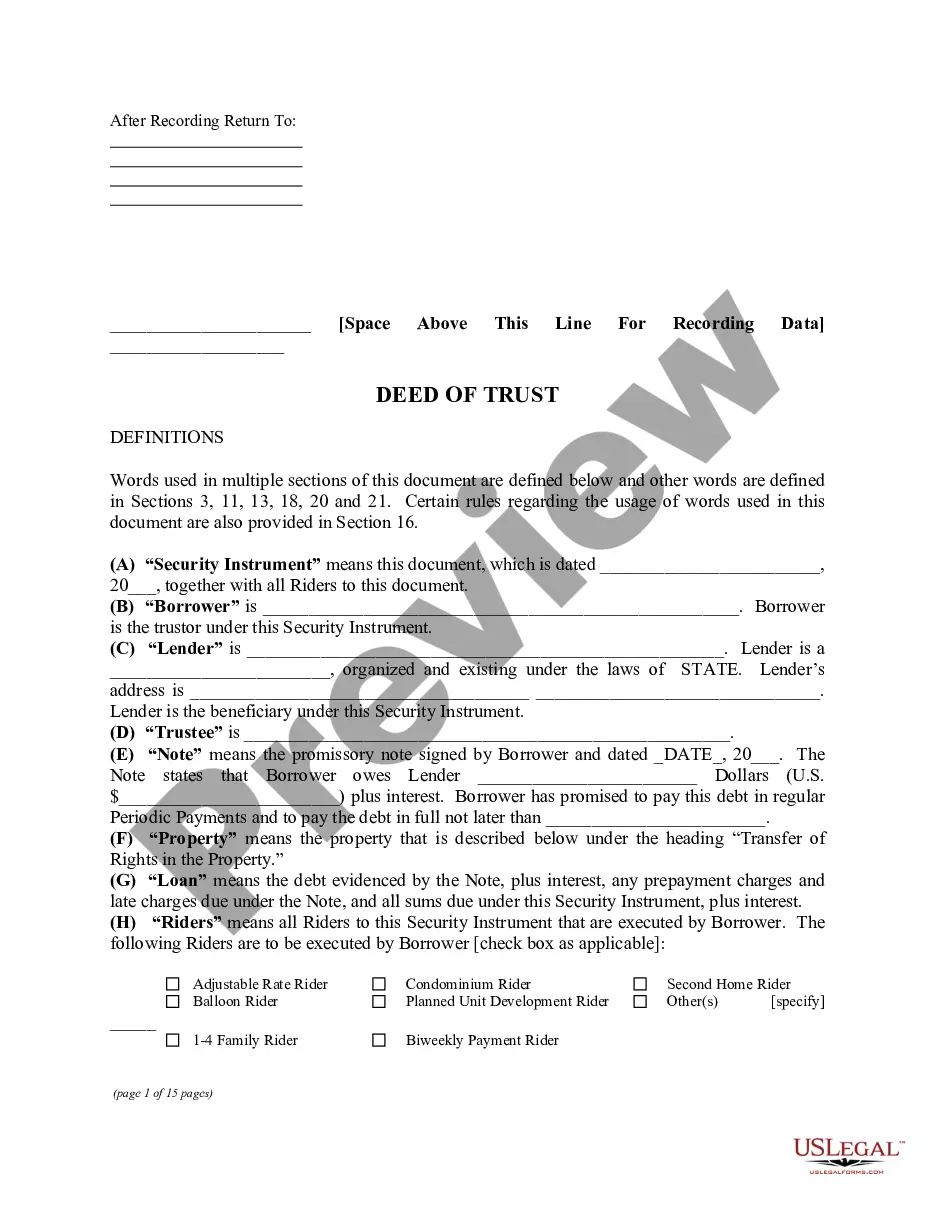
A Deed of Trust is a legal document used in real estate transactions to secure a loan with real property. In this form, the borrower (Trustor) transfers the title of the property to a third party (Trustee) who holds it as security for the loan until it is paid off. This type of deed differs from a mortgage in that it involves three parties instead of two, ensuring that the lender has a legal claim over the property if the borrower defaults.
Form components explained
- Effective date and location of the deed
- Identification of the Trustor, Beneficiary, and Trustee
- Description of the real property being secured
- Details on the obligation secured, including amount and payment terms
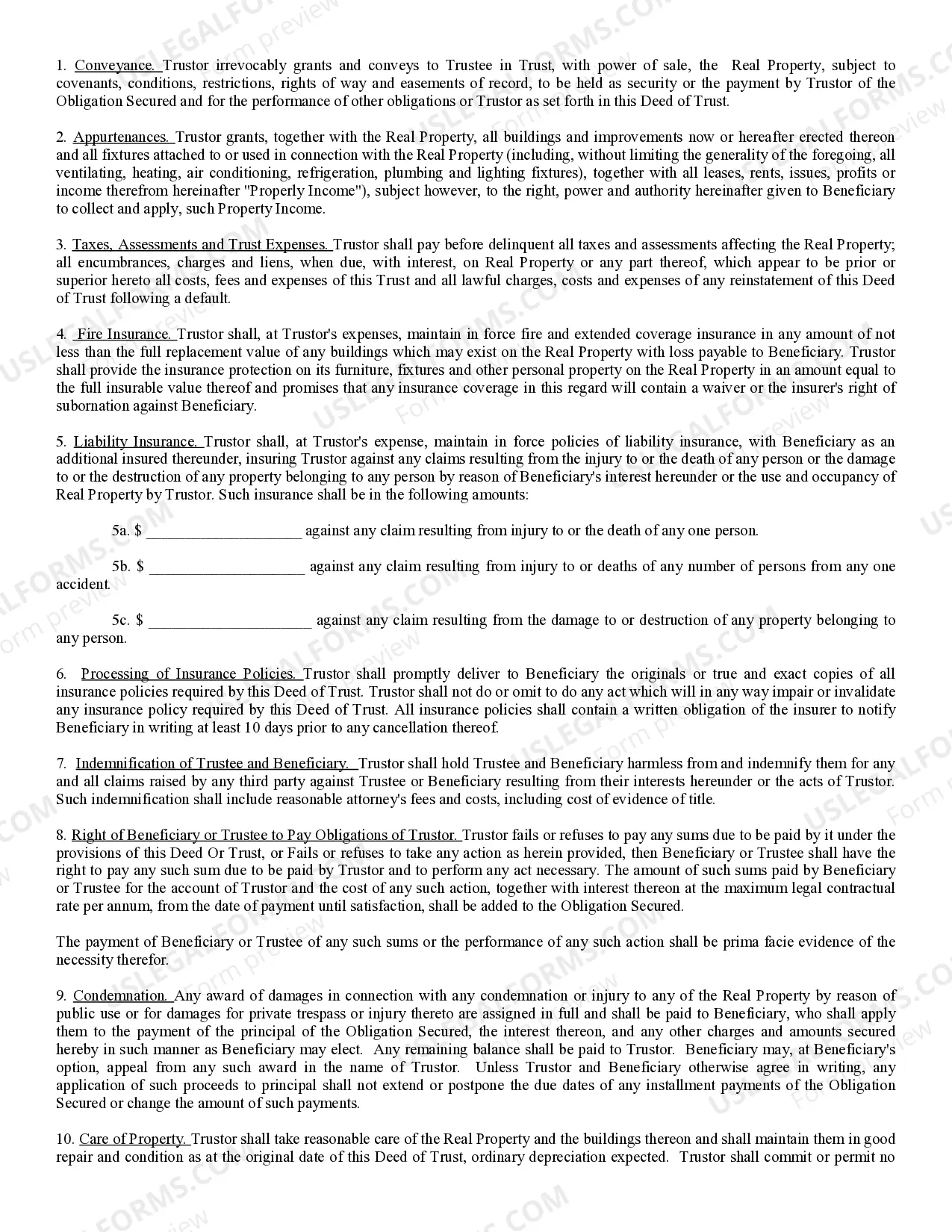
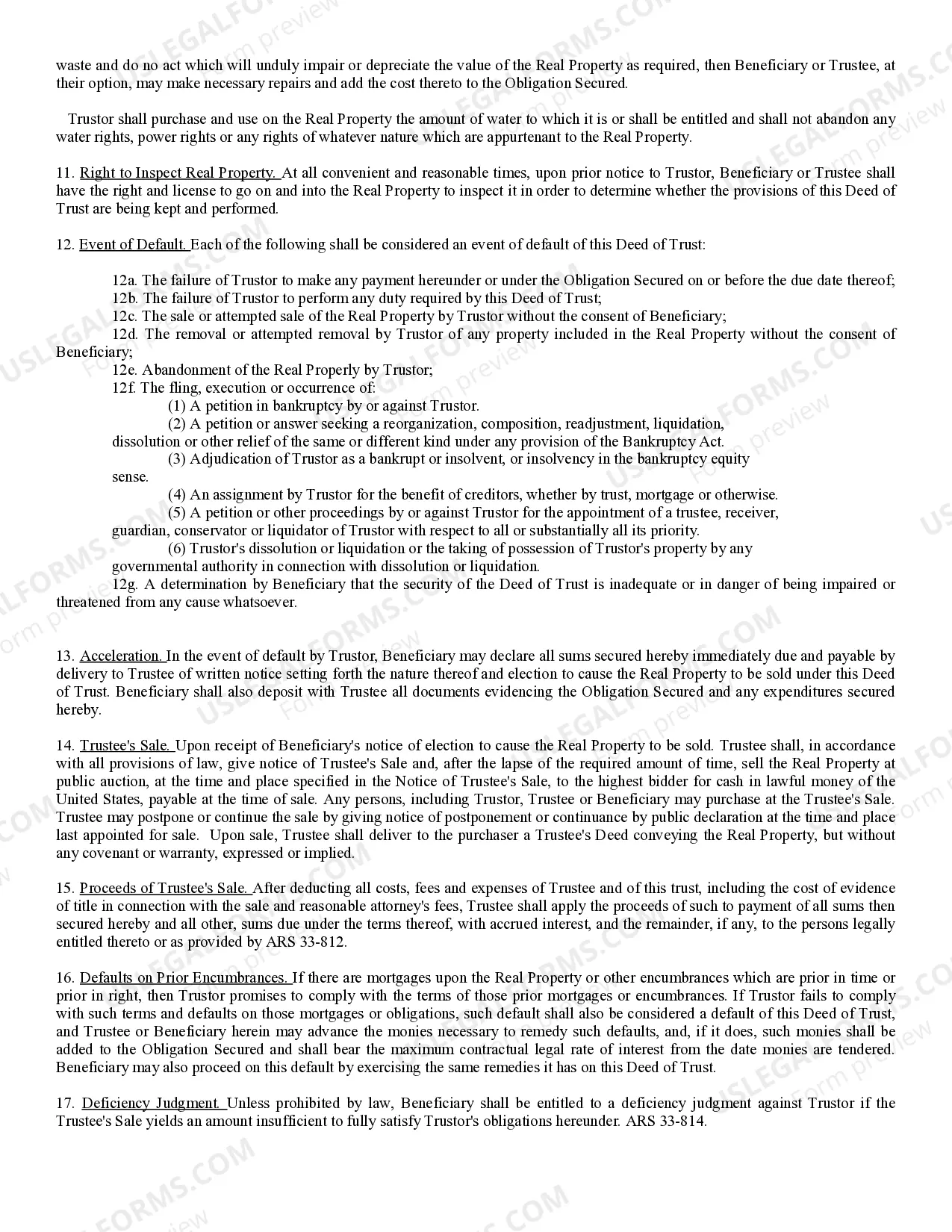
- Clauses related to taxes, insurance, and maintenance responsibilities
- Conditions defining events of default and remedies available to the Beneficiary




When to use this form
This Deed of Trust should be used when securing a loan with real estate as collateral. It is relevant in scenarios such as purchasing a home, refinancing existing mortgages, or consolidating debts. In these cases, the buyer will need to provide assurance to the lender that the property will serve as security for repayment of the loan.
Who should use this form
This form is suitable for:
- Homebuyers seeking financing to purchase property
- Borrowers refinancing mortgages with new lenders
- Lenders looking to secure their interest in real estate
- Real estate investors using property as collateral for loans
How to complete this form
- Identify the parties involved: Trustor (borrower), Beneficiary (lender), and Trustee.
- Provide the effective date and the county and state of the property.
- Describe the real property and indicate the obligation secured, including the amount.
- Fill in details related to taxes, insurance, and responsibilities regarding the property.
- Both Trustor and Trustee must sign the form in the presence of a notary public.
Is notarization required?
This form must be notarized to be legally valid. US Legal Forms provides secure online notarization powered by Notarize, allowing you to complete the process through a verified video call.
Get your form ready online
Our built-in tools help you complete, sign, share, and store your documents in one place.
Make edits, fill in missing information, and update formatting in US Legal Forms—just like you would in MS Word.
Download a copy, print it, send it by email, or mail it via USPS—whatever works best for your next step.
Sign and collect signatures with our SignNow integration. Send to multiple recipients, set reminders, and more. Go Premium to unlock E-Sign.
If this form requires notarization, complete it online through a secure video call—no need to meet a notary in person or wait for an appointment.
We protect your documents and personal data by following strict security and privacy standards.

Make edits, fill in missing information, and update formatting in US Legal Forms—just like you would in MS Word.

Download a copy, print it, send it by email, or mail it via USPS—whatever works best for your next step.

Sign and collect signatures with our SignNow integration. Send to multiple recipients, set reminders, and more. Go Premium to unlock E-Sign.

If this form requires notarization, complete it online through a secure video call—no need to meet a notary in person or wait for an appointment.

We protect your documents and personal data by following strict security and privacy standards.
Mistakes to watch out for
- Failing to provide complete and accurate property descriptions.
- Not signing the deed in front of a notary public, if required.
- Leaving out essential details regarding the obligation secured.
- Failing to provide current addresses for all parties involved.
Why use this form online
- Convenience of downloading and printing the form at any time.
- Editability to customize according to specific needs and circumstances.
- Access to templates reviewed by licensed attorneys for legal compliance.
Looking for another form?


Form popularity
FAQ
A trust is a legal entity that holds title to property for the benefit of beneficiaries, whereas a beneficiary deed is a tool that allows property to transfer automatically upon death without going through probate. With an Arizona Deed of Trust, you can fund a trust, providing control and benefits for the designated beneficiaries. Understanding these differences can help you make informed decisions about asset management and estate planning.
Transferring a deed to a trust in Arizona involves preparing a new deed that names the trust as the new property owner. Alongside this, you will need to record the new deed with the county recorder’s office. This action effectively updates the ownership under the Arizona Deed of Trust and ensures that the property is managed according to the terms of the trust.
In Arizona, the time limit to enforce a deed of trust is typically six years from the date of default. After this period, the lender may lose the right to foreclose on the property. It's important to stay informed about the specifics related to the Arizona Deed of Trust to ensure all parties involved are aware of their rights and responsibilities.
Yes, Arizona is a deed of trust state, which means that most real estate transactions in the state utilize a deed of trust instead of a mortgage. This choice often provides a faster process for lenders to reclaim property in case of default. Understanding the implications of an Arizona Deed of Trust is crucial for anyone involved in real estate transactions in Arizona.
To put your home in a trust in Arizona, you need to create a trust document that outlines all terms and conditions. Next, you will need to transfer the property title into the trust's name, which is often done through a deed. Ensure you follow Arizona's legal requirements to establish a valid Arizona Deed of Trust, as this will safeguard your home's ownership under the trust.
Arizona is considered a deed of trust state, which means that most real estate transactions utilize a deed of trust rather than a traditional mortgage. This method provides a streamlined process for lenders to secure loans and protect their interests. Understanding this distinction is crucial for anyone buying or refinancing a property in Arizona. If you need help securing the right documents, you can turn to US Legal Forms for assistance with your Arizona Deed of Trust.
To obtain a copy of your deed in Arizona, you can visit the county recorder's office where your property is located. Most counties also provide online access to property records, allowing you to search for your deed digitally. If you need assistance navigating this process, platforms like US Legal Forms can offer guidance and resources to help you find your Arizona Deed of Trust.
A trust is a legal arrangement where one party holds property for the benefit of another, while a trust deed is a specific document used in real estate transactions in Arizona. A trust deed involves three parties: the borrower, the lender, and the trustee. It's crucial to understand these differences, especially when dealing with an Arizona Deed of Trust.
To put your house in a trust in Arizona, start by creating a trust document that outlines how you want the property managed, including an Arizona Deed of Trust to facilitate the transfer. Sign the deed in front of a notary, clearly indicating that the property is moving from your name into the trust's name. Finally, record the deed with the county recorder’s office to complete the process and ensure your house is properly held in trust.
One common mistake parents make when setting up a trust fund is failing to properly fund the trust with their assets, which can lead to complications later. If properties are not correctly transferred using instruments like an Arizona Deed of Trust, beneficiaries may miss out on intended benefits. Proper planning ensures that your wishes are fulfilled and provides peace of mind for you and your family.