Arizona Dishonor Check
Understanding this form
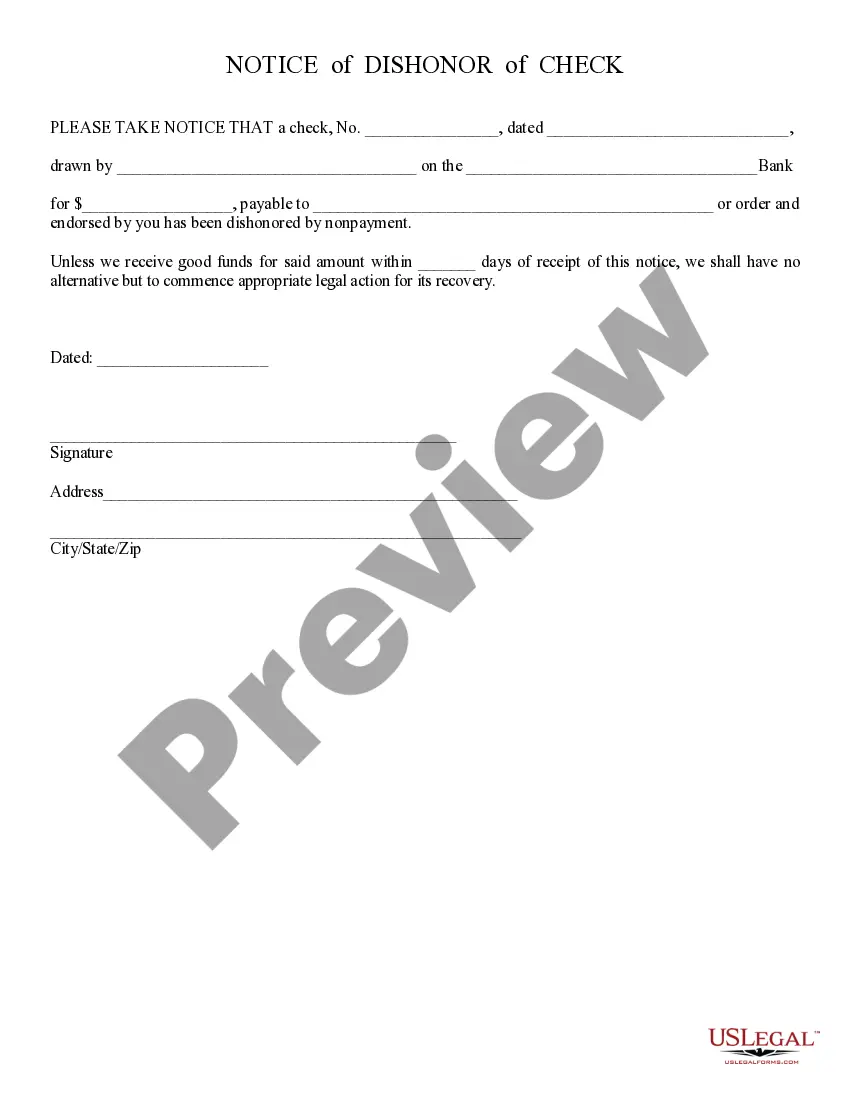
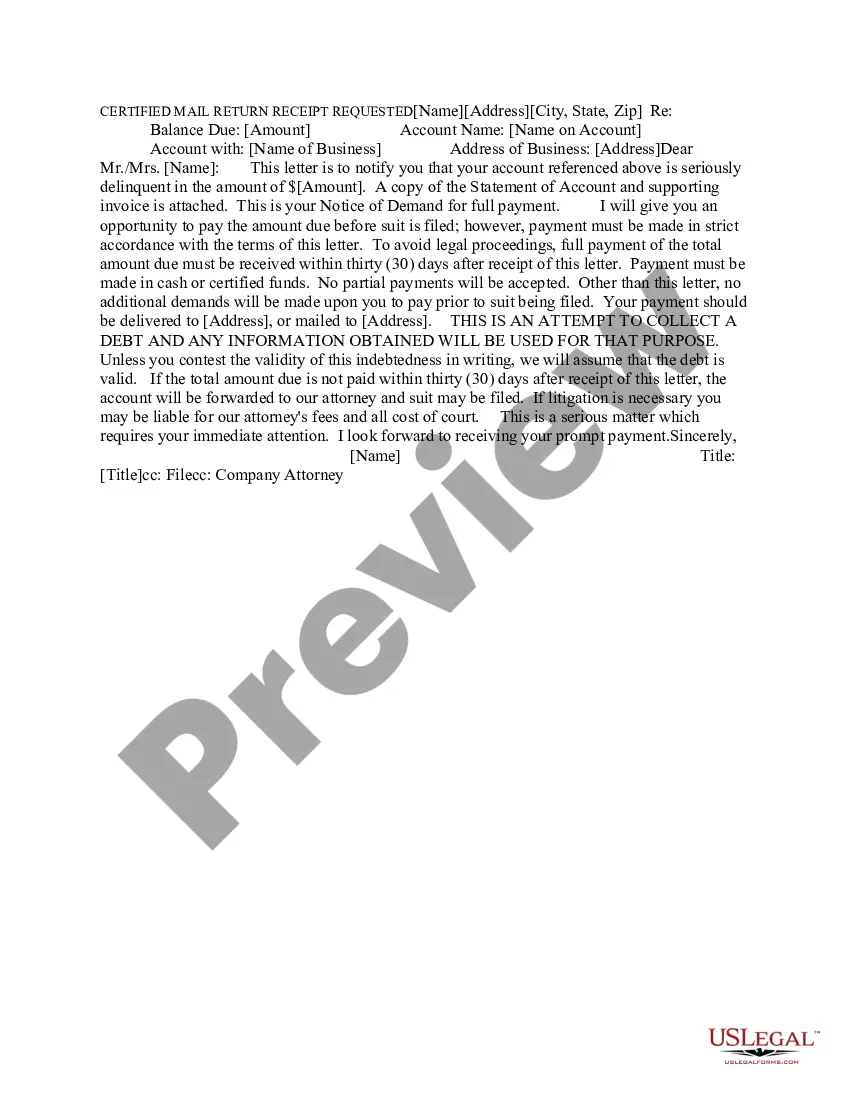
The Dishonor Check form serves as an official notice to the writer of a check that their payment has been rejected due to insufficient funds. This form is essential for fulfilling legal requirements before pursuing a lawsuit for recovery of the owed amount. It clearly outlines the intent to seek legal action if payment is not made within a specified time frame, making it a vital tool for creditors. Unlike similar forms, this document specifically addresses dishonored payments, ensuring that the writer is duly notified.
Main sections of this form
- Identification of the check, including the check number and issuing bank.
- Name of the payee to whom the check was made out.
- Statement indicating the intent to commence legal action if payment is not made.
- Signature of the person issuing the form.
- Contact information for follow-up regarding the payment.
- Date of the dishonor notice.
When to use this form
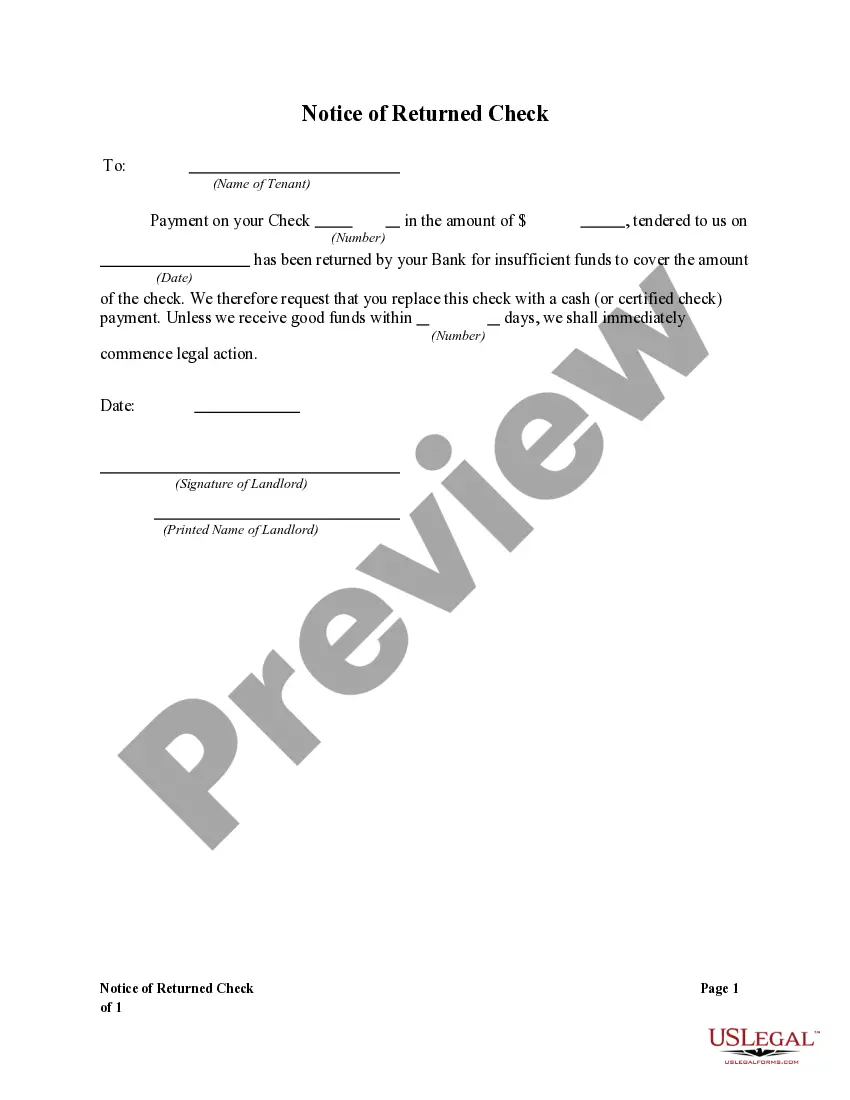
This form is used when a check has been returned due to insufficient funds. If you are a payee who has received a dishonored check, this document is crucial for formally notifying the check writer of their obligation. It is also applicable before taking further legal actions to recover the funds owed to you.
Who should use this form
This form is intended for:
- Individuals who have received a dishonored check.
- Businesses that have issued checks that have bounced.
- Creditors seeking recovery of funds from a debtor.
How to complete this form
- Enter the details of the dishonored check, including the check number and the issuing bank.
- Fill in the name of the payee intended to receive payment.
- Clearly specify the total amount the check was written for.
- Indicate a specific timeframe within which the payment must be made to avoid legal action.
- Sign and date the form to validate the notice.
- Provide your contact information for any follow-up regarding the matter.
Does this form need to be notarized?
This form usually doesn’t need to be notarized. However, local laws or specific transactions may require it. Our online notarization service, powered by Notarize, lets you complete it remotely through a secure video session, available 24/7.
Get your form ready online
Our built-in tools help you complete, sign, share, and store your documents in one place.
Make edits, fill in missing information, and update formatting in US Legal Forms—just like you would in MS Word.
Download a copy, print it, send it by email, or mail it via USPS—whatever works best for your next step.
Sign and collect signatures with our SignNow integration. Send to multiple recipients, set reminders, and more. Go Premium to unlock E-Sign.
If this form requires notarization, complete it online through a secure video call—no need to meet a notary in person or wait for an appointment.
We protect your documents and personal data by following strict security and privacy standards.

Make edits, fill in missing information, and update formatting in US Legal Forms—just like you would in MS Word.

Download a copy, print it, send it by email, or mail it via USPS—whatever works best for your next step.

Sign and collect signatures with our SignNow integration. Send to multiple recipients, set reminders, and more. Go Premium to unlock E-Sign.

If this form requires notarization, complete it online through a secure video call—no need to meet a notary in person or wait for an appointment.

We protect your documents and personal data by following strict security and privacy standards.
Common mistakes
- Failing to include all relevant details of the dishonored check.
- Not providing a clear deadline for payment.
- Neglecting to sign the document.
- Forgetting to keep a copy for personal records.
Benefits of completing this form online
- Convenient access to customizable templates.
- Ability to edit and download in preferred formats (Word or Rich Text).
- Quick guidance on legal language required for proper notice.
- Immediate availability without the need for physical trips to a lawyer's office.
Main things to remember
- The dishonor check form is essential for notifying a check writer of insufficient funds.
- Clear communication and deadlines are crucial to avoid legal action.
- Using an online legal form provides convenience and ensures accuracy.
Looking for another form?
Form popularity
FAQ
A check becomes unacceptable for several reasons, including insufficient funds in the account or a closed account. Additionally, mistakes in the written amount or signature discrepancies can lead to an Arizona Dishonor Check. These factors not only affect your financial reputation but also may result in legal issues. To protect yourself, consider using platforms like US Legal Forms, which can help you understand the legal aspects and ensure proper documentation.
In Arizona, the key difference between a misdemeanor and a felony lies in the severity of the crime. A misdemeanor, such as writing an Arizona Dishonor Check for less than a specific amount, typically carries lighter penalties, including a shorter jail time and lower fines. In contrast, a felony involves graver offenses, leading to harsher punishments, like longer prison sentences. Understanding this distinction helps you navigate the legal landscape more effectively.
Writing an Arizona Dishonor Check can lead to severe consequences. If the check bounces, you may face civil penalties, including fees and damages. Furthermore, repeated incidents could lead to criminal charges, resulting in fines or even jail time. It's crucial to understand these outcomes and handle your financial responsibilities to avoid serious repercussions.
To file a lawsuit in Arizona regarding an Arizona Dishonor Check, begin by gathering all relevant documentation, including the check and any correspondence related to the issue. Next, determine the appropriate court for your case, which typically depends on the amount involved. Then, complete the required forms, which can be efficiently managed with the help of platforms like US Legal Forms. Finally, file your complaint with the court and ensure you follow up with the process to serve the necessary parties involved.
To claim false light in Arizona, you’ll need to show that someone publicly portrayed you in a misleading way, causing harm to your reputation. This portrayal must be done with actual malice or reckless disregard for the truth. If an Arizona dishonor check situation has led to such misrepresentation, it’s vital to gather proof and seek legal guidance. Consider using resources like US Legal Forms to help navigate your claim effectively.
Yes, writing a bad check can escalate to a felony in Arizona under certain conditions. If you knowingly issue a check from an account with insufficient funds, and it exceeds a specific amount, you may face felony charges. Additionally, multiple incidents can increase the severity of the penalties. Understanding the consequences of an Arizona dishonor check is crucial to ensuring your financial actions abide by the law.
To claim unjust enrichment in Arizona, you need to gather evidence showing that you conferred a benefit on another party who has not compensated you. Start by documenting the transactions related to the Arizona dishonor check. You may want to consult legal professionals or use platforms like US Legal Forms to assist you in this process. Filing a lawsuit may involve completing specific legal forms and following court procedures.
The rules of unjust enrichment in Arizona state that a claimant must prove three key elements. First, the defendant received a benefit from the claimant. Second, the retention of this benefit must be unjust, particularly if it arose from an Arizona dishonor check. Lastly, the claimant should not have been compensated for this benefit. Understanding these rules can help in assessing whether you have a valid claim.
A lawsuit based on unjust enrichment seeks to recover benefits that one party unfairly received at another's expense. Essentially, if someone benefits from your loss due to an Arizona dishonor check, you can potentially claim unjust enrichment. Courts generally require proof that you have not been compensated for the benefits conferred. This legal avenue helps to ensure fairness in financial transactions.
In Arizona, the limitation period for unjust enrichment claims is typically three years. This means that you have three years from the date of the alleged unjust enrichment to file a lawsuit. If you miss this deadline, you may lose your right to seek restitution for the Arizona dishonor check. It’s important to be mindful of these timelines to protect your interests.