Arizona Mutual Release
Understanding this form
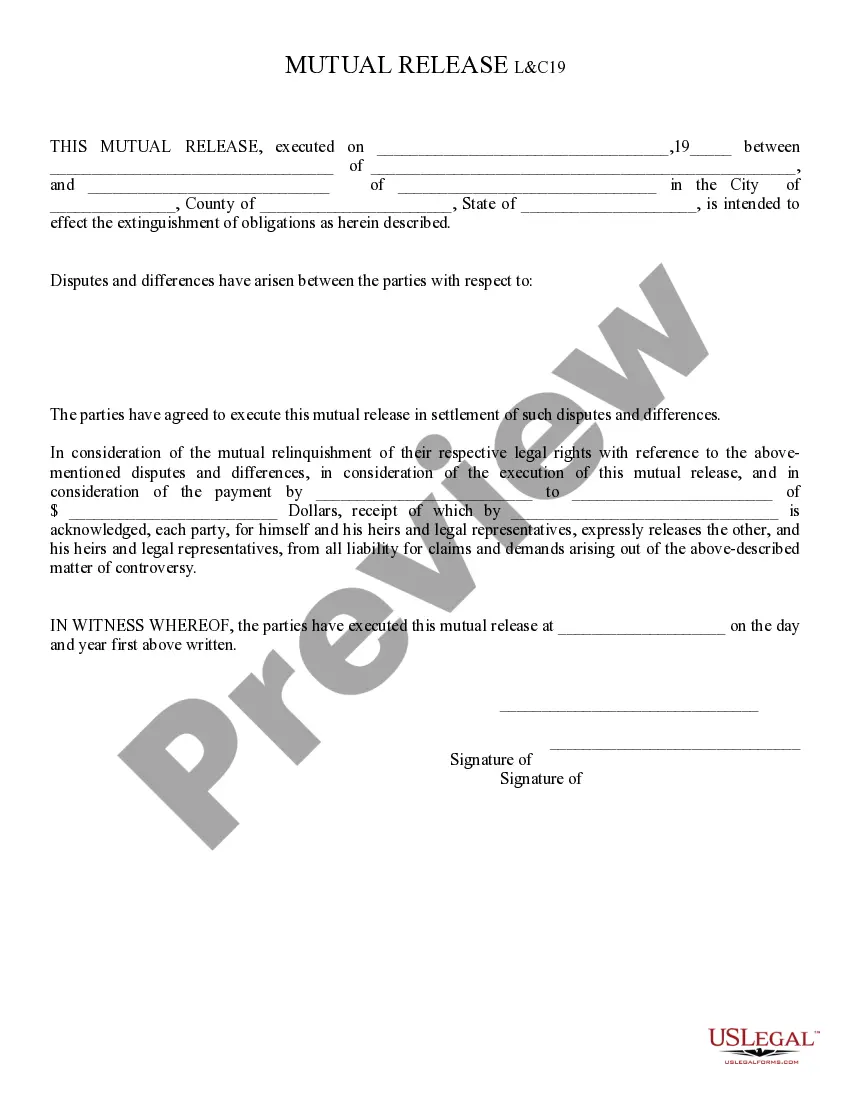
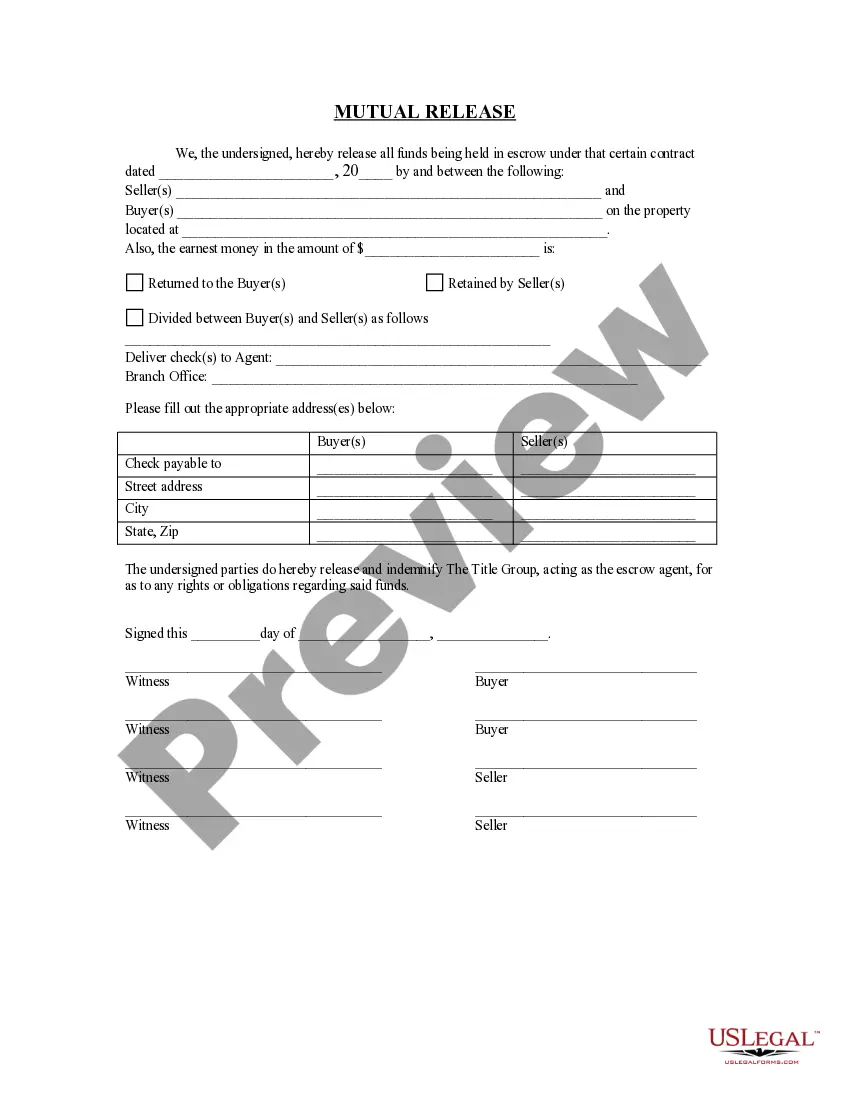
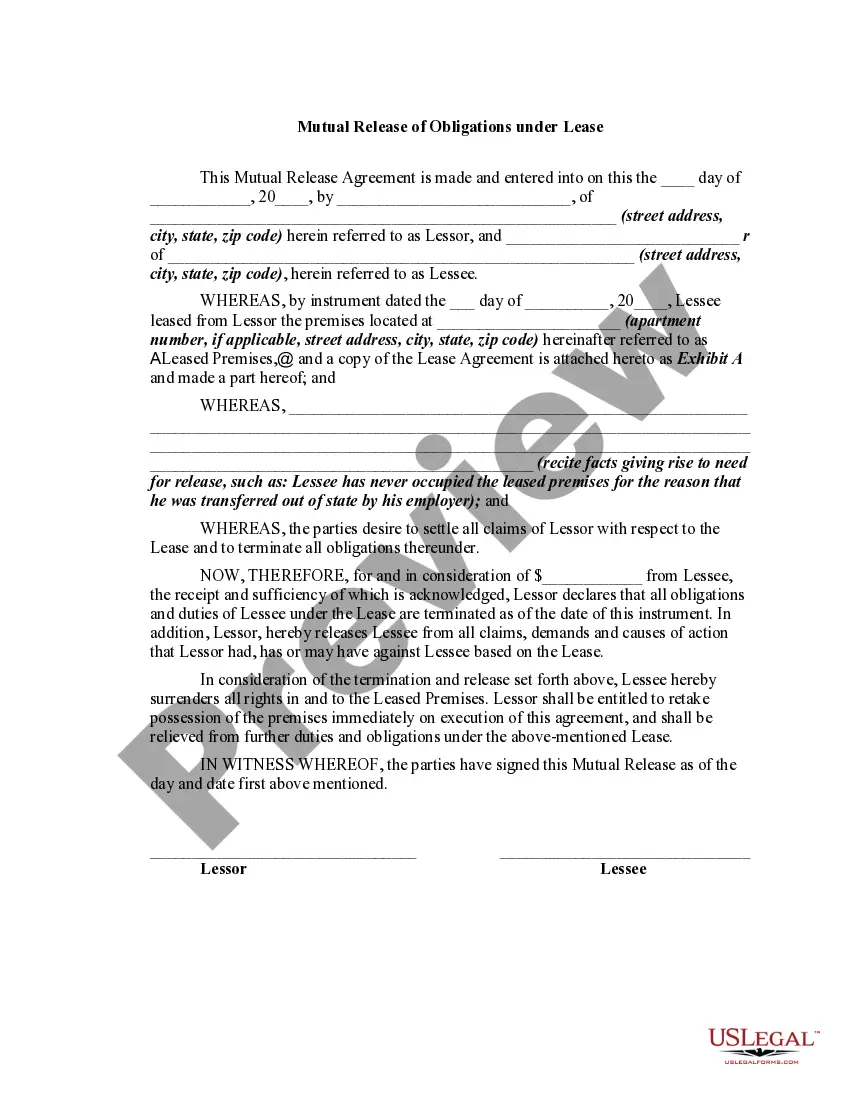
A Mutual Release is a legal document that relinquishes all claims either party may have had against the other in the event of a contract breach. This form helps both parties settle disputes amicably by confirming that they will not pursue further legal action regarding the issues specified. Unlike similar agreements, a Mutual Release focuses on mutual concessions and can foster a more collaborative resolution process.
Form components explained
- Identification of the parties involved, including names and addresses.
- Date of execution of the Mutual Release.
- Description of the disputes or differences prompting the release.
- Consideration provided, which often involves a monetary payment.
- Signatures of both parties, which must be notarized.

When to use this form
This form is needed when two parties have a contract that has been breached, and they wish to settle their differences without pursuing legal action. It is often used in business partnerships, employment agreements, or any contractual relationship where mutual claims may arise. A Mutual Release can prevent future disputes and clarifies that both parties are releasing each other from any further obligations related to the specific issues outlined in the agreement.
Who can use this document
- Individuals or businesses involved in a contractual relationship experiencing disputes.
- Parties seeking to settle issues out of court without further complications.
- Anyone looking to formally release the other party from obligations and claims.
Steps to complete this form
- Identify and clearly state the names and addresses of both parties involved.
- Enter the date on which the Mutual Release is executed.
- Provide a brief description of the disputes that led to this agreement.
- Specify the monetary amount or any consideration being exchanged.
- Ensure both parties sign the document in front of a Notary Public.
Is notarization required?
This form usually doesn’t need to be notarized. However, local laws or specific transactions may require it. Our online notarization service, powered by Notarize, lets you complete it remotely through a secure video session, available 24/7.
Get your form ready online
Our built-in tools help you complete, sign, share, and store your documents in one place.
Make edits, fill in missing information, and update formatting in US Legal Forms—just like you would in MS Word.
Download a copy, print it, send it by email, or mail it via USPS—whatever works best for your next step.
Sign and collect signatures with our SignNow integration. Send to multiple recipients, set reminders, and more. Go Premium to unlock E-Sign.
If this form requires notarization, complete it online through a secure video call—no need to meet a notary in person or wait for an appointment.
We protect your documents and personal data by following strict security and privacy standards.

Make edits, fill in missing information, and update formatting in US Legal Forms—just like you would in MS Word.

Download a copy, print it, send it by email, or mail it via USPS—whatever works best for your next step.

Sign and collect signatures with our SignNow integration. Send to multiple recipients, set reminders, and more. Go Premium to unlock E-Sign.

If this form requires notarization, complete it online through a secure video call—no need to meet a notary in person or wait for an appointment.

We protect your documents and personal data by following strict security and privacy standards.
Common mistakes to avoid
- Failing to clearly describe the underlying disputes.
- Not including the consideration, which may invalidate the release.
- Missing a signature or not having the document notarized.
Quick recap
- A Mutual Release is essential for settling disputes without pursuing further legal action.
- Both parties must sign and have the document notarized for it to be valid.
- This form helps clarify and extinguish any future claims related to the specified disputes.
Looking for another form?

Form popularity
FAQ
A mutual termination and release occurs when both parties agree to end their contract and also release each other from any remaining obligations or claims. This agreement allows both sides to part ways amicably without fear of future liabilities. For a clear and enforceable exit strategy, an Arizona Mutual Release is an effective tool to guide this process.
In mergers and acquisitions (M&A), a mutual release is an agreement where both parties release each other from claims related to the transaction. This release helps clarify that neither party can hold the other responsible for past actions related to the deal. Utilizing an Arizona Mutual Release can streamline this process, providing legal protection for both entities involved.
In Arizona, canceling a contract after signing is possible under certain conditions, such as misrepresentation, fraud, or if the parties mutually agree to terminate the contract. If you want to pursue cancellation, consider drafting an Arizona Mutual Release to formalize the termination and avoid future disputes. Always review the terms of your contract to understand your rights.
A mutual discharge of contract refers to an agreement where both parties release each other from further obligations under the contract. This action effectively ends the contract, allowing parties to move forward without liability for any remaining terms. Using an Arizona Mutual Release provides a formal and clear way to execute this discharge.
In Arizona, a contract becomes legally binding when it has an offer, acceptance, and consideration. Additionally, both parties must have the legal capacity to enter into the agreement, and the contract's purpose must be lawful. Understanding these elements helps ensure that your Arizona Mutual Release is enforceable when needed.
To write an Arizona Mutual Release, start by clearly identifying the parties involved and the obligations being released. Include a statement expressing the intent to release each other from all claims, disputes, or liabilities. It is crucial to clearly outline any remaining obligations, if applicable, and ensure both parties sign the document to validate it.
While a release and a discharge may seem similar, they have distinct meanings in legal terms. A release specifically relinquishes a claim or right, often associated with an Arizona Mutual Release, while a discharge ends the overall obligations outlined in an agreement. Both processes serve to clear any legal burdens, but they operate in slightly different contexts. Understanding these differences helps in navigating legal agreements effectively.
A discharge of a mutual agreement refers to the process where both parties involved agree to terminate the obligations defined in their contract. In the case of an Arizona Mutual Release, this mutual discharge ensures that neither party can hold the other accountable for prior commitments. This type of agreement often helps to eliminate misunderstandings or conflicts. It marks a new chapter for both parties, promoting peace and clarity.
A mutual release and discharge is a comprehensive agreement where parties agree to release one another from legal claims and liabilities. It serves as a safeguard against future disputes over matters already settled. Utilizing an Arizona Mutual Release can effectively conclude ongoing litigation or disputes and provide clarity and closure to all involved.
The time you have to file a civil suit in Arizona varies based on the nature of your claim, generally ranging from one to six years. Knowing these time limits is crucial for protecting your legal rights. If you are considering an Arizona Mutual Release, being mindful of these deadlines will aid in effective negotiations.