Arizona Default of Contract
Understanding this form
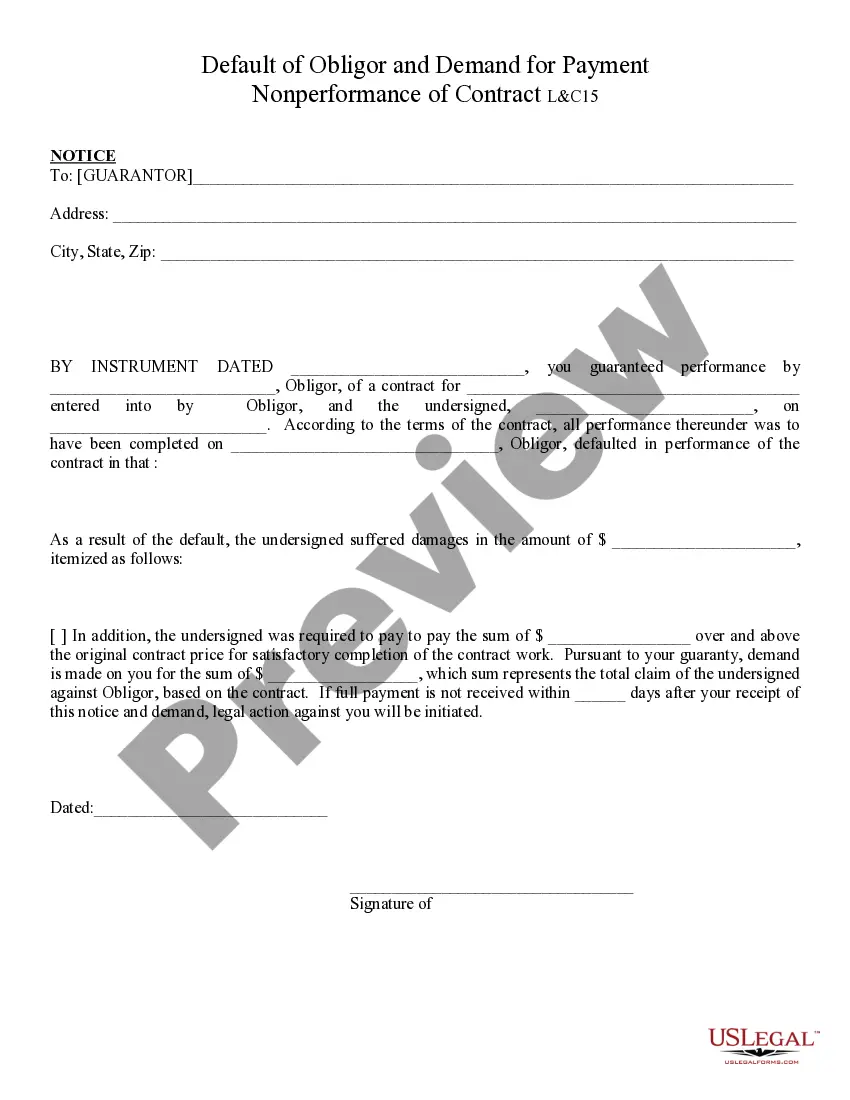
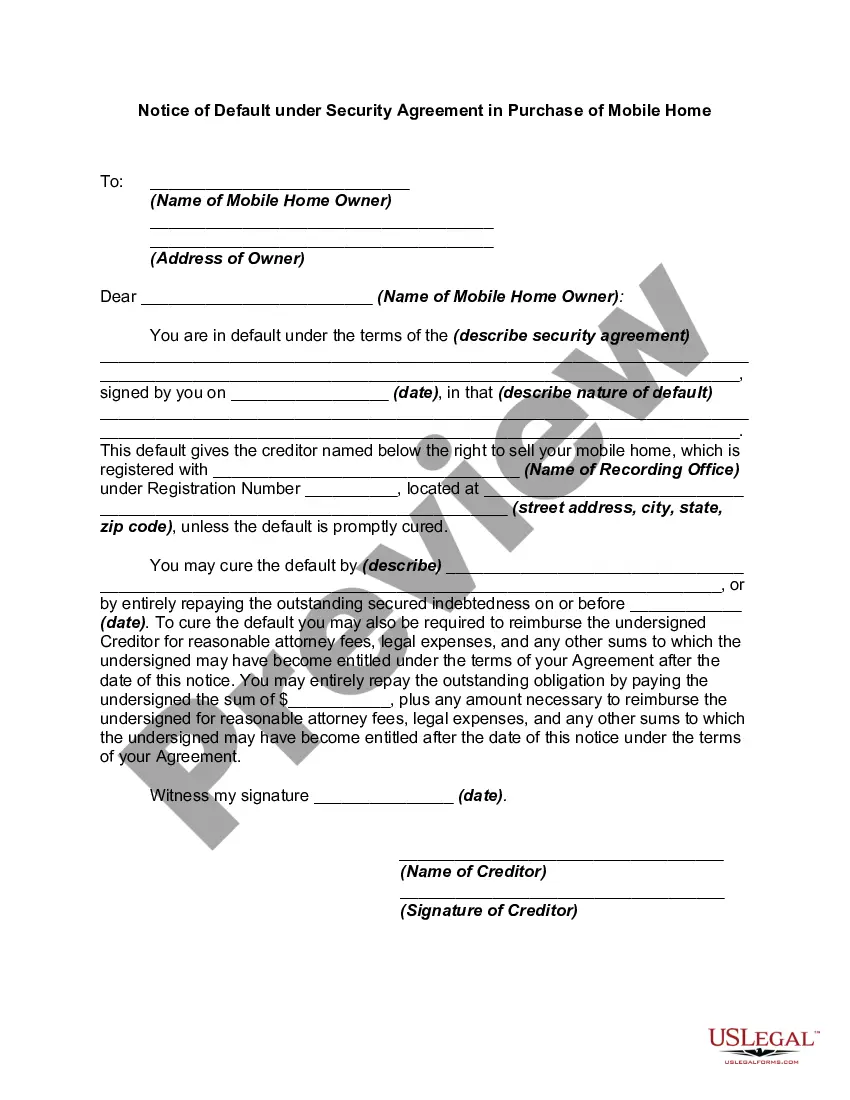
The Default of Contract form is a legal notice that indicates a party has failed to meet the terms of a contract. This document allows the non-defaulting party to demand payment or terminate the contract altogether. It is essential for formalizing communication regarding a breach of contract and outlines the financial repercussions for the defaulting party. Unlike informal notifications, this notice serves as a formal legal document that may be used in future proceedings if necessary.
Main sections of this form
- Parties Involved: Details the guarantor, obligor, and the party issuing the notice.
- Contract Details: Specifies the nature of the contract and the date it was entered into.
- Performance Deadline: Indicates when the obligations of the contract were due to be completed.
- Nature of Default: Describes the specific reasons the obligor is considered in default.
- Damages Claimed: Quantifies the damages suffered by the party not in default.
- Response Timeline: Sets a deadline for the guarantor to respond to the notice before legal action is taken.
Situations where this form applies
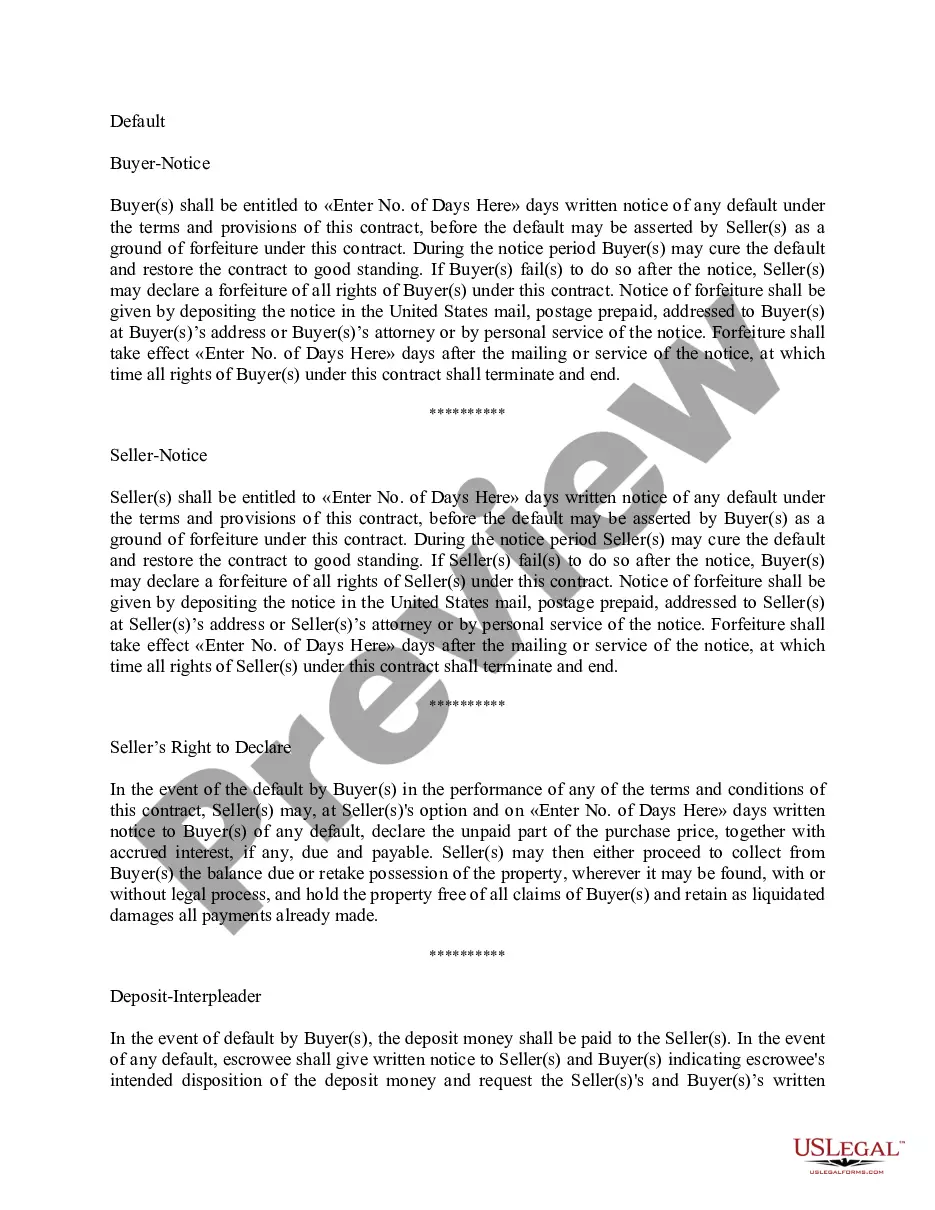
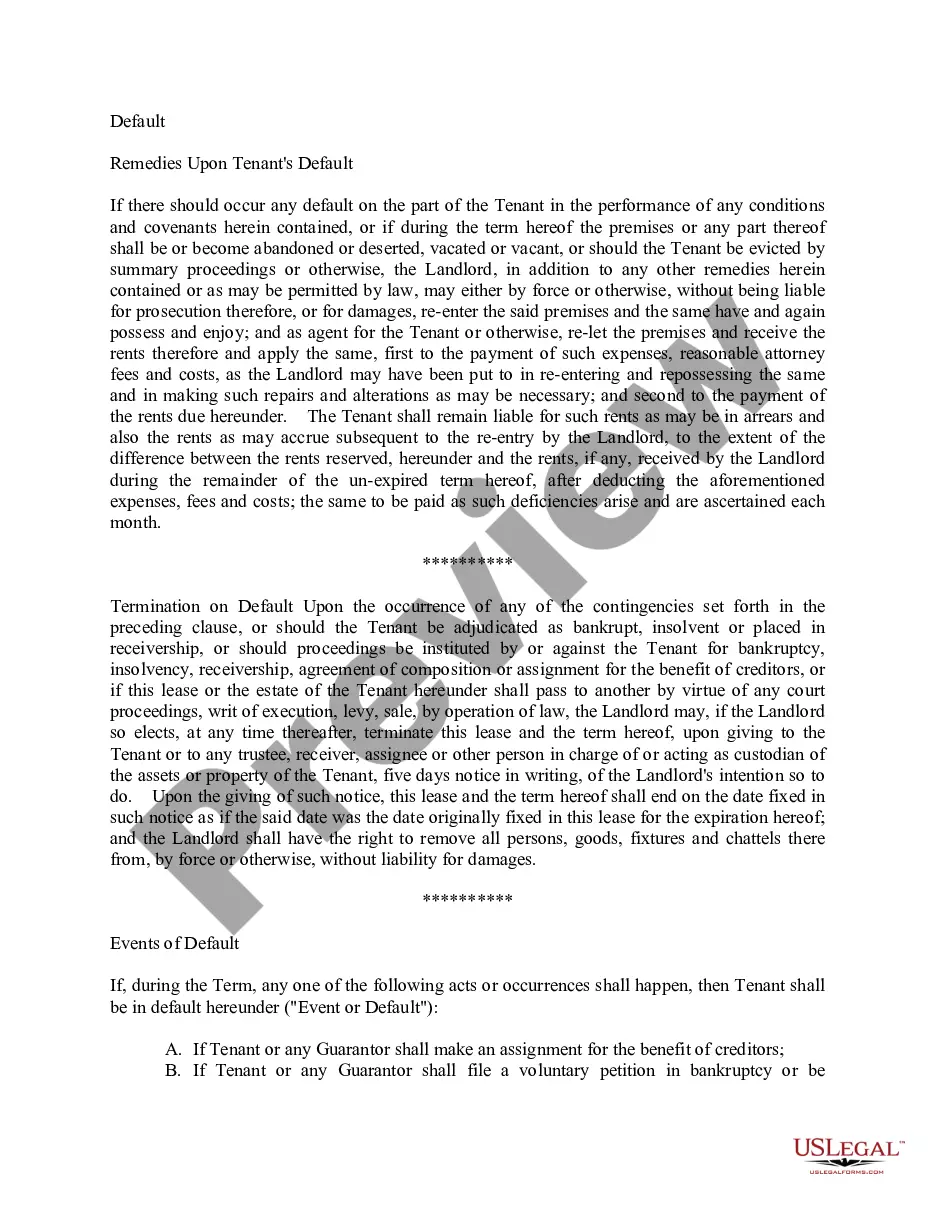
This form should be used when one party to a contract fails to perform their obligations as specified. For example, if a contractor does not complete the agreed-upon work, the other party can issue this notice to demand payment for damages incurred or to assert their right to terminate the contract. Use this form when you need to formally document and communicate a breach of contract to initiate the resolution process.
Who should use this form
This form is intended for:
- Individuals or businesses that have entered into a contract with another party.
- Non-defaulting parties seeking to recover damages due to a breach of contract.
- Guarantors who are responsible for ensuring another party meets their contractual obligations.
How to complete this form
To complete the Default of Contract form, follow these steps:
- Identify the parties involved by filling in the names and contact information of the guarantor, obligor, and the issuing party.
- Enter the date of the contract and describe the specific contract that is being breached.
- Specify the due date for the contract obligations and describe the nature of the default.
- Detail the damages suffered, including the amount and reasons for those damages.
- Include the total amount being claimed from the guarantor, including any additional costs incurred.
- Sign and date the notice to finalize it before sending it to the guarantor.
Notarization guidance
This form does not typically require notarization unless specified by local law.
Get your form ready online
Our built-in tools help you complete, sign, share, and store your documents in one place.
Make edits, fill in missing information, and update formatting in US Legal Forms—just like you would in MS Word.
Download a copy, print it, send it by email, or mail it via USPS—whatever works best for your next step.
Sign and collect signatures with our SignNow integration. Send to multiple recipients, set reminders, and more. Go Premium to unlock E-Sign.
If this form requires notarization, complete it online through a secure video call—no need to meet a notary in person or wait for an appointment.
We protect your documents and personal data by following strict security and privacy standards.

Make edits, fill in missing information, and update formatting in US Legal Forms—just like you would in MS Word.

Download a copy, print it, send it by email, or mail it via USPS—whatever works best for your next step.

Sign and collect signatures with our SignNow integration. Send to multiple recipients, set reminders, and more. Go Premium to unlock E-Sign.

If this form requires notarization, complete it online through a secure video call—no need to meet a notary in person or wait for an appointment.

We protect your documents and personal data by following strict security and privacy standards.
Common mistakes to avoid
- Failing to provide detailed descriptions of the defaulting party's obligations.
- Not specifying the amount of damages clearly.
- Neglecting to include key dates, which can lead to confusion.
- Forgetting to sign and date the form before sending it.
Benefits of completing this form online
- Convenience of downloading and customizing the form to fit specific needs.
- Ensures that all necessary legal elements are included for enforceability.
- Provides a structured format that simplifies the completion process.
Looking for another form?


Form popularity
FAQ
Being in default of a contract means that a party has failed to fulfill their obligations as specified in the agreement. This failure can lead to legal consequences and potential claims for damages by the non-breaching party. When dealing with issues of Arizona Default of Contract, understanding the definition and implications of default is crucial for protecting your rights.
The 23 1501 law in Arizona pertains to specific provisions surrounding employment contracts and the implications of breach. This law outlines the rights and responsibilities of parties involved in employment agreements. Being aware of this law can be essential for navigating issues related to Arizona Default of Contract in an employment context.
Breach of contract law in Arizona is designed to protect the rights and remedies of parties in contractual relationships. When a contract is breached, the non-breaching party may seek damages or specific performance, depending on the circumstances. Understanding Arizona's unique stance on breach of contract can help individuals navigate issues of Arizona Default of Contract more confidently.
In Arizona, the elements of a breach of contract claim encompass a valid contract, proof of breach, and resulting damages. The plaintiff must demonstrate that the contract was enforceable, the other party failed to perform their obligations, and that this failure caused them measurable harm. Knowing these elements is crucial for addressing potential Arizona Default of Contract situations.
A breach of contract claim in Arizona must include three essential elements: the existence of a valid contract, a breach of that contract, and damages incurred as a result of the breach. Each element must be clearly demonstrated to support your case effectively. By understanding these components, you can strengthen your claims related to Arizona Default of Contract.
In Arizona, the time required to back out of a contract depends on the type of agreement. Generally, if a contract is formed under duress or misrepresentation, a party may rescind the contract within a reasonable time. Familiarizing yourself with the specifics of contract law is vital to avoid issues related to the Arizona Default of Contract.
The burden of proof for a breach of contract in Arizona lies with the party alleging the breach. This means that the plaintiff must provide evidence that demonstrates the defendant's failure to meet the obligations outlined in the contract. Establishing these facts is essential in cases related to Arizona Default of Contract, as the evidence will support your claims.
In Arizona, the default judgment rule allows a party to obtain a judgment without the other party present, usually when that party fails to respond to a lawsuit. This means if a defendant does not answer a complaint within the required time frame, the court may award a judgment automatically to the plaintiff. Understanding this rule is crucial to navigate potential Arizona Default of Contract issues effectively.
Rule 55a in Arizona pertains to the procedures involved in obtaining a default judgment, including the necessary steps after a default entry has been made. It provides specific guidelines on how to proceed with your case once the court recognizes default. By familiarizing yourself with Rule 55a, you can effectively handle scenarios involving an Arizona default of contract.
The rules for judgments in Arizona govern how courts issue decisions on legal claims, including defaults. These rules cover everything from filing requirements to the type of evidence needed for a judgment to be awarded. For those dealing with an Arizona default of contract, adhering to these rules can significantly impact the outcome of their case.