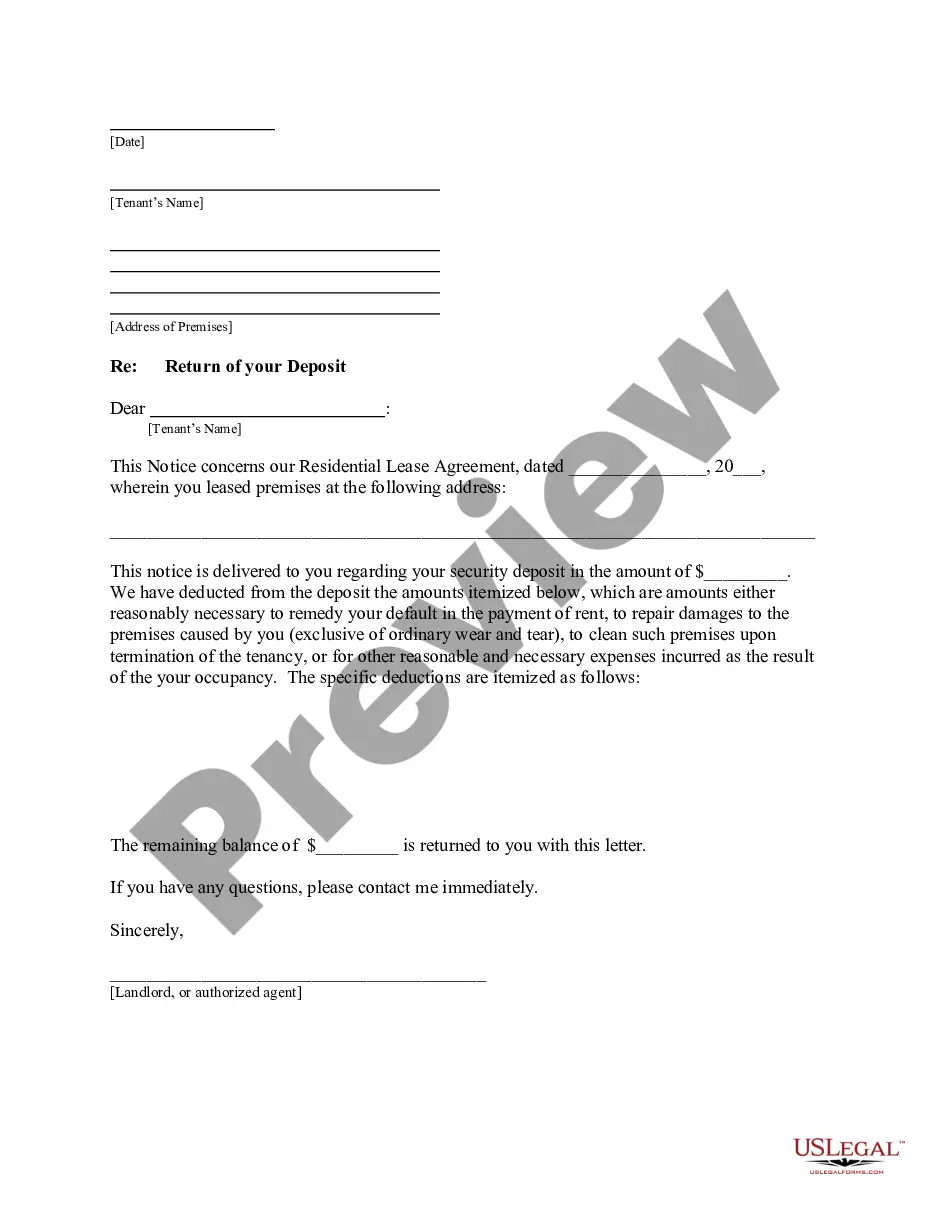
Audiovisual Work Synchronization and Videogram License
What is this form?
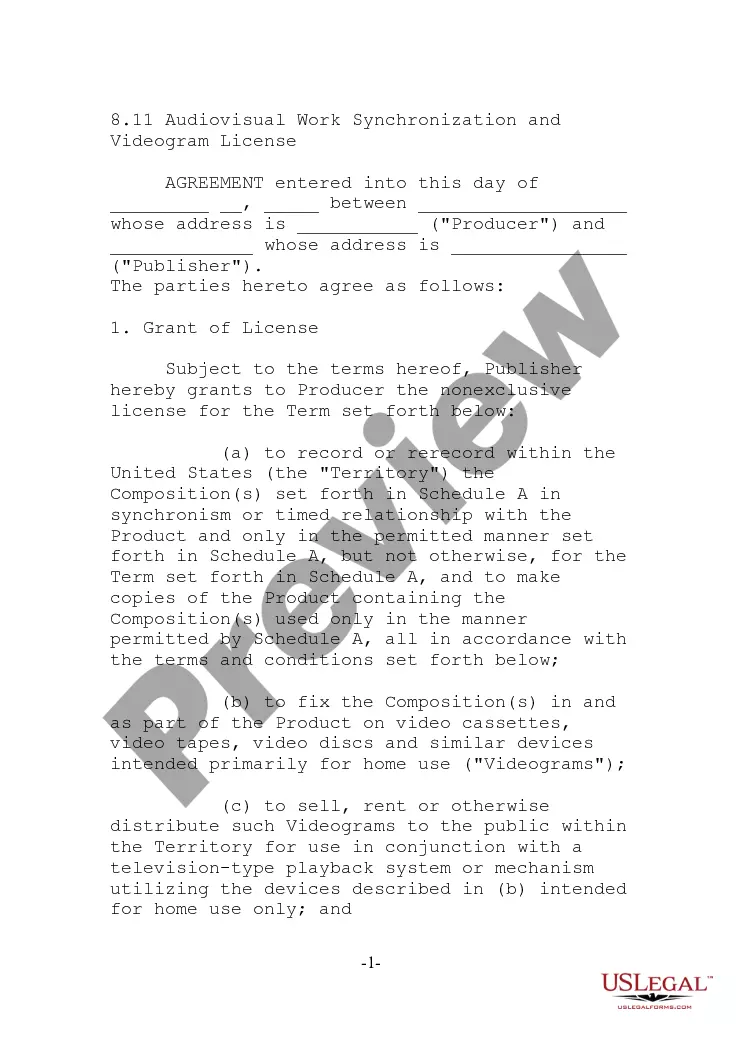
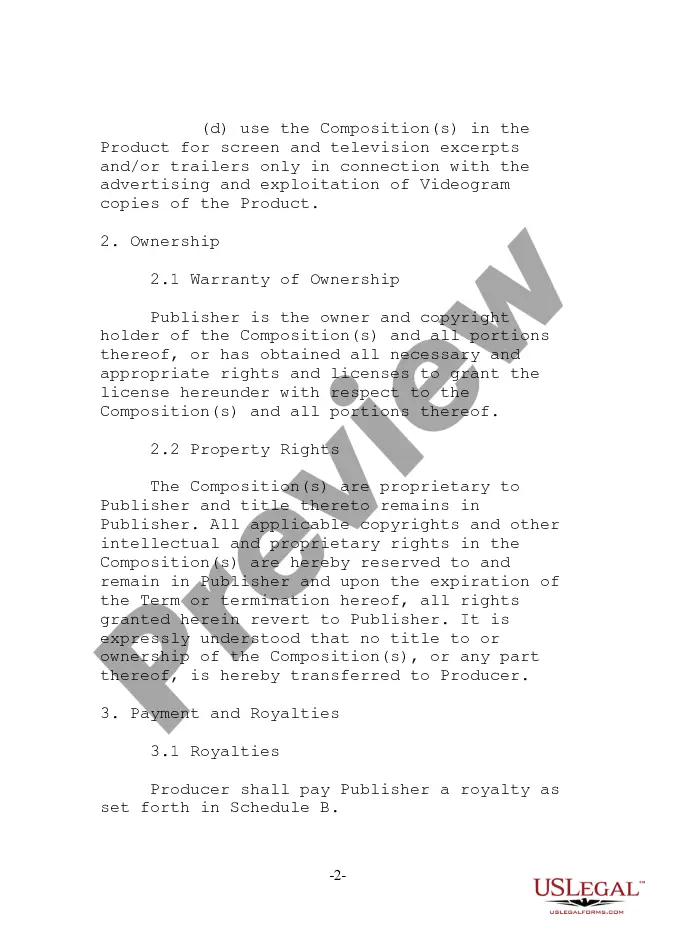
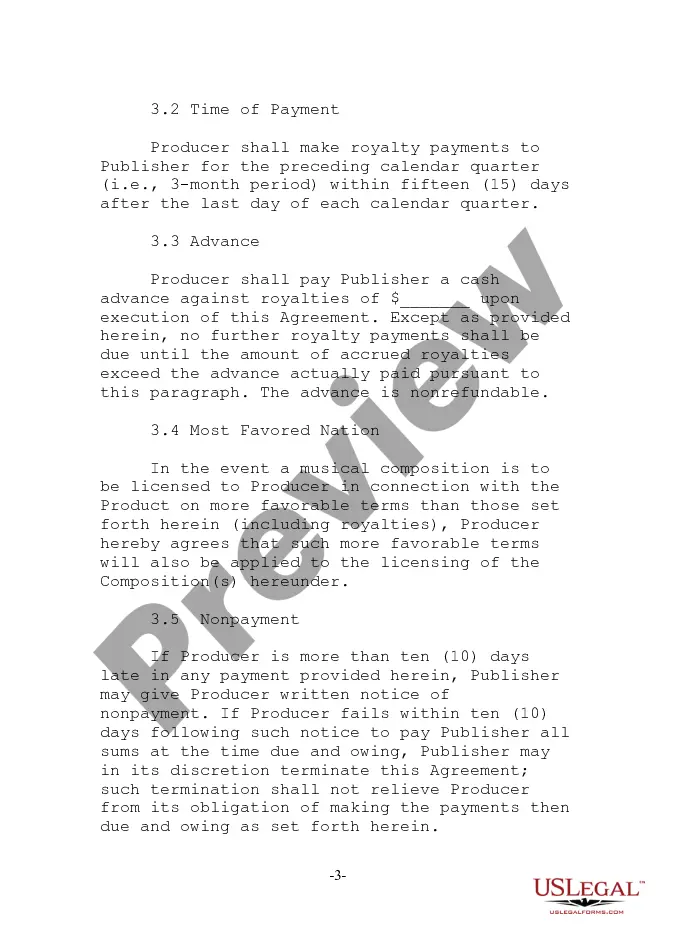
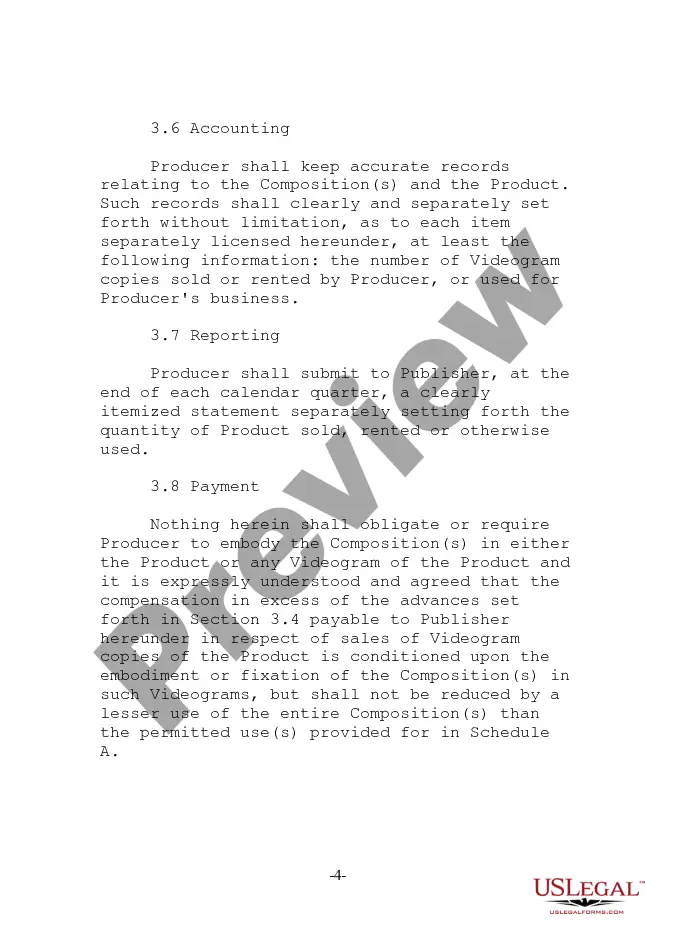
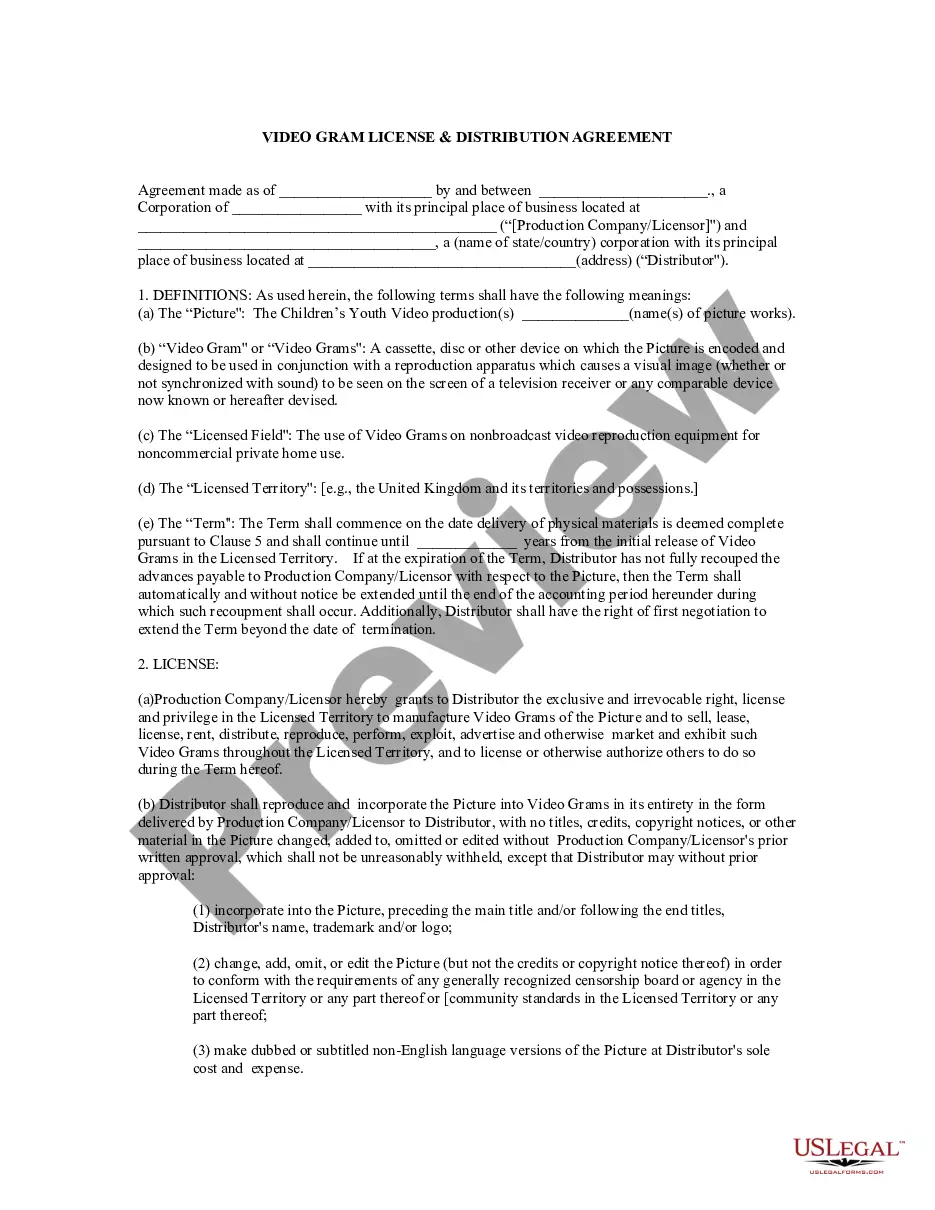
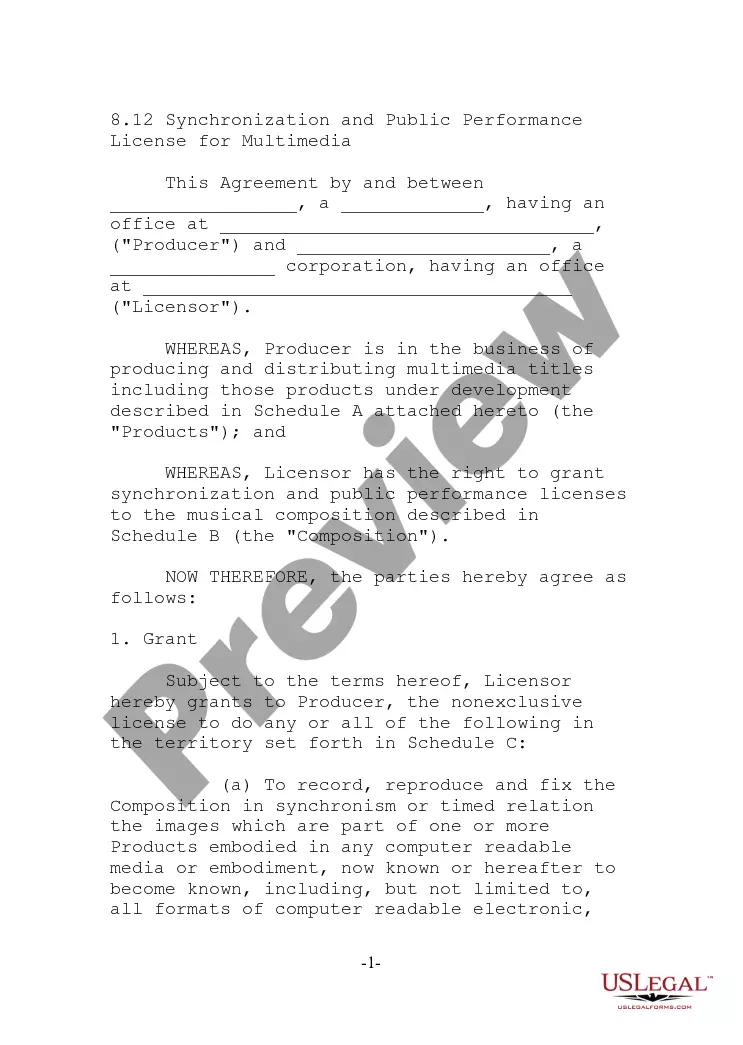
The Audiovisual Work Synchronization and Videogram License is a legal document that grants a producer the rights to synchronize music compositions with audiovisual works. Unlike standard licensing agreements, this license specifically allows for the creation and distribution of video cassettes or other formats that contain the licensed musical compositions. This form ensures that producers can legally use copyrighted music within their products while protecting the rights of the copyright holder, commonly referred to as the publisher.
Main sections of this form
- Grant of License: Outlines the specific rights granted to the producer regarding the use of compositions.
- Ownership: Establishes the publisher's ownership of the compositions and the conditions under which rights may revert back to the publisher.
- Payment and Royalties: Details payment schedules for royalties and outlines conditions for advance payments.
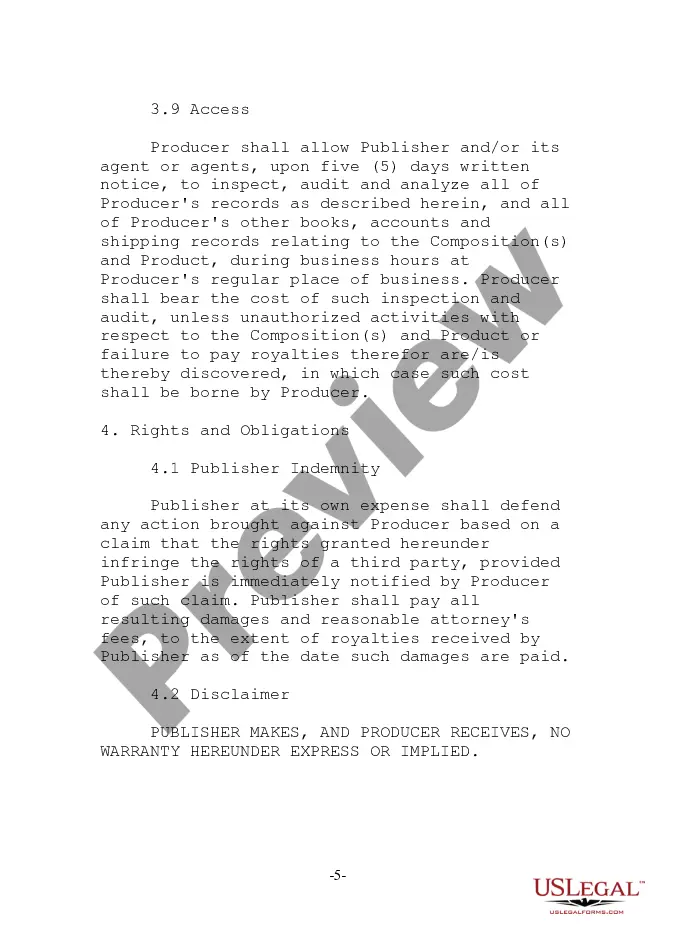
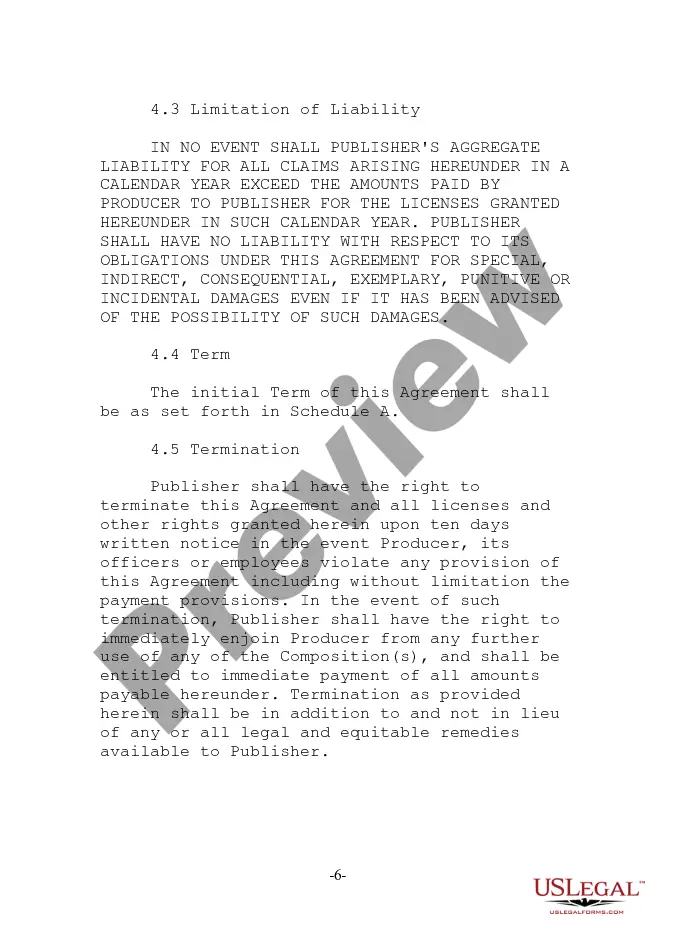
- Rights and Obligations: Specifies the responsibilities of both parties, including indemnity clauses and limits on liability.
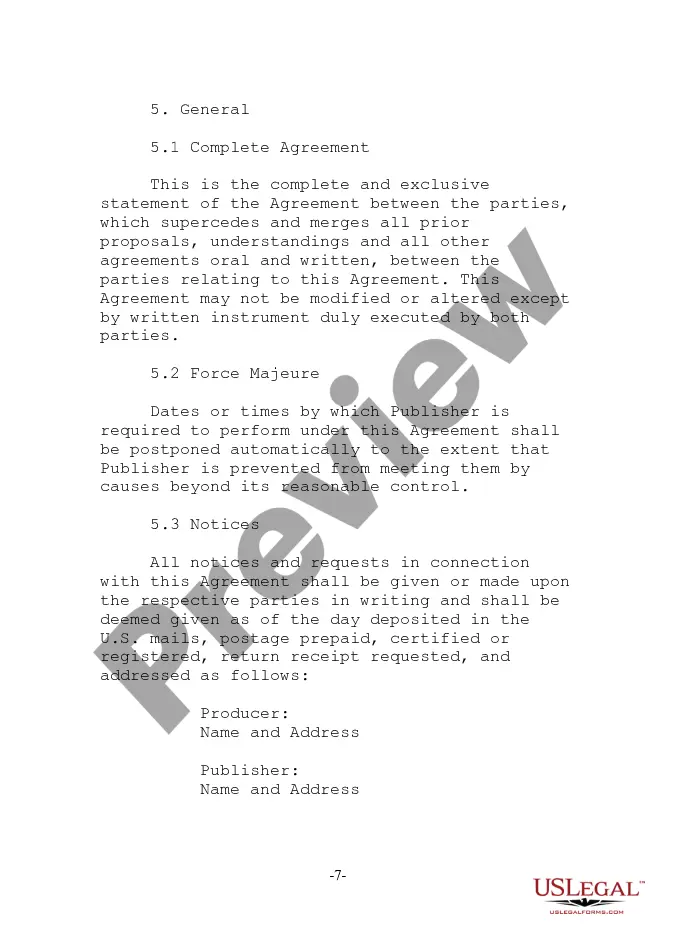
- Complete Agreement: States that the document represents the entire agreement between the parties, superseding previous agreements.
Common use cases
This form should be used when a producer wishes to incorporate musical compositions into audiovisual projects, like films, television shows, or promotional materials, especially when creating video recordings for home distribution. It is particularly important when the compositions are copyrighted and require legal licensing to avoid infringement issues.
Who needs this form
- Producers and filmmakers looking to use copyrighted music in their audiovisual works.
- Publishers and composers who wish to license their music for use in films or other multimedia projects.
- Companies involved in the production of video content that includes musical compositions.
How to prepare this document
- Identify all parties involved: Fill in the names and addresses of both the producer and the publisher.
- Specify the compositions: List the musical compositions being licensed in Schedule A.
- Fill in the term: Indicate the duration of the license agreement in the specified section.
- Detail payment terms: Enter the agreed royalty amounts and advance payments as described in Schedule B.
- Sign and date the form: Ensure both parties sign and date the agreement to finalize the licensing terms.
Notarization requirements for this form
Notarization is not commonly needed for this form. However, certain documents or local rules may make it necessary. Our notarization service, powered by Notarize, allows you to finalize it securely online anytime, day or night.
Get your form ready online
Our built-in tools help you complete, sign, share, and store your documents in one place.
Make edits, fill in missing information, and update formatting in US Legal Forms—just like you would in MS Word.
Download a copy, print it, send it by email, or mail it via USPS—whatever works best for your next step.
Sign and collect signatures with our SignNow integration. Send to multiple recipients, set reminders, and more. Go Premium to unlock E-Sign.
If this form requires notarization, complete it online through a secure video call—no need to meet a notary in person or wait for an appointment.
We protect your documents and personal data by following strict security and privacy standards.

Make edits, fill in missing information, and update formatting in US Legal Forms—just like you would in MS Word.

Download a copy, print it, send it by email, or mail it via USPS—whatever works best for your next step.

Sign and collect signatures with our SignNow integration. Send to multiple recipients, set reminders, and more. Go Premium to unlock E-Sign.

If this form requires notarization, complete it online through a secure video call—no need to meet a notary in person or wait for an appointment.

We protect your documents and personal data by following strict security and privacy standards.
Common mistakes
- Failing to accurately list all compositions to be licensed.
- Not specifying the full term for licensing rights.
- Inaccurate payment details, leading to disputes over royalties.
- Neglecting to include signatures from all parties involved.
Why complete this form online
- Convenience: Downloadable and editable, making it easy to tailor to specific needs.
- Accessibility: Available anytime, enabling quick turnaround for urgent projects.
- Reliability: Drafted by licensed attorneys, ensuring that the form meets legal standards and requirements.
Legal use & context
- This form establishes a nonexclusive license, meaning the publisher may license the same compositions to other producers.
- The agreement does not transfer ownership of the compositions; all rights remain with the publisher.
- Failure to comply with the terms outlined in this agreement can lead to termination and potential legal disputes regarding copyright infringement.
Main things to remember
- The Audiovisual Work Synchronization and Videogram License is crucial for legally incorporating music in audiovisual projects.
- Careful attention must be paid to the specified rights, payment terms, and ownership details to avoid legal complications.
- Both producers and publishers benefit from using this form to clarify their rights and obligations in a licensing agreement.
Looking for another form?

Form popularity
FAQ
Choosing a License The six licenses and the public domain dedication tool give creators a range of options. The best way to decide which is appropriate for you is to think about why you want to share your work, and how you hope others will use that work.
In most cases, this sync license fee can range from a few hundred dollars for a small artist in a small project to a few hundred thousand dollars for a major artist whose song is being used in a large budget production.
Who gets paid? A synchronization license pays a royalty to the copyright holder (owner) of the composition (song). This is typically the composer or their publisher. However, sometimes rights are sold.
Synchronization License: This is the right to synchronize a song or a piece of music with your visual image. It must be obtained from the copyright owner of the music, which is usually the publisher. You can find out who the publisher is by using ASCAP's Clearance Express (ACE) at www.ascap.com/ace.
Pick 3 to 5 Tracks From Your Catalogue & Export MP3 and WAV Files. If you're not sure they're good enough, try anyway. Input Metadata. Create a Catalogue Spreadsheet. Register Your Songs with a PRO.
In general, there are six types of licenses that someone can use for various purposes. They are: synchronization license, mechanical license, master license, public performance license, print rights license, and theatrical license.
Public Performing Right. The exclusive right of the copyright owner, granted by the U.S. Copyright Law, to authorize the performance or transmission of the work in public. Public Performance License. Reproduction Right. Mechanical License. Synchronization License. Digital Performance Right in Sound Recordings.
How Can I Get A Sync License To Do A Cover Song On Youtube? If you've read the above and want to ensure you have permission to do cover songs from the original owner, the next step is to get in contact with them. You can do this by contacting the makers of the song and requesting a 'synchronization license'.