Arizona Sale on Consignment Agreement
Understanding this form
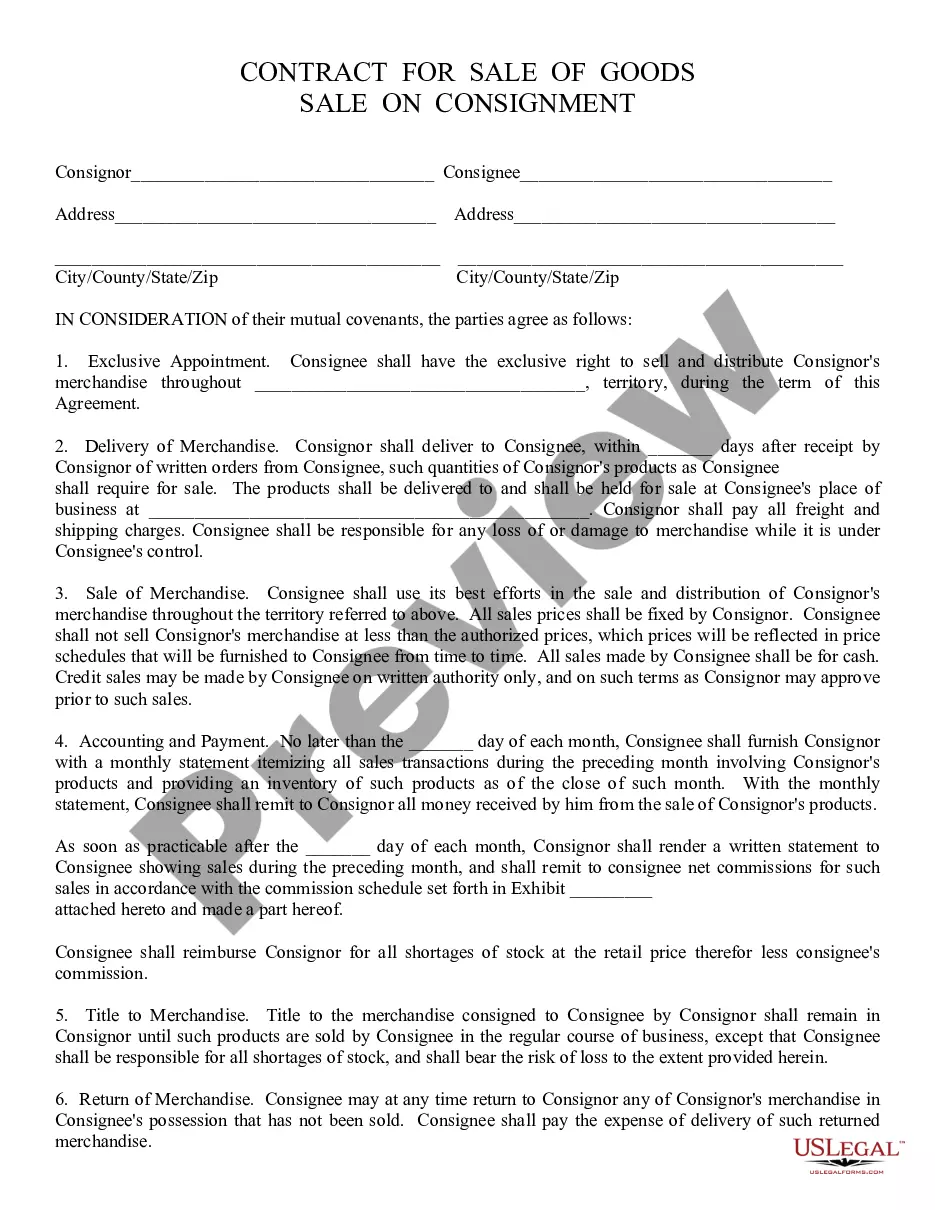
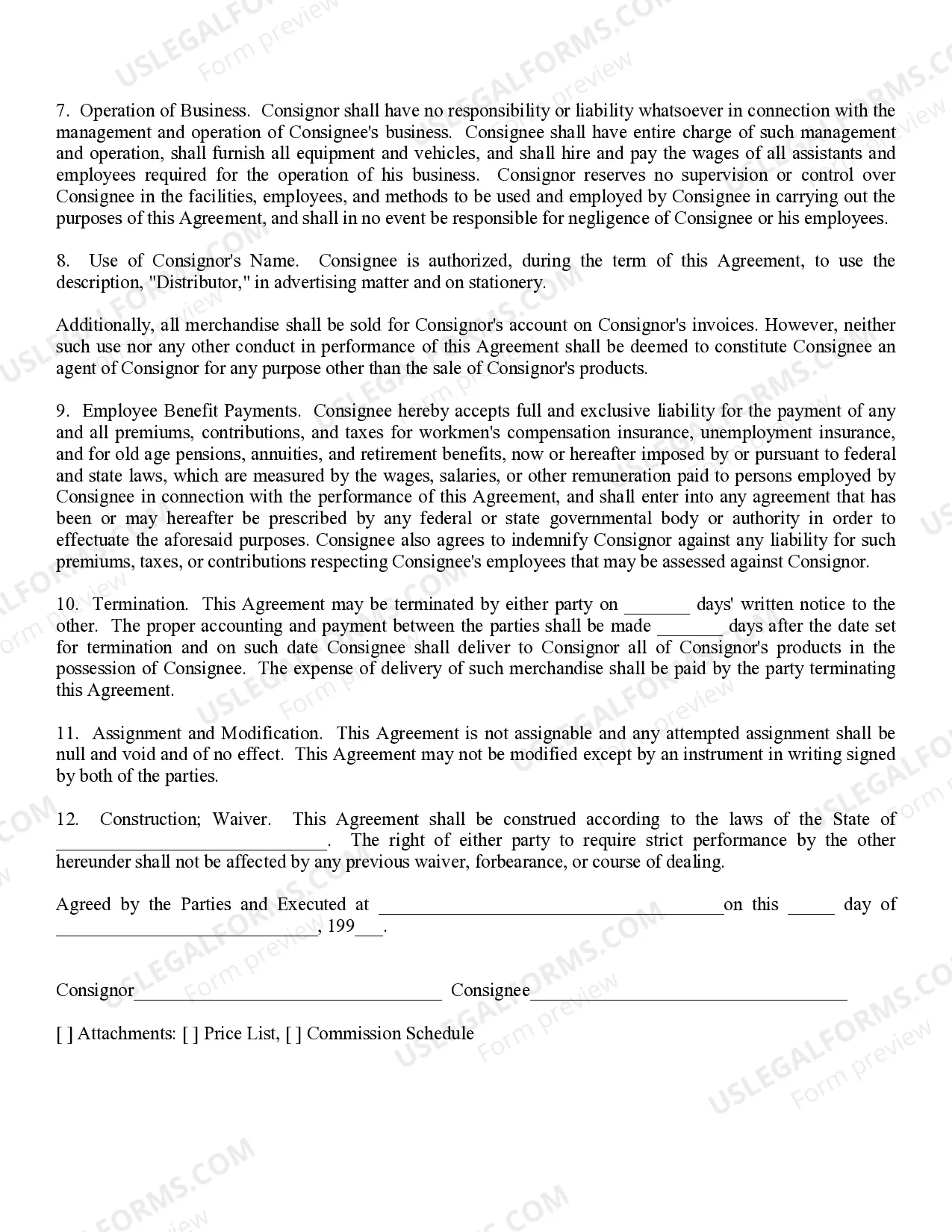
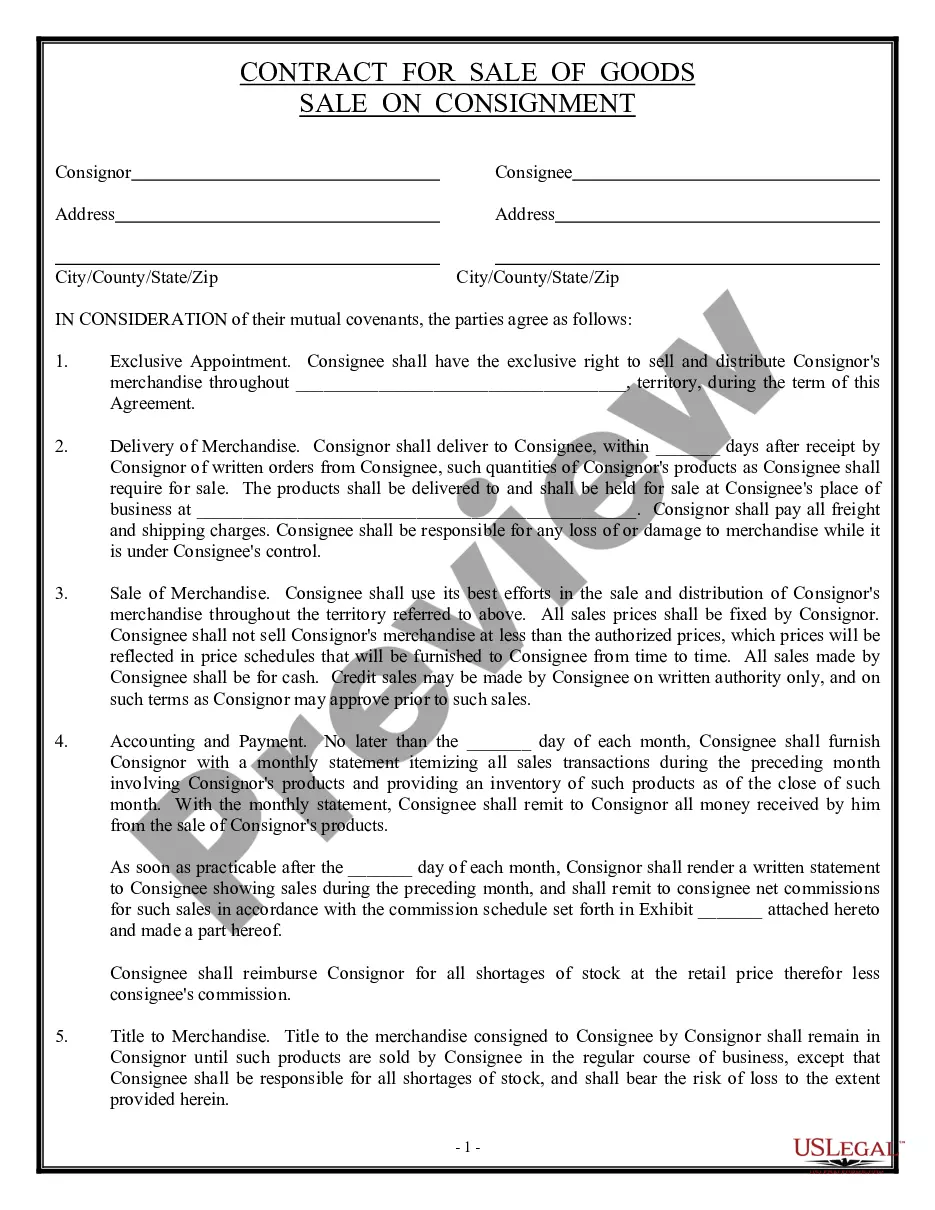
The Sale on Consignment Agreement is a legally binding document between a consignor and consignee, outlining the terms and responsibilities regarding the sale of merchandise on a consignment basis. This agreement ensures that both parties understand their roles, including the delivery of products, pricing, and payment arrangements. It differs from other sales agreements by specifically addressing consignment scenarios, where ownership of the product remains with the consignor until sold by the consignee. This form is essential for facilitating clear communication and protecting the interests of both parties involved in consignment sales.
Main sections of this form
- Exclusive appointment detailing the consignee's rights to sell the merchandise.
- Terms for delivering merchandise from the consignor to the consignee.
- Guidelines on pricing and sale of merchandise.
- Accountability and payment schedules for sales made by the consignee.
- Conditions for returning unsold merchandise to the consignor.
- Termination clauses and responsibilities post-termination.

When to use this form
This Sale on Consignment Agreement should be used when a consignor wants to place their merchandise in the hands of a consignee for sale. It is particularly useful for businesses looking to expand their market reach without bearing the initial costs of inventory placement. For example, artists or craftsmen might use this agreement when collaborating with shops to display and sell their products. Retailers looking to sell goods from various suppliers on a consignment basis can also benefit from utilizing this formal contract.
Who can use this document
This agreement is suitable for:
- Consignors who wish to have their products sold by third-party vendors.
- Consignees who intend to offer consignment merchandise in their business.
- Small business owners interested in selling products without incurring upfront inventory costs.
- Artists, craftspeople, and other creators looking to showcase their work through retailers.
How to prepare this document
- Identify the parties involved by entering the names of the consignor and consignee.
- Specify the territory where the merchandise will be sold.
- Detail the responsibilities for delivery, including timelines and shipping costs.
- Outline the pricing strategy for sales, including any restrictions.
- Include terms for accounting, payments, and returns of unsold merchandise.
- Sign and date the agreement to finalize the contract.
Notarization requirements for this form
This form does not typically require notarization to be legally valid. However, some jurisdictions or document types may still require it. US Legal Forms provides secure online notarization powered by Notarize, available 24/7 for added convenience.
Get your form ready online
Our built-in tools help you complete, sign, share, and store your documents in one place.
Make edits, fill in missing information, and update formatting in US Legal Forms—just like you would in MS Word.
Download a copy, print it, send it by email, or mail it via USPS—whatever works best for your next step.
Sign and collect signatures with our SignNow integration. Send to multiple recipients, set reminders, and more. Go Premium to unlock E-Sign.
If this form requires notarization, complete it online through a secure video call—no need to meet a notary in person or wait for an appointment.
We protect your documents and personal data by following strict security and privacy standards.

Make edits, fill in missing information, and update formatting in US Legal Forms—just like you would in MS Word.

Download a copy, print it, send it by email, or mail it via USPS—whatever works best for your next step.

Sign and collect signatures with our SignNow integration. Send to multiple recipients, set reminders, and more. Go Premium to unlock E-Sign.

If this form requires notarization, complete it online through a secure video call—no need to meet a notary in person or wait for an appointment.

We protect your documents and personal data by following strict security and privacy standards.
Avoid these common issues
- Failing to clearly define the territory for sale can lead to disputes.
- Not specifying the timeline for delivery of merchandise may cause confusion.
- Omitting pricing details can result in unauthorized discounts by the consignee.
- Neglecting to include a clear termination clause can create problems if either party wants to end the agreement.
Benefits of completing this form online
- Convenient download options in editable formats, making it easy to customize for specific needs.
- Accessibility from anywhere with an internet connection, allowing for immediate use.
- Time-saving, as the form can be filled out and finalized online without delays.
- Reliable templates drafted by licensed attorneys for peace of mind in legal compliance.
What to keep in mind
- The Sale on Consignment Agreement establishes clear rights and responsibilities between a consignor and consignee.
- It is crucial to detail terms regarding pricing, delivery, and payments to avoid misunderstandings.
- Employing this form can protect the interests of both parties in a consignment arrangement.
Looking for another form?
Form popularity
FAQ
A normal commission in consignment typically falls between 30% and 50%. However, the specific rate can differ based on the type of goods sold and the policies of the consignment shop. When entering into an Arizona Sale on Consignment Agreement, review the commission rates to ensure that they align with your expectations and potential earnings.
The profit margin for consignment stores varies widely based on location, inventory quality, and market demand. Typically, consignment stores operate on a lower margin than traditional retail, but they benefit from selling second-hand or unique items that can command higher prices. It’s essential to analyze trends in your area, especially when considering an Arizona Sale on Consignment Agreement.
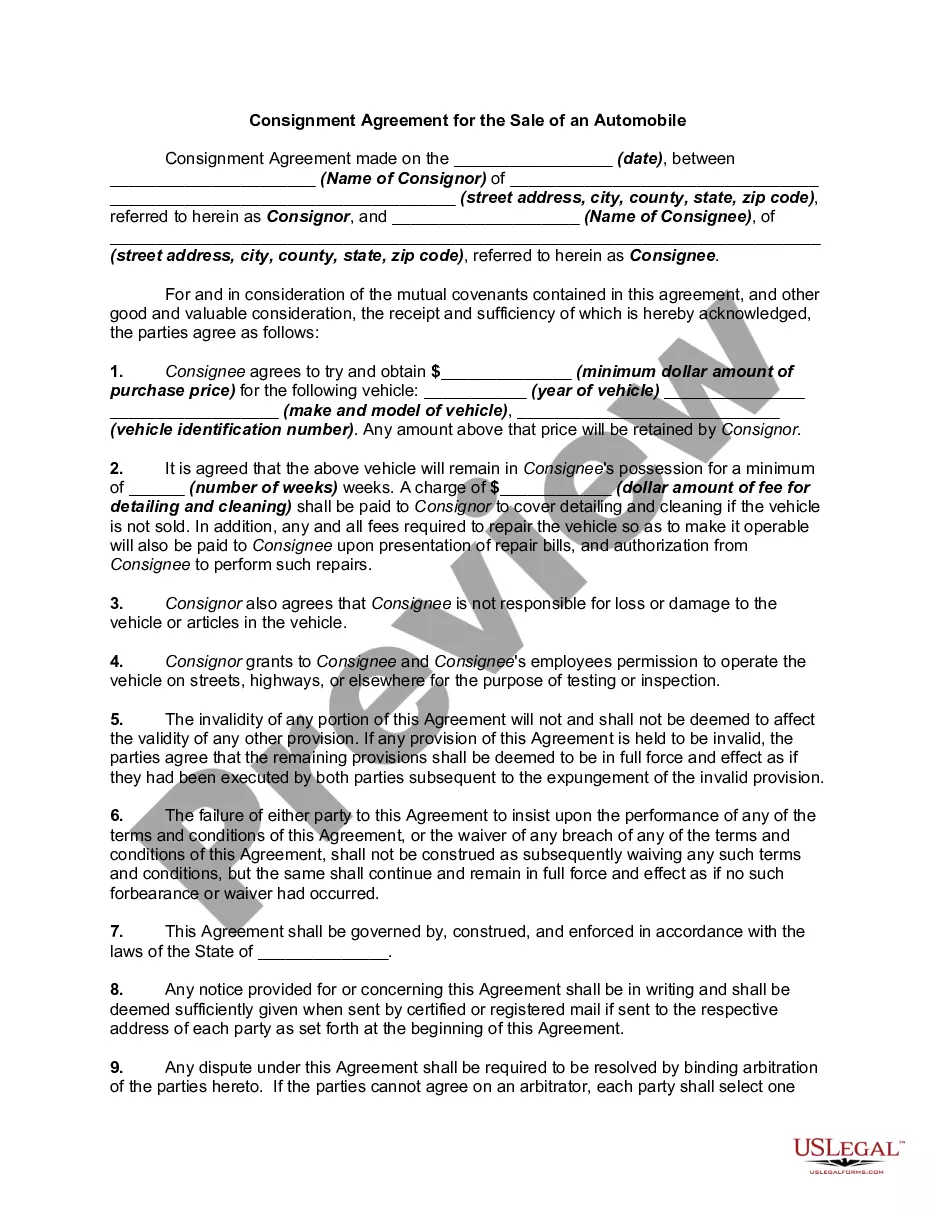
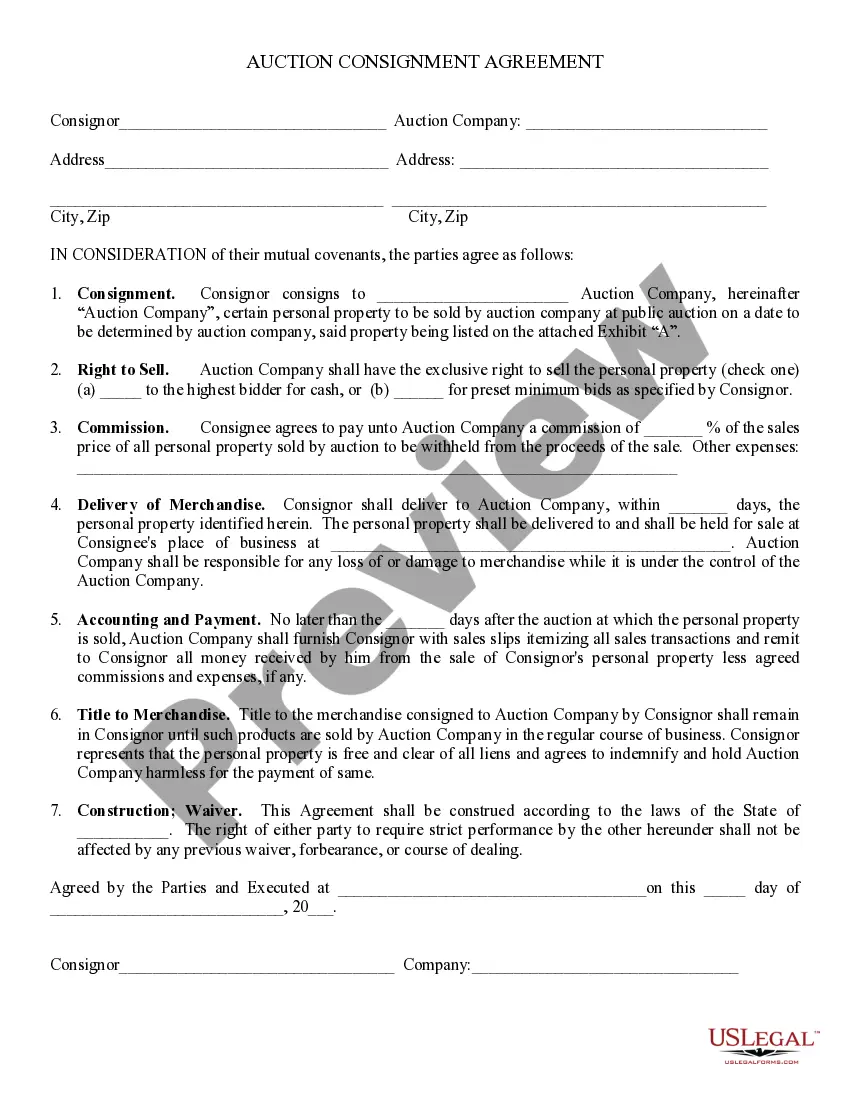
There are generally three types of consignments: retail consignment, auction consignment, and consignment in antique stores. Each type can suit different types of products and marketing strategies. Understanding these categories can help you choose the right one when drafting your Arizona Sale on Consignment Agreement and maximize your sales potential.
The process of a consignment agreement typically begins with drafting the agreement itself, which outlines the terms of sale, commission rates, and duration of the agreement. Once both parties sign, you deliver the items to the consignee. With an Arizona Sale on Consignment Agreement, you can monitor the sale progress, and payment occurs once the item sells, making it a straightforward process.
Accounting for consignment sales involves tracking inventory and revenue accurately. When you set up an Arizona Sale on Consignment Agreement, you typically recognize revenue only when the item sells. This method ensures your books reflect current inventory levels, making it easier to manage financial records and understand profit margins for consigned items.
A common example of a consignment model is a flea market or consignment shop, where multiple vendors display their items in a single location. Each vendor retains ownership of their goods until sold, with the shop taking a commission on each sale. Establishing a clear Arizona Sale on Consignment Agreement is crucial in these arrangements to clarify the terms and expectations between vendors and the consignment shop.
Consignment means handing over goods to another party for sale, with payment contingent upon sale success. For example, a clothing designer may place their collection in a boutique, allowing the boutique to sell the items under an Arizona Sale on Consignment Agreement. The designer receives payment only after the clothing sells, making this a low-risk option for beginning retailers.
Consignment selling is a retail arrangement where a seller provides goods to a retailer, who then sells them on behalf of the seller. The seller retains ownership until the item sells, ensuring they are only compensated for sold items. If you are considering this method, an Arizona Sale on Consignment Agreement can help define the relationship and protect your interests in the transaction.
A consignment agreement operates by outlining the duties and responsibilities of both the seller and the retailer. The retailer sells the goods and, upon sale, pays the seller based on the agreed percentage outlined in the Arizona Sale on Consignment Agreement. This arrangement minimizes risk for the seller while allowing the retailer to offer diverse products without upfront inventory costs.
A fair percentage for consignment can vary, typically ranging from 30% to 60% depending on the type of goods and the market. For an Arizona Sale on Consignment Agreement, sellers should negotiate percentages that reflect the value provided by the retailer. It’s important to come to a mutually agreeable figure that rewards both parties fairly.