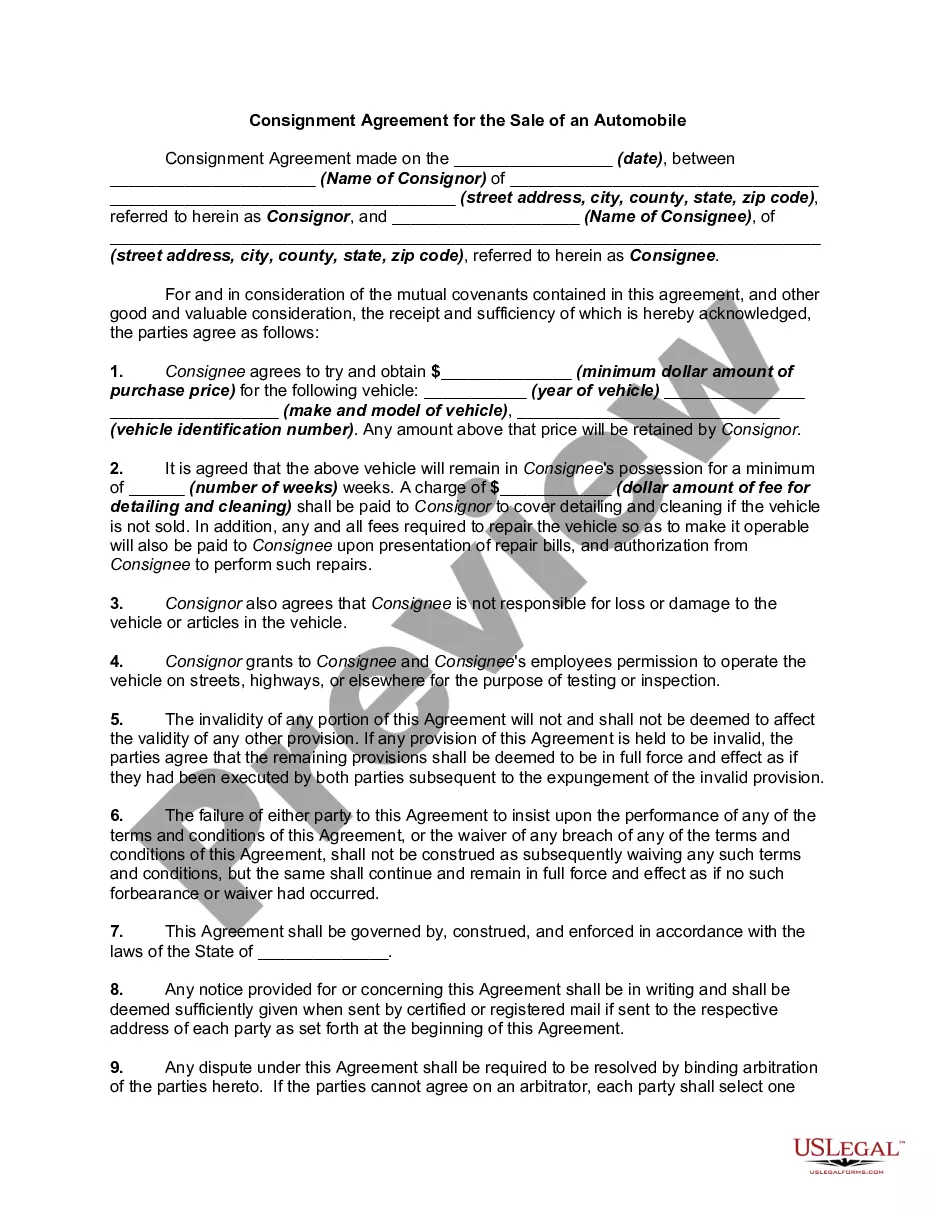
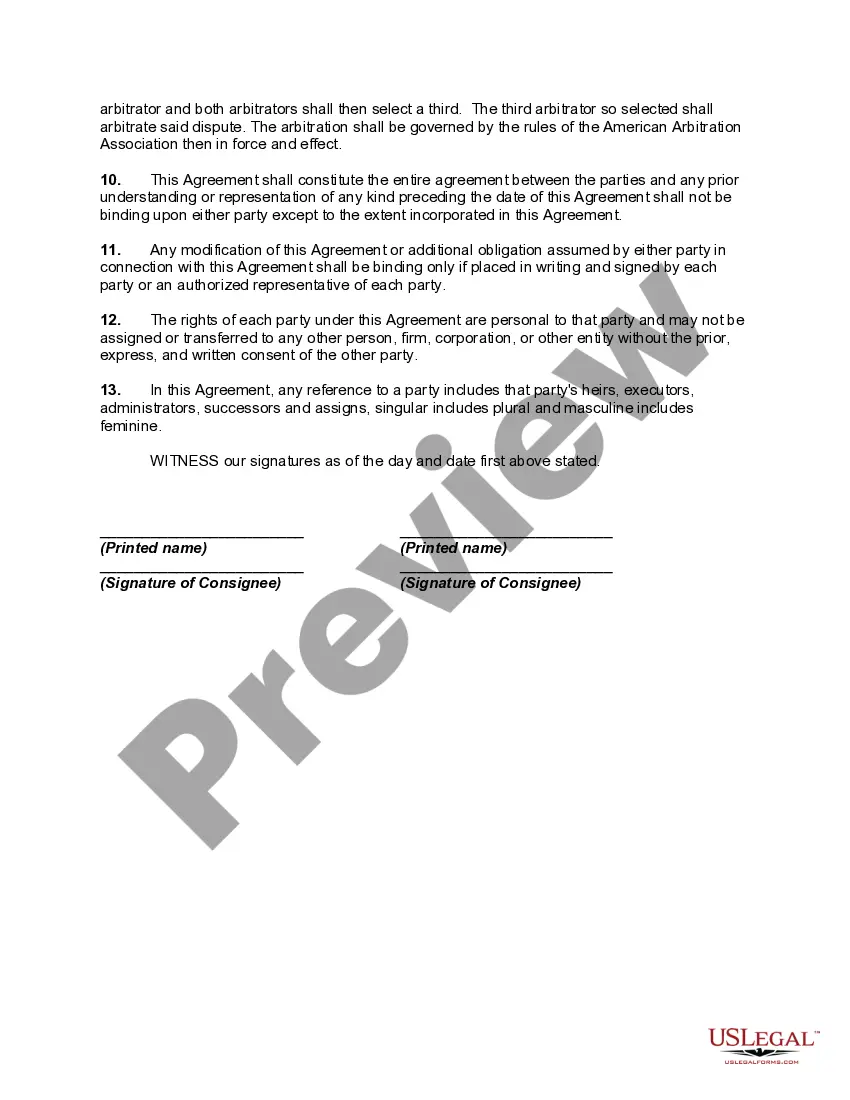
The Consignment Agreement for the Sale of an Automobile is a legal document outlining the terms under which a vehicle owner (consignor) allows another party (consignee) to sell their car on their behalf. This agreement ensures that the consignor receives payment for the vehicle once sold and details the responsibilities of both parties in the sales process. Unlike a standard sale, this arrangement allows the vehicle to be sold without an immediate purchase commitment, making it a flexible option for those looking to sell their automobile while retaining some control over the process.
This form is appropriate when an automobile owner wishes to sell their vehicle through a consignee instead of a direct sale. It can be beneficial in scenarios where the owner may not have the time or opportunity to manage the sale process directly, or when they want to retain certain rights over the sale until a sale is successfully completed. It is especially useful in competitive markets where the consignee has the ability to reach a broader audience of potential buyers.
This form is intended for:
This form usually doesn’t need to be notarized. However, local laws or specific transactions may require it. Our online notarization service, powered by Notarize, lets you complete it remotely through a secure video session, available 24/7.
Our built-in tools help you complete, sign, share, and store your documents in one place.
Make edits, fill in missing information, and update formatting in US Legal Forms—just like you would in MS Word.
Download a copy, print it, send it by email, or mail it via USPS—whatever works best for your next step.
Sign and collect signatures with our SignNow integration. Send to multiple recipients, set reminders, and more. Go Premium to unlock E-Sign.
If this form requires notarization, complete it online through a secure video call—no need to meet a notary in person or wait for an appointment.
We protect your documents and personal data by following strict security and privacy standards.

Make edits, fill in missing information, and update formatting in US Legal Forms—just like you would in MS Word.

Download a copy, print it, send it by email, or mail it via USPS—whatever works best for your next step.

Sign and collect signatures with our SignNow integration. Send to multiple recipients, set reminders, and more. Go Premium to unlock E-Sign.

If this form requires notarization, complete it online through a secure video call—no need to meet a notary in person or wait for an appointment.

We protect your documents and personal data by following strict security and privacy standards.
The parties to a consignment are consignor and consignee whereas the parties to the sale are buyer and seller.In consignment, only the possession of goods transfers not the ownership. On the other hand, in the sale, both the ownership and possession are transferred to the buyer.
Parties. Provide the names and addresses of the consignor and the consignee. Item(s) for sale. Pricing. Payment. Expenses. Record-keeping. Ownership. Insurance.
Auto consignment offers an attractive option for vehicle owners who would like to get more money for their car than the dealer trade-in price, as the vehicle will be marketed professionally without the traditional hassle and frustration of trying to sell it yourself.
A consignment agreement is a contract that places an item the consignor (or owner) owns with the consignee (or seller) for the consignee to sell. The consignee often takes a commission or fee and then the remainder of the sale price is paid to the consignor.
Introduction of Parties. Identifies the parties and the date of the agreement. Recitals. Section 1: Consigned Property. Section 2: Delivery of Goods. Section 3: Consignment Period. Section 4: Efforts to Sell. Section 5: Title to Products. Section 6: Payment; Commission.
Depending on the consignment shop and the item being sold, the seller may concede 25% to 60% of the sales price in consignment fees. Consignment arrangements typically are in effect for a set period of time. After this time, if a sale is not made, the goods are returned to their owner.
A consignment agreement is an agreement between a consignee and consignor for the storage, transfer, sale or resale and use of the commodity. The consignee may take goods from the consignment stock for use or resale subject to payment to the consignor agreeably to the terms bargained in the consignment agreement.
Specifically, the contract should include details about payment and what happens if the consignee does not fulfill their duties. The Consignment Contract should outline all of the parties expectations for their working relationship. It should be created, printed, and signed by both parties before the work begins.