Arizona Conservation Easement
Overview of this form
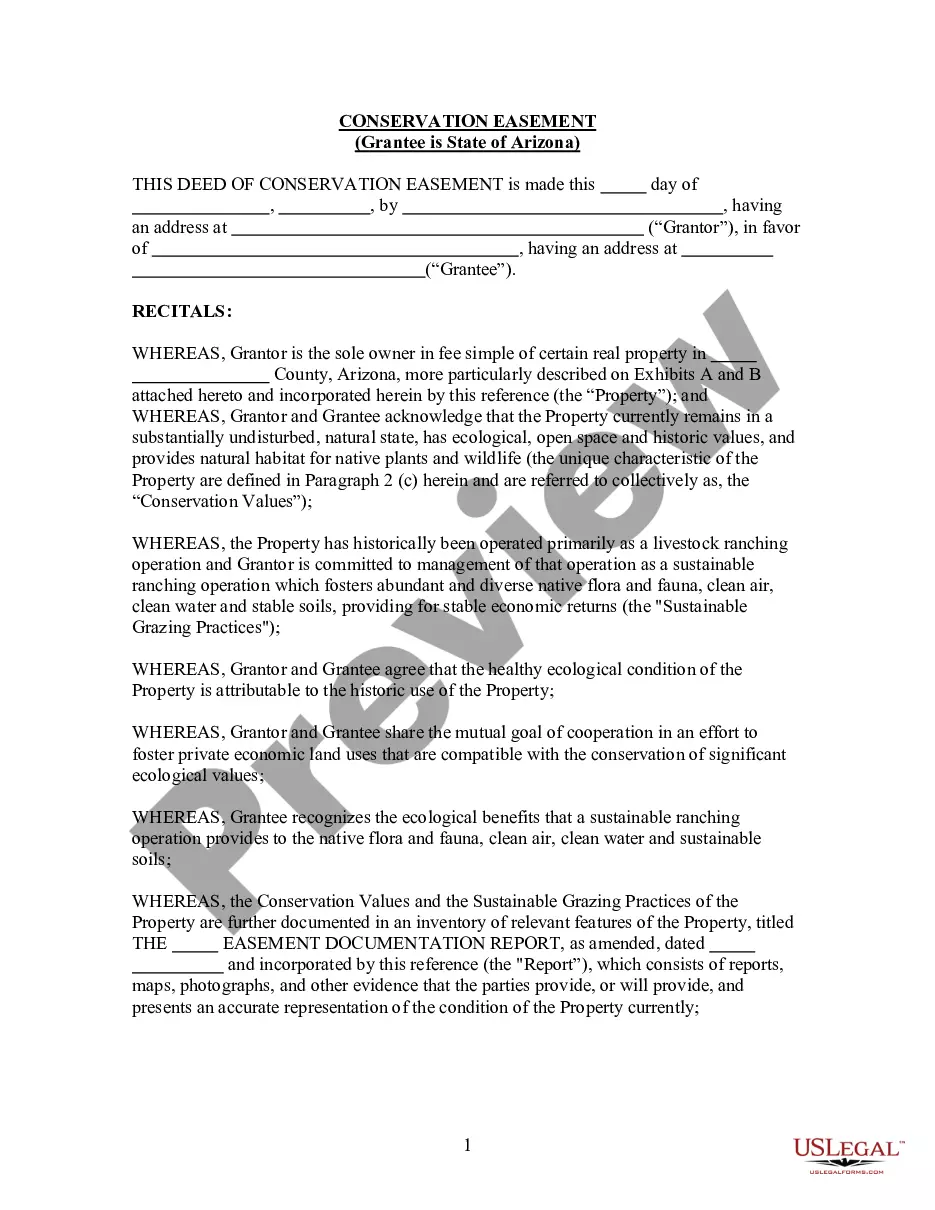
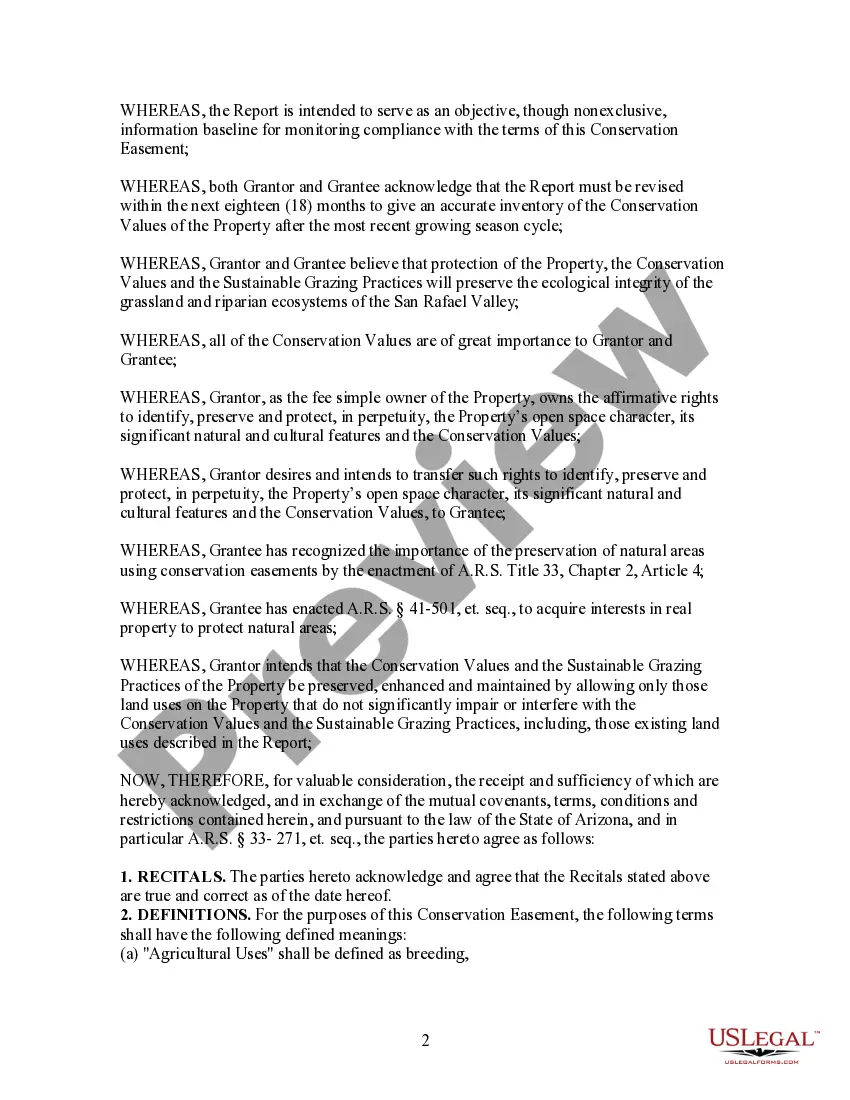
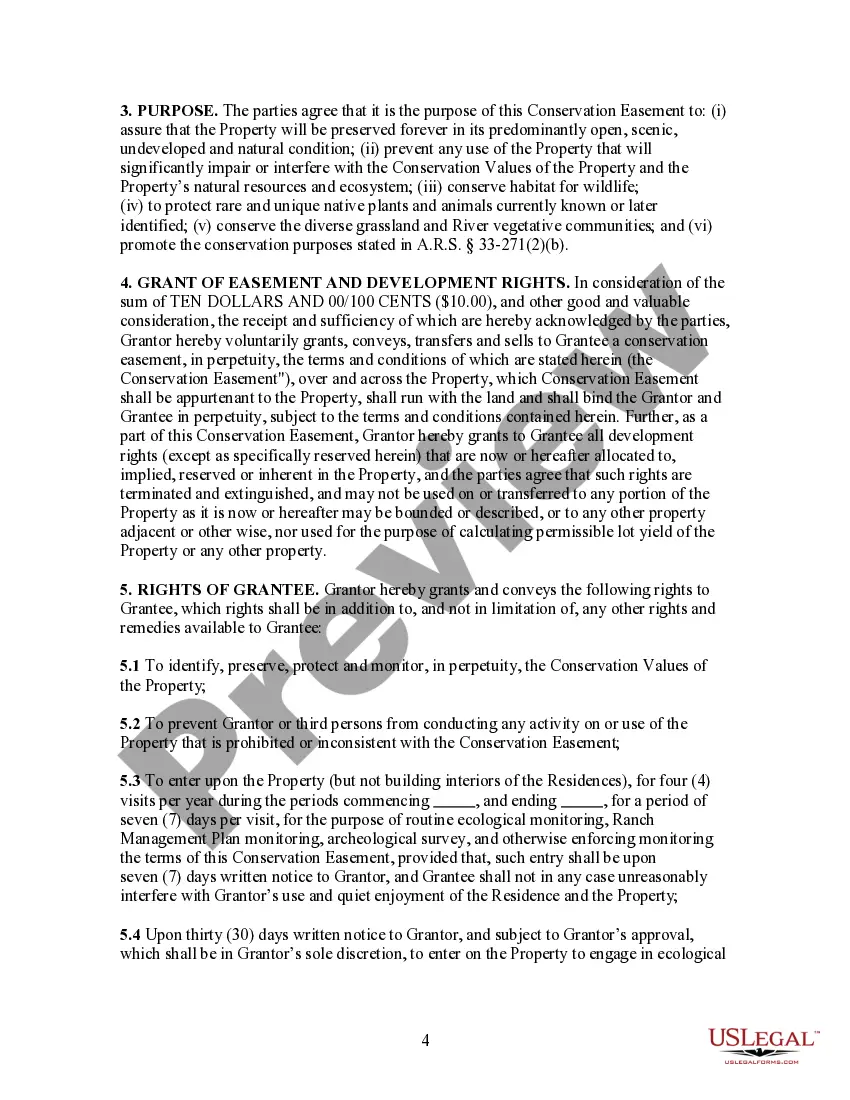
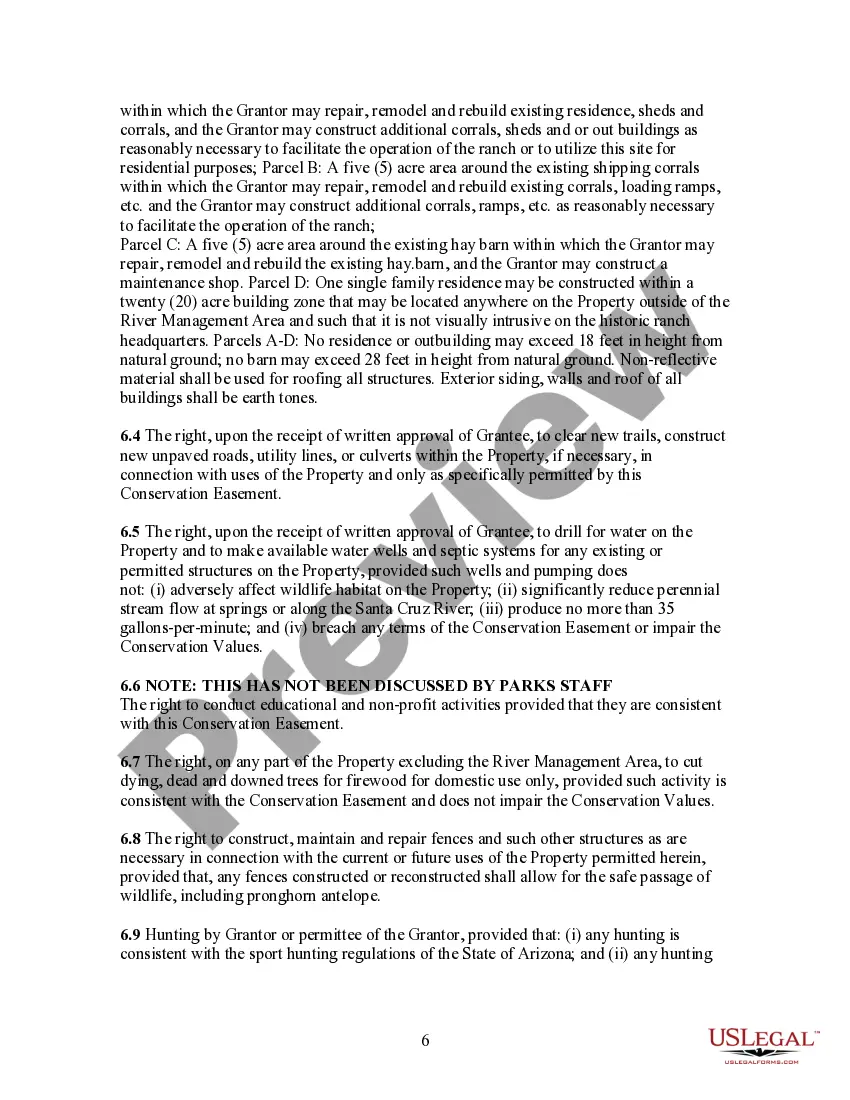
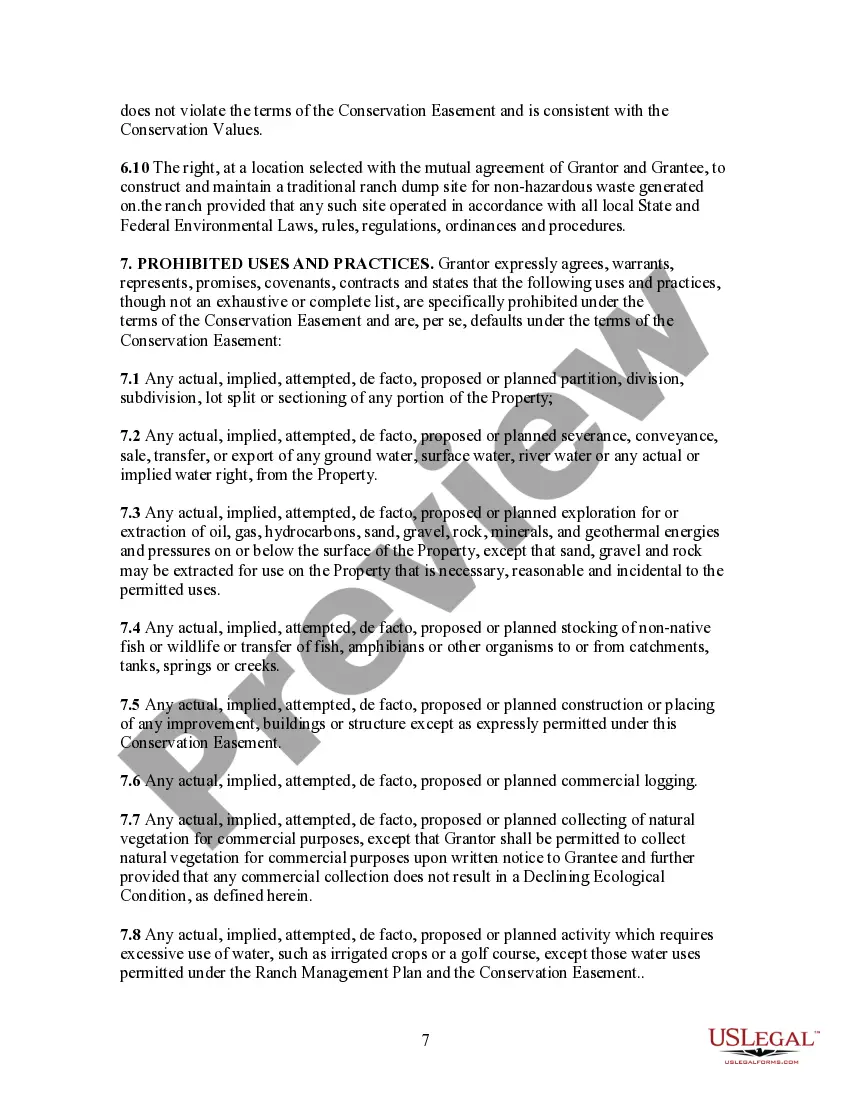
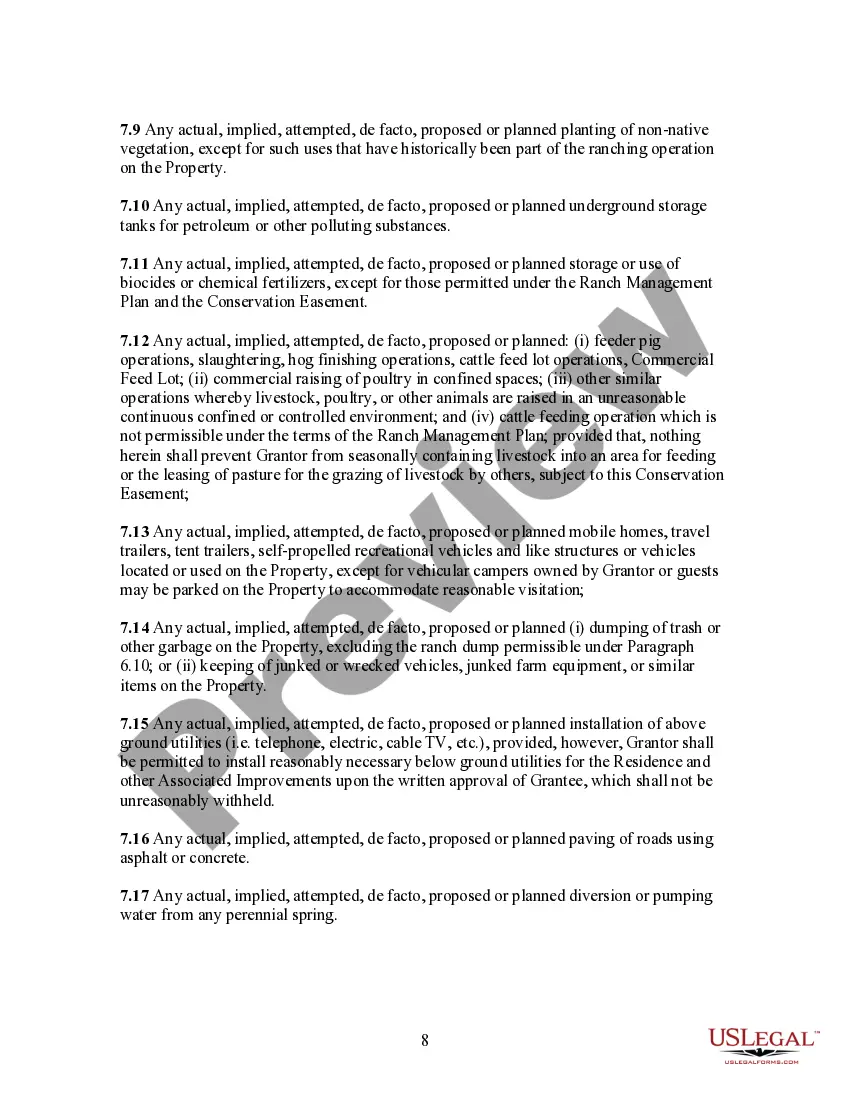
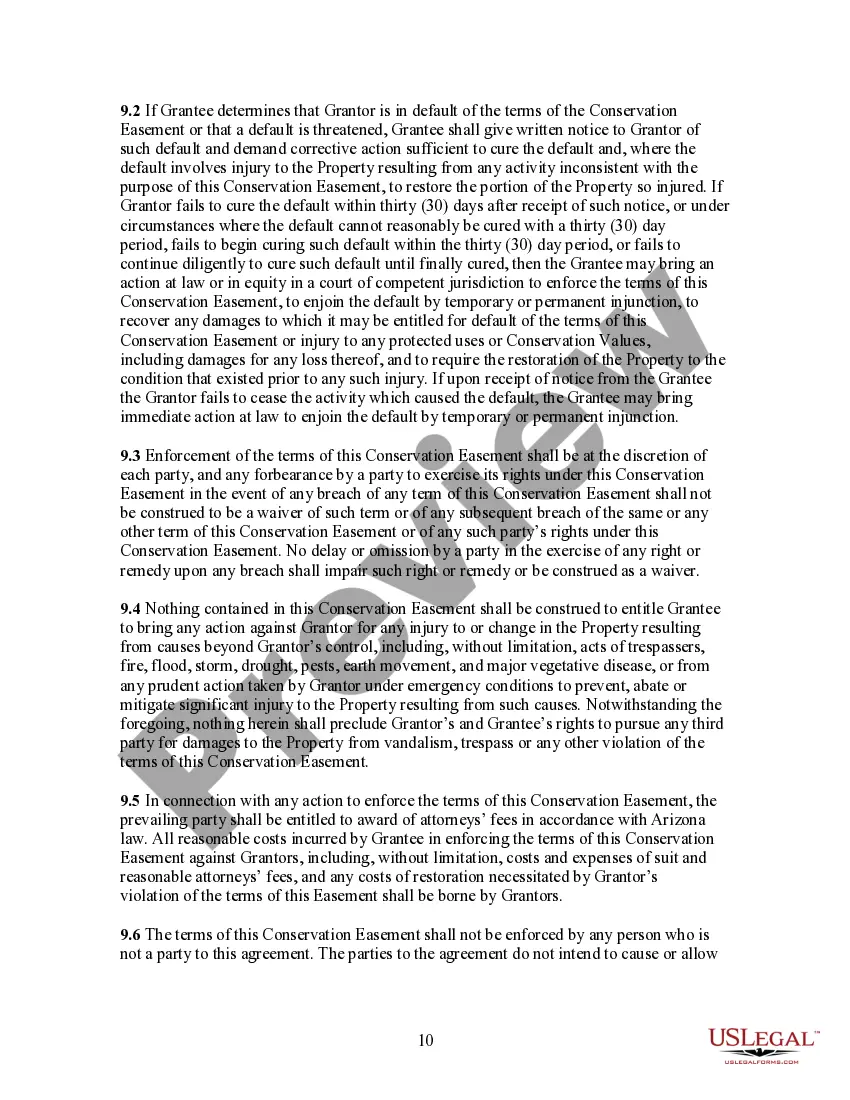
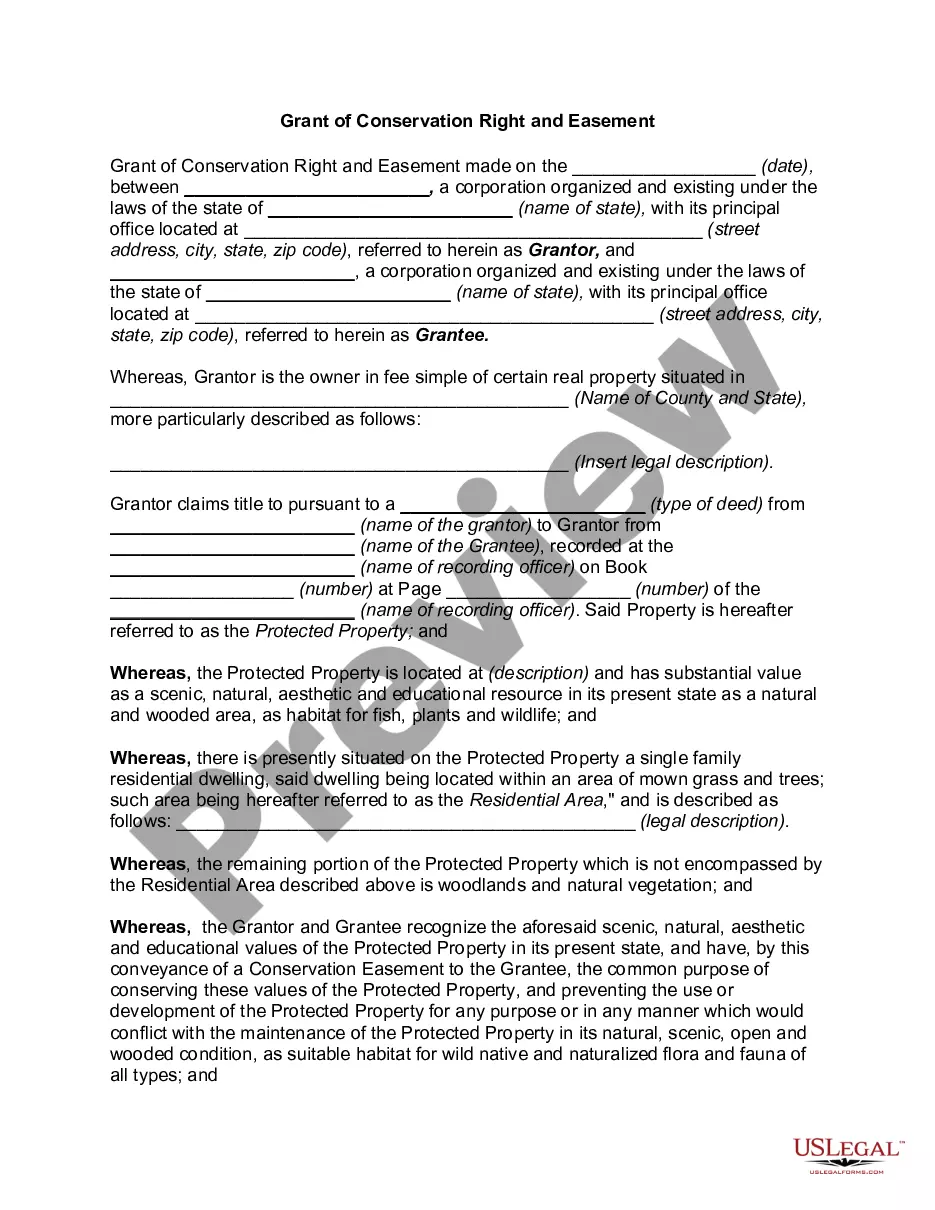
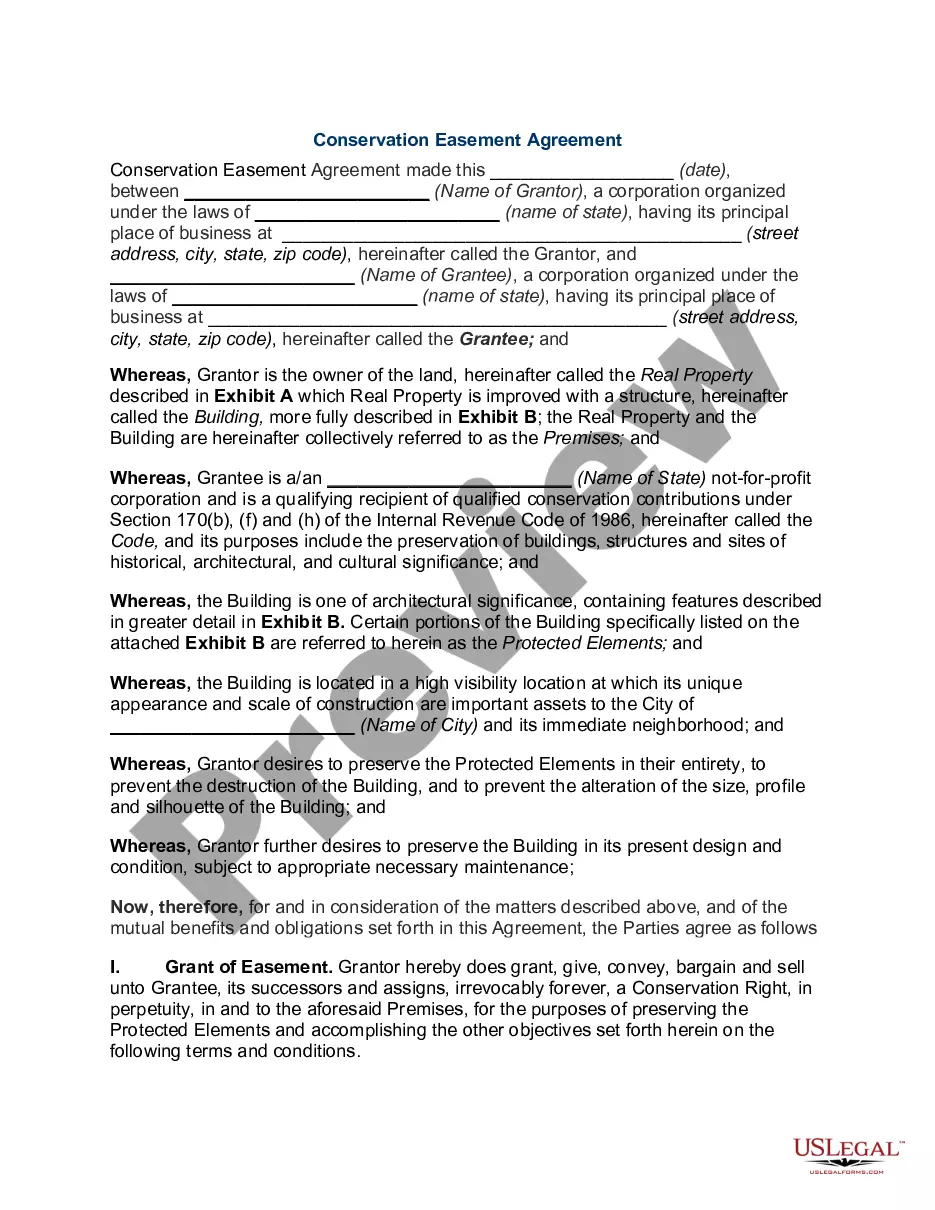
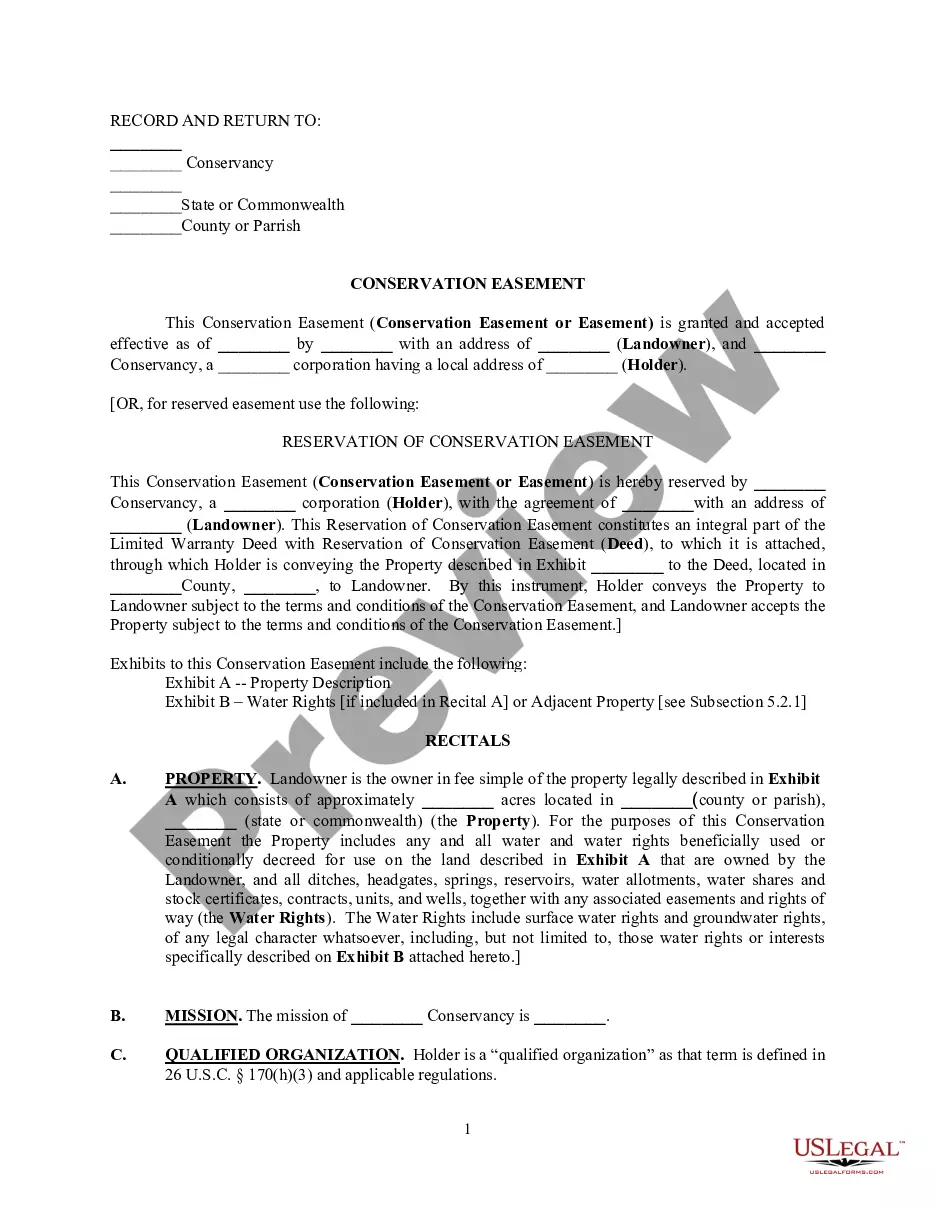
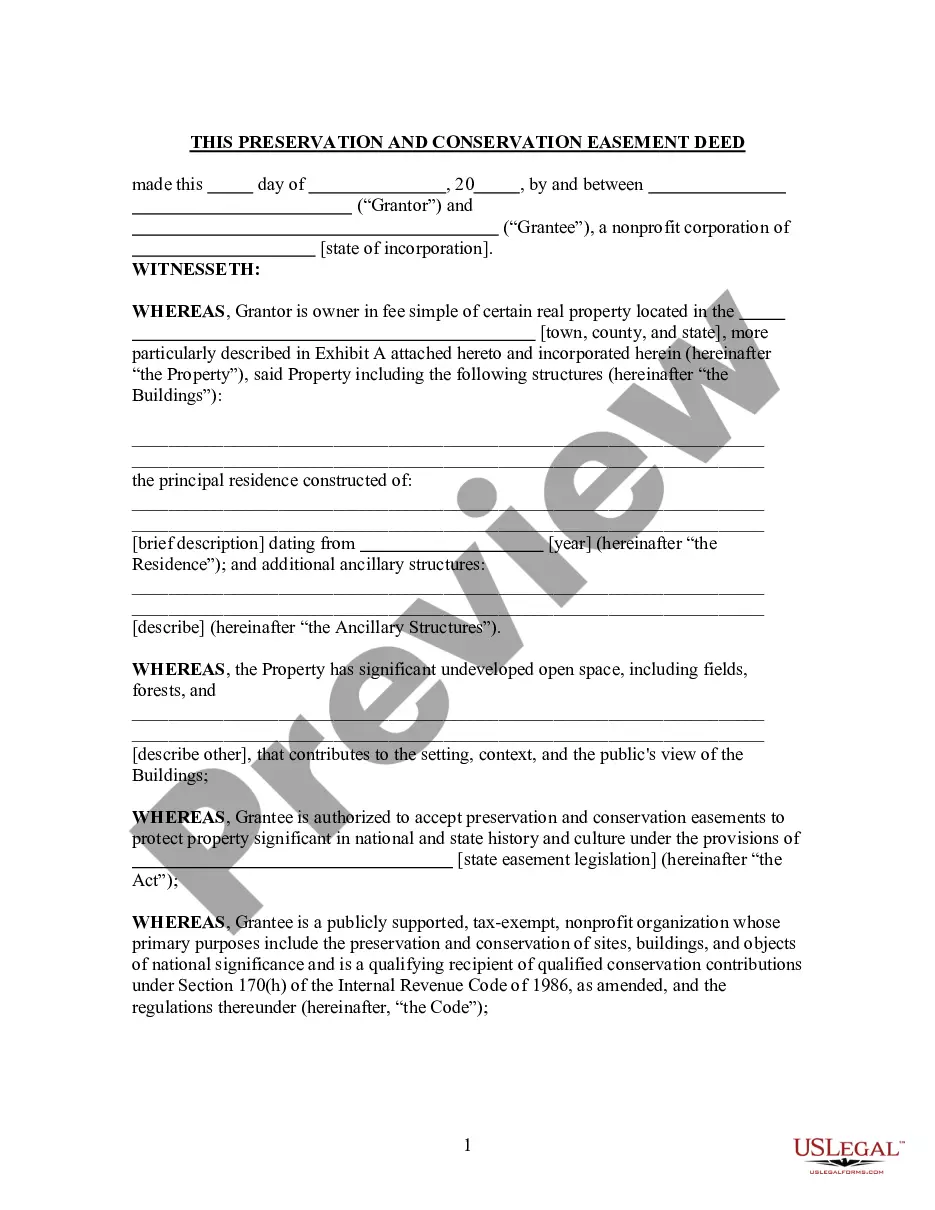
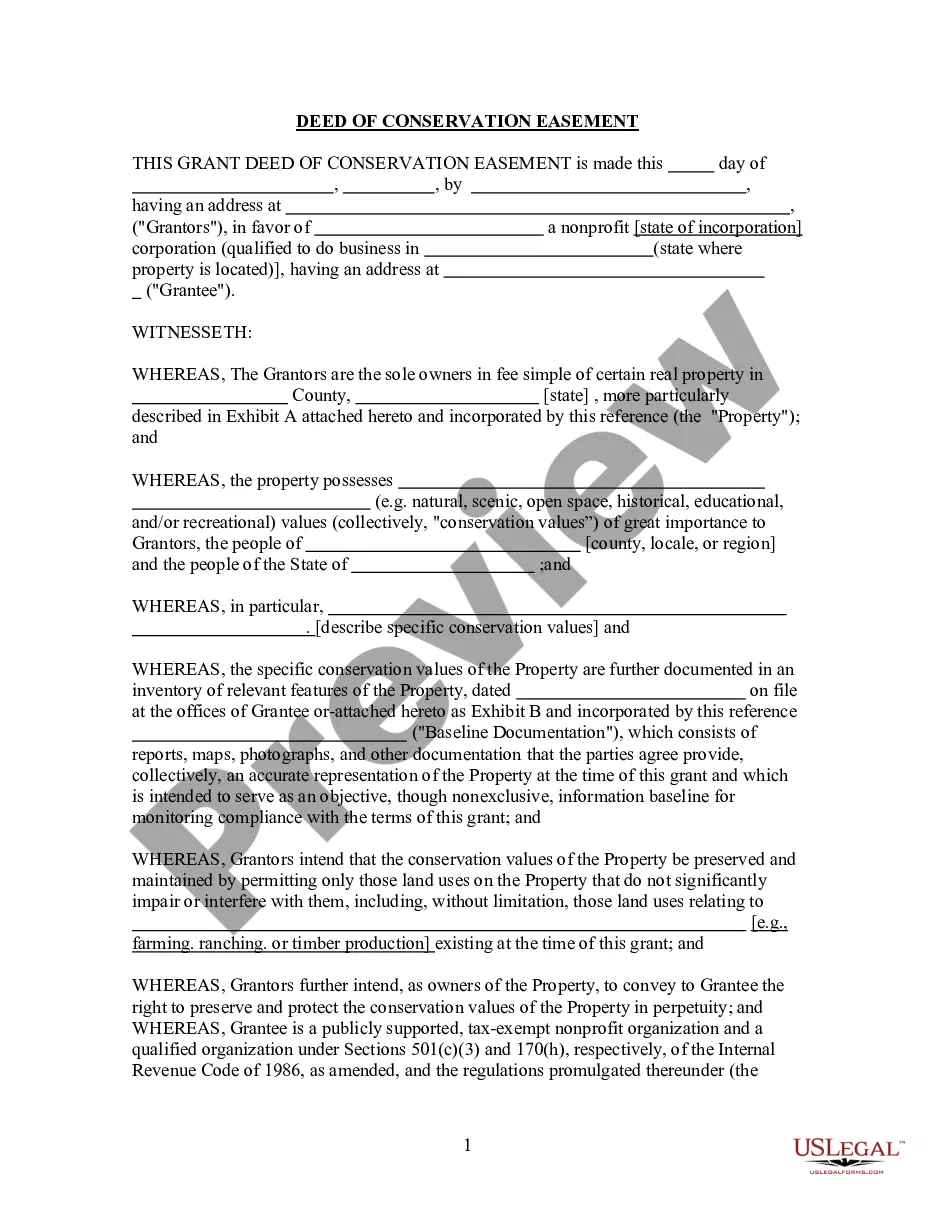
The Conservation Easement is a legal document designed to protect the open, scenic, and ecological values of a property. This form allows property owners to maintain specific permitted uses, such as sustainable ranching, while ensuring that significant natural and cultural features are preserved. Unlike general property agreements, this easement focuses on long-term conservation and responsible land management practices.
What’s included in this form
- Identification of the Grantor (property owner) and Grantee (entity receiving the easement)
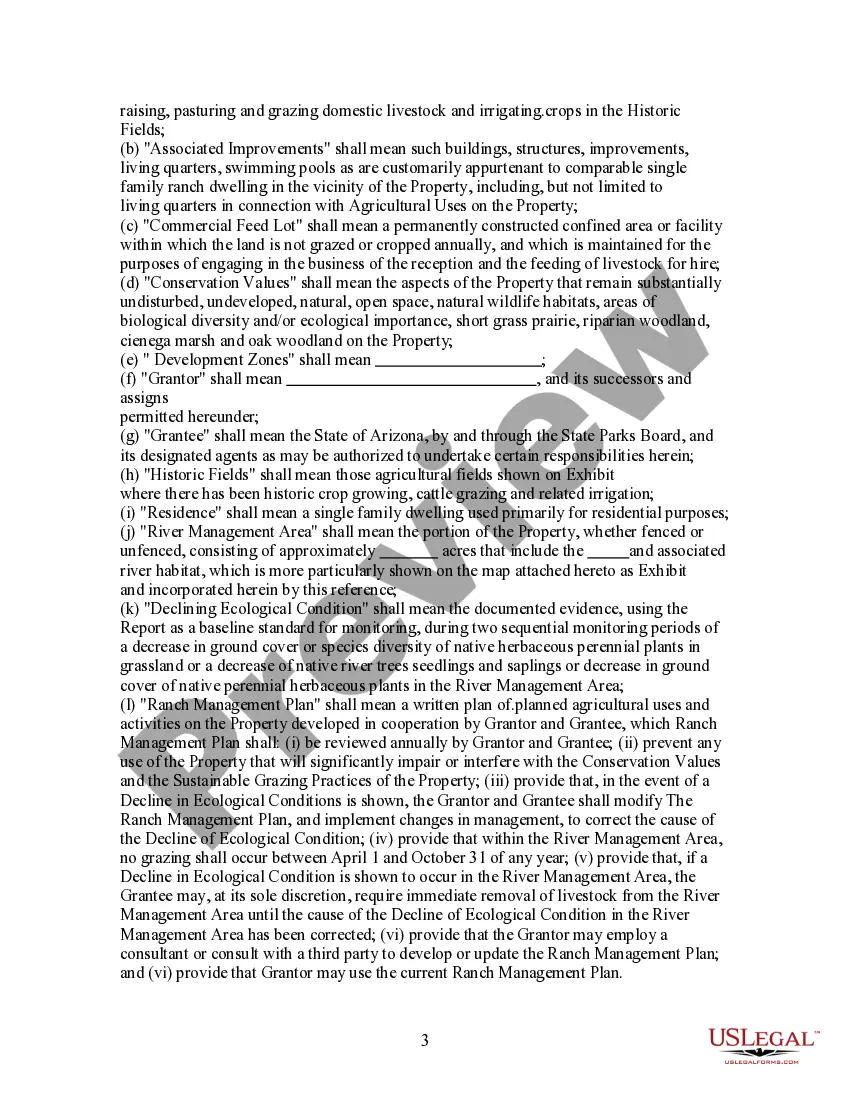
- Definitions related to agricultural uses, conservation values, and associated improvements
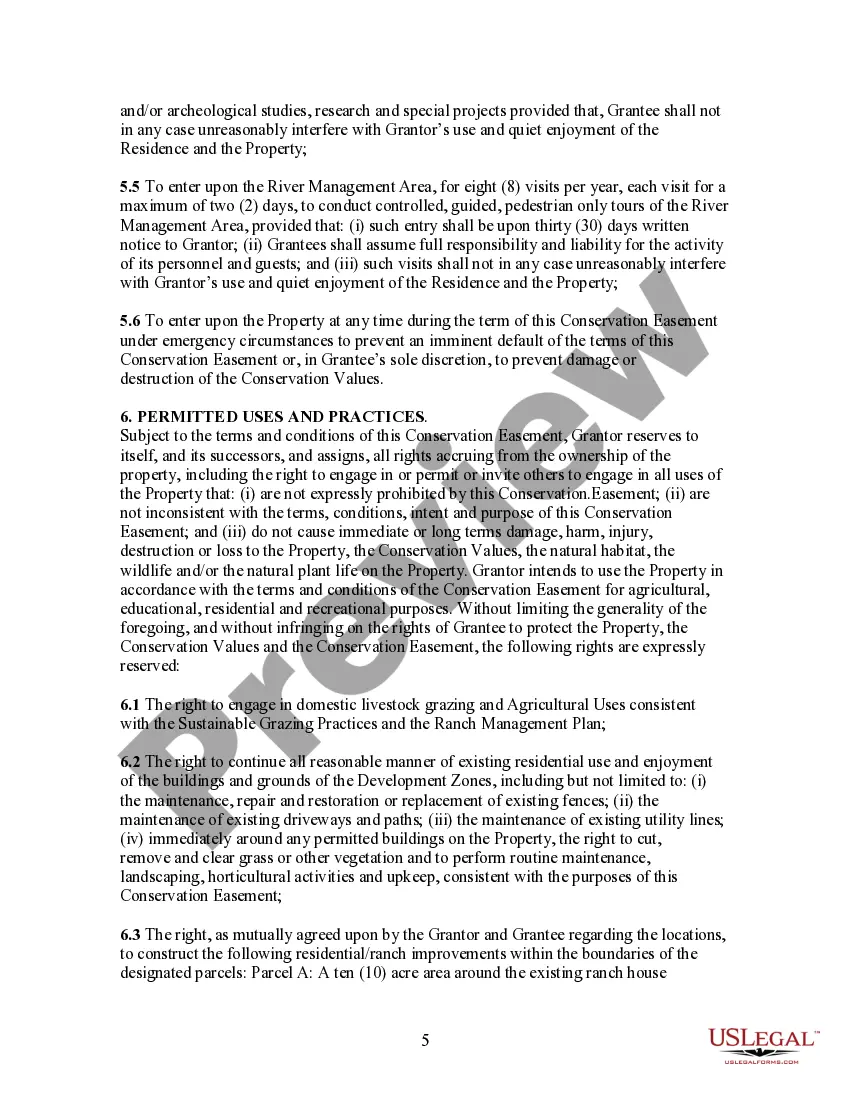
- Permitted uses and practices on the property, including sustainable grazing
- Prohibited uses that could harm ecological values or alter the property's landscape
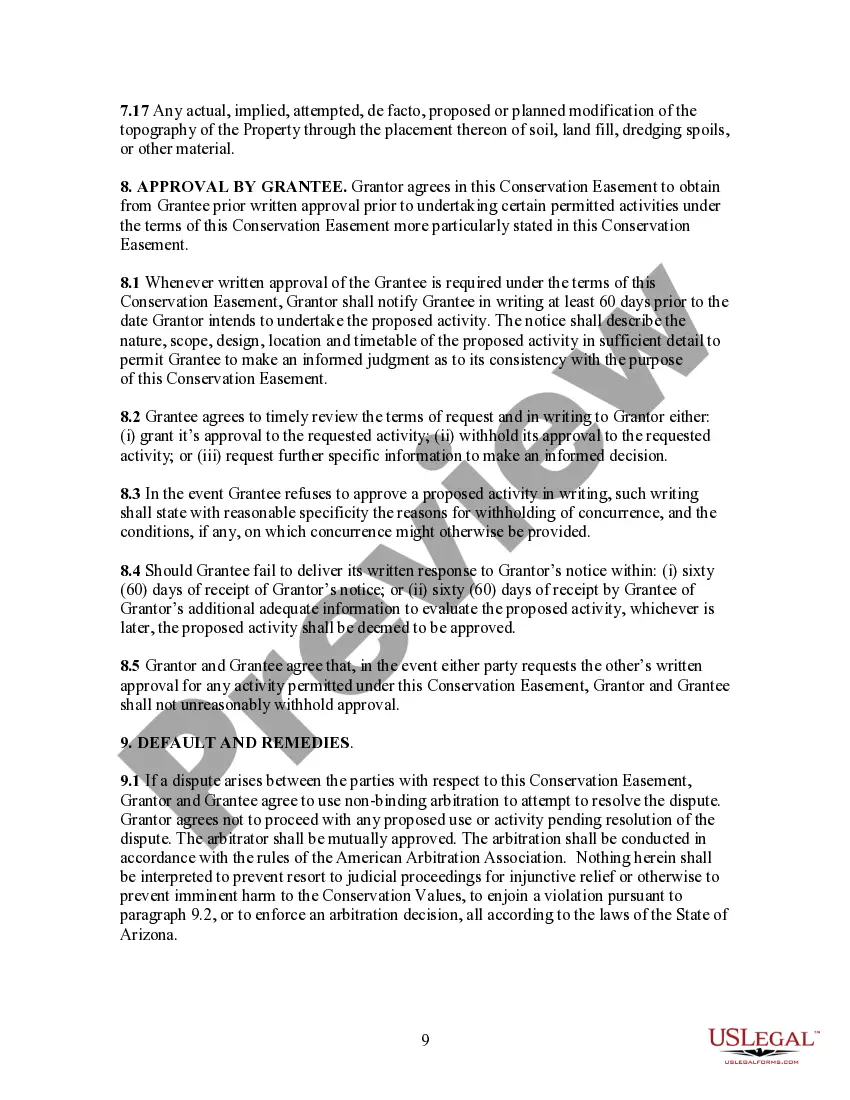
- Process for obtaining Grantee approval for specified activities
- Rights and responsibilities of both parties, including monitoring and compliance

Common use cases
This form is necessary when a property owner wishes to grant a conservation easement to an organization or government entity to preserve specific ecological and scenic characteristics of their land. It is particularly relevant for land that has been historically used for ranching and requires a sustainable management plan to maintain its integrity.
Who can use this document
- Property owners who wish to ensure long-term conservation of their land.
- Land trusts or conservation organizations interested in protecting natural resources.
- Farmers and ranchers seeking to continue agricultural practices while preserving environmental values.
- Individuals looking to comply with local conservation regulations.
How to complete this form
- Identify and clearly state the parties involved (Grantor and Grantee).
- Specify the property and attach a legal description.
- Outline the conservation values and sustainable practices that will be maintained.
- Include any permitted and prohibited uses of the property in detail.
- Sign and date the document with any necessary parties present.
Does this form need to be notarized?
This form does not typically require notarization unless specified by local law. However, it is advisable to consult legal counsel to confirm if notarization is necessary in your jurisdiction for added legal protection.
Get your form ready online
Our built-in tools help you complete, sign, share, and store your documents in one place.
Make edits, fill in missing information, and update formatting in US Legal Forms—just like you would in MS Word.
Download a copy, print it, send it by email, or mail it via USPS—whatever works best for your next step.
Sign and collect signatures with our SignNow integration. Send to multiple recipients, set reminders, and more. Go Premium to unlock E-Sign.
If this form requires notarization, complete it online through a secure video call—no need to meet a notary in person or wait for an appointment.
We protect your documents and personal data by following strict security and privacy standards.

Make edits, fill in missing information, and update formatting in US Legal Forms—just like you would in MS Word.

Download a copy, print it, send it by email, or mail it via USPS—whatever works best for your next step.

Sign and collect signatures with our SignNow integration. Send to multiple recipients, set reminders, and more. Go Premium to unlock E-Sign.

If this form requires notarization, complete it online through a secure video call—no need to meet a notary in person or wait for an appointment.

We protect your documents and personal data by following strict security and privacy standards.
Typical mistakes to avoid
- Failing to clearly define the conservation values and permitted uses.
- Not obtaining Grantee approval for actions that require it.
- Omitting signatures from all required parties.
- Neglecting to maintain and update the Ranch Management Plan as required.
Benefits of completing this form online
- Convenience of downloading and completing the document at your own pace.
- Editability allows for customizing the form to meet specific needs.
- Reliability through templates drafted by licensed attorneys.
Legal Context
- The Conservation Easement is legally binding and stays with the property even if sold.
- Both parties maintain rights to enforce the terms of the easement through legal channels if needed.
Main things to remember
Key Takeaways
- The Conservation Easement is essential for protecting land while allowing for sustainable uses.
- Understanding defined terms and permitted uses is crucial for compliance.
- Clear communication between the Grantor and Grantee can prevent disputes.
Looking for another form?

Form popularity
FAQ
Easement laws in Arizona define the rights and limitations connected to the use of someone's property for a specific purpose, like a conservation easement. These laws dictate how easements are created, enforced, and terminated. It is vital to understand that Arizona Conservation Easement regulations focus on preserving land while balancing property rights. Seeking assistance from platforms like USLegalForms can help navigate these laws effectively, ensuring all legal aspects are covered.
The encroachment law in Arizona involves regulations to address situations where property boundaries are violated, typically by neighboring structures or trees. When encroachments occur, property owners can pursue various solutions, such as legal action or negotiation with the encroaching party. Understanding these laws is essential for property owners to protect their rights, especially regarding Arizona Conservation Easements, which may intersect with encroachment issues. Consulting a legal expert can provide clarity on how these laws affect your property.
To terminate an easement in Arizona, you need to demonstrate valid reasons such as abandonment, expiration, or mutual agreement with the easement holder. You might need to submit a formal request or document to the local government office where the easement was recorded. It is advisable to have legal guidance during this process to ensure compliance with Arizona law. Utilizing resources like USLegalForms can simplify the termination of an Arizona Conservation Easement.
The maximum amount for a qualified conservation easement can vary depending on specific regulations and appraisals of the land. Typically, the benefits can amount to substantial tax deductions based on the easement's value. If you are curious about qualifying amounts for Arizona Conservation Easements, working with professionals can help you identify potential maximum benefits for your land.
In Louisiana, a conservation easement serves to protect significant natural features, such as wetlands and wildlife habitats, from development. This agreement enables landowners to preserve their property’s ecological value while still enjoying some use rights. If you're considering a similar initiative, an Arizona Conservation Easement could help safeguard your land while addressing your conservation intentions.
A conservation easement in Minnesota is a legal agreement that permanently restricts land development to promote conservation. It allows landowners to retain ownership while contributing to conservation goals. Interested in how such arrangements work? An Arizona Conservation Easement offers analogous options for protecting natural resources while maintaining land ownership.
In Florida, landowners can benefit from tax credits tied to conservation easements, which can significantly lower their tax burden. These credits often amount to 50% of the donation value, providing substantial financial incentives. If you're exploring potential tax benefits from your property, an Arizona Conservation Easement may present similar opportunities for tax savings.
Building on a conservation easement in New Jersey typically requires adherence to specific regulations. Generally, the purpose of an easement is to limit development that could damage natural resources. If you're considering development options, consulting with a professional can clarify your rights under Arizona Conservation Easements, offering a framework for responsible land use.
In New Jersey, a conservation easement allows landowners to maintain certain rights while restricting activities that might harm the environment. You can still conduct agricultural practices, manage forests, and enjoy recreational activities. However, construction and commercial uses are generally prohibited. Understanding your options with an Arizona Conservation Easement can provide similar flexibility.
The most common way to create an easement involves a written agreement between the parties involved. This agreement outlines the purpose, location, and rights associated with the easement. In the case of Arizona Conservation Easements, this written contract often includes provisions aimed at protecting environmental features of the land. Working with legal professionals can help ensure that the easement meets all legal standards and effectively serves its intended purpose.