Arizona Stipulation for Order to Modify Child Support
What this document covers
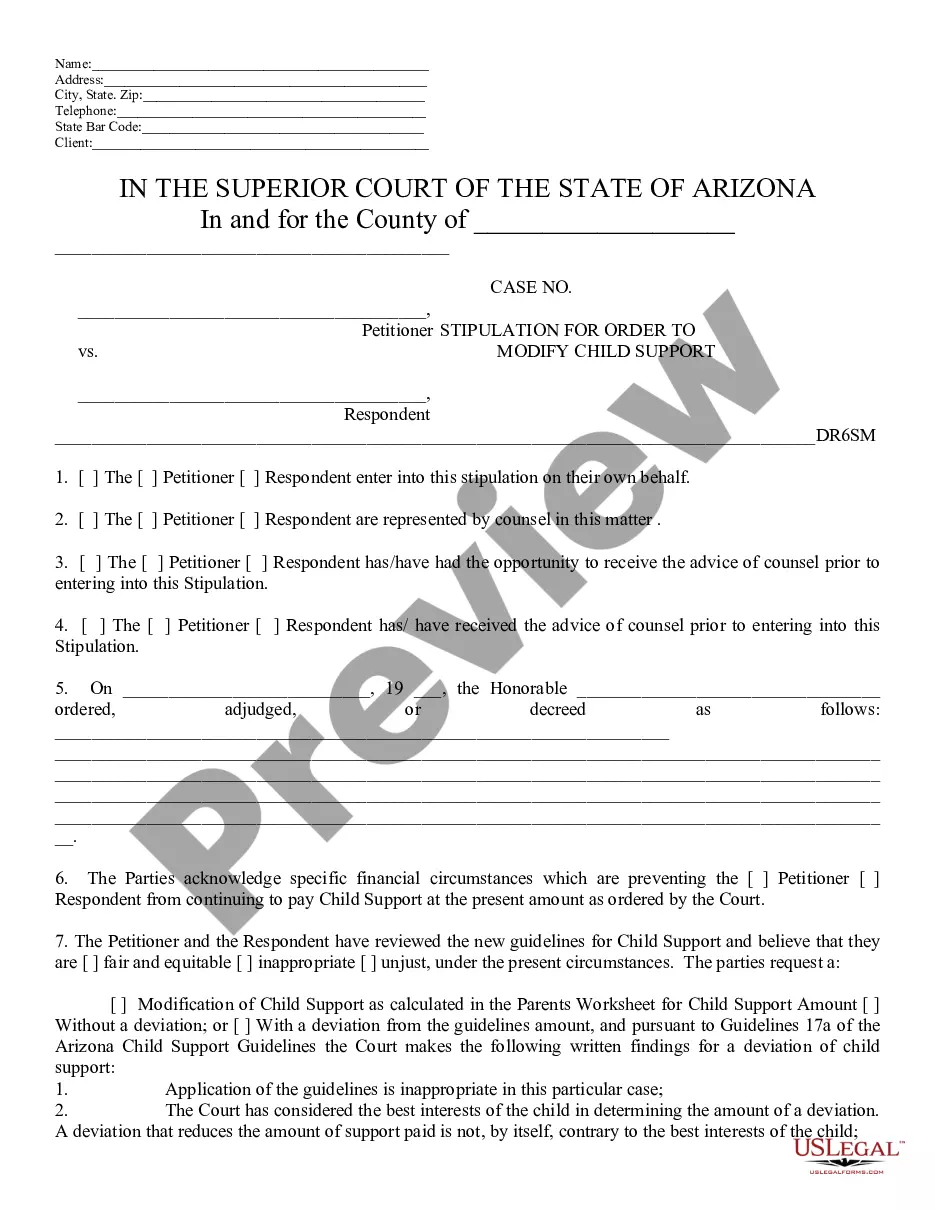
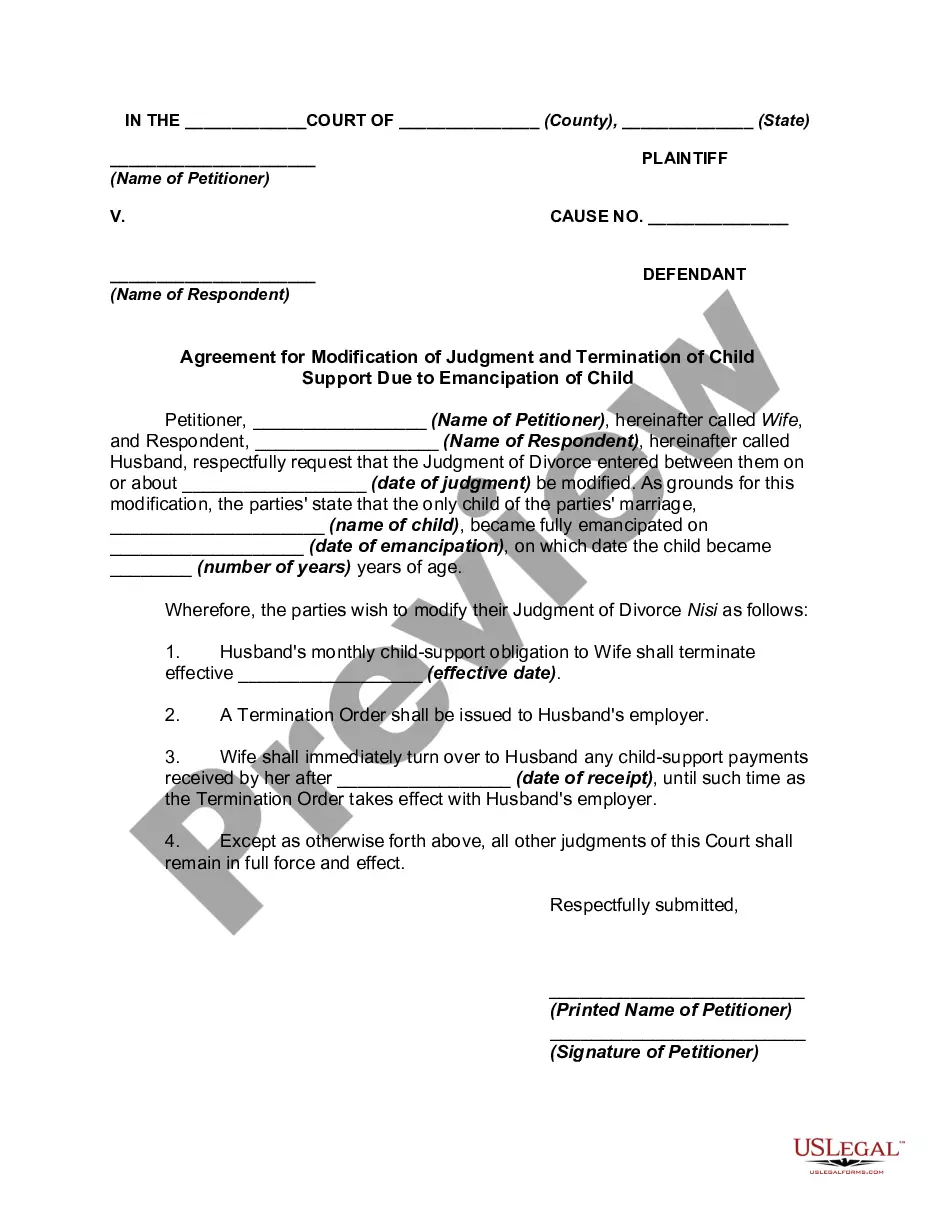
The Stipulation for Order to Modify Child Support is a legal document that allows parents to formally agree to a change in the amount of child support payments. This form is essential when the paying party wishes to reduce their payment amount and both parties believe the modification is fair. Unlike other child support documents, this stipulation requires consent from both parents and must be executed in front of a Notary Public to be legally binding.
Key parts of this document
- Addresses and contact information for both parties.
- Details of the original court order regarding child support.
- Statement of financial circumstances justifying the modification.
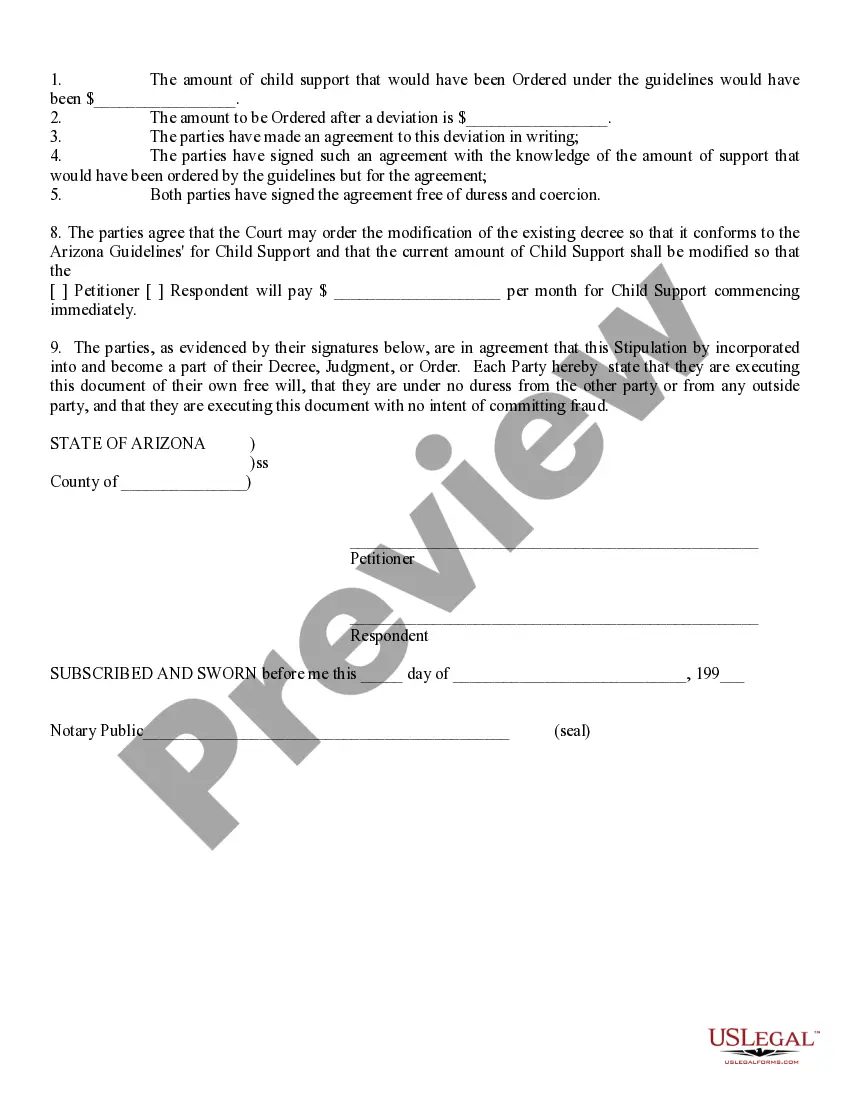
- Agreement on new child support payment amounts and rationale.
- Signature lines for both parties and Notary Public acknowledgment.
When to use this form
This form should be used when a parent experiences changes in their financial situation that affect their ability to continue making child support payments as previously ordered by the court. It is particularly relevant in circumstances such as job loss, income reduction, or significant changes in living expenses. Both parents should mutually agree on the new terms to ensure that the process is amicable and in the best interest of the child.
Who this form is for
- Parents who are involved in a child support agreement and wish to modify the terms.
- Either party (petitioner or respondent) affected by changes in financial circumstances.
- Individuals who have reached an amicable agreement on the new child support amount.
Steps to complete this form
- Enter the addresses and contact information for both parties at the top of the document.
- State the original court order's details, including the case number and date.
- Clearly articulate the financial circumstances that justify the modification.
- Agree on the new monthly payment amount and document it in the specified section.
- Both parties should sign the form in the presence of a Notary Public to finalize the agreement.
Does this document require notarization?
Yes, this form must be notarized to be legally valid. Signing in front of a Notary Public allows both parties to confirm their understanding and agreement without coercion. US Legal Forms offers integrated online notarization for added convenience, available 24/7 via secure video calls, ensuring that your modification process is simple and straightforward.
Get your form ready online
Our built-in tools help you complete, sign, share, and store your documents in one place.
Make edits, fill in missing information, and update formatting in US Legal Forms—just like you would in MS Word.
Download a copy, print it, send it by email, or mail it via USPS—whatever works best for your next step.
Sign and collect signatures with our SignNow integration. Send to multiple recipients, set reminders, and more. Go Premium to unlock E-Sign.
If this form requires notarization, complete it online through a secure video call—no need to meet a notary in person or wait for an appointment.
We protect your documents and personal data by following strict security and privacy standards.

Make edits, fill in missing information, and update formatting in US Legal Forms—just like you would in MS Word.

Download a copy, print it, send it by email, or mail it via USPS—whatever works best for your next step.

Sign and collect signatures with our SignNow integration. Send to multiple recipients, set reminders, and more. Go Premium to unlock E-Sign.

If this form requires notarization, complete it online through a secure video call—no need to meet a notary in person or wait for an appointment.

We protect your documents and personal data by following strict security and privacy standards.
Mistakes to watch out for
- Failing to include accurate financial information that justifies the modification.
- Not having both parties sign the document in front of a Notary Public.
- Neglecting to specify the new child support amount and rationale clearly.
Why complete this form online
- Convenience of downloading the form anytime and from anywhere.
- Editability allows you to fill in the required fields easily.
- The reliability of forms drafted by licensed attorneys, ensuring legal compliance.
Legal use & context
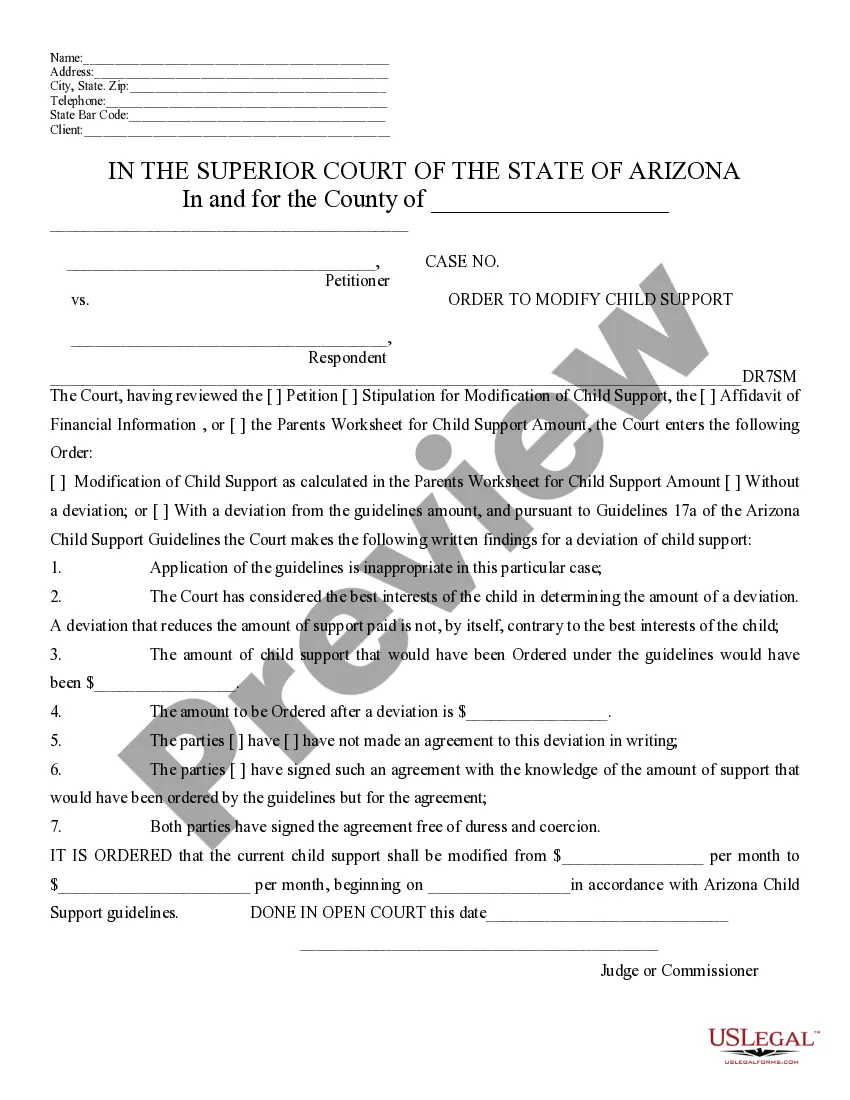
- This form is legally binding once submitted to the court and approved by a judge.
- It serves as a modification to the existing child support order, making it essential for both parties to fully understand its implications.
- Failure to adhere to the modified agreement may have legal consequences.
Summary of main points
- The Stipulation for Order to Modify Child Support is a collaborative form requiring agreement from both parents.
- It is essential to fill out the form accurately and have it notarized for legal effectiveness.
- Changes in financial circumstances can justify the need for adjustment in child support payments.
Looking for another form?
Form popularity
FAQ
The Stipulation for Order to Modify Child Support is a legal document that lets both parents formally agree to change the amount of child support. It is used when a party wants to adjust payments and both parents believe the change is fair, with consent and notarization to be legally binding. Use it when financial circumstances change.
The form includes the addresses and contact information for both parties; details of the original court order; a statement of financial circumstances justifying the modification; an agreement on the new child support amount and the rationale; and signature lines with Notary Public acknowledgment.
Both parties must sign the stipulation, and it must be executed in front of a Notary Public to be legally binding. The Notary acknowledges the signatures to verify the agreement and make the modification official.
This form is for parents involved in a child support agreement who want to modify terms and either party affected by changes in financial circumstances; it also fits individuals who have reached an amicable agreement on the new amount.
Use this form when a parent experiences changes in financial situation that affect their ability to continue paying as ordered, such as job loss, income reduction, or changing living expenses. Both parents should mutually agree on the new terms to keep the modification fair for the child.
This stipulation requires the consent of both parents and must be executed in front of a Notary Public to be legally binding, creating a mutual agreement rather than a unilateral filing.