Arizona Order to Stop Wage Assign.
What this document covers
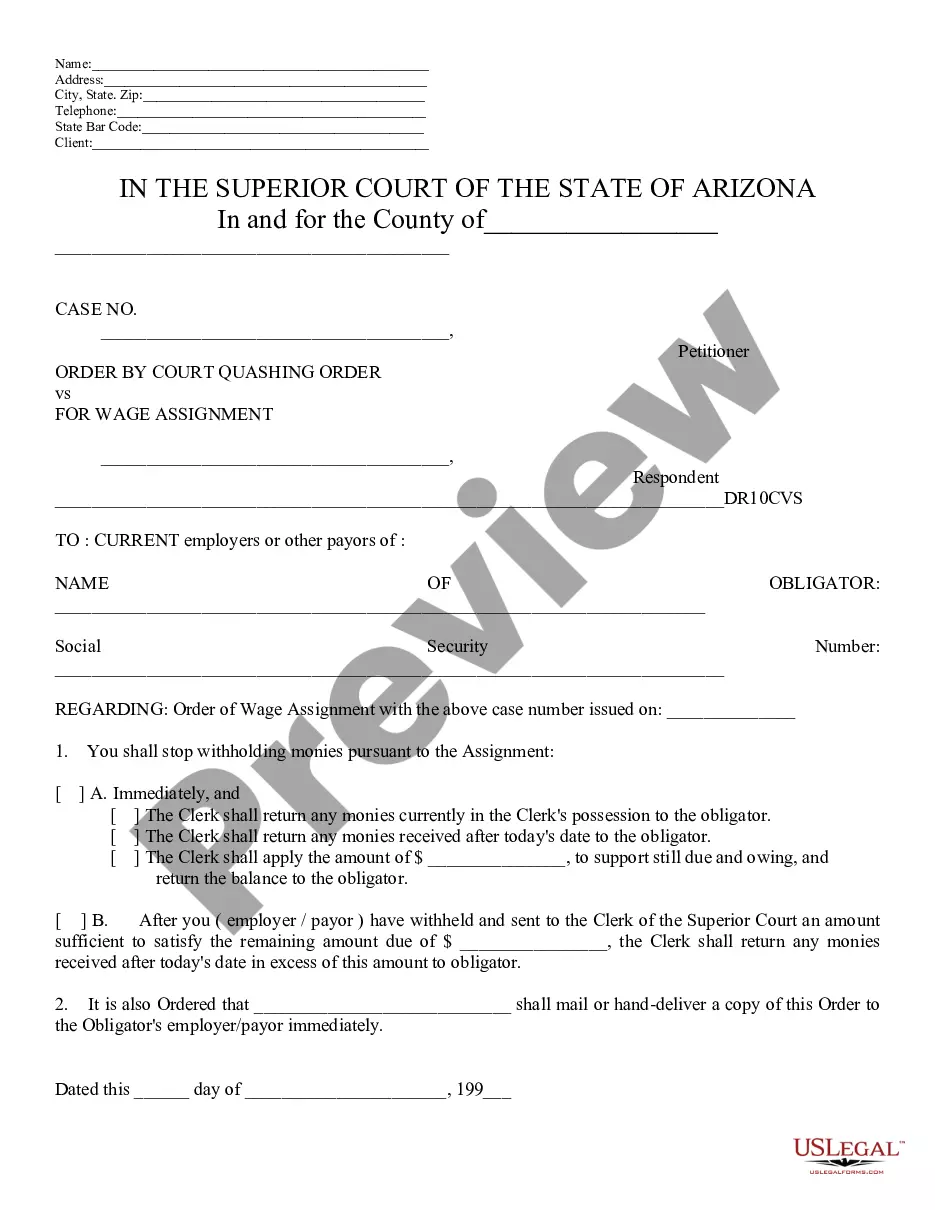
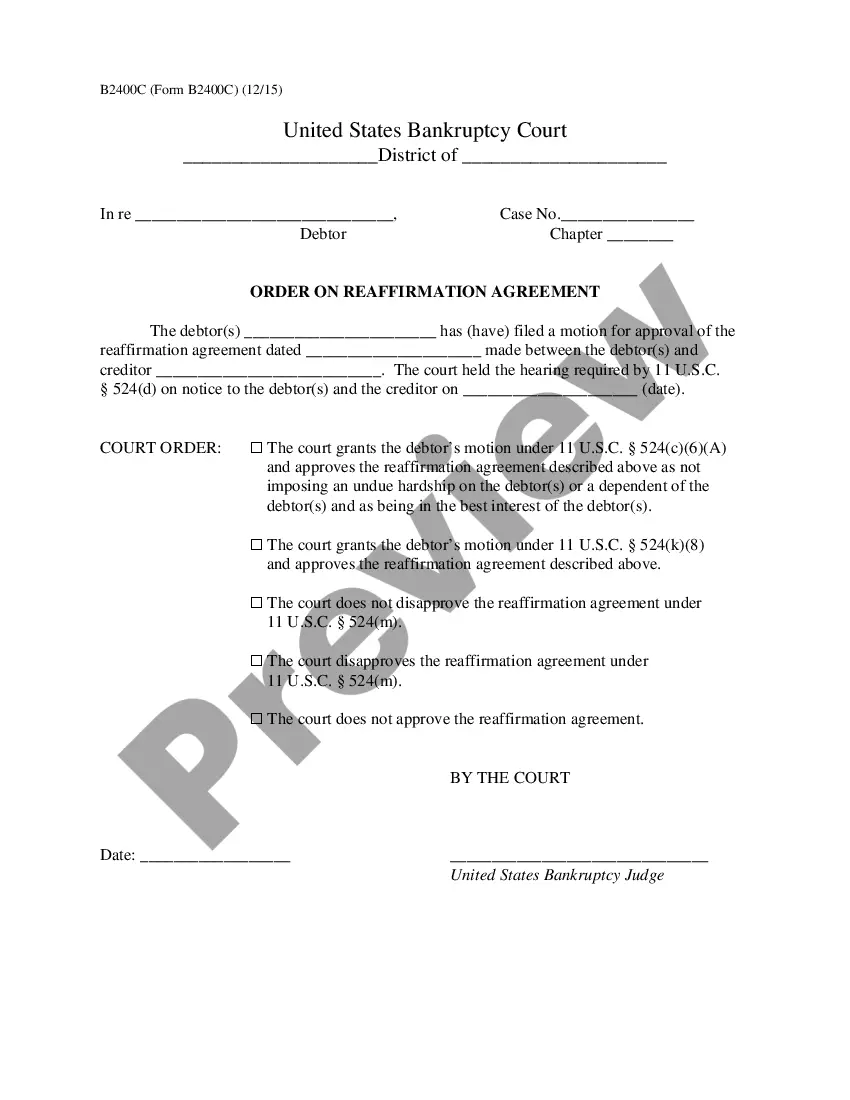
The Order to Stop Wage Assignment is a legal document used to terminate any existing wage garnishments from an employeeâs paycheck. This order mandates that the employer halt all deductions related to a prior wage assignment, ensuring that the employee receives their full earnings. Unlike other wage-related forms, this specific order focuses solely on reversing prior garnishments, facilitating financial relief for the employee.
Form components explained
- Petitioner's information: Name and address of the individual requesting the halt of wage assignment.
- Respondent's information: Details of the obligated party whose wages are being garnished.
- Order details: Clear instructions to the employer to stop withholding wages and return any money withheld incorrectly.
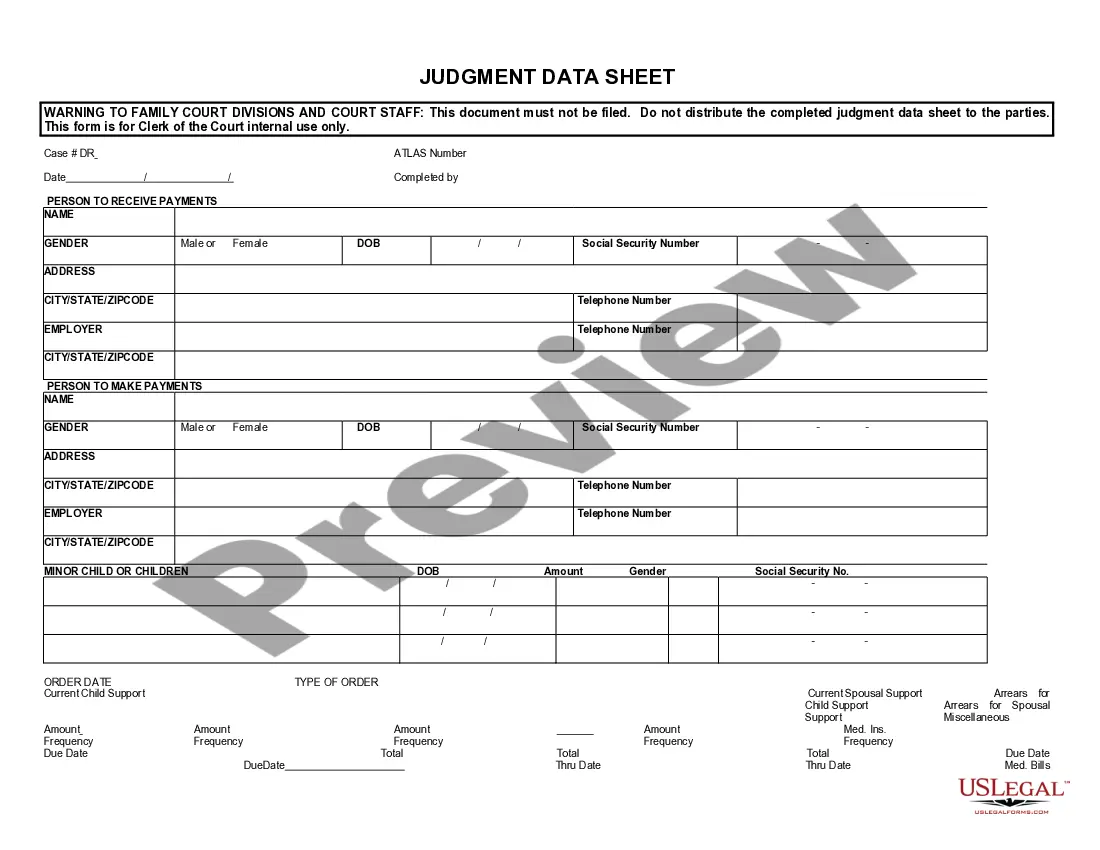
- Clerk's instructions: Guidelines for the court clerk on handling any funds already in possession.
- Notification requirements: Mandate to send a copy of the order to the employer or payment source.


When this form is needed
This form should be utilized when an employee seeks to stop wage garnishment due to various reasons, such as repayment completion, changes in financial circumstances, or errors in the original garnishment order. It is essential for individuals who wish to regain full access to their wages and resolve any financial strain caused by ongoing deductions.
Who this form is for
- Employees facing wage garnishment who have fulfilled their obligations.
- Individuals who believe the wage assignment was established in error.
- Employees seeking to stop garnishment due to financial necessity.
Instructions for completing this form
- Fill out the petitioner's information, including name and address.
- Provide the respondent's information, including their name and any relevant identifiers.
- Clearly state the case number and date of the wage assignment order being quashed.
- Indicate the amount owed, if applicable, and specify how remaining funds should be handled.
- Ensure all sections are completed accurately to prevent delays.
Does this document require notarization?
This form does not typically require notarization unless specified by local law. Users should verify their specific requirements to ensure compliance with relevant regulations.
Get your form ready online
Our built-in tools help you complete, sign, share, and store your documents in one place.
Make edits, fill in missing information, and update formatting in US Legal Forms—just like you would in MS Word.
Download a copy, print it, send it by email, or mail it via USPS—whatever works best for your next step.
Sign and collect signatures with our SignNow integration. Send to multiple recipients, set reminders, and more. Go Premium to unlock E-Sign.
If this form requires notarization, complete it online through a secure video call—no need to meet a notary in person or wait for an appointment.
We protect your documents and personal data by following strict security and privacy standards.

Make edits, fill in missing information, and update formatting in US Legal Forms—just like you would in MS Word.

Download a copy, print it, send it by email, or mail it via USPS—whatever works best for your next step.

Sign and collect signatures with our SignNow integration. Send to multiple recipients, set reminders, and more. Go Premium to unlock E-Sign.

If this form requires notarization, complete it online through a secure video call—no need to meet a notary in person or wait for an appointment.

We protect your documents and personal data by following strict security and privacy standards.
Typical mistakes to avoid
- Failing to provide complete information about the petitioner or respondent.
- Not specifying the court case number related to the wage assignment.
- Omitting the details about the amount of money that should be returned or handled by the court.
- Neglecting to send a copy of the order to the employer or payor after completion.
Advantages of online completion
- Immediate access to professionally drafted legal templates, ensuring accuracy and compliance.
- Convenient downloadable options in Word and Rich Text formats for easy customization.
- Effortless completion without the need for physical visits to legal offices.
Legal use & context
- This order is an essential legal tool for employees facing undue financial hardship from wage garnishments.
- Properly filed, this order enforces the cessation of wage deductions, providing immediate financial relief.
- It is a legally binding document enforceable in the courts upon approval by a judge or commissioner.
Main things to remember
- The Order to Stop Wage Assignment halts existing wage garnishments effectively.
- It is critical for individuals wanting to regain control of their finances.
- Ensure accuracy in filling out the form to avoid processing issues.
Looking for another form?





Form popularity
FAQ
Yes, in Arizona, child support generally stops automatically when the child turns 18 or graduates from high school. However, it is important to formally document this change with the court. Filing an Arizona Order to Stop Wage Assign can provide a clear termination of wage deductions. Always check the specifics of your case to ensure compliance with court rules.
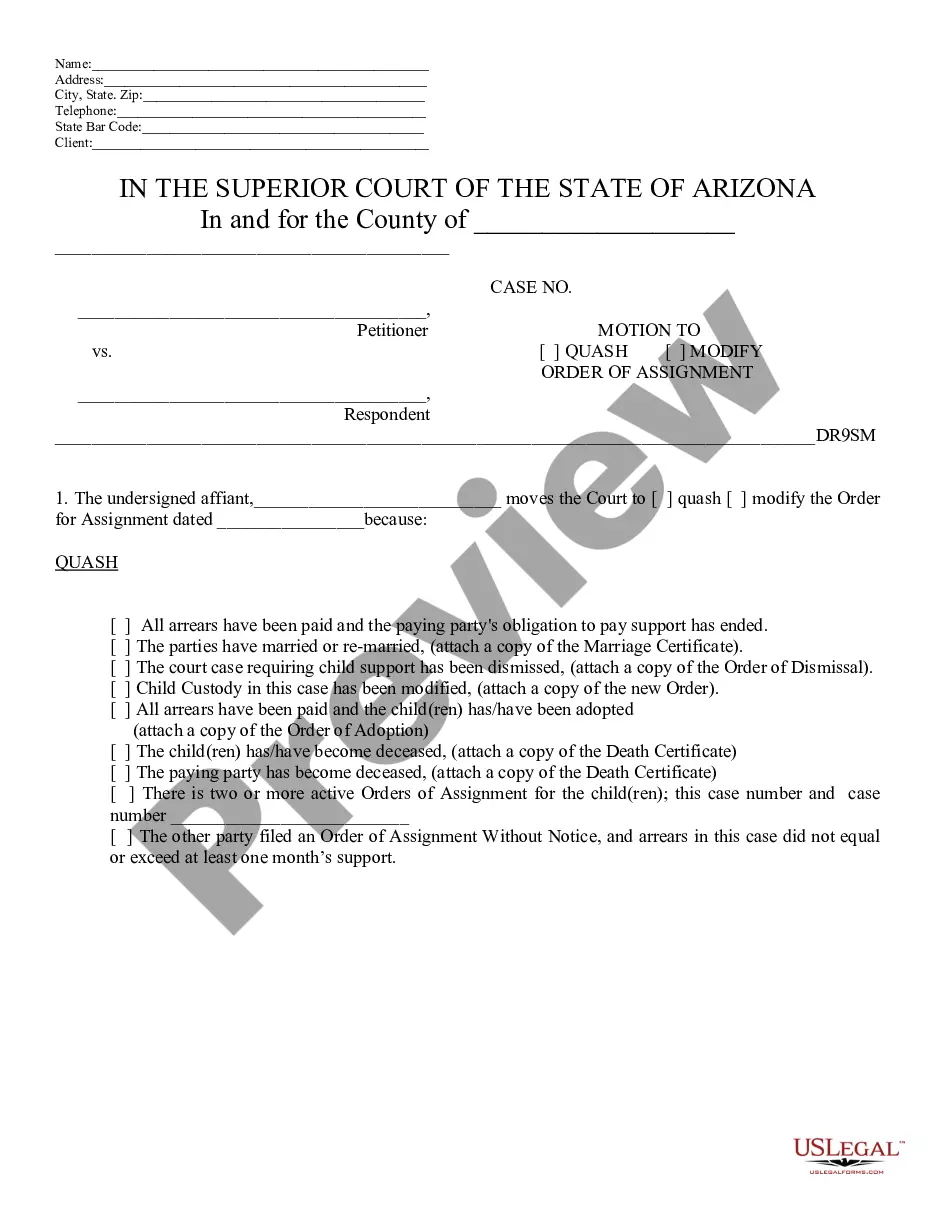
To stop wage garnishment in Arizona, you may need to file a motion with the court that issued the garnishment order. If the garnishment is due to unpaid child support, consider submitting an Arizona Order to Stop Wage Assign to halt the deductions. It is crucial to address the root cause of the garnishment during this process. Consult with a legal expert to ensure you follow the proper steps.
To cancel your child support in Arizona, you need to file a request with the court that issued the original support order. It is essential to provide valid reasons for the cancellation. Utilizing an Arizona Order to Stop Wage Assign can simplify this process by formally halting any garnishments. Ensure to follow the correct legal procedures to avoid any delays.
Yes, parents can agree to forgo child support in Arizona, but this must be approved by a court. The court will consider the best interests of the child before giving approval. If you’re planning to make such an agreement, consider filing an Arizona Order to Stop Wage Assign to formalize the process. Always document your agreements to ensure clarity and protection.
In Arizona, child support automatically terminates when the child turns 18 or graduates from high school, whichever comes later. To ensure a smooth process, you should file an Arizona Order to Stop Wage Assign with the court. This formal request prevents any further wage garnishments. Always keep documentation of the child’s status to avoid complications.
Yes, in Arizona, you must notify the child support office if you change jobs. This is essential to ensure that the correct income withholding order is issued to your new employer. Failing to do so could result in continued deductions from your previous employer or complications in your child support payments. For assistance in managing your child support obligations, look into the Arizona Order to Stop Wage Assign.
To stop paying child support in Arizona, you must file a petition with the court that issued your support order. Provide valid reasons for your request, and make sure to gather any necessary documentation to support your case. Remember, it's essential to follow legal procedures to avoid complications. The Arizona Order to Stop Wage Assign can provide you with the information you need to proceed correctly.
In Arizona, child support payments typically end when the child turns 18. However, you still need to formally notify the court to stop the garnishment. This requires filing a motion that outlines the child's current status. Using the Arizona Order to Stop Wage Assign can help streamline this process and ensure all legal requirements are met.
Yes, wage assignments are legal in Arizona, but they require specific conditions to be enforceable. An employer can withhold wages for debts, including child support, if a court order has been established. Proper legal channels must be followed to ensure compliance. If you need to halt a wage assignment, explore the Arizona Order to Stop Wage Assign for guidance.
An income withholding order in Arizona is a legal directive that requires an employer to deduct child support payments directly from a parent's paycheck. This order is typically established when the court determines a child support obligation. It aims to ensure timely payments for child support. Understanding how to navigate this process can lead you to the Arizona Order to Stop Wage Assign for further assistance.