Arizona Motion to Quash Order of Assignment With Attachments
Understanding this form
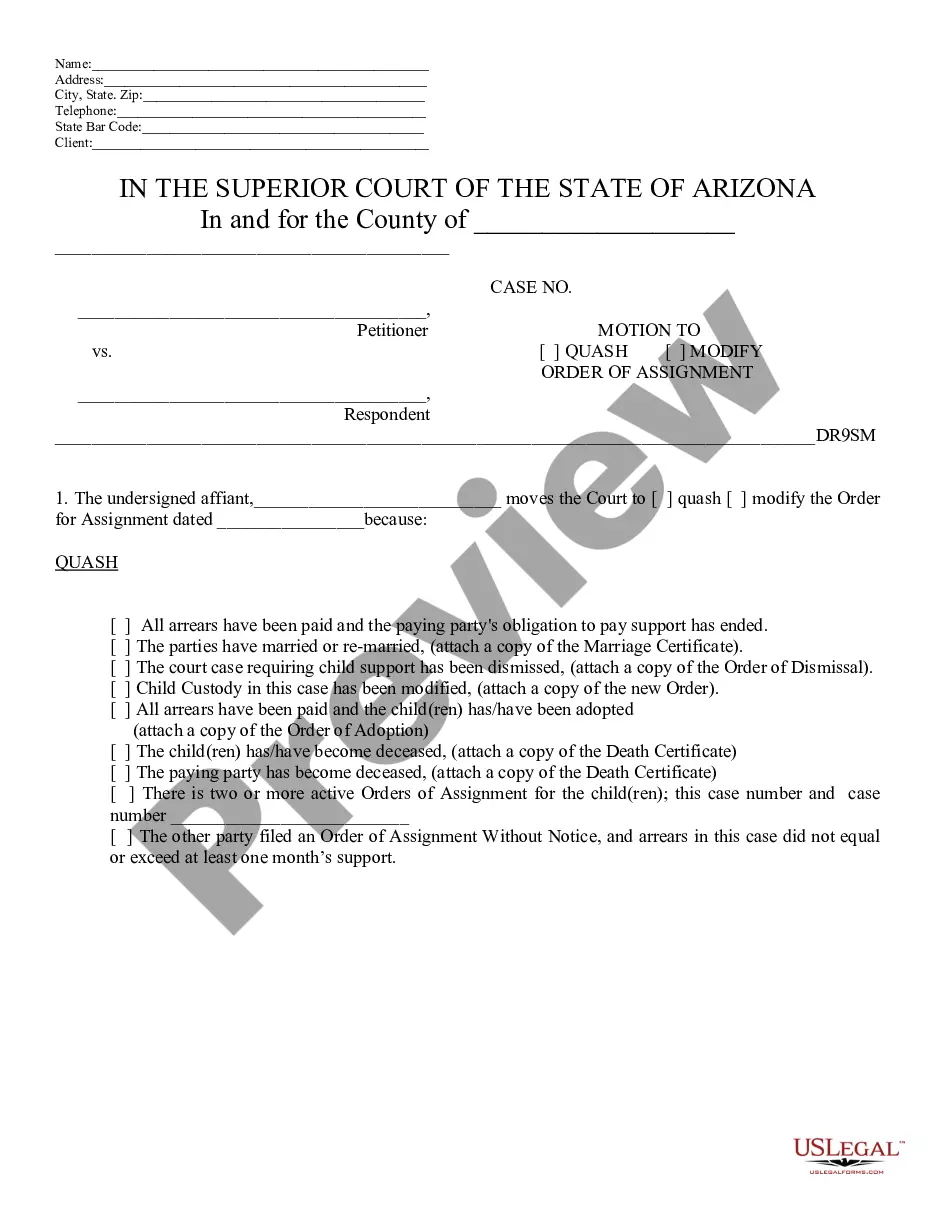
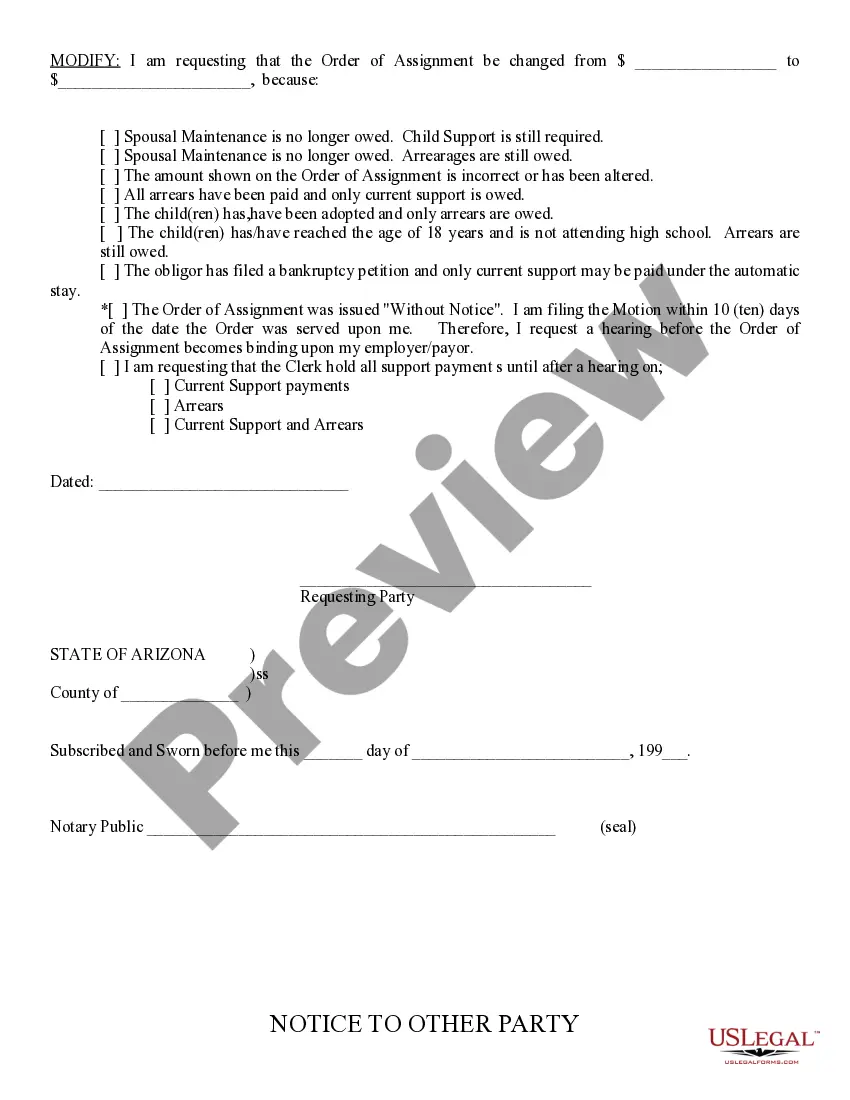
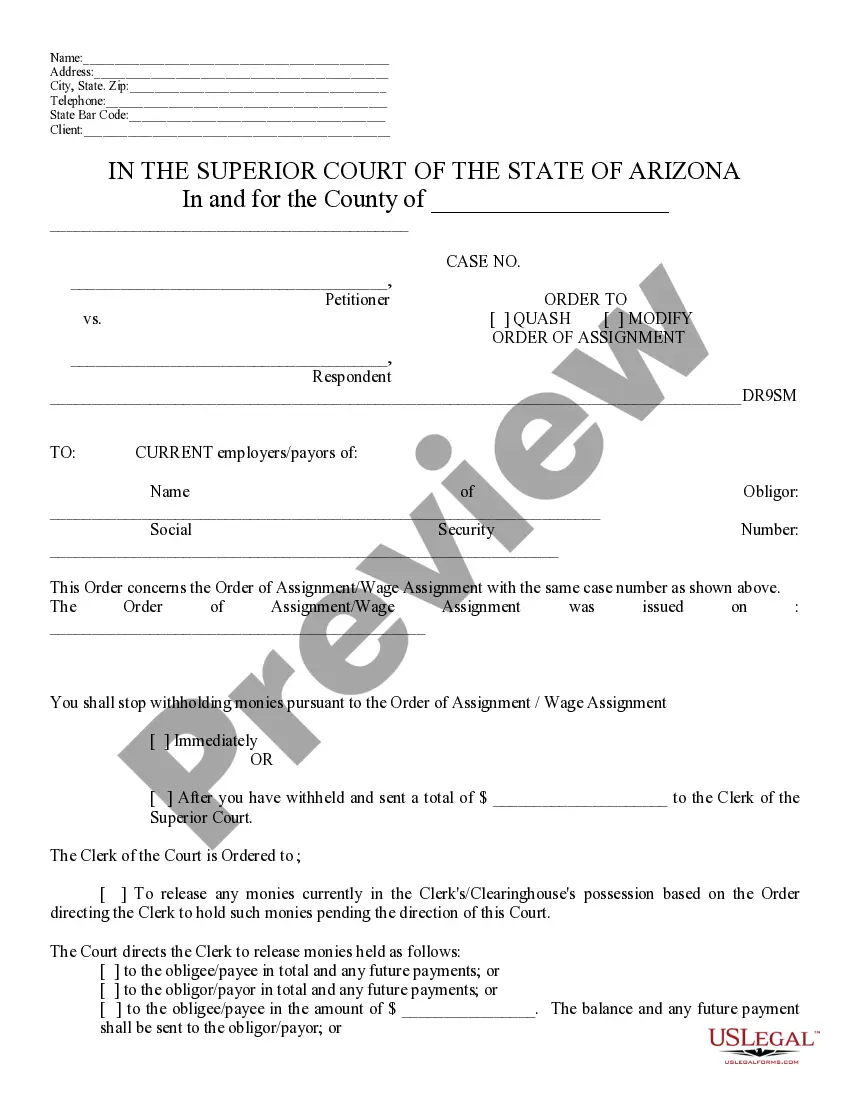
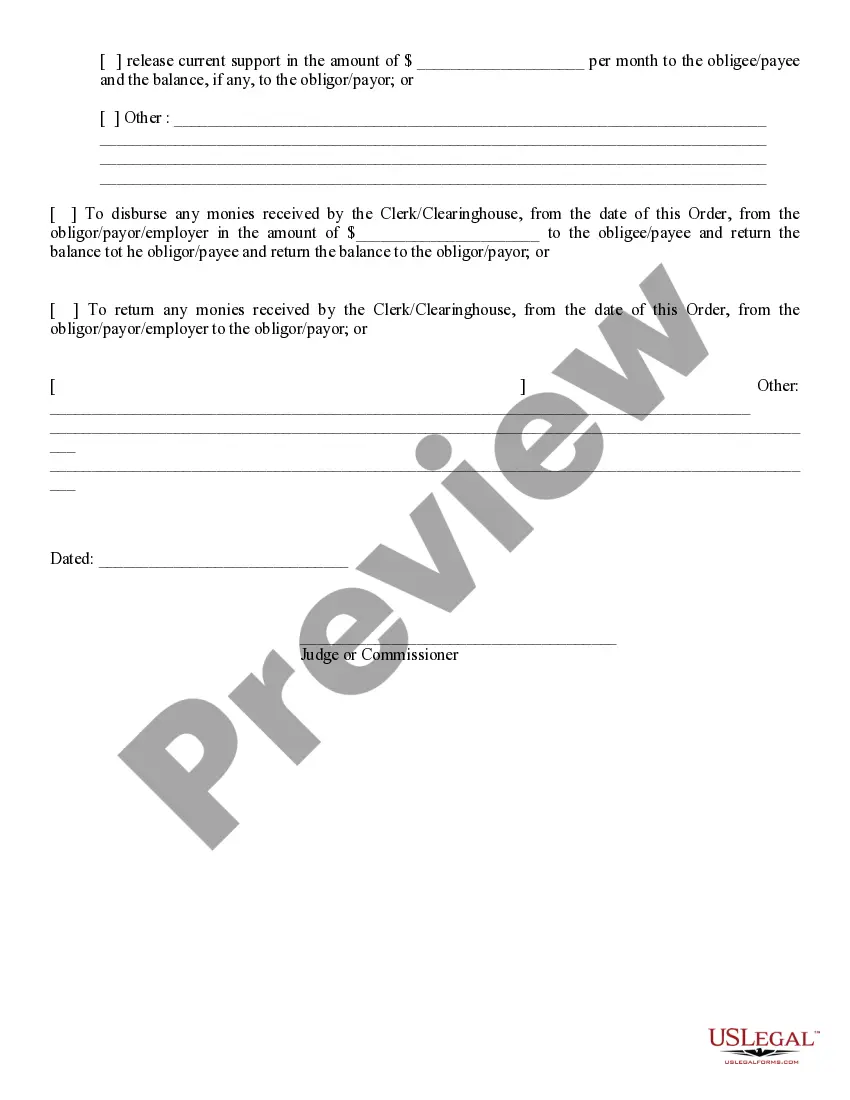
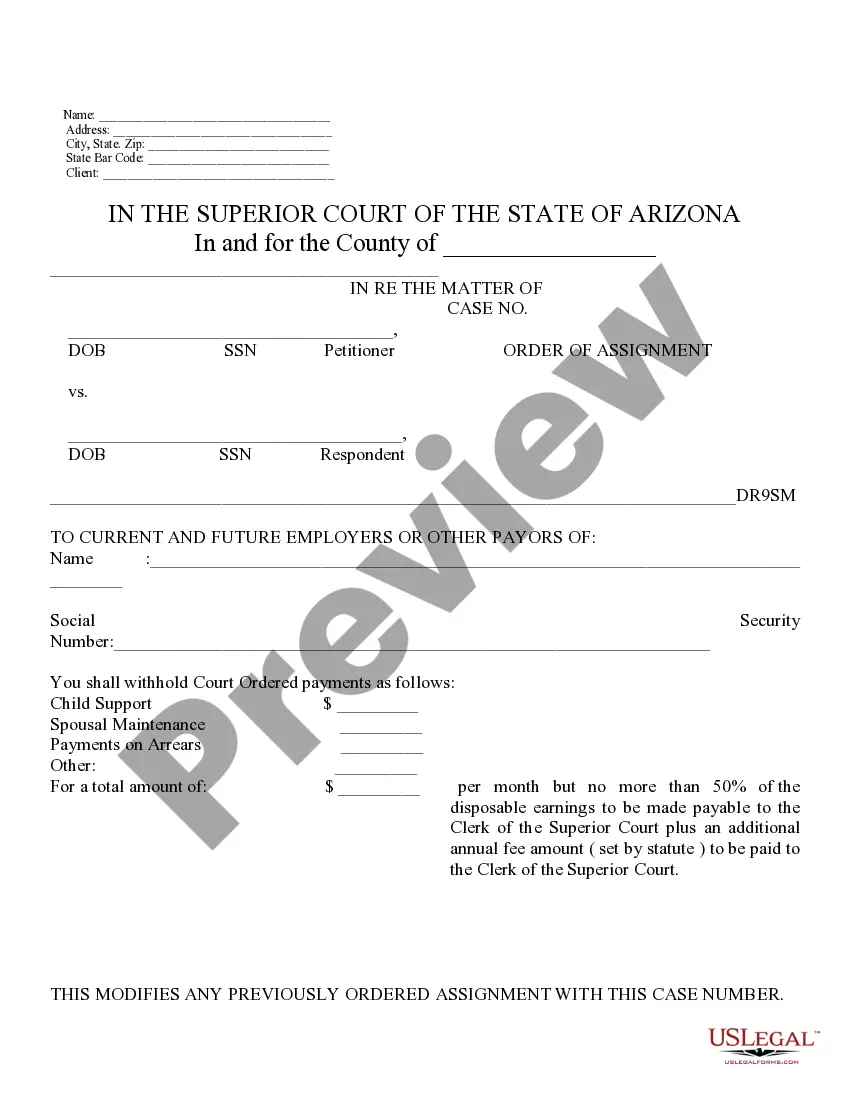
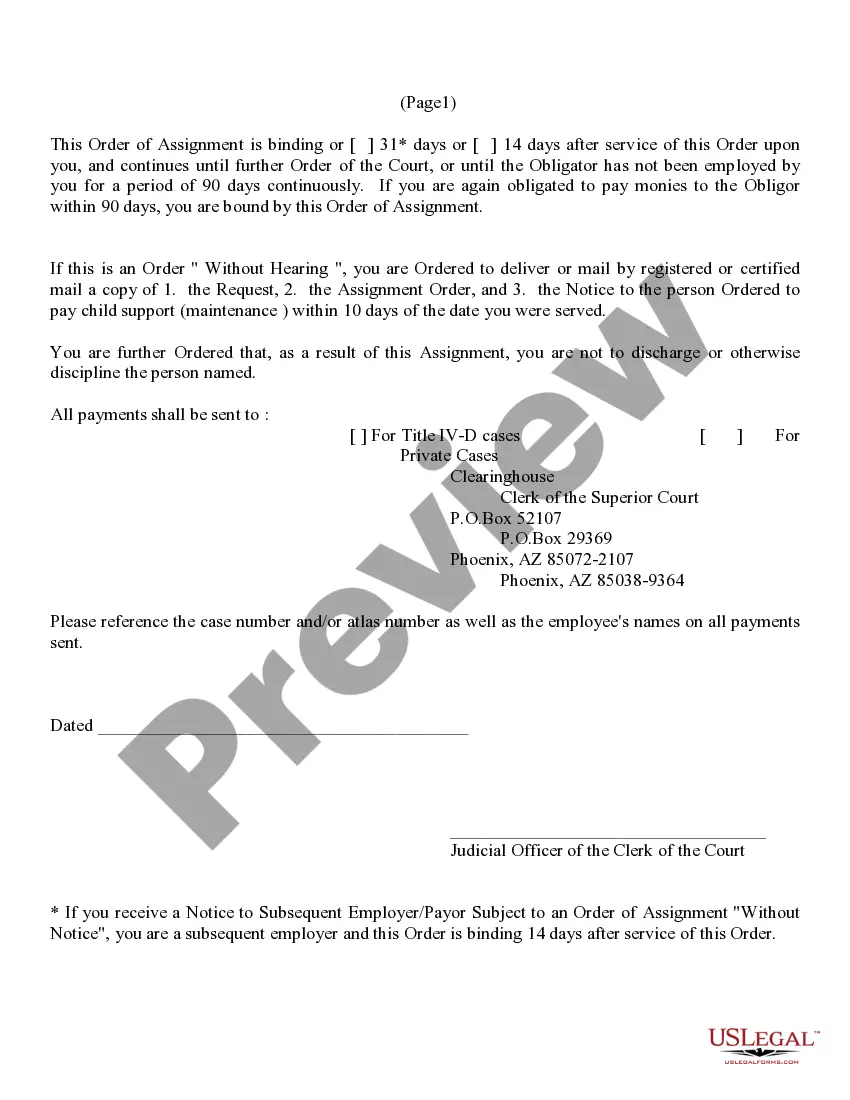
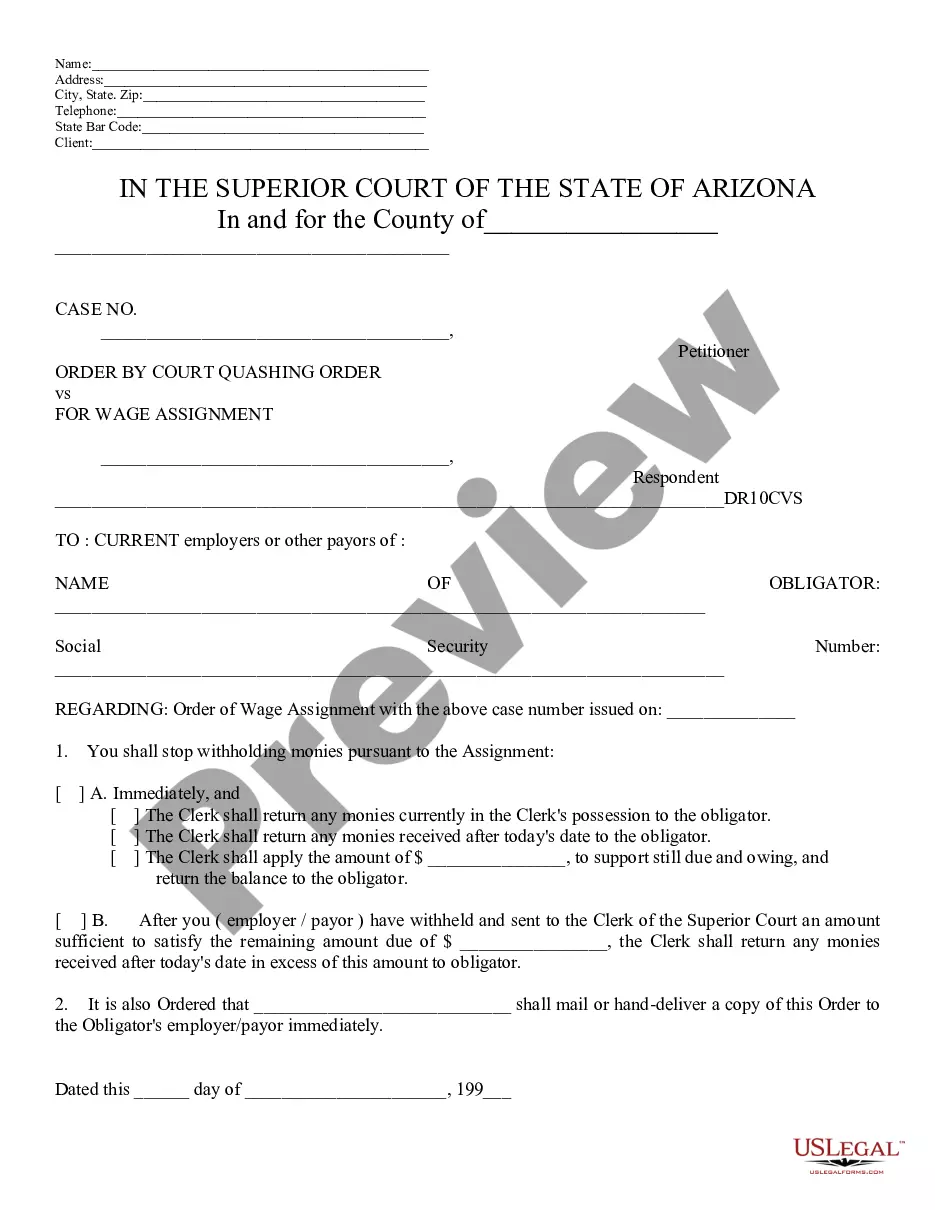
The Motion to Quash Order of Assignment With Attachments is a legal document used to request the court to invalidate or modify an existing order that mandates wage garnishment for child support or spousal maintenance. This form allows individuals to present reasons such as changes in support obligations or compliance issues. Unlike other motions, this one specifically pertains to orders concerning the assignment of wages for support payments, ensuring that changes in circumstances can be adequately addressed by the court.
Form components explained
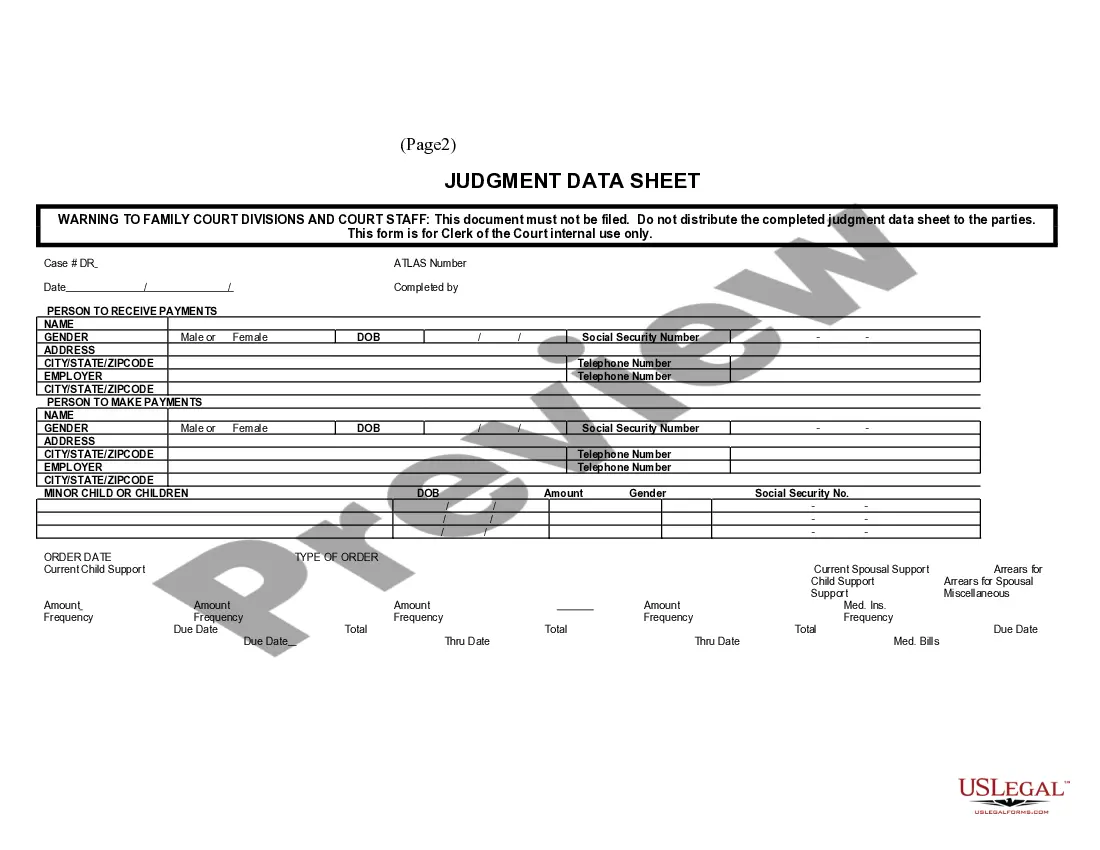
- Case details including names and case number.
- Affidavit affirming the request to quash or modify the order.
- Reasons for the requested action, such as payment completion or changes in custody.
- Attachments, such as marriage certificates or court orders relevant to the case.
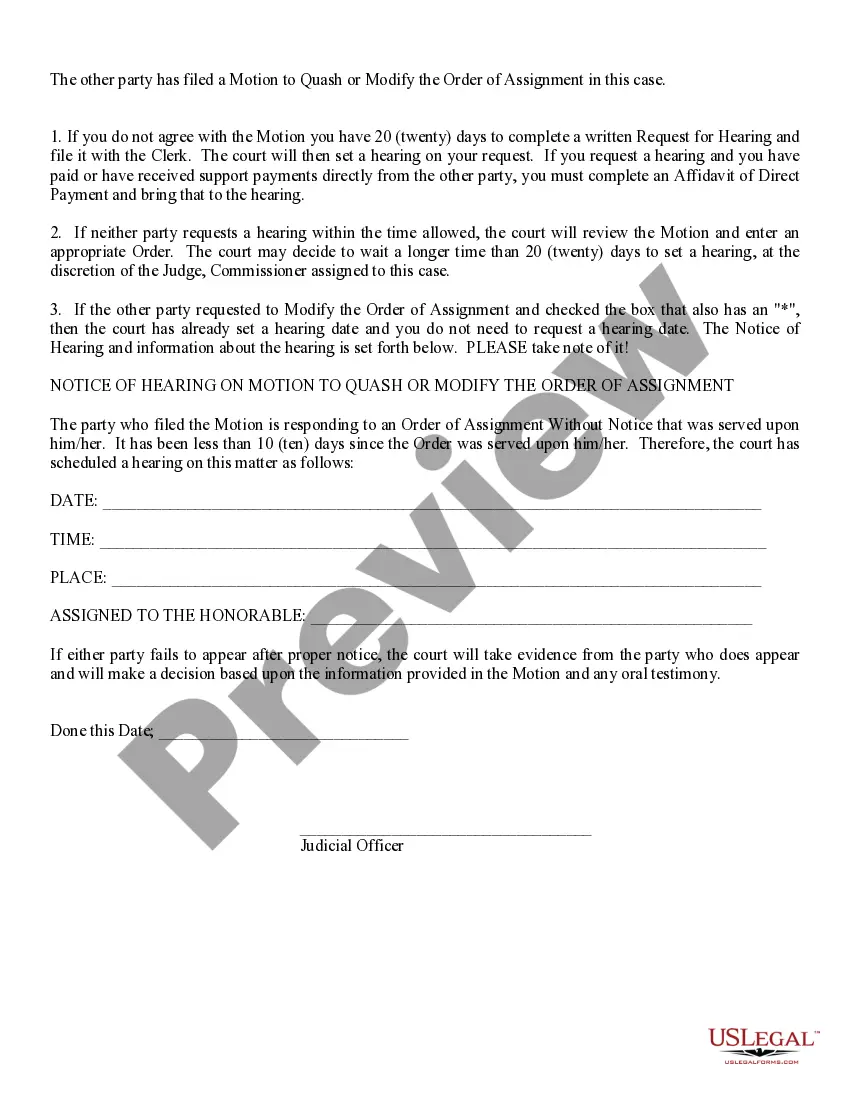
- Notice to the other party regarding their rights and options following the motion.

Common use cases
This form should be used when a party needs to contest a wage assignment order due to various reasons, including but not limited to: full payment of child support arrears, changes in marital status, modifications in child custody agreements, or the death of the obligor or child. It is essential in situations where the existing order is no longer applicable or needs adjustment to reflect current obligations.
Who needs this form
- Individuals who are obligated to pay child support or spousal maintenance.
- Persons who have received a wage assignment order and believe it should be quashed or modified.
- Parties who have experienced significant changes in their financial or personal circumstances affecting their support obligations.
- Legal representatives acting on behalf of clients in family law cases.
Steps to complete this form
- Fill in your personal details including name, address, and contact information.
- Provide the case information and details of the current order requiring modification.
- Clearly state the reasons for requesting to quash or modify the order, and attach relevant documents.
- Sign and date the affidavit in the presence of a notary if required.
- File the completed form with the court and serve notice to the other party involved.
Notarization requirements for this form
Yes, this form must be notarized to be legally valid. It is important that you sign the affidavit in front of a notary public to confirm the authenticity of your statements and claims made in the motion.
Get your form ready online
Our built-in tools help you complete, sign, share, and store your documents in one place.
Make edits, fill in missing information, and update formatting in US Legal Forms—just like you would in MS Word.
Download a copy, print it, send it by email, or mail it via USPS—whatever works best for your next step.
Sign and collect signatures with our SignNow integration. Send to multiple recipients, set reminders, and more. Go Premium to unlock E-Sign.
If this form requires notarization, complete it online through a secure video call—no need to meet a notary in person or wait for an appointment.
We protect your documents and personal data by following strict security and privacy standards.

Make edits, fill in missing information, and update formatting in US Legal Forms—just like you would in MS Word.

Download a copy, print it, send it by email, or mail it via USPS—whatever works best for your next step.

Sign and collect signatures with our SignNow integration. Send to multiple recipients, set reminders, and more. Go Premium to unlock E-Sign.

If this form requires notarization, complete it online through a secure video call—no need to meet a notary in person or wait for an appointment.

We protect your documents and personal data by following strict security and privacy standards.
Mistakes to watch out for
- Failing to include necessary attachments that support your motion.
- Not providing adequate reasons for the motion which can lead to rejection.
- Missing the deadline for filing the motion after receiving the order.
- Neglecting to properly serve the other party, which can invalidate the motion.
Why use this form online
- Convenience of accessing the form from anywhere at any time.
- Easy customization options to fit your specific legal situation.
- Reliable guidance through structured templates created by licensed professionals.
- Ability to save progress and edit details as needed before final submission.
Legal use & context
- The motion to quash is a formal request that the court must consider before finalizing support assignments.
- Filing this motion allows you to legally contest the enforcement of an assignment order.
- The effectiveness of this motion depends on the validity of the claims presented and adherence to procedural requirements.
Quick recap
- The Motion to Quash Order of Assignment is essential for addressing changes in child support or spousal maintenance orders.
- This form is tailored for use in Arizona, ensuring adherence to local court rules.
- Notarization is required, and timely filing is crucial to prevent automatic enforcement of the order.
Looking for another form?
Form popularity
FAQ
While you can file a motion for contempt without a lawyer, having legal assistance can significantly enhance your chances of success. An experienced attorney can help you navigate complex legal procedures and ensure your documents are properly prepared. If you're unsure, consider consulting tools like the Arizona Motion to Quash Order of Assignment With Attachments for guidance, regardless of whether you choose legal representation.
Filing a motion for contempt in Arizona involves drafting a formal request that highlights the specific order being violated. Include details and evidence of noncompliance to strengthen your case. Once your motion is prepared, submit it to the appropriate court. Resources like the Arizona Motion to Quash Order of Assignment With Attachments can help guide you in crafting a strong motion.
To quash a warrant in Arizona, you need to file a motion with the court that issued the warrant. This motion should explain the grounds for quashing the warrant, along with any supporting documents. It’s crucial to act quickly to minimize potential repercussions. Look for samples or templates related to the Arizona Motion to Quash Order of Assignment With Attachments to streamline your filing process.
To file a contempt of court in Arizona, you must prepare a motion detailing the reasons for your request. This document should specify the prior order and how the other party has failed to comply. Submitting the motion to the relevant court will initiate the process. Consider using formats like the Arizona Motion to Quash Order of Assignment With Attachments to ensure proper submission.
In Arizona, penalties for contempt of court can vary but may include fines, jail time, or both. Courts aim to enforce compliance with their orders, ensuring respect for the judicial system. Understanding these penalties is crucial if you're involved in a legal matter. Reviewing documents such as the Arizona Motion to Quash Order of Assignment With Attachments can aid in your preparation.
A motion to hold someone in contempt is a formal request to the court to find a party in violation of a previous court order. This motion outlines how the individual has disregarded the court's directives, impacting adherence to established legal standards. If you're facing this situation, consult resources like the Arizona Motion to Quash Order of Assignment With Attachments for additional clarity on addressing these motions.
In Arizona, you typically have 10 days to respond to a motion to dismiss. It’s vital to adhere to this timeline to avoid potential negative consequences. Failing to respond might lead to the court granting the motion without further consideration. Consider reviewing documents like the Arizona Motion to Quash Order of Assignment With Attachments for helpful guidance.
Rule 68 in Arizona primarily focuses on the application of offers of judgment across different types of legal cases. This rule encourages settlement negotiations by allowing parties to make formal offers. This can significantly affect your situation when dealing with an Arizona Motion to Quash Order of Assignment With Attachments due to the potential implications for costs and judgments.
Rule 70 deals with the enforcement of performance obligations in family law cases. It provides mechanisms for ensuring compliance with court orders, which can include various enforcement methods. When considering an Arizona Motion to Quash Order of Assignment With Attachments, understanding how this rule works can be very helpful.
Rule 28 addresses the requirements for procedural documents in civil cases, including notices and motions. Complying with these standards ensures that your submissions are properly filed. This is particularly relevant when you are preparing an Arizona Motion to Quash Order of Assignment With Attachments, as procedural accuracy is key.