Arizona Notice of Visitation
Overview of this form
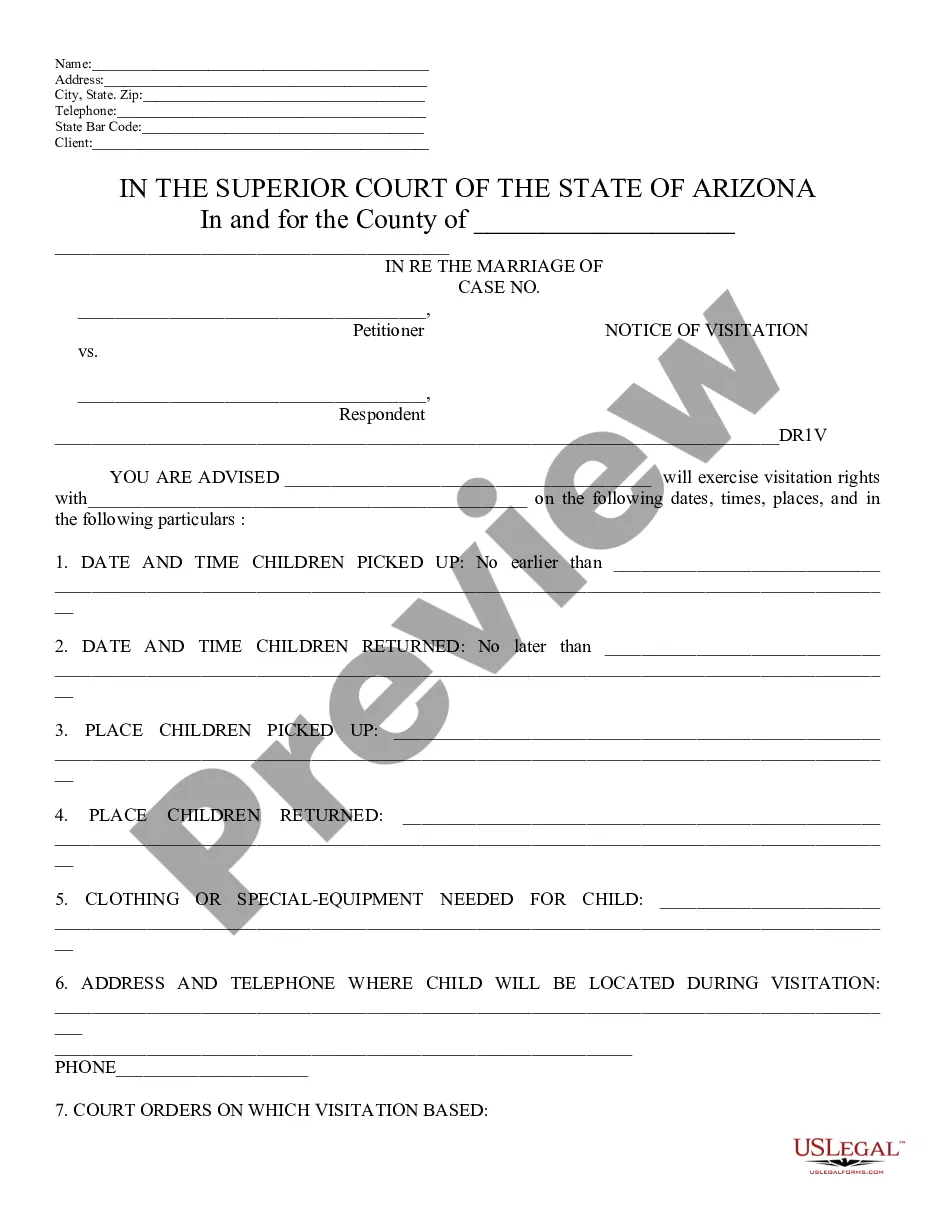
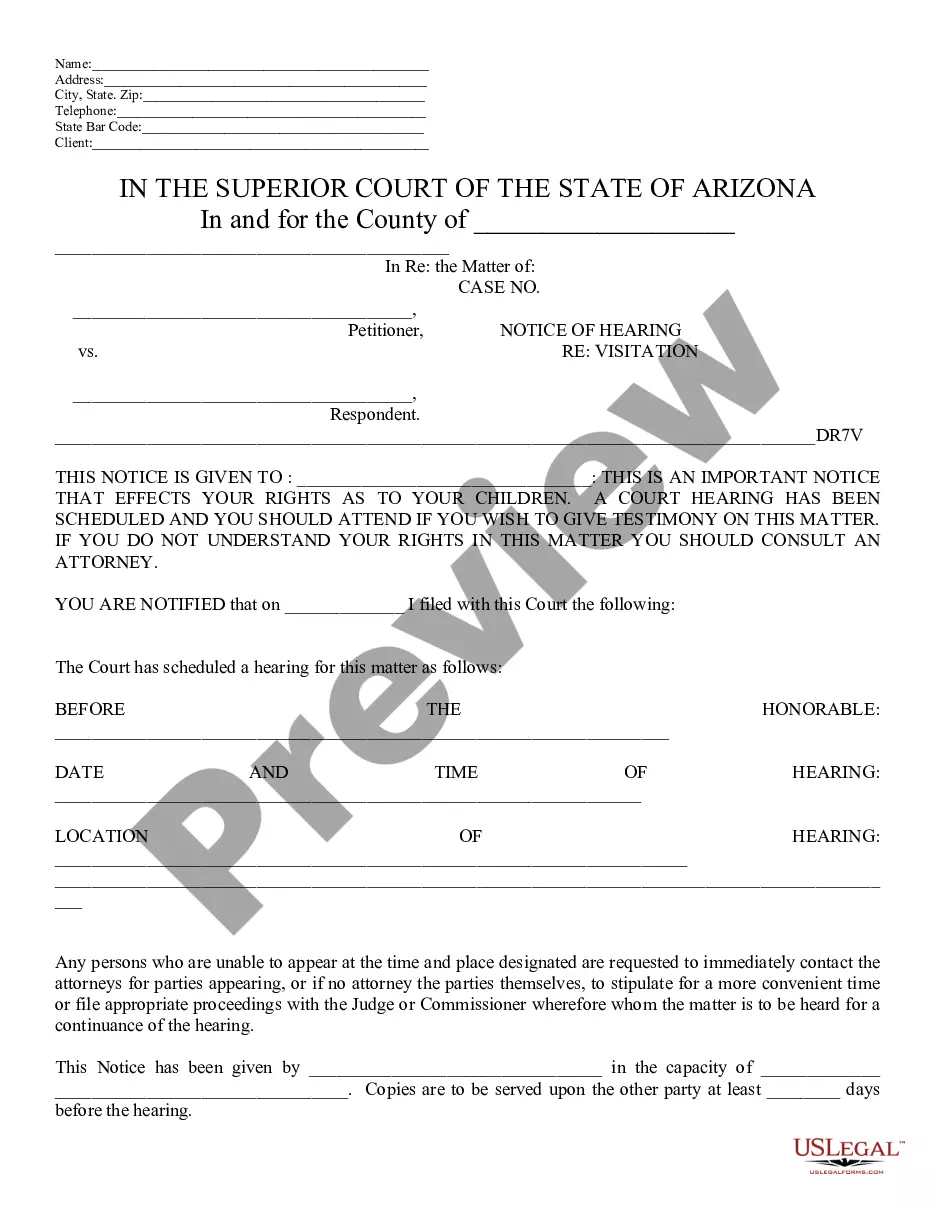
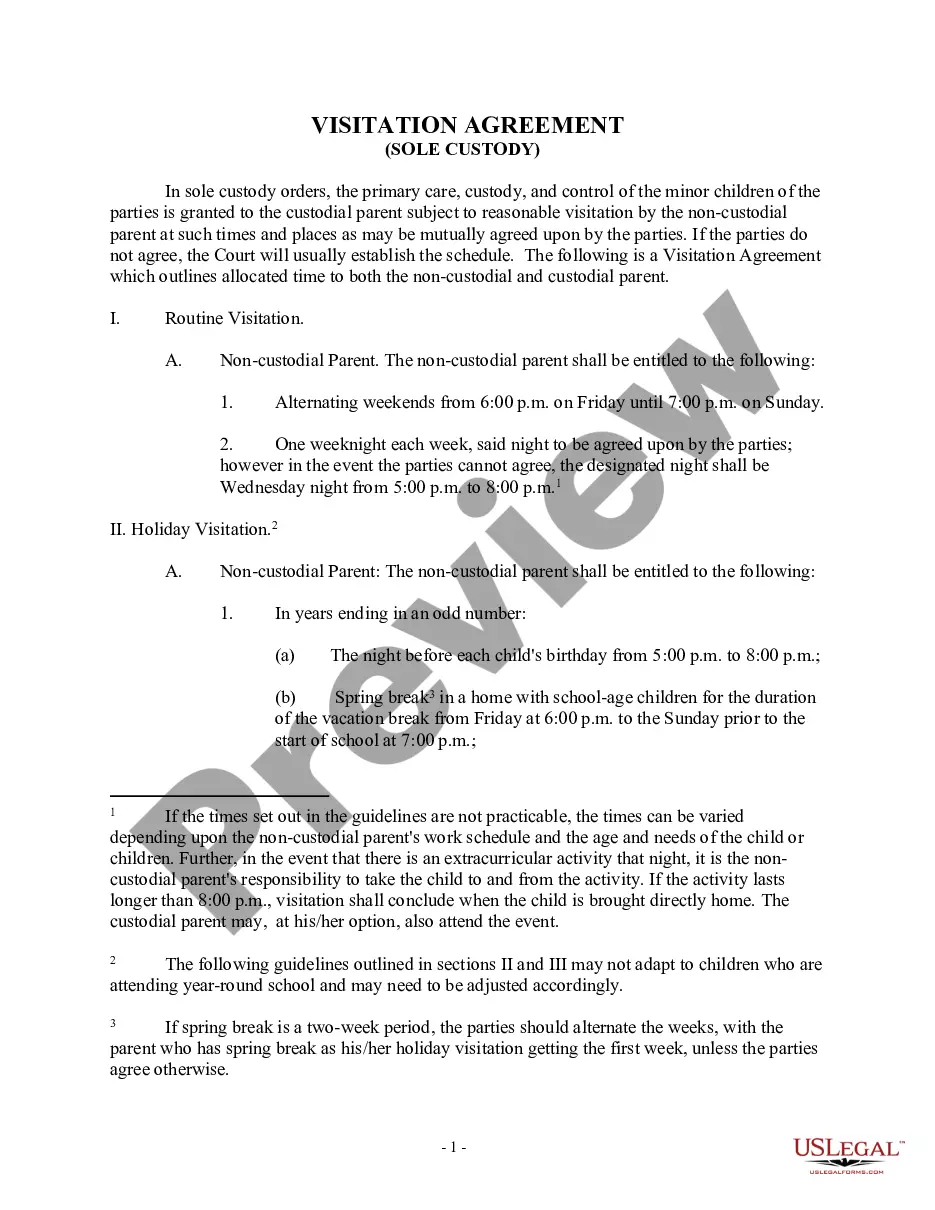
A Notice of Visitation is a legal document used to formally notify a party about a scheduled visitation with a child. Its main purpose is to outline the details of the visitation rights as stipulated by a court order. This form differentiates itself from similar notices by focusing specifically on visitation arrangements, ensuring clarity and reducing the potential for disputes between parties.
Form components explained
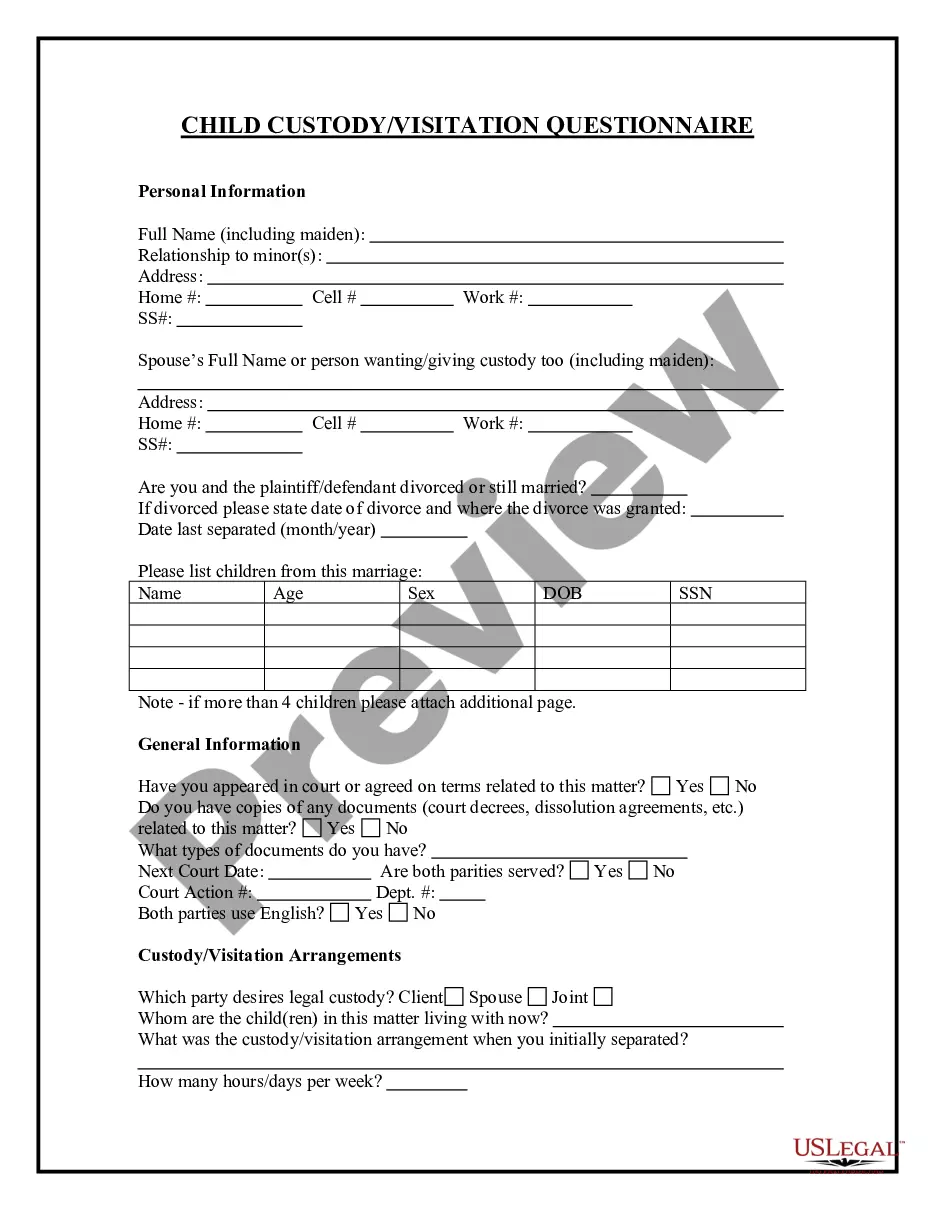
- Contact information of both parties involved in the visitation.
- Specific dates and times for when the children will be picked up and returned.
- Designated locations for the pick-up and drop-off of children.
- Information regarding any clothing or special equipment needed during the visitation.
- Details on where the child will be during the visitation, including contact information.
- Any relevant court orders pertaining to the visitation rights.
When to use this document
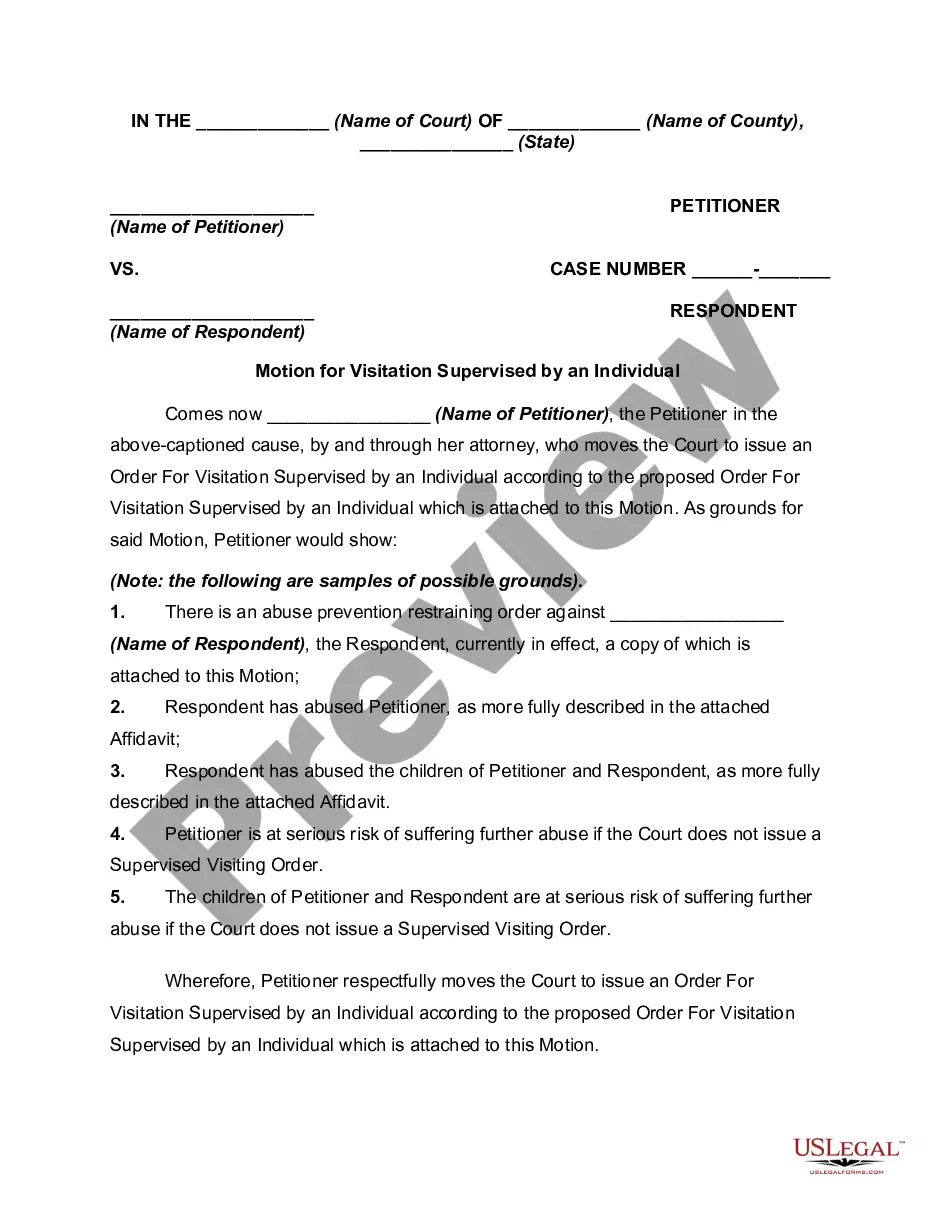
This form should be used whenever a parent or guardian wants to formally communicate their planned visitation rights to the other parent or guardian. It is essential when there are existing court orders regarding visitation to ensure compliance and avoid misunderstandings about the care and supervision of the child.
Intended users of this form
- Parents or guardians who have legal visitation rights as ordered by a court.
- Individuals seeking to establish or clarify visitation schedules with the other parent or guardian.
- Anyone involved in family law proceedings that require documented notification of visitation arrangements.
Completing this form step by step
- Fill in the contact details for both parties, including names, addresses, and phone numbers.
- Specify the dates and times for when the child will be picked up and returned.
- Define the locations for both pick-up and drop-off of the child.
- Indicate any special items or clothing the child may need during the visitation.
- Provide the address and phone number where the child can be reached during visitation hours.
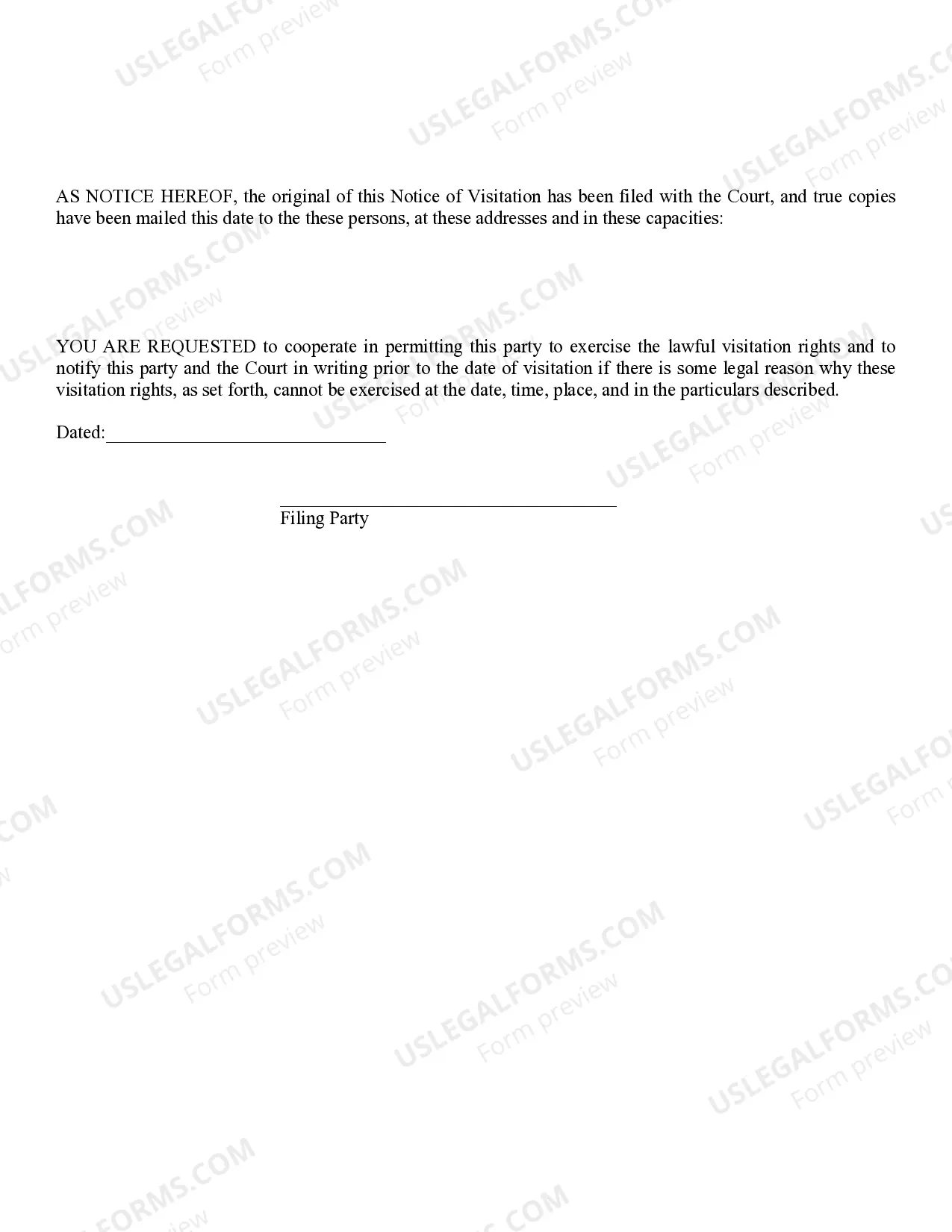
- File the form with the court and ensure copies are sent to all involved parties.
Notarization requirements for this form
This form does not typically require notarization unless specified by local law. It is advisable to check your local jurisdiction's requirements when completing this form for legal use.
Get your form ready online
Our built-in tools help you complete, sign, share, and store your documents in one place.
Make edits, fill in missing information, and update formatting in US Legal Forms—just like you would in MS Word.
Download a copy, print it, send it by email, or mail it via USPS—whatever works best for your next step.
Sign and collect signatures with our SignNow integration. Send to multiple recipients, set reminders, and more. Go Premium to unlock E-Sign.
If this form requires notarization, complete it online through a secure video call—no need to meet a notary in person or wait for an appointment.
We protect your documents and personal data by following strict security and privacy standards.

Make edits, fill in missing information, and update formatting in US Legal Forms—just like you would in MS Word.

Download a copy, print it, send it by email, or mail it via USPS—whatever works best for your next step.

Sign and collect signatures with our SignNow integration. Send to multiple recipients, set reminders, and more. Go Premium to unlock E-Sign.

If this form requires notarization, complete it online through a secure video call—no need to meet a notary in person or wait for an appointment.

We protect your documents and personal data by following strict security and privacy standards.
Avoid these common issues
- Failing to provide complete contact information for all parties involved.
- Not specifying the exact times for pick-up and drop-off.
- Overlooking the requirement to file the notice with the court.
- Neglecting to inform the other party in writing about changes to the visitation schedule.
Benefits of completing this form online
- Convenient access to downloadable forms that can be filled out at your own pace.
- Editability allows for easy customization to fit specific needs.
- Reliable templates drafted by licensed attorneys, ensuring legal compliance.
Legal use & context
- The Notice of Visitation serves as a formal record of visitation arrangements.
- It can be used as evidence in court if disputes arise regarding visitation rights.
- Compliance with this notice is essential to uphold legal visitation agreements.
Summary of main points
- A Notice of Visitation is critical for outlining visitation terms clearly between parents or guardians.
- Carefully fill out all sections to avoid disputes or misunderstandings.
- File with the court promptly and ensure all parties receive copies of the notice.
Looking for another form?
Form popularity
FAQ
Arizona does not generally allow conjugal visits in the sense of outside jail visits between incarcerated individuals and their partners. However, family visits may sometimes be permitted based on the facility's regulations. For custody situations that may affect visitation, knowing the implications of the Arizona Notice of Visitation can help parents navigate these complexities.
In Arizona, one parent should not keep a child from the other parent without a court order, as this can violate existing parenting time agreements. If the other parent is being denied access, they have legal options to address this through the courts. The Arizona Notice of Visitation can be a helpful tool in establishing clear visitation guidelines.
If your child expresses a desire not to see her father, it is important to listen and understand her feelings. You may need to address any underlying issues contributing to her reluctance. Utilizing the Arizona Notice of Visitation can guide both parents through a structured plan ensuring the child's best interests are met in terms of time spent with both parents.
In the U.S., the age a child can decide not to see a parent varies by state but is often around 14. Courts typically consider the child’s wishes at this age when making decisions about visitation. Understanding the nuances of the Arizona Notice of Visitation will help you navigate these matters effectively.
In Arizona, a child generally cannot refuse visitation with a parent until they reach a certain age, often around 14 or older, when courts start to take their wishes into account. However, this does not automatically terminate visitation rights. If a child expresses a desire not to see a parent, it may be beneficial to follow the Arizona Notice of Visitation process to appropriately address the situation.
Arizona does not set a specific legal age for leaving a child alone, but it does suggest parental discretion based on the child's maturity and circumstances. Parents should evaluate factors such as the child's age, mental capacity, and the environment before making this decision. For complex custody situations, the Arizona Notice of Visitation may provide clarity on related issues.
A mother can move a child away from the father in Arizona, but she must follow specific legal procedures. If there is a court order in place regarding custody, she typically needs permission from the court or the father to relocate with the child. It is advisable to consult an attorney for guidance and to ensure compliance with the Arizona Notice of Visitation requirements.
In Arizona, there is no specific age when a child can unilaterally choose which parent to live with. However, as children grow older, the courts may consider their preferences during custody evaluations. Typically, by age 14, a child's choice may carry more weight in custody arrangements. It's crucial to understand how the Arizona Notice of Visitation guidelines can influence these decisions.
The Arizona Department of Corrections has specific visitation policies designed to ensure safety and order within facilities. Visitation typically requires prior approval, and visitors must adhere to set guidelines concerning dress codes and behavior. For detailed questions about your rights and procedures, understanding the Arizona Notice of Visitation will be beneficial, and resources like US Legal Forms can simplify the process.
Arizona does not currently allow conjugal visits in its correctional facilities. The focus remains on maintaining security and managing inmate relationships through standard visitation. For any concerns about visitation policies related to the Arizona Notice of Visitation, consult local resources or legal experts to understand your rights.