Arizona Plaintiffs Interrogatory Suit on Debt
About this form
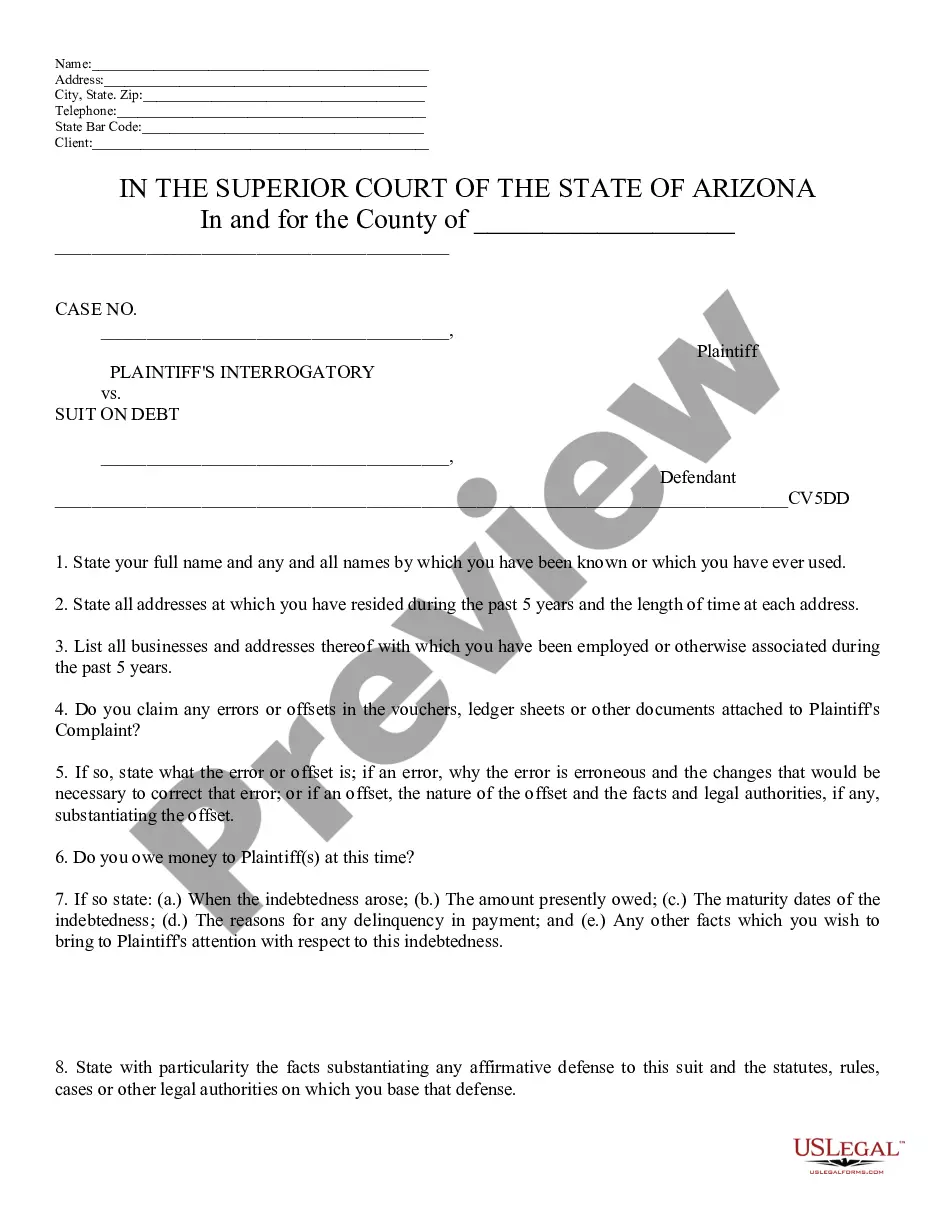
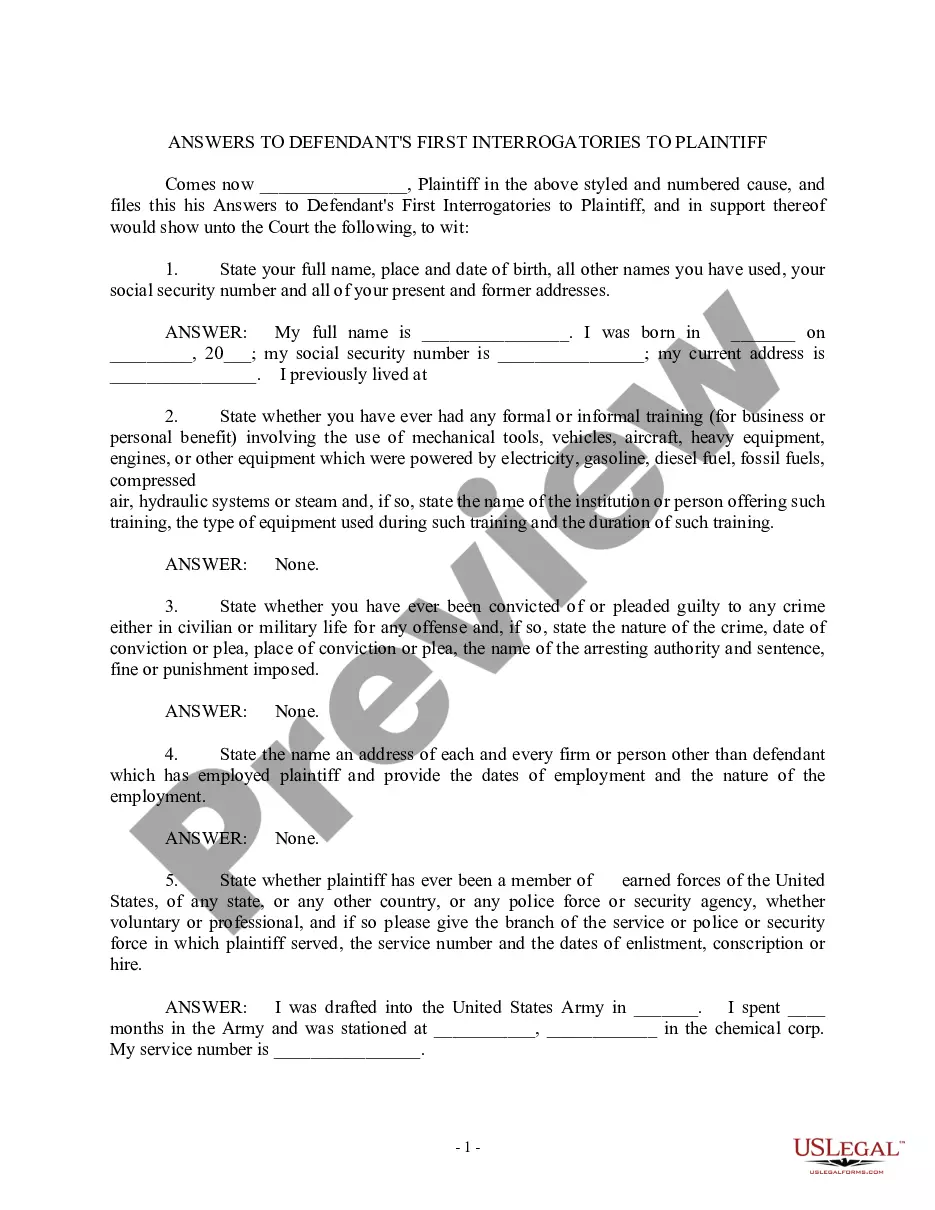
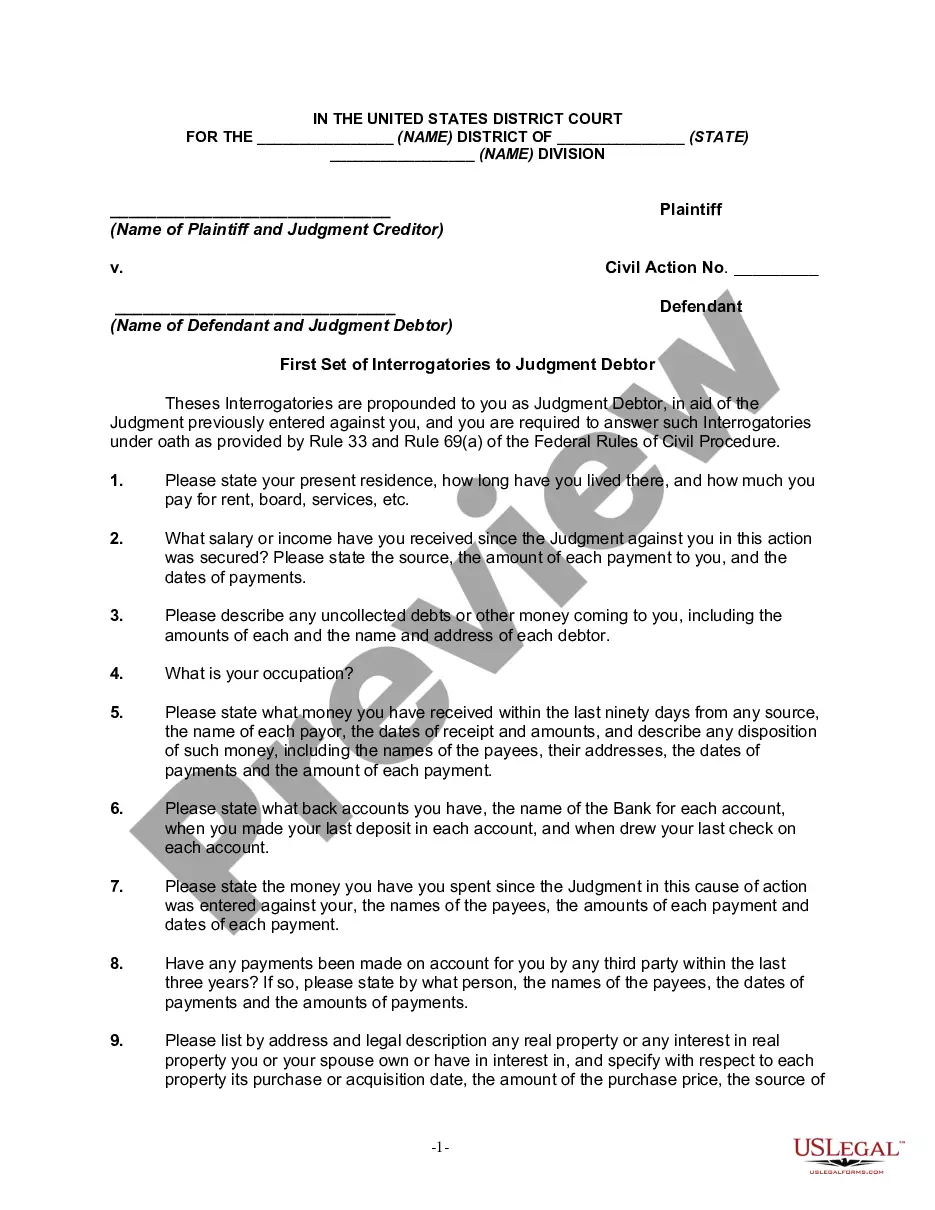
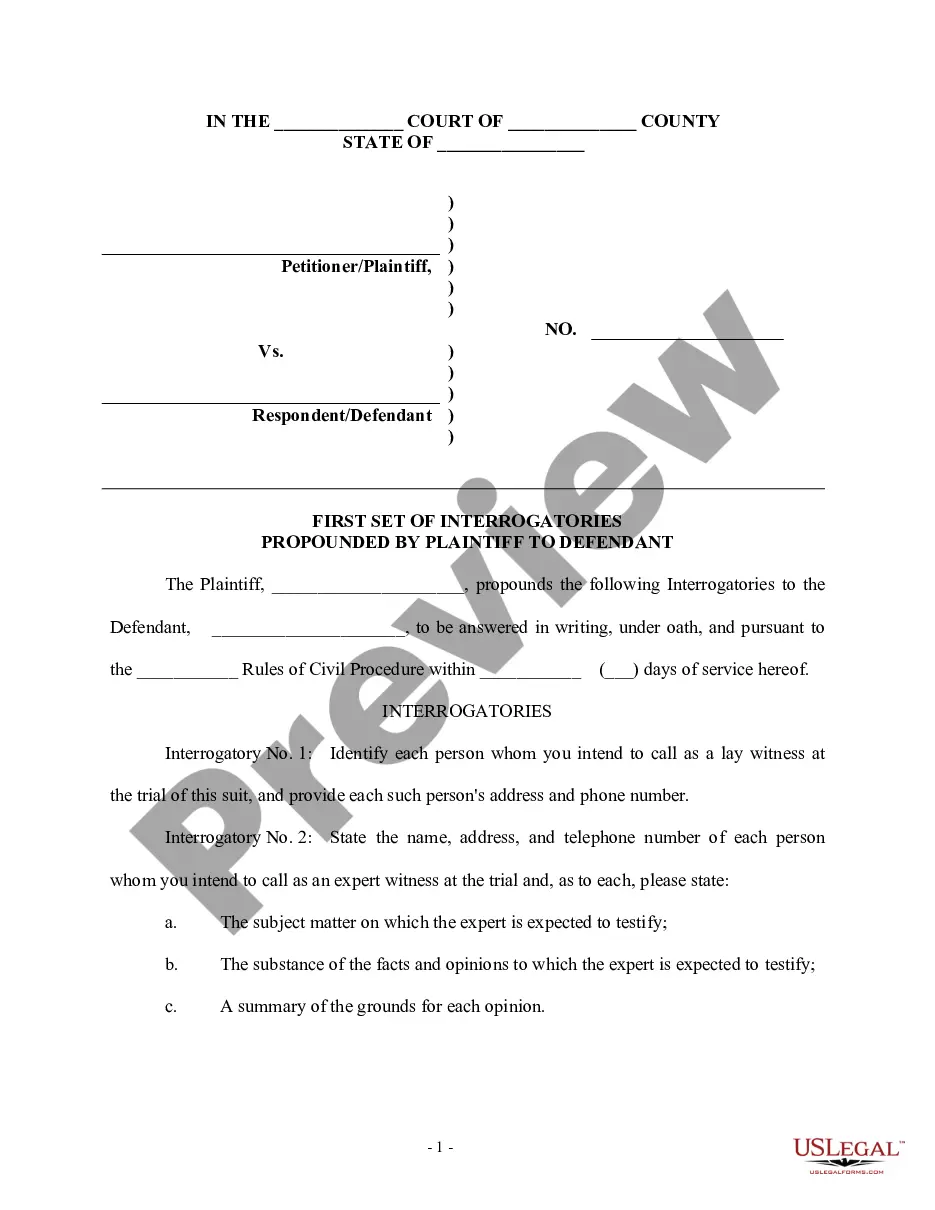
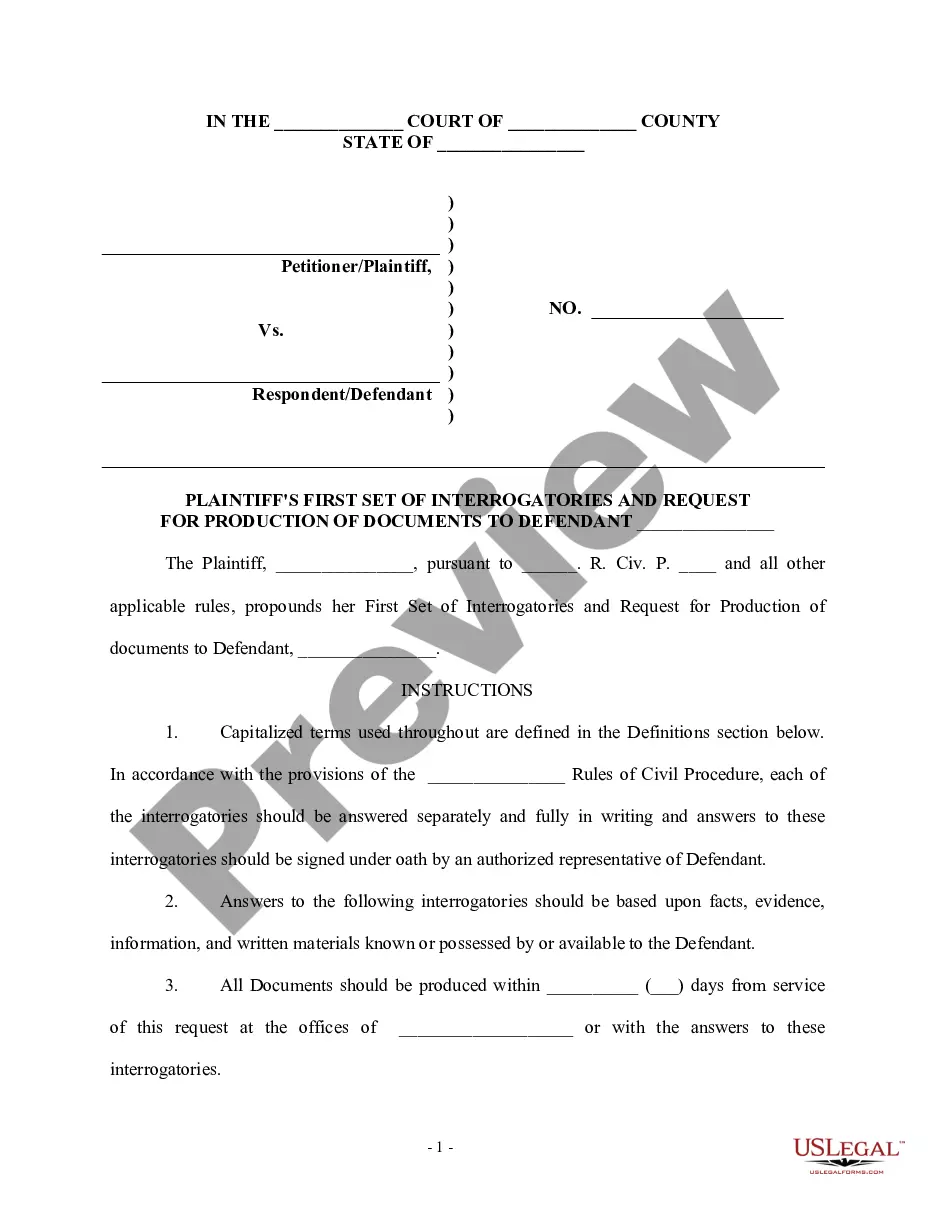
The Plaintiffs Interrogatory Suit on Debt is a legal document that includes a series of questions aimed at gathering information from the opposing party in a lawsuit concerning unpaid debts. This form is designed to help plaintiffs obtain relevant details about the defendant's financial situation, any defenses they may have, and any evidence or witnesses they may present. Unlike general interrogatories, this form specifically focuses on debt-related cases, making it essential for effectively preparing for court proceedings.
What’s included in this form
- Identification of both parties involved in the lawsuit.
- Questions regarding the defendant's personal and employment history.
- Inquiries about any claimed errors or offsets in the plaintiff's documentation.
- Detailed information about the debt, including amounts and payment history.
- Request for specific defenses and supporting evidence from the defendant.
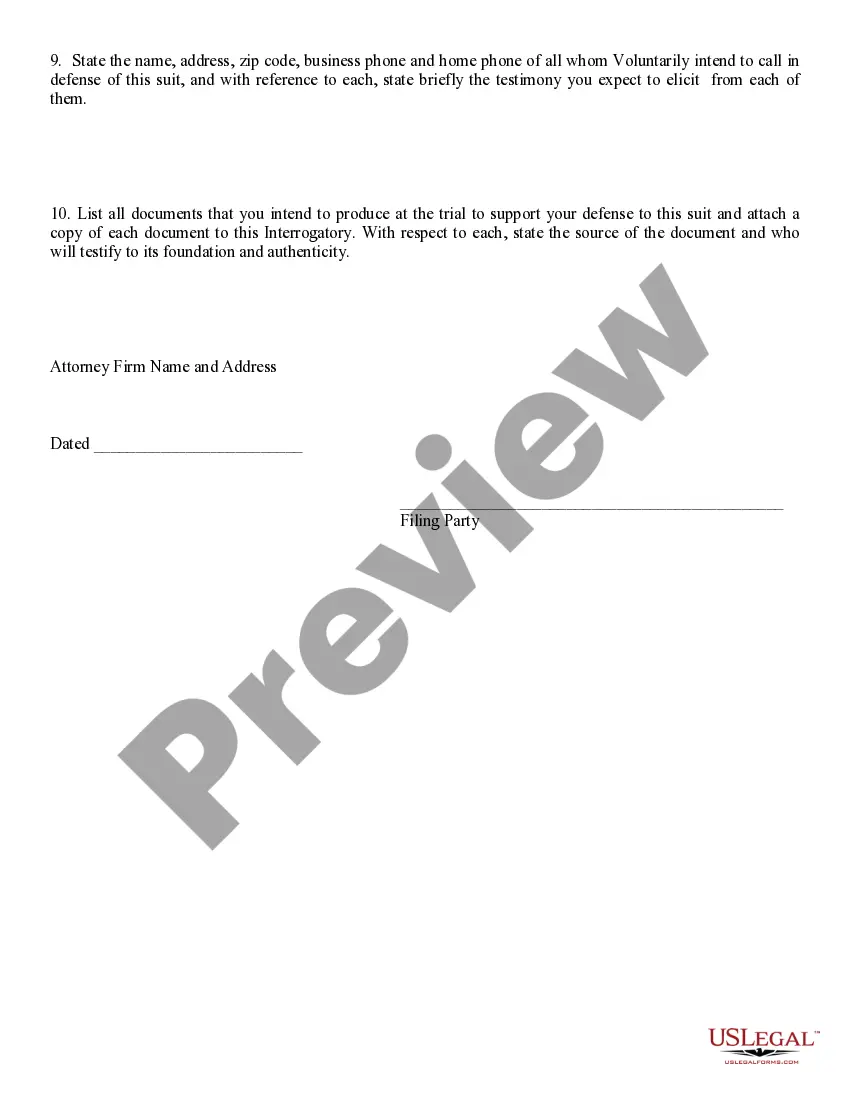
- Documentation requirements for trial support.
When this form is needed
This form is utilized when a plaintiff has filed a legal suit to recover an unpaid debt and needs to obtain detailed information from the defendant. It is particularly useful in cases where the defendant may contest the debt or assert defenses. This interrogatory can help clarify issues, expedite proceedings, and prepare for trial by gathering pertinent facts and evidence.
Who needs this form
- Individuals or businesses who are plaintiffs in a debt collection lawsuit.
- Attorneys representing plaintiffs in various debt-related legal matters.
- Anyone looking to understand their legal rights and gather necessary information for their case.
How to complete this form
- Identify the parties involved by completing their names and addresses at the top of the form.
- Answer all questions regarding your employment and residency history for the past five years.
- Provide details concerning any disputes about the claimed debt, including amounts and reasons for non-payment.
- List any witnesses you intend to call and the expected testimony from each.
- Attach copies of supporting documents you plan to utilize during the trial.
Is notarization required?
This form does not typically require notarization unless specified by local law. Ensure that you check any additional requirements specific to your jurisdiction.
Get your form ready online
Our built-in tools help you complete, sign, share, and store your documents in one place.
Make edits, fill in missing information, and update formatting in US Legal Forms—just like you would in MS Word.
Download a copy, print it, send it by email, or mail it via USPS—whatever works best for your next step.
Sign and collect signatures with our SignNow integration. Send to multiple recipients, set reminders, and more. Go Premium to unlock E-Sign.
If this form requires notarization, complete it online through a secure video call—no need to meet a notary in person or wait for an appointment.
We protect your documents and personal data by following strict security and privacy standards.

Make edits, fill in missing information, and update formatting in US Legal Forms—just like you would in MS Word.

Download a copy, print it, send it by email, or mail it via USPS—whatever works best for your next step.

Sign and collect signatures with our SignNow integration. Send to multiple recipients, set reminders, and more. Go Premium to unlock E-Sign.

If this form requires notarization, complete it online through a secure video call—no need to meet a notary in person or wait for an appointment.

We protect your documents and personal data by following strict security and privacy standards.
Common mistakes
- Failing to answer all questions completely, which can hinder your case.
- Neglecting to attach required documentation that supports your position.
- Providing vague or unclear responses that do not adequately address the questions.
Benefits of completing this form online
- Convenience of downloading and filling out the form at your own pace.
- Ability to access the form in editable formats like Word and Rich Text.
- Assurance that the form is drafted by licensed attorneys, providing legal credibility.
Legal use & context
- This form serves as a legal tool in debt-related lawsuits, facilitating the exchange of information between parties.
- It can be used to prepare for trial or settlement discussions.
- Failure to respond accurately or timely can result in adverse legal consequences.
Key takeaways
- The form is vital for plaintiffs in collecting debts and preparing for legal proceedings.
- It includes specific questions aimed at uncovering critical information about the defendant's financial situation.
- Completing the form accurately can strengthen your position in court and aid in resolving the case efficiently.
Legal terms and meanings
- Interrogatory: A set of written questions that one party sends to another as part of the legal discovery process.
- Plaintiff: The person or entity who initiates a lawsuit.
- Defendant: The person or entity being accused or sued in a court of law.
- Debt: An amount of money that is owed or due.
Looking for another form?




Form popularity
FAQ
Rule 26.2 concerns the protection of privileged information during disclosure and discovery in civil litigation. It provides guidelines on what types of information may be withheld. For individuals engaged in an Arizona Plaintiffs Interrogatory Suit on Debt, understanding these protections can help manage sensitive information effectively.
To file a lawsuit in Arizona, begin by completing the necessary court forms, which vary based on the type of case. After filing these forms with the court and paying any required fees, you must serve the opposing party. In an Arizona Plaintiffs Interrogatory Suit on Debt, ensuring all forms are accurately completed and filed is crucial for a successful process.
The best way to answer interrogatories is to be clear, thorough, and honest. Each answer should directly address the question while providing complete information, as incomplete answers may lead to complications. If you're dealing with an Arizona Plaintiffs Interrogatory Suit on Debt, consider using tools available on platforms like USLegalForms to assist in crafting accurate and comprehensive responses.
Rule 26.3 of the Arizona Rules of Civil Procedure deals with the timing and sequence of disclosures and discovery in civil cases. It ensures that all parties can access necessary information without delay. In the realm of an Arizona Plaintiffs Interrogatory Suit on Debt, adhering to this rule can streamline the process.
Rule 33 in Arizona allows parties to send written questions, known as interrogatories, to each other to gather information pertinent to the case. These questions can be crucial in an Arizona Plaintiffs Interrogatory Suit on Debt to clarify issues surrounding the debt and gather evidence for trial.
Rule 26.5 outlines the requirements for parties to provide detailed information about witnesses and their expected testimony before trial. This rule enhances the trial preparation process. For those dealing with an Arizona Plaintiffs Interrogatory Suit on Debt, understanding this rule can improve the effectiveness of evidence presented.
Rule 26.12 in Arizona mandates that parties must disclose the existence of insurance agreements relevant to the case. Such disclosures allow all parties to understand potential coverage for judgments. In an Arizona Plaintiffs Interrogatory Suit on Debt, this can be crucial for assessing possible recovery options.
Rule 26 disclosure in Arizona requires parties in a legal case to provide certain information to each other before trial. This includes financial documents, witness lists, and any relevant evidence they plan to use. In the context of an Arizona Plaintiffs Interrogatory Suit on Debt, these disclosures help ensure transparency and prepare both sides for the proceedings.
Responding to interrogatories involves providing clear and concise answers to the questions posed by the other party in a suit. Each response should be complete and directly address the inquiries, especially in an Arizona Plaintiffs Interrogatory Suit on Debt. It is crucial to be truthful and thorough as any discrepancies can lead to complications. Platforms like uslegalforms can help streamline the response process by offering templates that ensure you cover all necessary points.
In Arizona, the statute of limitations for most debt types is six years. After this period, debt collectors can no longer sue you to collect the debt, which can impact an Arizona Plaintiffs Interrogatory Suit on Debt. However, it is essential to understand that while they cannot sue, they may still attempt to collect the debt through other means. Always keep track of your debts and consult legal resources if necessary.