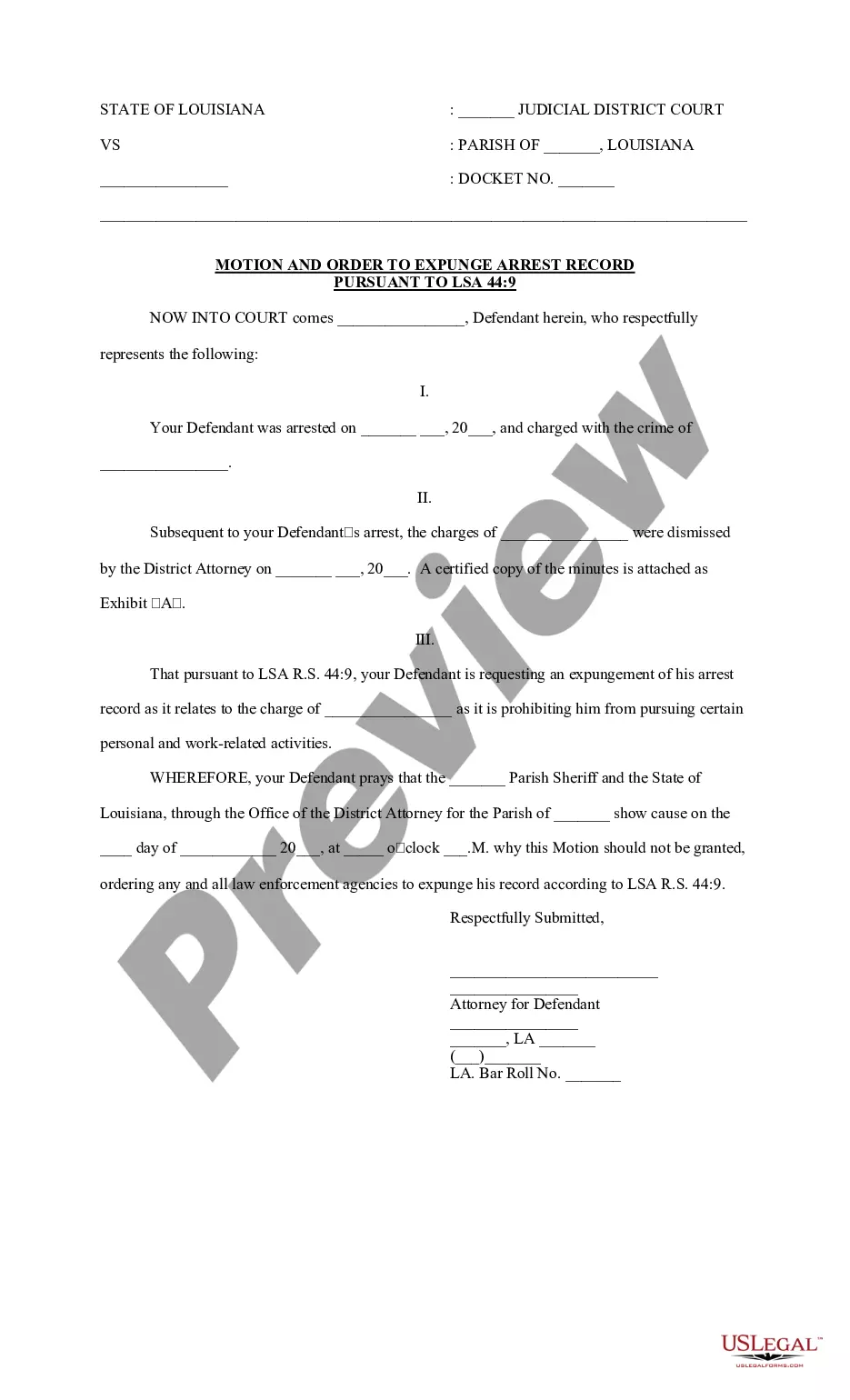
Arizona Affidavit of Service by Certified or Registered Mail
About this form
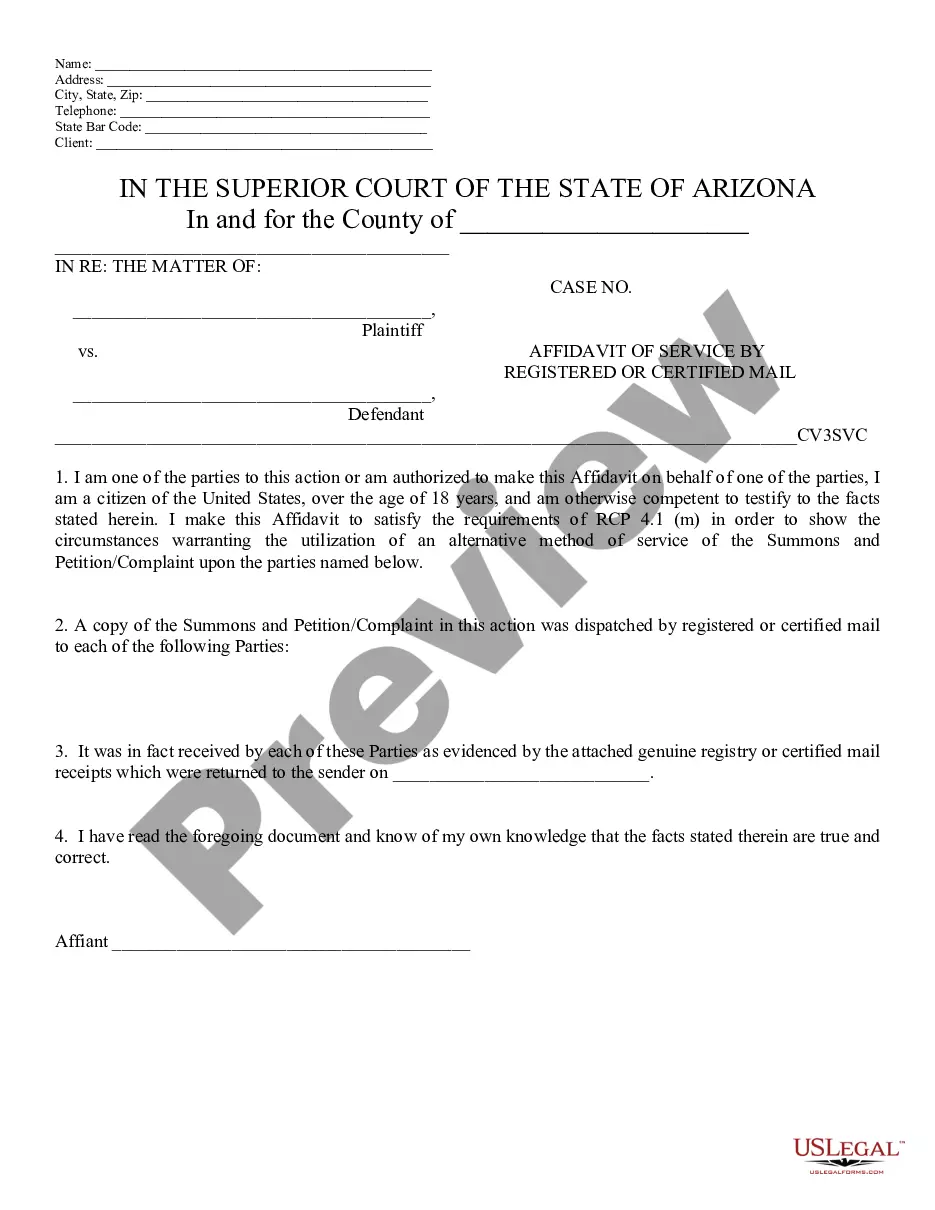
The Affidavit of Service by Certified or Registered Mail is a legal document used to confirm that you have successfully delivered legal papers to an individual via certified or registered mail rather than through personal hand delivery. This affidavit is essential for proving that service was properly executed, as it usually includes the mail receipt, which is then filed with the court.
Form components explained
- Address and contact details of the affiant.
- The title of the court and case number.
- A statement confirming the affiant's eligibility and authority to make the affidavit.
- Details of the party served, including the method and date of service.
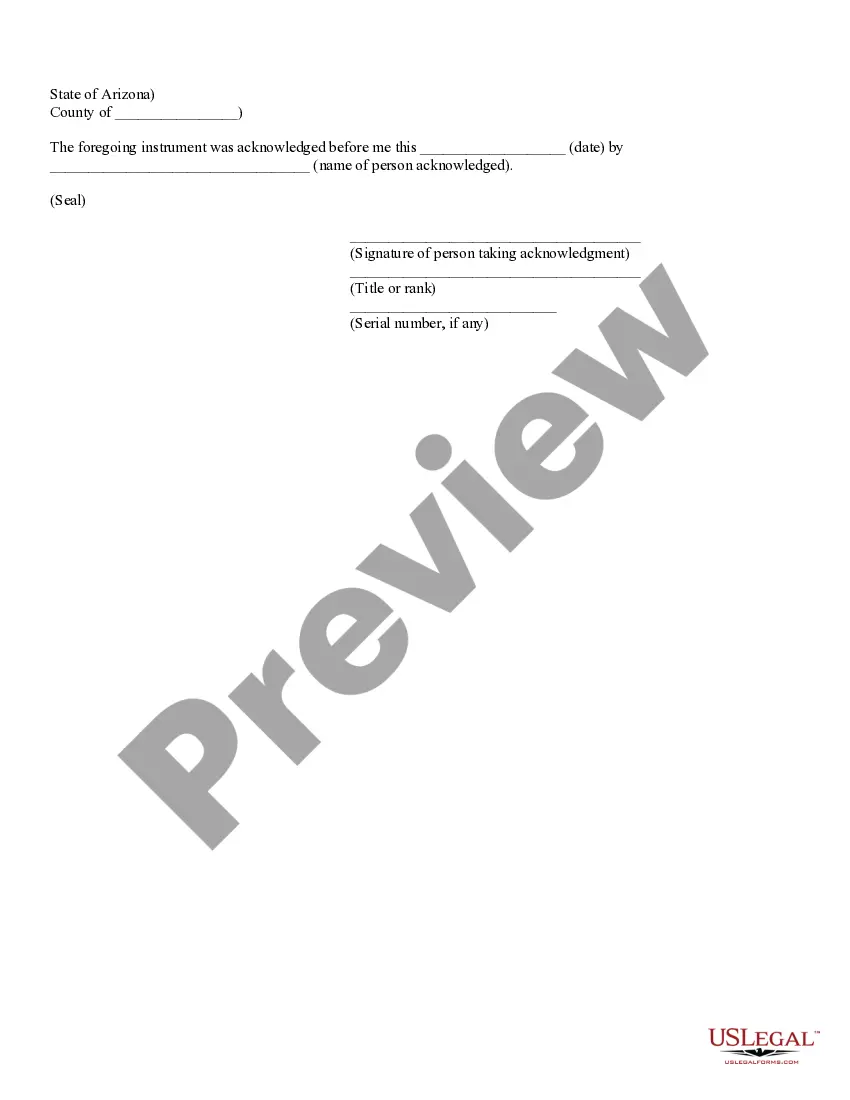
- A notary section for the authentication of the affidavit.

Situations where this form applies
This affidavit should be used when you have sent legal documents, such as a summons or complaint, via certified or registered mail and need to provide proof of delivery to the court. It is commonly utilized in divorce cases, civil lawsuits, or any situation requiring formal notification of legal action.
Who should use this form
This form is intended for:
- Individuals involved in legal proceedings who need to deliver documents to another party.
- Lawyers who are representing clients in cases requiring formal service of documents.
- Anyone who needs to establish proof of service to comply with court requirements.
Completing this form step by step
- Fill in your address, city, state, and zip code at the top of the form.
- Enter the details of the court, including the name and case number.
- Clearly identify the parties involved in the case.
- Document the date and method of service regarding the documents sent.
- Sign the affidavit in front of a notary public to ensure its validity.
Notarization guidance
This form must be notarized to be legally valid. US Legal Forms provides secure online notarization powered by Notarize, allowing you to complete the process through a verified video call.
Get your form ready online
Our built-in tools help you complete, sign, share, and store your documents in one place.
Make edits, fill in missing information, and update formatting in US Legal Forms—just like you would in MS Word.
Download a copy, print it, send it by email, or mail it via USPS—whatever works best for your next step.
Sign and collect signatures with our SignNow integration. Send to multiple recipients, set reminders, and more. Go Premium to unlock E-Sign.
If this form requires notarization, complete it online through a secure video call—no need to meet a notary in person or wait for an appointment.
We protect your documents and personal data by following strict security and privacy standards.
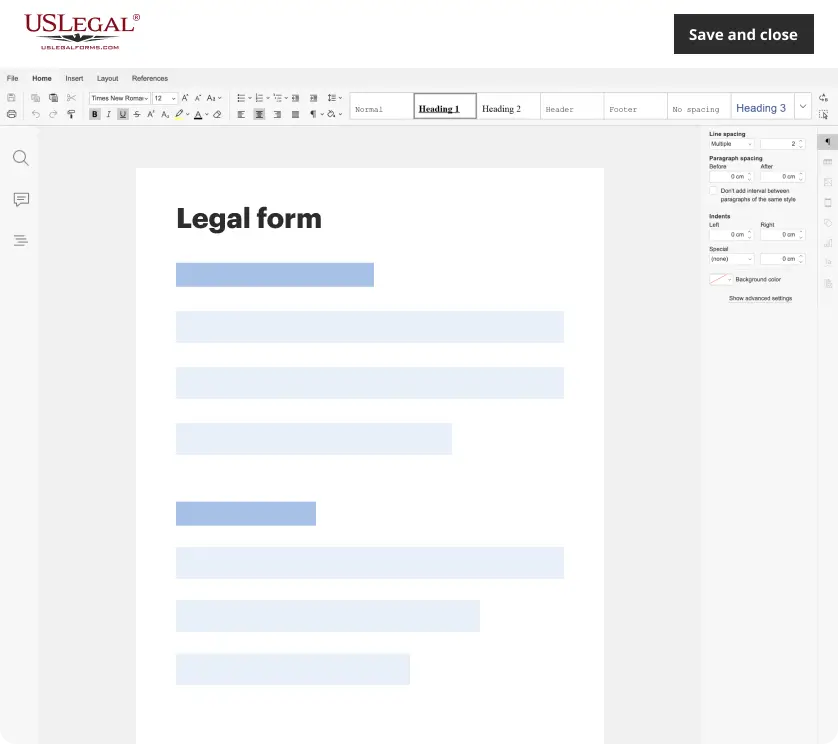
Make edits, fill in missing information, and update formatting in US Legal Forms—just like you would in MS Word.
Download a copy, print it, send it by email, or mail it via USPS—whatever works best for your next step.
Sign and collect signatures with our SignNow integration. Send to multiple recipients, set reminders, and more. Go Premium to unlock E-Sign.

If this form requires notarization, complete it online through a secure video call—no need to meet a notary in person or wait for an appointment.
We protect your documents and personal data by following strict security and privacy standards.
Mistakes to watch out for
- Failing to attach the certified mail receipt to the affidavit.
- Not completing all relevant sections of the form, such as the court information.
- Submitting the affidavit without notarization, if required.
- Incorrectly identifying the party served or the date of service.
Why complete this form online
- Convenience of completing the form at your own pace.
- Editable format allows for easy customization to suit your specific needs.
- Access to professionally drafted templates ensures legal validity.
Looking for another form?
Form popularity
FAQ
The Arizona Affidavit of Service by Certified or Registered Mail is a sworn document used to prove that legal papers were delivered by certified or registered mail rather than by hand. It records the affiant's details, the court title and case number, the service method and date, and often includes the mail receipt to be filed with the court. It's used in civil cases, divorces, and other proceedings requiring notice.
Don't include statements outside the affidavit's scope. Avoid legal conclusions or unrelated details. Ensure you list the affiant's address, the title of the court and the case number, a statement showing the affiant's authority, and the details of the party served, including the method and date of service, plus a valid notary acknowledgment.
Yes. In Arizona, service by certified or registered mail is recognized as a valid delivery method in many civil actions, and this form provides the documented proof of that service. Use it to show the court when and how the papers were delivered, and to attach the mail receipt when required.
Common mistakes include omitting the court title or case number, failing to show the affiant's authority, not specifying the party served, or missing the service method or date. Also, forgetting to reference or attach the mail receipt and neglecting the notary acknowledgment can undermine the affidavit's validity.
A strong affidavit clearly includes the affiant's contact information, the court title and case number, a statement of authority, and precise service details, including who was served, the method and date of service. It should also reference any attached mail receipt and include a properly executed notary section.
This form is tailored to service by certified or registered mail in Arizona, requiring documentation of the delivery method and date and, when possible, the mail receipt to be filed with the court. It also includes the affiant details, court title and case number, and a notary acknowledgment to authenticate the filing.