Arizona Summons - Eviction - Forcible Entry and Detainer
Overview of this form
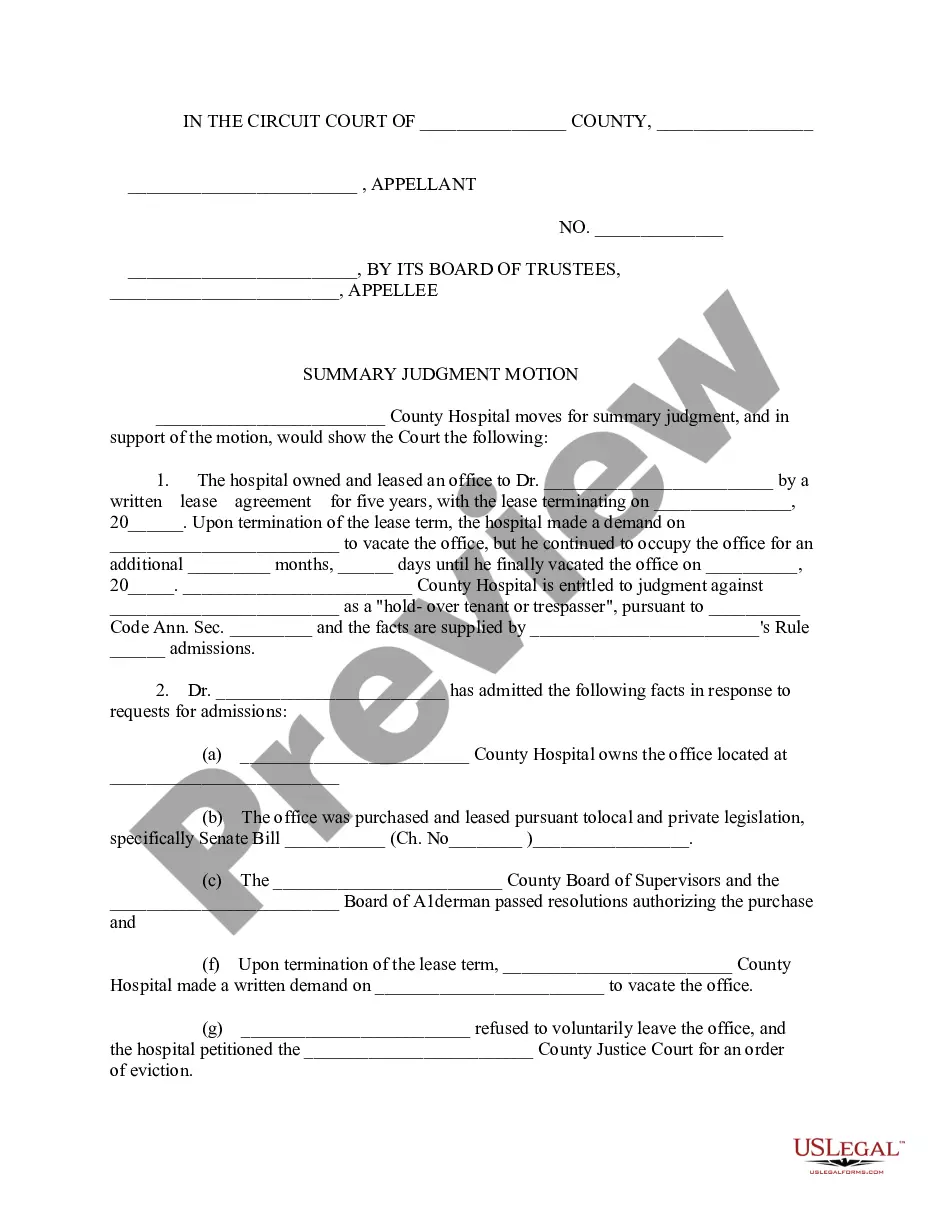
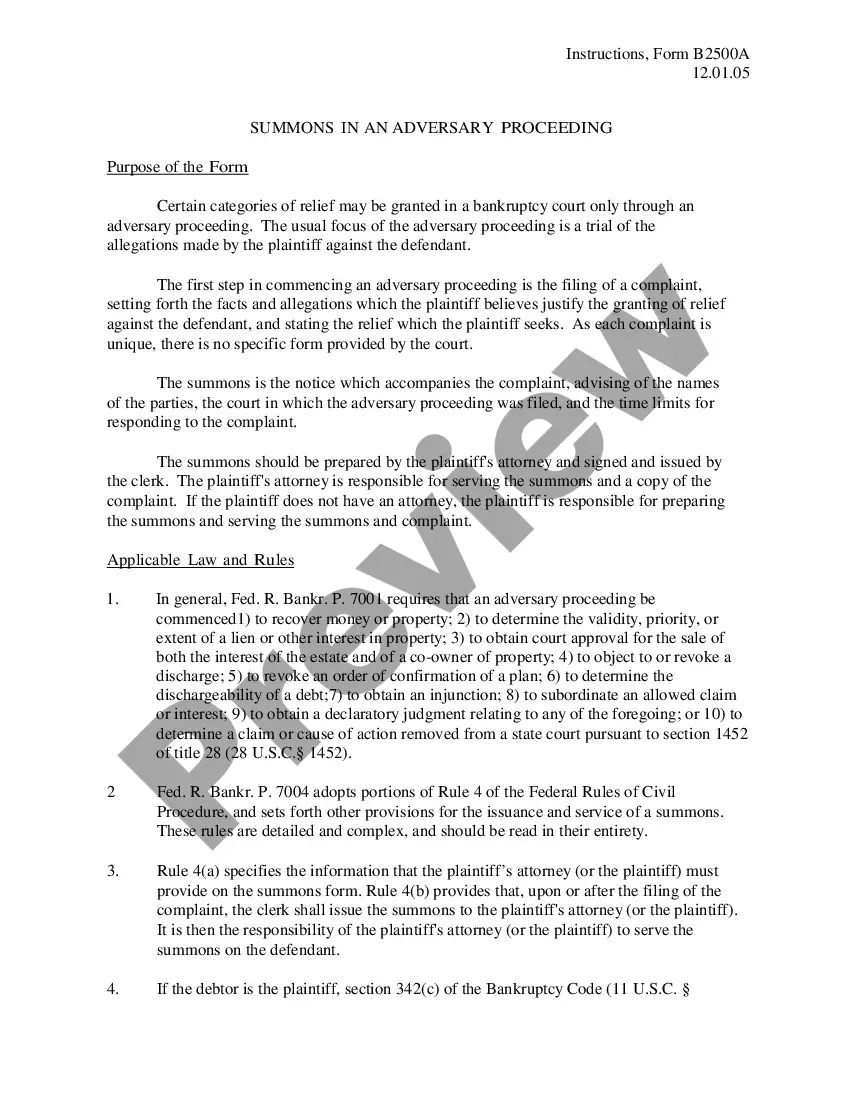
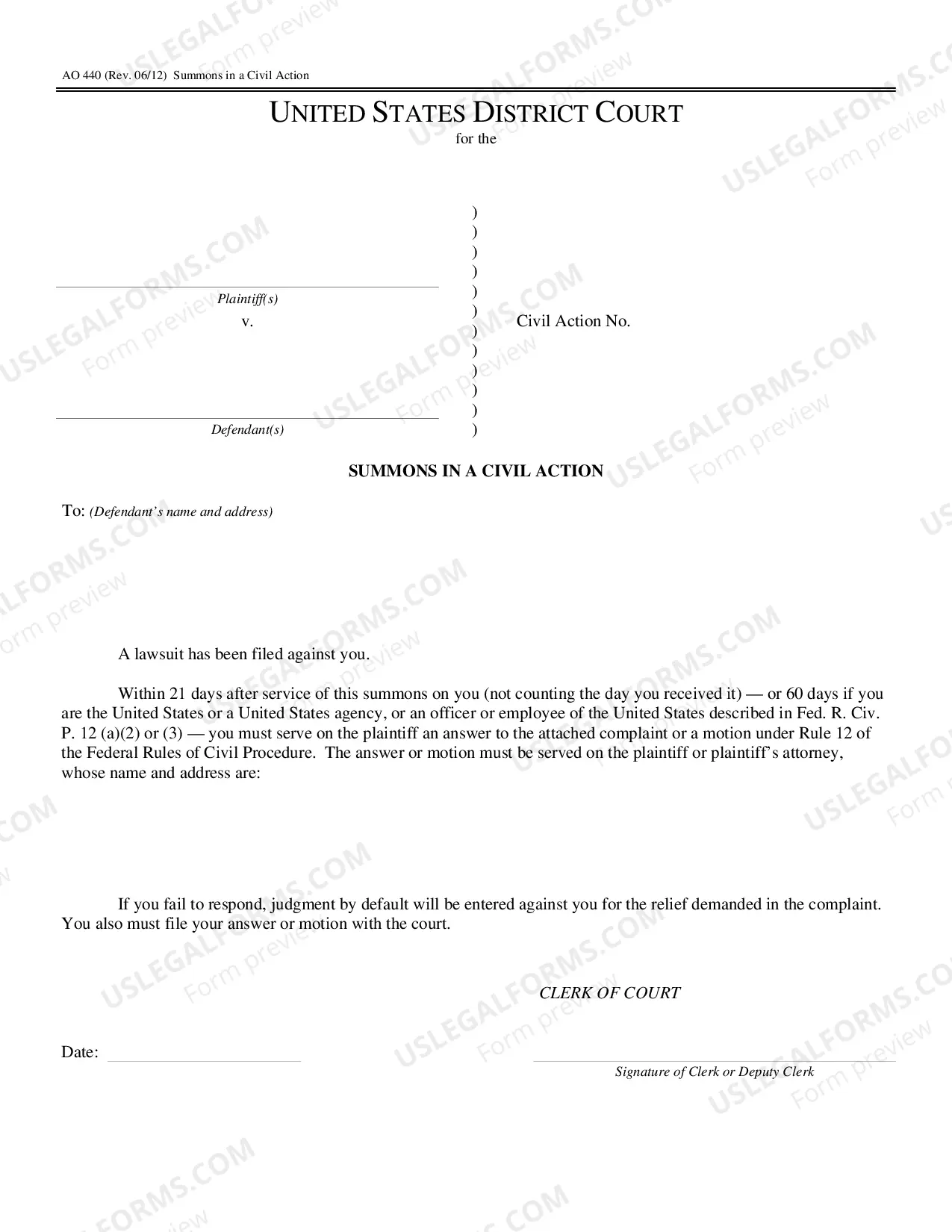
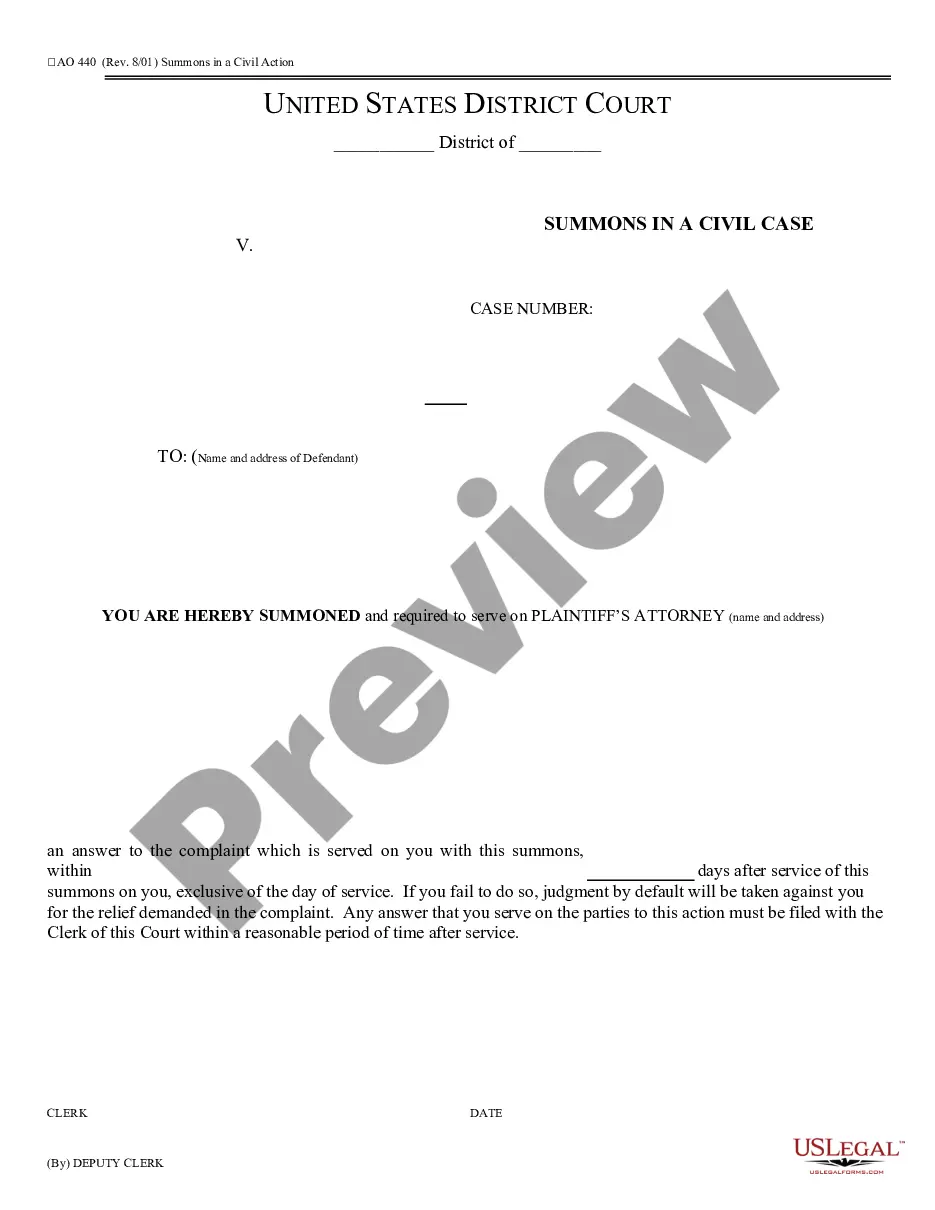
The Summons - Eviction - Forcible Entry and Detainer is a legal document used when a plaintiff seeks to reclaim property unlawfully held by the defendant. This summons mandates the defendant to appear in court at a specified date and time. If the defendant fails to appear, a default judgment may be issued against them. This form is distinct from other eviction notices by its court requirement and legal implications, ensuring compliance with local laws regarding property recovery.
Key parts of this document
- Addresses and contact information for both the plaintiff and defendant.
- Case number for easy identification in court records.
- Details of the court appearance, including date, time, and location.
- Specific property details that the plaintiff seeks to recover.
- Notification of potential judgment against the defendant for non-compliance.
- Contact information for the plaintiff's attorney, if applicable.

Common use cases
This form is necessary when a landlord or property owner wishes to initiate eviction proceedings due to a tenant unlawfully holding over the property after a rental agreement has ended. It is typically used in situations where negotiations have failed, and formal legal action is required to regain possession of the property.
Who this form is for
- Landlords seeking to recover property from tenants who refuse to vacate.
- Property owners who have legal grounds for eviction under local law.
- Attorneys representing clients in real estate or landlord-tenant disputes.
Instructions for completing this form
- Fill in the names and addresses of the plaintiff and defendant accurately.
- Provide the case number assigned by the court.
- Specify the date, time, and location for the court appearance.
- Describe the property that is the subject of the eviction.
- Include the contact information for any legal representation.
- Sign and date the form as required to validate it.
Is notarization required?
This form does not typically require notarization to be legally valid. However, some jurisdictions or document types may still require it. US Legal Forms provides secure online notarization powered by Notarize, available 24/7 for added convenience.
Get your form ready online
Our built-in tools help you complete, sign, share, and store your documents in one place.
Make edits, fill in missing information, and update formatting in US Legal Forms—just like you would in MS Word.
Download a copy, print it, send it by email, or mail it via USPS—whatever works best for your next step.
Sign and collect signatures with our SignNow integration. Send to multiple recipients, set reminders, and more. Go Premium to unlock E-Sign.
If this form requires notarization, complete it online through a secure video call—no need to meet a notary in person or wait for an appointment.
We protect your documents and personal data by following strict security and privacy standards.

Make edits, fill in missing information, and update formatting in US Legal Forms—just like you would in MS Word.

Download a copy, print it, send it by email, or mail it via USPS—whatever works best for your next step.

Sign and collect signatures with our SignNow integration. Send to multiple recipients, set reminders, and more. Go Premium to unlock E-Sign.

If this form requires notarization, complete it online through a secure video call—no need to meet a notary in person or wait for an appointment.

We protect your documents and personal data by following strict security and privacy standards.
Common mistakes
- Failing to provide accurate contact information for all parties.
- Not specifying the exact date and time of the court hearing.
- Leaving out critical details about the property in question.
- Not signing or dating the form before submission.
Advantages of online completion
- Convenience of immediate download for immediate legal action.
- Editable to ensure all information is accurate before printing.
- Reliability with attorney-reviewed templates ensuring compliance with local laws.
Looking for another form?
Form popularity
FAQ
No, a landlord cannot evict a tenant without a court order in Arizona. Even if a tenant has violated lease terms, the landlord must follow legal procedures established by state law. Understanding your rights and obligations can greatly aid in navigating an Arizona Summons - Eviction - Forcible Entry and Detainer.
In Arizona, written notice can be delivered via various methods, including email, if both parties agree to this form of communication. It is vital to check if the lease agreement includes email as an accepted method for notices. Clarity on this matter can prevent confusion during the Arizona Summons - Eviction - Forcible Entry and Detainer process.
A 30-day notice to a tenant in Arizona indicates that a landlord intends to terminate a month-to-month rental agreement. This gives the tenant a full 30 days to vacate the premises before eviction proceedings can occur. Familiarizing yourself with this process ensures clarity during an Arizona Summons - Eviction - Forcible Entry and Detainer situation.
In Arizona, tenants can leave a rental property without prior notice under specific conditions, but it is generally advisable to provide notice per the lease agreement. Leaving without notice may result in financial penalties or loss of security deposits. To avoid complications with an Arizona Summons - Eviction - Forcible Entry and Detainer, communication with the landlord is key.
In Arizona, a landlord can initiate eviction proceedings if a tenant is more than 5 days late on rent. This is usually when the eviction notice is served, prompting the Arizona Summons - Eviction - Forcible Entry and Detainer process. It is important to communicate with your landlord about any issues regarding rent payments to avoid escalation. Staying proactive can help avoid misunderstandings and potential legal troubles.
When you face eviction in Arizona, the landlord will serve an Arizona Summons - Eviction - Forcible Entry and Detainer, outlining the reasons and timeline. If you do not move out by the specified date, the landlord can proceed to court to obtain a judgment. Once the court rules in favor of the landlord, they can request law enforcement to remove you from the property. This process emphasizes the importance of understanding your rights and responsibilities.
In Arizona, a landlord usually gives a 30-day notice to vacate unless the lease specifies otherwise. If the lease has a month-to-month agreement, this standard applies. However, if a tenant has committed a serious violation, the notice may only require 5 days. Understanding these notices is essential when navigating Arizona Summons - Eviction - Forcible Entry and Detainer.
In Arizona, the time a landlord must give a tenant to move out depends on the lease agreement and the reason for eviction. For a standard lease, a landlord typically provides a 30-day notice. However, if the tenant has violated the lease, the notice may be as short as 5 days. The process involves an Arizona Summons - Eviction - Forcible Entry and Detainer, which outlines these terms.
After an eviction notice in Arizona, the time given to move varies based on the type of notice. If a tenant receives a court order for eviction, they typically must vacate immediately or within a specified timeframe. Knowing your timeline and rights is crucial, and referencing the Arizona Summons - Eviction - Forcible Entry and Detainer can provide clarity on your situation.
In Arizona, the amount of time you have after receiving an eviction notice depends on the type of notice served. Typically, a tenant may receive 5 or 10 days to remedy the situation, but these details differ based on the circumstances. Understanding these timelines is essential, and resources like US Legal Forms can guide you through your rights related to the Arizona Summons - Eviction - Forcible Entry and Detainer process.