Arizona Quitclaim Deed - Trust to Husband and Wife
Understanding this form
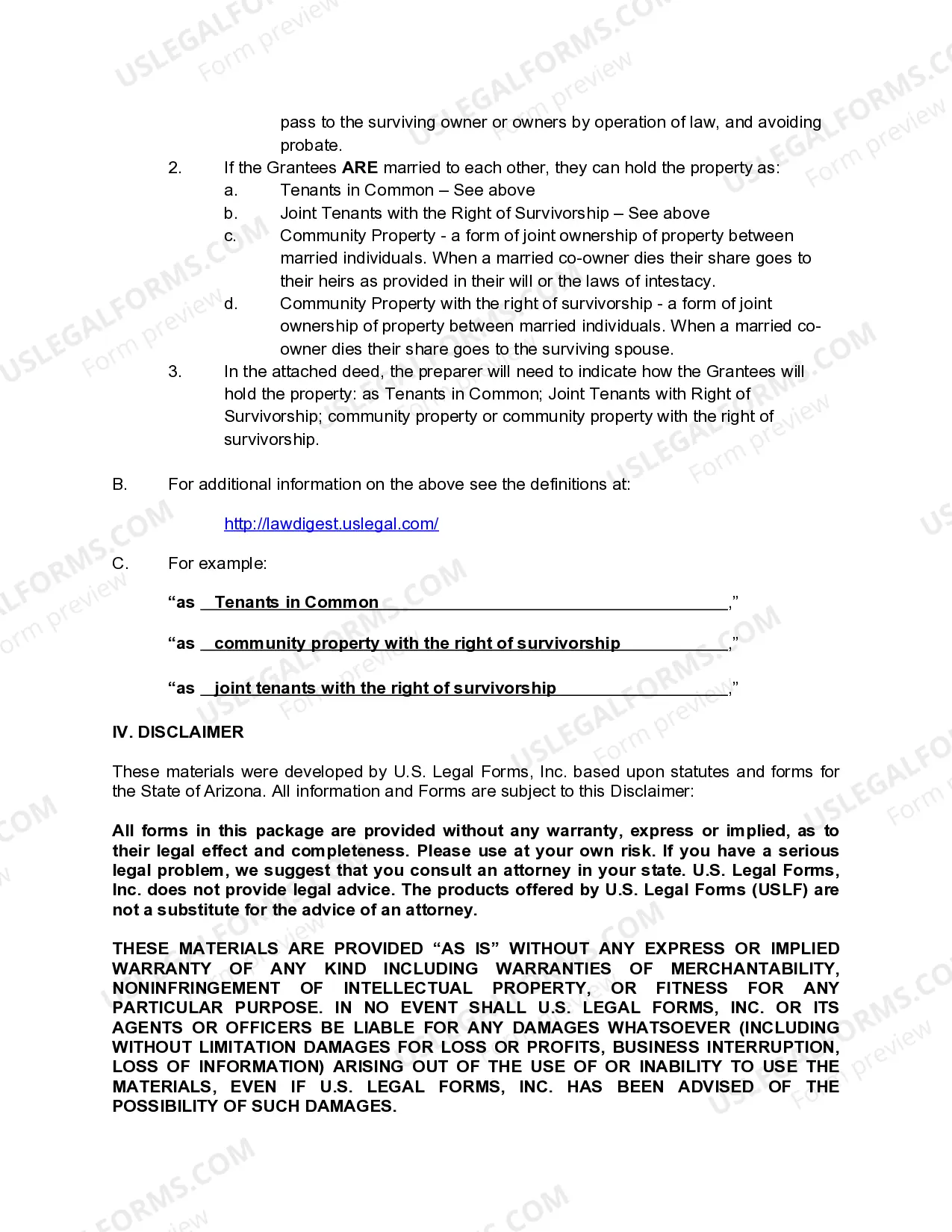
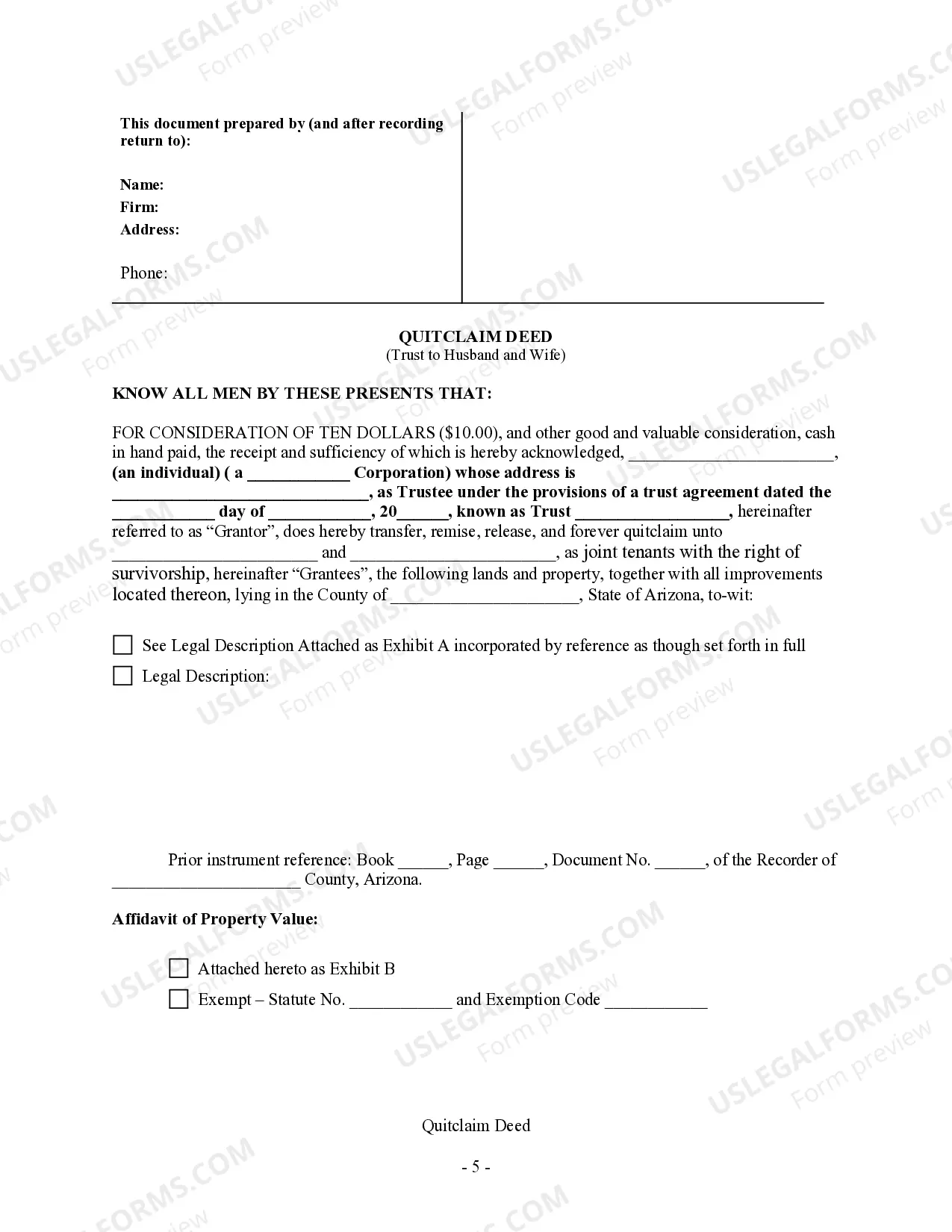
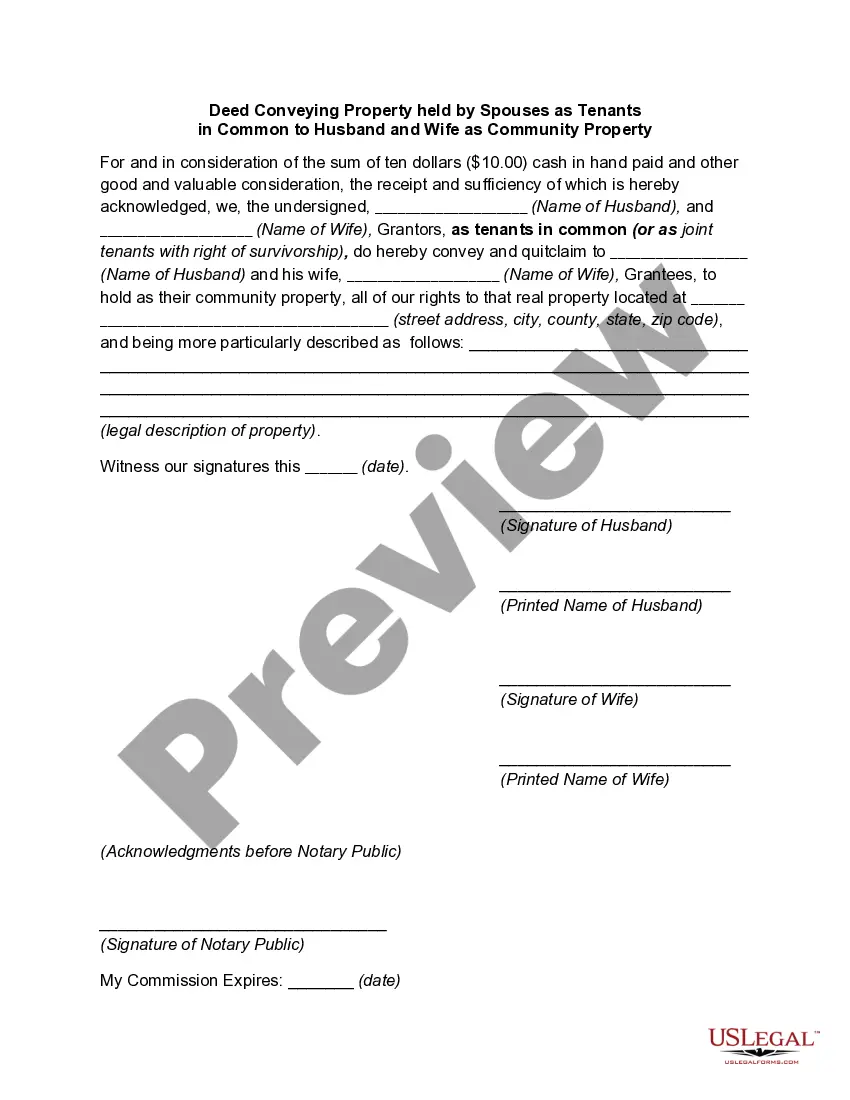
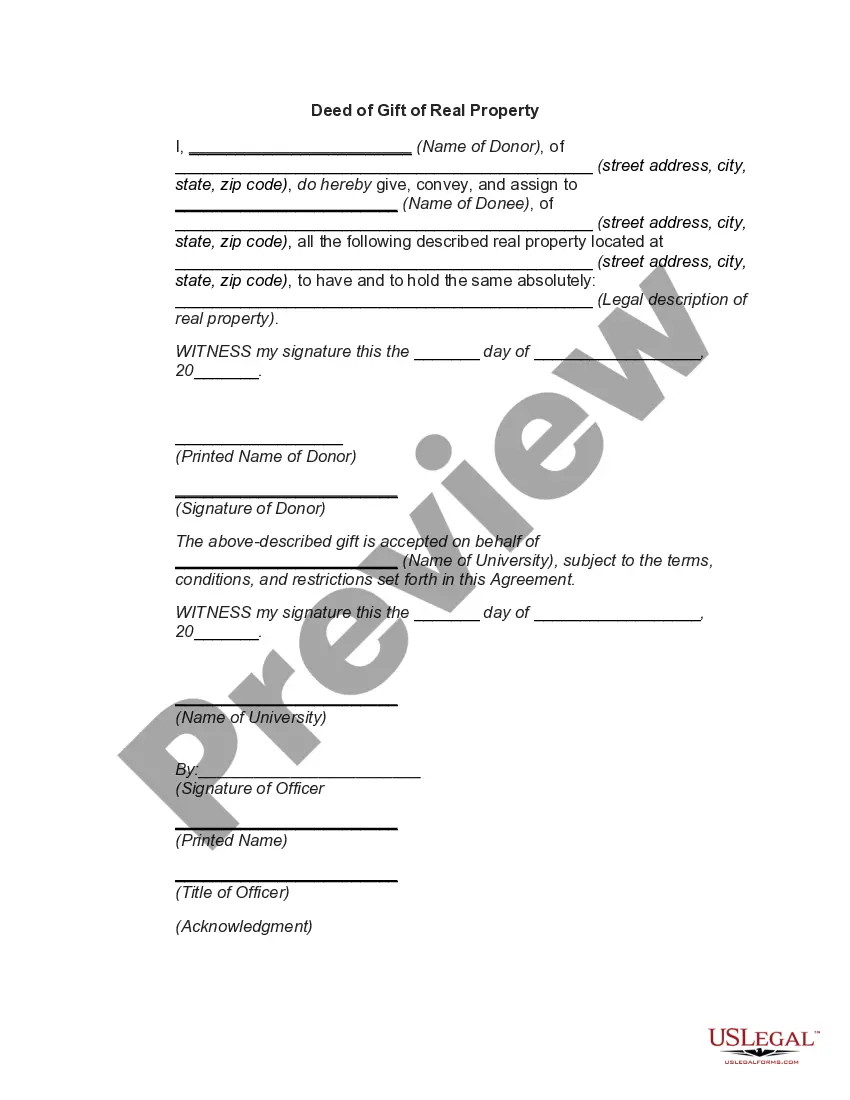
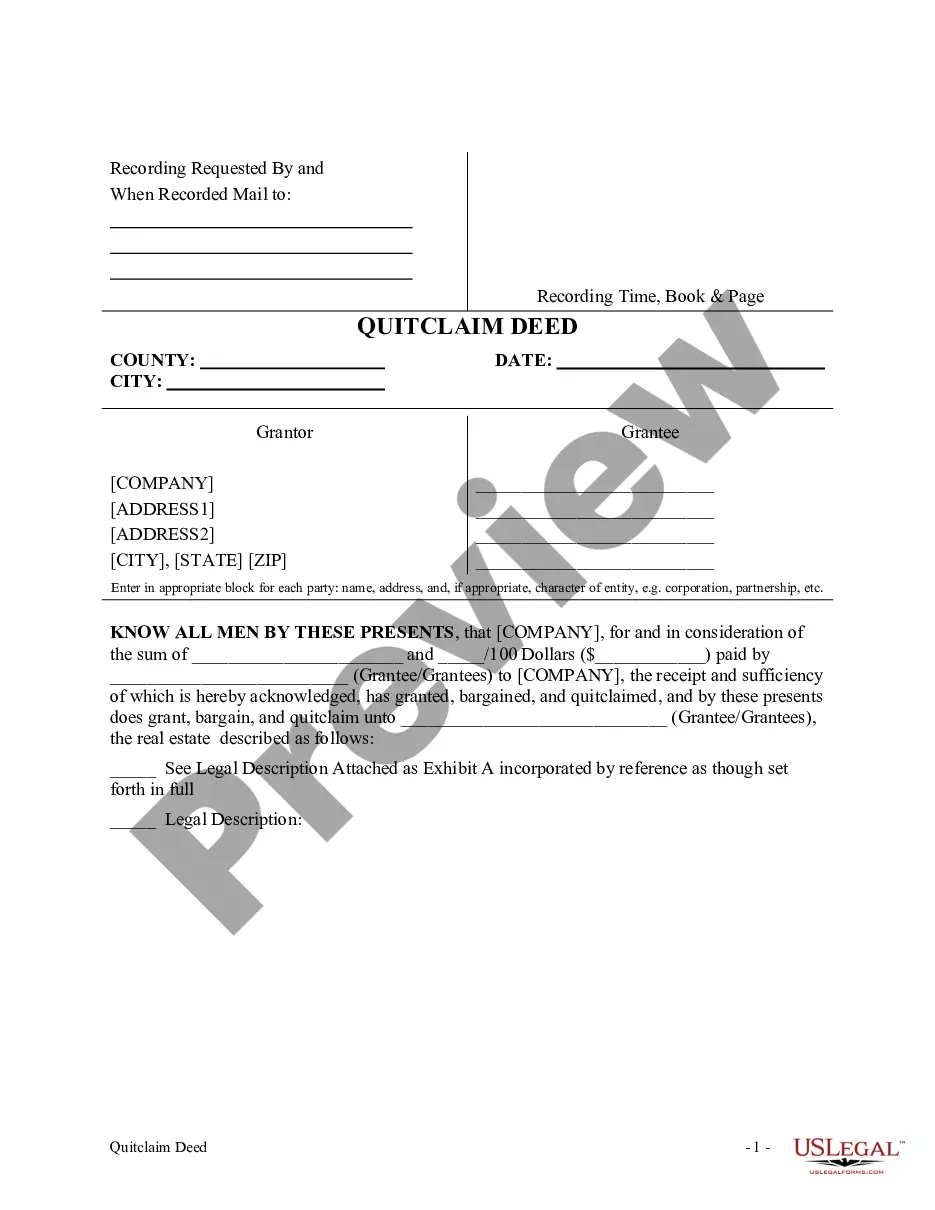
The Quitclaim Deed - Trust to Husband and Wife is a legal document used to transfer property ownership from a trust to a married couple. Unlike other types of deeds, a quitclaim deed does not guarantee the title of the property. It simply conveys whatever interest the grantor (the trust) has in the property, making it essential for spouses who want to clarify their ownership rights. This deed allows the couple to hold the property in various ways, such as community property or joint tenants with rights of survivorship.
Key components of this form
- Identification of the Grantor (the Trust) and Grantees (Husband and Wife).
- Description of the property being transferred.
- Details regarding how the Grantees will hold title to the property (e.g., community property, joint tenants).
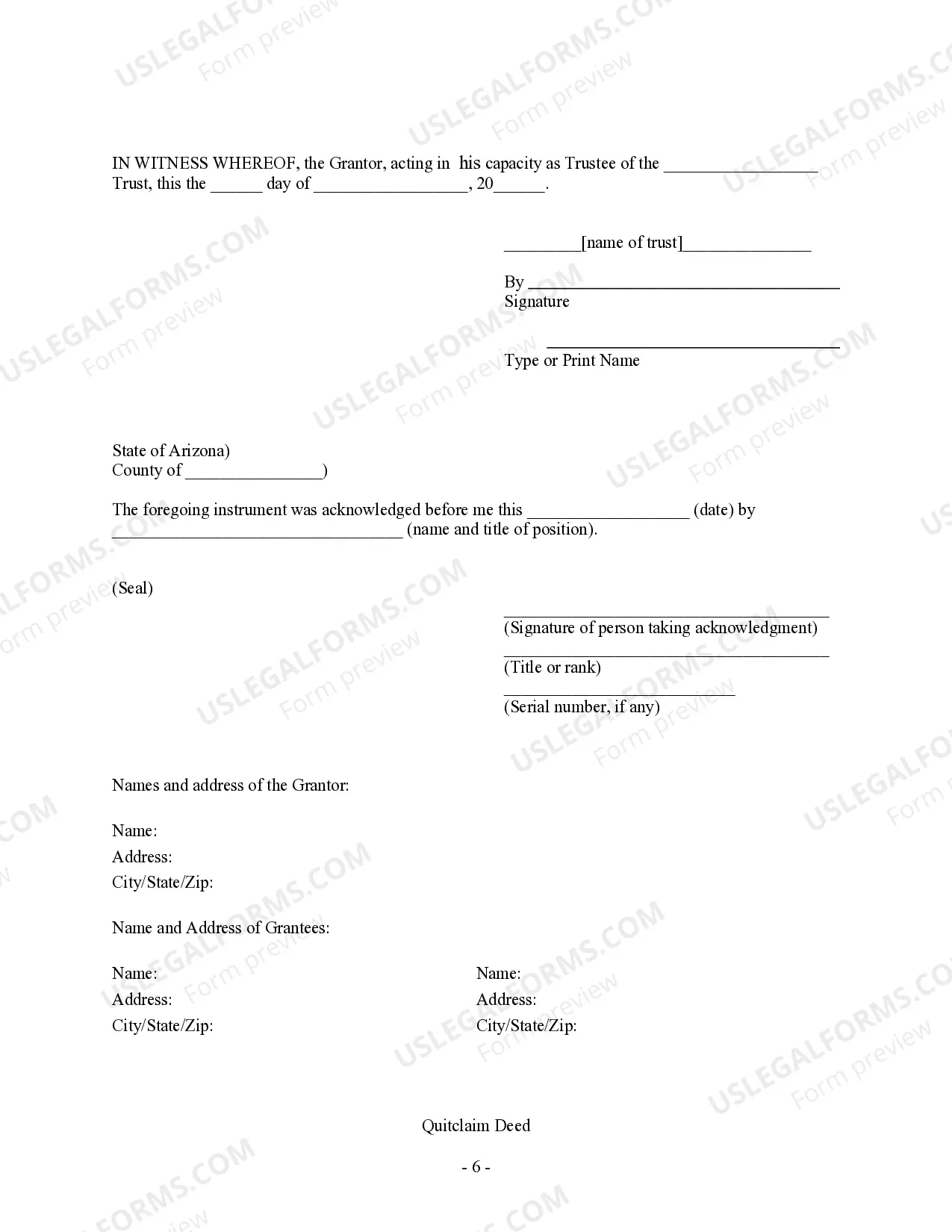
- Signature line for the Grantor acting as Trustee.
- Date of the transaction.
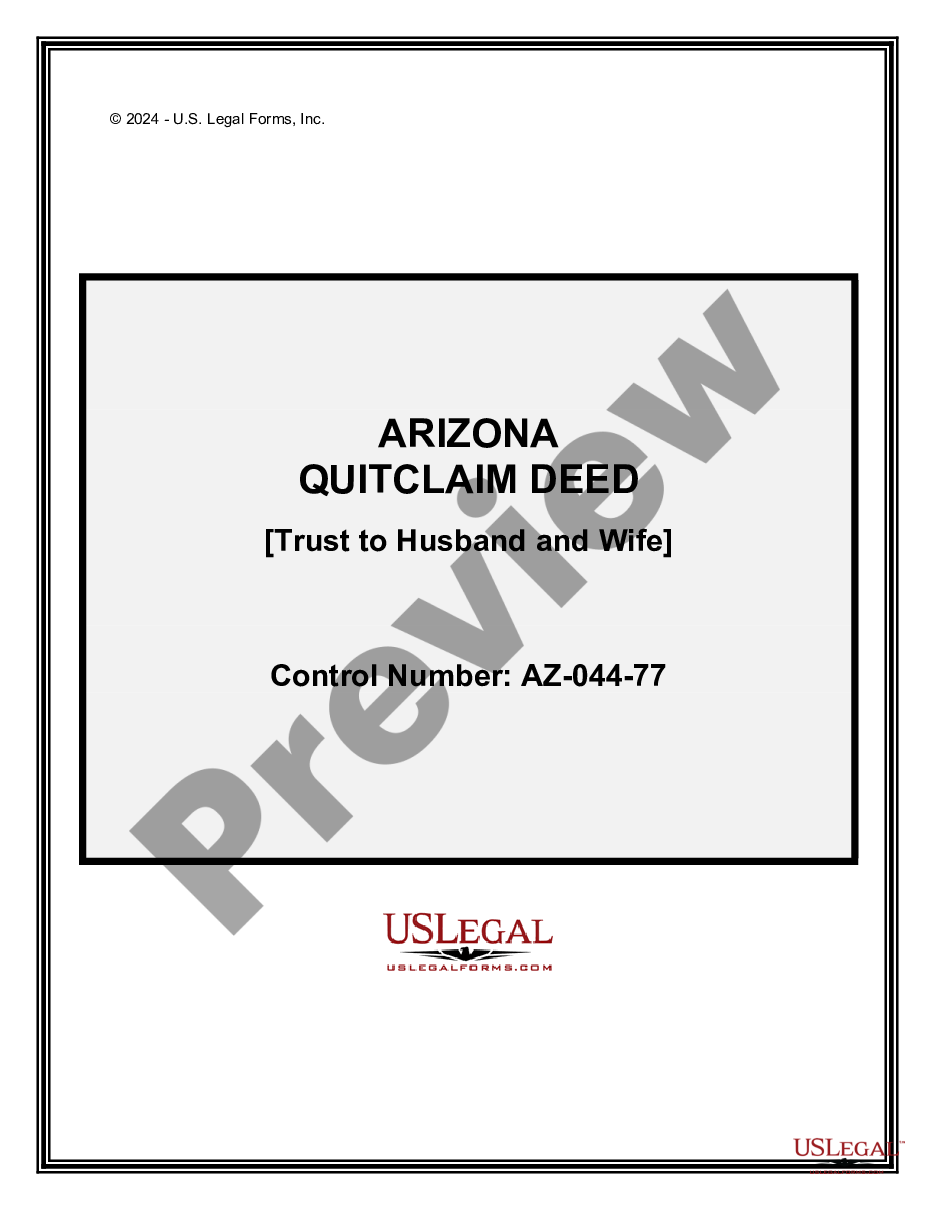
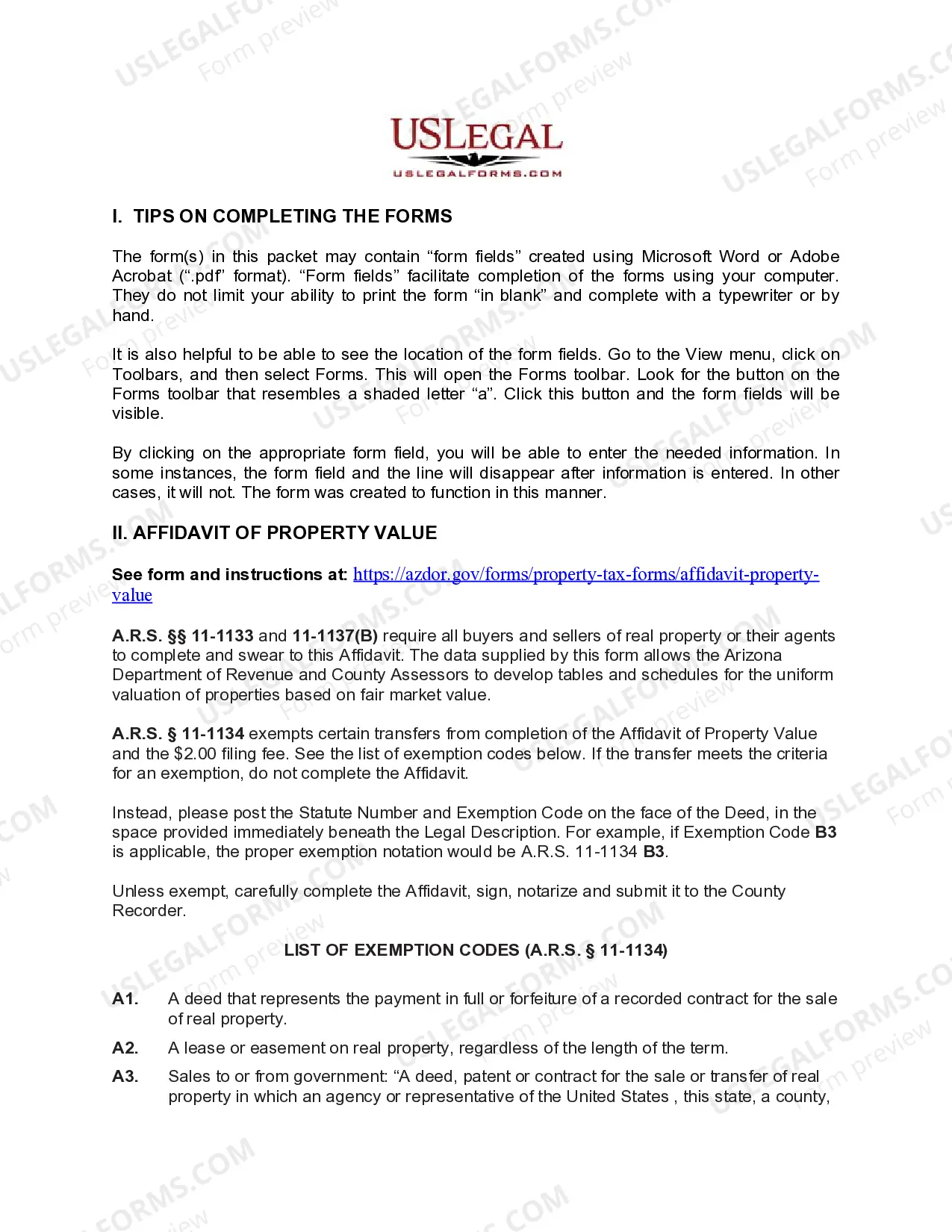
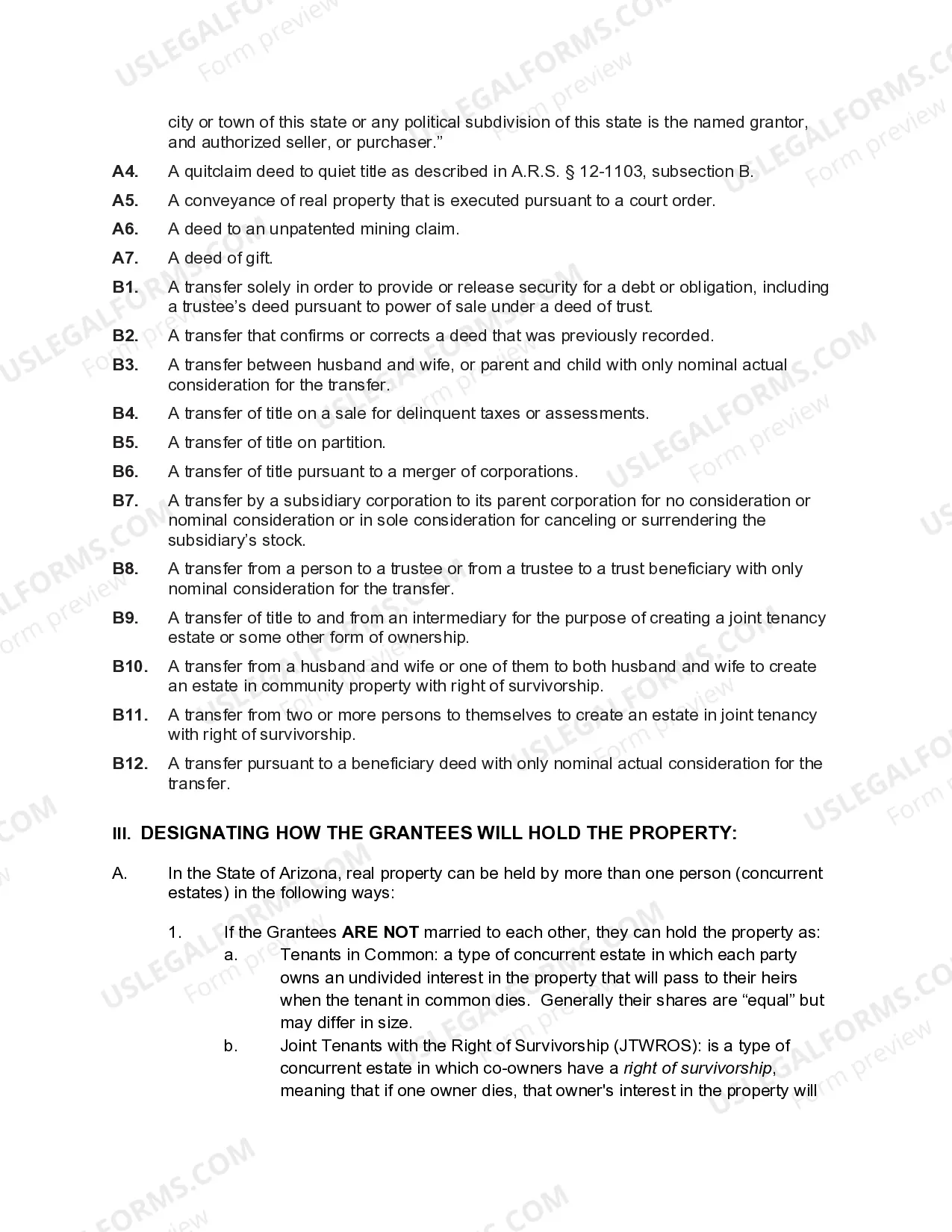

When this form is needed
This form should be used when a trust needs to transfer property to a married couple, particularly in scenarios such as transferring investment properties, vacation homes, or family residences. It is commonly used in estate planning or when simplifying the ownership structure between spouses.
Who this form is for
- Married couples who are acquiring property from a trust.
- Trustees responsible for managing and distributing trust assets.
- Individuals involved in estate planning within the family context.
How to complete this form
- Identify the Grantor as the Trust and the Grantees as the Husband and Wife.
- Provide a detailed description of the property being transferred.
- Specify how the Grantees will hold the property title.
- Add the date and ensure all parties sign the document.
- Consider having the document reviewed by a legal professional to confirm its accuracy.
Notarization guidance
Notarization is required for this form to take effect. Our online notarization service, powered by Notarize, lets you verify and sign documents remotely through an encrypted video session, available 24/7.
Get your form ready online
Our built-in tools help you complete, sign, share, and store your documents in one place.
Make edits, fill in missing information, and update formatting in US Legal Forms—just like you would in MS Word.
Download a copy, print it, send it by email, or mail it via USPS—whatever works best for your next step.
Sign and collect signatures with our SignNow integration. Send to multiple recipients, set reminders, and more. Go Premium to unlock E-Sign.
If this form requires notarization, complete it online through a secure video call—no need to meet a notary in person or wait for an appointment.
We protect your documents and personal data by following strict security and privacy standards.

Make edits, fill in missing information, and update formatting in US Legal Forms—just like you would in MS Word.

Download a copy, print it, send it by email, or mail it via USPS—whatever works best for your next step.

Sign and collect signatures with our SignNow integration. Send to multiple recipients, set reminders, and more. Go Premium to unlock E-Sign.

If this form requires notarization, complete it online through a secure video call—no need to meet a notary in person or wait for an appointment.

We protect your documents and personal data by following strict security and privacy standards.
Common mistakes
- Failing to accurately describe the property can lead to legal issues later on.
- Not including all necessary signatures may make the deed invalid.
- Omitting the date or incorrect dating can affect record-keeping.
Why use this form online
- Convenient access to legal documents without the need for in-person visits.
- Editability allows for customization to fit individual circumstances.
- Reliability of forms created by licensed attorneys ensures legal compliance.
Looking for another form?

Form popularity
FAQ
A Quit Claim Deed offers a straightforward way to transfer ownership of property. When you want to add your fiancée or wife to the title of a house in Arizona, this deed allows you to do so without complexities. By executing an Arizona Quitclaim Deed - Trust to Husband and Wife, you ensure that your partner has legal claim over the property. This can simplify estate planning and guarantee your spouse’s rights in the property.
The best way to add your wife to your deed is by using an Arizona Quitclaim Deed - Trust to Husband and Wife. This straightforward method allows for a simple transfer of property rights. Create and sign the deed, then record it with the county recorder’s office. This approach not only adds her to the title but also strengthens your legal ties regarding the property.
To add your spouse to your deed in Arizona, start by obtaining an Arizona Quitclaim Deed - Trust to Husband and Wife form. Fill out the necessary details, including both your names, and ensure it matches the current deed. After signing the deed in front of a notary, submit it to the county recorder's office to finalize the addition. This process safeguards both parties in property ownership.
Yes, you can add your spouse to a deed without refinancing. Utilizing an Arizona Quitclaim Deed - Trust to Husband and Wife simplifies this process. You just transfer ownership interests without changing your mortgage status. However, be sure to check your mortgage terms, as some lenders may have specific requirements.
To add your spouse to the house title in Arizona, you can use an Arizona Quitclaim Deed - Trust to Husband and Wife. This legal document allows you to transfer part of your property ownership to your spouse. You need to complete the deed, sign it in front of a notary, and then record it with your county recorder's office. This process ensures that your spouse officially shares in the property ownership.
The best way to add someone to a deed is by using a Quitclaim Deed, specifically the Arizona Quitclaim Deed - Trust to Husband and Wife for joint ownership scenarios. This method is efficient and eliminates the need for a lengthy process. Fill out the deed with pertinent details, ensure it is signed and notarized, then file it at your county’s office. By taking these steps, you can easily update ownership and provide clear title.
To fill out a Quit Claim Deed to add someone to a home title, begin with the names of both the current owner and the new party. Use the Arizona Quitclaim Deed - Trust to Husband and Wife format for consistent structure and clarity. Specify the property’s legal description and the consideration involved in the transfer. Don’t forget to sign in front of a notary and file this document with the local county recorder to finalize the process.
To add a spouse to a property deed in South Carolina, you can use the Arizona Quitclaim Deed - Trust to Husband and Wife as your go-to document. This deed allows for a straightforward transfer of interest from one party to both spouses. Complete the deed with both names and ensure it is notarized to ensure legal credibility. Finally, submit the updated deed to your local county office to reflect the ownership change.
Filling out an Arizona Quitclaim Deed - Trust to Husband and Wife requires clear and concise information. Start with the names of the parties involved, followed by a legal description of the property. Make sure to include the consideration amount, which is the value exchanged for the transfer. Once completed, sign the deed before a notary public, and then file it with the county recorder for official record.
An Arizona Quitclaim Deed - Trust to Husband and Wife must include specific information to be valid. This includes the names of the granter and grantee, a legal description of the property, and the date of transfer. It also requires the granter's signature, often needing notarization for legal authenticity. Ensuring these details are correct will help safeguard your interests in the property transfer process.