Arizona Assignment of Beneficiary Interest In Deed of Trust
About this form
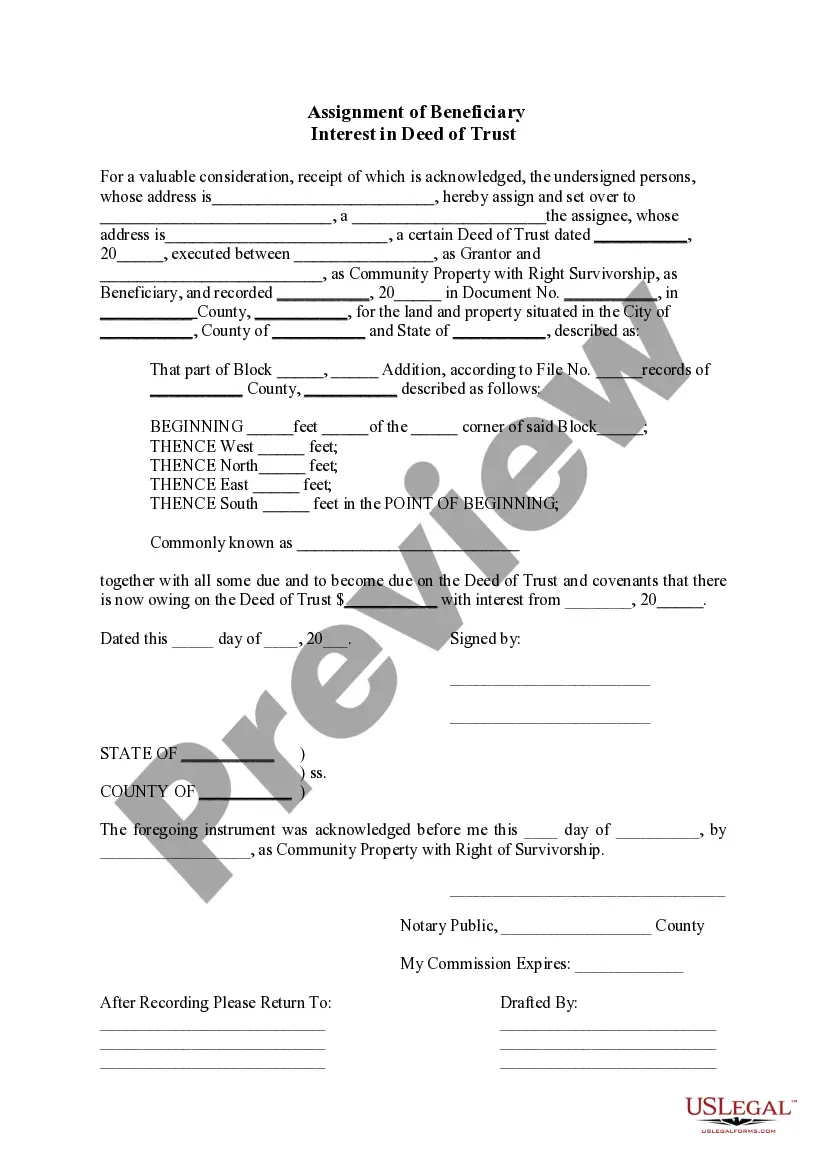
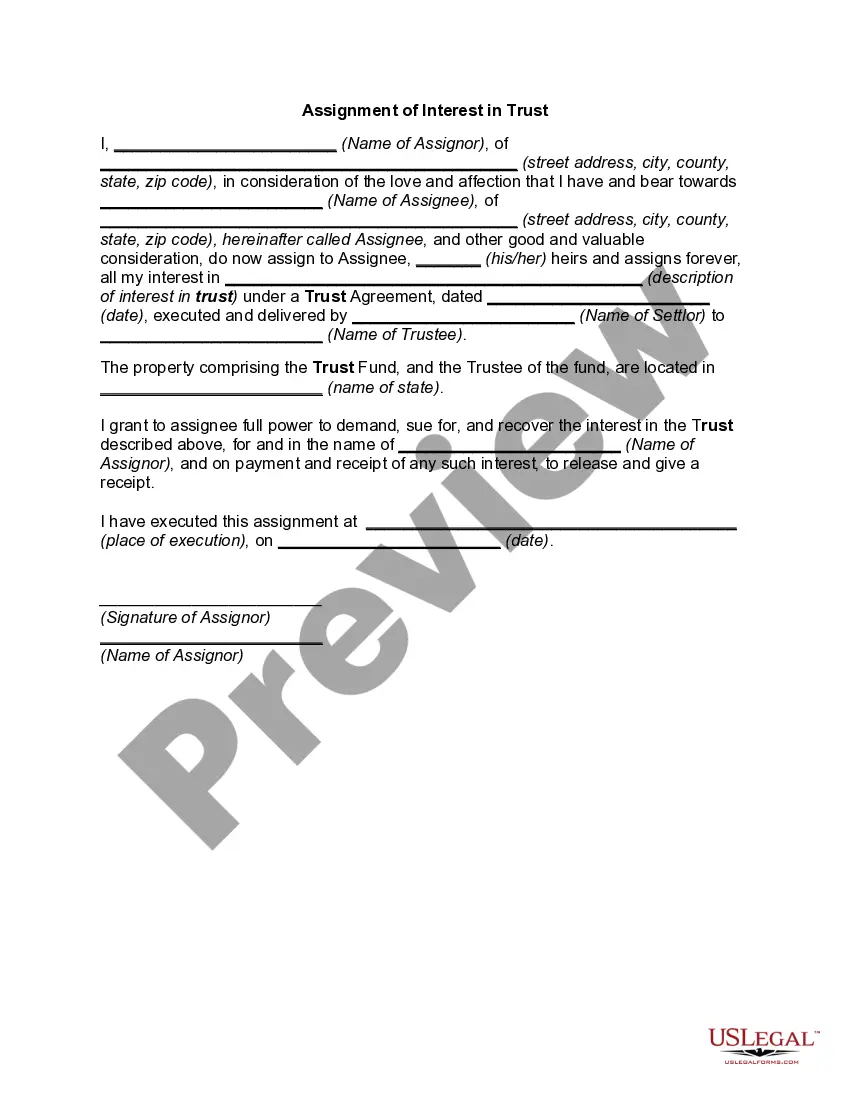
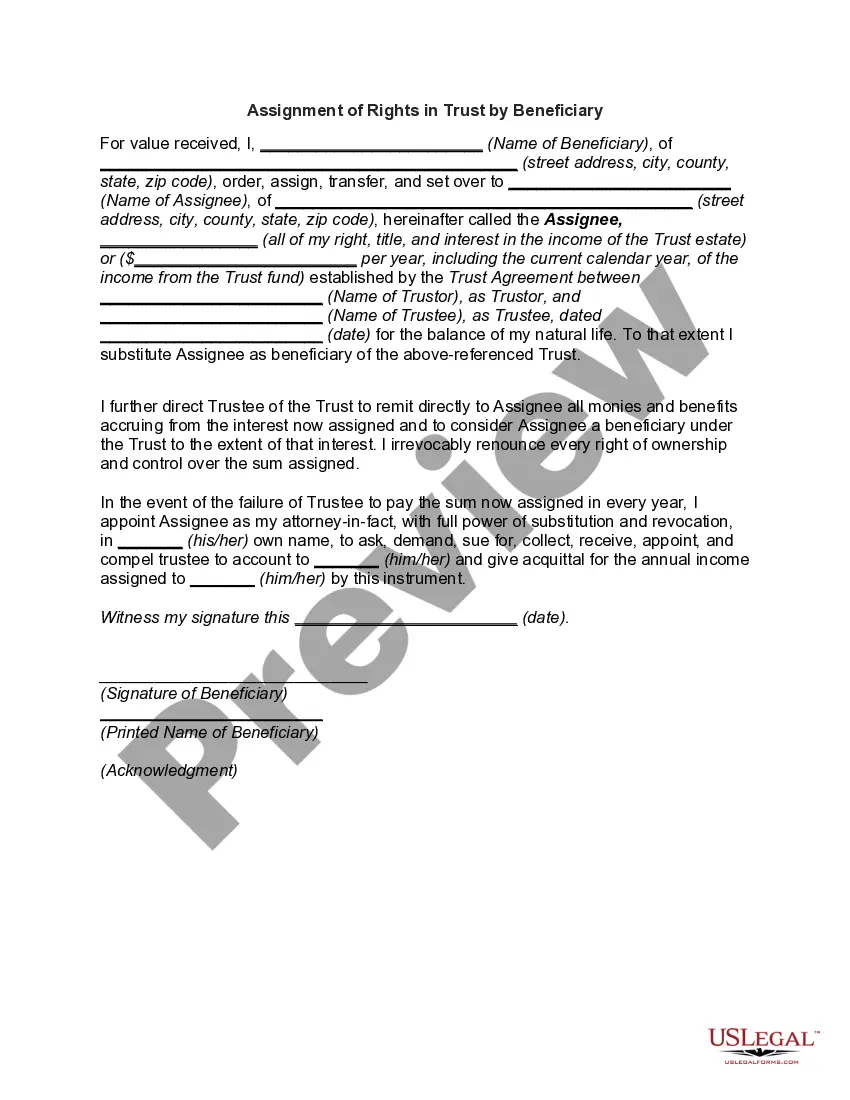
The Assignment of Beneficiary Interest In Deed of Trust is a legal document that transfers a beneficiary's rights in a deed of trust to another party. This assignment signifies a shift in ownership rights related to a piece of property, distinguishing it from other forms of action that deal with personal rights, like debts or receivables. This form is essential for formalizing agreements between parties involved in property transactions and ensuring clarity in ownership rights.
Key components of this form
- Names and addresses of the assignor (original beneficiary) and assignee (new beneficiary).
- Date of the original deed of trust and details about the property.
- Explicit description of the trust interest being transferred.
- Financial details, including any amounts owed under the trust.
- Notary acknowledgment to validate the assignment.

Common use cases
This form should be used when a beneficiary wishes to assign their interest in a deed of trust to another person or entity. Common scenarios include selling their interest to a buyer, transferring rights following a partnership dissolution, or settling an estate where the property is involved. It is crucial to document this transfer formally to maintain legal clarity and enforceability.
Who can use this document
- Individuals who have been named as beneficiaries in a deed of trust.
- Legal representatives or executors settling an estate that includes real property.
- Parties involved in the sale or reassignment of a beneficiary interest for investment or financial purposes.
- Anyone needing to officially transfer their interest to another person or organization.
How to complete this form
- Identify the parties involved by filling in the names and addresses of both the assignor and assignee.
- Specify the details of the original deed of trust, including the date and document number.
- Provide a thorough description of the property involved in the trust.
- Enter any relevant financial information, such as amounts owed and interest details.
- Have the form signed by the assignor and notarized to ensure legal validity.
Is notarization required?
Yes, this form must be notarized to be legally valid. Notarization adds an extra layer of verification to the transaction, ensuring that all signatures are authentic and that the parties are entering into the agreement voluntarily. US Legal Forms offers integrated online notarization services, available 24/7 through secure video calls, making it simple to comply with this requirement without the need for in-person visits.
Get your form ready online
Our built-in tools help you complete, sign, share, and store your documents in one place.
Make edits, fill in missing information, and update formatting in US Legal Forms—just like you would in MS Word.
Download a copy, print it, send it by email, or mail it via USPS—whatever works best for your next step.
Sign and collect signatures with our SignNow integration. Send to multiple recipients, set reminders, and more. Go Premium to unlock E-Sign.
If this form requires notarization, complete it online through a secure video call—no need to meet a notary in person or wait for an appointment.
We protect your documents and personal data by following strict security and privacy standards.

Make edits, fill in missing information, and update formatting in US Legal Forms—just like you would in MS Word.

Download a copy, print it, send it by email, or mail it via USPS—whatever works best for your next step.

Sign and collect signatures with our SignNow integration. Send to multiple recipients, set reminders, and more. Go Premium to unlock E-Sign.

If this form requires notarization, complete it online through a secure video call—no need to meet a notary in person or wait for an appointment.

We protect your documents and personal data by following strict security and privacy standards.
Common mistakes
- Failing to accurately fill in the names and addresses of both parties.
- Omitting critical details about the original deed of trust, such as its date or document number.
- Not including a clear description of the property, which can lead to disputes.
- Neglecting to obtain notarization, which may invalidate the assignment.
Why complete this form online
- Convenient access to legally drafted templates by licensed attorneys.
- Easy-to-use format that allows for quick customization and completion.
- Secure storage and retrieval options for your completed forms.
- Guidance throughout the process, reducing the risk of errors.
Looking for another form?

Form popularity
FAQ
This form records the transfer of the beneficiary’s interest in a deed of trust on a real property loan in Arizona. It is used when the current beneficiary wants to assign their rights to another party (such as a new lender or assignee), ensuring the new beneficiary steps into the same rights and remedies under the deed of trust.
In Arizona, a beneficiary may assign their interest in a deed of trust to another party by executing the Arizona Assignment of Beneficiary Interest In Deed of Trust. The form records the transfer of the beneficiary’s rights under the deed of trust to the new beneficiary; it does not terminate the underlying note or change the borrower's obligations.
Common mistakes include misidentifying the parties, failing to sign or date the assignment, not recording the instrument where required, and not ensuring the assignment aligns with the deed of trust terms. Correct use of the form helps ensure the transfer is legally effective in Arizona.
Possible negatives include increased risk if the new beneficiary has financial issues, potential disputes over who holds payment rights, and delays in processing the assignment. The form helps document the transfer, but parties should consider timing and notice requirements. In Arizona, proper execution and notice may be important to maintain enforceability.
Common beneficiary mistakes include not clearly identifying the new beneficiary, failing to obtain all required signatures, omitting recording of the assignment when required, and ignoring compatibility with the underlying deed of trust terms. Using this form helps reduce these errors and clarifies the assignment in Arizona.
Arizona Assignment of Beneficiary Interest In Deed of Trust is different from a standard assignment of a deed of trust because it records the transfer of the beneficiary’s rights under the deed of trust only, not the note or the lien itself. It focuses on who holds the beneficiary role and is tailored to Arizona procedures.