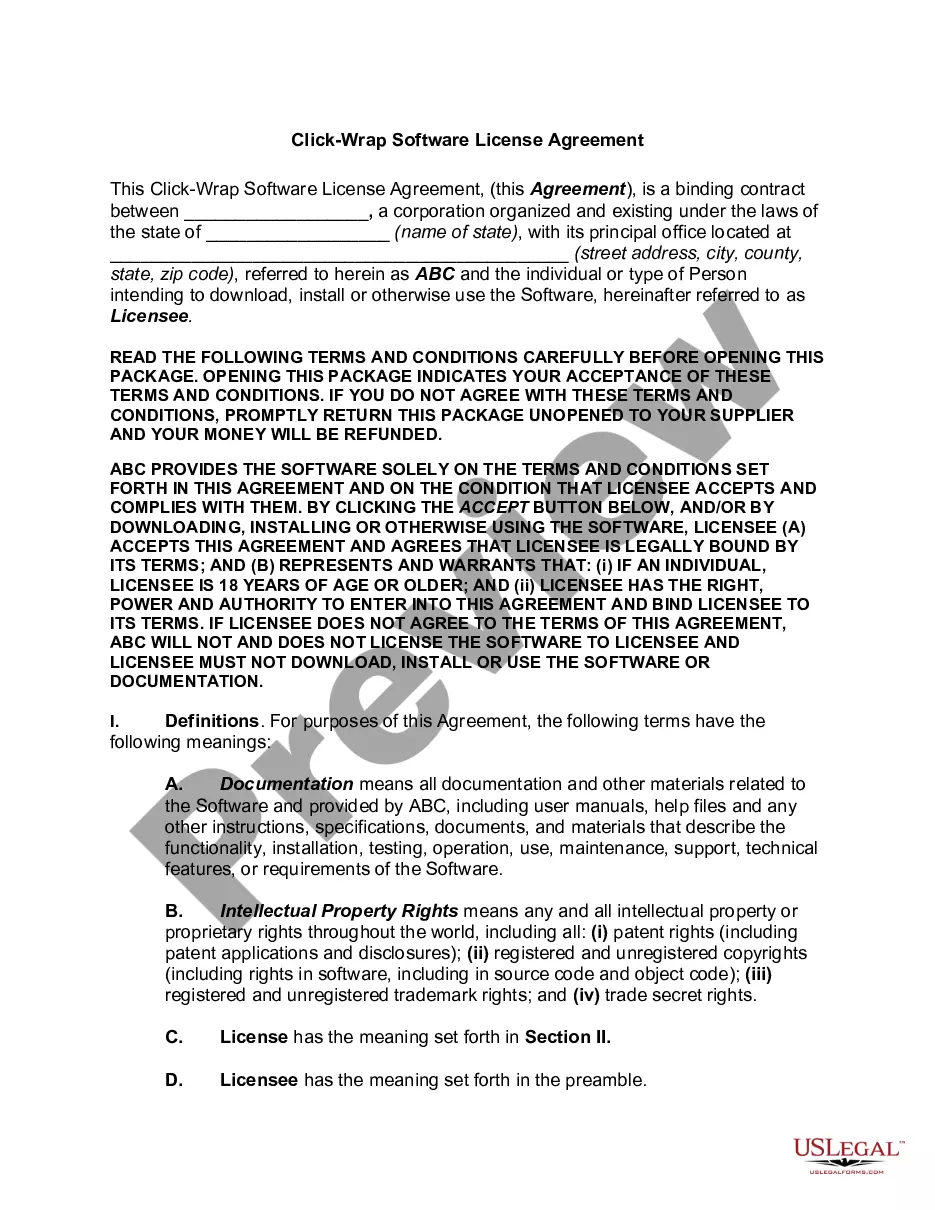
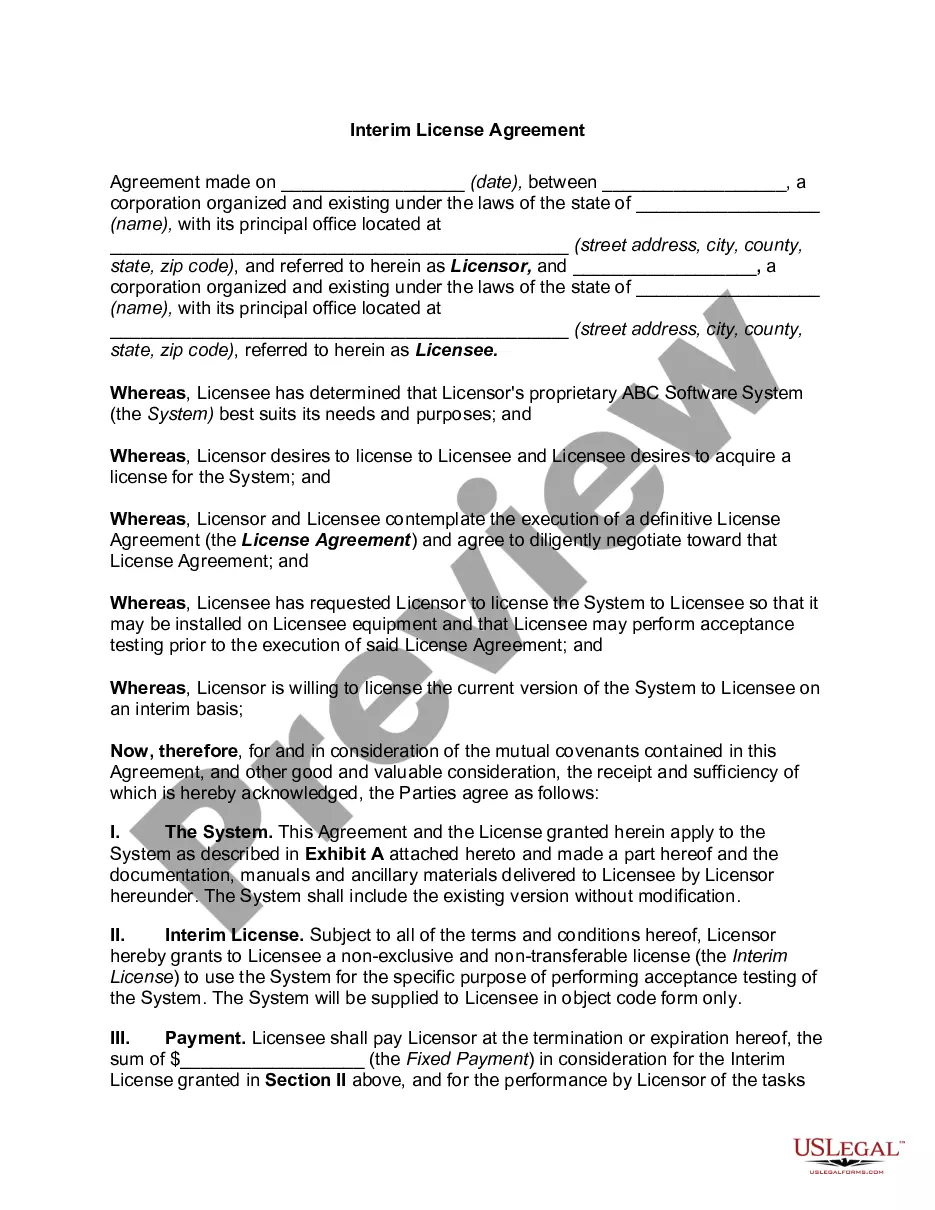
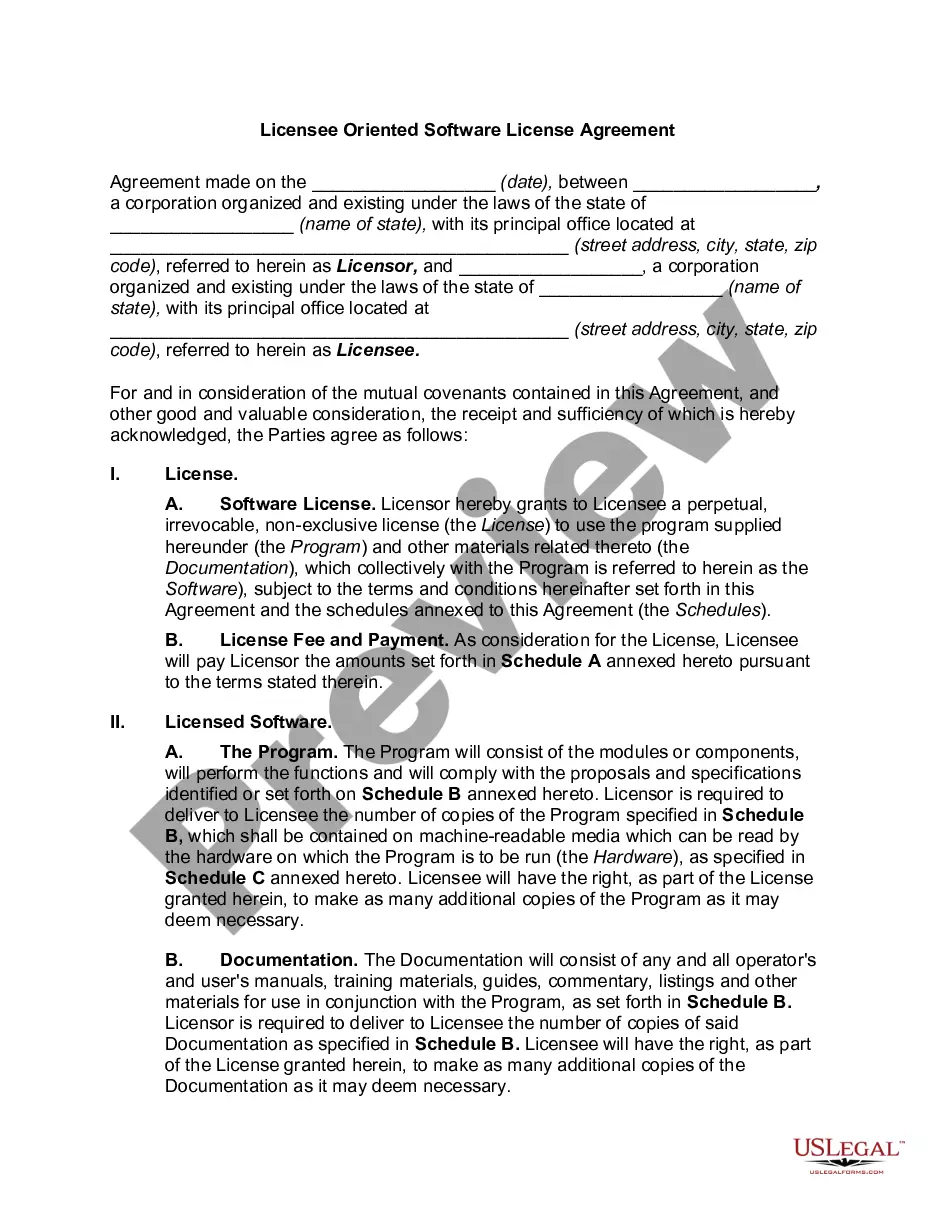
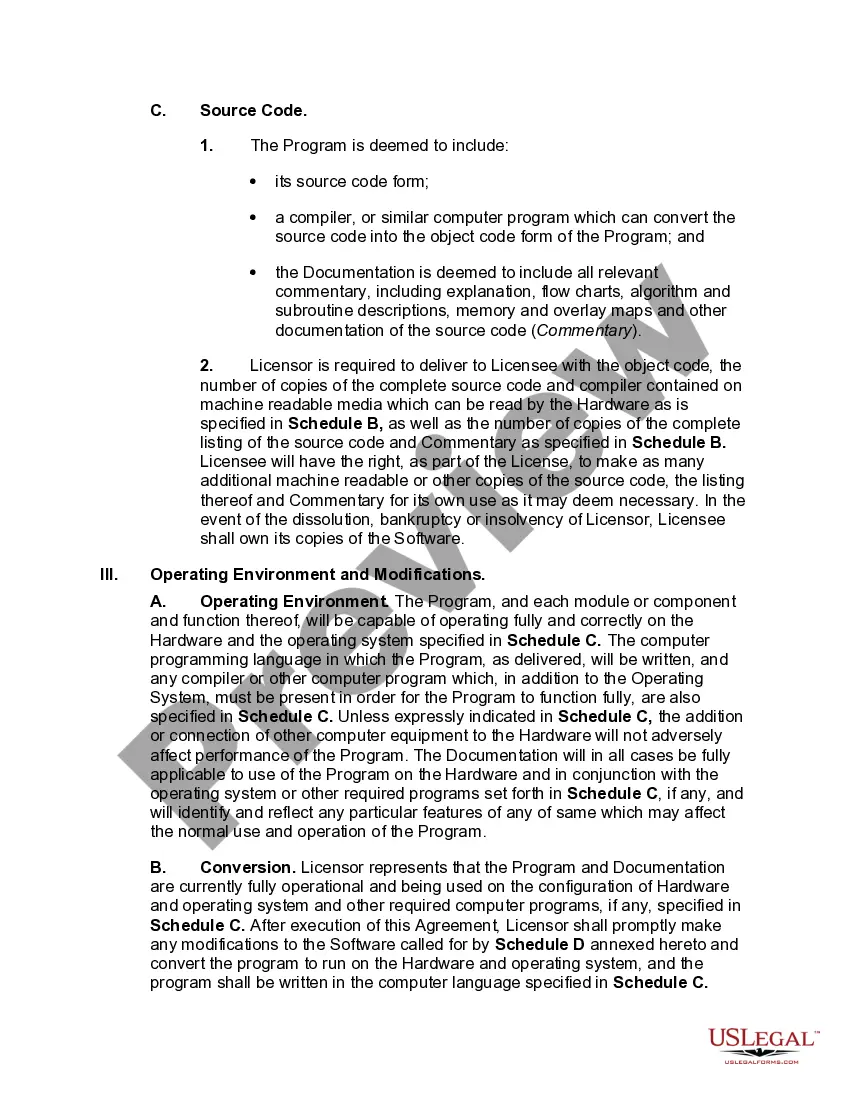
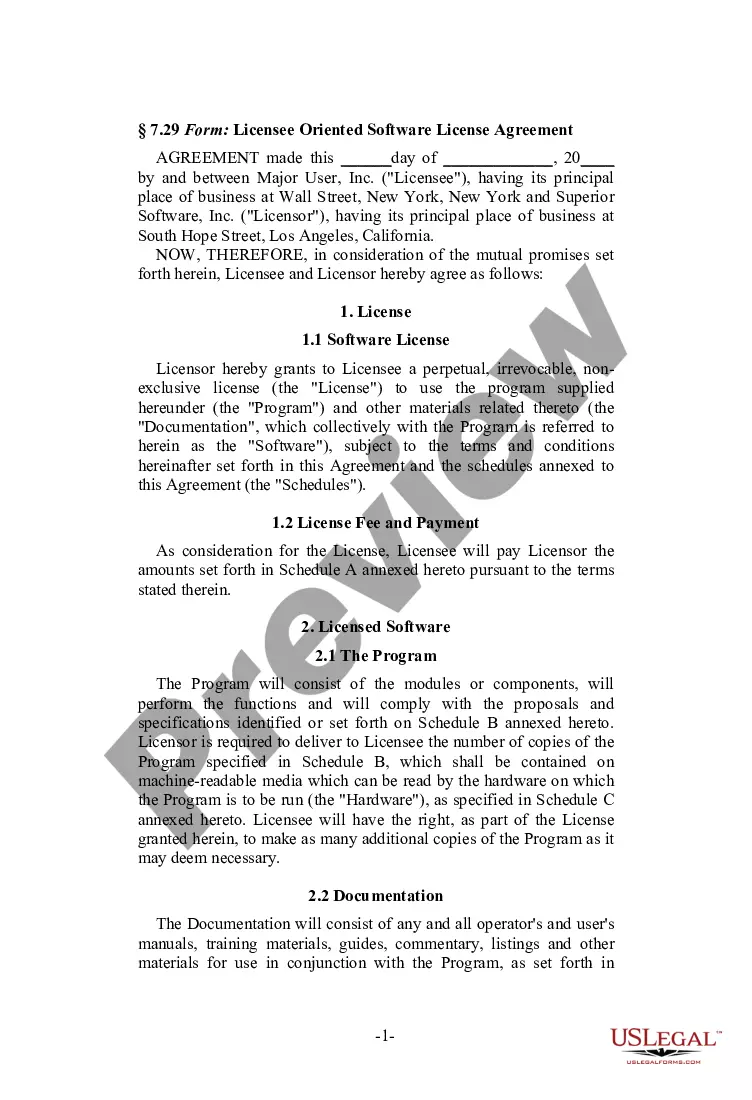
Arkansas Licensee Oriented Software License Agreement
Description
Get your form ready online
Our built-in tools help you complete, sign, share, and store your documents in one place.
Make edits, fill in missing information, and update formatting in US Legal Forms—just like you would in MS Word.
Download a copy, print it, send it by email, or mail it via USPS—whatever works best for your next step.
Sign and collect signatures with our SignNow integration. Send to multiple recipients, set reminders, and more. Go Premium to unlock E-Sign.
If this form requires notarization, complete it online through a secure video call—no need to meet a notary in person or wait for an appointment.
We protect your documents and personal data by following strict security and privacy standards.

Make edits, fill in missing information, and update formatting in US Legal Forms—just like you would in MS Word.

Download a copy, print it, send it by email, or mail it via USPS—whatever works best for your next step.

Sign and collect signatures with our SignNow integration. Send to multiple recipients, set reminders, and more. Go Premium to unlock E-Sign.

If this form requires notarization, complete it online through a secure video call—no need to meet a notary in person or wait for an appointment.

We protect your documents and personal data by following strict security and privacy standards.
Looking for another form?
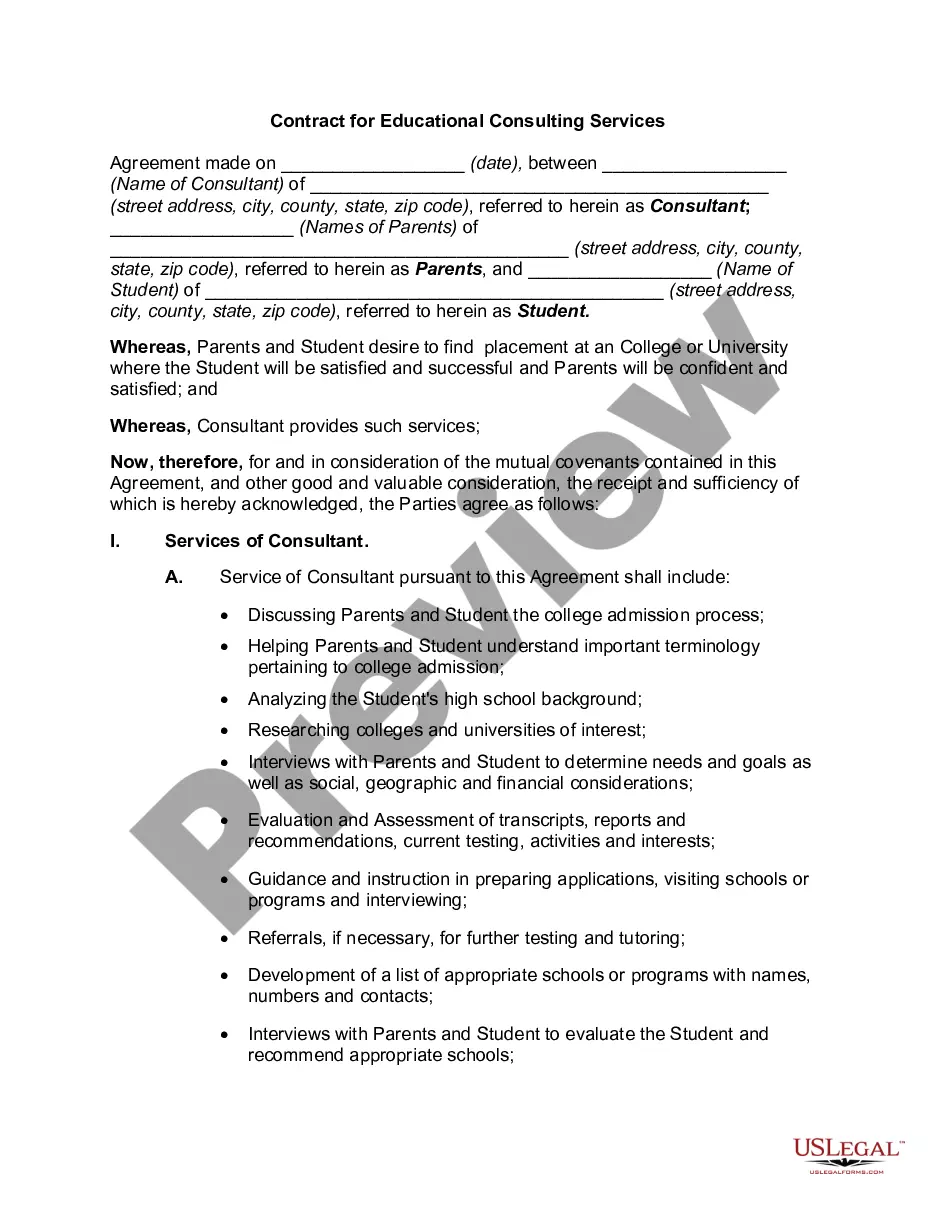
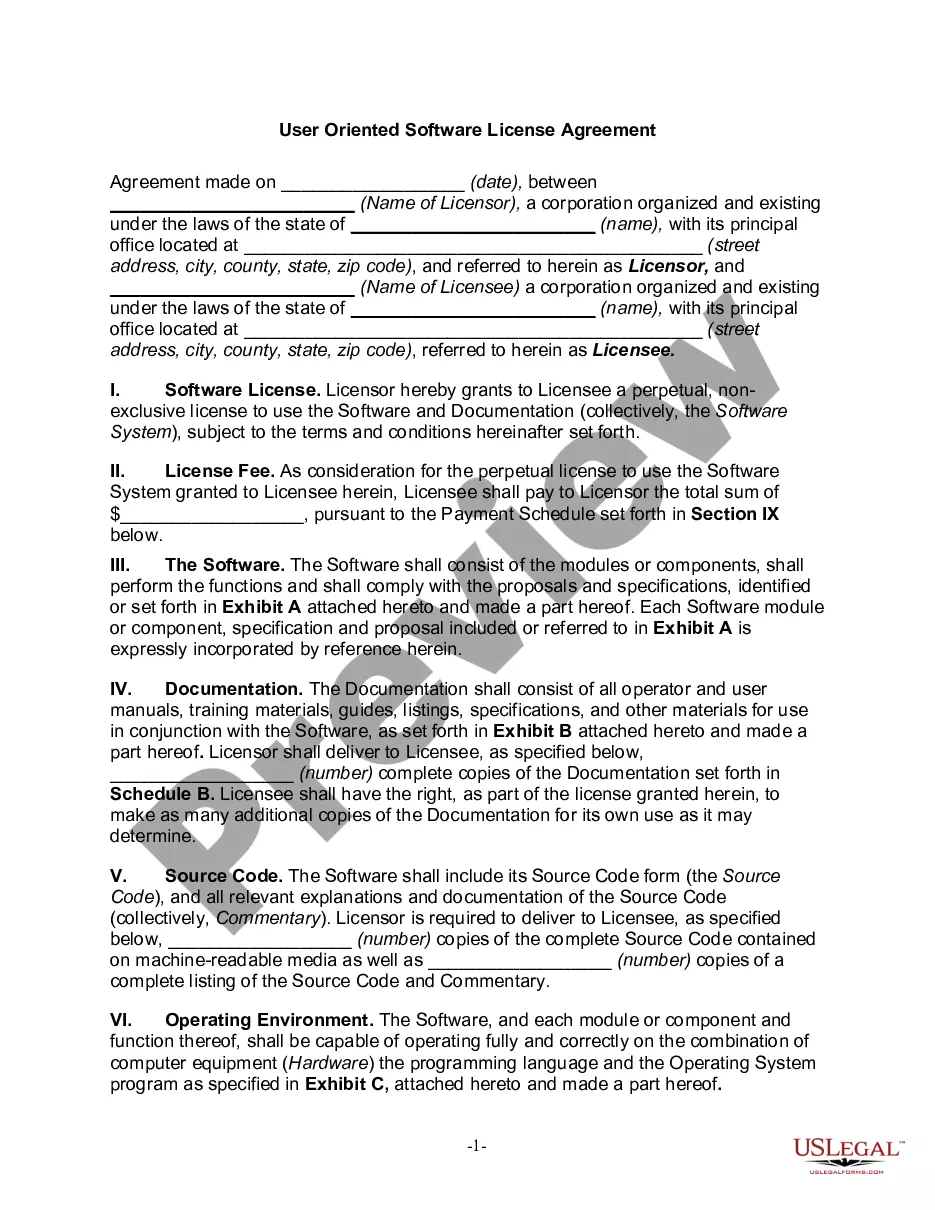
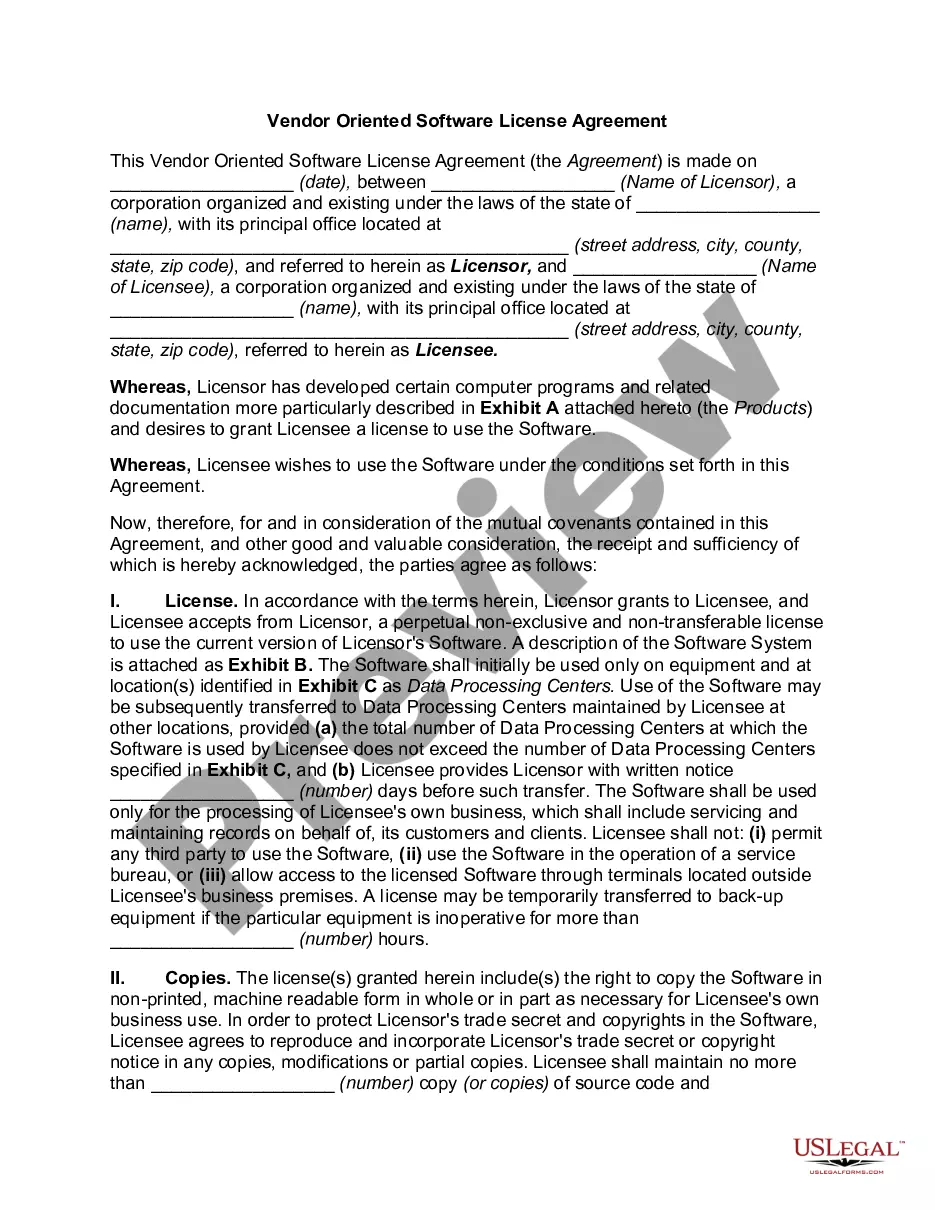
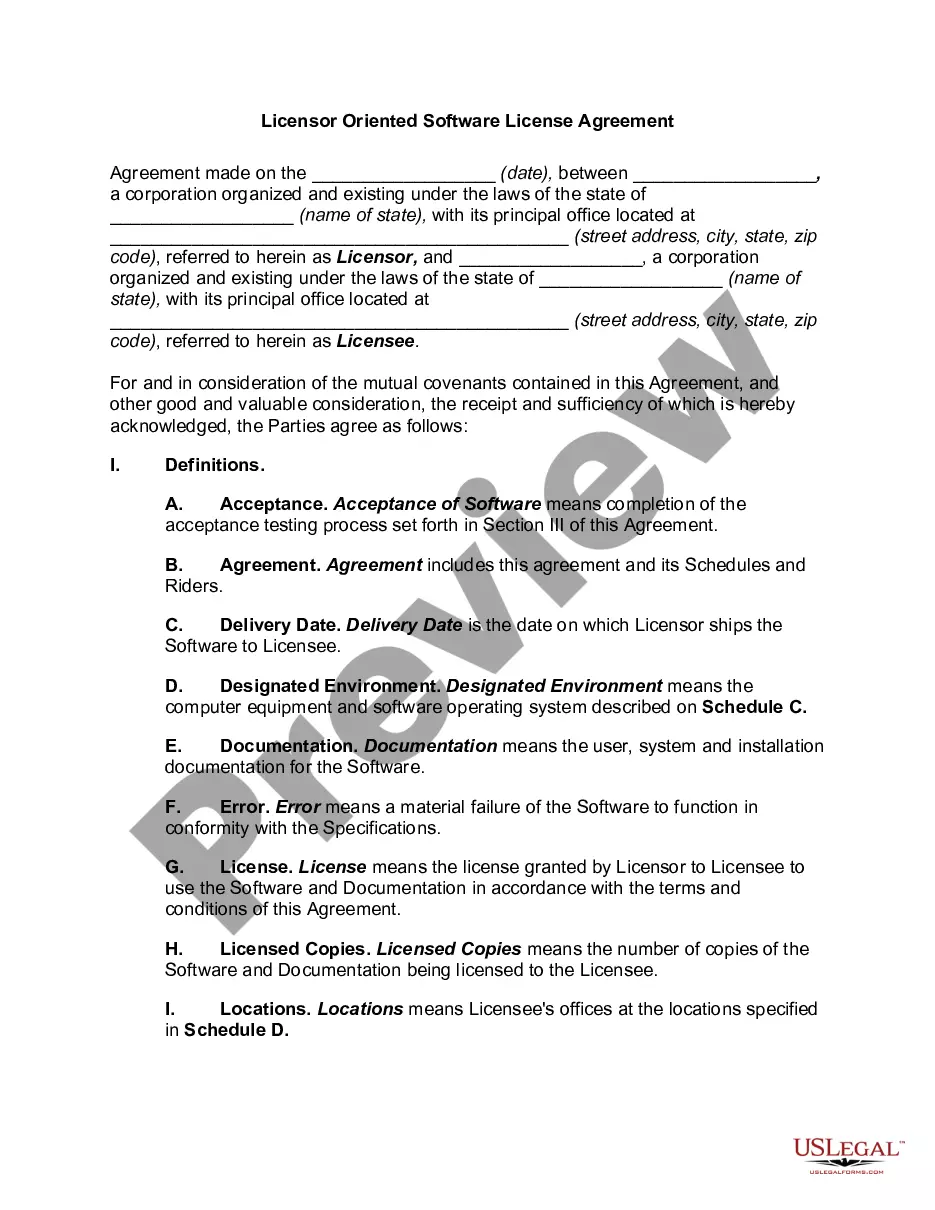
How to fill out Licensee Oriented Software License Agreement?
Have you found yourself in a scenario where you require documentation for either organization or specific purposes almost every business day? There are numerous legal document templates available online, yet finding ones you can trust is not straightforward.
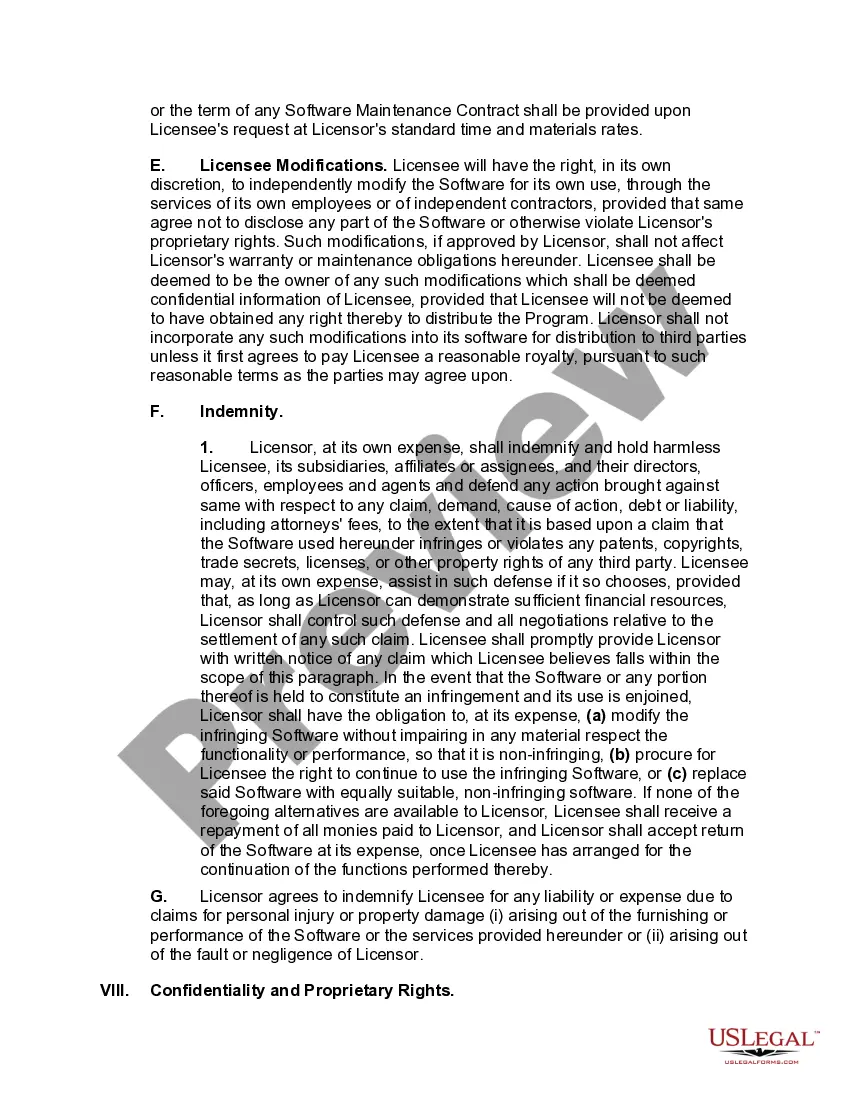
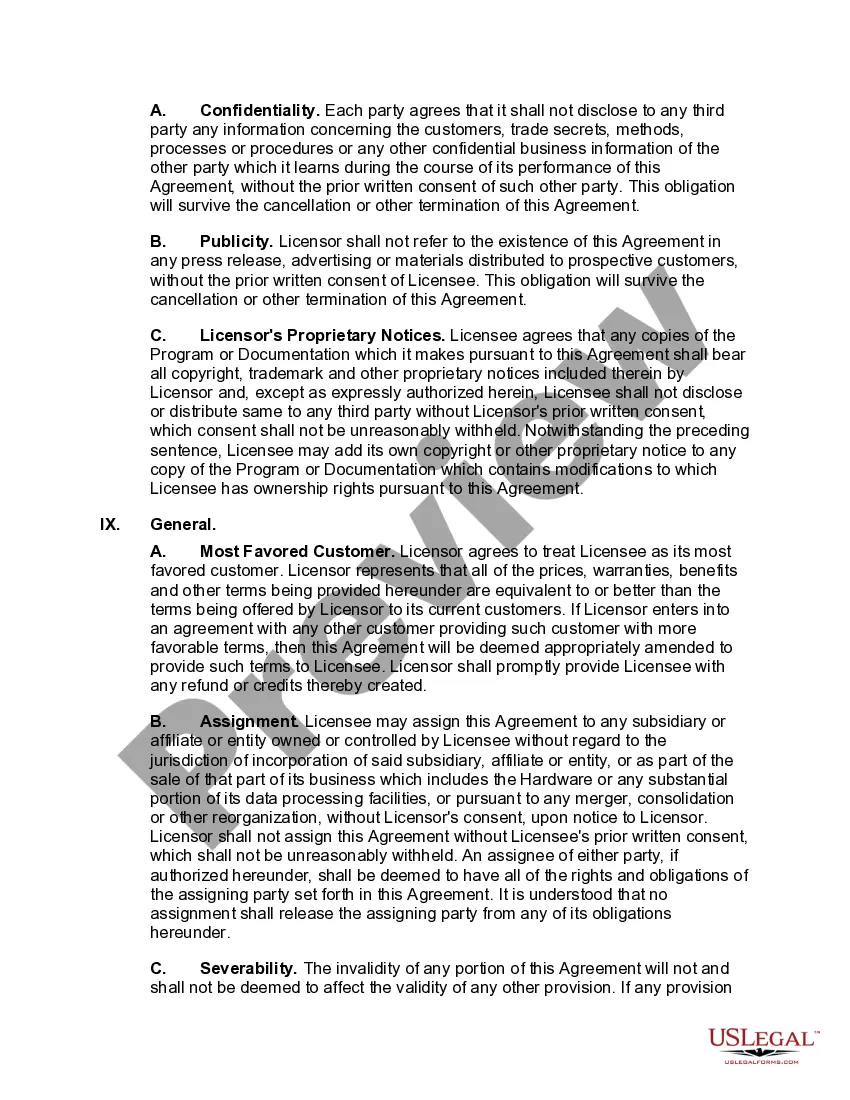
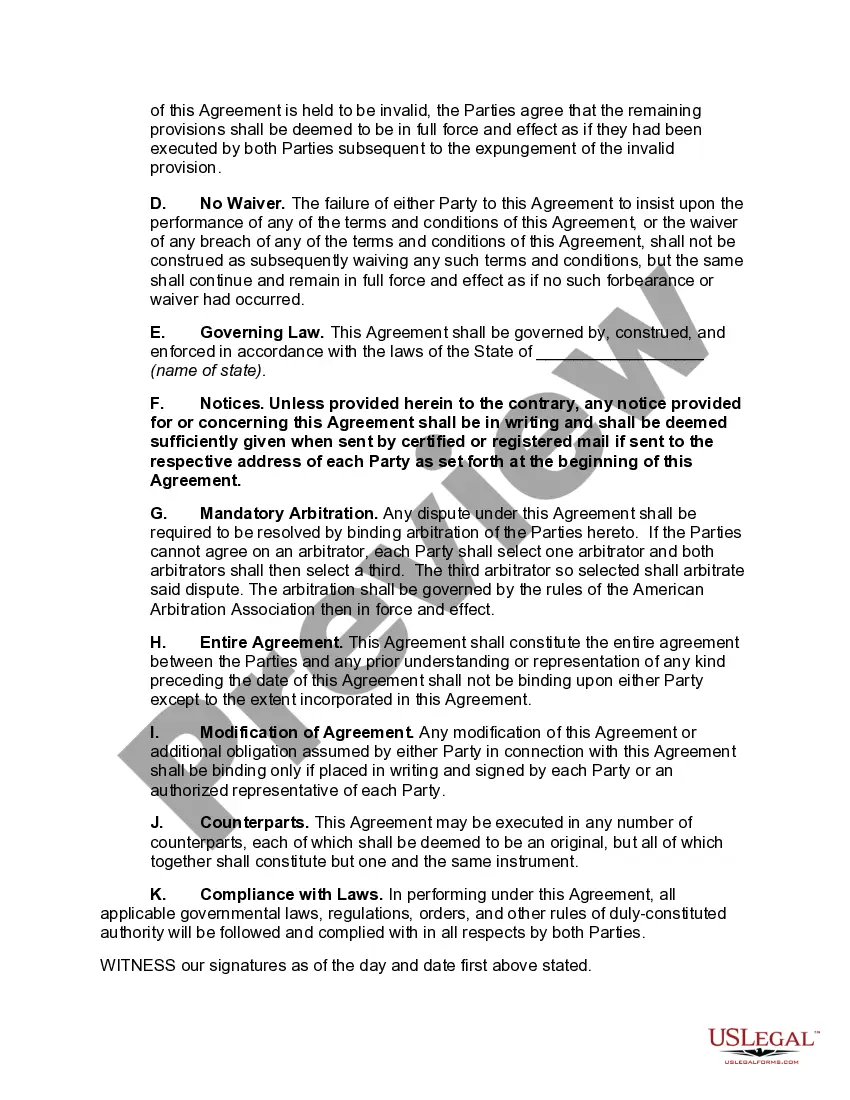
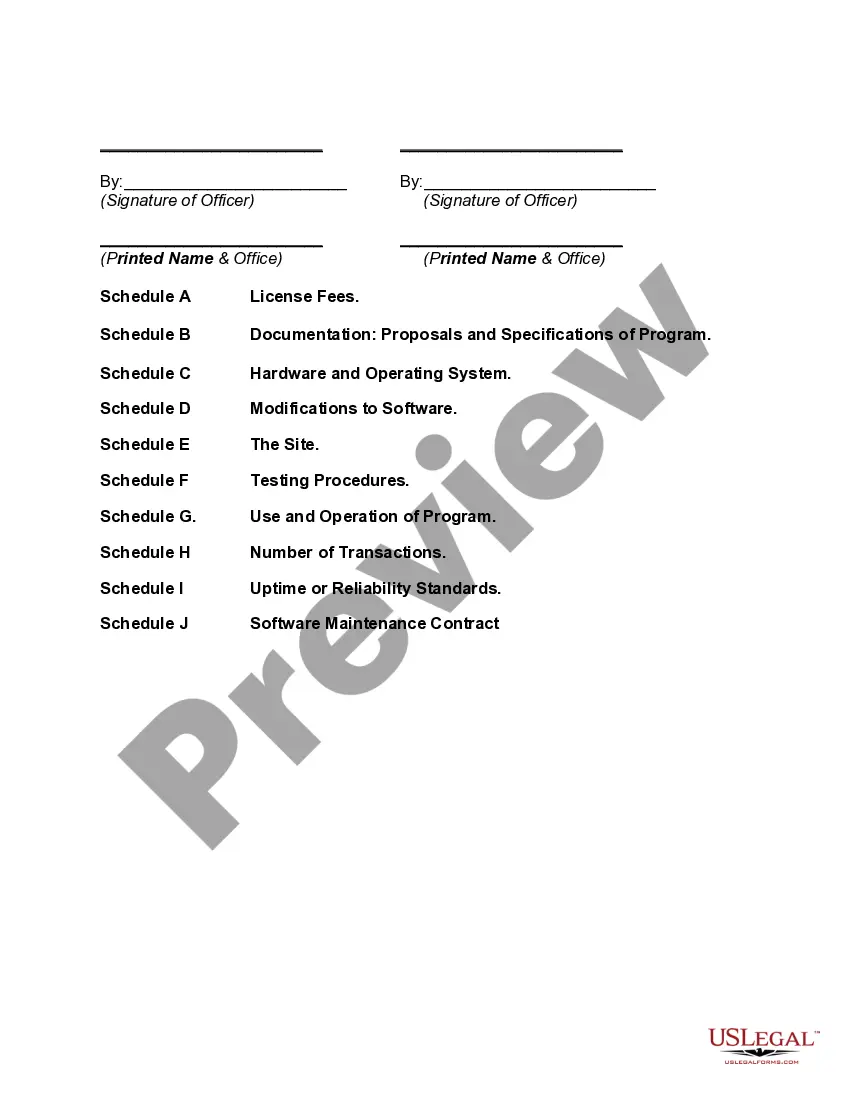
US Legal Forms offers a vast array of document templates, including the Arkansas Licensee Oriented Software License Agreement, designed to comply with federal and state regulations.
If you are already acquainted with the US Legal Forms website and have a free account, simply Log In. Afterwards, you can download the Arkansas Licensee Oriented Software License Agreement template.
- Locate the document you require and verify it is for the correct state/county.
- Utilize the Review feature to examine the form.
- Check the description to ensure you have chosen the appropriate document.
- If the form does not meet your needs, use the Search function to find the document that suits your necessities.
- Once you find the correct form, click Buy now.
- Select the payment plan you prefer, enter the necessary information to create your account, and finalize your purchase using PayPal or a credit card.
- Choose a convenient file format and download your copy.
Form popularity
FAQ
Licensing agreements are found in many different industries. An example of a licensing agreement is a contract between the copyright holders of software and another company, allowing the latter to use the computer software for their daily business operations.
Examples of licenses include a company using the design of a popular character, e.g. Mickey Mouse, on their products. Another example would be a clothing manufacturer like Life is Good licensing its designs and brand in a certain country to a local company.
Examples of Licensing Agreements An example of a licensing agreement is a contract between the copyright holders of software and another company, allowing the latter to use the computer software for their daily business operations.
The licensing agreement should explain what the licensee can do with the license. It should say whether the license is exclusive or not. It should also discuss whether the licensor gets to use the license or cedes all rights to the licensee.
Virtually every type of license agreement includes some form of initial payment and ongoing royalty to the licensor. Royalty formulas vary widely, however. They may be based on gross sales, net sales, net profits, fixed sum per product sold, or a minimum payment to be made to the licensor over a given period of time.
Precisely identifying which intellectual property will be the subject of the license is necessary to ensure both parties are on the same page and not exceeding their rights.Scope of the Grant.Exclusivity.Territory.Term.Compensation.Termination.Conclusion.
Types of licensing agreement The unique feature of this type of agreement is that even the licensor is excluded to use or exploit the licensed property during the term of the agreement. Copyright, trademark and patent licenses are the best examples of an exclusive license agreement.
Most licensing agreements will be valid only for a certain length of time....Scope of the AgreementExclusivity.Territory Rights.Guarantees of Sales.
Practitioners and licensing executives often refer to three basic types of voluntary licenses: non-exclusive, sole, and exclusive. A non-exclusive licence allows the licensor to retain the right to use the licensed property and the right to grant additional licenses to third parties.
A licensing agreement is a contract between two parties (the licensor and licensee) in which the licensor grants the licensee the right to use the brand name, trademark, patented technology, or ability to produce and sell goods owned by the licensor.