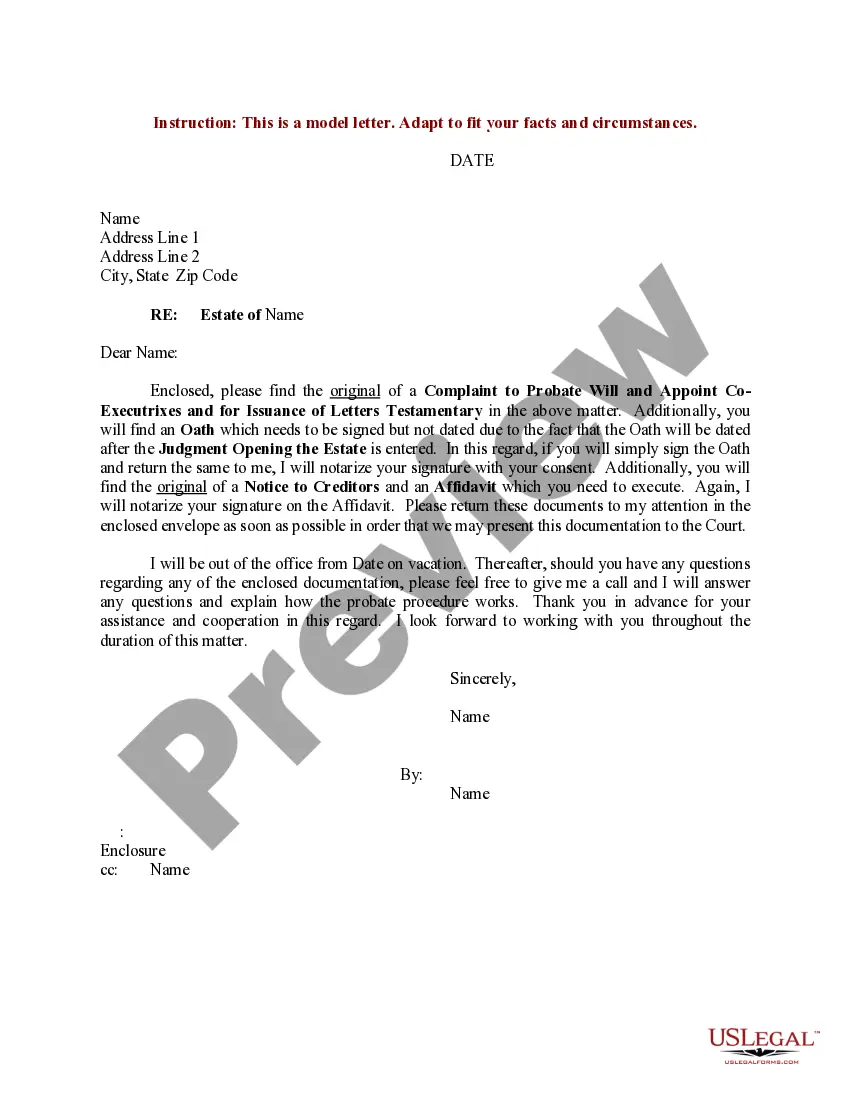
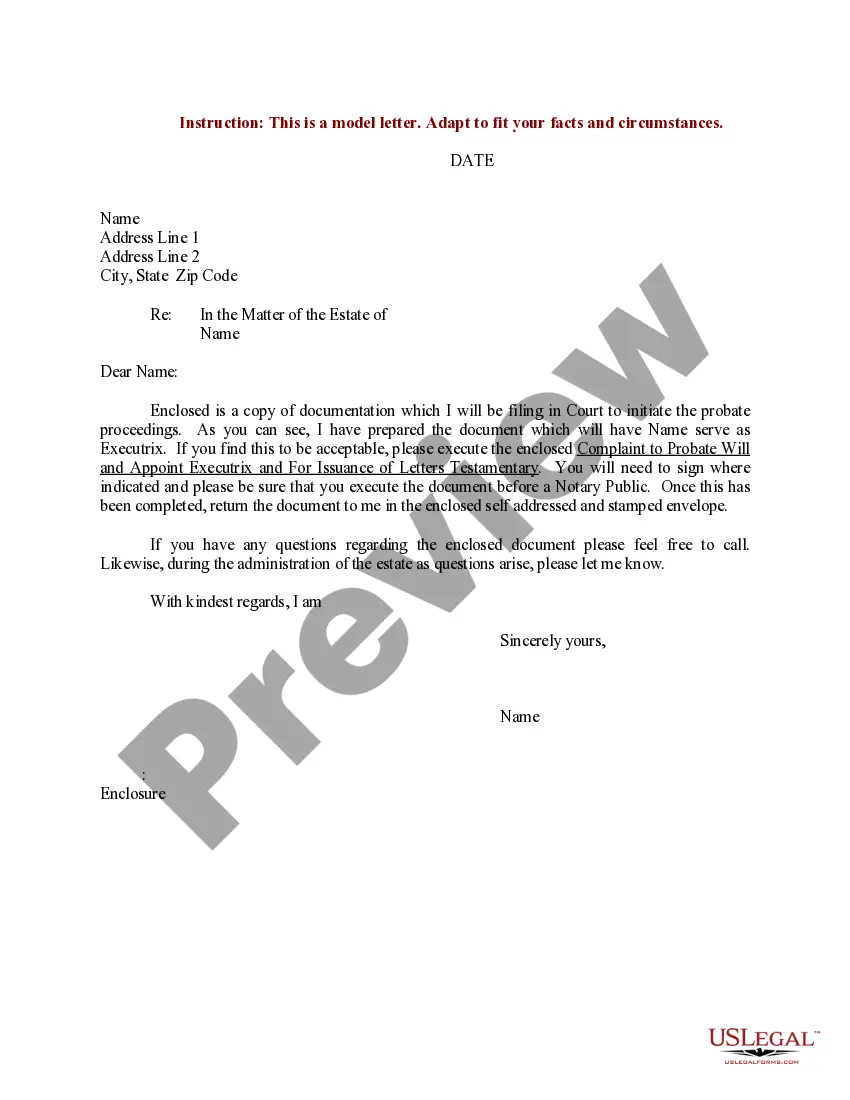
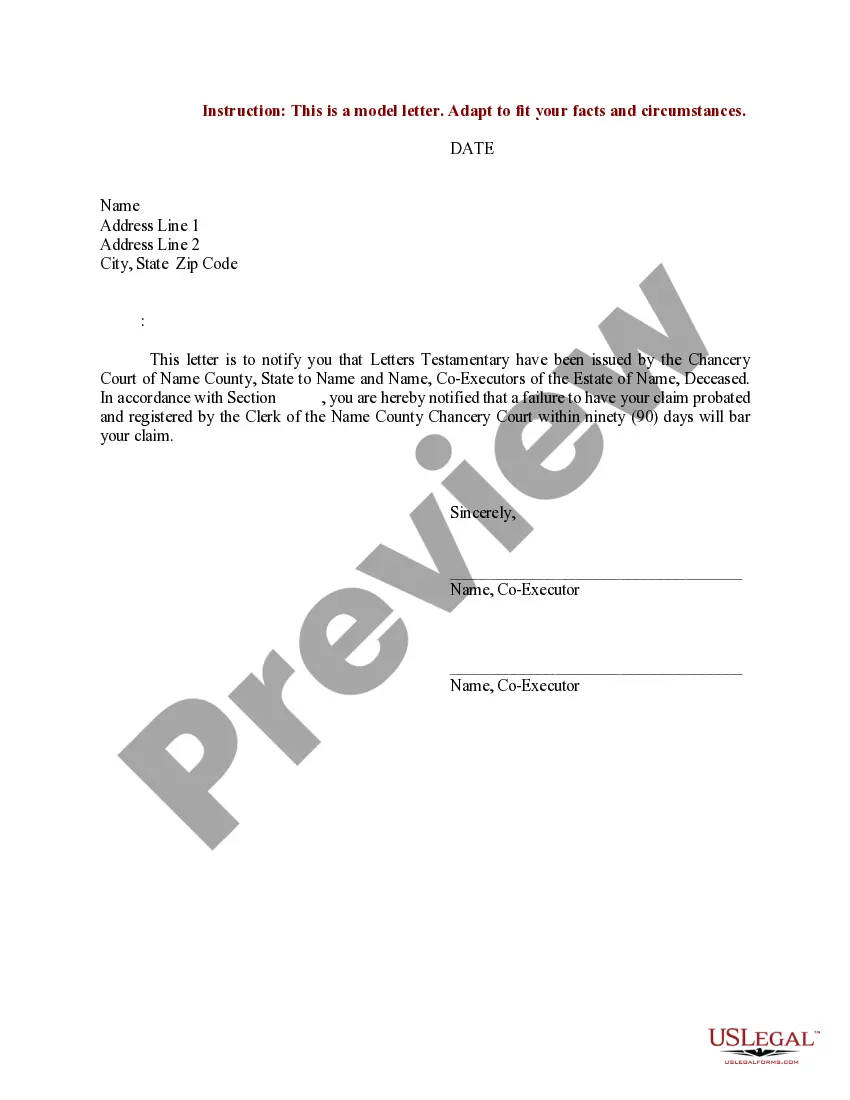
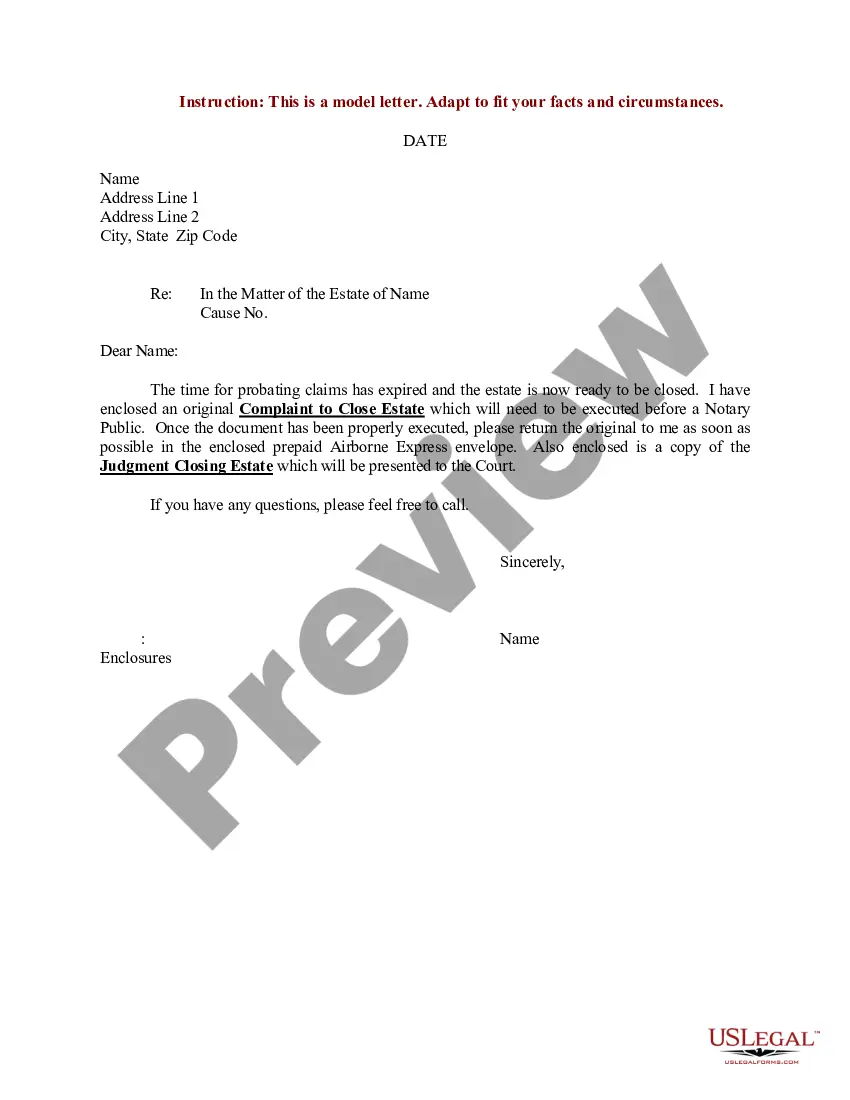
Arkansas Sample Letter for Complaint to Probate Will and Appoint Co-Executrixes and Issuance of Letters Testamentary
Description
Get your form ready online
Our built-in tools help you complete, sign, share, and store your documents in one place.
Make edits, fill in missing information, and update formatting in US Legal Forms—just like you would in MS Word.
Download a copy, print it, send it by email, or mail it via USPS—whatever works best for your next step.
Sign and collect signatures with our SignNow integration. Send to multiple recipients, set reminders, and more. Go Premium to unlock E-Sign.
If this form requires notarization, complete it online through a secure video call—no need to meet a notary in person or wait for an appointment.
We protect your documents and personal data by following strict security and privacy standards.

Make edits, fill in missing information, and update formatting in US Legal Forms—just like you would in MS Word.

Download a copy, print it, send it by email, or mail it via USPS—whatever works best for your next step.

Sign and collect signatures with our SignNow integration. Send to multiple recipients, set reminders, and more. Go Premium to unlock E-Sign.

If this form requires notarization, complete it online through a secure video call—no need to meet a notary in person or wait for an appointment.

We protect your documents and personal data by following strict security and privacy standards.
Looking for another form?
How to fill out Sample Letter For Complaint To Probate Will And Appoint Co-Executrixes And Issuance Of Letters Testamentary?
Choosing the right legitimate record format could be a battle. Naturally, there are a lot of themes available on the Internet, but how can you get the legitimate form you need? Utilize the US Legal Forms web site. The service delivers a large number of themes, like the Arkansas Sample Letter for Complaint to Probate Will and Appoint Co-Executrixes and Issuance of Letters Testamentary, which you can use for enterprise and private needs. Each of the kinds are checked out by professionals and fulfill state and federal specifications.
Should you be presently registered, log in to the accounts and click the Download key to have the Arkansas Sample Letter for Complaint to Probate Will and Appoint Co-Executrixes and Issuance of Letters Testamentary. Use your accounts to search throughout the legitimate kinds you possess ordered earlier. Proceed to the My Forms tab of the accounts and acquire another copy from the record you need.
Should you be a new customer of US Legal Forms, here are easy recommendations that you should stick to:
- Initially, ensure you have selected the appropriate form for your city/region. You can look over the shape using the Review key and browse the shape description to make certain it will be the best for you.
- In the event the form fails to fulfill your requirements, use the Seach field to get the correct form.
- When you are certain the shape is acceptable, go through the Buy now key to have the form.
- Pick the costs program you need and enter the needed information. Design your accounts and purchase the transaction making use of your PayPal accounts or Visa or Mastercard.
- Choose the submit structure and acquire the legitimate record format to the product.
- Total, modify and produce and indicator the received Arkansas Sample Letter for Complaint to Probate Will and Appoint Co-Executrixes and Issuance of Letters Testamentary.
US Legal Forms is the greatest collection of legitimate kinds in which you can discover numerous record themes. Utilize the company to acquire expertly-produced paperwork that stick to state specifications.
Form popularity
FAQ
How do I get letters of testamentary in Arkansas? Settling an Estate in Arkansas The will must be filed with the circuit court in the county where the decedent lived. An executor is appointed to oversee the estate, and the court provides letters testamentary to them.
No. Even if there is a valid Last Will and Testament you must go through probate court. Arkansas Code Ann 28-40-104 states, ?No will shall be effectual for the purpose of proving title to or the right to the possession of any real or personal property disposed of by the will until it has been admitted to probate.?
A Letter of Testamentary is a document granted to the Executor of an estate by the probate court. This document gives the Executor the authority he or she will need to formally act on behalf of the decedent. It gives the right to handle financial and other affairs related to closing out the estate.
Some ways to avoid probate proceedings in Arkansas include: Using a living trust, Qualify for Arkansas small estate laws, or. Transfer on death designations.
Letters testamentary are documents that a probate court delivers to the executor of the deceased's estate to enforce the terms of the deceased person's will. A court can issue letters testamentary only to persons who are chosen as an executor in a will.
Statute of Limitations A will must be submitted to the probate court within 5 years of the decedent's death. An administration must also be granted within 5 years of the decedent's death. Ark. Code Ann.
A Letter of Testamentary is a document granted to the Executor of an estate by the probate court. This document gives the Executor the authority he or she will need to formally act on behalf of the decedent. It gives the right to handle financial and other affairs related to closing out the estate.