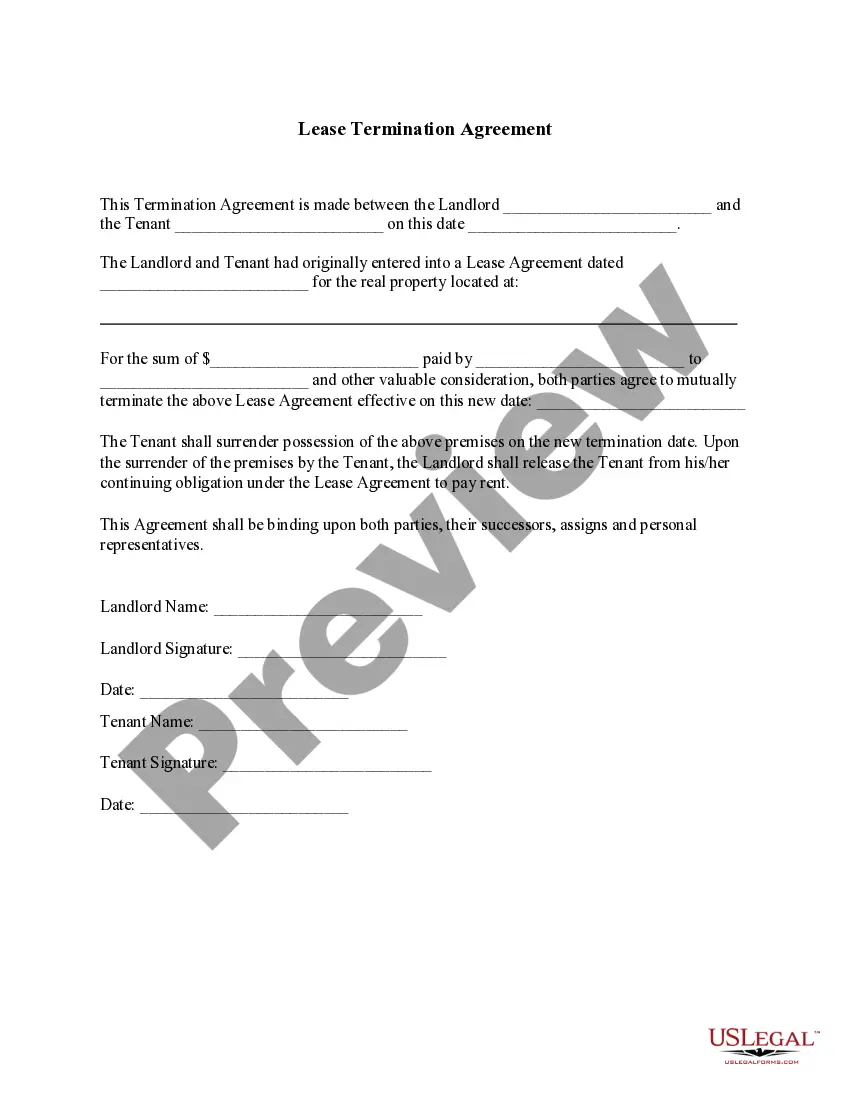
Arkansas Lease Termination Agreement
Description
Get your form ready online
Our built-in tools help you complete, sign, share, and store your documents in one place.
Make edits, fill in missing information, and update formatting in US Legal Forms—just like you would in MS Word.
Download a copy, print it, send it by email, or mail it via USPS—whatever works best for your next step.
Sign and collect signatures with our SignNow integration. Send to multiple recipients, set reminders, and more. Go Premium to unlock E-Sign.
If this form requires notarization, complete it online through a secure video call—no need to meet a notary in person or wait for an appointment.
We protect your documents and personal data by following strict security and privacy standards.

Make edits, fill in missing information, and update formatting in US Legal Forms—just like you would in MS Word.

Download a copy, print it, send it by email, or mail it via USPS—whatever works best for your next step.

Sign and collect signatures with our SignNow integration. Send to multiple recipients, set reminders, and more. Go Premium to unlock E-Sign.

If this form requires notarization, complete it online through a secure video call—no need to meet a notary in person or wait for an appointment.

We protect your documents and personal data by following strict security and privacy standards.
Looking for another form?


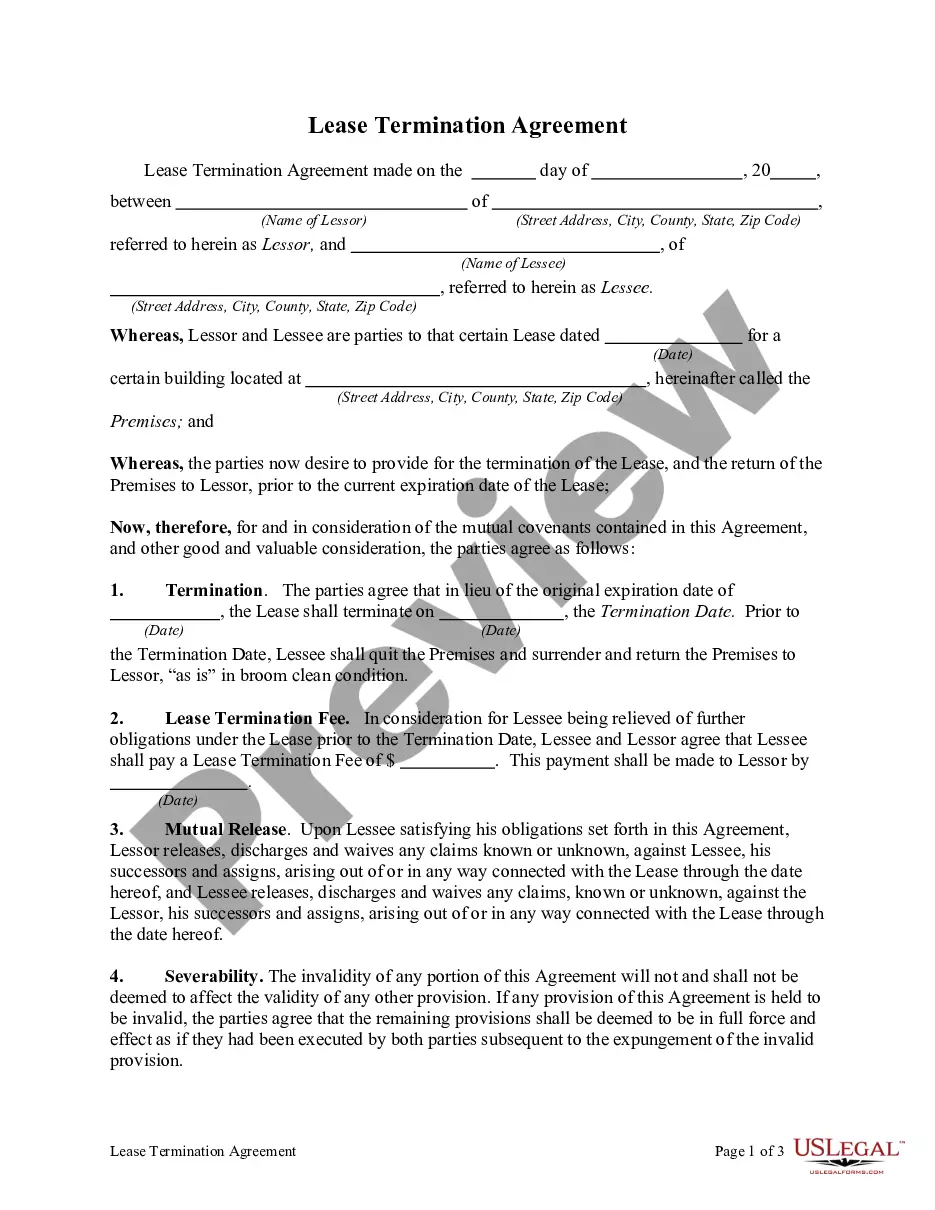
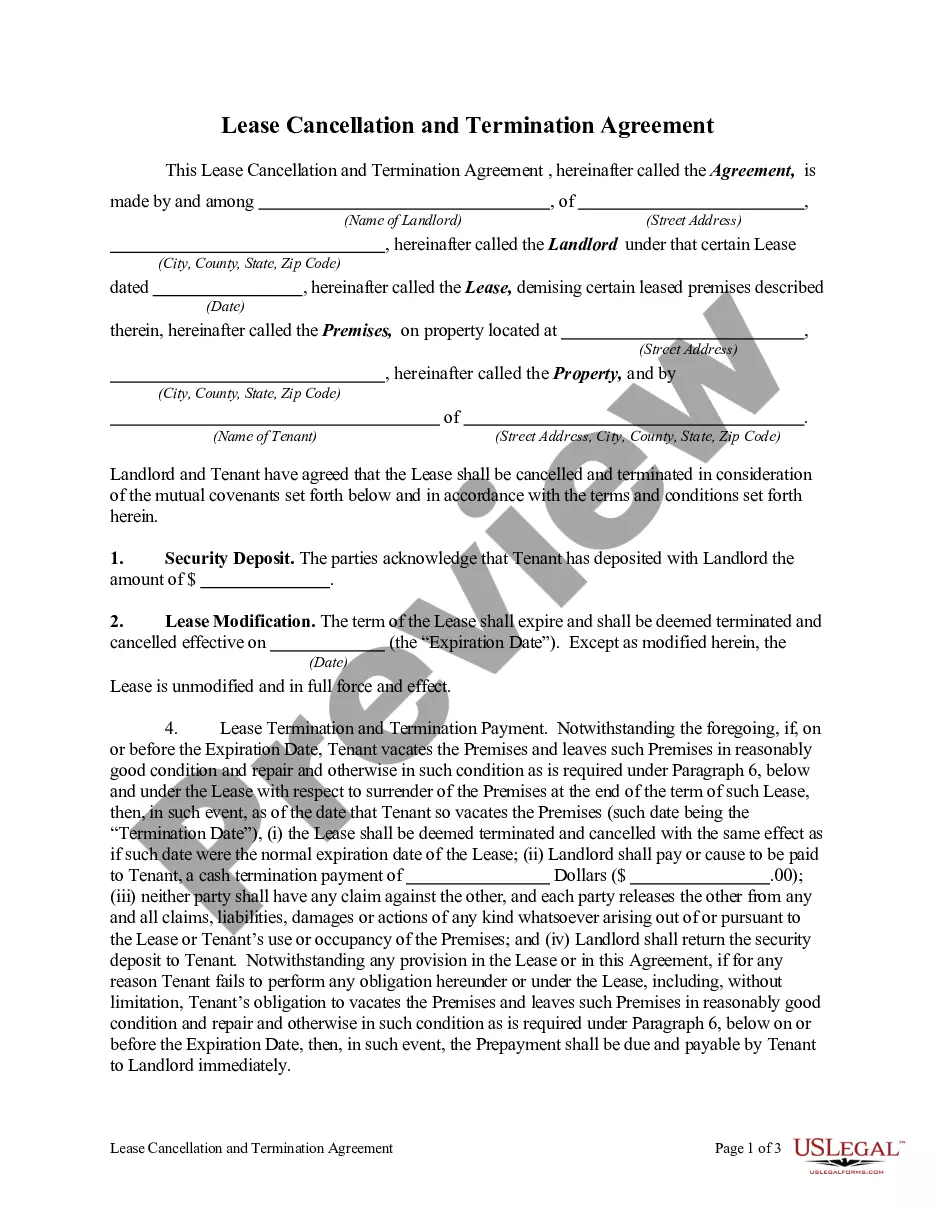
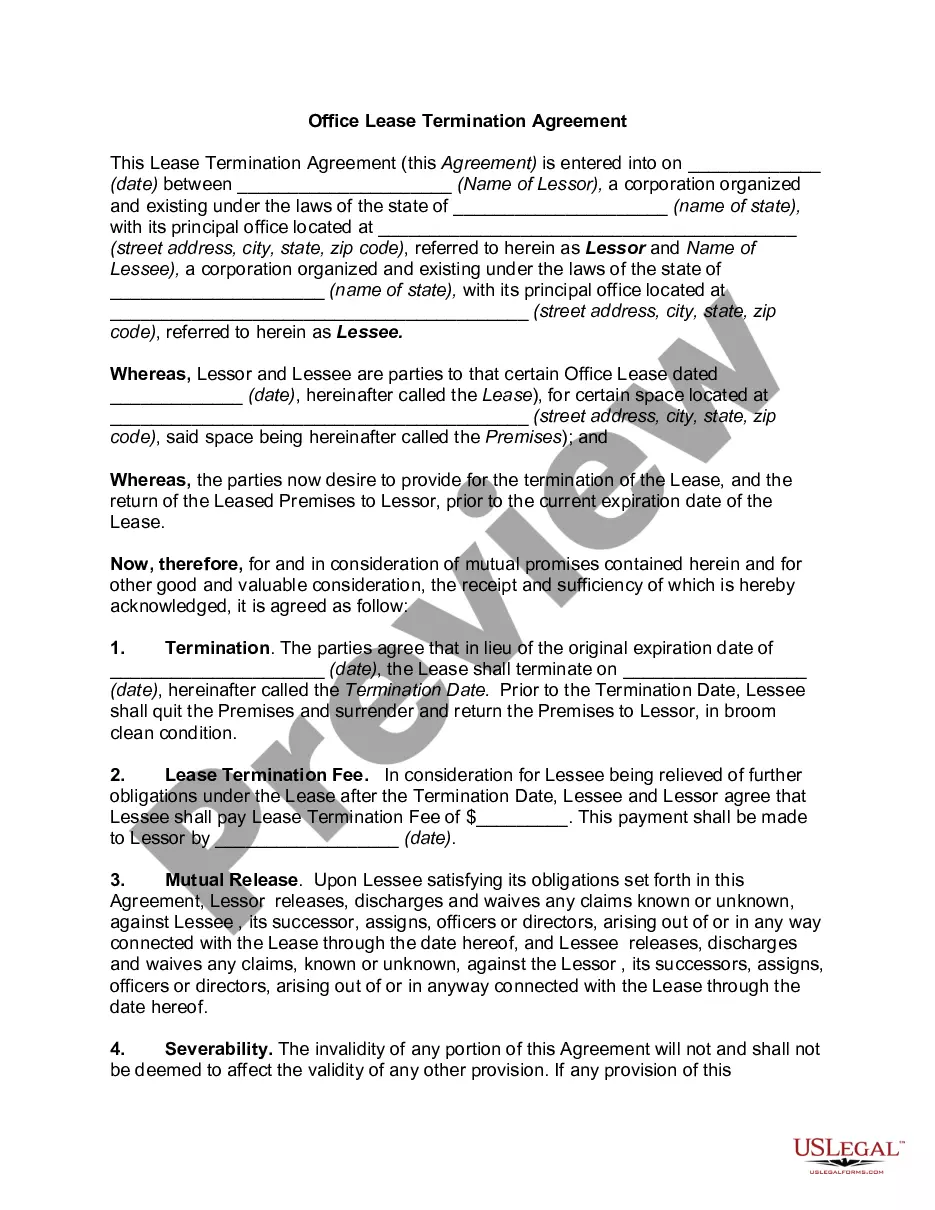
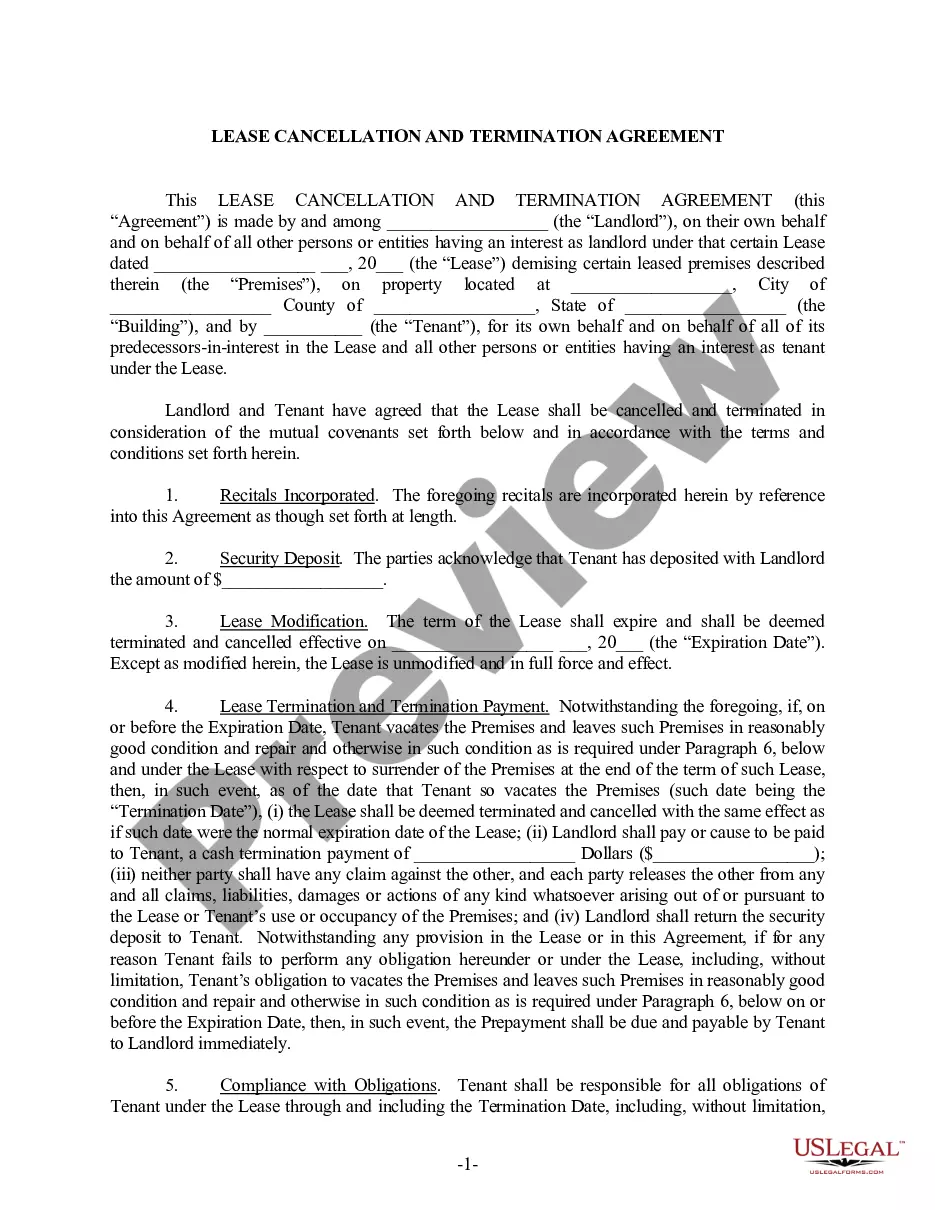
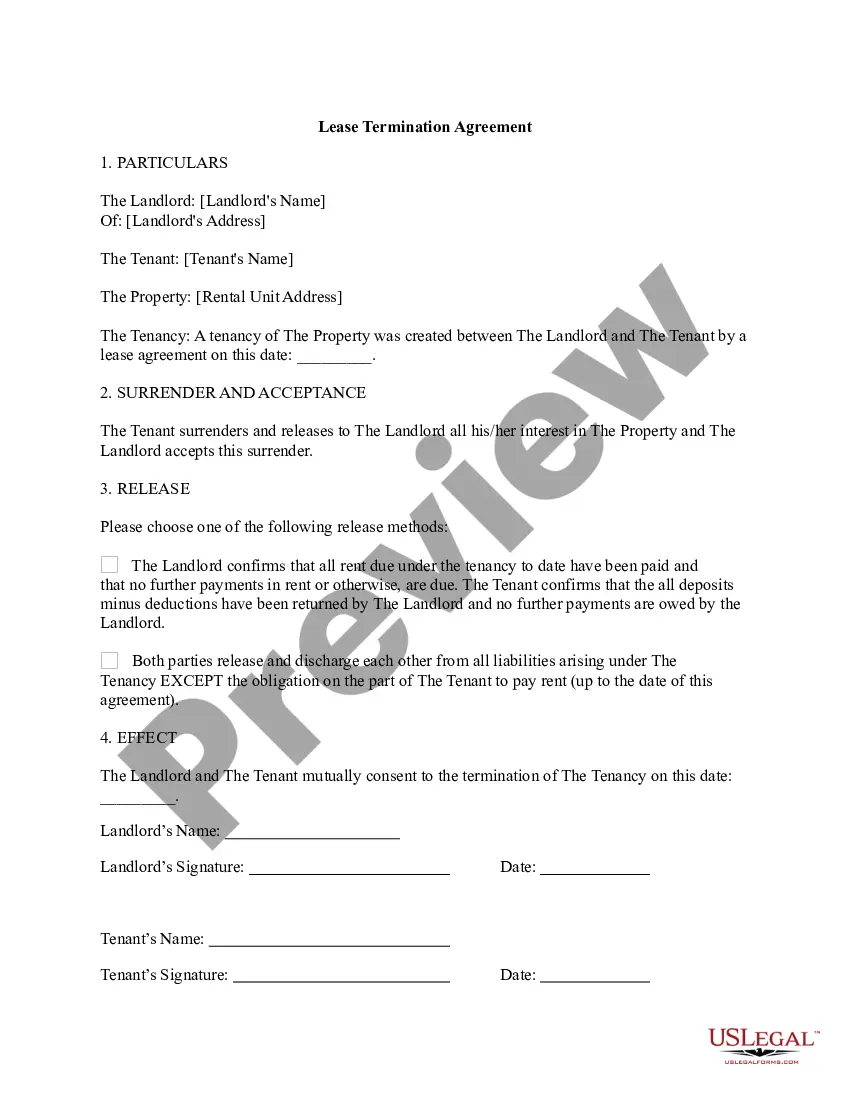
How to fill out Lease Termination Agreement?
You can spend numerous hours online looking for the valid document template that meets the federal and state standards you require.
US Legal Forms offers thousands of valid forms that have been reviewed by professionals.
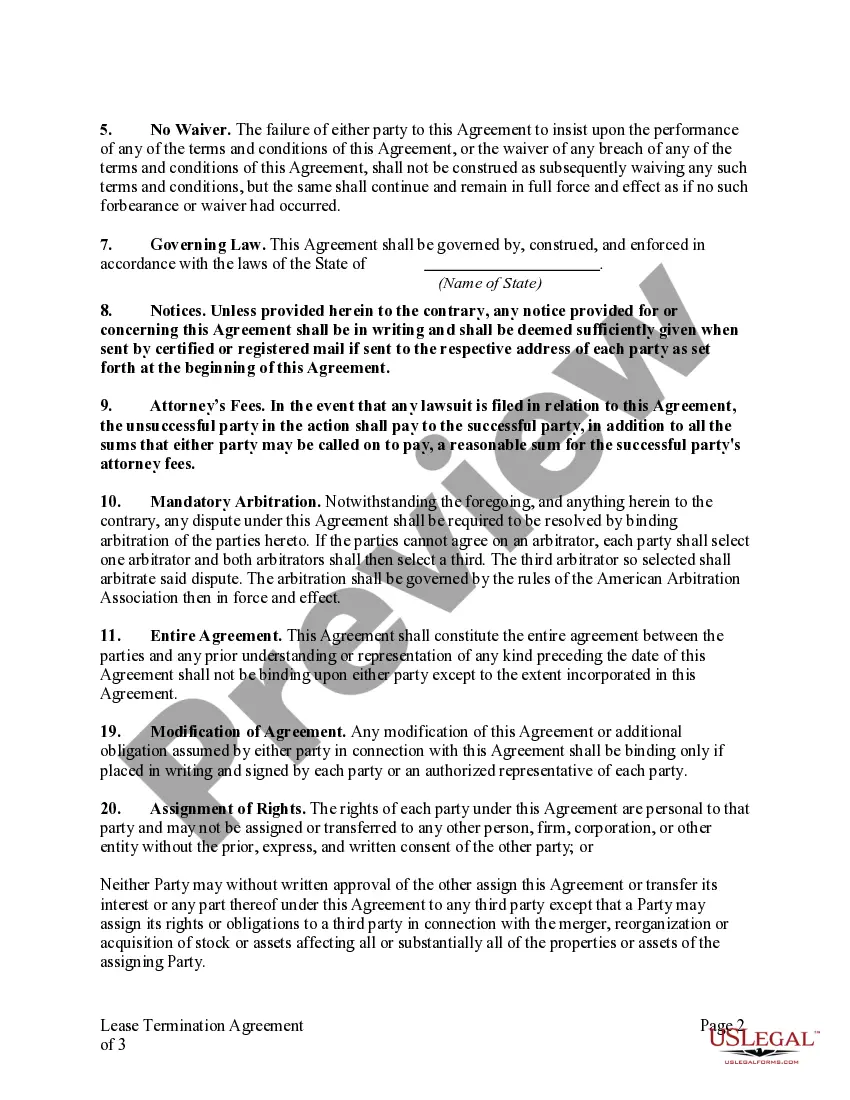
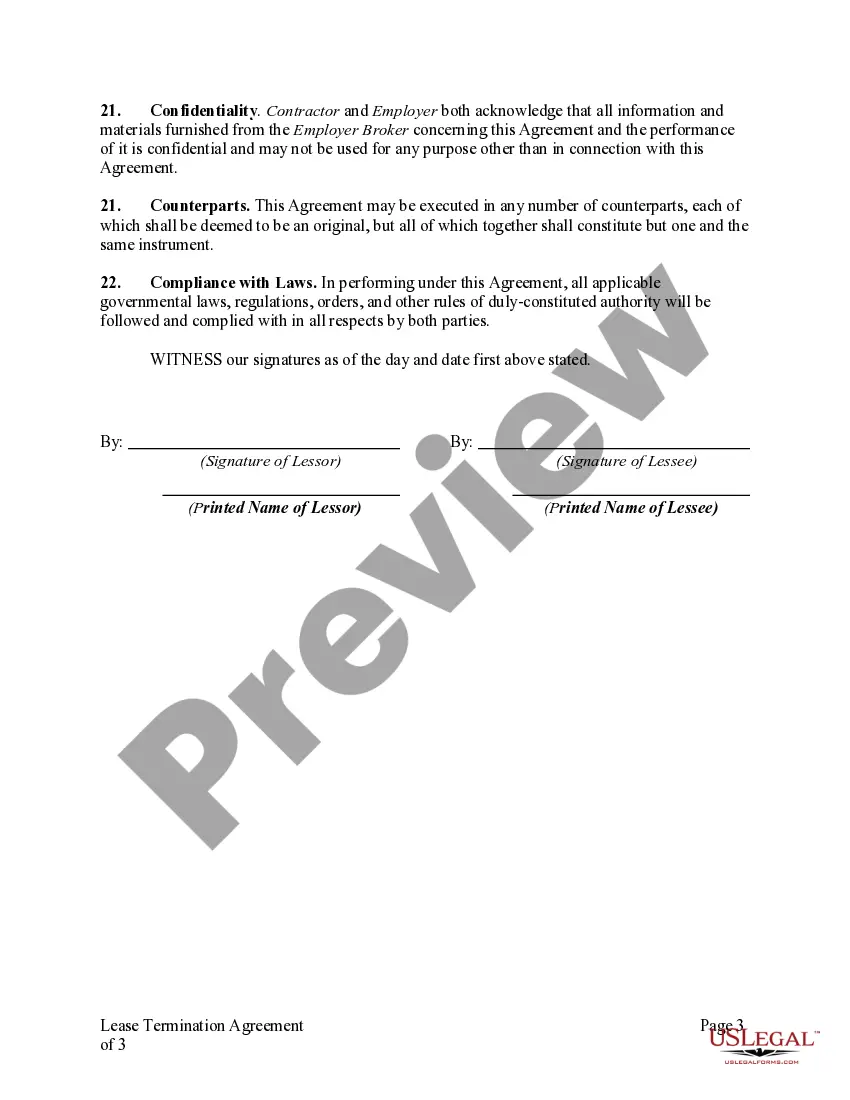
You can download or print the Arkansas Lease Termination Agreement from the service.
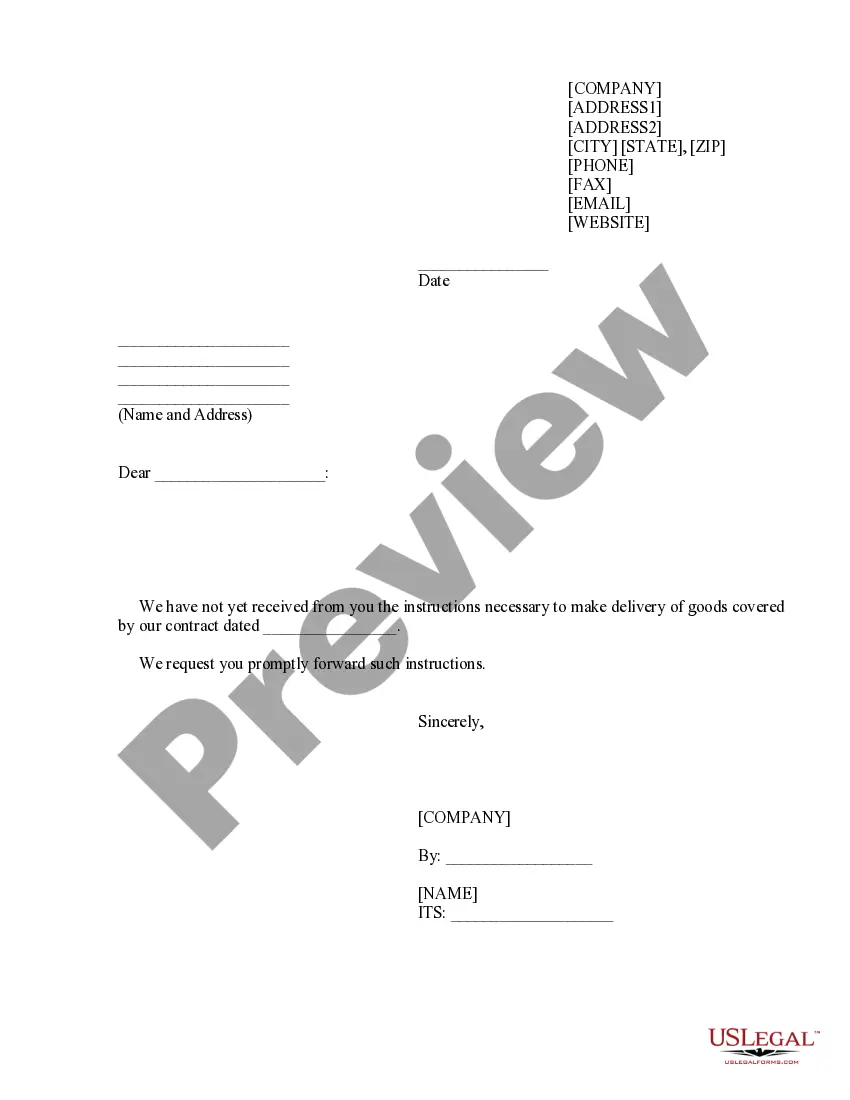
If available, use the Preview button to look through the document template as well.
- If you have a US Legal Forms account, you can sign in and then click the Download button.
- After that, you can fill out, modify, print, or sign the Arkansas Lease Termination Agreement.
- Every valid document template you obtain is yours permanently.
- To get an additional copy of any purchased form, go to the My documents tab and click the corresponding button.
- If you are visiting the US Legal Forms website for the first time, follow the simple instructions below.
- First, ensure you have selected the correct document template for your region/area of preference.
- Review the form description to confirm you have chosen the correct form.
Form popularity
FAQ
A notice to vacate is not the same as a lease termination, but it is an essential step in the process. This notice informs your landlord of your intention to leave, which must follow the guidelines of your Arkansas Lease Termination Agreement. Terminating the lease legally concludes your rental obligations. Be sure to communicate clearly and formally to avoid misunderstandings.
To break your lease without penalty in Arkansas, you might need a legally justified reason, such as unsafe living conditions or other lease violations by the landlord. If you have a strong case, refer to your Arkansas Lease Termination Agreement for guidance. You can also negotiate with your landlord for an early lease termination. Using resources like USLegalForms can help you frame your request properly.
If you break your lease in Arkansas, you may face financial and legal consequences. Landlords can hold you responsible for unpaid rent until a new tenant is found. This may include fees outlined in your Arkansas Lease Termination Agreement. It is crucial to understand your rights and obligations before making any decisions.
When breaking a lease, it’s important to have a legitimate reason. Common reasons include job relocation, family emergencies, or health issues. Providing clear communication and context can help your landlord understand your situation. Involving an Arkansas Lease Termination Agreement can formalize your request and potentially ease the process.
To terminate a lease early without penalty in Arkansas, you should look for specific circumstances that permit this, such as a health or safety issue. You can also have a conversation with your landlord regarding your situation. Using an Arkansas Lease Termination Agreement can provide a structured approach to end the lease while minimizing liabilities or penalties.
In Arkansas, getting out of a lease early can involve a few steps, such as reviewing your lease for any early termination clauses. You can also discuss your situation with your landlord, as some may be open to negotiation. Utilizing an Arkansas Lease Termination Agreement can clarify the process and ensure both parties agree on terms, avoiding future disputes.
Breaking a lease early can potentially hurt your credit if the landlord reports the lease termination. They may consider it a default on your rental agreement. This can lead to negative marks, affecting future rental applications or credit approvals. To protect your credit, consider negotiating terms with your landlord or utilizing an Arkansas Lease Termination Agreement.
To exit your lease in Arkansas, review the terms of your Arkansas Lease Termination Agreement for any potential escape clauses. You may need to provide written notice to your landlord, depending on the conditions set forth in your lease. Discussing the situation with your landlord can sometimes result in a mutual agreement to terminate the lease early. US Legal Forms provides templates that can simplify this process for you.
In Arkansas, a landlord can begin the eviction process for non-payment of rent after a 14-day notice period. If other lease violations occur, the timeline may change based on the circumstances. Understanding your Arkansas Lease Termination Agreement can inform you of your rights and responsibilities. If you're facing eviction, US Legal Forms can guide you through the legal process effectively.
A landlord in Arkansas typically needs to provide a written notice of at least 30 days before asking you to move out. This timeframe can vary based on the terms outlined in your Arkansas Lease Termination Agreement. It’s crucial to carefully review your lease and seek clarity from your landlord if necessary. Resources like US Legal Forms can also offer helpful templates and advice.