Arkansas Living Trust Property Record
What is this form?
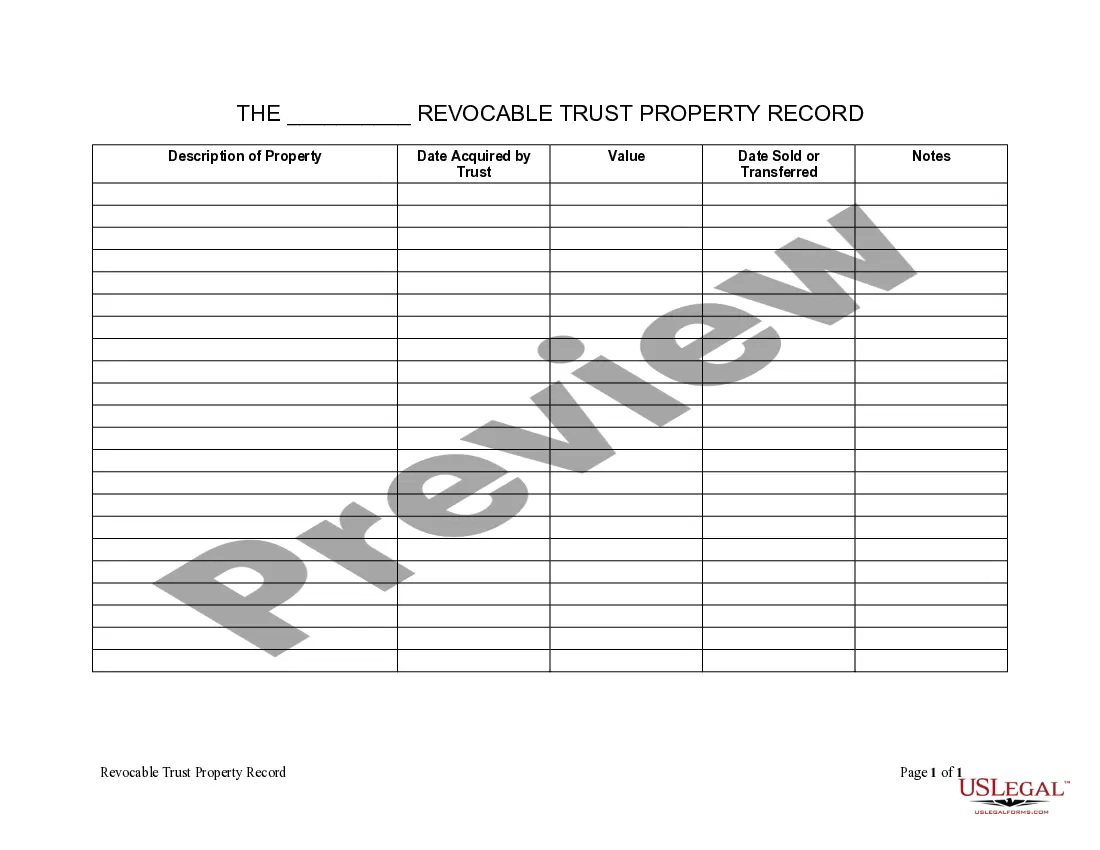
The Living Trust Property Record is a legal form designed to help trustees document and manage assets held within a living trust. Unlike typical property inventories, this form specifically aids in estate planning by allowing the trustee to maintain a comprehensive record of trust property, including details such as property description, acquisition date, value, and any transfers or sales. This thorough documentation helps ensure that all trust assets are accounted for during the lifetime of the trustor and after their passing.
What’s included in this form
- Description of Property: A detailed account of each asset held in the trust.
- Date Acquired by Trust: The date on which each asset was transferred into the trust.
- Value: The current or assessed value of each property item.
- Date Sold or Transferred: The date when any assets were sold or transferred out of the trust.


Situations where this form applies
This form is essential when establishing a living trust, particularly for individuals who want to ensure their assets are organized and managed effectively. It is useful for tracking real, personal, or intellectual property, especially if there are updates or changes in trust ownership over time. If you are the trustee responsible for managing trust assets, utilizing this form can help maintain clarity and transparency in the trust's operations.
Who needs this form
This form is intended for:
- Trustees managing a living trust.
- Individuals setting up or reviewing their estate plans.
- Beneficiaries seeking to understand the assets held within a trust.
Instructions for completing this form
- Identify all properties to be recorded in the trust.
- Provide a detailed description of each asset.
- Enter the date each asset was acquired by the trust.
- Note the value of each property based on current assessments.
- Document any dates of sale or transfer for relevant assets.
Does this form need to be notarized?
In most cases, this form does not require notarization. However, some jurisdictions or signing circumstances might. US Legal Forms offers online notarization powered by Notarize, accessible 24/7 for a quick, remote process.
Get your form ready online
Our built-in tools help you complete, sign, share, and store your documents in one place.
Make edits, fill in missing information, and update formatting in US Legal Forms—just like you would in MS Word.
Download a copy, print it, send it by email, or mail it via USPS—whatever works best for your next step.
Sign and collect signatures with our SignNow integration. Send to multiple recipients, set reminders, and more. Go Premium to unlock E-Sign.
If this form requires notarization, complete it online through a secure video call—no need to meet a notary in person or wait for an appointment.
We protect your documents and personal data by following strict security and privacy standards.

Make edits, fill in missing information, and update formatting in US Legal Forms—just like you would in MS Word.

Download a copy, print it, send it by email, or mail it via USPS—whatever works best for your next step.

Sign and collect signatures with our SignNow integration. Send to multiple recipients, set reminders, and more. Go Premium to unlock E-Sign.

If this form requires notarization, complete it online through a secure video call—no need to meet a notary in person or wait for an appointment.

We protect your documents and personal data by following strict security and privacy standards.
Avoid these common issues
- Failing to update the form after selling or transferring assets.
- Inaccurate asset valuations that may affect tax implications.
- Not including all trust property, leading to incomplete records.
Benefits of completing this form online
- Quick and easy download and access from anywhere.
- Editable fields that allow you to customize the form as needed.
- Reliable templates drafted by licensed attorneys to ensure legal compliance.
Looking for another form?


Form popularity
FAQ
To conduct a title search in Arkansas, you can begin by visiting your local county clerk's office, where property records are maintained. You can also utilize online resources that aggregate property information to streamline your search. A thorough title search will help you identify any claims or liens on the property. For a comprehensive approach, consider looking into your Arkansas Living Trust Property Records through professional services.
Yes, Arkansas property records are generally public, allowing anyone to access information about property ownership and transactions. These records can provide important insights when assessing the status of a property or evaluating its market value. Accessibility to property records is vital for ensuring transparency in real estate transactions. You can use platforms like US Legal Forms to easily obtain information related to Arkansas Living Trust Property Records.
Filling a living trust means entering specific details into the trust document, such as the names of the trustees, beneficiaries, and assets included. Ensuring all required fields are completed accurately helps create a reliable Arkansas Living Trust Property Record. After drafting, signing, and notarizing the document, you may need to transfer ownership of specific assets to the trust. This process safeguards your estate and clarifies your intentions.
Listing assets in a trust requires detailing each asset in the trust document. Include specific information like descriptions, titles, and the fair market value of each asset, creating a clear Arkansas Living Trust Property Record. This comprehensive listing protects your assets and ensures they are managed according to your wishes. Using a structured format keeps your information organized and easily accessible.
To place your house in a trust in Arkansas, you must create a trust document that specifies the trust's terms and beneficiaries. Following this, file a new deed with your local county recorder that transfers the property title from your name to the trust's name, creating an updated Arkansas Living Trust Property Record. It’s often beneficial to consult a legal professional to ensure all requirements are met and to avoid complications.
Placing assets in a trust involves transferring ownership from you to the trust itself. You will need to execute a transfer document, outlining the assets included, to officially update the Arkansas Living Trust Property Record. For real estate, this means filing a deed that names the trust as the new owner. By taking these steps, you ensure the trust holds legal title to your assets.
Assets in a trust are typically listed in a trust document, which outlines each asset's title and description. This document serves as a record of all property included, helping to maintain an organized Arkansas Living Trust Property Record. Additionally, a schedule of assets may accompany the trust document for clarity. It's essential to ensure that all assets are accurately documented to avoid future disputes.
Assets that typically do not go through probate include those placed in a living trust, jointly held property, and accounts with designated beneficiaries. Understanding these exemptions can help you efficiently manage your estate and maintain a clear Arkansas Living Trust Property Record. By organizing your assets properly, you can ensure that your beneficiaries receive them without delays.
Generally, a trust does not have to go through probate in Arkansas. Assets in a living trust pass directly to the beneficiaries after your death, bypassing the probate court. This streamlines the process and simplifies the management of your Arkansas Living Trust Property Record.
While a living trust itself does not need to be recorded, any property transferred to the trust should be recorded. This is especially important for real estate, which must be recorded to ensure proper title transfer. Keeping your Arkansas Living Trust Property Record up to date will help you avoid legal issues and ensure a smooth transfer of assets.