Arkansas Guaranty Attachment to Lease for Guarantor or Cosigner
What is this form?
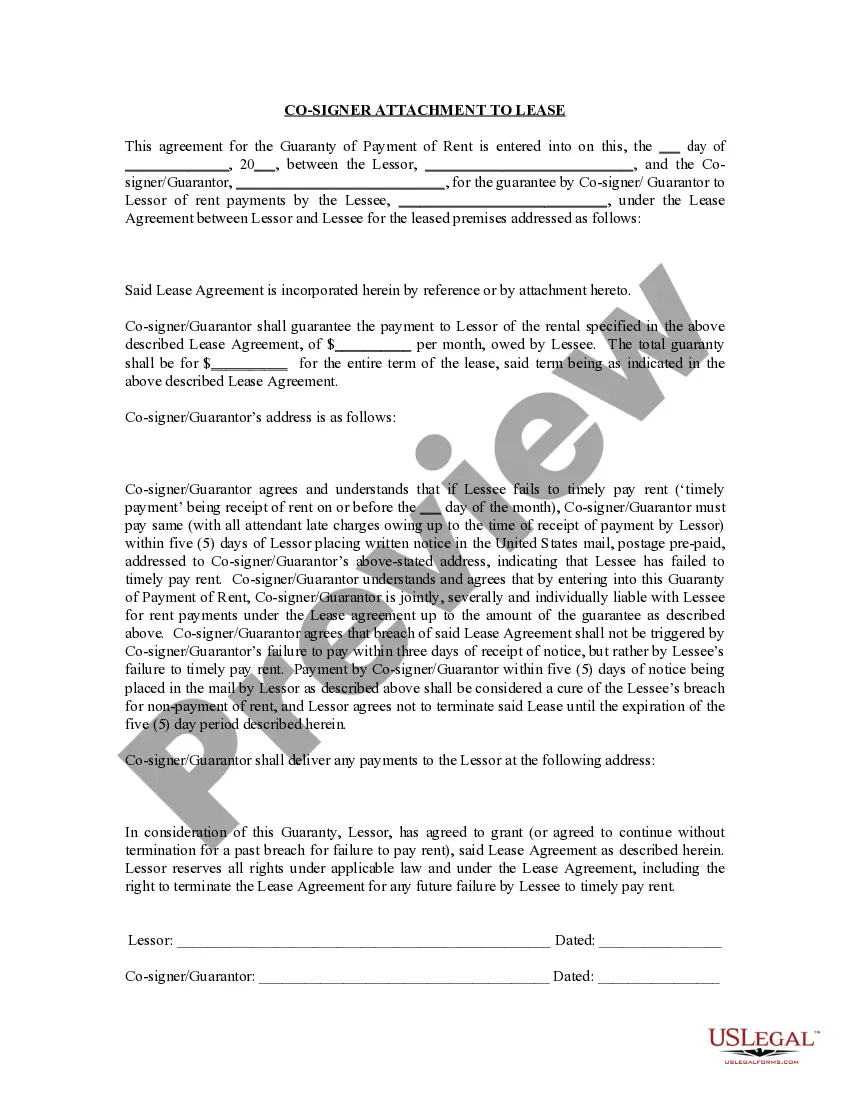
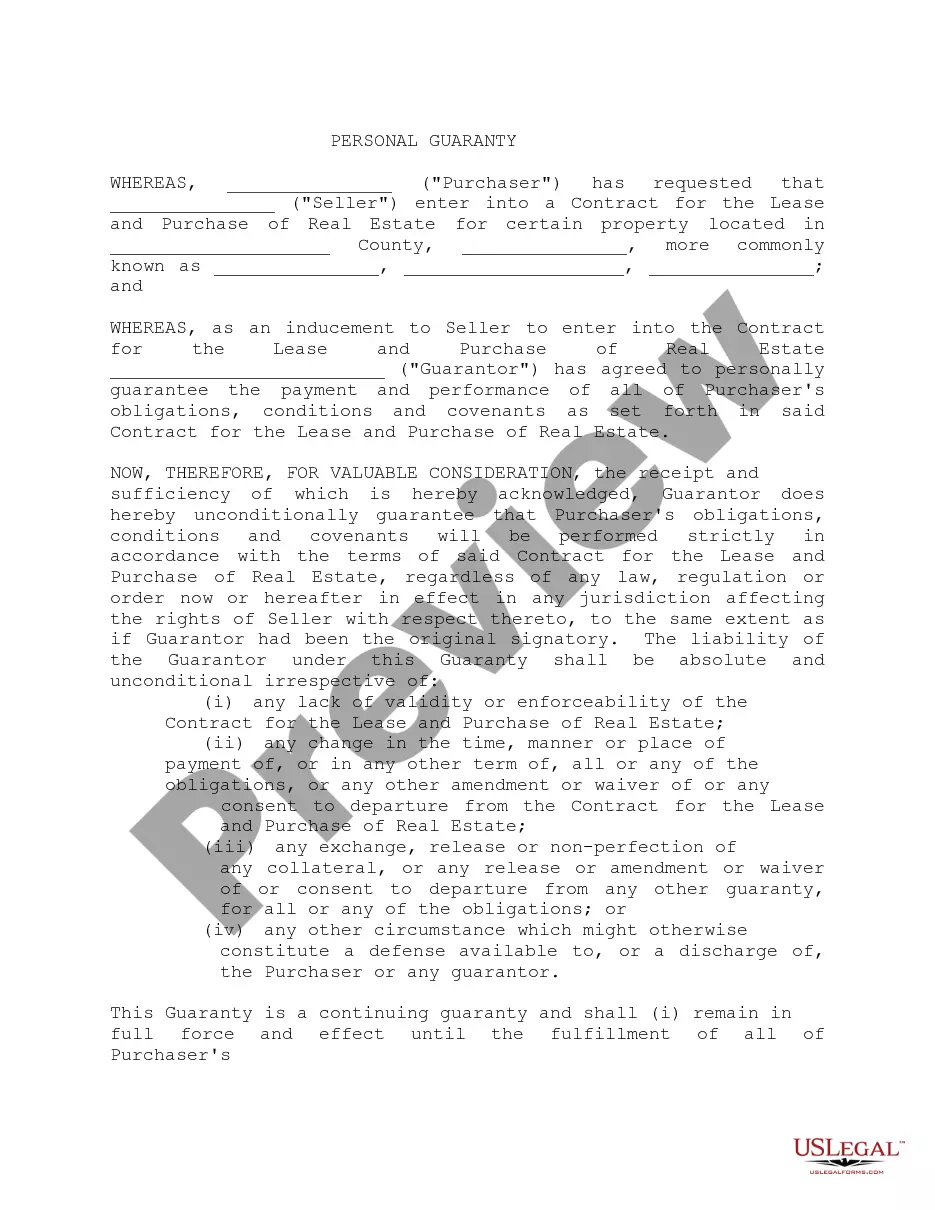
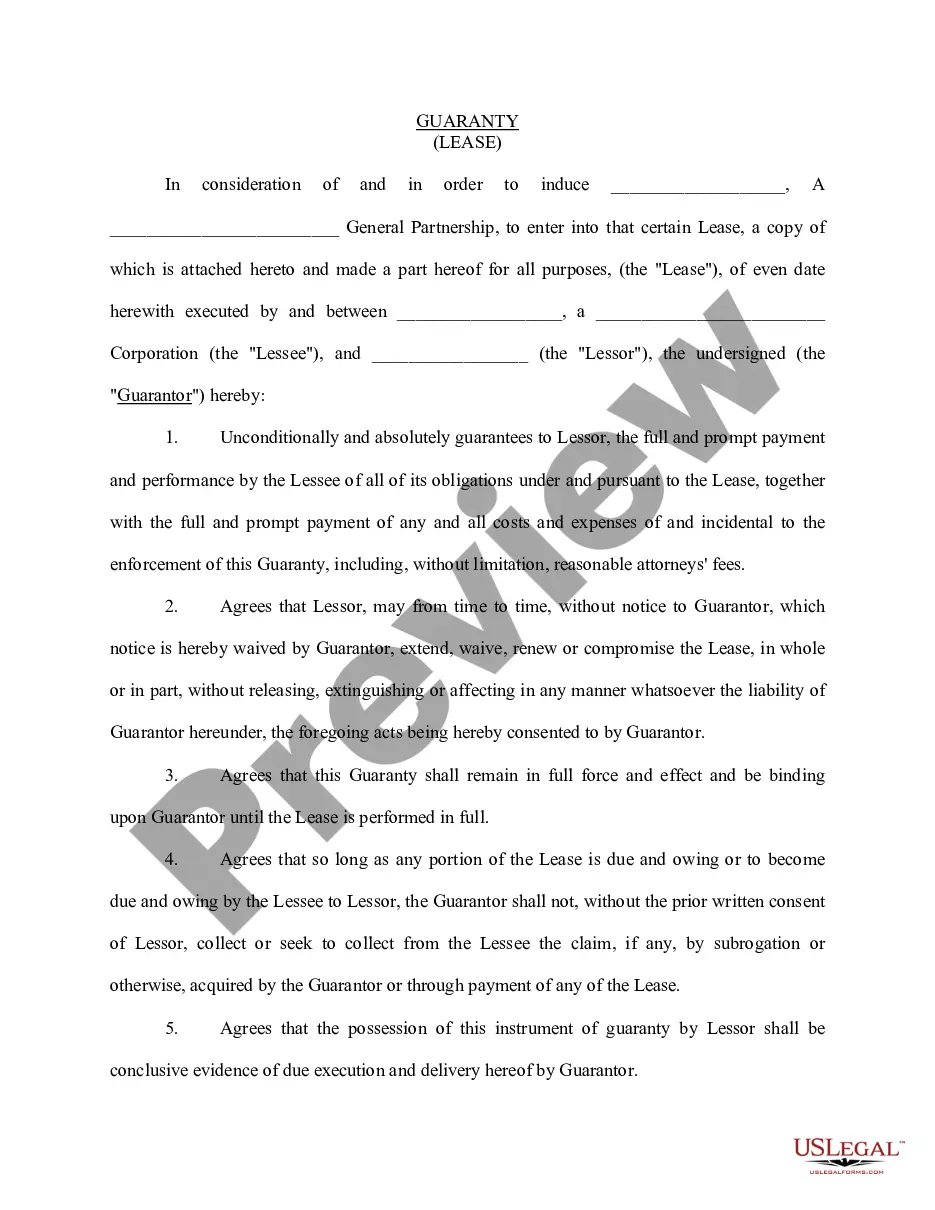
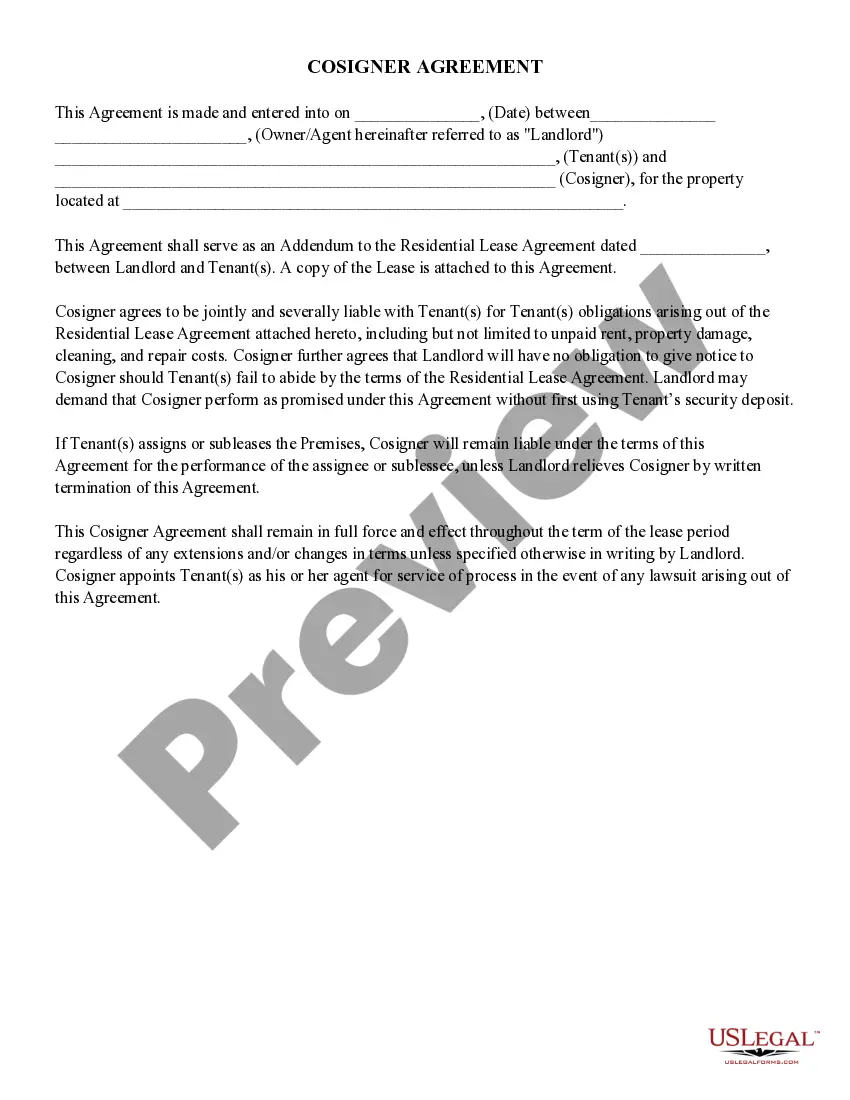
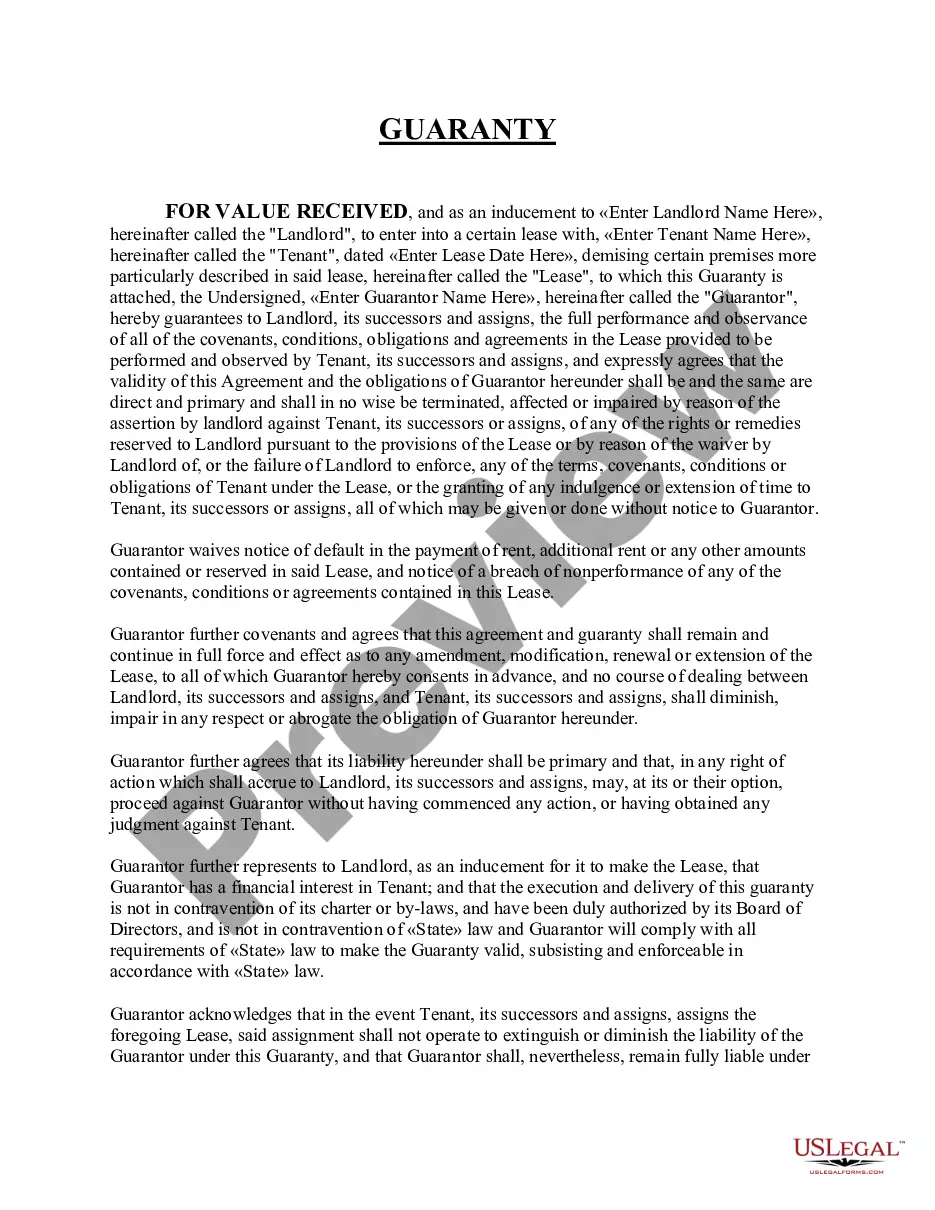
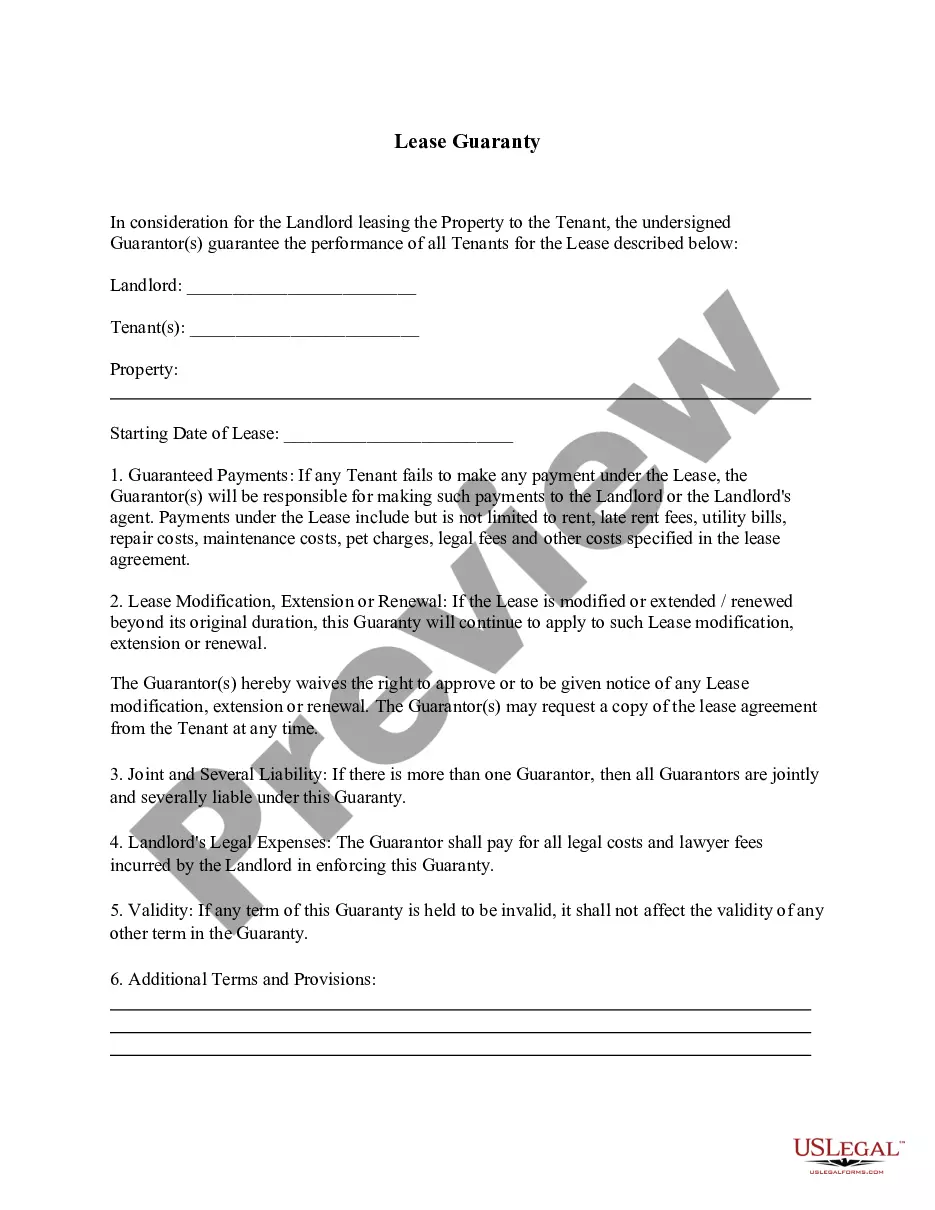
The Guaranty Attachment to Lease for Guarantor or Cosigner is a legal document that allows a third party to co-sign a lease agreement. This form ensures that the guarantor agrees to cover any unpaid rent obligations should the primary tenant default. Unlike a standard rental agreement, this form specifically addresses the responsibilities of a guarantor in relation to lease payments.
Form components explained
- Co-signer/Guarantor's address: Required to identify the guarantor clearly.
- Lessor's name: The landlord or property owner's name must be included.
- Dates: Important for establishing the agreement's effective date.
- Signatures: Both the guarantor and lessor must sign to validate the document.
When to use this form
This form is typically used when a tenant is required to have a co-signer or guarantor due to insufficient credit history, lack of rental history, or any circumstances that may raise concerns for the landlord. It is ideal for situations where the tenant's financial stability may not be adequate to secure a lease independently.
Who can use this document
- Tenants with limited credit history who need a guarantor to secure a lease.
- Landlords seeking additional security for their lease agreements.
- Guarantors or co-signers who are willing to assume responsibility for the lease obligations.
How to prepare this document
- Identify the parties: Fill in the names of the guarantor and the lessor.
- Specify the property: Clearly state the address of the rental property.
- Enter the dates: Include the effective date of the guaranty.
- Sign the document: Both the guarantor and lessor must sign the form.
Does this document require notarization?
This form usually doesn’t need to be notarized. However, local laws or specific transactions may require it. Our online notarization service, powered by Notarize, lets you complete it remotely through a secure video session, available 24/7.
Get your form ready online
Our built-in tools help you complete, sign, share, and store your documents in one place.
Make edits, fill in missing information, and update formatting in US Legal Forms—just like you would in MS Word.
Download a copy, print it, send it by email, or mail it via USPS—whatever works best for your next step.
Sign and collect signatures with our SignNow integration. Send to multiple recipients, set reminders, and more. Go Premium to unlock E-Sign.
If this form requires notarization, complete it online through a secure video call—no need to meet a notary in person or wait for an appointment.
We protect your documents and personal data by following strict security and privacy standards.

Make edits, fill in missing information, and update formatting in US Legal Forms—just like you would in MS Word.

Download a copy, print it, send it by email, or mail it via USPS—whatever works best for your next step.

Sign and collect signatures with our SignNow integration. Send to multiple recipients, set reminders, and more. Go Premium to unlock E-Sign.

If this form requires notarization, complete it online through a secure video call—no need to meet a notary in person or wait for an appointment.

We protect your documents and personal data by following strict security and privacy standards.
Common mistakes to avoid
- Failing to clearly identify the co-signer or guarantor's full address.
- Not including the effective date of the guaranty.
- Forgetting to obtain signatures from both parties involved.
Why complete this form online
- Convenience of downloading and filling out the form from home.
- Immediate access to legally drafted templates created by licensed attorneys.
- Editability: Easily modify the template to fit your specific needs.
Legal use & context
- This form provides a legal avenue for landlords to secure rental payments through guarantors.
- If the tenant defaults, the lessor can seek payment from the guarantor based on this signed agreement.
- Understanding the enforceability of this form is critical to maintaining rights under local landlord-tenant laws.
What to keep in mind
- The form serves to secure rent payment guarantees from a third party.
- It is commonly used when the tenant's financial profile is weak.
- Key details include the parties' addresses, signature, and date of signing.
Looking for another form?

Form popularity
FAQ
To add a guarantor to a lease application, ensure you have the necessary information about your guarantor, such as contact details and financial background. You can then include this information in the designated section of the application. Using the Arkansas Guaranty Attachment to Lease for Guarantor or Cosigner helps clarify the roles of all parties involved and solidifies their commitment.
To add a guarantor to your lease application, find the specific section designated for guarantors and provide their details. This may include the guarantor's name, address, and financial information. An Arkansas Guaranty Attachment to Lease for Guarantor or Cosigner streamlines this process, ensuring that everything is documented correctly for both you and your landlord.
Yes, a guarantor guarantees the lease by agreeing to be responsible for the tenant's financial obligations if they default. This assurance can provide peace of mind to landlords, making it easier for tenants to secure rental properties. By having an Arkansas Guaranty Attachment to Lease for Guarantor or Cosigner, both parties can clearly understand their responsibilities and rights.
A guarantor or co-signer is not always required for a tenant; it often depends on the landlord's policies and the tenant's financial standing. However, having one can enhance your chances of getting approved, especially if your credit history is limited or your income is lower than expected. The Arkansas Guaranty Attachment to Lease for Guarantor or Cosigner serves as a beneficial tool to ease this requirement.
The guarantor form is typically filled out by the person who agrees to guarantee your lease. This individual will need to provide personal and financial information to demonstrate their ability to fulfill the lease obligations. When using an Arkansas Guaranty Attachment to Lease for Guarantor or Cosigner, it simplifies the process, ensuring that your guarantor knows exactly what is required.
If you can't find a guarantor, consider reaching out to family members or close friends who might be willing to help. Alternatively, some landlords may allow you to provide a larger security deposit or prepay a few months' rent in lieu of a guarantor. Utilizing the Arkansas Guaranty Attachment to Lease for Guarantor or Cosigner can also pave the way for securing your lease, even without traditional guarantors.
To add a cosigner to your rental application, first, locate the section that allows for additional applicants. You will typically need to provide the cosigner's information, including their name, contact details, and financial background. Completing an Arkansas Guaranty Attachment to Lease for Guarantor or Cosigner makes this process straightforward, ensuring that all documentation is properly managed.
A lease addendum for a cosigner outlines the specific obligations of the cosigner regarding the lease agreement. This document links the cosigner to the lease, emphasizing their shared financial responsibility. By using an Arkansas Guaranty Attachment to Lease for Guarantor or Cosigner, you create a clear framework for both tenants and cosigners.
Listing a guarantor on a lease typically involves including their details in a separate section or addendum. Ensure to provide their full name and contact information, as well as their relationship to the tenant. Incorporating an Arkansas Guaranty Attachment to Lease for Guarantor or Cosigner can simplify this process and ensure all legalities are addressed.
Choosing between a cosigner or a guarantor greatly depends on your situation. If you want shared financial responsibility, a cosigner might be preferable. If you're seeking someone to step in only if needed, a guarantor may be more beneficial, particularly when utilizing an Arkansas Guaranty Attachment to Lease for Guarantor or Cosigner.